

Note: This article contains affiliate links. If you click on these links and make a purchase, I may earn a small commission at no extra cost to you. This helps support my research and content. Read my full affiliate disclosure here.
If you want greenery in a dim bedroom, picking plants that tolerate low light and limited attention matters more than looks alone. The right low light bedroom plants will survive near north-facing windows, under soft artificial light, or tucked into corners without constant watering. This guide shortlists seven top options suited to bedroom conditions, and explains how we judged them on light tolerance, maintenance, and suitability for indoor sleeping spaces. Read on to match plant habits to your room and care routine before exploring the product shortlist.
Top Picks at a Glance
| Best Overall The best all-around choice for most situations | Costa Farms Golden Pothos Live Indoor Trailing Vine (Medium) |  |
| Best Quality Built to a higher standard if you want something more solid | Plants for Pets Marble Queen Pothos in 4" Nursery Pot |  |
| Best Value The sweet spot between price and what you get | Costa Farms Snake Plant 3-Pack (Live Indoor Plants, 8–12 in, in Grower Pots) |  |
| Highest Rated A top-rated pick with lots of positive feedback | Thirsty Leaves Philodendron Atom live indoor plant (4" & 6" pot) |  |
| Most Popular A crowd favorite that many people choose with confidence | Costa Farms Money Tree (Pachira aquatica) Live Indoor Plant in Decorative Pot |  |
| Best Seller A high-volume bestseller chosen again and again | Costa Farms Money Tree (10 in.) Live Indoor Plant |  |
Costa Farms Golden Pothos Live Indoor Trailing Vine (Medium)

| Indoor Outdoor Usage | Indoor |
|---|---|
| Other Special Features of the Product | Air Purification |
| Sunlight Exposure | Partial Sun |
| Moisture Needs | Regular Watering |
| USDA Hardiness Zone | 10 |
The Costa Farms Golden Pothos is a classic, easy-care indoor vine that arrives ready to display in a grower pot and is well suited to east-facing windows where it receives morning sun and bright indirect light. It is typically used as a trailing plant on shelves or in hanging baskets, or kept as a compact desk or tabletop specimen. Notable features from the listing include tolerance for medium, indirect light, a recommended weekly watering routine of about one cup, and natural air-purifying qualities. Practically, this means the pothos will tolerate inconsistent care, recover from occasional underwatering, and grow quickly when given moderate light and occasional fertilizer in spring and summer. Limitations are that it is shipped in a plastic grower pot and may need repotting as it grows, and it is not frost-hardy so it is strictly an indoor plant in most climates. Expect variability between individual plants since these are living items sourced from growers.
Best for: Buyers who want a reliable, low-maintenance houseplant to brighten an east-facing window, desk, or shelf and prefer a plant that tolerates irregular care.
Less Ideal for: People seeking a flowering or cold-hardy outdoor specimen or those who want a decorative plant in a permanent show pot without repotting.
- Tolerates low to medium indirect light, making it suitable for east-facing windows
- Low watering needs and forgiving of inconsistent care
- Fast-growing trailing habit useful for shelves, hanging baskets, or to fill space
- Listed air-purifying properties add a functional indoor benefit
- Arrives in a plastic grower pot and will likely need repotting as it matures
- Hardy only as an indoor plant in warm zones and not suitable for outdoor cold climates
Verdict: An easy, fast-growing pothos that reliably brightens east-facing windows and suits busy or beginner plant owners.
Plants for Pets Marble Queen Pothos in 4" Nursery Pot
| Indoor Outdoor Usage | Indoor |
|---|---|
| Other Special Features of the Product | Air Purification |
| Moisture Needs | Moderate Watering |
| Material Features | Natural |
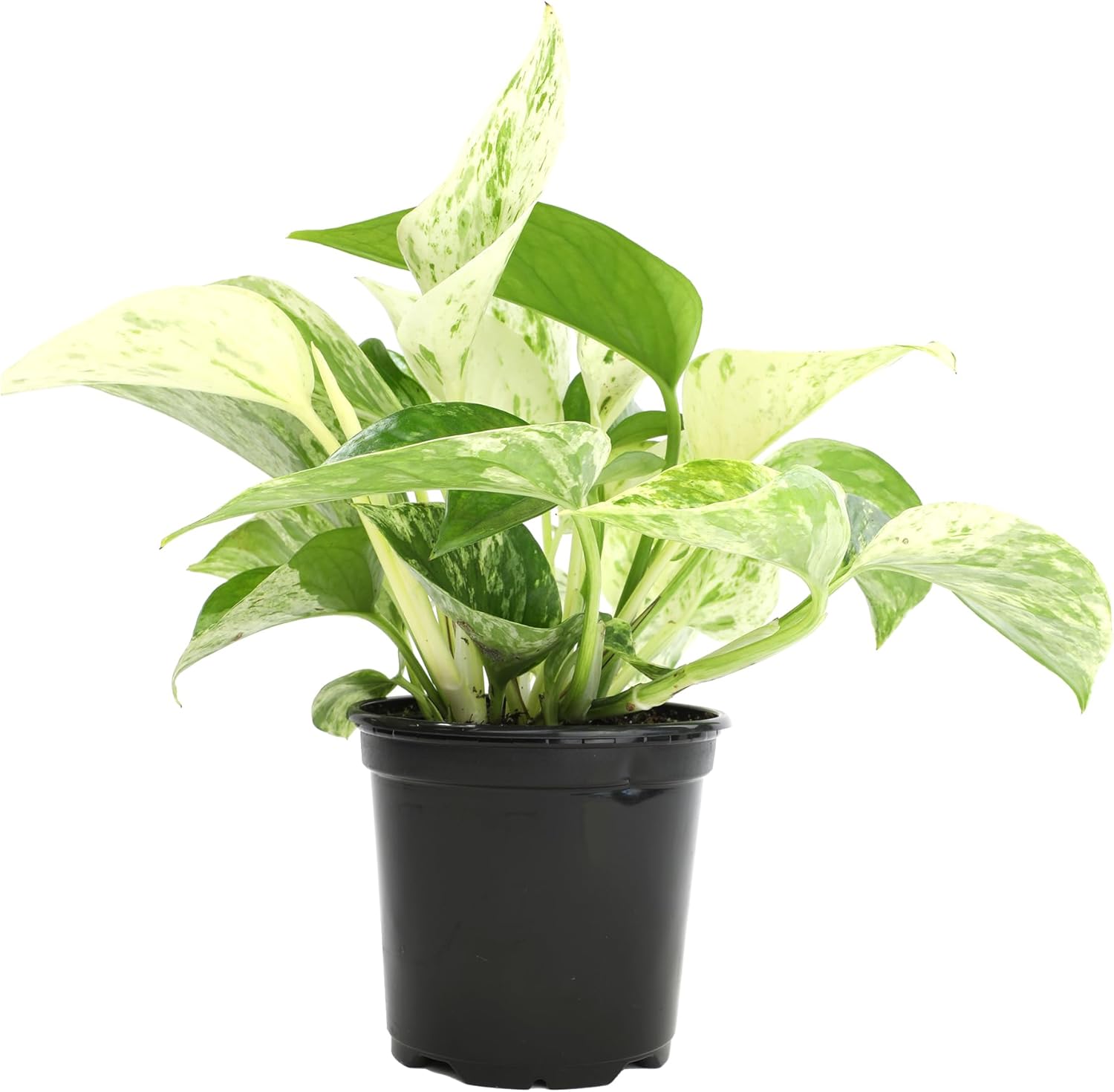
The Marble Queen pothos is a compact, easy-care vining houseplant that arrives fully rooted in a 4" nursery pot and is suited for indoor spaces with limited light. Typical use is as a hanging plant, shelf specimen, or trailing accent where it can receive bright, indirect light or tolerate lower light levels. Notable features from the listing include variegated green-and-cream foliage, moderate watering needs, and an air-purifying benefit. Practically, this means the plant adds visual interest without demanding daily attention and recovers well if watering is occasionally missed, provided you avoid prolonged saturation that can cause root rot. It also responds to occasional feeding during spring and summer to keep new growth colorful. Limitations are its small nursery pot size on arrival, so taller or fuller displays will require repotting over time, and the plant is toxic to pets so it should be kept out of reach of cats and dogs. Buyers seeking a low-fuss, attractive trailing houseplant will find this an easy add to bedrooms, offices, and shaded living rooms.
Best for: Buyers who want an attractive, low-maintenance trailing houseplant for shaded rooms, shelves, or hanging displays and prefer a reliable plant that tolerates occasional care lapses.
Less Ideal for: People who need instant tall or full specimens without repotting or those who have curious pets that access plant foliage.
- Variegated, decorative foliage that brightens low-light spaces
- Tolerant of low to bright indirect light, making placement flexible
- Arrives fully rooted and ready to display in a nursery pot
- Low care: moderate watering and occasional feeding are sufficient
- Ships in a small 4" nursery pot so repotting is likely for faster growth
- Not pet friendly and should be kept away from cats and dogs
Verdict: A forgiving, variegated pothos that brings low-light rooms life with minimal maintenance and easy placement.
Costa Farms Snake Plant 3-Pack (Live Indoor Plants, 8–12 in, in Grower Pots)

| Indoor Outdoor Usage | Indoor |
|---|---|
| Other Special Features of the Product | Air Purification, Drought Tolerant, Low Maintenance |
| Sunlight Exposure | Partial Sun |
| Moisture Needs | Little To No Watering |
| Product Care Instructions | Bright, Indirect Sunlight; Water 2-3 cups once a week |
These Costa Farms snake plants are a practical choice when you want low-maintenance greenery that still makes a visual impact. The 3-pack arrives in grower pots with plants sized about 8 to 12 inches tall, ready to place on shelves, desks, or narrow corners. Snake plants tolerate a wide range of light and require very little water, so they work well in dim bedrooms, windowless offices, or busy homes where regular care is unlikely. Notable features include drought tolerance, air-purifying qualities, and packaging designed to protect upright leaves during transit. The main benefits are instant decor with architectural vertical foliage, ease of care for beginner plant owners, and the flexibility to split the trio across rooms or give individual plants as gifts. Limitations are inherent to small potted plants: they are starter-size rather than mature floor specimens and come in plain grower pots so you may want to repot into decorative containers for long-term display.
Best for: Buyers who want reliable, low-effort houseplants to brighten low-light rooms or busy spaces and who value proven, widely purchased varieties with straightforward care.
Less Ideal for: People seeking large, mature statement floor plants or those who want decorative pots included out of the box.
- Very low water needs and tolerant of neglected watering
- Performs well in low to partial sun, suitable for dim indoor spots
- Arrives in a coordinated 3-pack for consistent styling across multiple areas
- Small, vertical growth habit fits narrow shelves and desks
- Advertised air-purifying benefit for healthier indoor air
- Ships in basic grower pots, so repotting or decorative containers are needed for long-term display
- Plants are starter-size (8–12 inches) rather than fully mature floor specimens
Verdict: Choose this 3-pack if you want dependable, nearly indestructible plants that add vertical greenery to low-light rooms with minimal care required.
Thirsty Leaves Philodendron Atom live indoor plant (4" & 6" pot)

| Indoor Outdoor Usage | Indoor |
|---|---|
| Sunlight Exposure | Indirect Sunlight |
| Soil Type | Philodendron Soil |
| Moisture Needs | Moderate Watering |
The Philodendron Atom is a small, low-maintenance houseplant with deeply lobed, glossy leaves that fits well on a bedside table or small shelf. It is typically sold in a 4" or 6" nursery pot and is intended for indoor use where it receives bright, indirect or medium light; it will tolerate low light but grows more slowly there. Key features include compact foliage suited to small spaces, year-round leaf display, and standard philodendron care: well-draining potting mix and moderate watering. In practice the plant is straightforward to keep healthy in a bedroom environment—avoid direct sun on the leaves and water when the topsoil begins to dry to prevent root rot. The main limitations are typical of young potted plants: slower growth in low-light bedrooms and the need for occasional repositioning if stems become leggy. For someone seeking a dependable, space-saving foliage plant, the Atom delivers attractive texture and low fuss care, but plan for occasional repotting as it matures and for brighter light if you want faster, fuller growth.
Best for: A buyer who wants a reliable, low-maintenance bedroom plant that adds texture without needing daily attention and who values a compact specimen for small indoor spaces.
Less Ideal for: Not the best choice for someone who wants rapid, showy growth or large statement plants for a bright living room.
- Compact, deeply lobed foliage fits small spaces and bedside tables
- Tolerates lower light conditions while still remaining attractive
- Simple care routine of moderate watering and well-draining soil
- Year-round evergreen foliage provides continuous visual interest
- Slower growth and possible legginess in consistently low-light bedrooms
Verdict: Choose the Philodendron Atom if you want a dependable, space-saving bedroom plant that stays attractive with minimal care.
Costa Farms Money Tree (Pachira aquatica) Live Indoor Plant in Decorative Pot

| Indoor Outdoor Usage | Indoor |
|---|---|
| Other Special Features of the Product | Air Purification, Low Maintenance, Pet Friendly |
| Sunlight Exposure | Partial Shade |
| Moisture Needs | Moderate Watering |
| Product Care Instructions | Bright, Indirect Light, Water Weekly |
The Costa Farms Money Tree is a beginner-friendly indoor tree grown and shipped ready to display in a decorative pot. It is typically used as a tabletop or small floor accent where bright, indirect light is available. Notable features include the signature braided trunk, pet-safe foliage, and packaging designed to protect the plant during transit. Practically, it offers easy care: water when the top 2 inches of soil feel dry and keep it in bright, filtered light, which makes it forgiving if you miss an occasional watering. The pre-potted presentation removes the immediate need to repot and gives an instant finished look for desks, entryways, or living rooms. Limitations to expect are that it prefers consistent indirect light and moderate moisture, so darker rooms or chronic overwatering will hamper growth, and the medium size is a tabletop rather than a large floor specimen. For buyers focused on easy success and decorative impact, this Money Tree balances aesthetics and low effort, though long-term growers may eventually want to repot for fuller development.
Best for: Buyers who want an attractive, low-effort houseplant that looks finished out of the box and is safe around pets, especially those who value straightforward care and reliable arrival. Ideal for people adding easy greenery to desks, shelves, or small living spaces.
Less Ideal for: Experienced collectors seeking a large specimen tree or anyone needing a plant that thrives in dim light should consider other options.
- Arrives pre-potted in a decorative planter for immediate display
- Pet-safe, non-toxic foliage suitable for households with cats and dogs
- Forgiving care needs that tolerate occasional missed waterings
- Distinctive braided trunk adds architectural, designer appeal
- Not ideal for low-light rooms since it prefers bright, indirect light
- Medium/tabletop size may be too small for buyers seeking a large floor statement plant
Verdict: A stylish, pet-safe Money Tree that delivers easy, low-stress greenery already potted and ready to display.
Costa Farms Money Tree (10 in.) Live Indoor Plant

| Height | 10-in. tall |
|---|---|
| Pet safety | ASPCA-certified non-toxic |
| Packaging | Farm-direct, transit-safe packaging |
The Costa Farms Money Tree is a small, easy-care indoor tree sold ready to display and commonly used on plant stands, shelves, or near windows with indirect light. It ships rooted and is packaged for transit to preserve soil moisture and reduce shock. Notable features include a braided trunk for visual interest, compact 10-inch height that fits small spaces, and ASPCA-certified non-toxicity for homes with cats and dogs. In typical use it needs bright indirect to low light, occasional watering when the topsoil dries, and minimal pruning to keep a tidy shape. Practical benefits are immediate decor impact without re-potting, pet safety, and straightforward maintenance that suits first-time plant owners. Limitations are its small size if you want a statement floor tree and the usual sensitivity of tropical houseplants to overwatering and sudden light changes, so placement and watering routine still matter for reliable success.
Best for: Buyers who want a low-fuss, pet-safe indoor tree that provides decorative structure in small or low-light rooms and prefer a plant that arrives ready to display.
Less Ideal for: Not a good fit for shoppers seeking a large statement floor tree or for those who prefer fully mature specimens that require no early growth management.
- Arrives rooted and packaged to reduce transit shock
- Compact size fits shelves, stands, and small rooms
- ASPCA-certified non-toxic for homes with pets
- Attractive braided trunk offers instant decorative impact
- Small 10-inch height may be too short for people wanting a floor-level indoor tree
- Requires consistent, moderate light and careful watering despite being low-maintenance
Verdict: Choose this Costa Farms Money Tree when you want an easy-care, pet-friendly indoor tree that arrives ready to brighten small, low-light spaces.
Choosing the Right Low Light Bedroom Plants: Key Factors to Consider
Light Tolerance and Placement
Determine how much indirect or artificial light the bedroom receives throughout the day. Some low-light plants will do fine several feet away from a north window or under sheer curtains; others need a little bright indirect light for a few hours. Positioning affects growth rate, leaf color, and leggy stretching. Place plants closer to the best light source available and rotate periodically to keep growth balanced. If a plant shows pale leaves or long internodes, it typically needs more light or a brighter spot. Consider LED grow lights for very dark rooms, using low-output fixtures on a timer rather than long bright sessions.
Watering Rhythm and Soil
Bedrooms often receive inconsistent attention, so choose plants that tolerate irregular watering. Look for species that prefer to dry slightly between waterings rather than those that need constantly moist soil. Fast-draining potting mix with added perlite or bark helps prevent root rot in low-light conditions where evaporation is slower. Match pot size to the plant's root system; oversized pots hold excess moisture and increase rot risk. Use a moisture meter or the finger test to avoid overwatering. Plants that store water in thick leaves or rhizomes are more forgiving in a bedroom setting.
Growth Habit and Size Control
Think about mature size and whether the plant stays compact, trails, or becomes upright. A trailing plant can work well on a shelf or hanging basket, while an upright grower may suit a bedside stand. Some low-light species grow slowly and stay small, making them a better fit for tight spaces. Regular light pruning or pot-bound conditions can keep a plant within bedroom scale. If floor space is limited, choose varieties known for slow, compact growth or opt for hanging or shelf placement to add green without cluttering walkways.
Air Quality and Nighttime Effects
Many indoor plants help capture common volatile organic compounds and can slightly improve perceived air quality. While the overall effect is modest in a single bedroom, plants with larger leaf area or leathery leaves often contribute more to gas exchange and particulate capture. Be mindful that some flowering or heavily scented plants can aggravate allergies or disrupt sleep for sensitive people. Choose nonscented, broad-leaf plants if night-time air comfort is a priority.
Pet and Child Safety
If pets or small children have access to the bedroom, toxicity matters. Some attractive low-light plants contain compounds that can cause vomiting or skin irritation when chewed. Prefer non-toxic species or place plants well out of reach when safety is a concern. Also consider leaf texture and shedding. Plants that drop leaves or have brittle foliage can create extra cleaning work and may pose ingestion risks for curious pets.
Pest Susceptibility and Maintenance
Low-light, lower-airflow bedroom corners can become havens for common pests like mealybugs and spider mites. Select plants with a reputation for pest resistance or that tolerate occasional inspections and wipes. Routine care such as wiping leaves, checking undersides, and avoiding overwatering reduces pest pressure. Keep a simple maintenance routine that fits your schedule: light dusting, monthly checks, and occasional isolation of new plants before placing them near existing ones.
Best Spots in a Bedroom for Low-Light Plants
Identify microclimates within the bedroom. Areas near north-facing windows, on nightstands close to a window, or on shelves beneath higher windows usually offer the dim but usable light low-light plants prefer. Corners far from windows may work only for the most tolerant species.
Think vertically when floor space is limited. Hanging baskets, wall shelves, or tall narrow plant stands let you position foliage closer to available light while keeping surfaces clear. Also consider placing plants near indirect artificial light sources, such as a lamp with a soft white bulb, rather than under direct harsh lighting.
- Place plants within a few feet of the best available window
- Use hanging or shelving to maximize light without crowding
- Rotate plants monthly to prevent one-sided growth
How to Water Low-Light Bedroom Plants
Low light slows evaporation, so water less frequently than with sun-loving plants. Water when the top inch or two of soil is dry depending on the plant. Use pots with drainage holes and discard saucer water that collects beneath the pot to avoid root rot.
For plants that store water, give a thorough soak and then allow the soil to dry out somewhat. For species that like consistently moist conditions, use a lighter touch and smaller pots to avoid saturation. Consider a simple moisture meter if you tend to either overwater or forget.
- Check soil moisture before watering rather than sticking to a fixed schedule
- Avoid waterlogged soil; ensure good drainage
- Reduce watering in winter when growth slows
Managing Humidity and Temperature
Bedrooms often have moderate indoor humidity. Many low-light plants tolerate typical indoor ranges, but a few appreciate slightly higher humidity. Grouping plants together or using a pebble tray can raise local humidity without a humidifier. Avoid placing plants directly above heating vents where air is dry and warm.
Keep temperatures steady and avoid cold drafts from windows during winter. Most bedroom-tolerant plants do well between about 60 and 75 degrees Fahrenheit. Sudden temperature swings can stress plants and invite pests.
- Group plants to raise local humidity gently
- Avoid direct drafts and hot vents
- Keep temperatures consistent for steady growth
Styling and Placement Tips for Small Bedrooms
Use plants to add texture without overwhelming small spaces. Select narrow-profile plants for bedside tables and trailing varieties for shelves and hanging baskets. A single taller specimen can create vertical interest without taking up floor space.
Consider mixing leaf shapes and heights to avoid a cluttered look. Use matching pots or a limited color palette to keep the styling cohesive and make maintenance easier.
- Favor vertical or hanging placements to save floor area
- Mix small and medium foliage for balanced visuals
- Choose easy-clean leaves if dust is a concern
Seasonal Care and Dormancy
Growth slows in winter when daylight is shortest. Expect reduced watering and minimal fertilizer during these months. Trim only dead or damaged foliage and delay major repotting until spring when the plant returns to active growth.
Monitor for pest outbreaks that can appear when indoor heating is on. A sudden decline in leaf vigor often signals either low light stress or an environmental mismatch rather than a disease.
- Cut back on watering and feeding in winter
- Postpone repotting until spring
- Inspect for pests during seasonal transitions
How We Chose the Best Low Light Bedroom Plants
We prioritized traits that matter for plants kept in bedrooms with limited natural light. Light tolerance was the first filter: candidates had to show reliable growth under low or indirect light rather than requiring direct sun. Low maintenance was next, favoring species that need infrequent watering, tolerate missed waterings, and respond well to average indoor humidity. Air-quality and safety considerations influenced selection. We preferred plants with a history of improving indoor air or that have low dust buildup and are non-invasive in pot culture. Size and growth habit were evaluated so bedroom plants stay compact or can be trained to fit small spaces. Pest resistance and general hardiness reduced the need for frequent interventions. We excluded plants that demand bright light, constant humidity, or aggressive pruning. We also excluded species with known high toxicity for households with children or pets when safer alternatives existed. The remaining picks were judged on light tolerance, maintenance needs, growth habit and size control, pest and disease resistance, and suitability for indoor bedroom conditions.
FAQ
Can low-light bedroom plants survive without any natural light?
Most so-called low-light plants still need at least some indirect or artificial light to photosynthesize. In a room with virtually no natural light, use low-output LED grow lights on a timer to provide a few hours of illumination each day.
How often should I water a low-light plant in my bedroom?
Watering frequency depends on species and potting mix, but commonly every 2 to 4 weeks is enough for many low-light houseplants. Check the top inch or two of soil for dryness and reduce watering in winter when growth slows.
Do low-light plants improve bedroom air quality at night?
Plants contribute modestly to air quality by taking up some VOCs and dust; however, the scale is small for a single bedroom. Choose plants with larger leaves and keep them healthy to maximize any air-cleansing benefit.
Are low-light bedroom plants safe for pets and children?
Safety varies by species. Some low-light plants are non-toxic while others can cause irritation or digestive upset if chewed. If safety is a concern, select non-toxic varieties or keep plants out of reach.
Will low-light plants grow slowly in a bedroom?
Yes, slower growth is typical in lower light. Expect reduced leaf production and occasional legginess. Slightly increased light or periodic rotation can help maintain more compact, attractive growth.
How do I prevent pests on plants kept in low-light bedrooms?
Maintain good hygiene by wiping leaves, avoiding overwatering, and inspecting plants regularly. Quarantine new plants before adding them to the room and treat small infestations early with gentle physical removal or approved biological methods.
Final Verdict
Choosing low-light bedroom plants means balancing light tolerance, watering habits, and size in a confined, restful space. Prioritize species that tolerate dim conditions, require infrequent watering, and stay compact or trail neatly. Accept that lower light usually means slower growth and plan care around reduced water and seasonal dormancy. With the right choices and simple maintenance you can enjoy greenery that suits a bedroom environment without extra work or disruption.
