

Note: This article contains affiliate links. If you click on these links and make a purchase, I may earn a small commission at no extra cost to you. This helps support my research and content. Read my full affiliate disclosure here.
Raised beds concentrate soil, drainage, and warmth, which makes them ideal for gardeners who want productive, low-maintenance planting. Choosing easy plants for raised beds matters because the best selections establish quickly, tolerate variable soil conditions, and reward you with steady growth rather than intensive care. This guide shortlists six robust, gardener-friendly options suited to raised bed culture and evaluates them on factors like yield, maintenance needs, and site fit. Read on for a practical look at what to plant, why each choice works in a raised bed, and the criteria we used to pick these top contenders.
Top Picks at a Glance
| Best Overall The best all-around choice for most situations | The Three Company Live Herb Assortment (6-Pack) |  |
| Best Quality Built to a higher standard if you want something more solid | Bonnie Plants Husky Cherry Red Tomato Live Vegetable Plants, 4-Pack |  |
| Best Value The sweet spot between price and what you get | Valley Greene Deluxe 30-Pack Heirloom Vegetable Seeds |  |
| Best Budget The cheapest option that still gets the job done reliably | Harley Seeds Dwarf Red Robin Tomato Seeds (30 Count) |  |
| Highest Rated A top-rated pick with lots of positive feedback | Cerca Cultivation Farmers Bundle — 12 Ready-to-Plant Seedlings (Seasonal Mix) |  |
| Most Popular A crowd favorite that many people choose with confidence | Black Duck Brand Set of 43 Heirloom Vegetable & Herb Seed Packets with Mylar Storage Bag |  |
The Three Company Live Herb Assortment (6-Pack)

| Indoor Outdoor Usage | Indoor, Outdoor |
|---|---|
| USDA Hardiness Zone | 3-11 |
| Moisture Needs | Moderate Watering |
| Sunlight Exposure | Full Sun to Partial Shade |
| Unit Count | 6 Count |
This six-pack of live herbs delivers a hand-selected assortment of perennial culinary plants intended for container gardens, balcony planters, and kitchen beds. Plants arrive as small potted starts and are typically used to fill multiple pots or a single long planter; growers can transplant them into well-draining potting mix, place the planter in full sun to partial shade, and water regularly while they establish. Notable features include suitability for indoor or outdoor use across USDA zones 3 to 11 and modest moisture needs, which makes them adaptable to different balcony exposures. The assortment approach means you get variety and immediate usable herbs for cooking or for attracting pollinators, but you cannot choose specific varieties since the selection is the seller's grower choice. Because plants are live, initial condition and vigor may vary, so expect some variation in size and leaf count at delivery. For balcony gardeners this pack is a convenient way to start or expand an herb planter with minimal fuss.
Best for: Balcony gardeners who want an easy, low-effort way to establish a small edible herb collection and prioritize usable variety over picking specific cultivars.
Less Ideal for: Gardeners who need guaranteed specific herb varieties or those who prefer uniform, mature plants for immediate harvest.
- Ready-to-plant live herbs suitable for containers and balcony planters
- Adaptable to full sun or partial shade, widening placement options on balconies
- Perennial varieties cover cooking, tea, and pollinator uses
- Works across a wide USDA zone range (3-11) for broad climate compatibility
- Grower-selected assortment means you cannot choose exact herb varieties
- Live plants may arrive with variable size or vigor depending on shipment and handling
Verdict: An easy starter pack for balcony planters that delivers a mixed set of live culinary herbs ready to transplant and use.
Bonnie Plants Husky Cherry Red Tomato Live Vegetable Plants, 4-Pack

| Expected Blooming Period | Spring to Summer |
|---|---|
| Sunlight Exposure | Full Sun |
| Expected Planting Period | Spring to Summer |
| Soil Type | Loam Soil |
| Moisture Needs | Regular Watering |
These Bonnie Plants Husky Cherry Red tomato starters arrive as young, vigorous plants ready to transplant after your last frost. The dwarf indeterminate vines stay compact, typically 3 to 4 feet, which makes them well suited to pots, small raised beds, or tight garden spaces while still producing long stretches of cherry tomato clusters. They are non-GMO and described as disease resistant, with plants maturing to fruit in about 65 days and needing full sun and regular watering. Practical benefits include faster harvests than seed-starting, an attractive tidy habit that needs only a small stake or cage for support, and good productivity from each plant. Limitations are the shorter mature height compared with full-size indeterminate varieties if you want very large yields, and the need to monitor watering and sun exposure closely when grown in containers to avoid stress. These come as a pack of four live plants, so expect the usual care of transplanting and initial acclimation when you get them.
Best for: Gardeners who want a reliable, space-efficient cherry tomato for patio pots or small vegetable beds and who prefer the convenience of transplant-ready plants over starting seeds.
Less Ideal for: Growers seeking very large commercial yields or those who prefer heirloom seed varieties and full control of cultivar selection from seed.
- Compact dwarf vines ideal for containers and small spaces
- Produces sweet, bite-sized cherry tomatoes around 65 days after planting
- Plants are disease resistant and non-GMO
- Starter plants speed harvest compared with beginning from seed
- Smaller overall yield per plant than full-size indeterminate tomatoes
Verdict: A compact, productive cherry tomato starter ideal for patio pots and small gardens when you want quick, reliable harvests without starting from seed.
Valley Greene Deluxe 30-Pack Heirloom Vegetable Seeds
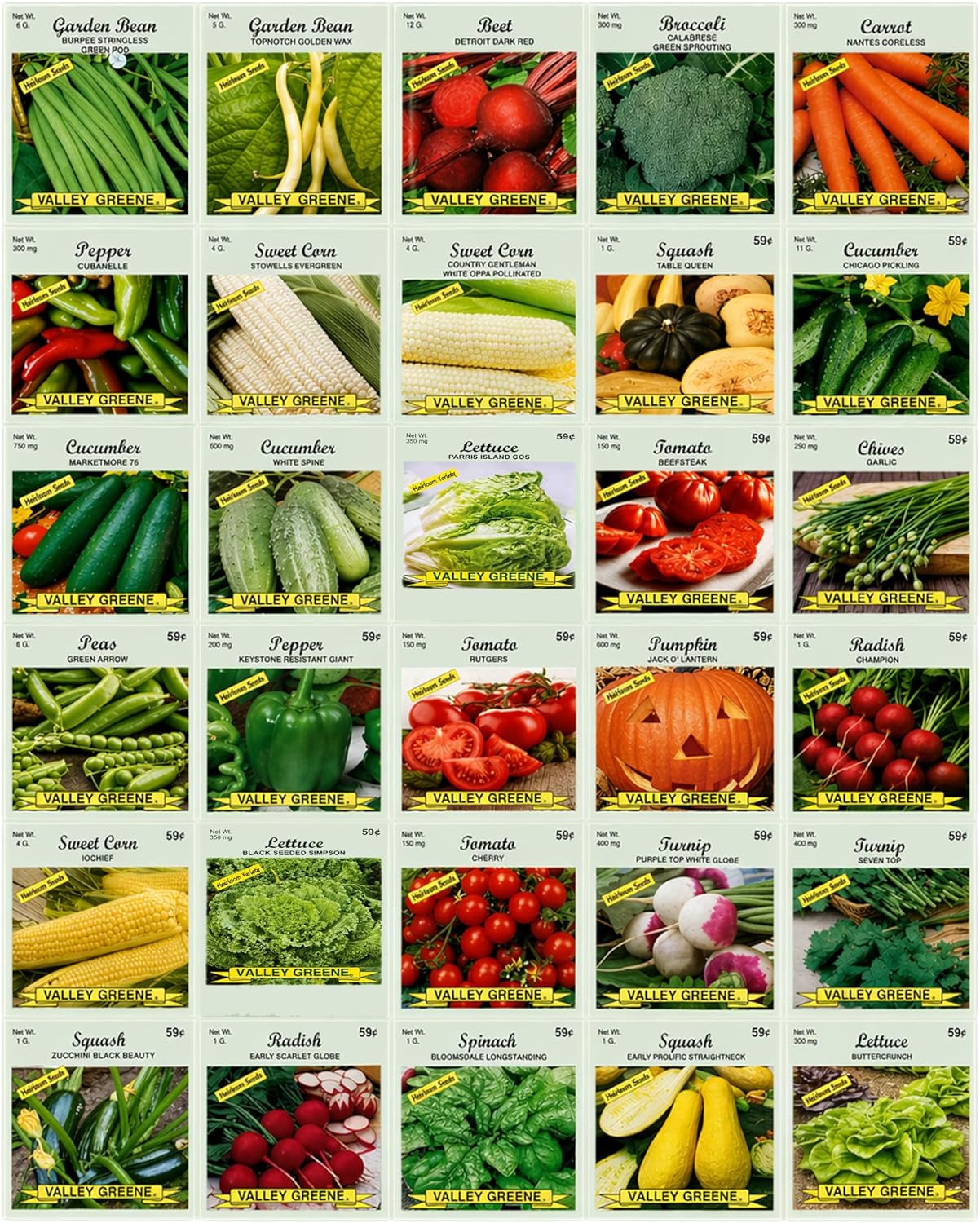
| Indoor Outdoor Usage | Outdoor |
|---|---|
| Other Special Features of the Product | High Germination Rate |
| Expected Blooming Period | Winter |
| Sunlight Exposure | Partial Sun |
| Unit Count | 30 Count |
This 30-pack from Valley Greene provides a wide assortment of heirloom, non-GMO vegetable seeds intended to get a small kitchen or container garden started quickly. The packets are sold as 30 different varieties with a reported high germination rate within 7 to 14 days, and the listing notes seeds are best stored cool and dry to retain viability. For pot gardeners the variety gives flexibility to test several compact or bush-type vegetables suited to containers and partial-sun locations. Because seeds are dated with a sell-by and described as heirloom, you can also save and replant seed from matured crops. Limitations to be aware of: the listing does not specify which exact vegetable varieties or seed counts per packet, and expected mature heights are generic, so you will need to choose container sizes and trellises based on the plants you select. Success with containers still depends on matching each variety to pot size, soil and sunlight needs.
Best for: Gardeners who want a balanced, low-commitment way to try many vegetable types in containers and learn what performs best in partial sun conditions.
Less Ideal for: Growers who need specific cultivars, exact sowing rates, or detailed size and spacing guidance for a planned edible garden layout should look for single-variety seed packs with full specs.
- Large variety pack gives 30 different heirloom, non-GMO seed types for experimenting in pots
- High germination rate advertised (7–14 days) to get plants started reliably
- Seeds are heirloom and can be saved for future planting
- Clear storage advice to keep seeds viable longer
- Specific varieties and seed counts per packet are not listed, so planning exact crops for pots requires extra research
- No detailed maturity or spacing info per variety which can complicate container selection
Verdict: A convenient 30-variety heirloom seed assortment that lets container gardeners experiment broadly and quickly identify which vegetables work best in pots.
Harley Seeds Dwarf Red Robin Tomato Seeds (30 Count)

| Indoor Outdoor Usage | Outdoor |
|---|---|
| Other Special Features of the Product | Compact |
| Sunlight Exposure | Full Sun |
| USDA Hardiness Zone | 4 |
| Moisture Needs | Moderate Watering |
These Dwarf Red Robin tomato seeds produce super-dwarf determinate plants designed for containers, hanging baskets, or small patios. They germinate in about 7–14 days under warm soil and reach mature harvest in roughly 55–60 days, yielding tight clusters of small, sweet-tart cherry tomatoes that are good for snacking. The variety is compact and hardy across zones 4–10, so you can start seeds indoors in small pots and transplant outdoors after hardening off. Practical benefits for container gardeners include the short height, high germination rate listed, and quick time to fruit, which makes them well suited to limited space and successive plantings. Limitations are that seeds need consistently warm, well-drained potting mix and careful watering to avoid rot, and the determinate habit means the harvest is concentrated rather than continuous. Expect to manage light exposure during seedling hardening and to thin seedlings when starting multiple seeds in a single starter cell.
Best for: Container gardeners who want a compact, fast-maturing cherry tomato for small patios, balconies, or hanging pots and who prefer quick, productive plants over tall indeterminate vines.
Less Ideal for: People seeking a continuous summer-long harvest or large slicing tomatoes should choose indeterminate or larger-fruited varieties instead.
- Compact determinate habit ideal for small containers and hanging pots
- Short time to harvest (about 55–60 days) for quick results
- High germination guidance and recommended for year-round planting in suitable climates
- Sweet-tart cherry tomatoes produced in tight, productive clusters
- Produces a concentrated, not continuous, harvest because it is determinate
- Requires warm, consistently moist but well-drained soil and careful watering to avoid seed/seedling rot
Verdict: A compact, fast-maturing cherry tomato seed pack built for container growers who want productive, small plants that fruit quickly.
Cerca Cultivation Farmers Bundle — 12 Ready-to-Plant Seedlings (Seasonal Mix)

| Sunlight Exposure | Full Sun |
|---|---|
| Other Special Features of the Product | For soil gardens |
| Unit Count | 12 Ounce |
| Item Weight | 12 ounces |
This Farmers Bundle provides a mixed selection of 12 edible seedlings and transplants grown for direct planting in soil gardens and raised beds. Typical contents are seasonal lettuces, herbs, greens, flowers, and small vegetables such as arugula, baby lettuce mixes, cilantro, parsley, green onion, and annual flowers like marigold and sweet alyssum. The plants arrive as live starts, ready to be transplanted into prepared raised beds, which saves weeks of indoor seed starting and helps establish a quicker harvest. Because the selection is dealer's choice, you get variety and seasonal picks that are suited to the current planting window for full-sun locations. Practical benefits include faster establishment compared with seeds, immediate bed coverage, and mixed companion planting for pest deterrence and continuous harvest. Limitations are that exact varieties are not selectable and availability is seasonal so you may not receive specific cultivars listed; transplant care at delivery still matters to ensure survival. For gardeners who want reliable, garden-ready starts for raised beds, this bundle streamlines planting and reduces early-stage failures.
Best for: Gardeners who prioritize dependable, garden-ready transplants for raised beds and want to skip indoor seed starting; ideal for those who value quick establishment and a practical mix of edible and companion plants.
Less Ideal for: Gardeners who require specific cultivars or exact counts of each plant, or those aiming to grow rare or out-of-season varieties from seed.
- Live, ready-to-plant seedlings speed up establishment compared with starting seed indoors
- Seasonal mix offers useful diversity of herbs, lettuces, greens, small vegetables and flowers for companion planting
- Specifically grown for soil gardens and suitable for raised beds in full sun
- Provides immediate edible and flowering plants without seed germination wait time
- Contents are dealer-selected so exact varieties and quantities of each species are not guaranteed
- Seasonal availability means the same mix may not be offered year-round
Verdict: A convenient, reliability-focused bundle of 12 garden-ready seedlings that gets raised beds producing faster without indoor seed starting.
Black Duck Brand Set of 43 Heirloom Vegetable & Herb Seed Packets with Mylar Storage Bag

| Indoor Outdoor Usage | Indoor, Outdoor |
|---|---|
| Other Special Features of the Product | High Germination Rate |
| Sunlight Exposure | Full Sun |
| USDA Hardiness Zone | 2,3,4,5,6,7,8,9,10,11 |
| Material Features | GMO Free, Heirloom |
This seed set supplies 43 different heirloom vegetable and herb varieties with an estimated total of about 10,000 seeds, making it a convenient way to stock raised beds for a full season. Packets are labeled with simple planting and harvesting instructions and the collection is sold with a mylar storage bag to help keep unused seed dry. The seeds are described as non-GMO with a high germination rate and broad USDA zone coverage, so they suit many climates and both indoor starts and direct sowing in raised beds. Practical benefits include variety for succession planting, enough seed counts for multiple rows or containers, and the convenience of clear packet directions for beginner-friendly raised-bed planning. Important limitations are that individual seed counts per packet vary widely by variety, so popular crops may run out faster than expected, and specifics like exact cultivar performance in your microclimate will still require trialing. Expect standard care needs such as regular watering and full sun placement for the best results in raised beds.
Best for: Gardeners who want a ready-made, low-effort way to fill several raised beds with a mix of vegetables and herbs and who value variety and ease of use over ordering single-purpose seed packs.
Less Ideal for: Growers seeking specific cultivars for market production or strict yield predictability should choose single-variety commercial seed packets instead.
- Very large assortment covering 43 vegetable and herb varieties for diverse raised-bed plantings
- Heirloom, non-GMO seeds with stated high germination for reliable starts
- Includes mylar storage bag to preserve unused seeds between seasons
- Packets include planting and harvesting instructions helpful to novice gardeners
- Packet seed counts vary widely so some varieties have very few seeds compared with others
Verdict: A convenient, high-germination heirloom seed assortment that quickly stocks multiple raised beds with diverse vegetables and herbs.
Choosing the Right Easy Plants for Raised Beds: Key Factors to Consider
Sun Exposure and Site Match
Sunlight availability in a raised bed is fundamental because most productive plants respond to daily light hours. A bed in full sun will support summer fruiting and flowering plants, while part-shade beds favor leafy greens and some root crops. Consider the actual hours of direct sun and how nearby structures or trees cast shade during the day.
Sun exposure affects not just plant selection but planting density and watering schedules. Plants in full sun need more consistent moisture and may benefit from mulching to keep roots cool. In part shade, choose varieties that tolerate lower light and avoid overcrowding so lower leaves still receive light and airflow.
Soil Depth and Amendment Needs
Raised beds vary in depth, and root architecture determines whether a plant will perform well in a shallow or deep bed. Shallow-rooted species will thrive in beds with limited depth, while deeper-rooted crops require more soil volume. Match plant choices to the bed depth and plan amendments accordingly.
Amending with compost and a balanced mineral source improves water retention and nutrient availability in confined soils. Consistent, light feeding is often better than heavy initial fertilization because raised beds dry and leach differently than in-ground beds.
Watering and Drainage
Raised beds usually drain faster than native soil, which can be an advantage for preventing waterlogging but also creates a need for more frequent watering. Choose plants based on their drought tolerance relative to your ability to irrigate regularly. Group plants with similar moisture needs together to make irrigation efficient.
Good drainage also reduces root disease risk. If water tends to sit in a bed after heavy rain, select plants that tolerate brief wet conditions or improve bed structure with more organic matter and coarse material at the base.
Plant Size and Spacing
Space efficiency is critical in raised beds because square footage is limited. Select compact cultivars or vining types that can be trained vertically to maximize yield per square foot. Overcrowding reduces airflow and increases disease pressure, while underplanting wastes valuable space.
Plan for mature spread and staking requirements when laying out the bed. Consider succession planting to keep beds productive through multiple crops rather than filling with a single, slow-to-mature crop.
Pest and Disease Considerations
Raised beds can reduce certain pest problems but also concentrate others. Some pests and diseases thrive in close plantings or in the microclimate created by raised beds. Choose plants with known resistance to common local pests and rotate families seasonally to limit disease buildup.
Using physical barriers, row covers, and tidy cultural practices like removing debris and avoiding overhead watering helps keep pressure low. The choice of plant can determine how much active pest management you will need.
Sowing and Season Timing
Ease of starting and predictable season timing are part of what makes a plant 'easy' in raised beds. Some species can be direct-sown and germinate reliably in typical bed soils, while others require transplanting or long indoor starts. Select plants that match your growing season length and your willingness to start seeds indoors.
Consider staggered sowing or succession planting windows to maintain continuous production and to avoid having a bed sit empty between crops.
Designing Raised Beds Around Easy Plants
Think of the bed layout as a small ecosystem where plant choices determine maintenance needs. Place taller, vining plants at the back or center with shorter, bushy crops at the front or edges to prevent shading and to simplify harvesting. Use vertical supports where appropriate to free soil space.
Incorporate pathways and access points so you can reach all areas without compacting the soil. Mulch pathways and bed surfaces to conserve moisture and suppress weeds, which reduces the daily upkeep for low-maintenance plantings.
- Group plants by water needs to simplify irrigation
- Use vertical trellising for vining varieties to increase yield per square foot
- Leave access gaps for easy harvesting and soil amendment
Soil Prep and Simple Feeding for Busy Gardeners
Start with a well-draining, loamy mix high in organic matter. A single deep incorporation of compost before planting goes a long way in raised beds and reduces the need for constant fertilizing. Top-dress with compost midseason for nutrient boost without complex schedules.
For most easy plants, light, regular feeding with a balanced granular or liquid feed is more effective than heavy early-season fertilization. Monitor plant vigor and leaf color to determine if additional nutrients are needed rather than following a rigid schedule.
- Mix organic matter thoroughly for consistent moisture retention
- Use slow-release or light liquid feeds when growth slows
Season Extension and Succession Strategies
Raised beds warm earlier in spring and cool faster in fall; use this to your advantage by starting cool-season crops early and adding row covers or cloches for late-season warmth. Succession planting is a high-return strategy: follow early lettuces with warm-season beans or quick root crops to keep the bed productive.
Overwintering beds with cold-hardy crops or protective covers can provide harvests outside the main growing window without extra bed preparation in spring.
- Start cool-season crops under cover to get an early jump
- Plan succession windows to avoid bare soil and increase annual yield
Low-Maintenance Pest Management
Preventive culture is the least labor-intensive approach. Encourage beneficial insects with companion flowers, practice crop rotation, and keep beds clean of decaying plant material. Physical barriers like lightweight row covers reduce insect feeding without daily intervention.
When pests appear, treat locally and selectively to preserve helpful predators. Regular brief inspections are more effective than infrequent deep interventions because problems caught early are easier to manage.
- Use row covers early in the season to prevent egg-laying
- Inspect weekly and remove infested leaves promptly
Companion Planting and Pollinator Benefits
Integrating flowering herbs and companion plants in raised beds improves pollination and can deter some pests. Choose compact companion plants that do not compete strongly for root space but provide bloom for pollinators and beneficial insects.
A few well-placed pollinator-attracting plants will increase fruit set in flowering crops and can make small beds more productive with minimal extra work.
- Plant compact herbs and flowers along bed edges
- Select companions that bloom across the season for continuous pollinator support
How We Chose the Best Easy Plants for Raised Beds
We focused on practical performance in raised bed environments, selecting plants that routinely establish strong root systems in shallower, amended soils and show dependable growth with modest care. Our evaluation emphasized measurable, gardener-relevant criteria: time to first harvest or bloom, tolerance for common raised-bed soil types and moisture regimes, pest and disease resilience in small-scale plantings, and overall maintenance demands such as pruning, staking, or frequent feeding. We prioritized varieties that suit short-season starts and that fit compact spacing so beds stay productive without crowding. Plants were excluded if they require specialized greenhouse starts, lengthy training, or invasive root systems unsuited to confined beds. Final selections balance quick returns, low day-to-day work, and adaptability across sun exposures commonly found in home raised beds.
FAQ
What makes a plant easy to grow in a raised bed?
An easy raised-bed plant establishes quickly with minimal watering and fertilizing, tolerates the bed's soil depth, and resists common pests or diseases. Plants that fit these traits usually require simple cultural care rather than intensive training or constant attention.
Can I grow root vegetables in shallow raised beds?
Many root vegetables tolerate shallow beds if you choose compact varieties and provide loose, amended soil. For long-rooted crops, look for short-rooting cultivars or deeper bed sections to avoid stunting.
How often should I water easy plants in raised beds?
Frequency depends on bed depth, soil mix, and weather, but most easy plants do best with consistent moisture rather than sporadic deep soaking. Check the top few inches of soil and water when it begins to dry; grouping plants by water needs simplifies this task.
Do raised beds require different fertilizing than in-ground planting?
Yes. Raised beds often need lighter, more frequent feeding because they drain faster and have a limited soil volume. Incorporating compost before planting and using periodic light feeds during the season usually supports steady growth without overfertilizing.
Are vining plants a good fit for small raised beds?
Vining plants can be excellent choices because they use vertical space, increasing yield per square foot. Provide sturdy supports and train vines upward to prevent them from shading companion crops.
Final Verdict
For raised beds, prioritize plants that establish quickly, use soil volume efficiently, and tolerate the bed's drainage and microclimate. Balance yield goals with maintenance limits by choosing compact or vertically trained varieties and grouping crops by water and light needs. With attention to soil preparation, succession planting, and simple pest prevention, you can keep raised beds productive while minimizing daily work. Focus on the practical tradeoffs-depth versus root crop choice, watering frequency versus drought tolerance-and pick the options that match how much time you will commit to bed care.
