

Note: This article contains affiliate links. If you click on these links and make a purchase, I may earn a small commission at no extra cost to you. This helps support my research and content. Read my full affiliate disclosure here.
Setting up a tropical terrarium is more than aesthetics. The right plants control humidity, fit scale constraints, and determine how often you need to prune or repot. In a closed or semi-closed glass environment you want species that tolerate constant moisture, low to medium light, and limited root space. This guide covers six shortlisted plants for tropical terrarium setups and explains practical strengths like humidity tolerance, growth habit, and maintenance needs. Use the evaluation notes to match plants to the size and light of your enclosure before you add them to the tank.
Top Picks at a Glance
| Best Overall The best all-around choice for most situations | Optiflora Mini Terrarium Plants (6-Pack, 2" Pots) |  |
| Best Quality Built to a higher standard if you want something more solid | Josh's Frogs 10 Gallon Tropical Vivarium Plant Kit |  |
| Best Value The sweet spot between price and what you get | LUCKYRUNES Live Moss Duo Pack for Terrariums and Reptile Habitats |  |
| Best Budget The cheapest option that still gets the job done reliably | Legigo Natural Sphagnum Moss (4 qt) |  |
| Most Popular A crowd favorite that many people choose with confidence | Plants for Pets Easy-to-Grow 12-Pack Mini Houseplants (2" Grower Pots) |  |
| Best Seller A high-volume bestseller chosen again and again | Mosser Lee Spanish Moss, 250 Cubic Inches |  |
Optiflora Mini Terrarium Plants (6-Pack, 2" Pots)

| Indoor Outdoor Usage | Indoor |
|---|---|
| Other Special Features of the Product | High Humidity Tolerant, Low Maintenance, Pest Resistant |
| Sunlight Exposure | Partial Shade |
| Moisture Needs | Moderate Watering |
| Unit Count | 6 Count |
These Optiflora mini terrarium plants are a set of six different small varieties sold in 2-inch pots and intended for closed or open terrariums. They are greenhouse-grown and presented as easy-care, humidity-loving plants that prefer indirect or shaded light and consistently damp soil. Typical use is placing them inside a closed glass container or a fairy garden where low light and high humidity are maintained; trim back growth to keep them compact or let them establish slightly larger forms. Notable features include clear care guidance to keep the soil damp, compatibility with sandy potting mixes, and pest-resistant, low-maintenance varieties that suit beginners. Because they come as assorted varieties, ordering multiple packs increases diversity in a single terrarium. Limitations are that the plants are tiny and will need careful moisture monitoring in small closed systems to avoid rot, and exact varieties are not specified so you may get different foliage types than pictured.
Best for: Buyers who want a reliable, low-maintenance set of small plants specifically for creating or replenishing closed terrariums and value easy-care, humidity-tolerant stock.
Less Ideal for: Gardeners seeking named specimen plants, large decorative foliage, or instant mature displays should look for larger, identified plants instead.
- Six different mini plants provide immediate variety for a small terrarium
- Grown for high humidity and low light so they suit closed terrarium conditions
- Sold in 2" pots that make planting into a terrarium straightforward
- Labeled low maintenance with pest resistance and simple watering instructions
- Specific plant varieties are not listed so exact foliage types may vary
- Small size means they will need attention to moisture levels to prevent rot
Verdict: A dependable, low-light, high-humidity plant pack that makes assembling a closed terrarium quick and low-effort.
Josh's Frogs 10 Gallon Tropical Vivarium Plant Kit

| Indoor Outdoor Usage | Indoor |
|---|---|
| Other Special Features of the Product | Pet Friendly |
| Sunlight Exposure | Full Sun |
| Soil Type | Sandy Soil |
This Josh's Frogs kit delivers six live plants selected to establish a small tropical vivarium: two tropicals, two bromeliads, one fern, and one vining plant. It is intended for indoor use in warm, humid enclosures and is marketed as pet safe and quarantine-checked to reduce pests. Typical use is planting the small nursery pots and bare-root bromeliads into substrate to create humidity-retaining foliage, climbing structure for small reptiles and amphibians, and visual cover. Notable features include OMRI-listed treatments, labeled plants (except bromeliads) and a live arrival promise for suitable temperatures. Practical benefits are immediate greenery without sourcing individual species, plants chosen to tolerate terrarium humidity, and a mix that supports both groundcover and vertical interest. Important limitations are the small pot sizes and that specific varieties are not guaranteed, so larger or display-focused vivariums may require upsizing or additional plants for fuller coverage and long-term growth.
Best for: Buyers setting up a 10-gallon tropical vivarium who want a fast, pet-safe way to add a mix of foliage for humidity control, cover, and climbing surfaces.
Less Ideal for: Collectors who need specific named varieties, display terrariums that require mature plants, or large enclosures that need denser planting should look for larger specimens or bulk options.
- Curated mix of six plants covering groundcover, vine and bromeliad niches for a balanced small vivarium
- Plants are quarantined and labeled to help avoid pests and aid planting
- Treated only with OMRI-listed products suitable for bioactive and pet enclosures
- Includes both potted and bare-root options to simplify initial planting
- Sized for a 10-gallon tropical setup so you get an immediately usable set
- Small 2–3 inch nursery pots mean plants will need repotting for long-term growth
- Specific plant varieties are not guaranteed so exact appearance may vary
Verdict: A convenient, pet-safe six-plant pack that supplies the basic foliage types needed to quickly establish a 10-gallon tropical vivarium.
LUCKYRUNES Live Moss Duo Pack for Terrariums and Reptile Habitats

| Indoor Outdoor Usage | Indoor |
|---|---|
| Other Special Features of the Product | Supports humidity, Suitable for terrariums, Grows over time, Naturally grown, Ideal for reptiles |
| Sunlight Exposure | Full Shade |
| Moisture Needs | Regular Watering |
| Number of Pieces | 2 |
This duo pack supplies two different live moss types prepared for terrarium use and small habitat projects. The moss ships dry and dormant for safe transit and revives quickly when misted or lightly soaked, making it useful for closed terrariums, bioactive reptile setups, bonsai accents, and miniature landscapes. Its natural water-holding ability helps stabilize humidity in enclosures for geckos, frogs, and other small reptiles while providing soft, realistic groundcover that grows slowly over time. Care is straightforward: keep the moss shaded, mist regularly, and maintain a humid microclimate for continued growth. Because the pieces are small and packaged flat, they are easy to position and store for short periods. Limitations are that the kit is a starter amount—best for small tanks or as accent patches—and it requires consistent humidity and low light to thrive, so it is not a set-it-and-forget-it decorative product for dry, bright rooms.
Best for: Ideal for hobbyists building closed terrariums or small bioactive reptile habitats who want live, low-maintenance groundcover that revives easily and grows over time.
Less Ideal for: Not a good fit for users who need large-area coverage, want a maintenance-free artificial look, or keep plants in bright, dry rooms where humidity cannot be maintained.
- Includes two distinct live moss varieties for contrasting texture and color
- Ships dry and revives quickly with misting to avoid rot during transit
- Helps retain moisture and stabilize humidity in closed terrariums and reptile enclosures
- Designed for indoor, low-light environments and beginner-friendly care
- Small quantity intended as starter patches rather than full coverage for larger tanks
- Needs regular misting and a shaded, humid environment to stay healthy
Verdict: A compact, easy-to-revive pair of real moss varieties that bring living groundcover and humidity support to small closed terrariums and reptile enclosures.
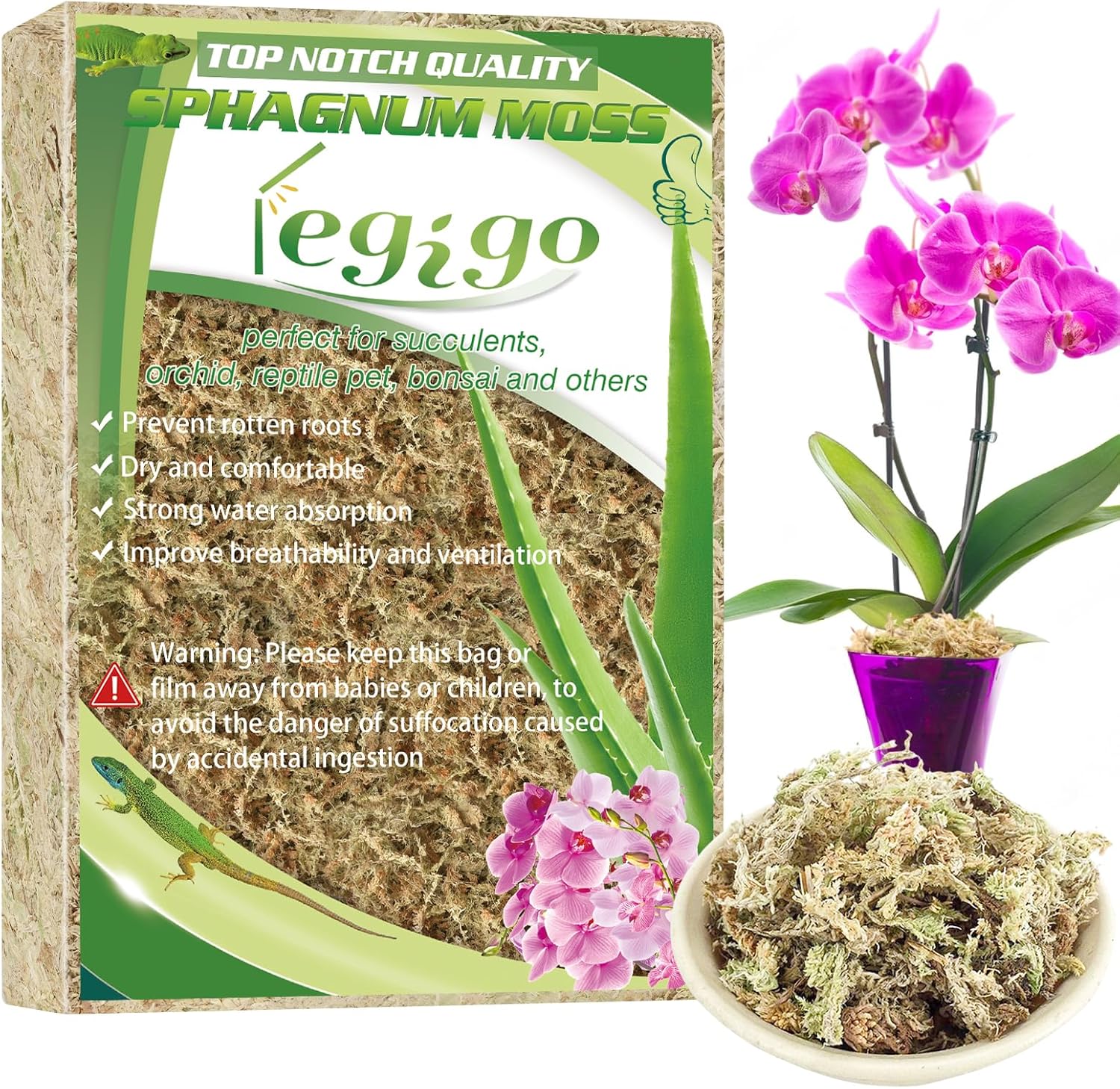
Legigo Natural Sphagnum Moss (4 qt)
| Brand Name | Legigo |
|---|---|
| Unit Count | 3 Ounce |
| Volume | 4 quarts |
| Material | Natural Sphagnum Moss |
| Style Name | Natural, organic |
This Legigo sphagnum moss is a lightweight, natural growing medium designed to hold moisture while keeping roots airy — traits carnivorous plant growers need. The package contains about 4 quarts (roughly 3–4 ounces compressed) of long-fiber dry moss that expands after soaking; hobbyists typically rehydrate and fluff it before using as a top dressing, pot lining, or component of carnivorous plant mixes. Key strengths are its strong water retention with gradual release, clean sifted fibers with few twigs or debris, and versatility for terrariums and reptile substrates. Practical benefits include reduced watering frequency for moisture-loving plants and an attractive natural layer for hanging baskets or display pots. Important limitations are the small net fill for repeat repotting of multiple plants and the need to soak thoroughly once dry because dry moss can be slow to reabsorb water. Buyers should also handle it to avoid dust inhalation and follow simple rinsing steps if replacing old root-bound moss.
Best for: Growers who prioritize healthy root aeration and steady moisture for orchids and carnivorous plants and want a clean, natural medium for single-plant repots or terrariums.
Less Ideal for: Large-scale growers, nurseries, or anyone needing bulk quantities for many repots should choose larger commercial-sized sphagnum or alternative substrates.
- Good water retention while remaining airy for roots
- Clean long fibers with minimal debris suitable for sensitive plants
- Useful for multiple uses: pot lining, terrarium substrate, and reptile bedding
- Pack expands when soaked so a little goes further for single repots
- Small unit count means frequent repurchases for collectors or multiple plants
- Dry moss can be slow to re-wet after it fully dries
Verdict: A clean, small-format sphagnum moss pack that gives carnivorous plant growers the moisture retention and aeration needed for healthy roots in single repots and terrariums.
Plants for Pets Easy-to-Grow 12-Pack Mini Houseplants (2" Grower Pots)

| Indoor Outdoor Usage | Indoor |
|---|---|
| Other Special Features of the Product | Air Purification, Compact, Low Maintenance |
| Sunlight Exposure | Partial Sun |
| Soil Type | Loam Soil |
| Moisture Needs | Regular Watering |
This 12-pack of mini houseplants is designed for container gardeners who want instant variety without sourcing individual plants. Each order includes a rotating mix of popular indoor species such as pothos, peperomia, spider plant varieties, croton, ficus, syngonium and begonia, all shipped in 2" grower pots and ready to be potted into decorative containers or grouped for impact. The small size makes them ideal for windowsills, terrariums, shelf displays and mixed container plantings. Care guidance is straightforward: bright, indirect light with watering when the soil dries and occasional feeding to encourage growth. Practical benefits include low maintenance, compact form for tight spaces, and the fun of receiving a surprise assortment. Limitations are the tiny starting pot size, which means most plants will need repotting within weeks to months, and variety is dependent on seasonal availability so you may not get every species pictured. Overall this is a convenient way to build a container plant collection quickly, especially if you plan to re-pot and arrange the plants into larger containers or themed groupings.
Best for: Buyers who want to quickly assemble container plantings or starter collections for small spaces and enjoy variety without sourcing individual plants.
Less Ideal for: Gardeners seeking mature, display-ready specimens or those who want guaranteed specific varieties rather than a rotating assortment should consider other options.
- Provides a dozen fully rooted, ready-to-pot plants for quick container displays
- Rotating assortment offers a broad mix of popular indoor species for variety
- Compact 2" pots are easy to place on shelves, windowsills, terrariums and grouped planters
- Low-maintenance varieties suited to bright, indirect light and regular watering
- Plants arrive in very small grower pots and will require repotting to thrive long term
- Exact varieties are not guaranteed and may differ from product images
Verdict: An easy, low-cost way to populate containers with a diverse set of small indoor plants ready for re-potting and display.
Mosser Lee Spanish Moss, 250 Cubic Inches

| Item Weight | 4.6 ounces |
|---|---|
| Manufacturer | Mosser Lee Company |
| ASIN | B000QTO78Q |
| Item model number | ML0560 |
Mosser Lee Spanish Moss is a lightweight natural moss sold in a 250 cubic inch bag for use as a decorative soil cover and craft filler. It is typically spread over potting soil, used in terrariums, hanging baskets, or woven into artificial arrangements to conceal soil and give a finished look. The product preserves moisture around the root zone without forming a water-impermeable layer, so plants can still be watered and fertilized normally. As a natural material it is renewable and easy to work with: fluff it up, spread it, or trim to fit. Limitations are that it is purely decorative and will eventually break down outdoors or with heavy watering, so it is best for indoor pots, displays, or short-term outdoor use; it also does not provide the insulating or long-term weed-suppressing benefits of heavier mulches. For cautious buyers this offers a predictable, widely used option that improves presentation with minimal risk to plant health.
Best for: Buyers who want a low-risk, decorative top layer for indoor pots, terrariums, and floral arrangements that improves appearance without altering watering routines.
Less Ideal for: Gardeners looking for a durable outdoor mulch that suppresses weeds or provides long-term soil insulation should choose a heavier organic or inorganic mulch instead.
- Natural, renewable material suitable for indoor plant displays and craft projects
- Lightweight and easy to spread or trim to fit pots and arrangements
- Helps retain surface moisture without blocking watering or fertilization
- Breaks down over time and needs periodic replacement in moist conditions
Verdict: Choose this Spanish moss when you want an easy, natural topper that improves the look of pots and arrangements without changing how you water or care for plants.
Choosing the Right Plants for Tropical Terrarium: Key Factors to Consider
Humidity Tolerance
A terrarium creates a near-constant humid microclimate. Choosing plants with high humidity tolerance reduces leaf spotting, wilting, and root rot. Plants adapted to tropical understories often have leaves structured to shed water or retain the appropriate gas exchange in moist air.
Consider how the plant handles condensation and prolonged wet substrate. Some species will tolerate standing moisture at the soil line, while others need a dry top layer to avoid crown rot. Match plant selection to whether your enclosure is fully sealed, which increases humidity, or ventilated, which lowers it.
Light Requirements
Many terraria receive low to medium indirect light, especially if kept indoors or away from large windows. Pick species that grow well in filtered light rather than full sun. Plants with broader, thinner leaves often indicate adaptation to lower light levels and will photosynthesize effectively in shaded glass tanks.
If you plan to add grow lighting, consider species that tolerate a wider light range so you can adjust intensity without stressing foliage color or growth habit.
Growth Habit and Size Control
Space inside a terrarium is limited, so plants with naturally compact growth habits work best. Slow to moderate growers reduce the need for frequent trimming and repotting. Look for rosette forms, small-leaved creepers, or short-stature upright plants rather than vigorous climbers unless you plan to train them.
Also consider root depth. Shallow-rooted species fit shallow substrate layers and reduce disturbance to decorative hardscape elements. Understand typical mature size so you can plan spacing and avoid overcrowding.
Soil and Moisture Needs
Tropical terrarium soils should drain enough to avoid stagnant water while holding humidity. Choose plants that accept a mix of peat, fine orchid bark, and perlite or that do well in a sphagnum moss-dominant substrate.
Some plants prefer consistently moist conditions, others need a slightly drier surface. Matching plant moisture preference to your chosen substrate and watering routine prevents crown and root problems and minimizes the need for disruptive repotting.
Maintenance and Pruning
Consider how much routine care each species requires. Plants that drop many leaves or produce leggy growth will demand more frequent pruning, cleanup, and possible trimming to maintain sight lines in the enclosure.
Low-maintenance species reduce the chance of soil contamination from decaying leaves and keep humidity levels stable. If you prefer a low-effort terrarium, favor plants that hold tidy forms and resist rapid stretching.
Compatibility With Tankmates
If you plan to mix several species in one terrarium, choose plants with similar light and moisture preferences. Compatibility reduces microclimate conflicts where one plant monopolizes humidity or light and forces others into poor growth.
Also consider leaf chemistry and sap. Some plants release compounds that slow growth or cause leaf drop in neighbors. Avoid mixing very fast nutrient feeders with slow growers to prevent soil nutrient imbalances and repeated substrate refreshes.
Matching Plants to Terrarium Size
Small desktop or jar terraria need plants that stay compact and develop pleasing shapes without frequent pruning. Look for species that reach no more than a few inches in height and spread slowly. In contrast, larger table-top enclosures can host a wider variety of forms including modest climbers and taller understory plants.
When planning layout, place the slowest-growing specimens in the center or focal point and faster but still compact plants around them. That approach keeps the arrangement balanced as each plant matures.
- Choose shallow-rooted species for narrow substrate depth.
- Reserve taller plants for deeper or taller tanks.
- Plan for pruning access when placing specimens near tank glass.
Lighting Options for a Tropical Setup
Natural filtered daylight works for many terrarium plants but is often inconsistent. LED grow lights designed for small enclosures offer a predictable spectrum and prevent stretching. Place lights to simulate canopy-filtered illumination rather than direct sun.
Adjust light duration rather than intensity to match plant needs. Most understory plants thrive with 8 to 12 hours of moderate light; shorter photoperiods reduce algae growth on soil and glass.
- Use diffused light to avoid leaf scorch.
- Rotate plants occasionally so all sides receive equal light.
- Monitor for signs of too little light, such as elongated stems or pale leaves.
Substrate Layers and Drainage Strategies
A well-structured substrate helps balance moisture and aeration. Common terrarium builds layer a drainage base such as small pebbles or expanded clay topped with a separation fabric and a soil mix tailored to tropical species. This prevents waterlogging while keeping humidity high near the plants.
Sphagnum or moisture-retentive layers near the surface help humidity-loving plants, but avoid packing substrate too densely. Good airflow through the soil reduces the chance of fungal issues and keeps roots healthy.
- Include a thin drainage layer to prevent standing water at the root zone.
- Use fine, well-draining mixes for shallow pots or narrow tanks.
- Top with leaf litter or decorative moss that tolerates damp conditions.
Managing Humidity and Ventilation
Closed terraria maintain high humidity but can trap heat and encourage mold. Introduce occasional ventilation by cracking the lid or using a small vent if condensation becomes excessive. Watch for water beads that persist on the glass as a sign the enclosure is near-saturated.
Plants that tolerate daily high humidity will benefit from a stable environment, but all terraria need monitored airflow to prevent stagnant pockets. Use gentle air exchanges rather than prolonged drying, which can stress tropical foliage.
- Open sealed terraria a few hours weekly to refresh air if condensation is heavy.
- Increase ventilation slightly when temperatures rise to reduce pathogen risk.
- Use hygrometers to track humidity and adjust routines accordingly.
Designing a Long-Lasting Composition
Think about how plants will age together. Choose focal plants with complementary textures and colors and place slower growers where they will remain visible as faster plants are pruned back. Using groups of the same species creates visual cohesion and simplifies care.
Include structural elements like rocks or driftwood to anchor plants and provide climbing surfaces for modest vines. These hardscape pieces also make maintenance easier by creating clear planting zones and minimizing future substrate disturbance.
- Group plants by light and moisture tolerance rather than solely by appearance.
- Leave some empty space for future propagation or replacement.
- Use propagation cuttings to refresh the display without disturbing established roots.
How We Chose the Best Plants for Tropical Terrarium
We selected plants that reliably perform in the microclimate of a tropical terrarium. Key evaluation dimensions were humidity tolerance, compact growth habit, light range adaptability, and ease of care in confined soil volumes. We prioritized species that resist rot and mold in damp substrate and that maintain attractive foliage without frequent heavy pruning. Resilience to common terrarium pests and compatibility with mixed-plant groupings were also considered. Excluded from the list were plants that need dry periods, deep rooting space, or full sun exposure. We filtered out aggressive spreaders that quickly overwhelm small glass enclosures and species known to produce high amounts of leaf litter that encourages decay. The final picks balance aesthetic appeal with predictable behavior under the steady heat and moisture typical of tropical terraria.
FAQ
How often should I water plants in a tropical terrarium?
Watering frequency depends on enclosure ventilation and substrate, but many tropical terrarium plants need only occasional misting or a light soak every few weeks. Monitor substrate moisture and reduce watering if condensation stays heavy on the glass.
Can I use live moss as a groundcover with these plants?
Yes, live moss is often an excellent groundcover because it retains humidity and looks natural. Choose moss species that tolerate consistent moisture and low light, and avoid overly thick moss layers that block airflow to the soil.
Will plants for tropical terrariums need fertilizer?
Most terrarium plants require minimal fertilization. A diluted, infrequent feed during the active growing season supports health without encouraging excessive growth that overwhelms the tank. Heavy feeding can promote algae and fast growth that complicates maintenance.
How do I prevent mold or fungal growth in a closed terrarium?
Prevent mold by avoiding overwatering, using a well-draining substrate, and providing occasional ventilation. Remove decaying leaves promptly and ensure good airflow around the plants to reduce stagnant moisture where fungi thrive.
Can I mix plants with different growth rates in the same terrarium?
You can, but balance is important. Pair plants with similar light and moisture needs and place faster growers where they can be pruned without disturbing others. Regular trimming and monitoring will help prevent aggressive species from crowding slower ones.
Final Verdict
Pick plants that match the humidity, light, and space constraints of your terrarium first, then refine choices based on maintenance tolerance and visual goals. Prioritize compact, slow-to-moderate growers with high humidity tolerance if you want a low-maintenance display. Accept tradeoffs: faster growers add quick color but need pruning, while ultra-slow species can stay tidy for longer. Using the evaluation criteria above will help you assemble a resilient, attractive tropical terrarium that requires predictable care.
