

Note: This article contains affiliate links. If you click on these links and make a purchase, I may earn a small commission at no extra cost to you. This helps support my research and content. Read my full affiliate disclosure here.
If you grow St. Augustine grass you know how quickly broadleaf weeds and grassy invasives can spoil a dense green lawn. Choosing the right liquid weed killer matters because some herbicides injure St. Augustine more easily than other turf types. This guide covers seven top liquid weed-killer options chosen for their efficacy on common lawn weeds and their compatibility with St. Augustine under normal use. We shortlisted products that balance selective weed control, minimal turf stress, and practical application features. Below you will find the evaluation criteria we used, short product summaries, and advice for applying treatments safely and at the right time for best results.
Top Picks at a Glance
| Best Overall The best all-around choice for most situations | Liquid Harvest Mesotrione Concentrate (8 oz) – Pre- and Post-Emergent Lawn Herbicide |  |
| Best Quality Built to a higher standard if you want something more solid | Hi-Yield Atrazine Selective Herbicide, 32 oz |  |
| Best Value The sweet spot between price and what you get | Southern Ag Atrazine St. Augustine Weed Killer, 32 oz |  |
| Best Budget The cheapest option that still gets the job done reliably | Ortho WeedClear Ready-to-Spray Lawn Weed Killer, 32 fl. oz. |  |
| Highest Rated A top-rated pick with lots of positive feedback | Southern Ag Atrazine St. Augustine Grass Weed Killer (1 Gallon) with 16 oz Non-Ionic Surfactant |  |
| Most Popular A crowd favorite that many people choose with confidence | Ortho WeedClear Weed Killer for Lawns with Comfort Wand, 1 gal. | 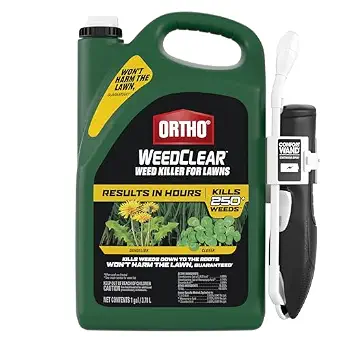 |
| Best Seller A high-volume bestseller chosen again and again | Roundup For Lawns Ready-to-Use (Southern) — 1 gal. |  |
Liquid Harvest Mesotrione Concentrate (8 oz) – Pre- and Post-Emergent Lawn Herbicide

| Active Ingredients | Mesotrione |
|---|---|
| Unit Count | 8 Ounce |
| Item Form | Liquid |
| Coverage | Full |
Liquid Harvest Mesotrione is a concentrated liquid herbicide that prevents photosynthesis in susceptible weeds and is labeled for both pre- and post-emergent use on several turfgrass types. Typical use is mixing the concentrate with water and a surfactant then applying it as a spot treatment or broadcast spray; the label gives mix rates for covering from a few thousand square feet up to an acre. It starts working on contact and may take two to three weeks for full weed death, and it must be activated by rainfall or irrigation if no rain occurs within 10 days. Notable features include its broad-spectrum activity against common ground-level broadleaf weeds and ability to suppress crabgrass germination. Practical benefits are flexible application options for spot or large-area treatment and compatibility with the brand surfactant and spray indicator for easier coverage. Limitations are turfgrass restrictions and sensitivity on certain grasses, plus the need for careful mixing, protective gear, and following the label to avoid damage to non-target turf.
Best for: Homeowners looking to control persistent broadleaf weeds like ground ivy on a budget who are comfortable mixing concentrate, following label directions, and treating targeted lawn areas.
Less Ideal for: People who want an immediate visual kill, who have sensitive turfgrass species listed as exclusions, or who prefer ready-to-use formulations without mixing.
- Concentrated formula allows treating spot areas or up to an acre with proper dilution
- Controls a wide range of broadleaf weeds and helps prevent crabgrass germination
- Works as both pre-emergent and post-emergent for flexible timing
- Can be paired with a surfactant and spray indicator to improve coverage and effectiveness
- Restricted on certain turfgrasses and can damage sensitive species if misapplied
- Requires rainfall or irrigation within 10 days for activation or manual watering
- Takes up to 2–3 weeks for full weed death, not an instant visual fix
Verdict: A cost-effective mesotrione concentrate for homeowners who need flexible pre- and post-emergent control of broadleaf weeds like ground ivy when used carefully according to the label.
Hi-Yield Atrazine Selective Herbicide, 32 oz

| Unit Count | 32 Ounce |
|---|---|
| Item Form | Liquid |
| Coverage | Full |
| Active Ingredients | atrazine |
This 32 oz Hi-Yield atrazine concentrate is a selective herbicide designed for St. Augustine and centipede grass. You dilute the concentrate per the label and apply it with a pump sprayer or watering can to treat up to about 3,720 sq ft, and the product is intended for early spring applications though it can be used in dormant or growing seasons. The formula targets common lawn weeds such as henbit, clover, and chickweed and is presented as a full-coverage liquid for even application. Practical benefits include a long coverage area from one bottle and clear directions for timing and application, which suit routine seasonal weed control. Important limitations are that it is grass-type specific and contains atrazine, so users must follow safety and storage instructions and check label restrictions for nearby plants and environmental considerations. Expect effective selective control when applied correctly, but confirm compatibility with your turf variety and local regulations before use.
Best for: Homeowners with St. Augustine or centipede lawns who prioritize efficient, season-based weed control and want a concentrate that covers a large area without specialty equipment.
Less Ideal for: Gardeners with different turf varieties, mixed ornamental beds, or those seeking an all-purpose or non-chemical weed solution should consider alternatives.
- Selective herbicide formulated specifically for St. Augustine and centipede grass
- Liquid concentrate treats up to roughly 3,720 square feet from one 32 oz bottle
- Clear label directions for dilution and timing make seasonal applications straightforward
- Effective on common broadleaf and grassy weeds like henbit, clover, and chickweed
- Contains atrazine which has application restrictions and environmental considerations
- Not suitable for turf types outside St. Augustine and centipede grass
Verdict: Choose this concentrate if you need a single, high-coverage selective herbicide specifically for managing weeds in St. Augustine or centipede lawns.
Southern Ag Atrazine St. Augustine Weed Killer, 32 oz
| Unit Count | 32 Fluid Ounces |
|---|---|
| Item Form | Spray |
| Coverage | 3,720 square_feet |
| Item Type Name | Specialty Herbicide |
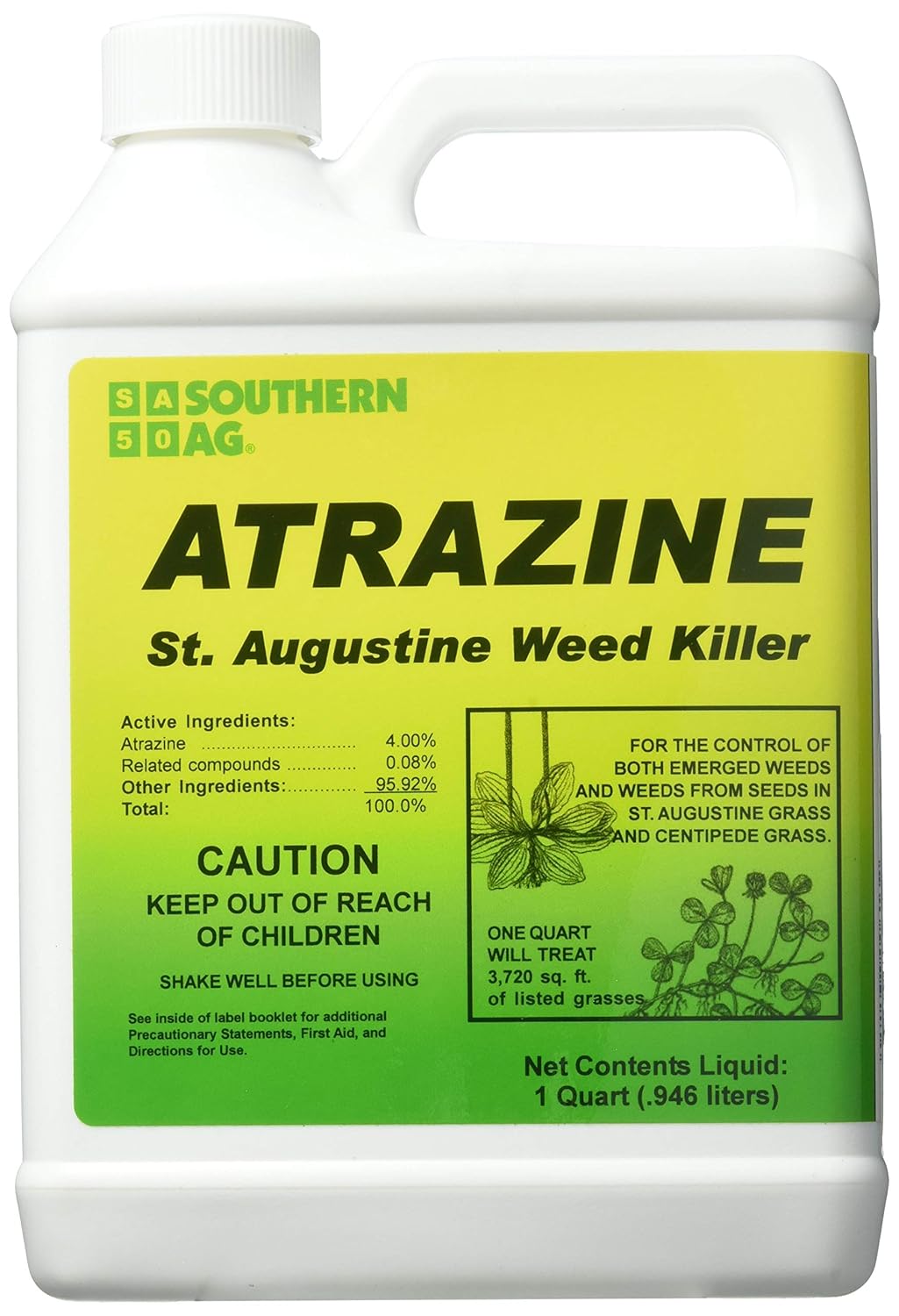
Southern Ag Atrazine is a concentrated liquid herbicide made specifically for St. Augustine and centipede grasses. It is mixed into spray and applied across the lawn to suppress crabgrass and remove many common broadleaf and grassy weeds; one quart claims coverage of roughly 3,720 square feet when diluted at the recommended rate. The product is intended for targeted seasonal use, with best results from early spring applications and careful, overlap-free spraying. Practical benefits include a focused label for the two grass types and a coverage rate that stretches a single bottle across a medium-sized yard, which helps keep costs down. Important limitations are that it is a chemical herbicide requiring careful handling and strict label following, it is not recommended for hose-end sprayers, and it is not a fertilizer so it will not improve turf nutrition or overall lawn health by itself. Use protective gear and avoid off-target drift to protect desirable plants.
Best for: Buyers who need an affordable, targeted weed control for St. Augustine or centipede lawns and want a product that covers a medium-sized yard without repeated purchases.
Less Ideal for: Homeowners seeking an all-in-one lawn treatment for nutrition or for use on other grass types should choose a different product or combine this with appropriate fertilization.
- Formulated specifically for St. Augustine and centipede lawns for targeted control
- Concentrated formula with coverage up to about 3,720 sq ft per quart
- Controls a range of broadleaf and some grassy weeds including suppression of crabgrass
- Practical application instructions for spot or broadcast spray use in early spring
- Chemical herbicide that requires protective handling and careful application
- Not a fertilizer so it does not provide nutrients or improve turf vigor
Verdict: A cost-effective, concentrated herbicide for homeowners who need focused weed control on St. Augustine or centipede lawns.
Ortho WeedClear Ready-to-Spray Lawn Weed Killer, 32 fl. oz.

| Formulation | Ready-to-spray hose-end |
|---|---|
| Volume | 32 fl. oz. |
| Coverage | Up to 10,600 sq. ft. (varies by grass type) |
| Weed spectrum | Broadleaf weeds (250+ listed) |
Ortho WeedClear Ready-to-Spray is a hose‑end broadleaf weed killer designed for quick application on lawns and is marketed to kill dandelions, clover, chickweed and many other common weeds without harming listed turfgrasses when used per label. You attach the 32 fl. oz. bottle to a garden hose, spray the target area and see results within hours on many species; a single bottle claims coverage up to about 10,600 sq ft depending on grass type. The main benefits are fast knockdown of a long list of broadleaf weeds and very simple, tool-free application that eliminates mixing and measuring. It is labeled for St. Augustine (except Floratam) and several other Southern grasses, which makes it appropriate for spot treatments or whole-lawn applications on those lawns. Important limitations are that it only targets broadleaf weeds rather than grassy weeds and results depend on following the label for grass type and application rate; the hose sprayer format can be less precise than spot applicators for tight areas. For budget-minded homeowners with St. Augustine and similar lawns, it is a convenient, low-effort option for routine broadleaf control.
Best for: Homeowners with St. Augustine and other Southern lawns who want an inexpensive, no-mix solution for routine broadleaf weed control and prefer quick, easy application.
Less Ideal for: People needing grassy weed control or those who require very precise spot applications near ornamentals should consider alternative products or applicators.
- Ready-to-spray hose attachment eliminates mixing and simplifies application
- Fast-acting formula that produces visible weed control within hours
- Treated coverage claimed up to 10,600 sq ft from one 32 fl. oz. bottle
- Labeled safe for St. Augustine (except Floratam) and other common Southern turfgrasses when used as directed
- Targets broadleaf weeds only and will not control grassy weeds
- Hose-end sprayer can be less precise for spot treatments near desirable plants
Verdict: A budget-friendly, no-mix hose‑end weed killer that delivers fast broadleaf control on St. Augustine and other Southern lawns.
Southern Ag Atrazine St. Augustine Grass Weed Killer (1 Gallon) with 16 oz Non-Ionic Surfactant

| Active Ingredients | Atrazine (4%) |
|---|---|
| Liquid Volume | 1 gallons |
| Coverage | 1,000 square feet per application |
| Included Accessory | Non-ionic surfactant 16 oz |
This kit pairs a 1 gallon atrazine herbicide formulated for St. Augustine and centipede grass with a 16 oz non-ionic surfactant to improve coverage and penetration. The atrazine concentrate is mixed into water (the recommended rate covers 1,000 sq ft when diluted to 2 gallons of spray), and is most often applied with a handheld or pump sprayer for spot or broadcast treatments in early spring. Key benefits are effective control of many broadleaf weeds, suppression of crabgrass, and activity on emerged weeds and those from seed. The included surfactant is useful when a label recommends one, reducing surface tension so the spray wets leaves more uniformly and boosts performance. Important practical limits are that atrazine is labeled specifically for St. Augustine and centipede lawns, so it is not a universal turf herbicide, and the product is not recommended for hose-end sprayers, meaning you need an appropriate sprayer and care to avoid overlap and off-target drift. Follow label directions and timing for best, reliable results.
Best for: Homeowners with St. Augustine or centipede lawns who prioritize dependable weed control and are comfortable mixing and applying a concentrated liquid herbicide with a proper sprayer.
Less Ideal for: Gardeners with mixed or unknown turf types, those seeking an all-purpose lawn weed killer, or users who prefer ready-to-use hose-end products.
- Formulated specifically for St. Augustine and centipede grasses, improving safety on those turf types
- Contains 4% atrazine which controls many broadleaf weeds and suppresses crabgrass
- Included non-ionic surfactant increases spray coverage and penetration when mixed as directed
- Concentrated gallon size covers about 1,000 sq ft per recommended dilution for practical yard treatments
- Not labeled for use on all turf types so it must be avoided on incompatible lawns
- Not intended for use with hose-end sprayers, requiring a separate sprayer and careful application to prevent overlap
Verdict: Buy this if you need a reliable, turf-safe atrazine concentrate plus surfactant for effective weed control on St. Augustine or centipede lawns.
Ortho WeedClear Weed Killer for Lawns with Comfort Wand, 1 gal.

| Unit Count | 128 Fluid Ounces |
|---|---|
| Item Form | Spray |
| Coverage | 16000 square feet |
| Kills listed weeds | 250+ weeds |
Ortho WeedClear is a 1 gallon ready-to-use weed spray formulated for lawn spot and small broadcast treatments. It combines three active ingredients to target broadleaf weeds and is labeled to control more than 250 species, including clover and dandelions. The included Comfort Wand gives a continuous, precise spray for spot application and makes it easy to treat patches without over-spraying surrounding grass. The formula shows visible decline in weeds within hours and becomes rainproof in about an hour once dry, so short windows between application and light rain are manageable. Practical benefits include simple application with no mixing for spot work, broad weed coverage, and guidance for mixing if you choose a wider broadcast treatment. Limitations to consider are that it is intended for actively growing weeds in spring or fall and is not a year-long preventative; repeated applications may be needed for persistent infestations. Also it contains synthetic herbicides, so follow label directions for safety around children, pets, and desirable plants.
Best for: Homeowners who want an easy, effective spot or small-area solution for common lawn broadleaf weeds and prefer a simple applicator for precise treatment.
Less Ideal for: People seeking a seasonal one-time preventer for long-term control or those who want an organic or non-chemical alternative for clover management.
- Targets over 250 common broadleaf lawn weeds including clover and dandelion
- Comfort Wand provides precise continuous spray for targeted spot treatment
- Ready-to-use formula needs no measuring for spot application
- Rainproof within one hour after drying for quicker windows between treatment and weather
- Not formulated for year-long weed prevention so recurring treatments may be required
- Contains synthetic active ingredients that require careful handling and adherence to label safety instructions
Verdict: A user-friendly ready-to-use weed spray with a comfort wand that makes quick, precise control of clover and other broadleaf lawn weeds straightforward and effective.
Roundup For Lawns Ready-to-Use (Southern) — 1 gal.

| Item Form | Liquid |
|---|---|
| Coverage | up to approximately 2,000 weeds |
| Liquid Volume | 1 gallons |
| Item Type Name | Weed Killer |
This ready-to-use Roundup For Lawns product is formulated for Southern grasses and is intended to kill common broadleaf weeds without harming the lawn when used as directed. It comes with an extended-reach wand to spray individual plants in lawns and around edges, and the label lists control of 93 weed types including dandelion, clover, dollarweed, and yellow nutsedge. The formula begins to act right away, is rainproof in about four hours, and the manufacturer says it kills weeds down to the root so regrowth is less likely. Typical use is spot-treating young, actively growing weeds on St. Augustine, Bermudagrass, Centipedegrass, and Bahiagrass while avoiding ornamentals, vegetable areas, and water. Practical benefits include the convenience of a gallon-ready product, targeted application with the wand, and a broad weed list. Important limitations are the strict use restrictions around desirable plants and water, and the need to follow timing and application directions to avoid turf injury during dormancy periods.
Best for: Homeowners with St. Augustine or other Southern warm-season lawns who prefer a convenient, ready-to-use solution and want to spot-treat broadleaf weeds with minimal mixing or equipment.
Less Ideal for: Gardeners who need a product safe for vegetable beds, flower beds, or mixed landscapes containing ornamentals, or those who require broadcast, preventive, or aquatic-safe weed control.
- Ready-to-use gallon eliminates mixing and is convenient for spot treatments
- Extended-reach wand makes it easier to target weeds in borders and hard-to-reach spots
- Label lists control of 93 common lawn weeds including dandelion, clover, and yellow nutsedge
- Starts working immediately and becomes rainproof in about four hours
- Not safe for use around vegetables, flowers, shrubs, or other ornamentals
- Requires careful application timing on warm-season turf to avoid injury during dormancy transitions
Verdict: A convenient, ready-to-use spot treatment designed to remove broadleaf weeds from St. Augustine and other Southern warm-season lawns with targeted wand application.
Choosing the Right Liquid Weed Killer for St. Augustine Grass: Key Factors to Consider
Turf Safety and Label Restrictions
St. Augustine is more sensitive to certain herbicide chemistries than other warm-season grasses. Always confirm the product label explicitly lists St. Augustine grass before applying. The label contains critical details such as allowed application timing, maximum annual application rates, and any temperature or moisture restrictions that affect turf response.
Misapplication or using a product not labeled for St. Augustine can cause yellowing, thinning, or permanent patchy damage. Turf safety also depends on concentration and whether product must be diluted. Following label rates reduces risk and helps you schedule treatments during lower-stress windows for the lawn, such as active growth but not during drought or extreme heat.
Weed Spectrum and Target Species
Liquid products vary in which weeds they control. Some are broadleaf-selective and effective on dandelions, clover, plantain, and chickweed. Others include active ingredients that also reduce certain grassy weeds. Match the product's labeled targets to the species present in your lawn to avoid repeated applications with disappointing results.
Identifying the weeds first saves time and prevents misuse of a product that weakly affects your main problem species. For persistent or mixed infestations, you may need a combination strategy or repeat applications timed to weed growth stages for best control.
Application Method and Coverage
How you apply a liquid product affects its effectiveness and the risk to desirable turf and nearby plants. Some formulations are designed for sprayers, others for hose-end applicators. Handheld pump sprayers allow precise spot-treatment, while hose-end devices speed up broadcast applications but can be less precise.
Consider nozzle type, droplet size, and walking speed when treating a lawn. Even coverage ensures consistent weed control and reduces streaking. For spot treatments, a sprayer with an adjustable nozzle helps you avoid off-target drift onto ornamental plantings or garden beds.
Timing, Turf Stress, and Weather
Herbicide effectiveness and turf tolerance depend on timing. Apply when weeds are actively growing and the lawn is not under drought, frozen, or heat stress. Many products work best in spring and fall for cool-season weeds and during active warm-season growth for others.
Check weather forecasts before applying. Rain within a few hours can wash away treatments for non-systemic contact products, while some systemic actives require a dry period to translocate. High temperatures can increase turf uptake and sensitivity, so avoid treatments during heat waves.
Residual Activity and Seeding Considerations
Some liquid herbicides leave residual activity in the soil that prevents or interferes with overseeding or transplanting for a period. If you plan to overseed a patch of St. Augustine or establish nearby ornamentals from seed, choose a product with minimal residual or allow the recommended interval before planting.
Residual characteristics also affect repeat-treatment scheduling. Products with longer residual control can reduce frequency but require more careful planning around other landscape tasks and nearby desirable plants.
Safety, PPE, and Environmental Precautions
Liquid herbicides require attention to personal protective equipment such as gloves and long sleeves, especially when handling concentrates. Read the label for required PPE and mixing instructions. Proper mixing and rinsing procedures protect you and prevent unintended exposure.
Consider runoff and proximity to water features. Use buffer zones where the label requires them and avoid applying before heavy rain. Store concentrates securely away from children and pets and follow disposal instructions for leftover product and rinse water.
Identifying Common St. Augustine Lawn Weeds
Before treating, take a short walk across the lawn to identify dominant weeds. Broadleaf species like clover, dandelions, and plantain show different growth habits and leaf shapes than grassy weeds such as crabgrass or bermudagrass encroachment. Knowing whether you face a broadleaf or grassy problem determines which liquid herbicide type will be effective.
Photograph a few representative weeds or pull one to check root type and leaf arrangement. Consult extension resources for difficult-to-identify plants. Correct ID reduces wasted treatments and speeds up recovery of the turf.
- Look for leaf shape, flower presence, and growth habit
- Note where weeds concentrate: sunny patches, shaded edges, or compacted areas
- Collect images or samples if uncertain before applying herbicide
When to Spot-Treat Versus Broadcast Spray
Spot treatments are best for isolated weeds or early infestations and limit chemical exposure to desirable grass and nearby plants. Use a low-volume sprayer and shield surrounding turf when treating single weeds. Broadcast sprays make sense for widespread problems but require even coverage and careful calibration.
If you have scattered weeds across large areas, consider two rounds of spot treatment spaced a few weeks apart rather than a single broadcast application. This approach reduces chemical use and often yields similar results for lawns with lower infestation levels.
- Spot treat small, isolated patches to reduce turf stress
- Broadcast for heavy, uniform infestations after confirming turf-safe labels
- Reassess three weeks after treatment to determine if follow-up is necessary
Safe Mixing and Sprayer Calibration
Accurate dilution is essential. Follow label math for concentration per gallon of water and convert area coverage into the sprayer volume you will use. Markings on pump sprayers are not always precise, so measure with a graduated container when possible.
Calibrate your sprayer on a small test area to establish walking pace and nozzle output. This reduces under- or over-application and helps protect turf health.
- Measure product and water with graduated tools
- Test spray pattern on cardboard or a small lawn strip
- Rinse sprayer thoroughly after use to prevent cross-contamination
Managing Lawn Recovery After Treatment
Expect some yellowing or temporary discoloration on broadleaf weeds as they die, and in some cases mild turf stress if conditions are not ideal. Allow the turf to recover with regular watering schedules once the label allows, and avoid additional cultural stress like heavy mowing or traffic immediately after treatment.
For larger patches that die back, thin areas can be overseeded or patched according to St. Augustine best practices. Plan repairs after any residual interval specified on the product label to avoid planting into affected soil.
- Hold off on heavy irrigation or mowing for the first 24 to 48 hours unless the label requires watering-in
- Monitor treated areas for new flushes of weeds and decide on spot re-treatment if necessary
- Repair damaged patches after the recommended planting interval
Alternative Cultural Controls to Reduce Herbicide Use
Healthy, dense St. Augustine stands suppress many common weeds. Adjust mowing height to the recommended level for St. Augustine to shade out young weed seedlings, and maintain appropriate irrigation and fertilization to encourage turf competitiveness.
Mechanical controls such as hand-pulling or using a weeding tool can be effective for small infestations and reduce reliance on chemicals, especially near sensitive beds or water features.
- Raise mowing height during warmer months to promote turf density
- Address soil compaction in high-traffic areas to reduce bare spots
- Use targeted hand-weeding for isolated plants in small lawns
How We Chose the Best Liquid Weed Killer for St. Augustine Grass
We focused on formulations and real-world use factors that matter for St. Augustine lawns. Selection began with herbicide mode of action and selectivity toward broadleaf weeds versus turf grasses. We prioritized products labeled safe for St. Augustine when used as directed and those that target the common weeds that afflict warm-season lawns. Practical application features were important. We reviewed concentration and dilution flexibility, whether the product can be applied with a handheld sprayer or hose-end applicator, and how easily homeowners can control coverage. Speed of visible control and the typical number of treatments required were considered to set realistic expectations. Environmental and turf-safety considerations influenced choices, including drying time, rainfall reactivation, and whether the product has residual soil activity that could affect overseeding or nearby ornamental beds. We excluded any formulations clearly labeled unsafe for St. Augustine or intended only for non-turf uses. The final shortlist reflects safety to the turf, weed control spectrum, application practicality, and predictable recovery time.
FAQ
Is it safe to use liquid weed killers on St. Augustine while the lawn is stressed from heat?
Applying herbicides during heat stress increases the risk of turf injury because the grass absorbs more chemical and has less capacity to recover. It usually depends on the product, but waiting for cooler, active growth conditions reduces risk and improves weed-control outcomes.
How long before I can overseed or replant after using a liquid weed killer?
The interval varies by active ingredient and formulation. Some products have minimal residual and permit planting within weeks, while others require longer waits. Check the product label for specific replanting or overseeding intervals and follow that guidance.
Can I mix a liquid weed killer with fertilizer to save time?
Many labels advise against mixing herbicides with fertilizer unless explicitly tested and allowed. Tank-mixing can affect efficacy and increase turf injury risk. Always follow label instructions and conduct a small-area test if mixing is permitted.
Will one application eliminate perennial weeds in St. Augustine lawns?
Perennial weeds often require multiple applications timed to the plant's active growth stages. One treatment may weaken top growth but not eliminate deep-rooted perennials. A follow-up treatment or integrated cultural controls are often necessary.
How soon after rain can I apply a liquid treatment?
Application timing depends on rainfastness stated on the label. Some products need a dry window of a few hours to a day to adhere and begin acting, while others require longer. Avoid applying when heavy rain is forecast shortly after treatment.
Are there special precautions when applying near flower beds or vegetable gardens?
Yes. Use shields or spot treatments to avoid drift and prevent contact with desirable plants. Respect buffer zones and avoid applying on windy days. Rinse equipment away from edible gardens and follow label restrictions regarding proximity to ornamentals and vegetables.
Final Verdict
Choose a liquid weed killer for St. Augustine by balancing turf safety with the specific weeds you need to control. Prioritize products labeled for St. Augustine, match active ingredients to your target species, and plan applications during active, non-stressful growth periods for the lawn. Weigh tradeoffs such as residual activity versus the need for overseeding and pick an application method that gives you the control you need with minimal off-target risk. With correct timing, calibration, and follow-up cultural care, you can reduce weed pressure while keeping your St. Augustine turf vigorous.
