

Note: This article contains affiliate links. If you click on these links and make a purchase, I may earn a small commission at no extra cost to you. This helps support my research and content. Read my full affiliate disclosure here.
If you have St. Augustine grass, a post-emergent weed killer chosen for that turf type lets you remove broadleaf and grassy invaders without setting back the lawn. The right spray or granular treatment will kill actively growing weeds while minimizing injury to St. Augustine blades and stolons. This guide looks at five top options suitable for common home lawn scenarios, from patchy older turf to recently established yards. We shortlisted products based on how they perform in real backyard conditions, with attention to turf safety, speed of control, and ease of application. Below you will find practical notes about use, the evaluation criteria we applied, and answers to common gardener questions to help you pick the right fit for your yard.
Top Picks at a Glance
| Best Overall The best all-around choice for most situations | Southern Ag Atrazine St. Augustine Weed Killer, 32 oz |  |
| Best Quality Built to a higher standard if you want something more solid | Celsius WG Granular Herbicide 2-Pack |  |
| Best Value The sweet spot between price and what you get | Southern Ag Atrazine St. Augustine Grass Weed Killer, 1 Gallon |  |
| Best Budget The cheapest option that still gets the job done reliably | Image Weed Killer for Southern Lawns Ready-to-Spray, 32 fl oz |  |
| Highest Rated A top-rated pick with lots of positive feedback | Celsius WG Post-Emergent Herbicide (Backed by Bayer) | 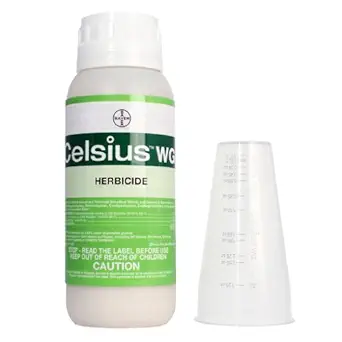 |
Southern Ag Atrazine St. Augustine Weed Killer, 32 oz

| Unit Count | 32 Fluid Ounces |
|---|---|
| Item Form | Spray |
| Coverage | 3,720 square_feet |
| Item Type Name | Specialty Herbicide |
Southern Ag Atrazine is a concentrated liquid herbicide made specifically for St. Augustine and centipede grasses. It is mixed into spray and applied across the lawn to suppress crabgrass and remove many common broadleaf and grassy weeds; one quart claims coverage of roughly 3,720 square feet when diluted at the recommended rate. The product is intended for targeted seasonal use, with best results from early spring applications and careful, overlap-free spraying. Practical benefits include a focused label for the two grass types and a coverage rate that stretches a single bottle across a medium-sized yard, which helps keep costs down. Important limitations are that it is a chemical herbicide requiring careful handling and strict label following, it is not recommended for hose-end sprayers, and it is not a fertilizer so it will not improve turf nutrition or overall lawn health by itself. Use protective gear and avoid off-target drift to protect desirable plants.
Best for: Buyers who need an affordable, targeted weed control for St. Augustine or centipede lawns and want a product that covers a medium-sized yard without repeated purchases.
Less Ideal for: Homeowners seeking an all-in-one lawn treatment for nutrition or for use on other grass types should choose a different product or combine this with appropriate fertilization.
- Formulated specifically for St. Augustine and centipede lawns for targeted control
- Concentrated formula with coverage up to about 3,720 sq ft per quart
- Controls a range of broadleaf and some grassy weeds including suppression of crabgrass
- Practical application instructions for spot or broadcast spray use in early spring
- Chemical herbicide that requires protective handling and careful application
- Not a fertilizer so it does not provide nutrients or improve turf vigor
Verdict: A cost-effective, concentrated herbicide for homeowners who need focused weed control on St. Augustine or centipede lawns.
Celsius WG Granular Herbicide 2-Pack

| Item Form | Granule |
|---|---|
| Item Highlight | Full Season Southern Lawn Weed Control | Safe on St. Augustine, Bermuda & Zoysia | Covers 4,000 sq ft | Kills 120+ Weeds |
| Manufacturer | Envu |
| Brand | Bug And Blade |
Celsius WG is a granular, two-treatment weed control system designed specifically for warm-season lawns like zoysia. The kit supplies two packets intended for a spring and a late-summer or fall application to cover up to 4,000 sq ft, and the triple-mode active ingredient mix is intended to attack weeds with three independent mechanisms to reduce resistance. In use you broadcast the granules when weeds are actively growing and above about 60°F; weeds stop growing within hours, yellowing appears in 1–2 weeks, and full control typically follows in 1–4 weeks. The product includes laminated weed ID cards to help you target common problem species and notes the lawn is safe for family and pets once the granules have dried. Limitations are that it is formulated only for warm-season turf and must be applied according to the label timing and rates for safe turf tolerance and effective results, and persistent perennials may need a follow-up application.
Best for: Homeowners or lawn-care-minded users with zoysia or other warm-season turf who prioritize effective, season-long weed control and want a planned two-application program.
Less Ideal for: Those managing cool-season lawns or users who need an all-purpose herbicide for mixed grass types should consider alternatives labeled for their turf.
- Two-packet system covers a full season with spring and season-ending treatments
- Formulated for safe use on zoysia and other warm-season turfgrasses
- Triple-mode-of-action formula helps control weeds with resistance to single-mode herbicides
- Includes laminated weed ID cards to simplify identification and timing
- Not labelled for cool-season grasses so it cannot be used on lawns like fescue or bluegrass
- May require a second follow-up application for stubborn perennial weeds
Verdict: If you need a targeted, season-long program for zoysia and other warm-season lawns, this two-pack granular system delivers reliable, resistance-minded weed control.
Southern Ag Atrazine St. Augustine Grass Weed Killer, 1 Gallon

| Unit Count | 128 Fluid Ounces |
|---|---|
| Item Form | Spray |
| Coverage | 500 square_feet |
| Active Ingredients | atrazine |
Southern Ag Atrazine is a ready-to-mix liquid herbicide designed to target many broadleaf weeds and provide suppression of crabgrass in lawns, and it is commonly used on St. Augustine and centipede grass. You apply it as a spray over the lawn following label directions; it controls emerged weeds and offers some pre- and post-emergent activity against certain species. The key feature is atrazine as the active ingredient, which is effective against a broad spectrum of common turf weeds and can reduce follow-up spot treatments. The product lists coverage of about 500 square feet per gallon, so a single jug is suitable for small to medium patches rather than very large lawns. Important limitations are that atrazine is restricted or regulated in some areas and can harm sensitive turf varieties and nearby desirable plants if misapplied, so careful adherence to safety and application instructions is necessary. For a cautious homeowner, this product works well when used precisely where centipede grass is listed as a labeled tolerant species.
Best for: Homeowners with centipede or St. Augustine lawns who want a targeted chemical option to control broadleaf weeds and suppress crabgrass and who will follow label directions carefully.
Less Ideal for: Gardeners who prefer non-chemical control methods, those with mixed or sensitive plantings near the lawn, or anyone in regions where atrazine use is restricted or banned.
- Contains atrazine, a proven active ingredient for controlling many broadleaf weeds in tolerant warm-season grasses
- Ready-to-mix liquid formulation suitable for spray application over established turf
- Labels centipede grass as a use case so it can be used where centipede is present
- Covers about 500 square feet per gallon, adequate for targeted spot or small-area treatments
- Atrazine is regulated in some regions and requires careful handling and strict adherence to label restrictions
- Not intended for all turf types and can damage sensitive plants if applied off-target
- Coverage per gallon is modest for large lawns, requiring multiple gallons for big areas
Verdict: A practical, label-approved atrazine spray for homeowners needing a targeted herbicide for centipede and St. Augustine lawns.
Image Weed Killer for Southern Lawns Ready-to-Spray, 32 fl oz

| Item Form | Liquid |
|---|---|
| Coverage | 5,000 sq. ft |
| Unit Count | 32 Fluid Ounces |
| Active Ingredients | Penoxsulam & Sulfentrazone |
This ready-to-spray Image weed killer connects to a garden hose for quick coverage of a typical yard and is formulated specifically for southern lawns, including Zoysia. It targets broadleaf weeds such as dandelion, chickweed, and clover and starts showing results within hours while being labeled as safe for southern turf when used as directed. The 32-ounce bottle covers up to 5,000 square feet, making it convenient for homeowners who want a single-step spray solution instead of mixing concentrates. Practical benefits include easy hose-end application, a fast-acting formula, and active ingredients designed to control tough weeds down to the root. Limitations are that it is a broadleaf herbicide, so it will not control grassy weeds and requires following temperature and safety instructions exactly to avoid turf damage or contact with people and pets. For spot treatments or small lawns the hose connection may waste product compared with a targeted sprayer, and repeat applications may be necessary for persistent infestations.
Best for: Homeowners with southern lawns who want a low-effort, budget-friendly way to knock back broadleaf weeds across medium to large yards and prefer a hose-end product over mixing concentrates.
Less Ideal for: Gardeners needing selective control of grassy weeds, those with very small lawns who want to minimize product use, or users who prefer spot treatment with a hand sprayer.
- Ready-to-spray hose-end design for fast, no-mixing application
- Formulated for southern turf including Zoysia, Bermudagrass, St. Augustine, and Centipedegrass
- Covers up to 5,000 sq. ft. from a single bottle
- Fast-acting formula that visibly reduces broadleaf weeds within hours
- Does not control grassy weeds or grassy weed species
- Requires careful application and adherence to temperature and safety directions to avoid damage or exposure
Verdict: A convenient, ready-to-spray herbicide designed to quickly reduce broadleaf weeds in Zoysia and other southern lawns with minimal fuss.
Celsius WG Post-Emergent Herbicide (Backed by Bayer)

| Item Form | Spray |
|---|---|
| Coverage | Non-selective broad spectrum coverage |
| Active Ingredients | Herbicide |
| Unit Count | 1 Count |
Celsius WG is a water-dispersible granule post-emergent herbicide intended for spot or broadcast application to control more than 150 broadleaf and grassy weeds in turf. It is typically mixed according to label rates and applied with a sprayer, and the product description notes it has no high-temperature limitations and is safe on St. Augustine and centipede lawns when used as directed. The formulation benefits users who need reliable weed control across many species and a wider application window during warm weather. The listing also recommends using a specific surfactant to increase effectiveness, but warns against surfactants when air temperatures exceed 90 degrees F. Important limitations include the need to follow safety precautions for outdoor application and the dependency on proper mixing and surfactant use for best results. Buyers should consult the label for rates and timing to avoid turf injury and ensure legal, effective use.
Best for: Homeowners with St. Augustine or centipede lawns who prioritize dependable, wide-spectrum post-emergent weed control and need a product that can be applied safely in warm conditions.
Less Ideal for: Gardeners seeking an organic or non-chemical weed solution or those who cannot follow precise mixing and safety instructions for chemical herbicides.
- Controls more than 150 broadleaf and grassy weeds for wide-spectrum coverage
- Labeled safe for St. Augustine and centipede grass when applied per directions
- No high-temperature limitation for application, allowing use in warmer conditions
- Water-dispersible granule formulation mixes for spray application
- Requires following label directions and specific surfactant guidance to avoid reduced efficacy or turf damage
Verdict: Choose Celsius WG when you need a reliable, post-emergent herbicide that controls a wide range of weeds and is labeled safe for St. Augustine turf in warm conditions.
Choosing the Right Post Emergent Weed Killer for St. Augustine Grass: Key Factors to Consider
Turf Safety
St. Augustine grass is sensitive to certain herbicides and can show thinning, discoloration, or stolon damage when exposed to inappropriate chemistries. Verify that the active ingredient is labeled for St. Augustine and follow recommended rates and temperature restrictions.
Application timing matters because heat stress or drought can amplify herbicide injury. Apply when turf is actively growing and not under heat or moisture stress, and avoid treating newly sodded or sprigged areas until the stand is well established according to label guidance.
Target Weed Spectrum
Know which weeds you need to control. Broadleaf weeds like dollarweed, clover, or plantain may require different active ingredients than grassy weeds such as crabgrass or goosegrass. A post-emergent product may be broad-spectrum or formulated for specific weed groups.
Selecting a product matched to the weeds present reduces the need for multiple spot-treatments and lowers the chance of over-applying herbicide to the lawn. Inspect the lawn to identify dominant species before choosing a treatment.
Application Window and Speed
Post-emergent products work best on actively growing weeds. Some formulations show visible browning in days, while others take longer to stunt and die. Faster-acting options can provide quick curb appeal, but slower systemic actives may reach roots and reduce regrowth.
Consider when you need results. If you want rapid spot cleanup before an event, choose faster contact activity. For long-term suppression and fewer repeat applications, a systemic product that takes longer to show visible damage may be preferable.
Residual Control and Re-treatment Interval
Residual activity limits how quickly new weeds can establish after treatment. Some post-emergent herbicides provide weeks of suppression, while others have little to no residual effect and only control existing weeds.
If your lawn regularly faces new weed flushes, a product with some residual suppression can reduce follow-up treatments. Check recommended re-treatment intervals and whether the product should be used alongside a pre-emergent program for season-long control.
Application Method and Coverage
Products come as ready-to-use sprays, concentrates to mix in a hose sprayer, or granular formulations. Sprays allow targeted spot applications and even coverage on taller weeds, while granules can be easier for large areas but may be less precise.
Think about the tools you have and the area you need to treat. Concentrates often give the best cost-per-area for whole-yard applications, but require careful measurement and mixing. Also consider whether the product requires protective equipment or special nozzles for safe, even application.
Environmental Conditions and Safety
Wind, temperature, and soil moisture influence both safety and effectiveness. Wind can cause drift onto desirable plants, and high temperatures can increase turf sensitivity. Many labels advise avoiding application when temperatures exceed a specified limit or when wind could move spray onto ornamentals.
Follow label precautions for runoff and avoid application before heavy rain. Consider surrounding landscape plants and water sources when planning treatments, and use targeted spot applications in sensitive areas.
When to Treat St. Augustine Lawns
Treat weeds after they have emerged and are actively growing, not while they are dormant or under stress. For most warm-season climates, that means treating in spring through early fall when both turf and weeds are vigorous.
Avoid applying herbicide during extreme heat or drought. A healthy, well-watered lawn at time of treatment tolerates chemicals better and helps herbicides transport through plant tissue more predictably.
- Spot-treat small patches to minimize turf exposure
- Wait for calm, mild-weather days to reduce drift
- Do not mow 24 to 48 hours before treatment unless label allows
Spot Treatment Vs Whole-Lawn Applications
Spot treatments let you target individual weeds and reduce total chemical use, which is often preferable in smaller yards or when infestations are sparse. Use a pump sprayer or ready-to-use trigger sprayer for precision.
Whole-lawn applications are efficient for widespread infestations but require careful calibration of equipment and adherence to label rates to avoid turf injury. For large areas, concentrates mixed to the correct rate deliver uniform coverage more reliably than random spraying.
- Spot treatment reduces risk to nearby ornamentals
- Whole-lawn applications require consistent walking speed and nozzle selection
- Consider background weed pressure when choosing coverage method
Timing with Lawn Care Practices
Coordinate herbicide applications with mowing, fertilizing, and irrigation. Mow a few days before treating to expose weed foliage, but avoid mowing immediately before or after application unless the label allows it. Fertilizing right before a treatment can increase turf growth and resilience, but heavy fertilization can also divert herbicide uptake in weeds.
Irrigation schedules matter. Many products require a dry period after application to allow uptake, while others need light irrigation later to move residual actives into the soil. Always check label timing for watering restrictions.
- Mow short, but not scalped, a few days before application
- Delay heavy irrigation if label advises
- Space fertilization to avoid masking herbicide action
Safety Around Flower Beds and Edibles
Avoid drift onto garden beds or edible plantings. Use shields or spot-spray carefully along lawn edges. Some herbicides can damage nearby ornamentals at even low exposure levels.
If you grow vegetables or herbs adjacent to turf, leave a buffer zone and consider using non-chemical control methods near those areas until you can confirm the selected product is safe for nearby plants.
- Create a 12 to 24 inch buffer near sensitive plantings when possible
- Use a low-pressure nozzle to reduce drift
- Wash equipment thoroughly after treating turf near edible gardens
Integrating Chemical Control with Cultural Practices
Herbicides are most effective when combined with good cultural care. Proper mowing height, adequate fertilization timed to the growth cycle, and regular irrigation reduce open niches that weeds exploit.
Address recurring weed problems by improving turf density and health. Over-seeding or sod repair in thin areas after weeds are controlled helps prevent reinfestation and reduces future reliance on herbicides.
- Raise mowing height to favor St. Augustine growth
- Fill thin spots to choke out weeds
- Use periodic core aeration to improve root vigor
How We Chose the Best Post Emergent Weed Killer for St. Augustine Grass
We focused on treatments specifically intended for post-emergent control in St. Augustine turf and applied filters that reflect real garden use. Primary evaluation criteria included turf safety on St. Augustine grass under typical local conditions, efficacy against common broadleaf and grassy weeds found in warm-season lawns, and how quickly visible control appears after application. We also weighed residual activity and re‑growth suppression to judge how well a product reduces repeat spot treatments, plus ease of use for homeowners including mixing, application method, and required re-entry or watering delays. We excluded products labeled only for pre-emergent control, those intended solely for non-turf settings, and any option with unclear guidance for St. Augustine. We prioritized products with clear application rates and gardener-friendly instructions that reduce the risk of turf scorch when used as directed. The scoring focused on turf safety, weed kill spectrum, speed of visible control, residual suppression, and application convenience.
FAQ
Can I use any post-emergent herbicide on St. Augustine grass?
Not all post-emergent herbicides are safe on St. Augustine. It depends on the active ingredient and label instructions. Check the label for explicit St. Augustine turf approval and follow temperature, rate, and timing restrictions to reduce risk of injury.
How soon will I see weeds die after treatment?
Visible results vary. Contact herbicides may brown foliage within days, while systemic products that move to roots can take one to three weeks to fully kill weeds. Speed depends on weed species, growth stage, and environmental conditions.
Is spot treatment better than treating the entire lawn?
Spot treatment is usually preferable for isolated patches because it minimizes overall chemical use and reduces exposure to desirable turf and nearby plants. Whole-lawn applications make sense when weeds are widespread, but they require careful rate calibration and even coverage.
Will treating weeds harm my ornamental plants nearby?
Drift or runoff can injure ornamentals. Use shields, apply on calm days, and maintain buffer zones. If ornamentals are sensitive, avoid spraying close to their foliage and consider manual removal or spot-treating instead.
Can I mow or water right after applying a post-emergent?
Mowing and watering instructions depend on the product. Many labels advise not to mow for 24 to 48 hours and to avoid heavy irrigation immediately after application to allow uptake. Check the product label for exact guidance.
How often will I need to reapply treatment?
Reapplication intervals vary by product and weed pressure. Some materials require retreatment every few weeks for persistent species, while others offer residual suppression that reduces frequency. Follow label re-treatment intervals and monitor the lawn for new flushes.
Final Verdict
Choosing a post-emergent weed killer for St. Augustine grass is about balancing turf safety with the specific weeds you need to control. Prioritize products labeled for St. Augustine, match the active ingredient to the weed spectrum in your lawn, and consider whether you need fast contact control or slower systemic suppression. Combine herbicide use with cultural practices that favor a dense, healthy St. Augustine stand to reduce repeat treatments. With careful timing, correct application rates, and attention to environmental conditions, you can restore uniform turf and keep weed pressure low over the season.
