

Note: This article contains affiliate links. If you click on these links and make a purchase, I may earn a small commission at no extra cost to you. This helps support my research and content. Read my full affiliate disclosure here.
If you garden or manage a lawn with Zoysia, controlling active weeds without stressing the turf matters more than chasing every product claim. Post emergent weed control targets already-germinated broadleaf and grassy invaders while Zoysia is actively growing. The right choice reduces visible weed pressure quickly, minimizes brown spots, and lets the lawn recover its dense, carpet-like habit. This guide shortlists five top post emergent options for Zoysia grass and explains how we evaluated selectivity, turf safety, and application practicality. Use the criteria here to match a product to your mowing schedule, irrigation setup, and the common weeds in your yard before you apply.
Top Picks at a Glance
| Best Quality Built to a higher standard if you want something more solid | BASF Drive XLR8 Crabgrass Killer Concentrate, 64 oz |  |
| Best Value The sweet spot between price and what you get | SEDGEHAMMER Plus Turf Herbicide Nutsedge Killer, 2-Pack |  |
| Highest Rated A top-rated pick with lots of positive feedback | Sedgehammer Plus Turf Herbicide Nutsedge Killer, 13.5 g Packet (1 Pack) |  |
| Most Popular A crowd favorite that many people choose with confidence | Spectracide Weed Stop for Lawns Concentrate, 32 oz Ready-to-Spray |  |
| Best Seller A high-volume bestseller chosen again and again | Celsius WG Granular Herbicide 2-Pack |  |
BASF Drive XLR8 Crabgrass Killer Concentrate, 64 oz
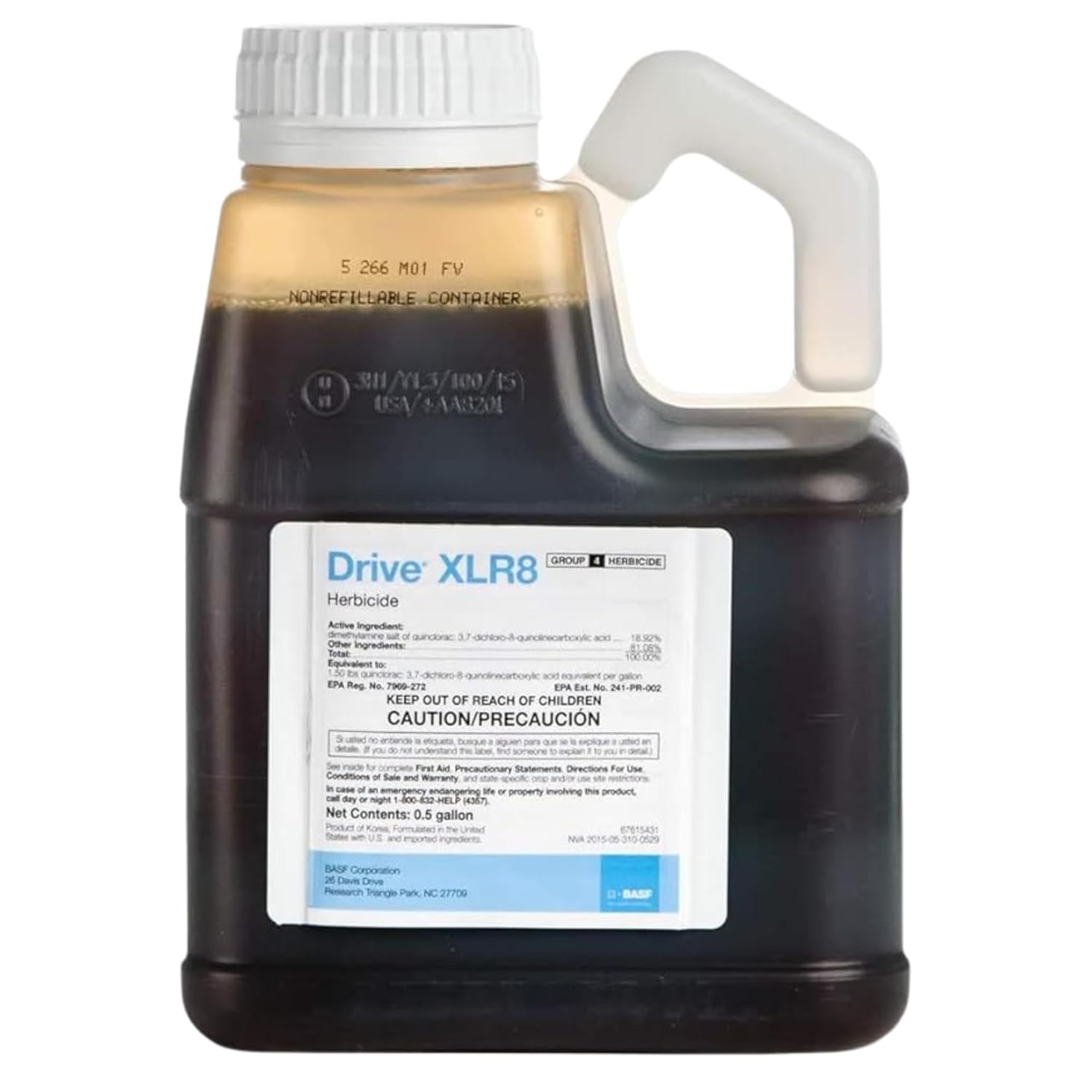
| Unit Count | 64 Ounce |
|---|---|
| Item Form | Liquid |
| Active Ingredients | Quinclorac 18.92% |
| Coverage | Full |
Drive XLR8 is a concentrated liquid herbicide built mainly to knock down crabgrass and other grassy and broadleaf weeds in turf. You mix a small measured amount with water and a methylated seed oil adjuvant and spray over the turf for spot or broadcast treatment. Its water-based formulation and quinclorac active ingredient deliver relatively fast uptake and labeled rainfast protection within about an hour, and the product advertises up to 30 days of residual control, which reduces how often you need to reapply. It is labeled for both warm- and cool-season turf and can be tank-mixed with other turf herbicides when label directions allow, giving flexibility for complicated weed problems. Important limitations are that it is a chemical herbicide that requires careful PPE and strict adherence to label directions, and some local restrictions apply, including reduced use patterns in certain states and spot-application limits. For gardeners who follow the label, it offers reliable, professional-strength control of crabgrass and many common lawn weeds.
Best for: Homeowners and groundskeepers who want a strong, professional-style postemergent solution to quickly reduce crabgrass and mixed weed populations and who are comfortable following label safety and application steps.
Less Ideal for: People seeking an organic or nonchemical approach to crabgrass control or users who prefer no-handling of concentrated herbicides should consider alternative cultural or nonchemical options.
- Concentrated 64 oz formula covers large areas when mixed per label directions
- Water-based formulation for faster plant uptake and rainfast protection in under an hour
- Provides up to 30 days of residual control against crabgrass and several grassy weeds
- Labeled for use on both warm-season and cool-season turf and compatible with some tank mixes
- Requires careful handling and PPE because it is a chemical herbicide
- Some state-specific use restrictions and label limitations apply
Verdict: Choose Drive XLR8 when you want a concentrated, fast-acting postemergent herbicide that delivers reliable crabgrass control and multi-week residual protection.
SEDGEHAMMER Plus Turf Herbicide Nutsedge Killer, 2-Pack

| Item Form | Powder |
|---|---|
| Coverage | 1000 square_feet |
| Unit Count | 1 Ounce |
| Number of Packs | 2 |
| Active Ingredients | Herbicide |
Sedgehammer Plus is a selective post-emergent herbicide sold as pre-measured powder packets that you mix into water and spray on actively growing nutsedge and other small broadleaf and sedge weeds. One 13.5 g packet already contains a non-ionic surfactant and is mixed into one gallon of water to treat about 1,000 square feet, so applications are simple and measured. It works systemically, moving into tubers and nutlets so you can see yellowing within 10 to 14 days and fuller control in a few weeks. The label lists compatibility with many common turfgrasses and gives clear timing guidance such as not mowing two days before and after treatment and avoiding rain within four hours. Practical strengths are convenience of single-dose packets, built-in surfactant, and selective activity that reduces risk to established turf when used as directed. Limitations are that it targets specific weeds rather than acting as a broad-spectrum lawn spray and requires careful timing, repeat applications for heavy infestations, and adherence to safety directions about pets, children, and not storing mixed solution.
Best for: Buyers who want a reliable, easy-to-mix product that controls nutsedge without harming common turfgrasses and who prefer clear, measured applications and conservative lawn care practices.
Less Ideal for: People seeking a single product to kill a wide range of weed types across non-turf areas or those who prefer granular or extended-release formats for very large properties.
- Pre-measured packets with built-in surfactant for easy, accurate mixing
- Systemic action that reaches tubers and nutlets for longer-lasting nutsedge control
- Selective formulation labeled for many common turfgrasses to lower risk to lawn
- Covers approximately 1,000 sq ft per packet, simplifying coverage planning
- Targets nutsedge and a limited list of weeds rather than providing broad-spectrum weed control
- Mixed solution should be used immediately and not stored, requiring planning around application windows
- May require repeat treatments for heavy or established infestations
Verdict: If you want a straightforward, selective nutsedge treatment with single-use packets and built-in surfactant, Sedgehammer Plus is a practical, low-risk choice.
Sedgehammer Plus Turf Herbicide Nutsedge Killer, 13.5 g Packet (1 Pack)

| Item Form | Liquid |
|---|---|
| Coverage | 1000 square feet |
| Liquid Volume | 1 gallons |
| Item Highlight | Surfactant Built In |
Sedgehammer Plus is a packetized post‑emergent herbicide designed specifically to target purple and yellow nutsedge by moving into tubers and nutlets as well as foliage. You pour one 13.5 g packet into a gallon of water, spray actively growing nutsedge (3–8 leaf stage) and expect yellowing in 10–14 days with full control in 3–4 weeks. The packet includes a built‑in non‑ionic surfactant so no additional additive is required, and one prepared gallon treats about 1,000 sq ft. It is labeled for use on many common warm‑ and cool‑season grasses when applied as directed, and it also controls a range of other weeds. Practical users will appreciate the premeasured dosing and selective action that reduces impact on established turf. Limitations: you must spray in the correct growth window, avoid mowing 2 days before and after treatment, do not apply if rain is expected within 4 hours, and reapplication every 6–10 weeks may be needed for stubborn infestations. Keep people and pets off treated areas until spray is dry.
Best for: Gardeners who want a practical, no‑fuss solution to remove nutsedge from established lawns and prefer premeasured dosing and predictable, selective control.
Less Ideal for: Large commercial applicators who need bulk concentrated formulations or users who require treatment for turf types not listed on the label such as putting greens.
- Premeasured packet with built‑in surfactant eliminates measuring and extra additives
- Systemic activity reaches tubers and nutlets for more complete nutsedge control
- Covers 1,000 sq ft per packet when mixed as directed
- Selective on a wide range of established turfgrass species when used per label
- Also controls about 19 additional broadleaf and grassy weeds
- Requires application at specific growth stages and timing rules for best results
- Mixed solution should be sprayed immediately and cannot be stored
- Not labeled for use on golf course putting greens
Verdict: If you want a simple, premeasured post‑emergent that reaches nutsedge tubers and treats 1,000 sq ft per gallon, Sedgehammer Plus is a practical choice.
Spectracide Weed Stop for Lawns Concentrate, 32 oz Ready-to-Spray

| Coverage | 8,000 square feet |
|---|---|
| Liquid Volume | 32 fluid ounces |
| Item Form | Liquid |
| Active Ingredients | 2,4-D, Mecoprop-P, Dicamba, Sulfentrazone |
Spectracide Weed Stop for Lawns is a hose-attach ready-to-spray concentrate designed to control broadleaf weeds across common turf types. It kills by contact and down to the root, listing over 460 weeds such as clover, dandelion and chickweed, and promises visible browning in around three hours. The QuickFlip sprayer makes treatment fast for larger yards and the formula is labeled for use on bluegrass, fescue, Bermuda and perennial rye, though you should avoid zoysiagrass coming out of dormancy and not spray above 90°F. Practical benefits include quick application without mixing and one-hour rainproofing so treatments are less weather-dependent. Important limitations are temperature restrictions for safe use, the need to keep people and pets off the lawn until dry, and the usual reseeding wait time of three to four weeks. For homeowners focused on routine clover control, this product offers a straightforward, time-saving option, but follow label directions closely to protect desirable turf and nearby plants.
Best for: Homeowners who want an inexpensive, no-mix solution to knock back clover and other broadleaf weeds quickly across a typical lawn and value fast application.
Less Ideal for: Gardens that need constant reseeding, very young lawns or yards with delicate ornamentals close to treatment areas should consider more targeted options.
- Ready-to-spray QuickFlip hose attachment speeds up application for medium to large lawns
- Kills broadleaf weeds including clover, dandelion and chickweed with visible results in about three hours
- Rainproof in one hour which reduces the chance of losing treatment to light rain
- Works on a variety of common turf types when used as directed
- Should not be applied when daytime temperatures exceed 90°F which limits use in hot weather
- Requires waiting 3–4 weeks before reseeding treated areas
Verdict: A convenient ready-to-spray concentrate that quickly controls clover and other broadleaf weeds for budget-minded homeowners who want fast, low-effort treatments.
Celsius WG Granular Herbicide 2-Pack

| Item Form | Granule |
|---|---|
| Item Highlight | Full Season Southern Lawn Weed Control | Safe on St. Augustine, Bermuda & Zoysia | Covers 4,000 sq ft | Kills 120+ Weeds |
| Manufacturer | Envu |
| Brand | Bug And Blade |
Celsius WG is a granular, two-treatment weed control system designed specifically for warm-season lawns like zoysia. The kit supplies two packets intended for a spring and a late-summer or fall application to cover up to 4,000 sq ft, and the triple-mode active ingredient mix is intended to attack weeds with three independent mechanisms to reduce resistance. In use you broadcast the granules when weeds are actively growing and above about 60°F; weeds stop growing within hours, yellowing appears in 1–2 weeks, and full control typically follows in 1–4 weeks. The product includes laminated weed ID cards to help you target common problem species and notes the lawn is safe for family and pets once the granules have dried. Limitations are that it is formulated only for warm-season turf and must be applied according to the label timing and rates for safe turf tolerance and effective results, and persistent perennials may need a follow-up application.
Best for: Homeowners or lawn-care-minded users with zoysia or other warm-season turf who prioritize effective, season-long weed control and want a planned two-application program.
Less Ideal for: Those managing cool-season lawns or users who need an all-purpose herbicide for mixed grass types should consider alternatives labeled for their turf.
- Two-packet system covers a full season with spring and season-ending treatments
- Formulated for safe use on zoysia and other warm-season turfgrasses
- Triple-mode-of-action formula helps control weeds with resistance to single-mode herbicides
- Includes laminated weed ID cards to simplify identification and timing
- Not labelled for cool-season grasses so it cannot be used on lawns like fescue or bluegrass
- May require a second follow-up application for stubborn perennial weeds
Verdict: If you need a targeted, season-long program for zoysia and other warm-season lawns, this two-pack granular system delivers reliable, resistance-minded weed control.
Choosing the Right Post Emergent Weed Killer for Zoysia Grass: Key Factors to Consider
Turf Selectivity and Safety
Zoysia is a warm-season, slow green-up turf that can show damage when exposed to nonselective or incorrectly applied herbicides. Selectivity describes how well an herbicide targets weeds while leaving Zoysia unaffected. Choose products whose active ingredients are known to be selective on warm-season lawns and follow label directions about application timing and rates.
Applying during active Zoysia growth reduces stress because the turf can recover more quickly. Conversely, avoid treatments when the lawn is under heat or drought stress, and do a small spot test when trying a new product for the first time.
Target Weeds and Spectrum of Control
Post emergent products differ in which weeds they control. Some are formulated for broadleaf weeds like clover, dandelion, and plantain, while others also include control for certain grassy weeds. Identify the dominant weed types in your lawn and pick a product whose active ingredients list those species or categories.
A narrow-spectrum product can be helpful when you only need to remove broadleaf weeds and want to avoid extra chemical exposure. For mixed infestations, choose a broader-spectrum post emergent that still lists warm-season turf safety.
Application Timing and Lawn Condition
Timing affects both safety and efficacy. Post emergent herbicides work best when weeds are actively growing, typically in warm, moist conditions. Apply when daytime temperatures are within the window recommended on the label and when Zoysia is not stressed by drought, recent mowing, or extreme heat.
Avoid application immediately before heavy rain; many formulas require a dry period for uptake. Plan treatments around mowing and irrigation so you do not remove contact residues or delay turf recovery.
Mixing, Coverage Accuracy, and Equipment Compatibility
Accurate mixing and even coverage determine whether a treatment controls weeds without harming the lawn. Look for products with clear mixing rates for spot treatment versus broadcast spraying and that are compatible with the sprayer you use.
Some concentrated formulations need careful measuring to avoid overdosing, while ready-to-use sprays reduce mixing error but may cost more per treated area. Consider how easy the label makes it to scale application rates to your lawn size.
Environmental Restrictions and Safety Precautions
Label restrictions can limit use near water, desirable ornamentals, or during windy conditions. Pay attention to buffer zones, re-entry intervals, and recommendations for protecting pollinators if flowers are present in the lawn area.
Personal protective equipment and storage instructions matter for home gardeners. Choosing a product with clear safety guidance reduces the chance of misuse and helps you comply with local regulations.
When to Treat a Zoysia Lawn
Treat actively growing weeds when Zoysia has come out of dormancy and is able to recover quickly. Optimal windows are spring after green-up and late summer when the grass is vigorous, not during peak seasonal stress from heat or drought.
For spot treatments, address weeds immediately to prevent seeding. For large infestations, plan a treatment during stable weather with several days of mild conditions to allow uptake and visible control.
- Apply when daytime temperatures are within the label-recommended range.
- Avoid treating before heavy rain or during drought stress.
- Time applications around mowing so clippings do not interfere with spray contact.
Spot Treatment Vs Broadcast Application
Spot treating isolated patches reduces chemical use and lowers risk to surrounding plants. Use a precise sprayer or gel applicator for visible weeds. For widespread infestations, a broadcast treatment may be more efficient if the product is labeled for turf use over the entire lawn.
Spot treatments are useful for small yards or when only a few species are present. Broadcast applications require correct calibration and even pass coverage to avoid streaking or missed areas.
- Spot treat individual weeds when possible to minimize exposure.
- Calibrate spreaders and sprayers before broadcast use to ensure correct rates.
- Mark treated areas to avoid reapplying accidentally.
Mowing, Irrigation, and Recovery
Adjust mowing height and schedule around treatment. Leave the grass slightly taller for a couple of mowings to reduce stress and help turf outcompete surviving weeds. Don't mow immediately before or after application unless label instructions allow it.
Water timing matters. Some herbicides need a dry period after application for uptake, while others may require irrigation to move the active ingredient into the soil for root uptake. Follow label guidance and avoid heavy watering that removes spray from target foliage.
- Delay mowing for at least 24 to 48 hours when recommended.
- Follow label directions for post-application irrigation.
- Monitor treated areas for signs of turf stress and recovery over 2 to 4 weeks.
Managing Persistent or Resistant Weeds
Some weeds tolerate single applications and require follow-up treatments or integrated approaches. Rotate modes of action where the label supports it and combine cultural strategies such as overseeding thin areas, improving fertility, and adjusting mowing height to suppress future outbreaks.
Mechanical removal can be appropriate for isolated, stubborn plants. Avoid repeated use of the same active ingredient if control remains poor; consult local extension resources for resistant species guidance.
- Use follow-up spot treatments rather than blanket reapplications when possible.
- Improve turf density through cultural care to reduce long-term weed pressure.
- Track which active ingredients you use to avoid over-reliance on a single mode of action.
Safety and Environmental Best Practices
Read and follow all label instructions, including PPE recommendations and buffer zones. Keep children and pets off treated areas for the interval listed on the product label.
Minimize off-target movement by spraying on calm days and avoiding overapplication. Consider mechanical removal or a targeted spot treatment when nonchemical options are practical.
- Store herbicides locked away and in original containers.
- Avoid treating near ornamental beds unless product is labeled safe.
- Dispose of rinse water and containers according to local regulations.
How We Chose the Best Post Emergent Weed Killer for Zoysia Grass
We prioritized products that balance effective control of actively growing weeds with minimal risk to Zoysia turf. Evaluation criteria emphasized chemical selectivity and documented turf safety on warm-season grasses, because Zoysia is sensitive to nonselective herbicides. We also scored speed of visible control and duration of control to reflect how quickly a gardener will see results and how long retreatment may be needed. Application practicality was another filter: we preferred formulations that allow accurate low-rate coverage, clear mixing instructions, and compatibility with common homeowner sprayers. Environmental and label constraints were considered, including restrictions on use during heat stress and required buffer zones. We excluded any options explicitly labeled unsafe for Zoysia or limited to preemergent control only. The final list focuses on products with relevant active ingredients, usable application windows for warm-season lawns, and clear guidance for safe use.
FAQ
Can I use post-emergent herbicides on Zoysia during high summer heat?
Usually you should avoid treating during extreme heat or drought because Zoysia is more prone to injury then. Many labels advise waiting for cooler conditions or when the turf is actively growing and not stressed.
How soon will I see weeds die after a post-emergent application?
Visible control often appears within a few days to two weeks depending on weed species and product speed. Tough or perennial weeds may take longer or need follow-up treatments.
Is spot treatment safer than treating the whole lawn?
Spot treatment reduces overall chemical use and lowers the risk to non-target areas. It is effective for isolated weeds but may be impractical for heavy infestations where a labeled broadcast treatment is more efficient.
Will irrigation wash away an application and reduce effectiveness?
That depends on the product. Some formulations require a dry period after application for foliage uptake, while others recommend light irrigation to move the product into the root zone. Follow label directions for water timing.
Can I mow right after applying a post-emergent herbicide?
Often it is best to delay mowing for at least 24 to 48 hours so the herbicide can contact weed foliage. Check the product label for specific mowing and clippings guidance.
Final Verdict
Selecting a post emergent option for Zoysia grass comes down to balancing targeted weed control with turf safety. Prioritize products that list Zoysia or warm-season turf on the label, match the product spectrum to your dominant weeds, and apply during favorable weather and turf conditions. Plan treatments as part of a broader turf-care routine that includes proper mowing, irrigation, and fertility to reduce future weed pressure. When used correctly, post emergent herbicides can quickly restore Zoysia's dense, uniform appearance without long-term harm to the lawn.
