

Note: This article contains affiliate links. If you click on these links and make a purchase, I may earn a small commission at no extra cost to you. This helps support my research and content. Read my full affiliate disclosure here.
If you maintain a synthetic lawn, keeping weeds out of seams, infill, and drainage channels matters for appearance and longevity. Not all weed products behave the same on artificial turf. Some chemicals can damage fibers or leave residues that attract dirt, while others are ineffective on the kinds of opportunistic grasses and moss that colonize edges and infill. This guide covers seven shortlisted weed control options suitable for astroturf applications and explains how we evaluated them. You will get practical advice on effectiveness, turf safety, and application technique so you can pick the right solution for your synthetic lawn.
Top Picks at a Glance
| Best Overall The best all-around choice for most situations | Roundup Weed & Grass Killer4 with Pump 'N Go 2 Sprayer, 1.33 gal |  |
| Best Quality Built to a higher standard if you want something more solid | Roundup Weed & Grass Killer with Comfort Wand, 1.33 gal. |  |
| Best Value The sweet spot between price and what you get | Ortho GroundClear Super Weed & Grass Killer with Comfort Wand, 0.5 gal | 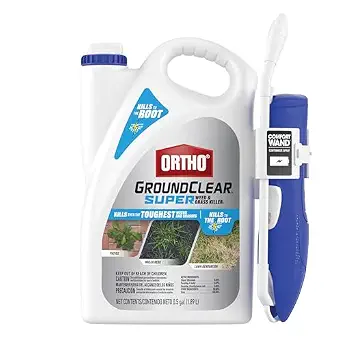 |
| Best Budget The cheapest option that still gets the job done reliably | Spectracide Weed & Grass Killer for Driveways & Walkways, 1 Gal |  |
| Highest Rated A top-rated pick with lots of positive feedback | Spectracide Weed & Grass Killer Refill for AccuShot Sprayer, 1.33 Gal |  |
| Most Popular A crowd favorite that many people choose with confidence | Spectracide Weed & Grass Killer with AccuShot Power Sprayer, 1.33 Gal |  |
| Best Seller A high-volume bestseller chosen again and again | Roundup Weed & Grass Killer4 Refill, 1.25 gal |  |
Roundup Weed & Grass Killer4 with Pump 'N Go 2 Sprayer, 1.33 gal

| Unit Count | 170 Fluid Ounces |
|---|---|
| Item Form | Spray |
| Coverage | 300 Square_Feet |
| Active Ingredients | Triclopyr, Triethylamine Salt, Fluazifop-P-Butyl, Diquat Dibromide |
This packaged Roundup kit combines a 1.33 gallon formulated weed-and-grass killer with a Pump 'N Go 2 sprayer, letting you treat patches of weeds and grassy intruders without mixing chemicals or carrying a separate sprayer. The extendable wand and up to 10 minutes of continuous spray make targeted application around flower beds, patios, gravel, and edges easier and reduce bending. The formula claims visible results in hours, becomes rainproof in about 30 minutes, and permits replanting within the stated window. Practical benefits include convenience of an integrated sprayer, good coverage for small to medium areas, and a broad activity spectrum against dandelions, crabgrass, clover, and other common broadleaf weeds. Important limitations are safety precautions and restricted access after application since it is an herbicide that can harm desirable plants and requires protective clothing and keeping people and pets away until dry. Also, this product is for spot and surface treatments rather than long-term lawn renovation or nonchemical weed control approaches.
Best for: Buyers who want a convenient, ready-to-use herbicide for spot-treating visible weeds and grass around hardscapes and landscape beds and who prefer an integrated sprayer to simplify application.
Less Ideal for: People seeking organic, nonchemical weed control or a product for large-scale lawn renovation should consider alternative methods or professional services.
- Includes Pump 'N Go 2 sprayer with extendable wand for accurate, continuous spray
- Ready-to-use formulation so no measuring or mixing is required
- Produces visible results in hours and is rainproof in about 30 minutes
- Designed for use around beds, patios, driveways, gravel, and edging
- Contains potent active ingredients that require safety precautions and restrict access to treated areas
- Not suitable for nonchemical or preventive long-term weed management
Verdict: If you want a no-mixing, spot-treatment herbicide with a built-in sprayer for quick, targeted weed control, this all-in-one Roundup kit is a practical choice.
Roundup Weed & Grass Killer with Comfort Wand, 1.33 gal.

| Item Form | Liquid |
|---|---|
| Coverage | 400 sq. ft. |
| Liquid Volume | 1.33 gallons |
This Roundup package pairs a 1.33 gallon liquid formulation with a Comfort Wand for easier spraying around beds, walkways, and foundations. It is formulated to kill common broadleaf weeds and grasses down to the root, with visible wilting in hours and rainfast protection in about 30 minutes, so treated areas are less likely to wash away after a brief rain. The wand offers one-touch continuous spray, which reduces hand fatigue during spot treatments and makes edging and targeted applications simpler than using a separate sprayer. Coverage is listed at about 400 sq. ft., appropriate for small yards, beds, or multiple spot-treatment sessions. Important limitations are that this is a nonselective herbicide so it will damage desirable plants if contacted and the product directions include replanting wait times of 1 to 30 days depending on use. Users should follow label precautions about keeping people and pets away until spray has dried and applying only in calm conditions to avoid drift.
Best for: Buyers who want a straightforward, ready-to-use herbicide for targeted spot treatments and edging where quick, reliable weed control is the priority and minimizing application fuss matters.
Less Ideal for: Large properties or users who need selective lawn-safe control should consider professional application methods or products formulated specifically for turf.
- Fast visible results in hours and rainproof in as fast as 30 minutes
- Comfort Wand with one-touch continuous spray reduces hand fatigue and improves targeting
- Kills a wide range of broadleaf weeds and grasses to the root
- Ready-to-use liquid requires no mixing and covers up to 400 sq. ft.
- Nonselective formula will damage desirable plants if contacted
- Container and wand limit treatment area per refill compared with larger tank sprayers
Verdict: A convenient, ready-to-use herbicide with a Comfort Wand that delivers fast, reliable spot control of broadleaf weeds and grasses for homeowners who want an easy, low-fuss solution.
Ortho GroundClear Super Weed & Grass Killer with Comfort Wand, 0.5 gal

| Unit Count | 64 Fluid Ounces |
|---|---|
| Item Form | Spray |
| Coverage | Broad spectrum coverage |
| Liquid Volume | 0.5 gallons |
Ortho GroundClear Super Weed & Grass Killer is a ready-to-use spray intended for spot treatment of weeds and grasses in landscape beds, along walkways, driveways, and around structures. The bottle’s attached Comfort Wand delivers a continuous spray for targeted application, which helps avoid overspray on nearby plants. The formula combines a contact ingredient for rapid burn-down with systemic actives that penetrate to the root, so you can see visible effects within hours and full control in days to a couple of weeks. It is rainfast in about 15 minutes, so treatments hold up quickly after application. Practical benefits include ease of use without mixing, broad-spectrum control of common tough weeds, and suitability for prepping areas for renovation. Important limitations are that it is nonselective so care is required near desirable plants, it should not be used on edible crops, and protective gear is recommended during application because of the herbicidal strength.
Best for: Homeowners who want an easy, no-mix solution to remove persistent weeds from landscape beds, hardscapes, and around structures and who prioritize quick, visible results with precise application.
Less Ideal for: Gardners maintaining vegetable beds, pollinator or mixed planting areas where nonselective chemistry risks desirable plants, or users seeking an organic or granular spot-treatment method.
- Ready-to-use spray needs no mixing and the attached Comfort Wand enables targeted continuous application
- Dual-action formula gives quick visible burn-down and systemic root kill for longer control
- Rainfast in 15 minutes so treatments are less likely to wash off in light showers
- Nonselective herbicide that can damage desirable plants if not applied carefully
- Not labeled for use on edible crops so unsuitable for vegetable gardens
Verdict: Choose this ready-to-use spray when you need fast, targeted knockdown and root-level control of tough weeds in landscape beds without mixing or special equipment.
Spectracide Weed & Grass Killer for Driveways & Walkways, 1 Gal

| Unit Count | 128 Fluid Ounces |
|---|---|
| Coverage | 6,400 square feet |
| Item Form | Spray |
| Active Ingredients | Diquat Dibromide 0.12%, Fluazifop-P-Butyl 0.06%, Dicamba, Dimethylamine Salt |
Spectracide Weed & Grass Killer is a one-gallon, ready-to-use spray designed for spot treating unwanted weeds and grasses on hard surfaces and around planting areas. It is intended to be used with the AccuShot sprayer cap for continuous spraying and an extendable wand to improve accuracy and reduce hand fatigue. The formula claims visible results in about three hours and becomes rainproof in 15 minutes, so light rain shortly after application should not reduce effectiveness. It kills down to the root and allows replanting of flowers, trees, or shrubs after one day. Practical benefits include wide coverage per bottle and an easy-to-operate sprayer system for directed applications near desirable plants. Important limitations are that it must be applied carefully to avoid drift onto desirable vegetation and that it is formulated for spot treatments rather than broadcast lawn use. Follow safety directions closely to protect people, pets, and nearby plants.
Best for: Buyers wanting an affordable, no-mix solution to remove weeds from driveways, walkways, and around beds who prioritize straightforward, targeted treatments over lawn-wide programs.
Less Ideal for: Those looking for a lawn-safe, broadcast weed control for large turf areas or users who prefer organic or non-chemical weed management methods.
- Ready-to-use pre-mixed formula requires no measuring or mixing
- Works on both broadleaf weeds and grasses and claims root-killing action
- Rainproof in 15 minutes so light rain shortly after application will not wash it away
- Designed for use with AccuShot sprayer and extendable wand for targeted application
- Not suitable for broadcast lawn treatments since it is intended for spot and hard-surface use
- Contains strong active ingredients so careful application and protective measures are required
Verdict: A budget-friendly, ready-to-use spot treatment that delivers fast, rainproof control of weeds and grasses on driveways and walkways.
Spectracide Weed & Grass Killer Refill for AccuShot Sprayer, 1.33 Gal

| Item Form | Liquid |
|---|---|
| Unit Count | 166.4 Fluid Ounces |
| Coverage | 300 sq ft per gallon (claimed) |
| Rainproof | 15 minutes |
This Spectracide refill is a ready-to-use herbicide formulated to kill broadleaf weeds and grasses down to the root when applied with the AccuShot continuous power sprayer. It is typically used for spot treatment on driveways, walkways, around fences and foundations, and other non-lawn areas where you want quick control. Notable features include a rainproof formula after 15 minutes, visible results in as fast as three hours, and compatibility with the AccuShot wand for extended reach and more accurate targeting. Practical benefits are straightforward: no mixing, fast knockdown of common weeds like dandelion and clover, and the ability to replant treated areas within a day. Important limitations are that it is non-selective so it will damage desirable plants if misapplied, it is intended for use with the AccuShot sprayer for best ergonomics and targeting, and the effectiveness depends on applying when temperatures are above 60 degrees. For buyers prioritizing a low-cost, fast-acting solution for tough weeds on hard surfaces, this product delivers reliable, simple results.
Best for: Buyers who want an inexpensive, no-fuss solution to clear heavy weeds and grasses from hard surfaces and neglected areas quickly without mixing chemicals.
Less Ideal for: Gardeners who need a selective weed control for lawns, beds with desirable plants nearby, or those who prefer manual or non-chemical weed removal methods.
- Ready-to-use pre-mixed formula requires no measuring or dilution
- Rainproof in 15 minutes so recent watering or light rain won’t wash it away
- Visible results in as fast as three hours and replanting possible after one day
- Works with AccuShot sprayer for extended reach and continuous spray to reduce hand fatigue
- Non-selective herbicide that will kill desirable plants if sprayed accidentally
- Designed to be used with the AccuShot sprayer for easiest application
Verdict: If you need a fast, budget-friendly way to kill tough weeds and grasses on driveways and walkways, this ready-to-use Spectracide refill delivers reliable, quick results.
Spectracide Weed & Grass Killer with AccuShot Power Sprayer, 1.33 Gal

| Unit Count | 170 Fluid Ounces |
|---|---|
| Item Form | Spray |
| Coverage | 1 gallon |
| Active Ingredients | Diquat Dibromide 0.12%, Fluazifop-p-butyl 0.06%, Dicamba 0.04% |
Spectracide Weed & Grass Killer pairs a concentrated non-selective formula with a battery-powered AccuShot sprayer to clear weeds from driveway cracks, patios and around foundations. The product is used by aiming and spraying foliage until leaves are covered; the active ingredients move through the leaf to the root and can show visible die-back in as little as three hours. The AccuShot wand is extendable and provides continuous spray without manual pumping, which improves accuracy for narrow cracks and reduces hand fatigue during larger jobs. It is rainproof within 15 minutes, so treated areas are protected quickly. Practical benefits include fast results that let you replant or resume use of the area within a day and a reusable sprayer for follow-up applications. Important limitations are that the herbicide is non-selective so it will kill any plant it contacts, it requires careful handling and PPE to avoid skin or eye exposure, and the sprayer runs on four AA batteries that must be replaced periodically. Follow label directions to avoid runoff into water.
Best for: Buyers who want a fast, no-nonsense solution for weeds growing in driveways and hard surfaces and who prioritize tools with clear user feedback and proven results.
Less Ideal for: Gardeners who need a selective lawn-safe treatment, people unwilling to follow pesticide safety precautions, or those treating areas adjacent to water features.
- AccuShot battery-powered wand gives continuous spray for accurate application in tight cracks
- Formula moves through foliage to kill weeds down to the root with visible results in about three hours
- Rainproof after 15 minutes so treatments are not easily washed away by brief showers
- Covers approximately 300 square feet per gallon, suitable for multiple crack-treatment sessions
- Non-selective herbicide will damage any desirable plants it contacts
- Sprayer requires four AA batteries and occasional replacement to maintain function
- Product is toxic to aquatic life and must not be used near water or allowed to run off
Verdict: A fast-acting, easy-to-aim non-selective herbicide with a battery-powered wand that is well suited to reliably clear weeds from driveway cracks and other hard surfaces.
Roundup Weed & Grass Killer4 Refill, 1.25 gal

| Unit Count | 160 Fluid Ounces |
|---|---|
| Coverage | 375 square feet |
| Item Form | Spray |
| Active Ingredients | Triclopyr, Fluazifop P-Butyl, Diquat Dibromide |
This 1.25 gallon Roundup Weed & Grass Killer4 refill is designed to be poured into an empty spray container to treat weeds and grassy weeds around beds, walkways, driveways, foundations, and other hardscape edges. It contains multiple active ingredients that attack broadleaf weeds and grasses to the root and promises visible wilting within hours and rainproofing in as fast as 30 minutes, which makes it convenient when weather windows are short. The refill covers about 375 square feet and is intended for use in and around established plantings when applied carefully to avoid drift onto desirable plants. Practical benefits include fast action, the ability to replant some areas within a specified wait period, and compatibility with the brand’s comfort wand refills so you avoid frequent repurchasing of small bottles. Important limitations are that it is a nonselective herbicide so it will damage desirable plants if misapplied and treated areas should be kept clear of people and pets until spray dries; follow label directions closely for safe use and replanting intervals.
Best for: Buyers who prioritize reliable, fast-acting weed control for routine maintenance of beds, edges, and hardscape areas and who follow label directions to minimize risk.
Less Ideal for: Gardeners who need selective control inside densely planted flower beds or who prefer organic or nonchemical weed management methods.
- Kills a broad range of weeds and grasses to the root, including dandelion and crabgrass
- Fast visible results in hours and becomes rainproof in about 30 minutes
- Large 1.25 gal refill reduces need for frequent repurchases and covers roughly 375 sq ft
- Formulated to refill compatible spray wand for easy application around beds and hardscapes
- Nonselective formula that will harm desirable plants if it drifts or is oversprayed
- Requires careful handling and adherence to label safety and replanting intervals
Verdict: Choose this refill if you want a fast, proven, large-format herbicide that quickly kills tough weeds and grasses and refills a compatible spray wand for area-wide maintenance.
Choosing the Right Weed Killer for Astroturf: Key Factors to Consider
Target Weed Spectrum
Different products are formulated to kill broadleaf species, grasses, moss, or a combination. Knowing which weeds are taking hold in seams, around edges, or in infill helps you select a product that will actually control them. A broad-spectrum herbicide can be useful for mixed infestations, but selective options may be gentler on nonweed vegetation adjacent to the turf.
Also consider perennial versus annual weeds. Perennials with deep, spreading roots often need systemic activity to prevent regrowth, while annual seedlings are usually controlled by contact or residual surface action. On synthetic turf, root systems may be limited by the substrate, changing which mode of action is most effective.
Turf Material Compatibility
Artificial grass comes in different polymers, pile heights, and backing materials; some chemicals can alter color, soften fibers, or affect the backing glue. Choose products explicitly labeled as safe for synthetic turf or those with nonstaining, nonbleaching formulations. When in doubt, test a small hidden area and wait the labeled interval to check for changes.
Compatibility also covers infill types. Sand, rubber, or organic infill can interact differently with spray residues; a safe product on bare turf may still bind to infill and trap soil or dust, so look for guidance on infill-safe applications.
Application Method and Precision
How you apply a weed control product matters more on astroturf than on soil. Spot-treating with a hand sprayer or brush reduces chemical contact with large areas of turf and limits runoff. Conversely, broadcast sprays are faster but increase the chance of overspray, staining, or residue buildup in high-traffic zones.
Consider nozzle type, dilution requirements, and whether the formula requires wetting or drying periods. Some options need rinsing after a short dwell time to remove residues; this step may be necessary to protect fibers, but it adds labor and requires access to drainage.
Residue, Staining, and Cleanability
Residues left by some weed control products can trap grit, discolor fibers, or create a sticky surface that collects debris. On synthetic lawns this shows quickly because the material does not renew like natural grass. Prefer nonstaining formulations and check whether the product can be rinsed clean without degrading the turf or impairing drainage.
Also evaluate how easy it is to remove accidental splashes from walkways or borders. A product that rinses freely with water reduces the risk of long-term visual issues.
Environmental and Runoff Considerations
Synthetic lawns often sit above paved or landscaped surfaces where runoff can reach drains, plantings, or water features. Choose options with lower aquatic toxicity and follow best practices to contain runoff, such as spot treating and avoiding application before heavy rain.
Local regulations or neighborhood rules may restrict certain herbicide classes. Consider biodegradable or physically removing weeds where chemical restrictions apply, and always follow label directions to minimize environmental impact.
Safety and Reentry Time
Because astroturf is a surface people and pets walk on, reentry intervals and safety after application are important. Some products require the treated area to remain dry or off-limits until residues set or are rinsed away. Others advertise rapid reentry but may still leave slippery residues.
Plan applications for times when foot traffic is low and communicate reentry guidance to household members. Using targeted application tools reduces the treated footprint and shortens the time the area is restricted.
Why Weeds Grow On Synthetic Turf
Weeds take hold on artificial lawns where there is exposed soil at seams, along edges, or in infill that accumulates organic matter. Windblown seed, birds, and nearby plantings all introduce propagules that find tiny pockets of material to germinate in. Moisture-retaining debris and compacted infill create microenvironments that allow seedlings to survive.
Understanding where weeds originate helps you target treatments. Preventative maintenance like brushing, removing debris, and repairing gaps reduces the sites where weeds can establish, reducing the need for chemical controls.
- Seed settles in seams, joins, and edges
- Organic matter in infill fuels seedling growth
- Poor drainage or shaded areas increase moisture retention
Nonchemical Alternatives and When to Use Them
Physical removal, steaming, or flame weeding are effective for small infestations and have no risk of chemical damage to the turf. Hand pulling works when weeds are isolated and accessible, especially on seams and borders. Mechanical weeding tools or a targeted steam wand can remove plants without affecting synthetic fibers.
Nonchemical options are best for small areas, for gardeners with strict chemical restrictions, or when you need immediate removal without retreatment intervals. For persistent or widespread infestations, a combined approach using mechanical removal followed by a spot-applied herbicide often gives longer control.
- Hand removal and brushing reduce seed buildup
- Steam and heat methods avoid residues
- Physical methods require regular follow-up
Timing Treatments for Best Results
Treat weeds when they are actively growing and not drought-stressed. Spring and early autumn are often the most effective windows because young plants uptake systemic products more readily and contact treatments desiccate tender tissues quickly. Avoid applying before heavy rain to prevent runoff and dilution.
For seasonal maintenance, plan a spot-check schedule and treat small outbreaks early. This lowers the workload and reduces the amount of product you need to apply on the turf surface.
- Treat actively growing weeds
- Avoid applications before rain
- Spot treatments reduce overall chemical use
Post-application Care and Monitoring
After treatment, monitor the treated area for signs of discoloration, fiber softening, or residue buildup. Rinse only if the product label recommends it; unnecessary rinsing can dilute herbicide activity and require retreatment. Keep debris cleared to prevent reestablishment from trapped seed.
Regular brushing and infill top-ups restore appearance and reduce the microhabitats where weeds germinate. Establish a seasonal routine for inspection so small problems do not grow into widespread infestations.
- Inspect for staining or residue
- Brush and remove debris regularly
- Top up infill where needed to close gaps
Safe Storage and Handling on Property
Store any chemical weed control products in a cool, dry place away from children and pets. Keep containers closed and in their original packaging with labels intact so you can follow safety instructions. Use protective gear during mixing and application, and avoid applying in windy conditions to limit drift.
Dispose of unused product and rinse water according to local regulations. When possible, mix only the volume you need for a single application to avoid leftover concentrates that require long-term storage.
- Keep products secured and labeled
- Use appropriate protective equipment
- Follow local rules for disposal
How We Chose the Best Weed Killer for Astroturf
We shortlisted products based on criteria that reflect real-world astroturf care. Effectiveness on common lawn-invading species was essential, with emphasis on both broadleaf weeds and grassy volunteers that can appear in seams and infill. Turf material safety was a core filter: we favored formulas and delivery methods that minimize fiber discoloration, softening, or breakdown. Residue and staining potential were evaluated to reduce long-term buildup that traps dirt. Application practicality guided our choices: we looked at how easily a product can be spot-treated versus blanket-sprayed, required rinsing, and compatibility with typical astroturf infill and backing. Environmental considerations such as runoff risk and whether the formulation requires special handling were included. Products that relied on methods unsuitable for installed synthetic turf or that necessitated complete turf replacement were excluded. The final list balances weed control power with preserving the appearance and function of artificial lawns.
FAQ
Can I use a standard lawn weed killer on astroturf?
Often standard lawn herbicides are not formulated with synthetic fibers in mind. Some may leave stains or residues, so check product labels for turf compatibility and test a small area first. Prefer products that state suitability for artificial surfaces or that are nonstaining.
How soon can people and pets walk on treated astroturf?
Reentry time depends on the formulation. Some contact products dry quickly and allow safe reentry within hours, while others recommend keeping people and pets off until residues are rinsed. Always follow the product label and keep the area inaccessible until it is declared safe.
Will treatments affect my infill or drainage?
Certain liquid residues can bind to infill or clog drainage if they are viscous or sticky. Products labeled as safe for different infill types are preferable. If a label suggests rinsing after application to protect materials, plan for adequate drainage and water availability.
Are organic options effective on weeds in artificial lawns?
Organic contact herbicides, such as vinegar-based or acetic acid products, can desiccate small seedlings but often provide short-lived control and may require repeated applications. They are useful for small outbreaks and where chemical restrictions apply, but they may not eradicate established perennial weeds.
How should I treat weeds in seams and around the edges?
Targeted spot treatments offer the best balance between control and turf safety. Use a hand sprayer, brush-on applicator, or mechanical removal for seams and borders to avoid treating the entire surface. Repair and seal gaps to prevent reestablishment.
What precautions reduce environmental runoff risk?
Apply on dry, low-wind days and avoid treating before heavy rain. Use spot applications instead of broadcast spraying and follow dilution instructions carefully. Contain rinse water and dispose of it according to local guidelines to prevent chemicals entering storm drains.
Final Verdict
Choose a weed control approach for astroturf that balances effective knockdown of the target species with protection of synthetic fibers and drainage. Prioritize products and methods labeled for synthetic surfaces, use spot applications when possible, and plan post-application care to prevent residue buildup. Weed control on artificial lawns is often an ongoing maintenance task rather than a one-time fix. Focus on early detection, targeted treatment, and routine cleaning to keep the turf looking its best while minimizing environmental and material risks.
