

Note: This article contains affiliate links. If you click on these links and make a purchase, I may earn a small commission at no extra cost to you. This helps support my research and content. Read my full affiliate disclosure here.
If you want to extend the growing season or protect tender plants without spending a fortune, a greenhouse under $1000 can be an excellent investment. The right structure makes it easier to manage temperature, humidity, and pest pressure in a compact footprint that fits patios, small yards, or suburban plots. This guide covers seven shortlisted greenhouses that balance sturdiness, usable space, and weather resistance for budget-minded gardeners. We evaluated each option for frame durability, cover material, ventilation, and usable interior layout so you can match a greenhouse to your site and growing goals. Read on for practical pros and cons and the criteria we used to choose these picks.
Top Picks at a Glance
| Best Overall The best all-around choice for most situations | EAGLE PEAK 8×6 Pop-Up Walk-In Greenhouse |  |
| Best Quality Built to a higher standard if you want something more solid | Sylviera 6×4 ft Outdoor Polycarbonate Greenhouse with Hygrometer | 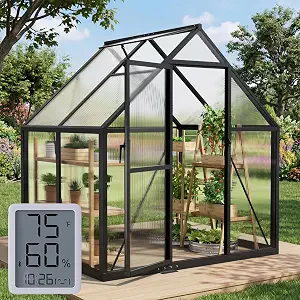 |
| Best Value The sweet spot between price and what you get | VEVOR 15 x 7 x 7 ft Walk‑In Tunnel Greenhouse with Integrated Watering System |  |
| Best Budget The cheapest option that still gets the job done reliably | Bamworld 4-Tier Wooden Mini Greenhouse with PE Cover |  |
| Highest Rated A top-rated pick with lots of positive feedback | Coumy 8×14 ft Walk-In Aluminum Greenhouse with Polycarbonate Panels |  |
| Most Popular A crowd favorite that many people choose with confidence | Pure Garden 4-Tier Mini Greenhouse with PVC Cover and Locking Wheels |  |
| Best Seller A high-volume bestseller chosen again and again | EAGLE PEAK 6×4 Pop-Up Walk-In Greenhouse |  |
EAGLE PEAK 8×6 Pop-Up Walk-In Greenhouse

| Size | 8×6 |
|---|---|
| Cover Material | Polyethylene (PE) |
| Frame Material | Alloy Steel |
| Number of Doors | 1 |
| Number Of Vents | 2 |
The EAGLE PEAK 8×6 pop-up greenhouse is a walk-in shelter aimed at extending the growing season and protecting plants from frost and light weather. Its preassembled alloy-steel frame uses extra steel reinforcement and a patented PeakPush center lock so one person can set it up quickly without tools. The PE cover is water-resistant and UV-filtering to help retain warmth and humidity, while the roll-up zippered door and mesh vents let you manage airflow and pest access. It includes stakes and guy ropes for added stability and a ground skirt you can weight down for windy conditions. Practical benefits include ample interior space for shelving or multiple pots, straightforward seasonal use for seed starting or fall protection, and replaceable covers or frames if components wear. Important limitations are that pop-up greenhouses are not engineered for heavy snow loads or sustained high winds so you will need to clear snow and add extra anchoring or weights during storms, and the PE cover will age faster than rigid glazing in strong sun over many seasons.
Best for: Gardeners who want an easy-to-assemble, walk-in greenhouse to start seeds, protect pots, and extend the growing season with minimal setup time and hands-on maintenance.
Less Ideal for: People needing a permanent, year-round structure for heavy snow loads or high-wind exposed sites should choose a rigid-glazed or anchored greenhouse instead.
- One-person, tool-free setup with patented center lock for fast assembly.
- Sturdy alloy-steel frame reinforced for better stability than typical pop-ups.
- Water-resistant, UV-filtering PE cover that traps warmth for season extension.
- Zippered roll-up door and mesh vents for adjustable ventilation and pest control.
- Not built to withstand heavy snow or severe winds without additional reinforcement.
- PE cover will wear faster than rigid glazing and may need replacement after prolonged sun exposure.
Verdict: Buy this if you want a roomy, one-person pop-up greenhouse that balances easy setup with a stronger steel frame for reliable seasonal protection.
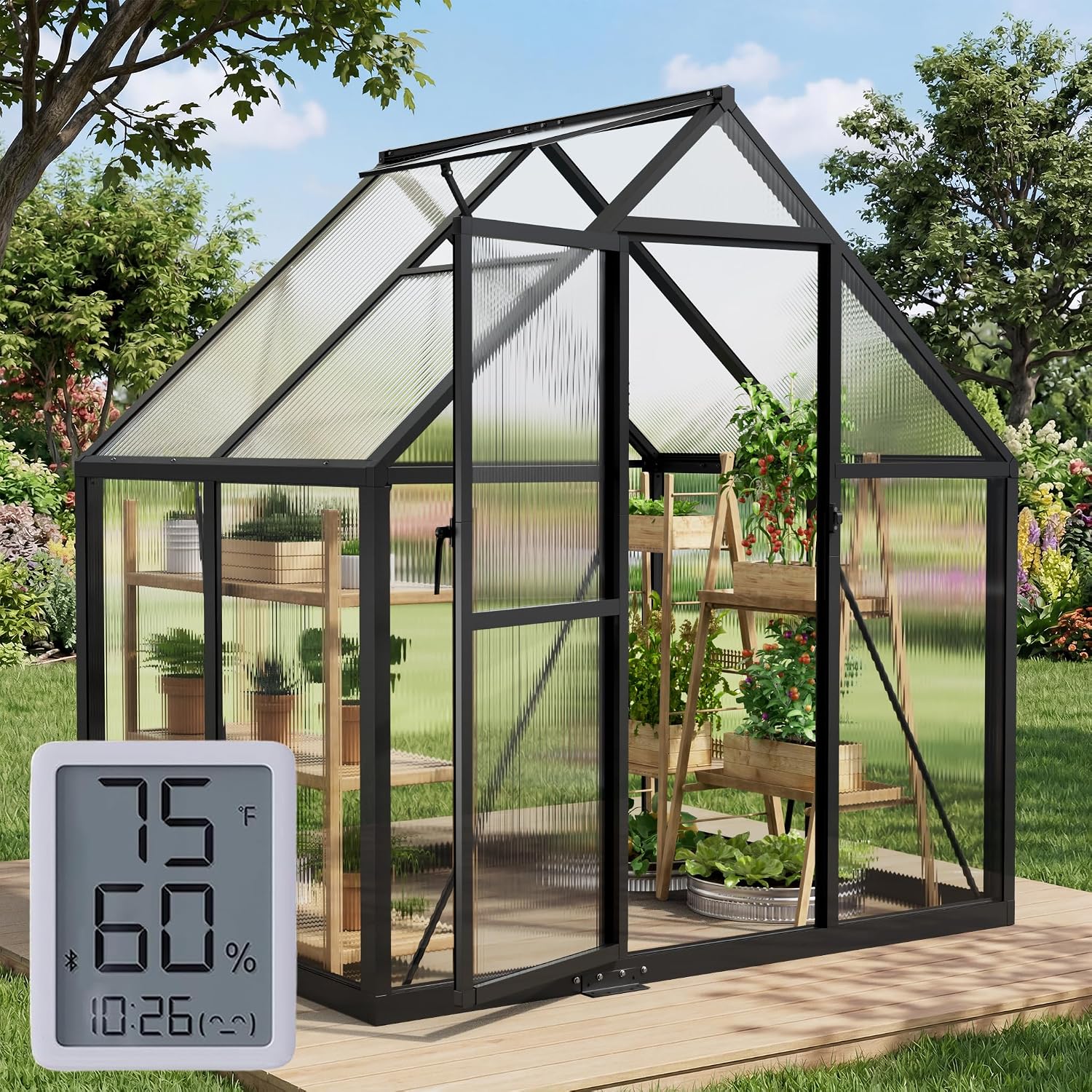
Sylviera 6×4 ft Outdoor Polycarbonate Greenhouse with Hygrometer
| Cover Material | Polycarbonate (PC) |
|---|---|
| Frame Material | Aluminum |
| Number Of Vents | 2 |
| Indoor Outdoor Usage | Outdoor |
The Sylviera 6×4 ft greenhouse is a compact walk-in shelter that creates a controlled environment for vegetables, herbs, and ornamentals. It uses an aluminum frame with 4mm double-wall polycarbonate panels to let light in while blocking UV, and the kit includes roof vents, a lockable door, and a hygrometer for basic climate monitoring. Typical use is to stage potted plants and seed trays on shelving inside, open vents to prevent overheating on warm days, and close up for wind or light snow. Notable features are the impact-resistant panels that improve insulation compared with single-sheet plastic, a reinforced frame for better wind resistance, and labeled parts with tools to simplify assembly. In practice this means extended growing seasons and safer overwintering for small crops, but expect a modest usable footprint that limits large beds and taller crops. Assembly takes two people and some time to align panels and secure seams, and heavy wind or deep snow may still require additional anchoring or sealant to keep joints tight.
Best for: Gardeners who prioritize year-round performance and want a durable small greenhouse to extend seasons and protect plants from wind and light snow.
Less Ideal for: Those needing a large production space, tall plant beds, or a no-assembly, instant shelter should consider larger or prebuilt alternatives.
- Double-wall polycarbonate panels provide UV protection and better insulation than thin plastic sheeting
- Aluminum frame offers corrosion resistance and increased structural strength
- Adjustable roof vents and a lockable door help regulate temperature and airflow
- Includes a hygrometer and labeled parts for clearer assembly and basic climate monitoring
- Small interior footprint limits planting layout and vertical growing space
- Assembly requires two people and careful alignment of panels for a weather-tight fit
Verdict: Choose this compact Sylviera greenhouse when you want a durable, ventilated small walk-in that reliably extends your growing season.
VEVOR 15 x 7 x 7 ft Walk‑In Tunnel Greenhouse with Integrated Watering System

| Cover Material | 140 g/m² Double-Sided Coated PE |
|---|---|
| Frame Material | Q195 Galvanized Steel Tubes |
| Size | 15x7x7 ft |
| Number Of Vents | 8 |
| Number of Doors | 1 |
This VEVOR walk-in tunnel greenhouse gives a practical, semi-permanent growing space for home gardeners who need room to move around and tend plants. The galvanized steel frame with center support and ground stakes aims to keep the structure stable, while the 140 g/m² double‑sided PE cover balances light transmission and basic weather protection. Eight windows and a roll-up zipper door provide ventilation for summer use and the extended lower edge lets you add weight or secure the cover. What sets this kit apart is the included watering system: a 10 m hose with six adjustable brass nozzles and three spray modes reduces manual watering and can be run on a timer for regular irrigation. Assembly uses bolt‑fixed tube connectors and end caps to reduce wobble and protect surfaces, but the kit still requires careful anchoring and occasional tightening in wind. The PE cover and lightweight tubes are not a substitute for a framed greenhouse built for heavy snow or long-term exposure, so expect to maintain the cover and fasteners seasonally. For gardeners wanting a roomy, affordable hoop house with built-in irrigation, this is a useful, efficient option.
Best for: Gardeners who want a practical, easy-to-manage walk-in greenhouse that saves time on watering and gives a roomy workspace for seasonal vegetable and flower production.
Less Ideal for: People needing a permanent, heavy-duty greenhouse for year-round use in snowy or storm-prone climates should consider a rigid framed model instead.
- Roomy walk-in interior that lets you pot, prune, and move plants comfortably
- Galvanized steel frame with center support and ground stakes for improved stability
- Integrated 10 m watering system with six adjustable brass nozzles for easier, consistent irrigation
- Multiple windows and roll-up zipper door provide good ventilation control
- PE cover rated 140 g/m² offers light transmission with water resistance and sun protection
- PE cover and hoop construction are not designed for heavy snow loads or prolonged severe weather
- Requires regular anchoring checks and periodic tightening to maintain stability
Verdict: A spacious, budget-friendly walk-in tunnel greenhouse with a built-in watering system that streamlines irrigation and everyday plant care.
Bamworld 4-Tier Wooden Mini Greenhouse with PE Cover

| Frame Material | Wood |
|---|---|
| Cover Material | Polyethylene (PE) |
| Indoor Outdoor Usage | Outdoor |
| Size | 4 Tier Single Layer Roof |
This Bamworld 4-tier wooden mini greenhouse is a simple, low-cost solution for extending the growing season and starting seeds outdoors. The unit uses a wooden frame with a PE cover and a roll-up zipper door, and assembles into a narrow, tall greenhouse that fits on patios or small garden spots. It provides four shelving levels so you can organize seed trays, herb pots, or small overwintering plants vertically to maximize limited space. The PE cover protects plants from light frost and wind while the roll-up door gives easy access and ventilation. Practical benefits include straightforward assembly with the included hardware and a compact footprint that suits balconies or tight corners. Limits to expect are the lightweight single-layer PE cover and wooden frame which are fine for mild protection but not for heavy snow, strong winds, or long-term permanent installation. Buyers should plan to anchor it and replace the cover sooner than heavier, commercial greenhouses if exposed to harsh weather.
Best for: Gardeners working with tight patios, balconies, or small yards who want an inexpensive way to start seeds and protect herbs or small plants through light cold spells.
Less Ideal for: Those needing a permanent, heavy-duty greenhouse for year-round production or for sheltering large plants and heavy winter loads.
- Compact vertical design with four shelves maximizes planting area in small outdoor spaces
- Wood frame offers a sturdier feel than all-plastic alternatives
- Roll-up zipper door allows easy access and adjustable ventilation
- Includes PE cover and assembly hardware so it is ready to set up
- Single-layer PE cover and wooden frame are not suited for heavy snow or very windy locations
- Narrow footprint limits the size and number of larger pots you can use
Verdict: A low-cost, space-saving greenhouse that gives budget gardeners an easy way to start seeds and shield small plants from mild cold.
Coumy 8×14 ft Walk-In Aluminum Greenhouse with Polycarbonate Panels

| Cover Material | Polycarbonate (PC) |
|---|---|
| Frame Material | Aluminum |
| Number of Doors | 2 |
| Number Of Vents | 4 |
This Coumy 8×14 ft walk-in greenhouse creates a spacious, protected environment for starting seeds, overwintering tender plants, and organizing potting supplies. Its reinforced aluminum frame, triangular brackets and multiple side supports anchor to the ground with supplied anchors to give the structure better resistance to wind, rain and snow. Twin lockable hinged doors and four adjustable roof vents make daily access and airflow control straightforward, while integrated rain gutters let you route water for collection. The polycarbonate panels are shatterproof and carry a UV-blocking coating that filters harmful rays while admitting useful light and helping stabilize temperature and humidity. Assembly uses a slide-in panel design with pre-labeled parts and illustrated instructions to speed the build, but plan for two people and a few hours since the unit ships in two packages and requires anchoring. The greenhouse offers generous interior room for shelving and work areas, though its long-term wind performance depends on correct anchoring and occasional tightening of fasteners.
Best for: Buyers who prioritize a durable, year-round structure that protects plants through seasons and favor a stable, low-maintenance greenhouse for seed starting, overwintering and organized potting work.
Less Ideal for: Those with very small yards or who need a temporary, ultra-portable solution should consider smaller or soft-frame options instead.
- Reinforced aluminum frame with triangular brackets and ground anchors for improved stability in bad weather
- UV-protected, shatterproof polycarbonate panels that transmit light while blocking harmful UV
- Four adjustable roof vents and double lockable doors for good ventilation and secure access
- Integrated rain gutters that can be connected to a hose for rainwater collection
- Slide-in panel design and pre-labeled parts simplify assembly compared with traditional bolt-together builds
- Large footprint and multi-package delivery require planning for site preparation and assembly logistics
- Although reinforced, long-term resistance to very high winds depends on correct anchoring and maintenance
Verdict: Choose this greenhouse if you want a roomy, weather‑reinforced aluminum and polycarbonate structure built to protect plants year-round under $1000.
Pure Garden 4-Tier Mini Greenhouse with PVC Cover and Locking Wheels

| Number of Doors | 2 |
|---|---|
| Closure Type | Zipper |
| Weight Capacity | Maximum weight: 24 pounds |
| Cover Material | Polyvinyl Chloride (PVC) |
| Frame Material | Alloy Steel |
This 4-tier Pure Garden mini greenhouse provides a compact, movable environment for starting seedlings, growing herbs, and protecting small potted plants from frost. Assembly is tool-free and the tubular alloy steel frame plus clear PVC cover create a warm, sheltered space; the zippered roll-up door gives easy access and ventilation control. Each shelf is rated to hold up to 24 pounds, so it accommodates multiple trays, medium pots, or seed flats across four levels. Locking caster wheels make it simple to move the unit onto a porch or into a sunroom, and you can remove the wheels to keep it stationary outdoors. Practical benefits include season extension for vegetables and tender perennials and convenient organization of plants and supplies. Limitations are the lightweight PVC cover, which will need careful anchoring and protection from strong wind and prolonged sun exposure, and the modest shelf spacing that limits very large pots or tall plants.
Best for: Gardeners who want a versatile, space-efficient greenhouse to start seedlings, grow herbs, or protect small plants through cooler months and who value portability and simple setup.
Less Ideal for: Growers who need a heavy-duty, long-term outdoor greenhouse for large plants or commercial propagation should look for sturdier, larger climate-controlled options.
- Compact four-tier design fits seed trays and multiple small to medium pots
- Tool-free assembly with locking wheels for easy repositioning
- Clear PVC cover with zippered roll-up door for protection and ventilation
- Alloy steel tubular frame offers basic stability for everyday use
- PVC cover is lightweight and can deteriorate under prolonged sun or rough weather
- Shelf spacing and weight limits restrict use with large or heavy containers
Verdict: A practical, easy-to-move four-shelf greenhouse that extends the season for seed starting and small-plant growing in compact spaces.
EAGLE PEAK 6×4 Pop-Up Walk-In Greenhouse

| Size | 6×4 |
|---|---|
| Cover Material | Reinforced Polyethylene Film |
| Frame Material | Alloy Steel |
| Number of Doors | 1 |
| Number Of Vents | 2 |
The EAGLE PEAK 6×4 pop-up walk-in greenhouse is a compact, easy-to-use shelter for starting seeds, protecting tender plants from frost, and extending fall or early-winter growth. Its pre-assembled pop-up frame and patented center lock let one person erect the structure quickly without tools, and the reinforced polyethylene cover holds warmth and humidity while filtering light. Mesh windows and a roll-up zippered door provide straightforward ventilation and access, and included stakes and guy ropes help stabilize the unit in light to moderate winds. The alloy steel frame and powder-coated finish add durability compared with flimsy hobby tents, but because it is a lightweight pop-up design it still needs care in heavy snow or high winds and can require additional anchoring or weight bags for stormy weather. The greenhouse is best for patios, balconies, and small backyards where a simple, portable shelter is desirable rather than a permanent heavy-duty structure.
Best for: Buyers who want a small, reliable portable greenhouse they can set up alone to start seeds, overwinter plants, or extend the growing season in a patio or small yard with minimal fuss.
Less Ideal for: Gardeners needing a permanent, heavy-duty greenhouse for large crops or those in exposed, high-wind or heavy-snow climates should choose a framed, rigid structure instead.
- One-person, tool-free pop-up frame for quick setup
- Reinforced PE cover that retains warmth and is UV and water resistant
- Alloy steel frame with powder-coated finish for improved durability
- Zippered roll-up door and mesh windows for ventilation and easy access
- Pop-up design is not suited to heavy snow loads or extreme wind without extra anchoring
Verdict: A compact, one-person pop-up greenhouse that delivers easy setup and season-extension performance for small-space gardeners.
Choosing the Right Greenhouse: Key Factors to Consider
Frame Strength
A greenhouse frame determines how well the structure resists wind, snow, and everyday handling. Metal frames tend to be stiffer than plastic but vary by wall thickness and connection design. Look for welded joints or reinforced connector pieces and avoid frames that rely solely on thin tubing and friction-fit fittings.
Stronger frames allow for hanging shelves, lights, and irrigation lines without sagging. If you live in an area with gusty winds or occasional heavy snow, prioritize thicker tubing and secure anchoring options to reduce the risk of collapse and the need for seasonal takedown.
Cover Durability
Cover material controls light diffusion, insulation, and lifespan. Common budget covers include polyethylene sheeting and twin-wall polycarbonate panels. Polyethylene is inexpensive and easy to replace but tends to degrade faster under UV exposure. Polycarbonate panels cost more but provide better insultation and impact resistance.
Also consider cover attachment method and seams. Covers that are tensioned and clamped to the frame resist flapping and reduce wear. UV coatings and multiple layers improve longevity, so check manufacturer-stated UV ratings and whether replacement covers are sold separately.
Usable Interior Space
A greenhouse's listed footprint can be misleading if headroom or internal layout is poor. Usable space depends on clear wall height, peak height, and the ability to fit benches, shelving, and paths. Tall, narrow units may offer ample square footage but limited bench space if walls slope sharply.
Think about the plants you grow. Taller crops, upright tomato cages, or hanging baskets require more vertical clearance. Also plan for workspace and movement-comfortable access to all plants reduces accidental damage and improves maintenance efficiency.
Ventilation and Climate Control
Good ventilation prevents overheating and reduces humidity-driven problems like mildew. Passive ventilation through roof vents, side vents, or roll-up panels is effective for many gardeners and does not add ongoing costs. The ability to install small solar or electric fans gives better temperature control during heat spikes.
Consider how easy it is to add shade cloth, thermal curtains, or heaters later. A greenhouse that supports modular climate upgrades will perform well in seasonal extremes and can protect seedlings in spring and extend harvests into fall.
Anchoring and Wind Resistance
Anchoring options determine how well a greenhouse stays put in wind. Simple stakes may suffice for sheltered patios, but in exposed sites choose units with ground anchors, bolt-through base rails, or concrete fastening points. Effective anchoring reduces structural stress and prolongs cover life by minimizing movement.
Assess how the design handles uplift and lateral loads. A greenhouse with integrated base rails and multiple anchor points spreads forces more evenly and reduces the chance of torn covers or bent frames in gusts.
Ease of Assembly and Maintenance
Assembly complexity affects whether you can put the greenhouse up yourself and how quickly you can repair it. Check for clear instructions, labeled parts, and commonly available fasteners. Fewer custom fittings and modular panels make maintenance easier and spare parts more accessible.
Maintenance also covers cleaning and replacing covers. Smooth interior surfaces and accessible panels reduce time spent cleaning, while widely available replacement covers and standard-sized panels minimize downtime if a part fails.
Sizing for Your Space and Goals
Measure the intended site and allow room for doors to open and for you to work comfortably around benches. A greenhouse placed against a south-facing fence gains passive solar heat but still needs access on at least one side for ventilation and maintenance.
Consider how many plants you want to overwinter or started from seed each season. A small 4 by 6 foot unit works well for propagation and a few frost-tolerant edibles, while a larger walk-in structure gives space for organized shelving and a workspace.
- Account for roof overhangs and base footprint when planning placement.
- Leave clearance for roll-up sides or door swing.
- Place the greenhouse on level ground or a simple crushed-rock base for drainage.
Site Preparation and Foundation Options
A stable, level foundation increases longevity and performance. Simple options include compacted crushed stone, paving slabs, or a basic timber frame filled with gravel. Avoid placing the greenhouse directly on soft soil without adequate anchoring because shifting can misalign doors and stress the frame.
Foundations influence drainage and temperature. A raised timber base warms earlier in spring but may need extra anchoring. A concrete or paver base offers permanence and a solid anchor for higher-wind sites.
- Use a shallow gravel bed to improve drainage under a greenhouse.
- Ensure foundations allow water to run away from the base to prevent rot and pooling.
Seasonal Use and Year-Round Function
Decide whether you need the greenhouse primarily for spring and fall protection or as a year-round growing space. Winter use requires better insulation, more robust anchoring, and space for a small heater if temperatures frequently drop below plant tolerance.
For seasonal use, choose a lighter structure that is easy to ventilate and repair. For year-round use, prioritize sturdier frames and options for thermal mass or additional insulation to smooth temperature swings.
- Plan for removable shade in summer to reduce overheating.
- Consider thermal mass like water barrels to moderate night temperatures.
Maintenance and Longevity Tips
Regular maintenance extends the life of a budget greenhouse. Tighten fasteners seasonally, clear debris from gutters and base rails, and inspect the cover for tears or UV damage. Small repairs early prevent larger failures later.
Replace plastic covers before they become brittle to avoid sudden failures. Keep vents and pathways clear to ensure good air circulation and reduce humidity-related plant issues.
- Store spare cover material and commonly used fasteners on hand for quick repairs.
- Clean interior surfaces with mild soap and water to remove algae and residues that reduce light transmission.
Practical Ventilation Solutions
If the greenhouse lacks built-in vents, consider adding roll-up side panels, roof vents, or clip-on solar fans. Passive ventilation is often enough for mild climates, but supplemental fans help on hot, still days.
Arrange benches to allow airflow between plant rows and avoid blocking intake vents. Proper airflow reduces disease pressure and keeps temperatures more uniform.
- Use thermostatic vent openers for hands-free roof vent control.
- Mount fans low and exhaust high to create a consistent airflow path.
How We Chose the Best Greenhouse
We focused on features that matter most when choosing a greenhouse on a budget. Structural durability was assessed by frame material and key connection details, not brand claims. Weather resistance checked cover thickness, UV rating, and snow or wind capacity as reported by manufacturers. Usable growing area considered internal layout, shelving potential, and headroom, not just footprint. Ventilation and temperature control looked at passive options such as vents, roll-up sides, and the ability to add simple fans or passive vents. Ease of assembly and replacement parts availability were factored, since installation complexity and repairability affect long-term value. Stability hardware and ground anchoring options were included as a safety filter. We excluded very small propagation tents and heavy commercial polycarbonate structures that exceed the price limit. Items that relied exclusively on temporary tarps without structural framing were also excluded. The final shortlist emphasizes balanced performance across durability, usable space, ventilation, and assembly practicality.
FAQ
Can I install a greenhouse under $1000 that will survive winter?
Often yes, depending on local climate and how you prepare it. Choose a model with a sturdy frame and a thicker cover, add secure anchoring, and remove heavy snow promptly. In very snowy or windy regions, additional bracing or seasonal takedown may be necessary.
What foundation do I need for a small budget greenhouse?
A level crushed-stone base or compacted gravel with a timber or paver perimeter is usually sufficient. The key is level support and good drainage to prevent water pooling and frame deformation.
How much ventilation does a small greenhouse need?
Ventilation needs depend on sun exposure and temperature swings. Passive vents and roll-up sides are effective for moderate climates, while active ventilation with small fans is helpful during heatwaves or in greenhouses with dense planting.
Are replacement covers easy to find for budget greenhouses?
Replacement covers are commonly available for popular sizes, but availability varies. Choose designs with standard-sized panels or universally shaped covers to simplify future replacements.
Can I use a greenhouse under $1000 for starting seeds and overwintering plants?
Yes. Many budget greenhouses provide enough protection for seedlings and frost-tender plants if you manage temperatures with passive techniques, temporary heaters, and insulation like frost cloth when needed.
How do I protect a budget greenhouse from high winds?
Use multiple ground anchors or a bolted base rail, and site the greenhouse in a sheltered location when possible. Reinforce corners and add cross-bracing if the design allows to reduce sway and uplift.
Final Verdict
When choosing a greenhouse under $1000, prioritize structural reliability, usable interior layout, and ventilation over cosmetic extras. Decide first how you will use the space seasonally and match the frame and cover materials to those needs. Balance assembly complexity and anchoring requirements with the level of permanence you want. A well-chosen budget greenhouse will extend the growing season and protect plants effectively when you focus on durability, good ventilation, and a suitable foundation. Plan for straightforward maintenance and spare parts so the structure serves your garden for multiple seasons.
