

Note: This article contains affiliate links. If you click on these links and make a purchase, I may earn a small commission at no extra cost to you. This helps support my research and content. Read my full affiliate disclosure here.
If you spend time fighting weeds in beds, borders, or between patio pavers, a back rotary power weeding tool can change how you work. These tools shift the effort from your hands and lower back to a harness and rotating cutting head, so you cover more ground with less fatigue. Choosing the right option matters for comfort, run time, and how neatly it cuts without damaging nearby plants. This guide looks at our five shortlisted Back Rotary Power Weeding Tools that performed well in real gardening situations. We evaluated runtime, cut width, weight and balance, build durability, and ease of maintenance to help you pick the best fit for your garden and gardening style.
Top Picks at a Glance
| Best Overall The best all-around choice for most situations | SOARFLY Cordless Tiller Cultivator with 2×4.0Ah Batteries |  |
| Best Quality Built to a higher standard if you want something more solid | Paxwrenx Cordless 9" Tiller Cultivator (Tool Only) — DeWalt 20V Compatible |  |
| Best Value The sweet spot between price and what you get | TaskStar Cordless Garden Tiller Cultivator with 2×4.0Ah Batteries | 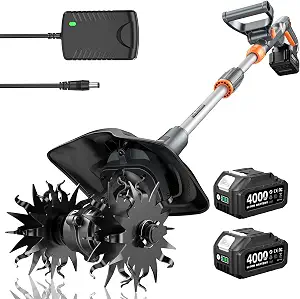 |
| Highest Rated A top-rated pick with lots of positive feedback | SEYVUM 20V Cordless Garden Tiller with Dual 4.0Ah Batteries |  |
| Best Seller A high-volume bestseller chosen again and again | HEINPRO Cordless Garden Tiller Cultivator (Compatible with DEWALT 20V MAX) |  |
SOARFLY Cordless Tiller Cultivator with 2×4.0Ah Batteries

| Unit Count | 2 Count |
|---|---|
| Material Type | Alloy Steel, Plastic |
| Power Source | Battery Powered |
| Operation Mode | Electric |
This SOARFLY cordless tiller is built for small gardens, raised beds, and flower plots where maneuverability and ease matter more than industrial power. It runs on two included 4.0Ah lithium batteries and drives 48 steel tines at a stated 360 RPM to loosen soil, remove weeds, and aerate moderately compacted ground. Adjustable handle height and an auxiliary grip make it simple to steer in tight rows and reduce operator fatigue during longer sessions. Because it is cordless and relatively lightweight, it is easy to carry between beds and safe to use where extension cords would be impractical. The machine performs best in normal garden soil and slightly moist clay when started shallow and increased gradually; very hard, rock-filled, or deeply compacted ground will slow progress and may require multiple passes or a heavier gas unit. Safety features include a two-step start with a safety lock to prevent accidental engagement. For gardeners who want a fuss-free, portable cultivator for prepping planting areas and spot weeding, this model is a practical, user-friendly option.
Best for: Home gardeners with small plots, raised beds, or tight planting rows who prioritize a lightweight, cordless tool that is easy to maneuver and reduces physical strain.
Less Ideal for: Large acreage owners or users who need to break up deep, heavily compacted or rock-strewn soil should consider a heavier gas-powered tiller instead.
- Comes with two 4.0Ah batteries for extended runtime and quick battery swaps
- 48 steel tines provide effective soil loosening for small beds and raised planters
- Adjustable height and auxiliary handle improve comfort and control during use
- Cordless design makes it highly portable and usable where power outlets are unavailable
- Not powerful enough for very hard, rocky, or deeply compacted soil compared with gas tillers
- 360 RPM and lightweight build mean slower progress on large areas
Verdict: A portable, easy-to-use cordless cultivator ideal for prepping and maintaining small gardens and raised beds with minimal hassle.
Paxwrenx Cordless 9" Tiller Cultivator (Tool Only) — DeWalt 20V Compatible

| Power Source | Battery Powered |
|---|---|
| Battery Compatibility | DeWalt 20V (DCB200–DCB210) |
| Maximum Till Depth | 7 in. |
| Maximum Till Width | 9 in. |
| No Load Speed | 360 RPM |
This handheld cordless tiller is built for fast, targeted soil work around beds and between rows. It uses DeWalt 20V-compatible batteries (battery not included) to drive a 300W peak motor at 360 RPM and four hardened steel tines that cultivate a 9-inch-wide, 7-inch-deep path. Typical use is breaking compacted topsoil, mixing in amendments, and removing weeds in garden beds where a full-size rototiller would be overkill. Notable features include tool-free assembly, a three-section precision-fit pole for rigid handling, a soft-grip ergonomic handle with an adjustable auxiliary grip, and overload protection that cuts power if the tines jam. A 4.0Ah battery delivers around 25 to 30 minutes of continuous work, which is enough for small to medium beds; larger plots will require spare battery packs. The unit is lightweight and easy to maneuver, but because it is a compact, handheld tool it is best for targeted cultivation rather than deep primary tilling of large areas. Users should expect slower progress in very heavy clay or rocky ground and may need to make multiple passes.
Best for: Gardeners who prioritize performance in targeted bed prep and want a powerful cordless cultivator that leverages existing 20V battery systems for quick weeding and amendment mixing.
Less Ideal for: Do not choose this if you need to till large acreage or break very deep compacted soil where a full-size rear-tine tiller or gas-powered unit is required.
- DeWalt 20V compatibility lets you use existing batteries for cordless convenience
- 300W peak high-torque motor with four hardened steel tines for effective soil penetration
- Tool-free assembly and a precision-fit three-section pole for rigid, wobble-free handling
- Lightweight design and ergonomic soft-grip handle reduce user fatigue during prolonged use
- Battery and charger are not included so runtime depends on separately purchased packs
- Limited continuous runtime per battery makes it less suitable for large-scale tilling
- Smaller 9" by 7" tilling width and depth are not ideal for primary cultivation of large plots
Verdict: A compact, high-torque cordless cultivator that delivers performance-focused, battery-powered tilling for fast bed prep and precision weeding.
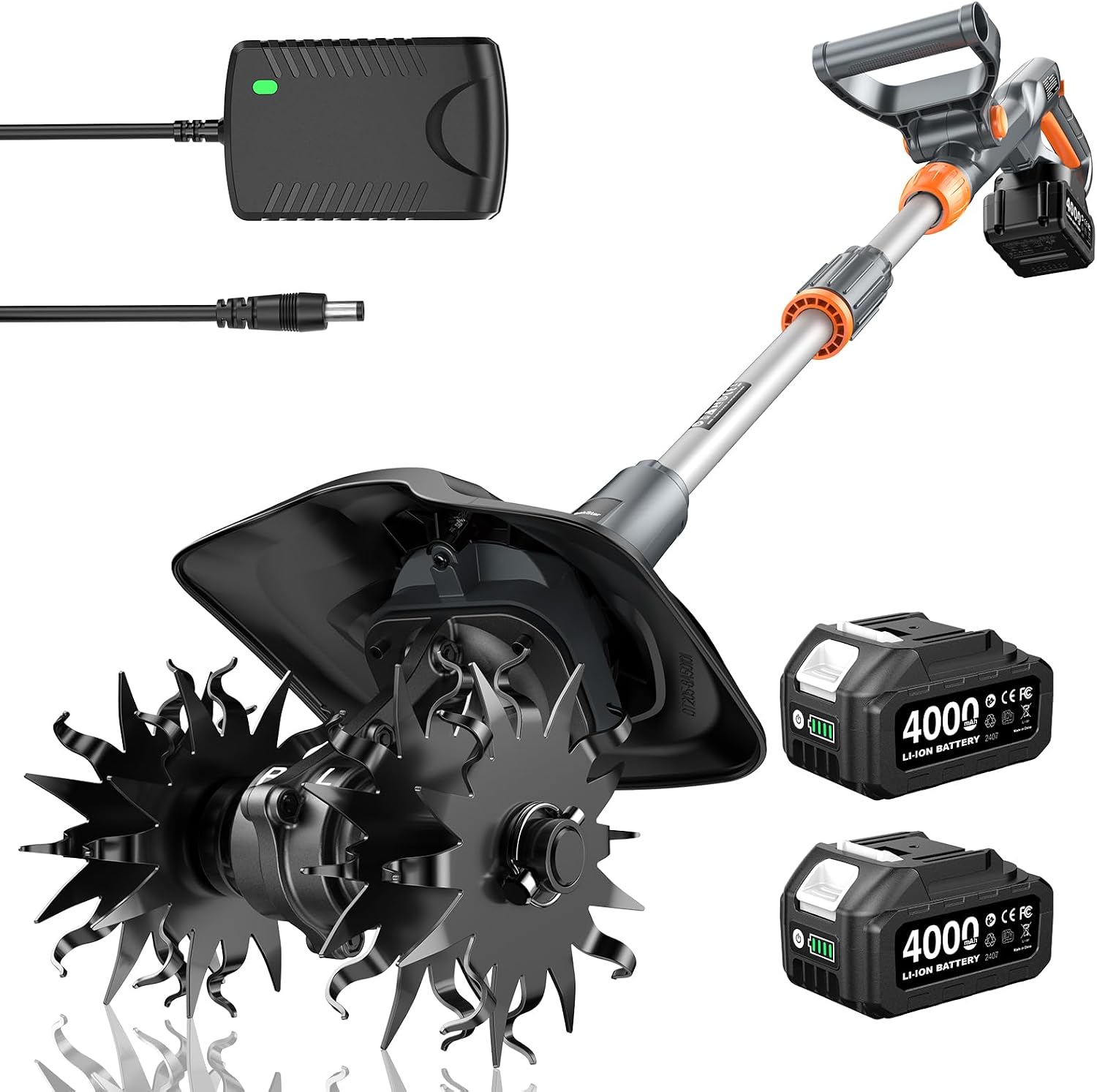
TaskStar Cordless Garden Tiller Cultivator with 2×4.0Ah Batteries
| Power Source | Battery Powered |
|---|---|
| Item Highlight | 9 Inch Tilling Width & 7 Inch Depth, 48 Steel Tines |
| Unit Count | 1 Count |
| Material Type | Alloy Steel |
The TaskStar cordless tiller is a compact electric cultivator aimed at speeding up small-scale soil preparation. It runs on two 20V 4.0Ah lithium batteries so you can till without cords or fuel, and the 48 steel tines with a roughly 9-inch working width handle mixing compost, breaking compacted soil, and preparing planting beds. The adjustable main handle and front auxiliary grip make it easy to steer through raised beds or narrow rows, and the detachable tine assembly simplifies cleaning and maintenance. Its 360 RPM motor delivers noticeable torque for soft to moderately compacted soils, and the lightweight design reduces fatigue for gardeners who prefer shorter sessions or frequent spot work. The main limitations are its small working width and limited depth compared with full-size tillers, so larger yards or very hard clay will require multiple passes or a heavier machine. For routine home garden tasks this model saves time and eliminates gas upkeep, but expect slower progress on big plots.
Best for: Home gardeners who want a low-maintenance, cordless tool to prepare and refresh small to medium beds, raised planters, and vegetable rows with minimal effort.
Less Ideal for: People with large acreage, commercial plots, or consistently heavy clay soil who need wider, deeper, or more powerful tilling in one pass.
- Cordless operation with two 20V 4.0Ah batteries for extended runtime and no fuel maintenance
- 48 rust-resistant steel tines provide effective soil penetration and mixing for beds and borders
- Lightweight and adjustable handles improve maneuverability and user comfort
- Detachable tine system makes cleaning and routine upkeep quick and simple
- Narrow 9-inch working width and modest tilling depth limit productivity on larger plots
- 360 RPM motor is good for typical garden soils but may struggle in very compacted clay
Verdict: A lightweight cordless cultivator that delivers convenient, low-maintenance soil preparation for small home gardens and raised beds.
SEYVUM 20V Cordless Garden Tiller with Dual 4.0Ah Batteries

| Power Source | Battery Powered |
|---|---|
| Batteries | 2 x 4.0Ah lithium |
| Tilling Width | 9-inch |
| Tilling Depth | 7-inch |
| Blades | 4 x 12-tooth steel |
The SEYVUM 20V cordless tiller is a lightweight electric cultivator built for routine soil prep in small vegetable beds, raised planters, and narrow pathways. It uses a high-speed brushless motor and four 12-tooth steel blades to break up clods and mix amendments without the fuss of gas engines. The unit ships with two 4.0Ah lithium batteries that the manufacturer rates for about 50 minutes of combined run time, so you can complete most small plots or multiple raised beds on a single charge. Its 9-inch tilling width and 7-inch depth let you work between rows and inside tight beds without disturbing adjacent plants. Practical touches include a compact frame that is easier to carry and store than larger tillers. Expect limits on heavy-duty tasks: it is optimized for light to medium soil and small areas rather than deep, continuous excavation on acreage. Also plan on recharging between longer sessions if you need extended runtime beyond the bundled batteries.
Best for: Gardeners who want a no-fuss, battery-powered cultivator to prepare and maintain small vegetable beds, raised planters, or narrow pathways and prioritize ease of use and storage.
Less Ideal for: Those needing a heavy-duty machine for large acreage, continuous deep tilling, or frequent work in very compacted clay should consider a larger gasoline or commercial-grade tiller.
- Brushless 20000 RPM motor for efficient, quieter operation
- Dual 4.0Ah batteries provide up to about 50 minutes combined runtime
- Compact 9-inch width and 7-inch depth for use in tight beds and between rows
- Four 12-tooth steel blades designed to cut and mix soil effectively
- Not intended for heavy clay or continuous large-scale tilling
- Limited working width means more passes on larger beds
Verdict: A compact, battery-powered tiller that makes quick work of small beds and tight spaces, ideal for gardeners who want an efficient, easy-to-store cultivator.
HEINPRO Cordless Garden Tiller Cultivator (Compatible with DEWALT 20V MAX)

| Power Source | Battery Powered (Battery and Charger not Included) |
|---|---|
| Working Width | 9In tilling width |
| Tilling Depth | 7In depth |
| Blades | 4 hardened steel blades |
| Speed | 360 RPM |
This HEINPRO cordless tiller is a compact electric cultivator aimed at quick soil prep in small plots and raised beds. It uses DEWALT 20V MAX-compatible batteries so you can borrow power from an existing tool collection, and an integrated battery gauge shows runtime at a glance. The unit turns soil with four hardened steel blades at about 360 RPM across a 9-inch working width and up to 7-inch depth, making light plowing, aerating, mixing compost, and weeding straightforward. The tiller is easy to assemble with a three-section pole and quick-release collar and has an adjustable auxiliary handle and non-slip soft grip for better control. Safety is addressed with a dual-switch system to prevent accidental starts. Limitations include modest power and a narrow working width that make it unsuitable for heavy sod, dense grass, or large acreage, and the battery and charger are not supplied. For small vegetable plots and tight garden spaces it is a practical, low-maintenance alternative to gas tillers.
Best for: Buyers who want a simple, low-maintenance electric tiller for small vegetable plots, raised beds, or flower borders and who prioritize safety and ease of use over maximum power.
Less Ideal for: People needing a heavy-duty tiller for large gardens, commercial use, or for removing established turf should consider a larger gas or higher‑power electric model.
- Cordless design compatible with DEWALT 20V MAX batteries for convenient shared power
- Lightweight and ergonomic with adjustable handle and soft grip for reduced user fatigue
- Four hardened steel blades provide efficient soil mixing, aeration, and light plowing
- Dual safety switch reduces accidental starts and improves user safety
- Quick three-section assembly and compact storage for tight sheds and garages
- Not intended for heavy sod or dense grass where blades can tangle
- Battery and charger are not included so runtime depends on separate purchase or existing batteries
- Narrow 9-inch width and modest RPM limit efficiency on larger areas
Verdict: A lightweight, safe cordless tiller that makes quick soil prep in small beds easy using DEWALT 20V MAX batteries.
Choosing the Right Back Rotary Power Weeding Tool: Key Factors to Consider
Battery Runtime and Charging
Battery runtime determines how much continuous work you can do between charges. For larger yards you will want a longer runtime or a quick-swap battery system so you do not stop frequently. Pay attention to realistic run times under load rather than idealized figures, because cutting dense weeds or tall grass drains batteries faster.
Charging time and the availability of spare batteries also matter. A long recharge can interrupt work if you only have one pack, while a shorter charge or the option to charge a spare while you work keeps productivity high. Consider battery chemistry and the manufacturer-specified cycle life if you expect heavy seasonal use.
Cutting Width and Blade Type
Cutting width affects how quickly you clear an area. A wider cutting head covers ground faster but can be harder to maneuver in tight beds and around plants. Narrower heads allow precision near borders and delicate plantings. Look for adjustable heads or attachable accessories that let you change coverage as needed.
Blade type and construction influence cutting performance and longevity. Blades designed for fibrous weeds and perennial roots will stay sharper longer and reduce clogging. Also consider whether the cutting system is compatible with replacement blades you can source locally.
Harness Comfort and Weight Distribution
A back-mounted unit shifts weight from your arms to your torso, but only a well-designed harness will actually reduce fatigue. Look for padded shoulder straps, adjustable belts or chest straps, and a harness that distributes load across the hips and shoulders. Poorly balanced systems concentrate weight on one area, causing sore shoulders or lower back strain over long use.
Check how the shaft length and tool balance work with your height. Some systems let you fine-tune harness adjustments and shaft length so the cutting head sits at a comfortable working angle without stooping.
Durability and Weather Resistance
Garden tools face dirt, moisture, and abrasion. Components exposed to soil and damp conditions should resist corrosion, and external housings should be impact-resistant. Durable gearboxes and mounts reduce the risk of failure when the tool encounters stubborn roots or stones.
Also evaluate how well seals and ventilation protect internal electronics and batteries from moisture. A tool that resists rust and water intrusion will hold up through seasons of use and require fewer repairs.
Maintenance and Serviceability
Routine maintenance keeps a power weeding tool reliable. Consider how easy it is to access cutting components for cleaning, sharpening, or replacement. Bolt-on blades or modular cutting heads are easier to service than permanently sealed units.
Also check for user-replaceable filters, belts, or fuses where applicable, and the availability of basic spare parts. Tools that require specialized service for minor repairs will cost more in downtime and maintenance over their lifetime.
Best Uses and Garden Situations
Back rotary power weeding tools are best when you need to clear large patches of weeds, maintain long borders, or work areas where repeated stooping causes back pain. They are especially useful for gardeners with mobility concerns or who manage several hundred square feet of beds and paths.
These tools are less ideal for tight, highly planted perennial beds where precision matters more than speed. For paver joints and narrow crevices, a narrower head or a different tool may be more appropriate.
- Efficient for open beds, long borders, and ditch edges
- Reduces repetitive bending and lowers arm fatigue
- Not optimal for delicate plantings or very tight spaces
Safety and Best Practices
Wear eye and ear protection when operating a back-mounted rotary weeder. Flying debris is common, and motor noise can be significant during extended use. Gloves and sturdy footwear protect hands and feet from accidental contact with blades or slipping on uneven ground.
Before starting, clear the work area of larger stones, garden stakes, and low-hanging limbs. Keep bystanders and pets at a safe distance. Use the tool at a steady pace and avoid forcing the cutting head through dense tangles; letting the motor work at its intended load reduces strain and risk of damage.
- Use protective eyewear, gloves, and hearing protection
- Clear debris and obstacles before cutting
- Maintain a safe distance from people and pets
Adjustments and Ergonomics for Different Gardeners
Height, torso length, and strength vary between gardeners, so a system with multiple harness adjustments and a telescoping shaft works best. Simple changes like moving shoulder straps, changing hip-belt position, or altering shaft angle can make long sessions comfortable.
Try to set the cutting head height so you can walk with a natural posture. If the tool forces you into a stooped position, you will lose the ergonomic benefits. Some gardeners prefer a light counterweight or foam padding added to the harness to fine-tune balance.
- Adjust harness and shaft length to maintain upright posture
- Test balance before long jobs and tweak padding as needed
- Consider harness swap options for shared tools
Storing and Winter Care
Clean soil and plant debris from the cutting head and shaft after each use to slow corrosion. Remove batteries for long storage and keep them at recommended charge levels in a cool, dry place. Inspect seals and fasteners seasonally and lubricate moving parts per manufacturer guidance.
For winter, store the unit in a dry area away from freezing temperatures when batteries are installed. Before first use in spring, check blade sharpness, harness integrity, and battery health to avoid surprises when you start work.
- Remove organic debris after every use
- Store batteries separately in cool, dry conditions
- Perform a seasonal check of blades, harness, and seals
Accessories and Attachments That Matter
Useful accessories include extra batteries, blade guards for transport, and different cutting heads for varied vegetation. A quick-release harness or a padded hip belt can significantly increase comfort on longer tasks. Carrying cases or wall mounts help keep the tool organized and protected between uses.
Also consider replacement blade kits and simple maintenance tools like a sharpening stone and basic wrench set. Having these on hand reduces downtime and keeps the tool ready through peak weeding seasons.
- Extra batteries and alternative cutting heads expand usefulness
- Protective guards and storage solutions extend tool life
- Maintenance kits keep blades sharp and parts accessible
How We Chose the Best Back Rotary Power Weeding Tool
We focused on features that directly affect how a back rotary power weeding tool performs in everyday garden use. Key evaluation criteria included battery runtime and charging behavior for cordless models, cutting width and blade type for effectiveness, weight distribution and harness comfort to reduce back and shoulder strain, and ease of maintenance for keeping the cutter reliable season after season. We also looked at build durability and corrosion resistance for use around moisture and soil, plus safety features such as blade guards and quick-stop switches. Excluded items included handheld trimmers and non-rotary weed-removal tools that do not offload load to the back, plus heavy commercial-only machines unsuited to home gardeners. The final list emphasizes tools that balance practical runtime, cutting performance, and wearable comfort for typical yard, bed, and path weeding tasks.
FAQ
How long will a battery-powered back rotary unit run on a single charge?
Run time depends on battery capacity and the vegetation you cut. Typical home-use batteries often run 30 to 90 minutes under normal loads, but dense or tall weeds shorten that. Using a spare battery or lowering cutting speed can extend work time.
Can I use a back rotary power weeder near delicate plants?
You can, but take care. Use a narrower cutting head and work slowly near plantings, or switch to a handheld tool for very close trimming. Proper shielding and steady control reduce chances of collateral damage.
Is maintenance difficult for these tools?
Maintenance is generally straightforward: clean debris after use, inspect blades, and replace or sharpen cutting elements as needed. Models with modular heads and user-replaceable parts are easiest to service.
Are there safety concerns unique to back-mounted designs?
Back-mounted tools can shift your center of gravity and increase risk of tripping if not properly balanced. A secure harness and correct shaft length mitigate this. Also be mindful of cooling vents, loose clothing, and keeping a safe distance from others.
Will a heavier unit always be more powerful?
Not necessarily. Heavier units may have bigger motors or batteries but also increase user fatigue. Balance and harness design influence how manageable a heavier tool feels during long sessions.
Final Verdict
Choosing the right back rotary power weeding tool means balancing runtime, cutting coverage, and harness comfort against durability and ease of upkeep. Prioritize a system that fits your garden size and the types of weeds you face, then check harness fit and serviceability before deciding. If you want long sessions without frequent interruptions, focus on battery runtime and spare battery options. If precision around plants matters, prioritize narrower heads and fine adjustments to harness and shaft length so you stay comfortable and in control.
