

Note: This article contains affiliate links. If you click on these links and make a purchase, I may earn a small commission at no extra cost to you. This helps support my research and content. Read my full affiliate disclosure here.
If you spend time maintaining patios, walkways, or driveways, the right paver weeding tool saves time and prevents damage to joints and stone edges. You want something that extracts roots and debris without widening gaps or cracking pavers, and that holds up when used on grit-filled joints or sand. This guide presents six top-rated paver weeding tools shortlisted for hardscape work and evaluates them on concrete factors gardeners care about: blade geometry, durability, handle ergonomics, and joint safety. Read on to compare the picks and find a tool that fits how you maintain your paved areas.
Top Picks at a Glance
| Best Overall The best all-around choice for most situations | GREBSTK Crack Weeder Adjustable Stainless Steel (20–63 in) |  |
| Best Quality Built to a higher standard if you want something more solid | Walensee 3-in-1 Adjustable Crack Weeder and Moss Remover Brush Tool |  |
| Best Value The sweet spot between price and what you get | Garden Guru Patio Crack Weeder Tool with Ergonomic Handle |  |
| Best Budget The cheapest option that still gets the job done reliably | WORKPRO 13.5" Crack Weeder with Stainless Steel Blade and Wooden Handle |  |
| Highest Rated A top-rated pick with lots of positive feedback | Ryscam 59-inch Stainless Steel Crack Weeder (Adjustable Length) |  |
| Most Popular A crowd favorite that many people choose with confidence | BARAYSTUS 3‑in‑1 Crack Weeder with Adjustable Stainless Steel Handle and Wire Brush |  |
GREBSTK Crack Weeder Adjustable Stainless Steel (20–63 in)

| Material | Stainless steel |
|---|---|
| Lengths available | 20 to 63 inches (adjustable in segments) |
| Blade type | L-shaped double-sided, precision-ground |
| Fits crack width | As narrow as 0.1 inch |
This GREBSTK Crack Weeder is a versatile manual tool designed for cleaning weeds from narrow joints, paver gaps, and edging beds. It assembles by twisting segmented shafts into four lengths (20 to 63 inches) so you can work standing or seated without tools. The L-shaped, double-sided hardened stainless steel blade is thin enough to slide into very narrow cracks and sharp enough to scrape and cut roots; a curved hook helps pry out taproots to reduce regrowth. All-steel construction resists bending and rust for heavy outdoor use. In practice the adjustable length and slim profile make it easy to get between tight pavers and along borders, while the long full-length setting reduces bending for larger areas. The main compromise is that the all-metal handle lacks cushioning, so extended use can be tiring without gloves, and the telescoping joints may develop play over long-term heavy use. For users who need a durable, precise tool for keeping joints and edges weed-free, this tool is a practical, long-lasting choice.
Best for: Homeowners and landscapers who want a single, adjustable tool to clean weeds from pavers, driveways, and tight joints while minimizing bending and improving precision.
Less Ideal for: People who need cushioned or ergonomic handles for long continuous work or who prefer powered solutions for very large areas should consider alternative tools.
- Telescoping design assembles to four lengths for standing or seated use.
- Slim, precision-ground stainless steel blade fits narrow cracks and cuts roots effectively.
- L-shaped double-sided blade and hooked tip help pry out taproots to reduce regrowth.
- Solid hardened stainless steel construction resists rust and bending for long-term outdoor use.
- Handle is all stainless steel with no padded grip, which can be uncomfortable during long sessions.
- Telescoping segments may develop slight play after heavy repeated use.
Verdict: A durable, adjustable stainless steel weeder that reaches into very narrow paver joints and lets you work standing or seated for precise, long-lasting weed removal.
Walensee 3-in-1 Adjustable Crack Weeder and Moss Remover Brush Tool

| Item Form | Manual |
|---|---|
| Item Weight | 1.4 kg |
| Coverage | non-selective broad spectrum coverage |
This Walensee crack weeder is built for heavy-duty paver and joint cleanup: it combines a V-shaped wire brush with a straight wire brush and a thick metal scraper to tackle roots, moss, and compacted dirt in cracks on patios, driveways, and sidewalks. The tool is typically used by loosening growth with the wire brush, then scraping with the 0.16-inch thick blade to pull roots up to about 2.8 inches deep. The three-length stainless steel handle (36, 51, 66.5 inches) adjusts to reduce bending and lets you work standing up, while the non-slip rubber grip improves control. Replaceable brush heads allow swapping from aggressive root removal to gentler moss sweeping and extend the tool’s service life. Assembly is straightforward with threaded pole sections and a few screws so you can get to work quickly. Limitations include manual effort for large areas and the need to pre-soak stubborn moss or weeds per instructions to get the best results, so it is less effective than powered options for very extensive surfaces.
Best for: Gardeners and homeowners who prioritize effective, hands-on performance for cleaning paver joints and small paved areas and want a tool that reaches deep roots while minimizing bending.
Less Ideal for: People who need to clear very large paved areas quickly or who prefer powered pressure-washing solutions should consider motorized equipment instead.
- Three adjustable handle lengths let users work standing to reduce back strain
- Two replaceable brush heads plus a metal scraper handle both moss sweeping and deep root removal
- Durable stainless-steel handle and threaded joints for quick assembly and modular storage
- Manual tool requires physical effort and is slower on large paved areas compared with powered cleaners
- Instructions note pre-soaking for best performance on stubborn moss and roots
Verdict: Choose this adjustable 3-in-1 crack weeder when you want a robust, standing-use tool that combines aggressive root removal and moss sweeping for precision paver maintenance.
Garden Guru Patio Crack Weeder Tool with Ergonomic Handle

| Material | Rust resistant stainless steel |
|---|---|
| Head style | L-shaped |
| Handle | Ergonomic soft-grip with thumb rest |
| Use | Patio, sidewalk, driveway cracks |
| Finish | Rust-resistant |
The Garden Guru Patio Crack Weeder is a purpose-built handheld tool for extracting weeds and thistles from tight joints in pavers, sidewalks, and driveways. The L-shaped stainless-steel head slips into narrow cracks to hook and lever out roots without digging large holes, while the rust-resistant finish keeps the metal durable for outdoor use. The thick, contoured soft-grip handle with thumb rest reduces hand and wrist fatigue during repetitive weeding and includes a hang hole for easy storage. In practice the tool shines on shallow-rooted weeds and in closely spaced joints where a larger weeder cannot reach; for deep taproots or very compacted joints you may need to follow up with a narrow pry bar or repeat visits. It is lightweight and unlikely to bend in typical paver maintenance, but it is a single-purpose tool best used alongside other weeding gear rather than as an all-in-one garden solution.
Best for: Buyers who want a low-effort, targeted solution for keeping paver joints and sidewalks weed-free and who prioritize ease of use and hand comfort during routine maintenance.
Less Ideal for: If you need a multi-function gardening tool or regularly remove very deep taprooted weeds across beds, choose a heavier digging tool or long-handled weeder instead.
- L-shaped stainless-steel head fits into narrow paver and sidewalk cracks to remove roots.
- Rust-resistant stainless steel construction resists bending and corrosion during outdoor use.
- Ergonomic soft-grip handle with thumb rest and finger grooves reduces hand and wrist fatigue.
- Lightweight design is easy to maneuver for extended weeding sessions.
- Hang hole on handle enables simple storage between uses.
- Designed specifically for surface and shallow-rooted weeds so may require additional tools for deep taproots.
Verdict: A simple, comfortable stainless-steel weeder that excels at pulling weeds from narrow paver and sidewalk joints for efficient routine maintenance.
WORKPRO 13.5" Crack Weeder with Stainless Steel Blade and Wooden Handle

| Blade material | Stainless steel |
|---|---|
| Handle material | Wood |
| Length | 13.5 inches |
| Weight | 6.7oz |
The WORKPRO 13.5" crack weeder is a straightforward hand tool for scraping and pulling weeds from paver joints, cracks, and along edging. Its L-shaped stainless steel blade combines a sharp cutting edge and sawtooth section for slicing turf, levering out roots, and scraping moss or debris from between stones. The stainless construction resists rust and keeps the blade rigid during leverage work while the FSC-certified wooden handle gives a comfortable grip and reduces wrist fatigue during repeated use. At roughly 13.5 inches long it fits well between patio stones and in tight corners where longer tools are awkward, and the hanging hole makes storage easy. Because it is a simple manual tool there is no power or adjustable depth, so it works best for surface and shallow-rooted weeds rather than deep perennial roots; heavy clay may require extra effort. For routine paver maintenance this tool is durable, easy to control, and ideal for quick spot weeding without setup.
Best for: A practical choice for homeowners who want an inexpensive, durable hand tool to keep paver joints and patio cracks tidy with quick spot weeding and scraping.
Less Ideal for: Not the best option for landscapers or users who need to clear large areas or remove deep perennial roots without powered or long-handled equipment.
- Stainless steel L-shaped blade resists rust and stays rigid for scraping and levering.
- Sawtooth and sharp edge let you cut turf and scrape debris from paver joints effectively.
- Comfortable hardwood handle reduces hand fatigue during prolonged use.
- Compact length reaches tight joints and corners between pavers and stones.
- Manual design provides no mechanical advantage for very deep or stubborn taproots.
- Short length limits reach compared with long-handled weeders for larger areas.
Verdict: A budget-friendly, corrosion-resistant hand weeder built for precise paver and crack maintenance.
Ryscam 59-inch Stainless Steel Crack Weeder (Adjustable Length)

| Handle length | 59 inches |
|---|---|
| Blade material | High carbon steel |
| Blade finish | Anti-rust coating |
| Recommended crack width | 0.1 inch (2.5mm) or wider |
| Recommended depth | Under 2 inches (5cm) |
This Ryscam crack weeder is a purpose-built long-handle tool for removing weeds and moss from narrow cracks in driveways, patios, and walkways while keeping you upright. The shaft breaks down into sections so you can assemble four different working lengths, and the 59-inch configuration lets you work without bending or kneeling for extended sessions. The L-shaped high-carbon steel blade is angled to dig beneath roots and lever them out rather than snapping off at the surface, and an anti-rust coating helps it resist corrosion from damp conditions. Two-section non-slip PVC grips give you control and reduce hand fatigue during repetitive scraping and pulling. It performs best on gaps about 0.1 inch wide and up to 2 inches deep, so it tackles common residential crevices efficiently. Expect a manual tool feel though: it requires some physical force on compacted or deep-rooted weeds, and the fixed blade shape is less versatile than interchangeable heads for other chores.
Best for: Buyers who prioritize a dependable, low-maintenance hand tool for frequent crevice weeding and prefer to avoid bending over during yard work.
Less Ideal for: Gardeners who need a multipurpose tool for large beds, very wide cracks, or who prefer powered weed removal methods.
- Adjustable 4-length shaft lets you work standing to reduce back and knee strain
- L-shaped high-carbon steel blade digs under roots for more complete removal
- Anti-rust coating and sturdy forged construction improve durability in wet conditions
- Non-slip PVC grips provide control and reduce hand fatigue during extended use
- Best suited to cracks roughly 0.1 inch wide and under 2 inches deep so not ideal for very large gaps or deep-rooted problems
- Requires physical effort on compacted surfaces compared with powered options
Verdict: A sturdy, long-handle weeder built to remove roots from narrow pavement cracks while keeping you standing for comfortable, repeatable use.
BARAYSTUS 3‑in‑1 Crack Weeder with Adjustable Stainless Steel Handle and Wire Brush
| Head Material | Stainless Steel, plastic |
|---|---|
| Handle Material | Stainless Steel |
| Gap compatibility | Fits gaps from 0.08" wide up to 1.5" depth |
| Adjustable lengths | 30.7 in, 44.5 in, 58.6 in |
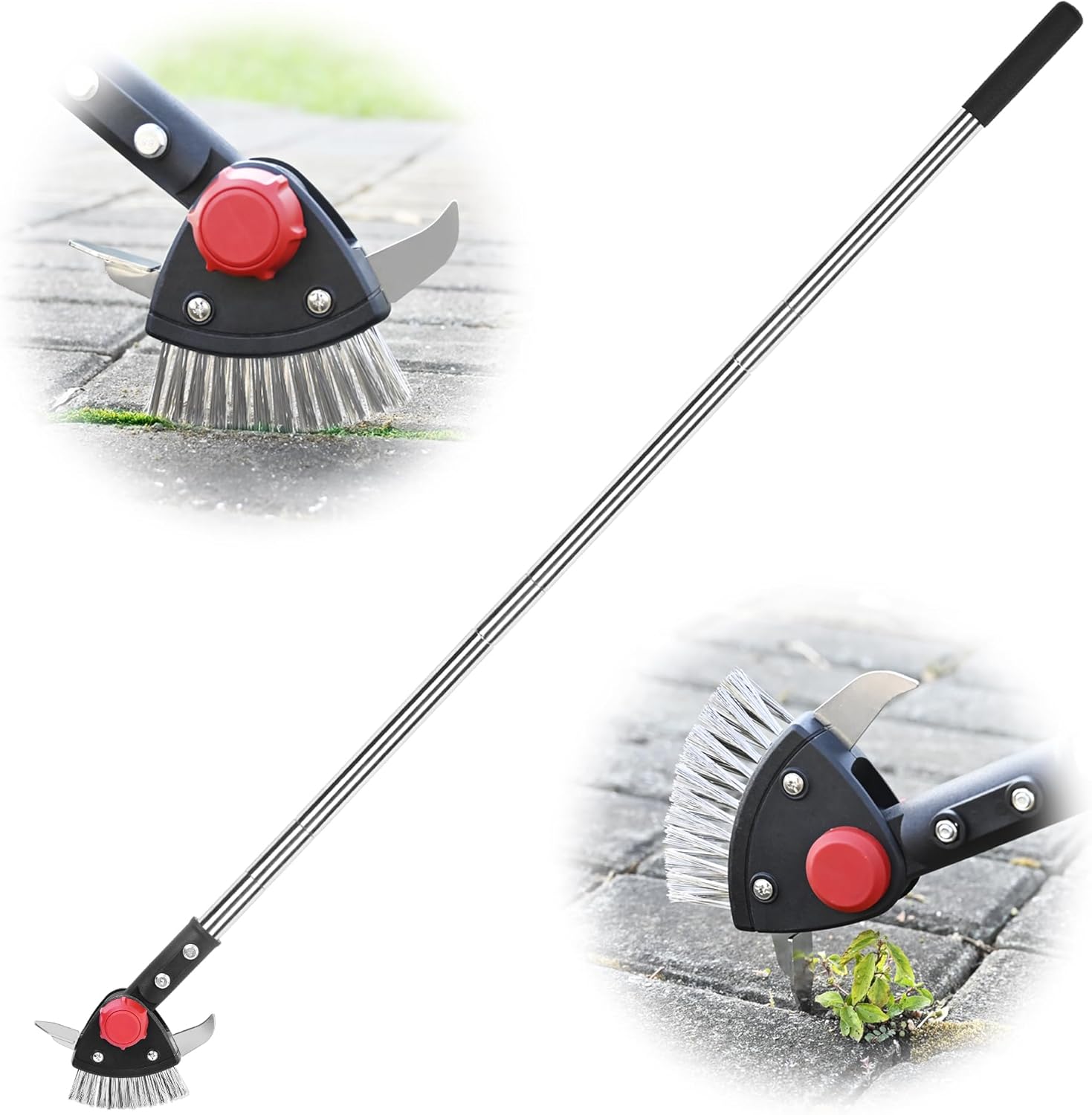
This 3-in-1 crack weeder is designed to remove weeds, moss, and debris from joints between pavers and along edges without bending over. The tool head includes a curved scraper for narrow crevices, a triangular scraper for wider gaps, and a stainless steel wire brush to sweep out loosened material. The head swivels up to 150 degrees so you can lock it at an angle that matches the gap, and the brush and blades are rust-resistant for year-round use. The stainless steel handle telescopes to three lengths so you can work standing up or shorten it for tight spots, and the four-section threaded assembly disassembles for compact storage. In practical use the metal bristles wear with heavy scraping on compacted soil and the nylon connector is the nonmetal weak point to be mindful of, but routine moistening of soil and using the scraper before brushing extend brush life. For homeowners who want a durable, straightforward hand tool to keep paver joints and driveways tidy, this tool covers the common tasks efficiently.
Best for: Homeowners who prioritize efficient, low-effort paver and driveway maintenance and want a proven, easy-to-use tool to remove weeds and debris without frequent bending.
Less Ideal for: Professional contractors who need heavy‑duty, replaceable brush systems or power equipment for large commercial jobs should consider more robust or specialized tools.
- Three functional heads (curved scraper, triangular scraper, wire brush) cover narrow and wide joints
- Stainless steel blades and brush are rust-resistant for outdoor use
- Adjustable stainless steel handle locks at three lengths to reduce bending and improve leverage
- 150° swivel head lets you set the working angle for better contact with irregular joints
- Wire brush is a wearing part and will need replacement sooner with heavy use
- Plastic (PA nylon) connector at the head is durable but is the tool's most vulnerable element
Verdict: A practical, rust-resistant 3-in-1 hand tool that lets you clean paver joints while standing, making routine weeding faster and easier for homeowners.
Choosing the Right Paver Weeding Tool: Key Factors to Consider
Blade Geometry
Blade shape determines how effectively a tool slices through roots and packed debris in paver joints. Narrow, tapered blades slip into tight gaps; beveled or hooked tips can pry roots out from the base rather than shredding them. Thicker blades resist bending on compacted sand but may be harder to insert into narrow joints. Consider whether you need a stiff straight blade for scraping or a hooked profile for levering-it changes how much force you apply and how the blade interacts with stone edges.
Blade length also matters. Longer blades reach deeper-rooted weeds but can be harder to control. For most hardscape maintenance, a mid-length blade balances reach with control so you can clear roots without levering against pavers.
Edge Durability and Material
Outdoor tools face moisture, grit, and repeated impact, so blade material and finish affect how long the tool stays sharp and functional. Hardened steel or properly heat-treated alloys retain a cutting edge when used against gritty sand and root mass. Corrosion-resistant finishes or stainless options reduce rust that can seize moving parts or erode thin blades.
Pay attention to how the blade is attached to the handle. Welded or riveted connections with full tangs stand up to prying and twisting; cheap press-fit blades are more likely to loosen. A durable edge reduces the need for frequent replacement and ensures consistent performance when you clear multiple runs of joints.
Handle Ergonomics and Grip
Joint work is repetitive and often done on knees or crouched positions, so handle comfort directly affects how long you can work without soreness. Ergonomic handles with contours or soft overmolds reduce pressure points and improve control during scraping motions. Longer shafts allow standing use for minor weeds, reducing strain on the back, while short handheld designs give more precise control in tight areas.
Consider balance too. A well-balanced tool transfers force efficiently from your hand to the blade, letting you use less effort to extract stubborn roots. Non-slip textures help when working with wet hands or gloves.
Joint Safety Design
Protecting paver edges and joint material is a key goal when choosing a weeding tool. Tools designed with shoulder stops, rounded transitions between blade and shank, or guarded tips reduce the tendency to gouge stone. Thin, sharp blades can cut weeds effectively but may also nick soft paver edges if misused. Look for profiles that allow root removal while minimizing lateral pressure on pavers.
If you use polymeric sand or sealed joints, aggressive lever action can dislodge jointing material and require re-sanding. A joint-safe tool balances cutting and pulling so you remove vegetation but keep joint material largely intact.
Ease of Blade Replacement and Maintenance
Blades will dull, bend, or corrode over time, so ease of replacement keeps a tool serviceable without full replacement. Tools with common blade fittings or available replacement blades make it possible to restore cutting performance quickly. Simple maintenance routines such as drying after use, light oiling, and occasional sharpening extend life.
Also evaluate whether the tool allows field sharpening and whether spare blades are a standard spec. For busy yards or commercial use, a replaceable blade system saves time and reduces downtime between jobs.
Versatility Across Joint Types
Paved surfaces vary from tight, sand-filled joints to wider mortar or gravel joints. A versatile tool handles multiple joint widths and surfaces without damaging surrounding stone. Some designs include interchangeable tips or dual-profile blades to adapt from narrow seams to wider cracks.
Choose a tool that matches the majority of joints you maintain. If you have mixed surfaces, prioritize adaptability so you can work efficiently across patios, pathways, and driveway edges with the same tool.
Preparing Pavers Before Weeding
Start by sweeping loose debris and sand from the joints to expose root systems and see the joint width. Removing surface grit first reduces abrasion on the blade and lets you judge how much force is safe to use without shifting pavers.
If you plan to work on a large area, test your chosen tool in a small, inconspicuous spot to confirm it clears roots without chipping edges. Protect delicate stone by using lighter strokes near seams with visible cracks.
- Sweep and clear loose material first
- Test in an inconspicuous seam
- Work from the center of the paver run toward edges to avoid levering against corner stones
Techniques for Removing Roots and Regrowth
For young weeds, a scraping motion along the joint often removes enough material to stop regrowth. For older plants with deeper roots, insert the blade to the base of the root and use a levering motion to extract as much root as possible. Pulling shallow only encourages rapid return.
After removing roots, clear remaining debris and consider brushing polymeric sands back into the joint and compacting where needed. Regular follow-up weeding at longer intervals prevents dense root mats from forming.
- Use scraping for seedlings, levering for deep roots
- Clear loosened material and recompact joint sand when necessary
- Repeat shorter sessions regularly for easier maintenance
Working with Different Joint Materials
Loose sand and dry joints permit a more aggressive scraping approach because the sand cushions blade action. Polymeric sand and hardened joint sealants require gentler work; avoid prying that dislodges bonded material. Mortared joints are brittle, so prioritize narrow blades and minimal lateral pressure.
If you encounter polymeric sand that has partially cured, you may need to soften the area with water and wait before mechanical removal to avoid tearing out joint material.
- Sand-filled joints: firmer scraping acceptable
- Polymeric or bonded joints: soften before aggressive work
- Mortar joints: use narrow blades and light pressure
Storing and Caring for Your Weeding Tool
Dry the tool after use to prevent rust and wipe away abrasive sand that accelerates wear. Apply light oil to metal surfaces occasionally, especially if the blade is made from plain steel. Store in a dry, ventilated area out of direct ground contact.
If the blade is replaceable, keep a spare on hand and sharpen blades with a file or stone when they become dull. Tighten any fasteners regularly and check for loosening at the handle-blade junction.
- Dry and oil the blade after use
- Sharpen or replace blades when dull
- Check handle attachments before each season
When to Use a Standing Versus Handheld Design
Standing tools with long shafts reduce bending and are ideal for larger areas where you will make many passes; they trade some precision for comfort. Handheld tools are better for tight, close-in work around edges and where delicate control is needed to avoid chips.
If you have mobility limitations or expect long sessions, favor longer-handled designs with good grips. For spot maintenance, a compact handheld weeder provides better visibility and accuracy.
- Standing designs reduce back strain
- Handheld designs increase precision near edges
- Match tool length to the scale of the job
How We Chose the Best Paver Weeding Tool
We looked for tools that make joint weed removal efficient while protecting pavers and minimizing gardener fatigue. Selection prioritized blade geometry and material because a stiff, narrow blade slices roots and loosens compacted sand without forcing joints wider. We evaluated handle design and ergonomics to reduce wrist strain during repetitive scraping and pulling. Durability matters for outdoor use, so corrosion resistance and secure blade-to-handle attachment were required. We also checked for joint-safety features such as rounded shoulders, tempered tips, or replacement blades to extend life without increasing damage risk. Finally, versatility across common joint types and grit conditions was considered so the tools work on narrow and wider joints, polymeric sand, and packed mortar edges. We excluded tools that are strictly for lawn or garden beds, excessively fragile designs, or items lacking tangible joint-protection elements. The remaining six tools meet minimum standards on cutting geometry, build quality, and ergonomics and represent practical options for homeowners and small-scale landscape pros.
FAQ
How often should I remove weeds from paver joints?
Often you can maintain tidy joints with a quick pass every few weeks during the growing season. Frequency depends on weed pressure and joint material; high-traffic areas and nutrient-rich joint sand may need more frequent attention.
Will a metal weeding tool damage my pavers?
It depends on the tool profile and technique. Thin, well-shaped blades used with controlled motions can remove roots without chipping. Avoid levering on paver corners and use gentler strokes on softer or aged stones.
Can I use a paver weeding tool on polymeric sand joints?
Yes, but take care. Polymeric sand that is fully cured resists mechanical removal and may crumble if pried. Light scraping after softening with water is safer than aggressive levering that dislodges bonded material.
Is a replaceable blade important for home use?
Replaceable blades extend the tool's life and make maintenance easier, especially if you have abrasive sand or large areas to manage. For occasional spot work, a durable fixed blade may be adequate.
How do I sharpen a paver weeding blade?
Use a small flat file or sharpening stone to restore a thin bevel, working along the edge in short, even strokes. Maintain the original angle and remove only small amounts to avoid weakening the blade.
Final Verdict
Choose a paver weeding tool that matches the joints and scale of your hardscape work. Prioritize blade geometry and durable materials if you regularly tackle compacted sand and deep roots. If comfort matters for long sessions, opt for ergonomic handles or a standing shaft. Balance joint protection against cutting power and prefer replaceable blades if you expect heavy use. Aim for a tool that removes roots cleanly without widening joints; that approach minimizes rework and keeps paved surfaces stable. With the right combination of blade profile, durability, and ergonomics, you can keep paver joints tidy with less effort and fewer repairs.
