

Note: This article contains affiliate links. If you click on these links and make a purchase, I may earn a small commission at no extra cost to you. This helps support my research and content. Read my full affiliate disclosure here.
A well-chosen wooden planter brings warmth and structure to patios, balconies, and garden beds while protecting fragile roots and improving soil conditions. The right wooden planter balances rot resistance, drainage, and size so your plants establish quickly and stay healthy through seasons. This guide showcases seven shortlisted wooden planters that suit a range of uses from small balconies to raised-bed vegetable plots. We evaluated each option on construction, longevity, and how it performs in real garden conditions to help you choose the best fit for your planting goals.
Top Picks at a Glance
| Best Overall The best all-around choice for most situations | Yaheetech Wooden Raised Garden Bed Planter Box |  |
| Best Quality Built to a higher standard if you want something more solid | Maple99 Cedar Raised Garden Bed with Legs, 48 x 24 x 30 |  |
| Best Value The sweet spot between price and what you get | VINGLI 3‑Piece Wooden Planter Barrel Set (11.5"–18") |  |
| Best Budget The cheapest option that still gets the job done reliably | windiy Rustic Pine Wooden Rectangular Planter Box with Removable Plastic Liner |  |
| Highest Rated A top-rated pick with lots of positive feedback | ScienGarden Square Fir Wood Planter Box with Liner |  |
| Most Popular A crowd favorite that many people choose with confidence | Best Choice Products 48 x 24 x 30in Raised Fir Wood Garden Bed with Liner |  |
| Best Seller A high-volume bestseller chosen again and again | Furinno Tioman Outdoor Planter Box with Bench (Natural) |  |
Yaheetech Wooden Raised Garden Bed Planter Box

| Capacity | 27 cubic feet |
|---|---|
| Number of Levels | 1 |
| Material Type | Fir Wood |
| Finish Types | Varnish |
| Indoor Outdoor Usage | Outdoor |
The Yaheetech wooden raised garden bed is a straightforward outdoor planter built from fir wood with a varnished finish and weather-resistant treatment. It arrives as a single-piece floor-standing bed sized for an 8ft by 4ft growing area and is typically used for backyard vegetable plots, herb patches, or flower borders where a defined, elevated bed helps control soil quality and drainage. Notable features include solid wood construction, a smooth varnish finish that helps resist the elements, and a divisible design option in the product line for flexible planting layouts. The open elevated form makes planting and weeding easier than ground-level beds and helps keep soil warmer and better drained for many crops. Expect basic assembly from the included instructions and routine maintenance like periodic sealing to prolong life. Limitations are typical of natural wood: it will eventually weather and needs upkeep to avoid rot, and the lighter fir wood is not as long-lived as rot-resistant species without regular care.
Best for: Home gardeners who want a large, natural-looking raised bed to grow vegetables, herbs, or flowers and who are willing to perform simple maintenance to protect the wood.
Less Ideal for: Those seeking a maintenance-free or lifetime solution or gardeners who prefer metal or composite beds that resist rot without sealing.
- Solid fir wood construction for a natural look and sturdy planting bed
- Varnish finish and weather-resistant treatment reduce immediate exposure to moisture
- Large 8ft x 4ft capacity provides ample planting area for multiple crops
- Floor-standing raised design improves drainage and makes planting and weeding easier
- Requires periodic sealing and maintenance to prevent weathering and rot
- Fir wood is less naturally rot-resistant than some hardwoods so lifespan depends on care
Verdict: If you want a roomy, natural wooden raised bed for backyard vegetables or herbs and are prepared to maintain it, this Yaheetech planter delivers practical, weather-resistant construction.
Maple99 Cedar Raised Garden Bed with Legs, 48 x 24 x 30
| Capacity | 200 pounds |
|---|---|
| Material Type | Cedar Wood, Fir Wood, Wood |
| Other Special Features of the Product | Drainage Hole |
| Mounting Type | Floor Standing |
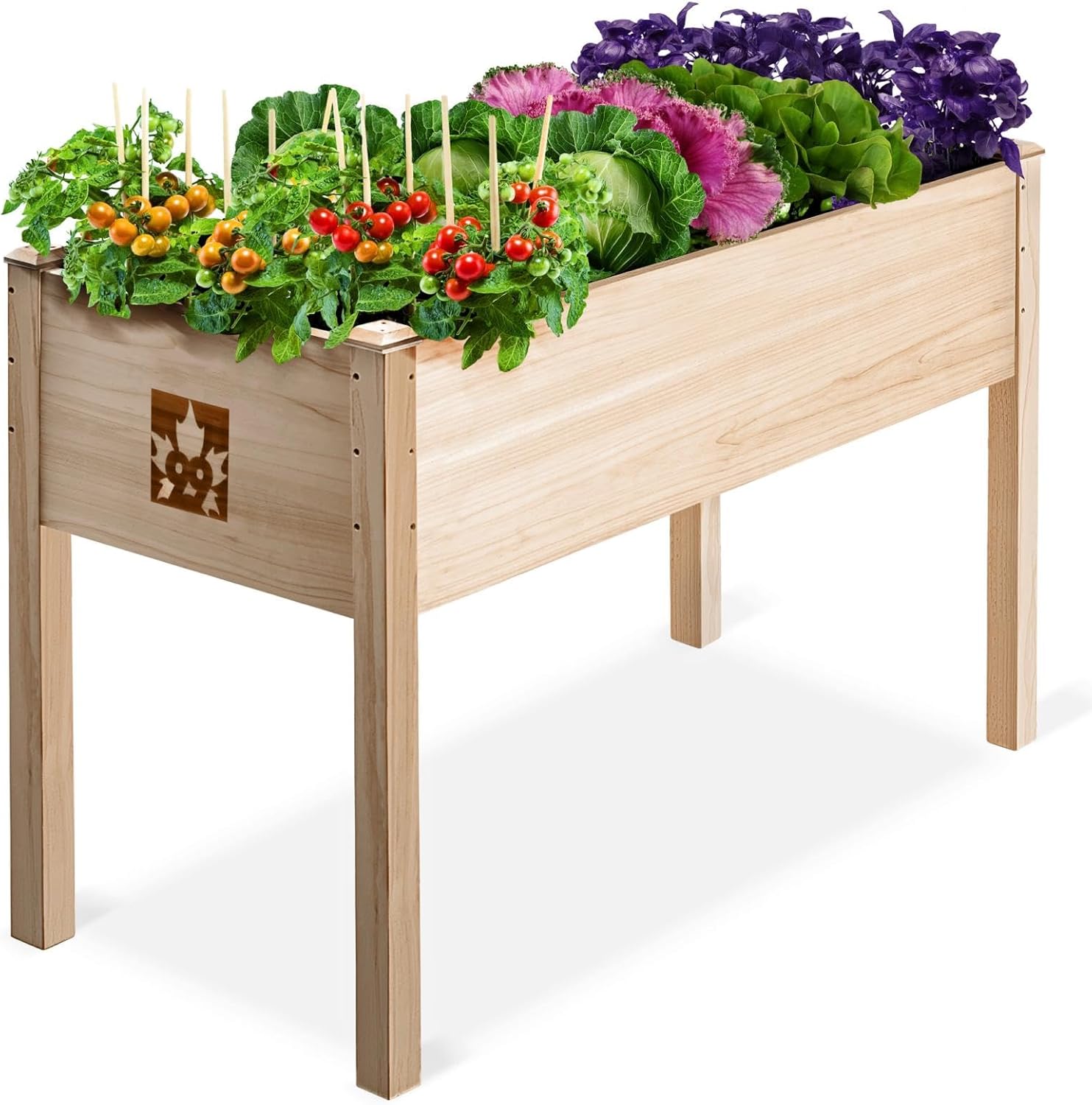
This Maple99 cedar raised garden bed is a sturdy, back-friendly planter built for small-scale vegetable and flower growing. It stands on 30-inch legs so you can tend plants without bending, and the cedar construction offers natural resistance to insects and weather while leaving the option to paint or customize the finish. The box is designed to hold up to 200 pounds of soil and water, and a drainage hole helps prevent waterlogging. Assembly is straightforward and includes the necessary tools and instructions, making it an achievable DIY project for one or two people. Practical benefits include improved ergonomics, reduced weed pressure compared with ground beds, and a contained footprint that works on patios or lawns. Limitations are its medium footprint, which may not suit gardeners who need very large planting volume, and the wood will still age over time so eventual maintenance or replacement is possible. The unit is best used for concentrated vegetable patches, herbs, or decorative flower mixes where raised height and tidy appearance matter.
Best for: Gardeners who prioritize ergonomic, performance-focused planting in a compact footprint and want a durable wooden planter for vegetables, herbs, or flowers that reduces bending and improves access.
Less Ideal for: People needing very large growing volume or commercial-scale production should choose larger beds or in-ground rows instead.
- Cedar and fir construction offers natural insect resistance and an attractive natural finish
- 30-inch legs raise planting height for comfortable, back-friendly gardening
- Supports up to 200 pounds of soil and water for stable planting
- Includes tools and clear instructions for straightforward assembly
- Built-in drainage hole reduces waterlogging risk
- Medium planting volume may be too small for large-scale vegetable production
- Wood will weather over time and require maintenance or replacement
Verdict: Choose this cedar raised bed when you want a durable, ergonomic wooden planter that keeps gardening comfortable while delivering reliable performance for focused vegetable and flower beds.
VINGLI 3‑Piece Wooden Planter Barrel Set (11.5"–18")

| Material Type | Wood |
|---|---|
| Included Components | 3 x Wooden Planter |
| Other Special Features of the Product | Drainage Hole |
| Mounting Type | Floor Standing |
| Indoor Outdoor Usage | Outdoor |
The VINGLI 3-piece wooden planter barrel set provides a simple, durable option for grouping container plants on patios, porches, or in garden beds. Each pot arrives ready to use with predrilled drainage holes and two metal side handles that make repositioning easier when filled. The barrels are built from fir wood with a charred finish and reinforced by a metal frame and screws, which helps them hold soil and resist warping under normal outdoor conditions. Having three graduated sizes gives flexibility for mixed plantings or staged arrangements. Expect natural wood to weather over time outdoors, so placing them under partial shelter or applying a sealer will extend life. These are floor-standing planters intended for outdoor use and do not include liners, so heavy watering or constant damp soil could speed deterioration if not managed. For buyers who want a rustic look and quick setup, these planters deliver attractive, ready-to-use containers with practical handling features.
Best for: Buyers who want a low-effort, rustic planter trio to create cohesive layered displays on a patio or garden and who prioritize ready-to-use, easy-to-move containers.
Less Ideal for: People seeking maintenance‑free, fully weatherproof planters or those who need large, heavy-duty pots for very large trees or constant soaking conditions.
- Comes as a coordinated three-piece set for layered plant arrangements.
- Predrilled drainage holes simplify planting and prevent waterlogging.
- Metal frame with screws reinforces the wooden staves for improved durability.
- Built-in side handles make moving full pots easier.
- Ready to use out of the box with no assembly required.
- Made of untreated wood finished by carbonization so long-term outdoor exposure can cause weathering without additional protection.
- No included liner or waterproofing layer, which may require adding one for delicate plants or frequent watering.
Verdict: A ready-to-use, rustic three-piece wooden planter set that makes creating layered outdoor displays quick and straightforward.
windiy Rustic Pine Wooden Rectangular Planter Box with Removable Plastic Liner

| Capacity | 4.32 liters |
|---|---|
| Included Components | Liner |
| Material Type | Pine Wood, Plastic, Wood |
| Mounting Type | Tabletop |
| Indoor Outdoor Usage | Indoor |
This windiy wooden planter box is a simple, budget-friendly way to add rustic charm to a windowsill, table, or centerpiece. It is made from unfinished pine and comes with a removable plastic liner so you can use potting soil or mason jars without worrying about leaks. At about 17 inches long and a narrow profile it fits a row of succulents, air plants, or a small floral arrangement and works well for indoor tabletop displays. The construction is straightforward and lightweight, so it is easy to move and position for seasonal decor or event centerpieces. Because the wood is unfinished and the liner is included but not deeply fitted, expect some manual fitting for snug placement and occasional wiping to keep water from contacting the wood. There are no drain holes, so it is best used with the liner or potted inserts rather than planting directly in the wood. For the price it delivers solid aesthetic value and flexible use for decorative plant displays.
Best for: Buyers looking for an inexpensive decorative planter to display succulents or small arrangements on tables or windowsills who prioritize style and affordability over heavy-duty planting.
Less Ideal for: Gardeners who need long-term outdoor planters for heavy watering or larger plants should choose a planter with drainage and more robust, finished materials.
- Includes a removable plastic liner to protect the wood and contain soil or water
- Lightweight pine construction makes it easy to move and position
- Narrow rectangular shape fits windowsills, tabletops, and centerpieces
- Unfinished rustic look complements farmhouse and country decor styles
- No built-in drain holes so direct planting requires careful moisture management
- Unfinished wood may need sealing over time if exposed to water frequently
Verdict: A very affordable rustic pine planter box that gives quick decorative impact for succulents and tabletop displays thanks to its included removable liner.
ScienGarden Square Fir Wood Planter Box with Liner

| Material | Fir Wood |
|---|---|
| Capacity | 36.91 gallons |
| Included Components | Liner |
| Other Special Features of the Product | Drainage Hole |
| Mounting Type | Floor Standing |
This ScienGarden square planter is a straightforward, no-frills wood planter built for predictable outdoor use. Constructed from solid fir with mortise-and-tenon style corners and bottom support bars, it holds soil and small plantings steadily and resists racking when filled. The painted, water-based finish gives a sealed surface that stands up to routine exposure and the slightly raised base helps keep the wood off wet ground. Two drainage holes and the included fabric liner combine to manage excess moisture and keep soil contained, which is useful for herbs, strawberries, annuals, and small vegetable starts on a patio, porch, or balcony. Assembly and placement are simple since it is floor-standing and compact. Limitations are its modest planting volume and single-unit format, so it works best for small-scale container gardens rather than larger raised beds or multi-plant installations, and as a natural wood product it will still benefit from seasonal maintenance to prolong life outdoors.
Best for: Buyers who prioritize a dependable, well-built wooden planter for small-scale outdoor container gardening and want a product that stays stable and drains well without fuss.
Less Ideal for: Gardeners looking to grow large numbers of vegetables or create an expansive raised bed system should consider larger or modular planters instead.
- Solid fir construction with mortise-and-tenon corners for structural stability
- Painted water-based finish provides a smoother, sealed surface for outdoor use
- Included fabric liner and two drainage holes control moisture and keep soil tidy
- Reinforced bottom support and slightly raised base improve stability and reduce ground moisture contact
- Size is small so it holds limited soil volume and supports only a few plants at a time
- As a natural wood planter it requires periodic care to maintain longevity outdoors
Verdict: A solid, compact fir wood planter that reliably holds soil and drains well for small outdoor container gardens.
Best Choice Products 48 x 24 x 30in Raised Fir Wood Garden Bed with Liner

| Capacity | 5 cubic feet |
|---|---|
| Material Type | Fir Wood |
| Mounting Type | Floor Standing |
| Other Special Features of the Product | Drainage Hole |
| Indoor Outdoor Usage | Outdoor |
This raised garden bed is a straightforward option for small-space vegetable and herb gardening. Constructed from unfinished fir wood, it assembles into a 48 x 24 footprint with a 30 inch planting height that reduces bending while you tend plants. The included bed liner separates soil from the wood, slowing rot and keeping roots and soil contained, and a built-in drainage hole prevents waterlogging. With about 5 cubic feet of planting volume and a 200 lb weight capacity it accommodates several seasonal vegetables, potting mixes, or a mix of herbs and flowers. The all-wood construction looks natural outdoors but will need sealing or periodic maintenance to maximize longevity. Assembly requires following the included guide and handling multiple pieces, so expect some time and basic tools. For gardeners who value an elevated, ergonomic setup and a ready-to-use liner, this planter delivers a practical balance of planting space and convenience; heavy-duty or permanent raised beds will outlast unfinished fir without added treatment.
Best for: Gardeners who want an elevated, easy-to-use planter for vegetables or herbs and prefer a natural wood look while minimizing daily maintenance.
Less Ideal for: People seeking a permanent, maintenance-free raised bed or very large-scale vegetable production should consider heavier-duty or larger alternatives.
- Ergonomic 30 inch height reduces bending and makes planting and harvesting easier
- Included liner keeps soil off the wood to slow rot and discourage pests
- Built-in drainage hole prevents waterlogging and promotes healthier roots
- Natural fir wood construction offers an attractive, rustic look outdoors
- Unfinished fir requires sealing or periodic maintenance to resist weathering
- Assembly involves multiple parts and basic tools and can take time
Verdict: A practical, elevated wooden planter with a liner and drainage that makes small vegetable and herb gardening easier and more ergonomic.
Furinno Tioman Outdoor Planter Box with Bench (Natural)

| Material Type | Engineered Wood |
|---|---|
| Furniture Finish | Teak |
| Included Components | Assembly Instruction, Bench, Flower Box, Hardware Pack |
| Maximum Weight Recommendation | 350 pounds |
The Furinno Tioman Outdoor Planter Box pairs a slatted hardwood planter with a removable single-seat bench so you get a low-profile seat and container in one piece of outdoor furniture. Made from dark red meranti wood treated with teak oil, the unit resists moisture better than unfinished wood and is designed for backyard, patio, balcony, or garden use. Assembly is straightforward with hardware and instructions included, and the bench removes for easier planting or cleaning. Practical perks include a 350 pound seating recommendation and a teak finish that blends with most outdoor decor. Limitations to expect are that the planter boxes do not include bottom panels so you will need liners or pots for contained planting, and engineered assembly means long-term durability depends on yearly teak oil maintenance and sheltered placement in severe weather. Size and weight make it a compact choice rather than a large raised bed, so plan accordingly for plant selection and placement.
Best for: Buyers who want a small, attractive wooden planter that also provides occasional seating and prefer a low-risk, easy-to-assemble outdoor accessory to complement a patio or balcony.
Less Ideal for: Gardeners who need deep, enclosed planters or a large planting area for vegetables and those unwilling to perform basic yearly wood maintenance should look elsewhere.
- Solid hardwood (dark red meranti) treated with teak oil for improved water resistance
- Dual-purpose design combines planter and removable bench for seating or work surface
- Easy assembly with included hardware and instructions
- Attractive teak finish that integrates with outdoor decor
- Rated to support up to 350 pounds for a usable single-seat bench
- Planter boxes lack bottom panels so liners or pots are required for contained planting
- Requires annual teak oil treatment to maintain appearance and weather resistance
Verdict: A compact hardwood planter that also functions as a removable bench, offering an attractive, low-effort addition to small patios and balconies.
Choosing the Right Wooden Planter: Key Factors to Consider
Wood Type and Decay Resistance
The species and any preservative treatment determine how long a wooden planter will last outdoors. Naturally durable woods like cedar and redwood resist rot longer than untreated softwoods. Pressure-treated lumber lasts but may not be ideal for edible plantings unless lined to separate soil from treated surfaces.
Understanding wood behavior helps you choose a planter that matches your maintenance tolerance. More durable woods reduce the need for yearly replacements but can cost more up front. If you plan to grow edibles, select construction and finishes that avoid direct contact between treated timber and growing medium.
Construction and Joinery
How a planter is put together affects strength, water resistance, and lifespan. Tight dovetail or mortise-and-tenon joints and stainless fasteners hold up better than simple stapled corners or thin nails. Reinforced corners and internal bracing prevent bulging when planters are filled with heavy, wet soil.
Look for solid bottoms or slatted bottoms with reinforced frames rather than thin plywood bases. Well-built joinery also reduces the chance of leaks or soil loss and makes seasonal moves safer because the planter will not fall apart under load.
Drainage Design
Effective drainage keeps roots healthy and wood dry. Good planters offer multiple drain holes, raised internal platforms, or removable feet to raise the bottom off the ground so excess water can escape. A planter without adequate drainage invites root rot and accelerates wood decay.
Consider how the planter will sit: directly on pavers, soil, or a wooden deck. Feet or spacers can help maintain airflow under the planter and reduce prolonged moisture contact that speeds rot.
Size, Depth, and Planting Use
Planter dimensions dictate what you can grow. Shallow boxes suit annuals and herbs, while deeper, wider planters are needed for shrubs, tomatoes, and perennials with larger root systems. Consider both internal depth and usable soil volume after any liners or coco coir are added.
Size also affects weight when filled. Large planters become heavy and may be impractical to move. Match the planter scale to the intended location so drainage, sunlight, and watering patterns are consistent with plant needs.
Finish, Liner Options, and Maintenance
Finishes and liners change both longevity and planting safety. Breathable finishes that protect wood while allowing moisture transfer extend life without sealing moisture inside. Removable plastic liners speed planting and reduce soil contact but can trap water if not paired with drainage holes.
Decide how much seasonal maintenance you will accept. Oiling or resealing every few years keeps the wood looking good and slows rot. If you prefer low upkeep, choose naturally rot-resistant species and planters designed for airflow and easy water shedding.
Portability and Weight
How often you plan to move a planter affects your choice of material and size. Wooden planters can be heavy once filled, so cast your decision on whether you need casters, handles, or a lighter construction. Portable planters are handy for changing light conditions or moving plants indoors for overwintering.
Also consider the base surface: heavy planters need stable support and protection for decks and surfaces. Choose designs with feet or allow space underneath to prevent moisture buildup that would harm both the planter and the surface it sits on.
Best Wood Choices for Outdoor Planters
Different woods behave differently in the garden. Cedar and redwood have natural oils that slow decay and resist insects, making them excellent for long-lived planters. Untreated pine or fir can be economical but will need sealing or a liner to last multiple seasons.
If you want a planter that lasts with minimal maintenance, prioritize wood species with natural rot resistance and pair it with good drainage. If you plan to paint or stain, choose straight, clear boards that take finishes evenly.
- Cedar: good rot resistance and pleasant aroma
- Redwood: durable and visually appealing
- Treated lumber: long-lasting but consider a liner for edibles
- Plywood: avoid thin exterior plywood bases without reinforcement
Lining and Soil Considerations
Linings protect wood and make replacing soil easier, but they alter drainage. If you use a plastic liner, ensure it has drain holes aligned with the planter bottom and consider adding gravel or a coarse layer to keep soil away from the wood contact points.
Use a light, well-draining potting mix rather than garden soil in planters. Mix in compost for nutrients and materials like perlite or coarse sand to improve porosity and reduce the chance of waterlogging the root zone.
- Add a 1 to 2 inch coarse drainage layer only if your soil mix struggles to drain
- Choose a potting mix suited to the plants you intend to grow
- Consider biodegradable liners for short-term separation that will eventually allow roots against wood
Placement and Seasonal Care
Where you place a planter affects its longevity. Sunny, well-drained sites that allow airflow under the planter reduce moisture accumulation and slow decay. Avoid direct contact with damp soil or grass for long periods.
Prepare for winter by emptying lightweight planters or moving them to a sheltered area. For heavy planters that cannot be moved, raise them slightly on blocks and cover the top with breathable fabric to reduce freeze-thaw stress on the wood and roots.
- Elevate planters off the ground to improve airflow
- Rotate or move planters seasonally if light conditions change
- Inspect and reseal finishes every 1 to 3 years depending on exposure
Design Details That Matter
Small design choices have big effects in daily gardening. Slatted bottoms allow easier drainage and air exchange compared with solid panels. Integrated trellis options help support vining plants without extra hardware. Removable bottom boards make winter drainage maintenance easier.
Check fasteners and corner reinforcements. Stainless steel screws and galvanized brackets resist corrosion and will outlast plain steel in humid or coastal gardens.
- Prefer slatted or raised bottoms for improved drainage
- Look for rust-resistant hardware
- Consider built-in irrigation compatibility if you plan to use drip systems
Styling Tips for Outdoor Spaces
Wooden planters suit many styles from rustic to modern. Natural, unfinished wood softens contemporary patios, while painted planters add a pop of color and protect the wood. Consider height and line when grouping planters to create visual interest and layering in planting schemes.
If you want a cohesive look, choose similar wood tones or finishes for planters in the same area. For a relaxed cottage feel, mix several sizes with trailing plants in front and taller specimens at the back.
- Paint for color and protection, but use breathable exterior paint
- Group heights to create focal points
- Match planter scale to the surrounding furniture and hardscape
How We Chose the Best Wooden Planter
We shortlisted wooden planters that demonstrate proven durability in outdoor use, then applied concrete selection filters gardeners care about. Key criteria included wood species and treatment for rot resistance, construction quality and joinery that determine how well a planter holds soil long term, and drainage design because standing water shortens wood life and harms roots. Size and depth options were assessed to match common planting needs from shallow herbs to deeper-rooted vegetables and shrubs. Finish and maintenance needs were evaluated so readers understand seasonal care and whether the planter will accept sealers or liners. We also considered weight and assembly complexity for practical placement and seasonal moves. Items that relied on non-breathable plastic liners without options for proper drainage were excluded, as were purely decorative boxes not intended for sustained outdoor planting. The final list reflects planters that balance durability, planting performance, and realistic upkeep expectations.
FAQ
How deep should a wooden planter be for vegetables?
Depth depends on the crop. Shallow-rooted herbs and lettuces do well in 6 to 8 inches of soil, while tomatoes, peppers, and many perennials need 12 inches or more. Always account for root ball size plus some reserve for moisture and nutrients.
Is it safe to grow edibles in treated wood planters?
It often depends on the treatment used. When using pressure-treated wood, add a heavy-duty liner or use an alternative wood to avoid potential chemical contact. Untreated rot-resistant woods or lined planters are safest for direct contact with edible soil.
Do wooden planters need a liner?
A liner is optional but useful. Liners reduce soil contact with the wood, extending life and making soil changes easier. If you use a liner, ensure it allows drainage and does not trap water against the wood.
How can I prevent my wooden planter from rotting quickly?
Provide good drainage, elevate the planter off the ground, and use a breathable finish or regular oiling to protect the wood. Avoid prolonged contact with saturated soil and inspect fasteners to catch early signs of failure.
Can I paint a wooden planter, or will that harm the wood?
Painting protects wood from moisture but choose breathable exterior paints or stains to allow moisture exchange. Rigid, non-breathable coatings can trap moisture and accelerate internal decay over time.
Final Verdict
Choose the wooden planter that aligns with how you garden and how much maintenance you will do. Prioritize wood species and construction if you want long-term durability, and favor effective drainage and appropriate depth for plant types. If low upkeep is key, select naturally rot-resistant wood and designs that elevate and ventilate the base. Balance size and portability against planting ambitions so you end up with a planter that supports healthy roots and suits your outdoor space.
