

Note: This article contains affiliate links. If you click on these links and make a purchase, I may earn a small commission at no extra cost to you. This helps support my research and content. Read my full affiliate disclosure here.
Choosing the right easy outdoor potted plants makes a big difference for busy gardeners, renters, and small-space patios. Containers change how plants experience sun, rain, and soil so selecting species that tolerate container conditions, limited root volume, and variable watering will save time and reduce losses. This guide covers the top shortlisted options for easy outdoor potted plants and explains practical care traits gardeners need to compare. We evaluate hardiness in containers, drought tolerance, and light requirements so you can match plants to your balcony, porch, or yard. Read on for simple, plant-first guidance before the product list.
Top Picks at a Glance
| Best Overall The best all-around choice for most situations | Tropical Plants of Florida Yellow Dipladenia Live Plant (3 Gallon) |  |
| Best Quality Built to a higher standard if you want something more solid | Southern Living Obsession Nandina Shrub (2 Gal) |  |
| Best Value The sweet spot between price and what you get | Ivydale 20-Pack Artificial Monkey Grass for Outdoors, UV-Resistant Faux Greenery |  |
| Best Budget The cheapest option that still gets the job done reliably | CitronellaKing Hesperaloe Red Yucca Plants (2 pack) |  |
| Highest Rated A top-rated pick with lots of positive feedback | YXZZWL 2-Pack 16" Artificial Eucalyptus Topiary Ball Trees (Potted) |  |
Tropical Plants of Florida Yellow Dipladenia Live Plant (3 Gallon)

| Indoor Outdoor Usage | Indoor, Outdoor |
|---|---|
| Expected Blooming Period | Spring to Fall |
| Sunlight Exposure | Full Sun |
| Soil Type | Sandy Soil |
This 3-gallon Yellow Dipladenia arrives as a compact, bushy flowering plant intended for containers or garden beds where you want immediate color. It produces trumpet-shaped yellow blooms from spring through fall and is noted for attracting pollinators and extended bloom time. The plant is marketed for both indoor and outdoor use but performs best in partial to full sun and sandy, well-draining soil; water regularly while allowing the surface to dry slightly between waterings. Because it grows as a non-climbing bush you do not need a trellis and it fits well on patios, balconies, or in mixed container arrangements. As an established 3-gallon specimen it provides faster visual impact than starter plugs, though it still needs routine care to keep blooms coming. Limitations include the need for sunny exposure and appropriately drained soil, and it may not tolerate heavy shade or overly wet conditions. For gardeners who want a low-maintenance, showy container plant, this dipladenia is an easy-to-use choice.
Best for: Gardeners who want an easy, ready-to-plant flowering shrub for pots or small patios and prioritize immediate color with minimal training.
Less Ideal for: Those who need a shade-tolerant or groundcover solution or who cannot provide well-drained soil and regular watering.
- Established 3-gallon plant gives immediate visual impact
- Long bloom period from spring to fall for extended color
- Attracts pollinators which benefits garden ecology
- Compact bush habit fits containers and patios without a trellis
- Requires partial to full sun and will not do well in heavy shade
- Prefers sandy, well-draining soil and can suffer in poorly drained sites
Verdict: Choose this established 3-gallon yellow dipladenia when you want an easy, pollinator-friendly potted plant that delivers season-long color with minimal fuss.
Southern Living Obsession Nandina Shrub (2 Gal)

| Sunlight Exposure | Full Sun to Part Shade |
|---|---|
| USDA Hardiness Zone | 6, 7, 8, 9, 10 |
| Moisture Needs | Moderate Watering |
| Expected Planting Period | Year Round |
The Southern Living Obsession Nandina is a 2-gallon evergreen shrub prized for intense red foliage that holds color through much of the year. It is marketed for outdoor beds and containers, and performs in full sun to part shade across USDA zones 6 to 10. Typical use is as an accent in mixed borders, a colorful container specimen on a patio, or a low hedge where a 3- to 4-foot mature height is acceptable. Practical benefits include low maintenance, deer resistance, and moderate water needs once established; the plant is described as organic and suited to loam soils with well-drained conditions. Limitations to consider are that it does not produce notable blossoms and requires routine watering while establishing; it will also reach about 48 inches, so plan placement or pruning accordingly. For container use, choose a generous pot and monitor soil moisture to keep foliage vibrant in hot, sunny sites.
Best for: Gardeners who want a low-maintenance, colorful evergreen for patio containers or small landscape accents and value year-round foliage interest.
Less Ideal for: People seeking a showy flowering shrub or those who need a very small dwarf variety for tight spaces should consider other options.
- Bright red evergreen foliage provides season-long color
- Suitable for containers or landscape beds thanks to compact mature size
- Tolerates full sun to part shade across USDA zones 6–10
- Low maintenance and described as deer resistant
- Does not produce significant blossoms for floral interest
- Requires consistent watering until established
Verdict: Choose this nandina when you want an easy-care, brightly colored evergreen that performs well in pots and small garden settings.
Ivydale 20-Pack Artificial Monkey Grass for Outdoors, UV-Resistant Faux Greenery
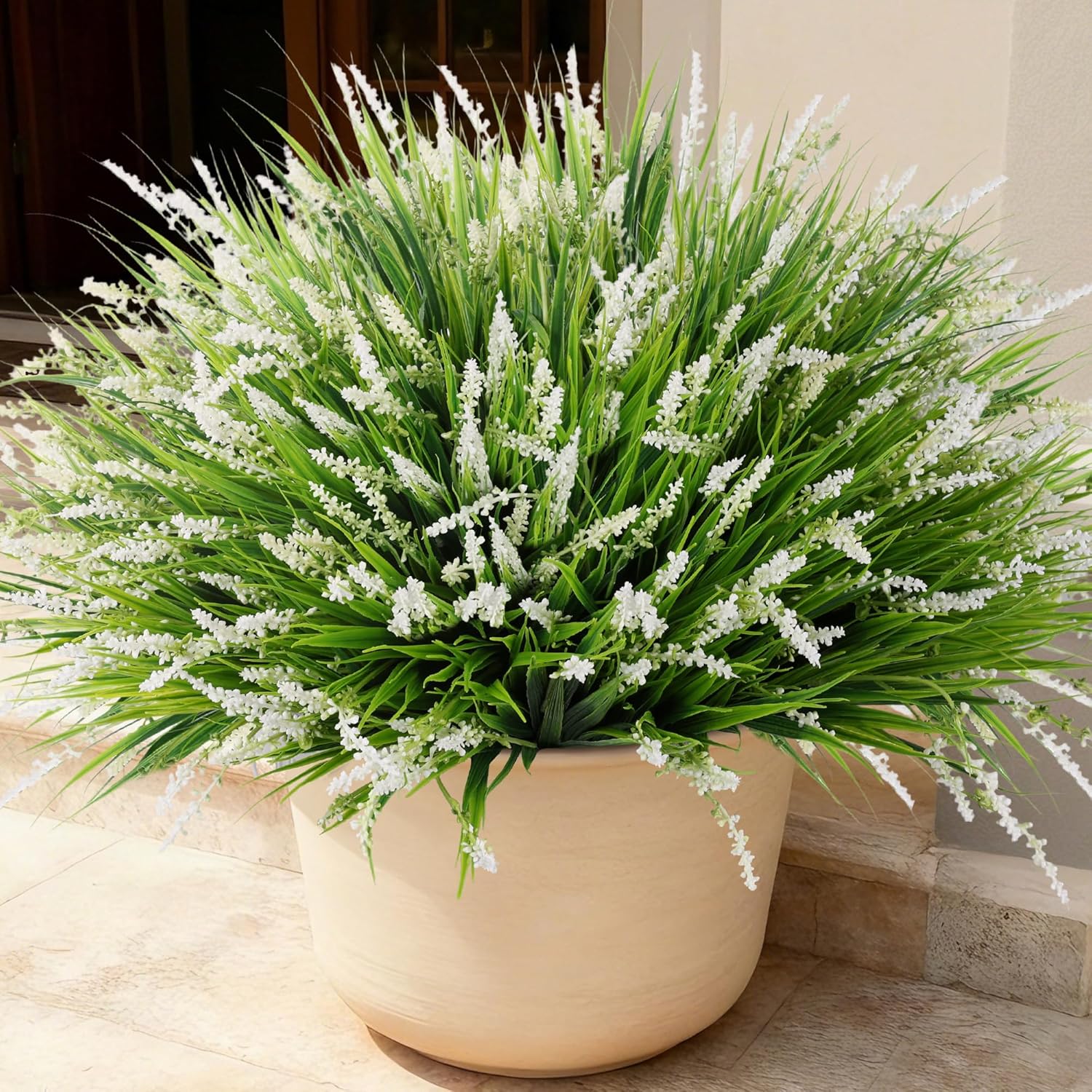
| Quantity | 20 pieces |
|---|---|
| Material | Plastic |
| UV resistant | Yes |
| Stem length | 16.5 inches |
These artificial monkey grass stems are made from UV-resistant plastic and come as a 20-piece set intended for outdoor use in planters, along walkways, or on porches. Each stem is about 16.5 inches long with flexible leaves that can be bent to look more natural, and the color gradients help mimic live foliage. The UV protection and fade-resistant material mean they can be left in sun-exposed containers with minimal maintenance, making them useful for busy homeowners or seasonal displays. They are lightweight and easy to arrange in groupings to fill pots or create a tidy border without soil, watering, or pruning. Limitations are that they are synthetic so they will not provide the texture or scent of real plants and may show wear or collect dust over time; they also lack root structure so they need anchoring in pots or foam to stay upright in wind. For straightforward low-maintenance outdoor greenery, these offer an uncomplicated alternative to live grasses.
Best for: Buyers who want a low-maintenance, ready-to-install way to keep outdoor pots and small planters looking green year-round without gardening upkeep.
Less Ideal for: People seeking the scent, growth dynamics, or ecosystem benefits of living plants should choose real grasses or perennials instead.
- UV-resistant plastic construction designed to resist fading in sunlight
- Comes as a 20-piece set that quickly fills multiple pots or planters
- Flexible leaves with color gradient deliver a more realistic appearance
- No watering or seasonal care required, suitable for year-round outdoor display
- Does not have real roots so stems need anchoring in potting medium or foam
- Can accumulate dust and may eventually show wear compared with fresh live plants
Verdict: A practical, no-fuss way to keep outdoor pots and planters looking consistently green with minimal upkeep.
CitronellaKing Hesperaloe Red Yucca Plants (2 pack)

| USDA Hardiness Zone | 5-11 |
|---|---|
| Sunlight Exposure | Full Sun to Partial Shade |
| Expected Blooming Period | Spring, Summer, Fall |
| Soil Type | Well-Draining Soil |
| Moisture Needs | Moderate Watering |
These two Hesperaloe red yucca starter plants arrive ready to plant in nursery cubes and are meant to provide low-maintenance vertical interest in drought-tolerant landscapes. They form neat, arching rosettes of narrow foliage and send up tall coral-red flower spikes that attract pollinators through spring to fall. Use them in full sun to partial shade beds, rock gardens, or large containers on well-draining soil; water sparingly after establishment and keep the top inch of soil dry between waterings. Notable features include broad USDA hardiness (zones 5–11), evergreen foliage, and strong drought and cold tolerance, which reduce seasonal chores and replacement risk. As starter plants they require transplanting and some early-season attention to settle in, and they will take a season or two to reach the reported mature height and bloom potential. If you need instant, full-size impact you will need to supplement with larger specimens, but for reliable, low-effort long-term structure in low-water designs these are a practical choice.
Best for: Buyers who prioritize reliable, low-maintenance perennial plants for drought-tolerant landscapes and want long-term structural interest with minimal ongoing care.
Less Ideal for: Gardeners seeking immediate large specimens, instant screening, or plants for heavily shaded locations should consider alternatives.
- Drought-tolerant and cold-hardy across USDA zones 5–11 for dependable outdoor performance
- Evergreen, architectural foliage with tall coral-red flower spikes that attract hummingbirds
- Low maintenance once established and suited to xeriscapes, rock gardens, borders, and containers
- Arrives as ready-to-plant nursery cubes that simplify initial planting and establishment
- Starter size means several seasons of growth are needed to reach full height and spread
- Not a quick fix for instant privacy or immediate large-scale impact
Verdict: A dependable, low-care choice for adding architectural form and long-lasting coral-red blooms to drought-tolerant gardens and containers.
YXZZWL 2-Pack 16" Artificial Eucalyptus Topiary Ball Trees (Potted)
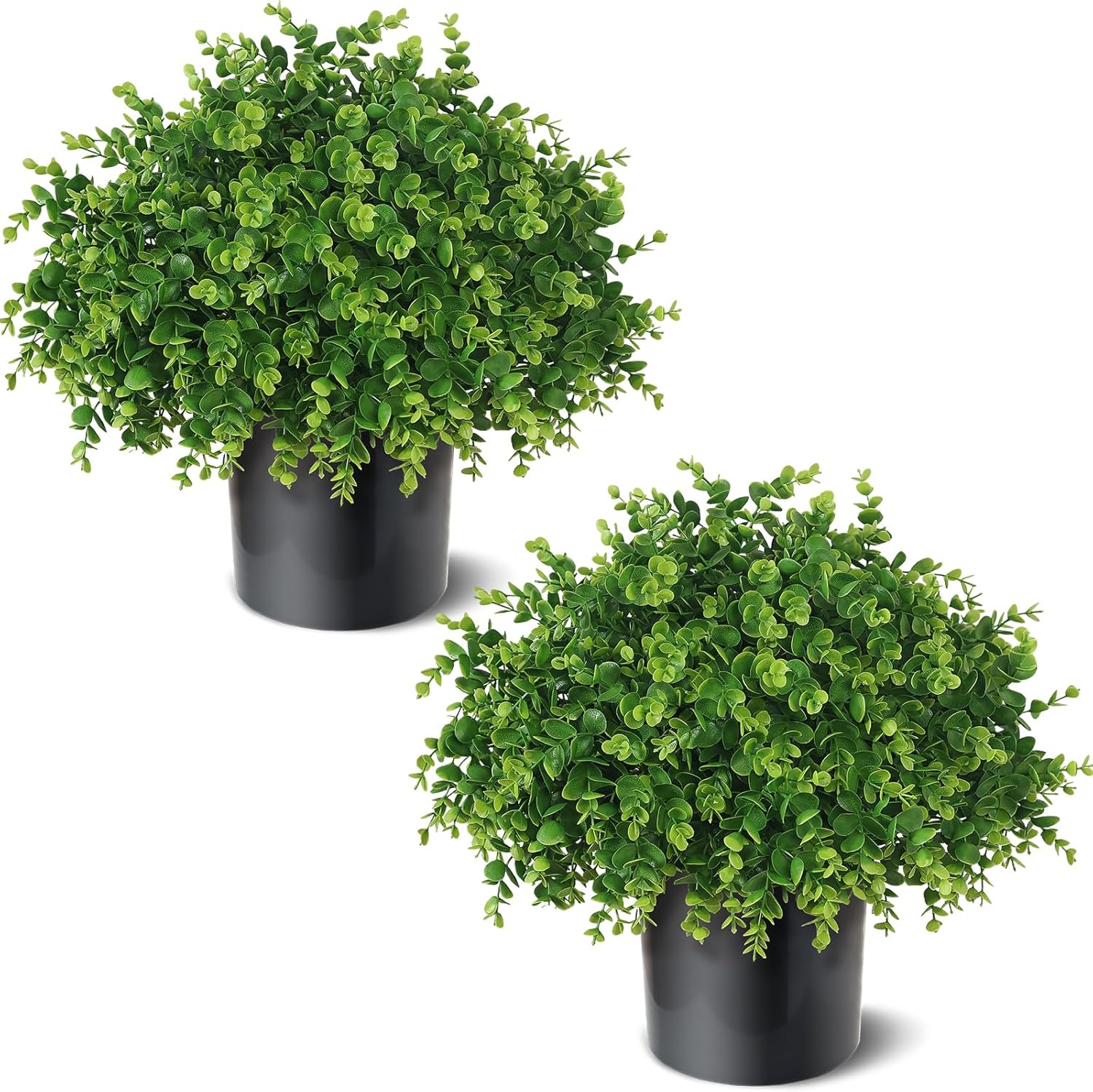
| Tree Type | Eucalyptus |
|---|---|
| Recommended Uses For Product | Outdoor |
| Material Type | Plastic |
| Other Special Features of the Product | Waterproof |
| Unit Count | 2 Count |
These two 16-inch potted eucalyptus topiary balls provide instant, low-maintenance greenery for a patio, porch, or entryway. Each comes finished in a small pot so you can place them beside a door, on a stair landing, or flanking outdoor furniture without planting or assembly. The leaves are made from fade-resistant plastic and are described as waterproof and UV-resistant, which means they will retain color and shape better than basic indoor-only faux plants when exposed to sun or light rain. The lifelike touch and naturally draping branches make them visually convincing at typical viewing distances. Because they are plastic, they require only occasional dusting or rinsing and will not wilt or need watering. Limitations are that the plants are small at 16 inches so they are best for accenting rather than making a bold focal statement, and the plastic construction lacks the texture and scent of real eucalyptus. Overall they are a dependable, low-effort option when you want consistent patio greenery year-round.
Best for: Buyers who want reliable, low-maintenance patio accents that keep a consistent look season after season without watering or regular care.
Less Ideal for: People seeking large statement plants, real botanical texture, scent, or seasonal change should consider live plants or larger artificial specimens instead.
- Ready-to-use potted set requires no assembly
- Waterproof and UV-resistant plastic suited for outdoor exposure
- Lifelike touch and natural drape for convincing appearance
- Pair provides balanced symmetry for flanking doors or furniture
- Small 16-inch size limits use to accents rather than primary focal plants
- Plastic leaves lack the scent and tactile variation of real eucalyptus
Verdict: If you want dependable, maintenance-free patio greenery that withstands sun and light weather, this ready-to-place 2-pack of potted eucalyptus topiaries delivers.
Choosing the Right Easy Outdoor Potted Plants: Key Factors to Consider
Container Size and Root Space
Container size directly affects root development, water retention, and nutrient availability. Plants with larger root systems need bigger pots to avoid becoming rootbound quickly. When a plant is rootbound it dries faster, becomes stressed in heat, and is more vulnerable to nutrient deficiencies.
For long-term container success, match mature plant size to pot volume and expect to repot or trim roots for long-lived specimens. Small pots suit annuals and dwarf varieties that complete their life cycle in a season. Larger, woody or evergreen specimens need deeper and wider containers to stabilize stems and store moisture through warm spells.
Watering Frequency and Drought Tolerance
Potted plants generally require more frequent watering than in-ground plants because containers dry out faster. Drought-tolerant species can survive irregular watering once established, which is ideal for gardeners who travel or have inconsistent schedules. Consider both the plant's natural drought adaptation and its tolerance when young.
Soil mix and pot material change how often you water. Fast-draining mixes and porous clay pots increase watering needs, while moisture-retentive mixes and plastic or glazed pots hold water longer. Choose plants whose moisture needs match how often you can realistically water.
Light Requirements and Placement
Container locations vary widely across yards and balconies, from full sun to deep shade. Plants that tolerate a range of light conditions offer more placement flexibility. Understanding how much direct sun a spot gets through the day helps you pick species that will flower or hold foliage color well.
Some plants develop leggy growth or reduced blooms in low light, while others scorch in hot afternoon sun. Think about seasonal changes too; a spot that is shaded in summer may be brighter in spring and fall, which affects flowering and growth patterns.
Cold Hardiness and Overwintering
Temperature swings are amplified in pots because limited soil volume offers less insulation. Cold-hardy plants are a safer choice if you plan to leave containers outdoors through winter. For marginally hardy species, consider using larger pots, insulating containers, or moving plants to a sheltered spot during freezes.
Decisions about whether to bring pots inside, mulch the soil surface, or store bare-root canes depend on plant hardiness and the cost or inconvenience of winter protection. Pick plants whose winter needs match the effort you are willing to invest.
Maintenance and Pruning Needs
Some container plants demand frequent deadheading, pruning, or feeding to stay tidy and blooming. Low-maintenance choices minimize deadheading and tolerate occasional neglect. Consider the time you want to spend on upkeep: annual bedding mixes often require replacement each season, while certain perennials and shrubs need limited pruning but may need fertilizer applications.
Keep maintenance predictable by choosing species with simple seasonal tasks, like a single spring prune or occasional trimming to control size. This reduces stress on the plant and simplifies long-term container management.
Pest and Disease Susceptibility
Containers located near doors, patios, or other plants are exposed to typical garden pests and microclimate-driven diseases. Plants with natural resistance reduce the need for interventions and are better suited to busy garden environments. Consider susceptibility to common issues like powdery mildew, aphids, or root rot under wet conditions.
Good container hygiene, adequate air circulation, and soil mixes that drain well reduce disease risk, but starting with resilient species lowers the overall care burden. Also factor in how easily you can isolate or treat an affected pot to prevent spread to other containers.
Best Potting Mixes and Amendments for Containers
A good potting mix balances drainage and moisture retention. Use a light, aerated mix with organic matter and a component that improves drainage, such as perlite or coarse sand. Avoid garden soil because it compacts and holds too much water in pots.
Incorporate a slow-release fertilizer at planting to provide steady nutrients, and topdress or supplement with liquid feed during peak growth. Adding a small amount of compost helps water-holding capacity and supports microbial life without making the mix heavy.
- Choose mixes labeled for containers or for vegetables and flowers.
- Add coarse material to the bottom of very deep pots to encourage root spread.
- Refresh the top few inches of mix annually to restore nutrients.
Choosing Containers: Material and Drainage
Container material affects moisture dynamics and plant temperature. Terracotta and unglazed clay are porous and wick moisture out, which benefits drought-tolerant plants but increases watering frequency. Plastic and glazed ceramic retain moisture better and warm faster in spring, promoting earlier growth.
Always ensure good drainage. Pots without drainage holes increase the risk of root rot. If aesthetics demand a decorative outer pot, use a functional inner liner with holes and lift the liner for water management.
- Match pot size to plant maturity to reduce repotting.
- Use saucers to protect surfaces but empty standing water after rainfall.
- Consider self-watering containers for hands-off watering schedules.
Seasonal Care Calendar for Potted Plants
Plan simple seasonal tasks: spring repotting or topdressing, summer watering and feeding, autumn pruning and frost protection, and winter storage or protection for tender species. Following a predictable rhythm prevents surprises and helps plants thrive year after year.
Adjust watering as temperatures change and move pots to take advantage of winter sun or shelter. Empty or reduce watering for dormant deciduous containers to avoid root rot, while evergreens may need less frequent but steady moisture.
- Spring: inspect roots, refresh mix, apply slow-release fertilizer.
- Summer: increase watering cadence, monitor for pests, deadhead as needed.
- Autumn: reduce feeding, prepare for cold, move tender pots indoors if necessary.
Designing Mixed Containers for Continuous Interest
Combine contrasting textures and heights to keep containers attractive across the season. Use a thriller, spiller, filler approach: a focal tall element, trailing plants that soften edges, and mid-height plants that supply color or foliage contrast.
Balance plants with similar water and light needs. Mixing a thirsty plant with a drought-tolerant one leads to inconsistent care and stressed specimens. Aim for a cohesive palette and stagger bloom times for longer display.
- Pick three to five compatible species per pot depending on container size.
- Group pots with similar watering needs together to simplify care.
- Use evergreen or structural plants to provide off-season interest.
Troubleshooting Common Container Problems
Yellowing leaves can indicate overwatering, nutrient deficiency, or root-bound roots. Check drainage, lift the root ball to inspect for crowding, and adjust watering and feeding accordingly. Brown, crisp leaf edges typically point to underwatering or hot sun stress.
Stunted growth often results from inadequate pot size or depleted nutrients. Regular topdressing and periodic repotting keep plants vigorous. For pest outbreaks, isolate affected pots and use targeted cultural or mechanical controls before resorting to chemical treatments.
- Lift roots annually from pots where growth has slowed to check for root crowding.
- Flush salts from fertilized containers every year with a thorough soak and drain.
- Keep a maintenance notebook to track which plants need special attention.
How We Chose the Best Easy Outdoor Potted Plants
We focused on characteristics that predict success in containers rather than ground beds. Each candidate was assessed for container hardiness, meaning how well the plant copes with restricted root space, temperature swings, and the faster drying typical of pots. Drought tolerance in established plants and the sensitivity of young transplants were considered separately to reflect real watering patterns. Light adaptability was another key filter because many container locations vary from full sun to deep shade. We evaluated seasonal interest and bloom reliability so potted plants deliver color or structure across months rather than for a brief window. Pest and disease resilience in high-traffic outdoor settings was included to favor lower-maintenance choices. We excluded plants that require specialized greenhouse care, heavy pruning schedules, or large, permanent in-ground root systems. Also excluded were species known for invasive spreading habits or strict soil-type dependence. The selection emphasizes plants that perform predictably in standard potting mixes and common container sizes.
FAQ
How often should I water easy outdoor potted plants?
Frequency depends on pot size, mix, and weather. Small pots and hot sun often need daily checks and watering, while larger containers may go several days. Test soil moisture with a finger or moisture meter and adjust as temperatures change.
Can these plants survive winter outdoors?
It depends on the species and your climate. Cold-hardy selections can survive outdoors in protected pots, while tender types need moving indoors, insulating, or other winter steps. Choose plants with hardiness that matches your local conditions if you plan to leave them out.
What potting mix is best for long-lasting containers?
A light, well-draining mix with added organic matter is best. Avoid garden soil and choose mixes formulated for containers. Adding slow-release fertilizer and some compost gives steady nutrition without making the mix heavy.
How do I prevent root rot in containers?
Ensure pots have drainage holes and use a fast-draining mix. Do not let pots sit in standing water and avoid overwatering. If root rot appears, remove the plant, trim affected roots, and repot in fresh mix.
Are self-watering containers a good option for these plants?
Self-watering containers help maintain consistent moisture and reduce watering frequency, which benefits many container-friendly species. They are less ideal for plants that prefer dry surface cycles, so match the container type to the plant's moisture preference.
Final Verdict
When choosing easy outdoor potted plants, prioritize container-hardy species whose water and light needs match your available spots and schedule. Balance pot size, soil mix, and winter plans with the plants' natural tolerances to reduce maintenance and increase success. Focus on drought-tolerant, pest-resistant, and light-flexible options for the easiest results. That approach helps you build attractive, low-effort containers that perform well across seasons and require only routine, predictable care.
