

Note: This article contains affiliate links. If you click on these links and make a purchase, I may earn a small commission at no extra cost to you. This helps support my research and content. Read my full affiliate disclosure here.
If you want bigger blooms, more fruit, or tougher root systems, choosing the right high potassium fertilizer matters for real-world gardening results. Different formulations affect how quickly potassium becomes available, how easy a product is to apply, and whether it suits container plants, raised beds, or in-ground rows. This guide covers seven shortlisted high potassium fertilizers that suit common garden situations. We evaluated products for nutrient ratio, release profile, and practical application concerns so you can match a feed to your planting style and schedule. Read on to understand the tradeoffs and pick the best option for your garden's flowering and fruiting needs.
Top Picks at a Glance
| Best Overall The best all-around choice for most situations | Cz Garden Muriate of Potash (0-0-60) Potassium Fertilizer, Granules, Resealable Pouch |  |
| Best Quality Built to a higher standard if you want something more solid | Espoma Potash 0-0-60 Granular Potassium Fertilizer, 6 lb |  |
| Best Value The sweet spot between price and what you get | CountryMax Potash Fertilizer 0-0-60, 50 lb |  |
| Best Budget The cheapest option that still gets the job done reliably | FOVGOTAN Potash Fertilizer (0-0-50), Sulfate of Potash, 1 lb |  |
| Highest Rated A top-rated pick with lots of positive feedback | Supply Solutions Pro-Mag Trio 0-0-22 High Potassium, Magnesium & Sulfur Water-Soluble Fertilizer (10 lb) |  |
| Most Popular A crowd favorite that many people choose with confidence | Farmer's Secret Fruit & Bloom Booster Liquid Fertilizer (8 oz) |  |
| Best Seller A high-volume bestseller chosen again and again | Down To Earth Langbeinite Organic Fertilizer 0-0-22, 5 lb |  |
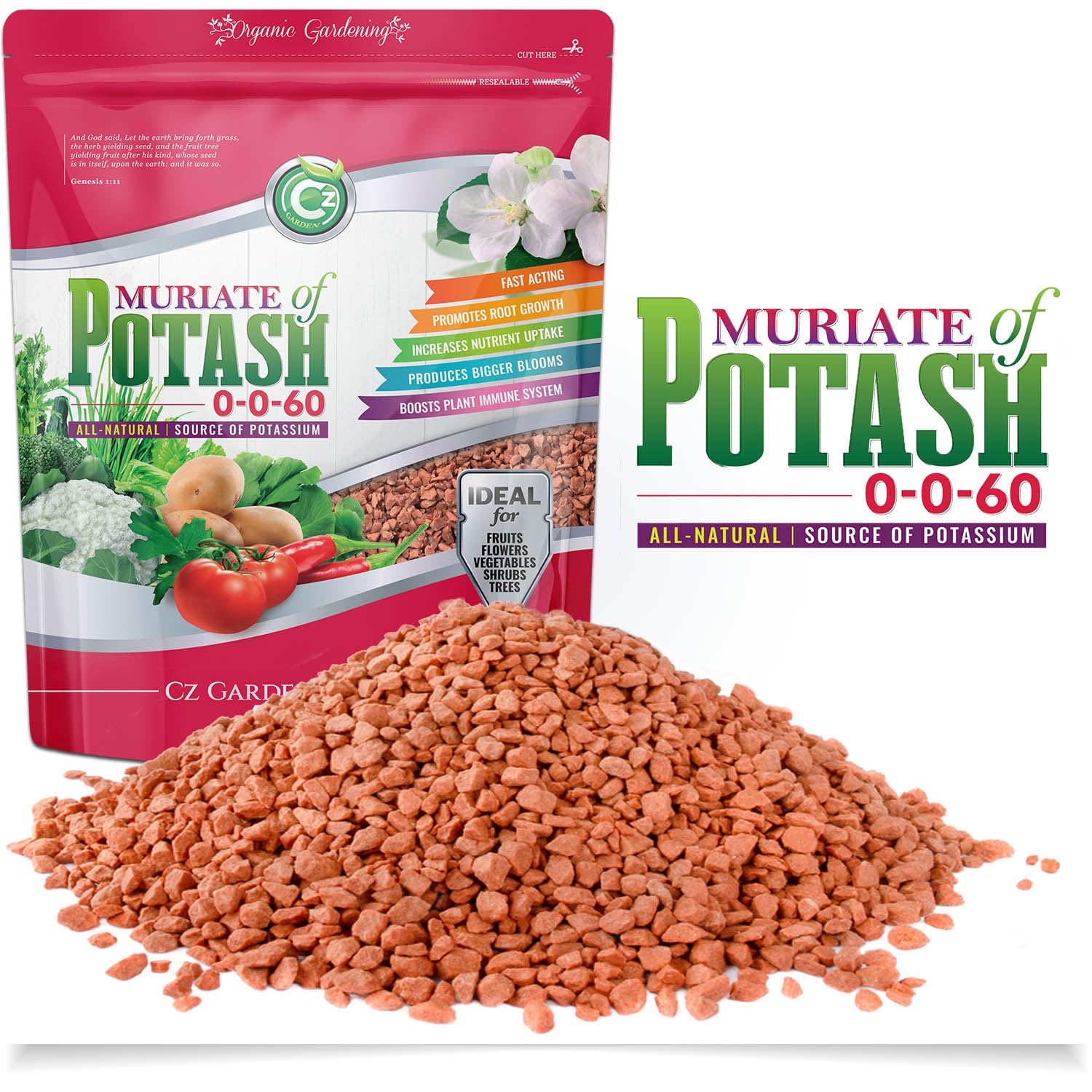
Cz Garden Muriate of Potash (0-0-60) Potassium Fertilizer, Granules, Resealable Pouch
| Item Form | Granules |
|---|---|
| Specific Uses For Product | Plant Food |
| Coverage | Resealable |
| Mixing Ratio | 0-0-60 |
| Unit Count | 80 Ounce |
This Cz Garden Muriate of Potash is a straight potassium source (0-0-60) sold as water-soluble granules in a resealable pouch. It is used as a supplemental feed when crops need a strong potassium boost to improve tuber development, fruiting, and stress tolerance. For Irish potatoes growers it is typically applied as a sidedress or soil amendment according to recommended rates, supplying potassium to support starch formation and overall tuber quality. Notable features include its high concentration, water solubility for easy mixing, and consumer-friendly resealable packaging for repeated small applications. Practical benefits are focused potassium delivery without added nitrogen or phosphorus, which helps correct K deficiencies without upsetting N:P balance, and straightforward handling when following safety guidance. Important limitations are that it is a single-nutrient product so it should be used alongside a balanced fertilizer program and soil test results; incorrect rates can harm plants or soil salinity, and users must wear gloves and eyewear to avoid irritation.
Best for: Buyers who prioritize proven, concentrated potassium for improving potato tuber size and quality and who will follow soil test guidance and application rates.
Less Ideal for: Gardeners seeking an all-in-one fertilizer or those unwilling to test soil or manage application rates should consider multi-nutrient blends or complete fertilizers instead.
- High potassium concentration (0-0-60) delivers a strong, targeted K boost.
- Water-soluble granules that mix easily for sidedressing or foliar solutions.
- Resealable pouch for convenient storage and repeated small applications.
- Made in the USA, produced for consistent ingredient sourcing.
- Single-nutrient product so it cannot replace a balanced complete fertilizer.
- Can increase soil salinity if overapplied or used without monitoring soil tests.
Verdict: Use this high-strength potassium concentrate when your potatoes need a direct, tested K boost to improve tuber size and quality.
Espoma Potash 0-0-60 Granular Potassium Fertilizer, 6 lb

| Analysis | 0-0-60 |
|---|---|
| Item Form | Granules |
| Application Method | Granular |
| Unit Count | 96 Ounce |
This granular potash supplies a concentrated potassium boost (analysis 0-0-60) intended to improve plant vigor and help disease resistance for a wide range of garden plants. It is typically applied by sprinkling around the drip line of trees, shrubs, flowers or vegetables and then watered in; the product is ready to use and requires no mixing. The 6 pound resealable bag makes it convenient for small- to medium-size gardens and spot applications, and the high potassium content means you need less product to raise soil potassium than lower-analysis mixes. Because it is a single-nutrient amendment, it is best used when a soil test or plant symptoms show a potassium deficiency rather than as a general all-purpose fertilizer. Also, it does not supply nitrogen or phosphorus, so plan to pair it with a balanced feed when other nutrients are needed. For gardeners seeking a simple, concentrated natural-source potassium supplement, this is an easy-to-use option with straightforward application.
Best for: Gardeners who want a simple, reliable potassium supplement to correct or prevent K deficiencies and prefer straightforward, low-risk application methods.
Less Ideal for: Gardeners looking for an all-in-one balanced fertilizer or those managing large-scale lawns or commercial plantings where bulk or multi-nutrient feeds are required.
- High potassium concentration (0-0-60) delivers a strong, targeted potash dose
- Granular, ready-to-use form requires no mixing and is easy to apply
- Resealable 6 lb bag is convenient for small to medium garden use and storage
- Promotes vigor and disease resistance in trees, shrubs, vegetables and flowers
- Supplies only potassium and does not address nitrogen or phosphorus needs
- Not suitable as a complete fertilizer for routine feeding without additional products
Verdict: Choose this granular potash if you need a concentrated, easy-to-apply potassium supplement to correct deficiencies and boost plant vigor.
CountryMax Potash Fertilizer 0-0-60, 50 lb

| Item Form | Granules |
|---|---|
| Specific Uses For Product | Lawns, Gardens, Vegetables, Fruits, Flowers, Trees, Outdoor Plants |
| Mixing Ratio | 0-0-60 |
| Unit Count | 800 Ounce |
CountryMax Potash 0-0-60 is a concentrated granular potassium fertilizer intended to boost root strength and help plants cope with stress. It is typically broadcast across lawns or worked into garden beds and around trees and vegetables according to soil test recommendations. The product’s clear 0-0-60 analysis makes it easy to dose precisely for potassium-deficient sites, and the granular form is simple to spread with a hand spreader or by hand for small areas. Practical benefits include improved fruit and vegetable quality, better drought resilience, and targeted potassium supplementation without added nitrogen or phosphorus. Important limitations are that it addresses only potassium needs so you must rely on soil tests to avoid imbalanced feeding, and the heavy 50 lb bag is bulky to move and store. Follow the recommended rates and water after application to reduce burn risk and ensure even distribution.
Best for: Buyers who prioritize practical, targeted soil management and want a straightforward potassium source to correct deficiencies and support crop quality in lawns and garden beds.
Less Ideal for: Gardeners seeking an all-in-one or balanced NPK fertilizer or those who prefer small, easy-to-handle packages for frequent light feedings.
- High 0-0-60 potassium analysis for focused correction of K deficiencies
- Granular form is easy to apply with a spreader or by hand
- Suitable for a wide range of outdoor plants including lawns, vegetables, fruits, flowers, and trees
- Directions and mixing ratio provided for lawn and garden applications
- Contains only potassium so it does not supply nitrogen or phosphorus
- Large 50 lb bag can be cumbersome to transport and store
Verdict: A no-nonsense, high-potassium granular fertilizer for gardeners who need precise potassium boosts to strengthen roots and improve crop quality.
FOVGOTAN Potash Fertilizer (0-0-50), Sulfate of Potash, 1 lb

| N-P-K | 0-0-50 |
|---|---|
| Item Form | Granules |
| Specific Uses For Product | Houseplants |
| Application Method | Spread evenly and water in |
| Ingredients | Sulfate of Potash |
This 1 lb bag of FOVGOTAN potash is a straightforward, high-potassium granular fertilizer (0-0-50) intended to promote blooms and fruit set. It is applied by spreading around the root zone—recommended 1 teaspoon per plant or 1 lb per 100 sq ft—and then watering in, so it works well as a top-dress for pots, vegetable beds, and small fruit trees. The product is plant-safe and formulated to release potassium quickly while supplying micronutrients that can help correct deficiencies and improve vigor. Because it is a single-nutrient sulfate of potash, it is best used as a supplement to a balanced feeding program rather than a sole feed. The 1 lb size is convenient for occasional use or for gardeners testing potassium needs, but it means frequent repurchasing for larger plots. Instructions note it is usable in organic gardens when applied at recommended rates. If you want a simple, no-frills source of potassium to boost flowering or fruiting, this does the job reliably with minimal fuss.
Best for: Gardeners looking for an inexpensive, targeted potassium boost for houseplants, containers, or small vegetable and fruit patches who prefer a simple, single-nutrient supplement.
Less Ideal for: Large-scale gardeners or those seeking an all-in-one complete fertilizer should choose a higher-volume or balanced N-P-K product instead.
- High potassium concentration (0-0-50) for improving blooms and fruit set
- Granular form is easy to apply as a top-dress or around container plants
- Contains sulfate of potash, a commonly used potassium source compatible with organic gardens
- Clear application guidance included for both individual plants and area coverage
- Small 1 lb package requires frequent replacement for larger gardens
Verdict: A compact, no-frills sulfate of potash that delivers a focused potassium boost to help flowering and fruiting in small gardens and containers.
Supply Solutions Pro-Mag Trio 0-0-22 High Potassium, Magnesium & Sulfur Water-Soluble Fertilizer (10 lb)

| Item Form | Powder |
|---|---|
| Application Method | Water-soluble |
| Coverage | Full |
| Target Species | Lawns, Palms, Fruit Trees |
Supply Solutions Pro-Mag Trio 0-0-22 is a water-soluble powder fertilizer formulated to deliver potassium, magnesium, and sulfur to lawns, turf, palms, and fruit trees. It dissolves quickly for application through watering cans, sprayers, or irrigation systems and can be used as either a soil drench or foliar feed. The high potassium content helps strengthen cell walls and improve stress tolerance while magnesium preserves leaf color and sulfur aids nutrient uptake, which together support denser turf and healthier trees. Because it is mineral-focused and contains no nitrogen, it is intended to be paired with a routine nitrogen fertilizer for balanced, ongoing feeding rather than as a complete all-in-one product. Practical benefits include fast dissolution for even coverage, compatibility with irrigation or manual spraying, and suitability for sandy or low-nutrient soils where micronutrient boosts are needed. The main limitation is that it does not provide nitrogen or a full N-P-K balance, so growers should plan it into a broader feeding schedule if they want green-up as well as structural and fruiting improvements.
Best for: Buyers who prioritize consistent, targeted mineral feeding to improve plant structure and stress resilience and who already follow a regular fertilizing program or are willing to combine this product with a nitrogen fertilizer.
Less Ideal for: Gardeners seeking an all-in-one lawn fertilizer that delivers rapid green-up without mixing with other products should look for a balanced N-P-K formulation instead.
- High potassium formula supports stress tolerance and stronger plant cell walls
- Includes magnesium and sulfur to maintain leaf color and improve nutrient uptake
- Fast-dissolving powder works with watering cans, sprayers, or irrigation for even coverage
- Suitable for turf, palms, and fruit trees and effective in sandy or low-nutrient soils
- Contains no nitrogen so it is not a complete N-P-K fertilizer and must be used alongside a nitrogen source
Verdict: Choose this if you want a reliable, high-potassium mineral supplement to strengthen turf and fruit trees as part of a planned fertilizing routine.
Farmer's Secret Fruit & Bloom Booster Liquid Fertilizer (8 oz)

| Item Form | Liquid |
|---|---|
| Liquid Volume | 8 fluid ounces |
| Mixing Ratio | 1 teaspoon : 2 gallons |
| Application Method | dilute with water and pour or spray |
Farmer's Secret Fruit & Bloom Booster is a concentrated liquid plant food designed for mid-to-late season use when plants begin to bud and set fruit. You dilute a small amount (1 teaspoon per 2 gallons) and apply it either to the soil with your watering can or as a foliar spray, repeating every 1 to 2 weeks. The formula emphasizes phosphorus and potassium alongside trace minerals to promote root development, flowering and fruit set, which is the kind of nutrient profile banana growers look for during fruiting. Because it is liquid and already mixed, nutrients are immediately available and it is easy to integrate with irrigation or regular watering. The bottle is small but very concentrated, so a little goes a long way. A practical limitation is that the 8 ounce size supplies only a limited number of applications for larger banana plants or multiple trees, so you will need to plan purchases for season-long feeding. Follow dilution directions carefully to avoid overapplication.
Best for: Gardeners who prefer a proven, easy-to-use liquid feed to encourage blooms and fruit and who want straightforward instructions and predictable results.
Less Ideal for: Growers with large banana groves or multiple mature plants who need bulk or long-term feeding should consider larger-volume fertilizers or granular options.
- High phosphorus and potassium formulation supports flowering and fruit set
- Liquid concentrate delivers nutrients immediately and is usable as soil or foliar feed
- Simple, low-strength mixing ratio makes it easy for beginners to apply safely
- Contains additional trace minerals (iron, zinc, calcium) that support overall plant health
- Small 8 oz bottle provides relatively few applications for mature banana plants or multiple trees
Verdict: A highly concentrated, easy-to-use liquid booster that quickly delivers flowering and fruiting nutrients for backyard banana plants and other fruiting ornamentals.
Down To Earth Langbeinite Organic Fertilizer 0-0-22, 5 lb

| N-P-K | 0-0-22 |
|---|---|
| Item Form | Granules |
| Specific Uses For Product | Organic |
| Target Species | Vegetables |
Down To Earth Langbeinite 0-0-22 is a simple, performance-focused potassium source for gardeners who want a natural, mineral-based fertilizer. It is a crystalline, water-soluble langbeinite that delivers potassium along with magnesium and sulfur, which helps strengthen stems, improve fruit set and correct magnesium deficiencies without changing soil pH. Typical use is a broadcast or side-dress application to vegetable beds, fruit trees and shrubs where extra potassium is needed during the growing season. The granular form is easy to spread by hand or with a small spreader and the low chlorine content reduces risk of salt burn. Because it supplies only K, Mg and S it pairs well with a balanced organic base fertilizer or compost when nitrogen and phosphorus are also required. Limitations are that it is not a complete NPK feed and results depend on correct timing and rates for your crop, so soil testing or following crop-specific guidance is advisable.
Best for: Gardeners focused on maximizing fruit and vegetable performance who want a clean, mineral potassium source to correct K or Mg deficiencies and boost crop quality.
Less Ideal for: Beginners wanting an all-in-one fertilizer for general feeding or growers who need immediate high-nitrogen correction without supplemental products.
- Provides high soluble potassium plus magnesium and sulfur in one natural mineral
- Low chlorine content reduces risk of fertilizer burn
- Granular form is easy to broadcast or side-dress by hand or with a small spreader
- OMRI-listed and suited for organic gardening practices
- Contains no nitrogen or phosphorus so it is not a complete fertilizer
- Performance depends on correct timing and soil nutrient status which may require testing
Verdict: Choose this langbeinite when you want a concentrated, organic potassium boost with added magnesium and sulfur to improve fruiting and plant strength.
Choosing the Right High Potassium Fertilizer: Key Factors to Consider
Potassium Concentration and Ratio
Potassium concentration determines how much product you must apply to change soil nutrient status. A high percentage of K on the guaranteed analysis means fewer pounds or teaspoons per application to reach target rates. Equally important is the ratio between potassium, nitrogen, and phosphorus because a product with high K but also high nitrogen will shift plant growth toward vegetative growth rather than flowering or fruiting.
For fruiting and flowering crops, aim for products that raise K relative to N and P so plants allocate more energy to reproductive structures. Be mindful of label math when converting from the guaranteed analysis to actual elemental potassium rather than relying on fertilizer grade shorthand.
Release Profile and Timing
How quickly potassium becomes available affects when to apply. Watersoluble potassium sources deliver a rapid nutrient boost useful during bloom or fruit set, but they can wash out quickly and require more frequent feeding. Slow-release or coated formulations supply K over weeks or months, smoothing availability and reducing the chance of sudden nutrient spikes.
Match release profile to crop timing. For quick corrections in containers or during a critical bloom window, choose a soluble feed. For beds where you prefer fewer passes during the season, a slow-release approach reduces labor while maintaining steady potassium availability.
Salt Index and Plant Safety
Some potassium fertilizers are salts that raise soil electrical conductivity, which can stress roots and tender seedlings. High salt risk is especially important in containers and small pots where soil volume is limited and salts accumulate faster.
Check label guidance for application rates in small containers and whether the product recommends leaching after application. For salt-sensitive plants, use lower rates or opt for formulations with a lower salt index, and always follow irrigation practices that prevent buildup.
Formulation and Application Method
Formulation dictates how you apply the product. Powdered or crystalline watersoluble fertilizers dissolve in irrigation water and are convenient for regular fertigations on containers, hanging baskets, and greenhouse benches. Granular blends are often broadcast or side-dressed in beds and require incorporation or watering in. Foliar-applied potassium can correct deficiencies quickly but provides only a temporary boost compared with soil-supplied K.
Consider whether you need a product compatible with drip irrigation or one you will hand-apply. Packaging that includes measuring tools or clear dilution instructions reduces mistakes and drift.
Soil Type and Existing Nutrient Levels
Soils with high clay content or organic matter can hold potassium differently than sandy soils. Clay and organic soils tend to retain cations longer, while sandy soils will leach potassium more rapidly and require more frequent top-ups. Knowing your soil texture and recent soil test results helps set application frequency and rate.
If a soil test shows adequate potassium, avoid routine high-K feeding to prevent nutrient imbalances with magnesium or calcium. For container-grown plants, test or follow conservative rates because potting mixes offer little buffering capacity.
Crop Stage and Plant Goals
Decide whether your priority is vegetative vigor, flower production, or fruit development. Potassium supports carbohydrate transport, water regulation, and fruit quality, so applications timed to bloom and early fruit development often give the best return. Applying too much K during early vegetative stages may not help flowering and can interfere with uptake of other nutrients.
Plan feeds around the crop calendar. Use higher potassium inputs as plants set flower buds and during early fruit sizing for better color, firmness, and overall yield.
When to Boost Potassium in the Garden
Potassium levels matter most at particular growth stages rather than all season long. The highest impact times are just before and during flowering, at fruit set, and during fruit enlargement. For ornamental plants, a potassium boost can deepen flower color and increase bloom retention. For vegetables and fruiting crops, potassium affects cell turgor and sugar transport, translating into better size and flavor.
Garden diagnostics help time feeds. Look for pale leaf margins, weak stems, or poor fruit quality as signs of K deficiency, but confirm with a soil test or tissue analysis when possible. Avoid routine overfeeding that can create antagonisms with magnesium and calcium.
- Apply soluble potassium during bloom or fruit set for quick uptake
- Use slow-release potassium in established beds to maintain steady levels
- Monitor leaf symptoms and soil tests before aggressive feeding
Applying Potassium in Containers and Raised Beds
Containers need special attention because limited soil volume concentrates salts. Use lower rates and more frequent, diluted applications rather than large one-time doses. Watersoluble potassium sources work well with regular fertigations, while controlled-release granules can reduce maintenance for large numbers of pots.
Always flush containers periodically to prevent salt buildup, and follow label directions for container use. For raised beds, incorporate granular products lightly into the root zone and water thoroughly to move potassium into the root zone.
- Fertilize containers with diluted solutions every 1 to 2 weeks during bloom
- Top-dress raised beds and water in well to distribute potassium
- Avoid high salt products in small pots or near seeds
Foliar Feeding Vs Soil Feeding: Pros and Cons
Foliar sprays deliver potassium directly to leaves for a fast correction of deficiency symptoms. They are effective for short-term fixes but do not replace a soil program because foliar-applied K remains limited in quantity and duration.
Soil-applied potassium supports long-term carbohydrate transport and fruit development. Use foliar feeding selectively when quick results are needed, and pair foliar treatments with a soil plan to sustain plants through the season.
- Use foliar sprays for quick symptom relief or during rapid weather stress
- Rely on soil applications for long-term fruit quality and root health
- Combine both methods sparingly to avoid foliar burn and nutrient excess
Adapting Application to Different Crops
Different crops respond uniquely to added potassium. Fruiting vegetables and many perennials show measurable improvements in yield and quality when potassium is timed correctly. Leafy greens usually need lower potassium relative to nitrogen, so avoid high-K feeds that reduce leafy production.
Read crop-specific fertilization guidelines and adjust rates by plant type and growth stage. When managing mixed beds, choose an approach that balances needs or use targeted applications to individual plants.
- Increase potassium for tomatoes, peppers, and fruiting perennials during bloom and fruit set
- Limit high-K feeds on leafy crops to preserve leaf production
- Target feeds when beds contain mixed crop types
How We Chose the Best High Potassium Fertilizer
We assembled this list by focusing on practical, gardener-centered performance rather than marketing claims. First, we looked for clear guaranteed analysis that emphasizes potassium relative to nitrogen and phosphorus so the product actually shifts nutrient balance toward K. Next, we prioritized formulation type because soluble salts, watersoluble blends, and slow-release granules behave differently in containers, raised beds, and large landscapes. We also weighed release profile and timing to match common bloom and fruit development windows. Application practicality guided selection: ease of measuring, compatibility with irrigation, and whether the product can be used as a foliar feed or soil drench. Stability and handling mattered too, including hygroscopic behavior and odor for storage. Finally, we excluded products with unclear nutrient labels, inconsistent release claims, or inappropriate K forms for typical garden use. The resulting picks represent distinct approaches gardeners use to raise potassium without oversupplying other nutrients.
FAQ
How do I tell if my plants need more potassium?
Common symptoms include marginal leaf browning or yellowing, weak stems, and poor fruit size or quality. These signs can mimic other issues, so confirm with a soil test or leaf tissue test when practical. Also consider crop timing; poor flowering or fruit set often benefits from potassium adjustments.
Can I add high potassium fertilizer to containers safely?
Yes, but use lower rates and dilute watersoluble feeds for containers. Containers are prone to salt buildup, so apply smaller, more frequent doses and flush the potting mix periodically. Choose formulations labeled safe for container use when possible.
When is foliar potassium useful?
Foliar potassium works well for quick correction of deficiency symptoms or short-term support during heat stress and flowering. It is not a substitute for soil applications because leaf sprays supply smaller total quantities and the effects are temporary.
Will adding potassium harm my soil or plants?
Excessive potassium can create imbalances with magnesium and calcium and raise soil salt levels. Avoid routine heavy applications without testing. Follow label rates, monitor plant response, and adjust based on soil test results.
How often should I apply high potassium fertilizer?
Application frequency depends on formulation and soil type. Watersoluble feeds can be applied every one to three weeks during bloom, while slow-release products typically last several months. Sandy soils need more frequent feeding than clay-rich soils because of leaching.
Final Verdict
Prioritize potassium applications around bloom and fruit development, choose a formulation that matches your planting situation, and always check soil or tissue tests before aggressive feeding. Balance potassium with other essential nutrients and adapt rates for containers versus in-ground beds. With those tradeoffs in mind, select the feed that fits your application method and crop timing to get the best results for blooms, fruit size, and overall plant resilience.
