

Note: This article contains affiliate links. If you click on these links and make a purchase, I may earn a small commission at no extra cost to you. This helps support my research and content. Read my full affiliate disclosure here.
If you want stronger root systems, fuller blooms, or better transplant success, choosing the right high phosphorus fertilizer matters. These products behave differently in beds, containers, and vegetable patches depending on formulation, concentration, and how you apply them. This guide shortlists seven top options and explains the attributes gardeners should weigh before buying. We evaluated each pick for nutrient ratio, solubility and application method, and the likely response in typical garden settings. Read on to see which formulations suit your soil, planting stage, and routine.
Top Picks at a Glance
| Best Overall The best all-around choice for most situations | FoxFarm Soil Liquid Trio Pack (Big Bloom, Grow Big, Tiger Bloom) |  |
| Best Quality Built to a higher standard if you want something more solid | FoxFarm Tiger Bloom Liquid Plant Food (1 pint) |  |
| Best Value The sweet spot between price and what you get | Grow More Hawaiian Bud and Bloom 5-50-17 Water-Soluble Bloom Fertilizer, 1.5 lb |  |
| Best Budget The cheapest option that still gets the job done reliably | Miracle-Gro Water Soluble Bloom Booster Flower Food, 10-52-10, 1 lb |  |
| Highest Rated A top-rated pick with lots of positive feedback | Supply Solutions Triple Superphosphate 0-45-0 Granular Fertilizer (High Phosphorus, 40 lb) |  |
| Most Popular A crowd favorite that many people choose with confidence | Farmer's Secret Fruit & Bloom Booster Liquid Fertilizer (8 oz) |  |
| Best Seller A high-volume bestseller chosen again and again | FoxFarm Tiger Bloom Liquid Plant Food (1 qt) |  |
FoxFarm Soil Liquid Trio Pack (Big Bloom, Grow Big, Tiger Bloom)

| Brand | FoxFarm |
|---|---|
| Item Form | Liquid |
| Unit Count | 48 Fluid Ounces |
| Specific Uses For Product | Plant Food |
| Coverage | Organic |
The FoxFarm Soil Liquid Trio Pack combines Big Bloom, Grow Big, and Tiger Bloom into a simple program for indoor gardeners who want strong vegetative growth followed by bigger blooms and fruit. Typical use is stage-based: Grow Big during vegetative growth to push leafy development, Big Bloom as an all-purpose supplement across cycles, and Tiger Bloom once buds form to encourage multiple bud sites and fuller flowers. The liquids are concentrated and greenhouse-tested for consistency, so measured feedings integrate easily with regular watering schedules. Practical benefits include a complete, complementary nutrient progression and formulations designed to keep micronutrients available in storage. Important limitations are that these are general-purpose concentrates rather than precision NPK formulations for specialty crops, and users who want exact nutrient ratios or automated dosing systems will need extra equipment and testing. Safety precautions such as keeping away from children and pets and wearing protective clothing are required when handling concentrated liquids.
Best for: Indoor growers who prioritize measurable performance and want a simple, stage-based feeding plan to push vigorous growth and larger blooms without building their own nutrient lineup.
Less Ideal for: Growers seeking exact NPK control, automated dosing integration, or a fertilizer tailored to a single specialist crop should consider lab-formulated or hydroponic-specific options instead.
- Three complementary formulas cover vegetative growth, bloom support, and fruiting in one kit
- Concentrated liquid form mixes readily for regular indoor feedings
- Greenhouse-tested formulations deliver consistent performance across batches
- Suitable for a wide range of indoor plants including houseplants, herbs, and vegetables
- Not a precision nutrient program for specialty or hydroponic crops
- Concentrated liquids require careful measuring and handling to avoid overfeeding
Verdict: For indoor gardeners who want a proven, stage-based liquid feeding program to boost vegetative growth and maximize blooms, this trio delivers a ready-made performance pathway.
FoxFarm Tiger Bloom Liquid Plant Food (1 pint)
| Item Form | Liquid |
|---|---|
| Specific Uses For Product | Hydroponic |
| Application Method | Watering; Foliar spraying |
| Target Species | Flowering Plants |
| Mixing Ratio | 1:200 or 1:300 |
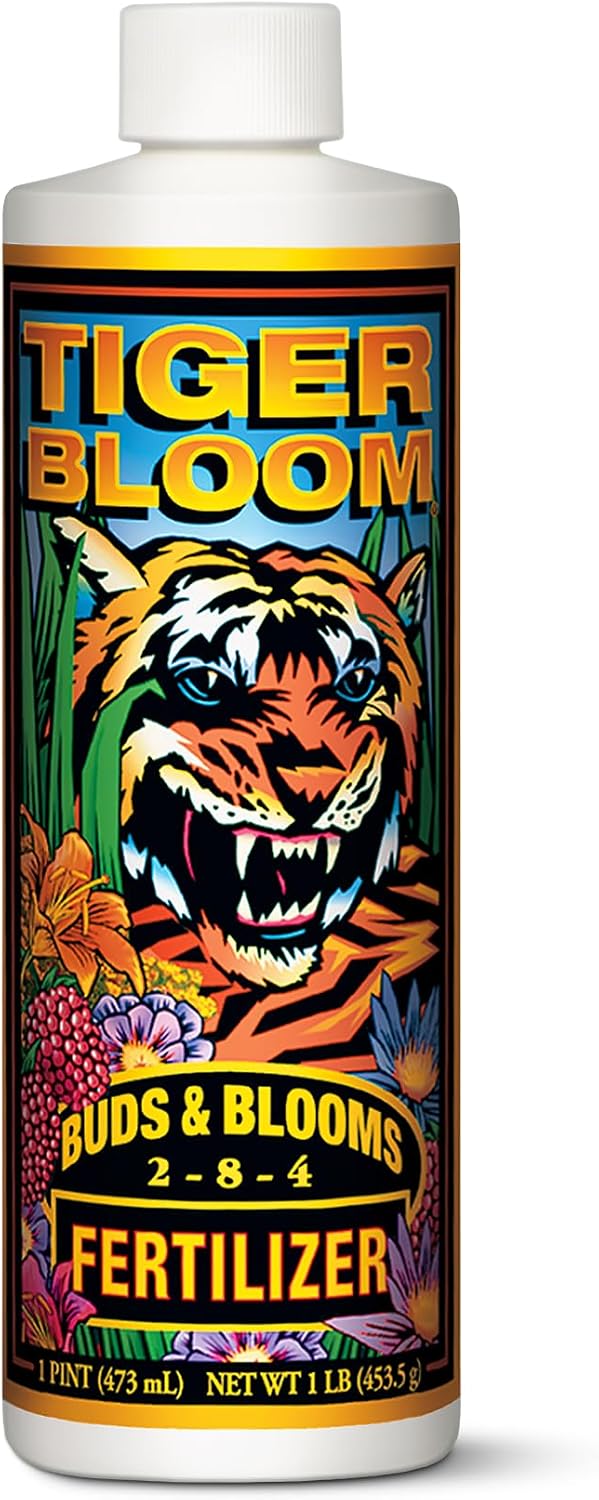
Tiger Bloom is a liquid, high-phosphorus fertilizer designed to push plants into a strong flowering and fruiting phase. You mix a small amount into the irrigation water or use it as a foliar spray and apply from first signs of flowering through harvest. The 2-8-4 formula and included micronutrients support bud set and larger blooms, and the concentrate mixes at 1:200 to 1:300 for routine feeding or 2 to 4 teaspoons per gallon for heavier feeding. It works in both soil and hydroponic setups and is formulated for quick nutrient uptake and stable micronutrient availability during storage. Practical benefits include flexible application methods, suitability for intensive flowering cycles, and a small bottle that lasts when used at recommended dilutions. Important limitations are that it is bloom-focused rather than an all-purpose feed so it may not meet vegetative needs, and the phosphorus content means users near waterways should follow local regulations to avoid runoff issues.
Best for: Serious growers who prioritize maximizing flower and bloom performance and want a concentrated, fast-acting bloom booster for soil or hydroponic environments.
Less Ideal for: Casual gardeners seeking a single all-purpose fertilizer for every growth stage or those managing turf or non-flowering lawns where phosphorus restrictions apply.
- High phosphorus NPK (2-8-4) concentrated for stronger bud development
- Works in soil and hydroponic systems for versatile use
- Liquid concentrate mixes easily for foliar or watering applications
- Formulated for quick nutrient uptake and stable micronutrient availability
- Focused on flowering so it is not a balanced all-stage fertilizer
- Contains phosphorus which may be restricted near waterways
Verdict: Choose Tiger Bloom when you need a concentrated, fast-acting bloom booster to maximize flower and fruit production.
Grow More Hawaiian Bud and Bloom 5-50-17 Water-Soluble Bloom Fertilizer, 1.5 lb

| Item Form | Powder |
|---|---|
| Application Method | Water Soluble |
| Target Species | flowers |
| Mixing Ratio | 1 tsp per gallon of water |
Grow More Hawaiian Bud and Bloom is a concentrated, water-soluble bloom fertilizer designed to push flower and bud development in flowering and tropical plants. It mixes at 1 teaspoon per gallon for general foliar or soil feeding and includes directions for hydroponic and fertigation use, making it useful in pots, beds, and controlled systems. The formula is urea-free and high in phosphorus with chelated micronutrients and extra potassium, which helps with bud formation, flower size, and plant vigor while improving stress tolerance. As a powder it dissolves readily and can be applied as a foliar spray or through irrigation for even coverage. Practical users will appreciate the clear mixing guidance and steady results when used during mid-to-late bloom stages. Limits to note are the product focus on flowering plants rather than general all-purpose feeding and the environmental advice about phosphorus runoff that requires mindful application near waterways and following local rules.
Best for: Gardeners who prioritize measurable bloom improvement and want a targeted late-flowering booster for potted, bedding, or hydroponic flowering plants. Best for growers who follow scheduled feeding and prefer precise, soluble products they can apply as foliar sprays or through irrigation.
Less Ideal for: People seeking an all-season, balanced feed for foliage or lawn care or those who need a nitrogen-focused starter fertilizer.
- High phosphorus formulation targeted to improve bud set and bloom size
- Urea-free powder that dissolves for foliar, soil, and hydroponic applications
- Includes chelated micronutrients for better uptake and plant vigor
- Clear mixing ratios and flexible application methods for different growing systems
- Designed specifically for flowering plants so not ideal as a general-purpose fertilizer
- Contains phosphorus which can contribute to runoff concerns near water bodies
Verdict: Use this concentrated, urea-free high-phosphorus booster when you want visibly bigger, more abundant blooms during mid-to-late flowering.
Miracle-Gro Water Soluble Bloom Booster Flower Food, 10-52-10, 1 lb

| Item Form | Liquid |
|---|---|
| Application Method | Water Soluble |
| Coverage | 500 square feet |
| Target Species | all blooming plants |
| Mixing Ratio | 1 tablespoon/gallon (1.5 tsp for indoor plants) |
This Miracle-Gro bloom booster is a water-soluble plant food designed for flowering annuals and perennials, and it is typically mixed into a watering can or used with a garden feeder. The 10-52-10 formula supplies a high phosphorus dose aimed at increasing bud set and flower production, and it starts working quickly through root and foliar feeding when applied as directed. Practical features include a simple mixing ratio (1 tablespoon per gallon for outdoor use, reduced rate for indoor plants) and compatibility with the Miracle-Gro garden feeder for easy coverage up to about 500 square feet per refill. For gardeners focused on colorful displays, the concentrated phosphorus and repeat feeding schedule (every 7 to 14 days during bloom) deliver noticeably fuller flower shows. Limitations are that it is specifically a bloom booster rather than an all-purpose fertilizer and should be used only during bud set and bloom to avoid nutrient imbalance; following label rates is important to prevent overfeeding. For basic container or bedding displays, it is an easy-to-use option that targets bloom performance without complicated application steps.
Best for: Gardeners who want an affordable, straightforward booster to increase flower production on annuals and container displays and who plan to feed regularly during the bloom period.
Less Ideal for: Those seeking an all-in-one, season-long fertilizer or a slow-release product for hands-off maintenance should look elsewhere.
- High phosphorus 10-52-10 formula to promote more blooms and better bud set
- Water-soluble for quick uptake and easy mixing in a watering can or garden feeder
- Clear mixing instructions with lower indoor rate to reduce risk of burning when used as directed
- Covers a substantial area per feeder refill, useful for beds and multiple containers
- Focused on bloom boosting rather than providing a balanced, all-season nutrient program
Verdict: If you want an inexpensive, easy-to-use booster that reliably increases blooms on annuals and containers, this is a strong, no-frills choice.
Supply Solutions Triple Superphosphate 0-45-0 Granular Fertilizer (High Phosphorus, 40 lb)

| Item Form | Granules |
|---|---|
| Mixing Ratio | 0:45:0 |
| Specific Uses For Product | Plant Growth, Root Development, Soil Conditioning |
| Unit Count | 640 Ounce |
Supply Solutions Triple Superphosphate 0-45-0 is a straight phosphorus granular fertilizer designed to push bloom production and strengthen roots. Gardeners typically broadcast or side-dress it around roses, fruit trees, ornamentals, and transplant starts, or mix it into planting holes as a starter dose. The concentrated 0-45-0 NPK and added calcium make it effective for stimulating bud set, improving flower quality, and supporting early root growth without adding nitrogen. Practical benefits include targeted phosphorus correction when soil tests show a deficiency and compatibility with other balanced fertilizers for ongoing feeding programs. Important limitations are that it is a specialist product rather than an all-in-one plant food and must be applied carefully to avoid overapplication and potential root damage. Users should follow mixing and application directions, wear protection when handling the granules, and incorporate it into a broader fertility plan rather than relying on it as a complete feed.
Best for: Gardeners who want a dependable, targeted phosphorus boost to improve flowering and root development and who plan soil amendments based on soil tests or a staged feeding routine.
Less Ideal for: Buyers seeking an all-purpose or balanced fertilizer for general feeding or first-time gardeners who prefer single-step products that do not require mixing with other fertilizers.
- Very high phosphorus concentration (0-45-0) for strong bloom and root stimulation
- Contains calcium to support cell strength and improve nutrient uptake
- Granular form is easy to apply with spreaders or for spot treatments
- Versatile for use on indoor ornamentals, flowering shrubs, fruit trees, and vegetable transplants
- Not a complete fertilizer since it supplies little or no nitrogen and potassium
- Requires careful dosing and handling to avoid burning roots or overapplication
- Safety precautions needed when handling granular concentrated phosphate
Verdict: Choose this concentrated triple superphosphate when you need a reliable, high-phosphorus booster to drive blooms and establish stronger roots.
Farmer's Secret Fruit & Bloom Booster Liquid Fertilizer (8 oz)

| Item Form | Liquid |
|---|---|
| Liquid Volume | 8 fluid ounces |
| Mixing Ratio | 1 teaspoon : 2 gallons |
| Application Method | dilute with water and pour or spray |
Farmer's Secret Fruit & Bloom Booster is a concentrated liquid plant food designed for mid-to-late season use when plants begin to bud and set fruit. You dilute a small amount (1 teaspoon per 2 gallons) and apply it either to the soil with your watering can or as a foliar spray, repeating every 1 to 2 weeks. The formula emphasizes phosphorus and potassium alongside trace minerals to promote root development, flowering and fruit set, which is the kind of nutrient profile banana growers look for during fruiting. Because it is liquid and already mixed, nutrients are immediately available and it is easy to integrate with irrigation or regular watering. The bottle is small but very concentrated, so a little goes a long way. A practical limitation is that the 8 ounce size supplies only a limited number of applications for larger banana plants or multiple trees, so you will need to plan purchases for season-long feeding. Follow dilution directions carefully to avoid overapplication.
Best for: Gardeners who prefer a proven, easy-to-use liquid feed to encourage blooms and fruit and who want straightforward instructions and predictable results.
Less Ideal for: Growers with large banana groves or multiple mature plants who need bulk or long-term feeding should consider larger-volume fertilizers or granular options.
- High phosphorus and potassium formulation supports flowering and fruit set
- Liquid concentrate delivers nutrients immediately and is usable as soil or foliar feed
- Simple, low-strength mixing ratio makes it easy for beginners to apply safely
- Contains additional trace minerals (iron, zinc, calcium) that support overall plant health
- Small 8 oz bottle provides relatively few applications for mature banana plants or multiple trees
Verdict: A highly concentrated, easy-to-use liquid booster that quickly delivers flowering and fruiting nutrients for backyard banana plants and other fruiting ornamentals.
FoxFarm Tiger Bloom Liquid Plant Food (1 qt)

| Item Form | Liquid |
|---|---|
| Specific Uses For Product | Hydroponic |
| Coverage | Medium |
| Mixing Ratio | 100:2 or 100:3 |
FoxFarm Tiger Bloom is a concentrated liquid bloom booster designed for use from the first signs of flowering through harvest. With a 2-8-4 N-P-K ratio and a low pH formulation, it supplies extra phosphorus and micronutrients that encourage larger flowers and better fruit set. Typical use is dilute feeding at 2 to 3 teaspoons per gallon every other watering, or foliar sprays applied early in the morning. Its liquid form makes it fast-acting and easy to mix for both soil and hydroponic setups, and the mixing ratio options let you adjust strength for heavier feeding. Important limitations are that it contains phosphorus, which may be restricted for lawn use in some areas, and that overuse can risk nutrient imbalance, so careful measuring is required. Safety precautions are recommended for handling and storage because it is a concentrated solution.
Best for: Growers focused on maximizing flower and fruit production who want a fast-acting, easy-to-dose bloom fertilizer for soil or hydroponic setups.
Less Ideal for: Casual gardeners who do not need high-phosphorus feedings or users who prefer slow-release granular fertilizers for low-maintenance lawns and beds.
- Phosphorus-rich 2-8-4 formula targets bud and bloom development
- Liquid concentrate mixes quickly for fast nutrient uptake
- Suitable for both soil and hydroponic systems
- Flexible mixing ratios allow light to heavy feeding schedules
- Contains phosphorus which may be restricted for non-agricultural turf in some jurisdictions
Verdict: Choose Tiger Bloom when you want a concentrated, phosphorus-focused liquid fertilizer to quickly boost buds and blooms.
Choosing the Right High Phosphorus Fertilizer: Key Factors to Consider
Nutrient Ratio and Phosphorus Content
Phosphorus appears in fertilizer labels as the middle number in the N-P-K ratio. Knowing that ratio and the actual phosphorus concentration helps you calculate how much elemental phosphorus you will add per application. A product labeled for high phosphorus may still vary widely in available P, so translate the ratio into pounds or grams of elemental phosphorus for your bed size.
Higher phosphorus concentration speeds root formation and supports bloom set but can also cause imbalances if applied without regard to soil testing. A measured approach reduces the risk of overapplication and ensures phosphorus complements, rather than overwrites, the rest of your soil fertility program.
Solubility and Release Profile
Fast-soluble formulations provide an immediate phosphorus boost ideal for transplants, bulb initiation, or when you need a quick flowering response. Water-soluble products are easy to feed through watering systems or for mixing into starter solutions at transplant time.
Slow-release or granular phosphorus sources release over weeks or months and are better for maintenance feeding in established beds. Consider how quickly you need plants to respond and whether you are willing to repeat applications when choosing between soluble and slow-release products.
Application Method and Ease
Different formats suit different garden setups. Granular fertilizers are simple to broadcast or side-dress in garden beds but require incorporation or watering to become available. Liquids and water-soluble powders are convenient for containers, hanging baskets, and foliar feeding when properly diluted.
Choose a form that matches your routine and equipment. If you have many containers, a soluble concentrate saves time. For large beds, a broadcastable granular with clear spreading rates may be more practical.
Soil Type and pH Interaction
Phosphorus availability is strongly influenced by soil pH and texture. In very acidic or very alkaline soils, phosphorus can become chemically tied up and unavailable to plants. Sandy soils also leach nutrients more quickly, while heavy clays can bind phosphorus near the surface.
Before heavy feeding, test soil pH and phosphorus levels. Choose formulations that improve availability in your specific conditions or pair fertilizer use with pH adjustments and organic matter amendments to optimize uptake.
Timing Relative to Plant Stage
Phosphorus is most beneficial during root establishment, transplanting, early vegetative growth, and flowering or fruit set. Applying a high phosphorus treatment at these stages can speed rooting and flower development. Conversely, applying heavy phosphorus when plants are dormant or already well established may have little benefit and can cause nutrient imbalance.
Plan applications to match crop phenology. For transplants, use a small, soluble starter treatment. For established flowering plants, consider timed feeds that coincide with bud formation.
Salt Index and Plant Sensitivity
Some high phosphorus fertilizers have a higher salt index, which can stress seedlings or salt-sensitive plants in containers. Water-soluble formulations that are highly concentrated can burn roots if overapplied or poorly diluted. Monitoring electrical conductivity or following conservative dilution rates reduces the risk of damage.
If you grow salt-sensitive species or start many seedlings, prefer lower-salt options or use diluted applications until plants are established.
When to Use High Phosphorus Fertilizer
High phosphorus fertilizers are most useful at specific moments in the garden year: when you transplant seedlings, plant bulbs, want to promote strong flowering, or need vigorous root development after dividing perennials. They are not a universal feed to apply on a weekly basis to all plants.
Use them judiciously for tasks that benefit from extra phosphorus rather than as a blanket maintenance feed. Overuse can produce diminishing returns and may lock up other nutrients in some soils.
- Transplant starter applications to encourage root establishment
- Bulb and bloom initiation for stronger flowering displays
- Root recovery after dividing or heavy pruning
Matching Formulation to Garden Setup
Containers and small pots often respond better to water-soluble or liquid high phosphorus feeds because the nutrient must be immediately available in the limited root zone. In large beds, granular slow-release sources can provide maintenance without frequent applications.
Consider labor and watering patterns. If you hand-water frequently, soluble feeds integrate easily. If you rely on irrigation or have wide beds, choose formulations that are compatible with your delivery method.
- Water-soluble concentrates for containers and foliar feeding
- Granular or slow-release for beds and long-term maintenance
- Liquid starters for transplants and nursery work
Integrating with Soil Tests and Organic Matter
A recent soil test is the best guide to how much phosphorus you need. If test results show adequate or high phosphorus, additional high-phosphorus applications are usually unnecessary and can be counterproductive. Amend soils with compost or well-rotted organic matter to improve structure and nutrient cycling, which helps phosphorus remain available to plants.
Organic sources such as bone meal release phosphorus slowly and contribute organic matter, while mineral sources can act faster. Think about the long-term health of the soil, not only immediate plant response.
- Always check soil phosphorus levels before heavy feeding
- Use organic matter to improve phosphorus availability over time
- Pair mineral applications with pH adjustments when needed
Safe Handling and Storage Practices
Many concentrated phosphorus fertilizers are hygroscopic or dusty. Store products in a cool, dry place out of direct sunlight and away from children and pets. Keep the original label intact and follow the manufacturer instructions for protective gear when mixing concentrated solutions.
Avoid pouring excess product into planting holes. Measure carefully and rinse dosing tools between uses to prevent accidental overapplication.
- Keep containers sealed and labeled
- Wear gloves and eye protection when mixing concentrates
- Clean tools and measuring devices after use
Environmental Considerations
Phosphorus can move from gardens into waterways via surface runoff, where it contributes to algal blooms. Apply fertilizers conservatively, avoid application before heavy rain, and use vegetative buffers near water bodies to trap runoff. Incorporating amendments into soil rather than leaving them on the surface reduces the chance of loss.
Consider slow-release and organic phosphorus sources in sensitive landscapes to lower the risk of off-site movement.
- Avoid applying before forecasted storms
- Incorporate granular products or water them in
- Use buffer strips near ponds and streams
How We Chose the Best High Phosphorus Fertilizer
We focused on traits that directly affect plant response and everyday garden use. Primary evaluation criteria were nutrient ratio clarity and phosphorus concentration, because guaranteed analysis and actual P content determine how much phosphorus a gardener delivers per application. We also judged solubility and release profile so users can match products to quick-bloom needs or slow-release feeding schedules. Application flexibility and ease of use was another filter, covering granular, liquid, and water-soluble formats and how straightforward they are for beds, containers, and transplants. Compatibility with common soil pH ranges and potential for salt buildup was considered to avoid unintended stress on sensitive plants. Packaging and handling safety were reviewed for clear dosing labels and safe storage. We excluded products aimed only at turf maintenance or those whose labels lacked clear phosphorus analysis or application instructions. Items that rely solely on vague marketing claims without published nutrient guarantees were not considered. The final shortlist reflects formulations that are practical for home gardeners and have the documentation needed to apply phosphorus precisely.
FAQ
How do I know if my plants need extra phosphorus?
Plants showing poor root development, weak flowering, or slow establishment after transplanting may benefit from additional phosphorus. A soil test is the most reliable way to confirm a deficiency because visual symptoms can overlap with other nutrient issues.
Can I use high phosphorus fertilizer on seedlings and young plants?
Seedlings are sensitive to concentrated salts, so use diluted water-soluble starters for very young plants. Small, conservative doses help root growth without causing burn. For older transplants, standard starter rates are usually safe.
Is bone meal a good source of phosphorus for the garden?
Bone meal is an organic, slow-release phosphorus source that can work well in beds where a gradual supply is acceptable. It is slower to act than mineral soluble fertilizers and its availability depends on soil biology and pH.
Will adding high phosphorus fertilizer change my soil pH?
Most phosphorus fertilizers do not significantly change soil pH in a single application. However, long-term use of some mineral fertilizers can alter soil chemistry. Monitor pH periodically if you apply amendments regularly.
How often should I reapply a high phosphorus feed?
Reapplication frequency depends on formulation and plant needs. Water-soluble feeds may be applied more often at low rates, while slow-release granules may only need seasonal application. Base timing on plant stage and soil test results.
Final Verdict
Choose a high phosphorus fertilizer that matches the stage of growth you are targeting and the way you garden. For quick root and bloom responses, use a soluble or liquid formulation at conservative rates. For long-term maintenance, a granular or slow-release option paired with organic matter can sustain availability without frequent dosing. Prioritize clear nutrient labels, compatibility with your soil pH, and safe handling. When in doubt, test your soil and select the product whose concentration, release profile, and application method align with the plants and growing conditions you manage.
