

Note: This article contains affiliate links. If you click on these links and make a purchase, I may earn a small commission at no extra cost to you. This helps support my research and content. Read my full affiliate disclosure here.
A wheel garden hoe changes how you prepare and maintain beds by letting you work from a standing position and make long, efficient passes. If you grow vegetables, flowers, or maintain several small beds, the tool you choose affects how quickly you can clear weeds, open furrows, and cultivate surface soil. This guide covers seven shortlisted wheel hoes that suit typical home gardens and allotments. We looked at how they behave in real garden conditions and evaluated cutting action, handle ergonomics, build durability, and accessory options. Read on to see which features matter most for your space and planting style before the product list.
Top Picks at a Glance
| Best Overall The best all-around choice for most situations | Hoss Double Wheel Hoe |  |
| Best Quality Built to a higher standard if you want something more solid | Hoss Single Wheel Hoe (SWH65) |  |
| Best Value The sweet spot between price and what you get | AWHAO Hand Push Wheel Hoe — Manual Push Weeder |  |
| Best Budget The cheapest option that still gets the job done reliably | JHSHlye 3-in-1 Wheel Hoe Garden Cultivator (WH03-A) |  |
| Highest Rated A top-rated pick with lots of positive feedback | JHSHlye Double Wheel Garden Hoe with Three Interchangeable Blades |  |
| Most Popular A crowd favorite that many people choose with confidence | EarthWay 6500 High Wheel Tubular Cultivator with 24-inch Steel Wheel and Adjustable Handle |  |
| Best Seller A high-volume bestseller chosen again and again | Varomorus High Wheel Cultivator — Single-Wheel Steel Wheel Hoe |  |
Hoss Double Wheel Hoe

| Material Type | Alloy Steel |
|---|---|
| Power Source | Manual |
| Operation Mode | Manual |
| Unit Count | 1 Count |
The Hoss Double Wheel Hoe is a heavy-duty manual cultivator intended to remove weeds, maintain row paths, and perform light plowing tasks in vegetable gardens and small-scale market plots. It uses two 15" powder-coated steel wheels and a 1/4" steel toolbar to give extra stability and let you straddle narrow rows so you can work both sides in one pass. Typical use is pushing the tool down a row to skim cultivator teeth through the soil, which disturbs weed seedlings while leaving soil structure intact. The universal toolbar accepts a range of attachments for tasks like hilling, furrowing, and planting potatoes, so the same frame covers multiple jobs. Construction features hardwood handles and an alloy steel frame for long life, though it is a manual tool so larger jobs take physical effort and require repetitive pushing. It is best for gardeners who want a precise, space-efficient alternative to motorized equipment and are comfortable using a hand-powered implement for routine cultivation.
Best for: Gardeners and small-scale market growers who want a durable, multi-task manual tool to maintain rows and control weeds without disturbing soil structure.
Less Ideal for: People who need to break new ground, work very large acreage quickly, or prefer motorized equipment for heavy-duty tilling.
- Double 15" steel wheels provide stability and allow straddling narrow rows for efficient one-pass cultivation.
- Universal 1/4" steel toolbar accepts multiple attachments for plowing, hilling, and other tasks.
- Powder-coated steel frame and hardwood handles offer durable, long-lasting construction.
- Shallow cultivation removes weeds while preserving soil structure, suitable for vegetable beds and greenhouses.
- Manual operation requires physical effort and is slower than powered tillers for large areas.
- Not suitable for heavy initial tilling of compacted or sod-covered ground.
Verdict: Choose this wheel hoe if you want a durable, versatile manual cultivator that efficiently weeds and maintains vegetable rows while preserving soil structure.
Hoss Single Wheel Hoe (SWH65)

| Material Type | Steel, Hardwood, Powder-coated Steel |
|---|---|
| Power Source | Manual |
| Operation Mode | Manual |
| Item Weight | 17 pounds |
The Hoss Single Wheel Hoe is a heavy-duty, manual garden tool built to speed up shallow cultivation and weed control in vegetable beds. It rolls on a single steel wheel and uses a universal 1/4 inch tool bar that accepts sweeps, oscillating hoes, plows, a disk harrow, and a seeder attachment so you can switch tasks without changing tools. Amish-crafted hardwood handles are adjustable for user height and the powder-coated steel frame promises long life and low maintenance. In practice the wheel hoe lets you quickly skim the soil surface to eliminate tiny weeds before they become established while preserving soil structure, and attachments make it useful for making furrows, hilling, and light cultivation. Because it is manual it requires physical effort and works best on prepared, moderately firm beds rather than heavy rock-filled ground. The tool is simple to maintain and avoids fuel or inflation chores, but buyers should plan for initial setup and occasional adjustment when changing implements.
Best for: Gardeners who prioritize efficient, long-lasting hand tools and want a single implement that handles weeding, light cultivation, and planting tasks in vegetable beds.
Less Ideal for: People who need a motorized solution for very large acreage or who routinely work in rocky, uncompacted ground should consider powered or specialty equipment instead.
- Universal 1/4" tool bar accepts many attachments for weeding, plowing, seeding, and general cultivation
- Durable powder-coated steel frame with hardwood handles built for long-term use
- Shallow cultivation controls weeds without disturbing soil structure
- Adjustable handles accommodate different user heights for more comfortable operation
- Manual operation requires physical effort and is less efficient for very large plots
- Not ideal for rocky or extremely compacted soils where attachments may clog or bounce
Verdict: Choose the Hoss Single Wheel Hoe if you want a versatile, built-to-last manual tool that speeds shallow cultivation and weed control in vegetable gardens.
AWHAO Hand Push Wheel Hoe — Manual Push Weeder

| Power Source | manual |
|---|---|
| Brand Name | AWHAO |
| Unit Count | 1 Count |
This hand push hoe is a simple, labor-saving wheel hoe that combines a serrated rolling wheel with a reinforced metal frame to cut weeds and lightly cultivate soil as you push it forward. You use it by guiding the tool along beds, paths, or between rows so the wheel slices and disturbs surface weeds while loosening the topsoil, reducing the need to bend or kneel for hand weeding. Notable features include the serrated wheel for better bite into turf and a sturdy metal build meant for repeated outdoor use. In practice it speeds up routine maintenance over moderate areas and is especially helpful for keeping pathways and vegetable beds tidy without frequent stops to dig. Limitations are that it is manual, so it is best for light to moderate weed pressure and even ground; it will not replace powered tillers for heavy tilling and can struggle on very rocky or root-dense soil. Assembly is straightforward but may require a bit of adjustment to get the wheel tracking straight.
Best for: Gardeners and small-plot growers who want a simple, low-effort tool to maintain beds and paths and who prioritize steady, ergonomic maintenance over heavy-duty cultivation.
Less Ideal for: People who need to break new ground, manage very compacted soil, or clear large areas quickly should choose powered tillers or heavy-duty cultivators instead.
- Rolling serrated wheel cuts surface weeds while loosening topsoil for efficient weeding
- Reinforced metal frame provides a durable feel for repeated garden use
- Push-action reduces bending and kneeling, lowering strain on back and arms
- Straightforward assembly and manual operation with no fuel or power required
- Manual design is not suited for heavy tilling or breaking compacted subsoil
- Less effective on very rocky ground or areas with large roots
Verdict: A straightforward, durable wheel hoe that speeds routine weeding and reduces bending for gardeners who want an efficient manual maintenance tool.
JHSHlye 3-in-1 Wheel Hoe Garden Cultivator (WH03-A)

| Material Type | Stainless Steel |
|---|---|
| Power Source | hand_powered |
| Operation Mode | Manual |
This JHSHlye 3-in-1 wheel hoe is a basic, hands-on cultivator built for small-scale garden chores. It ships as a metal frame with a double-wheel rolling carriage and three interchangeable heads: a wide weeding plow, a V-shaped trenching plow, and a diamond soil-loosening blade. You insert a standard wooden handle (not included) into the metal socket and secure it, then adjust depth quickly with dual butterfly screws without extra tools. The dual rubber wheels with sealed bearings make pushing through compact and loamy soil noticeably easier and more controlled than a single-wheel design. Construction is stainless steel and reinforced frame hardware that should stand up to regular bed work, though heavy clay or rock-strewn ground will still require more effort. Because the handle is user-supplied, setup requires a bit of DIY and may not suit someone who wants a fully assembled unit. Overall the tool is a practical, no-frills solution for routine weeding, shallow trenching, and aeration in rows and raised beds where manual power is preferred.
Best for: Gardeners who want an affordable, manual cultivator for routine weeding, shallow trenching, and bed preparation and who are willing to do minor assembly and provide a handle.
Less Ideal for: People who need a fully assembled powered tiller for large plots or who cannot do manual push work should consider motorized or grip-ready alternatives.
- Three interchangeable blades cover weeding, trenching, and soil loosening without extra tools.
- Dual rubber wheels with sealed bearings improve stability and make pushing easier over uneven garden soil.
- Tool-free depth adjustment via butterfly screws for quick on-the-fly changes.
- Stainless steel construction and reinforced frame designed for regular garden use.
- Wooden handle is not included so buyer must supply and attach their own handle.
- May require significant physical effort in heavy clay or rocky conditions.
Verdict: A sturdy, budget-friendly manual wheel hoe that covers weeding, trenching, and aeration for gardeners who prefer simple, tool-free adjustments and DIY handle setup.
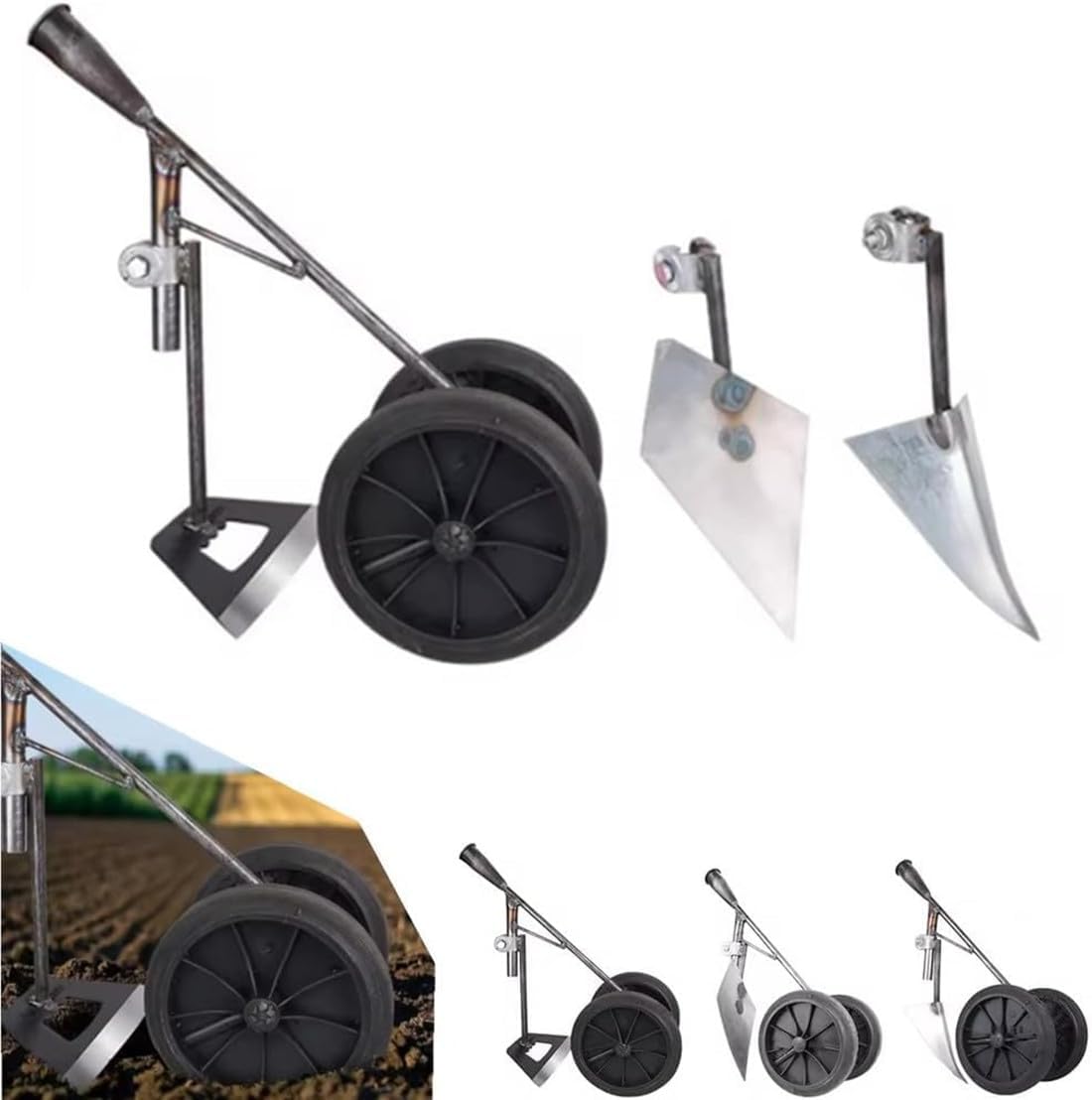
JHSHlye Double Wheel Garden Hoe with Three Interchangeable Blades
| Material Type | Stainless Steel |
|---|---|
| Number of Items | 4 |
| Power Source | hand_powered |
| Operation Mode | Manual |
This double-wheel wheel hoe is a straightforward, reliability-oriented tool for small bed and row work. The twin wheels open a shallow trench and keep the implement tracking straight while the set includes three interchangeable blades for weeding, trenching, and soil loosening, so you can switch tasks without buying separate tools. Construction uses quenched manganese stainless steel components and firm welding, which should hold up to regular use in garden soil. It is designed to be hand-pushed and manual, and the ergonomic metal socket accepts a standard wooden handle so you can fit a length that suits your posture. Practical benefits include easier, more consistent trenches for sowing, reduced bending compared with hand hoes when fitted to the right handle length, and versatility from the blade set. Limitations are that the wooden pole is not included so you must source and fit your own handle, and as a manual tool it is best for small plots and will not replace powered tillers for heavy-duty or large-area cultivation.
Best for: Gardeners who prioritize a dependable, low-tech cultivator for routine weeding, trenching, and planting in small beds and kitchen gardens and who prefer durable metal construction over lightweight hobby tools.
Less Ideal for: People managing large acreage, compacted heavy clay, or who need mechanized tilling and high‑speed cultivation should choose a powered tiller or larger machinery instead.
- Double-wheel design helps keep straight trenches and reduces effort when pushing
- Three interchangeable blades (trenching, soil loosening, weeding) add task versatility
- Quenched manganese stainless steel construction and firm welding for durable use
- Socket accepts a standard wooden handle so you can customize working height
- Wooden handle is not included so you must source and attach your own pole
- Manual operation is best suited to small beds and lighter soil and not for large or heavy-duty tilling
Verdict: Buy this if you want a robust, no-frills wheel hoe that delivers consistent trenches and interchangeable blades for reliable small-plot gardening.
EarthWay 6500 High Wheel Tubular Cultivator with 24-inch Steel Wheel and Adjustable Handle

| Brand Name | EarthWay |
|---|---|
| Model Number | 6500 |
| Material Type | Alloy Steel |
| Power Source | Manual |
| Wheel Size | 24-inch steel wheel |
The EarthWay 6500 is a high-wheel, manual cultivator designed to speed garden bed preparation and routine weeding without bending. It mounts interchangeable implements—moldboard plow, cultivator tines, and furrow tool—on a heavy one-inch plated tubular steel frame so you can plow, break clods, hill rows, and open furrows with one tool. The large 24-inch steel wheel helps roll through rough or deep soil and keeps the tool tracking straight, while the three-position height-adjustable handle improves user comfort for different operators. Implements attach with a single bolt for quick changes during the job. Practical benefits include less back strain than using a hoe, faster row preparation for small-scale or raised-bed vegetable plots, and a durable all-steel construction that tolerates regular use. Limitations are that it is a manual tool so it still requires physical effort and it is best suited to prepared or friable soil rather than compacted clay or very stony ground where a powered tiller would perform better.
Best for: Gardeners who want a durable, back-friendly hand tool to prepare rows, hill crops, and do precise cultivating in small to medium vegetable plots and raised beds, and who value proven performance over novelty.
Less Ideal for: Large acreage growers or users who need to break very hard, compacted soil quickly should consider motorized tillers or professional equipment instead.
- Three interchangeable implements (moldboard, cultivator, furrow) for multiple tasks
- Large 24-inch steel wheel improves tracking and roll in rough or deep soil
- One-inch plated tubular steel frame for durability under garden use
- Single-bolt quick-change system speeds swapping tools in the field
- Three-position adjustable handle increases user comfort for different heights
- Manual operation requires more physical effort than motorized tillers
- Not intended for very compacted or heavily rocky soil where powered equipment is preferable
Verdict: Choose the EarthWay 6500 if you want a robust, high-wheel manual cultivator that makes row prep and weeding faster while reducing back strain.
Varomorus High Wheel Cultivator — Single-Wheel Steel Wheel Hoe

| Material Type | Alloy Steel |
|---|---|
| Item Type Name | High Wheel Cultivator |
| Power Source | Manual |
| Operation Mode | Manual |
The Varomorus High Wheel Cultivator is a stand-up, manual wheel hoe built for routine garden tasks like removing weeds, shallow cultivation, furrowing, and light plowing. It rolls on a single large wheel to keep the operator upright while the tines work close to plant rows, and its universal toolbar accepts a range of attachments for seeding or different cultivating jobs. The all-alloy steel construction promises durability for repeated backyard use and the balanced design aims to deliver smooth forward and backward motion without digging up roots. Ergonomic handles and a self-cleaning tine arrangement reduce the need for constant stops to clear debris, which makes short work of beds and paths. Expect best performance in worked, reasonably dry soil rather than heavy clay or rocky ground, and because it is a manual tool you need to supply the physical effort for longer runs. Assembly and attachment swapping are straightforward but the tool is sized for garden beds rather than large-scale tilling.
Best for: Gardeners who want a reliable, low-tech weeding and light-cultivating tool for raised beds and small to medium backyard plots and who prefer a durable manual implement over powered equipment.
Less Ideal for: People managing large acreage, heavy unworked soil, or who need motorized tilling power should consider heavier or powered alternatives.
- Sturdy alloy steel construction suited for frequent backyard use
- Large single wheel and balanced frame enable smooth rolling and steady control
- Universal toolbar accepts multiple attachments for seeding and different cultivator tasks
- Self-cleaning tine design and ergonomic handles reduce interruptions and hand fatigue
- Manual operation requires physical effort for extended use
- Not intended for heavy clay, rocky ground, or large-scale tilling
Verdict: A durable, easy-to-use single-wheel cultivator that simplifies routine weeding and light bed preparation for backyard gardeners who prefer a manual tool.
Choosing the Right Wheel Garden Hoe: Key Factors to Consider
Blade Type and Cutting Performance
Blade shape, thickness, and edge geometry determine how effectively a wheel hoe severs weed stems and slices the soil surface. A sharp, thin blade will cut through fibrous weeds cleanly and require less forward force, while a heavier blade may be more robust but need more effort. Consider whether you will mainly weed light annuals, cut through heavier perennial roots, or use the tool to shape shallow furrows for planting.
Adjustable blade angle matters because it changes the contact point with the soil. Being able to tilt the blade lets you make shallow cultivation passes or dig deeper furrows. Also look for blades that can be resharpened or replaced; a tool with a serviceable blade extends the life of the implement and keeps cutting performance consistent without discarding the whole unit.
Handle Length and Ergonomic Setup
Handle length and the ability to adjust shaft height affect comfort during extended use. A longer handle lets taller gardeners work without bending, reducing lower-back strain, while a shorter setup can improve leverage for heavier ground. The handle cross-section and grip placement influence control and wrist position during forward pushing and occasional pulling motions.
Also consider whether the handle allows for angle adjustments to match your natural posture. Some wheel hoes offer simple telescoping or multi-hole shafts that let you set the handle to a neutral position. Comfortable hand contact points and vibration-dampening materials make repetitive passes less fatiguing and more precise when following planted rows.
Wheel Size and Ground Contact
Wheel diameter and tread shape control how the tool tracks over different soil textures and minor bumps. Larger wheels roll over clods and shallow obstacles more smoothly, keeping blade depth consistent. Narrower wheels are easier to maneuver in tight beds but may be less stable on rough ground.
Consider the wheel material too. Pneumatic or rubber-coated wheels provide a cushioning effect and better traction on looser soil, while hard plastic or metal wheels are low maintenance but can slip in wet conditions. The wheel mounting and hub construction also matter because a wobbling or loosely mounted wheel will make precise lines difficult to maintain.
Attachment Options and Expandability
A major advantage of wheel hoes is their modularity. Look at the range of available attachments such as different hoe blades, hilling plows, cultivator tines, and seeders. The more compatible attachments a tool accepts, the wider the range of tasks you can handle with one base unit.
Attachment systems that use common bolt patterns or quick-change clamps speed field swaps and encourage using the tool for repeated tasks. Also think about how stably attachments lock in; a poorly secured accessory can flex or shift during use, reducing effectiveness and increasing wear on fasteners.
Material Quality and Corrosion Resistance
Materials affect long-term performance because wheel hoes live in damp earth and are exposed to fertilizers and wet weather. Steel components should be either thick enough to resist bending or treated with rust-resistant coatings. Stainless or galvanized fittings at pivot points reduce the chance of seizing.
Handle materials matter too. Hardwood handles give a classic feel and can be repaired, while aluminum or coated steel shafts provide lighter weight and less moisture absorption. Consider whether replacement parts are available, since a tool built from standard fasteners and common shaft sizes is easier to keep in service for years.
Ease of Adjustment and Maintenance
How quickly you can change blade depth, swap attachments, or take the tool apart for cleaning determines whether the wheel hoe will actually be used regularly. Simple wing nuts, slotted bolts, or tool-free clamps are preferable for on-the-fly adjustments.
Maintenance needs such as sharpening, lubrication points, and wheel bearing accessibility influence lifetime cost and reliability. A design that minimizes trapped soil and rust-prone crevices will stay serviceable with less frequent heavy maintenance, which matters for gardeners who want dependable tools without a long upkeep routine.
How a Wheel Garden Hoe Changes Bed Work
A wheel hoe converts many hand-hoe tasks into standing, rolling motions that are faster on long beds. Instead of bending and chopping or pulling small weeds by hand, you push the tool along rows to slice the soil surface or plug shallow weeds at speed.
That change in motion affects how you plan work. For example, quick passes after seedlings are established help control small weeds without disturbing crop roots, while different blades let you widen furrows or break crusted surfaces between plantings.
- Standing work reduces lower-back stress compared with repeated bending.
- Long, straight beds deliver the biggest efficiency gains.
- You can switch tasks by changing blades rather than switching tools.
Preparing Soil and Using the Right Pass
Wheel hoes are not a substitute for initial deep tillage in heavy, compacted ground. They excel at surface cultivation, weed control, and making planting furrows. For very compacted soil, loosen with forks or a tiller before relying on wheel-hoe passes.
When using the tool, a shallow angled pass severs young weeds and lets residue sit on the surface as mulch, while a deeper vertical pass can cut into the soil to create a furrow for planting. Match the blade angle and depth to the specific job to avoid uprooting seedlings.
- Start with a pass at low depth to scout for seedling rows.
- Use multiple narrow passes rather than one deep pass for most cultivation.
- Keep the wheel in line with the row to avoid disturbing crop roots.
Maintaining Blades and Sharpening Tips
Sharpening keeps slicing performance high and reduces the force needed to push the tool. Use a flat file or bench grinder with light passes and maintain the factory bevel to avoid removing too much metal. After sharpening, deburr both sides for smooth contact.
Clean blades after use to prevent sticky residue and rust. A quick wipe and light oiling of the cutting edge before storage prevents corrosion and preserves edge life. Periodically inspect mounting bolts and adjust for play so the blade stays properly positioned during work.
- Sharpen at a consistent angle to preserve cutting geometry.
- Remove sap and soil before storage to limit corrosion.
- Check fasteners monthly during heavy season.
Using Attachments to Expand Tasks
Common attachments turn a wheel hoe into a seed furrower, a narrow-row cultivator, or a hilling tool for potatoes. That flexibility is particularly useful in mixed vegetable beds where you perform several operations in the same area.
When choosing attachments, prefer those that lock solidly and have clear depth stops. This keeps rows consistent and reduces the need for repeated measuring or hand adjustments between passes.
- Match attachment width to plant spacing for minimal crop disturbance.
- Use cultivator tines to break crusts without deep soil turnover.
- Hilling blades can form soil around tubers without heavy hand work.
Best Practices for Different Garden Sizes
In small urban beds and raised beds, maneuverability takes priority. A compact wheel hoe with a narrow wheelbase and short handle lets you work between close plantings without scuffing borders. For longer suburban rows, a wider stance and larger wheel will maintain straight travel and consistent depth across longer passes.
Consider storage and portability. If you work multiple small plots, choose a model that is easy to transport and reassemble. For a single large vegetable plot, a heavier, more robust build that tracks steadily over rough patches can save time and repeated adjustments.
- Compact models are best for raised beds and tight spacing.
- Larger wheels help keep consistent depth in longer rows.
- Transportable designs help gardeners who manage multiple sites.
How We Chose the Best Wheel Garden Hoe
We focused on features that matter when a gardener uses a Wheel Garden Hoe across seasons and tasks. Key evaluation criteria included cutting blade design and adjustability to measure how cleanly a tool severs weeds and slices into the soil. We examined handle ergonomics and shaft length options for comfortable standing use and reduced back strain. Durable materials and corrosion-resistant finishes were considered to predict how well a tool holds up to moist soil and repeated use. Attachment and accessory compatibility was another filter since many wheel hoes accept different furrowers, tined cultivators, or seeders that expand usefulness. Finally, setup and adjustment ease were assessed to estimate how quickly a gardener can switch blades, change wheel spacing, or alter depth. We excluded any tool that worked only as a decorative yard implement or that lacked basic adjustability. We also filtered out tools intended strictly for heavy tractor work rather than hand-propelled garden rows. The result is a group of versatile wheel hoes tuned to small-scale gardening tasks and gardeners who value efficiency, serviceable construction, and straightforward adjustability.
FAQ
Will a wheel hoe damage shallow-rooted seedlings?
It depends on blade choice and technique. Using a narrow, shallow cut at a slight angle and keeping the wheel aligned with the row minimizes root disturbance. Start with a light pass to assess proximity to seedlings before deeper work.
Can I use a wheel hoe in clay soil?
Wheel hoes can work in clay, but very compacted clay may require prior loosening. In sticky or wet clay, blades can clog and wheels may slip, so wait for drier conditions and use appropriate blade shapes to reduce clogging.
How often do wheel hoe blades need sharpening?
Frequency varies with use and soil type. Light home garden use may need edge maintenance once or twice per season, while heavy-duty weeding in gritty soils could require more frequent touch-ups. Inspect the edge when cutting efficiency drops.
Are replacement parts commonly available?
Many wheel hoes use standard fasteners and replaceable blades, so parts are often available or can be fabricated. Check that the tool you choose uses common bolt sizes and simple fittings to make future repairs easier.
Is a heavier wheel hoe always more durable?
Not always. Heavier components can resist bending, but they also increase weight and effort when pushing. Durability comes from good material choices and sound construction rather than mass alone, so balance robustness with maneuverability.
Can a wheel hoe help with planting rows as well as weeding?
Yes. With the right attachments and careful depth control, a wheel hoe can open shallow furrows for seed placement and create tidy hilled rows for tubers. Use depth stops and guide marks to keep rows consistent.
Final Verdict
Choose a wheel garden hoe that matches the tasks you do most often. Prioritize blade design and adjustability if you weed frequently, and favor handle ergonomics and wheel size when you have longer beds or want to minimize bending. Consider expandability through attachments if you need one tool to cover seeding, cultivating, and hilling. Balancing comfort, serviceability, and the right blade geometry will deliver the most useful tool for typical home garden work. Focus on the features that reduce effort and increase the range of tasks the hoe can perform to make the best long-term choice.
