

Note: This article contains affiliate links. If you click on these links and make a purchase, I may earn a small commission at no extra cost to you. This helps support my research and content. Read my full affiliate disclosure here.
If you want containers that thrive in blazing afternoon sun, choosing the right potted outdoor plants for full sun matters more than container style. Plants that handle direct light, heat, and intermittent drought will keep foliage and blooms healthy rather than suffering scorched leaves or stalled growth. This guide shortlists seven dependable options suited to sunny patios, balconies, and sunny borders. We evaluated each choice for sun tolerance, watering needs, seasonal interest, and container habit so you can pick plants that match the time you have to tend them. Read on for practical notes that will help you match plant habit and care to your space and schedule.
Top Picks at a Glance
| Best Overall The best all-around choice for most situations | Costa Farms Ixora Live Outdoor Shrub, 2–3 ft |  |
| Best Quality Built to a higher standard if you want something more solid | PERFECT PLANTS Jubilation Gardenia Live Plant (1 Gallon) |  |
| Best Value The sweet spot between price and what you get | Plants for Pets Gardenia 'August Beauty' (1‑Gallon) |  |
| Best Budget The cheapest option that still gets the job done reliably | ELLA'S HOMES Lantana Live Plants (2-Pack) |  |
| Highest Rated A top-rated pick with lots of positive feedback | Encore Azalea Autumn Kiss 1 Gal. Shrub |  |
| Most Popular A crowd favorite that many people choose with confidence | Perfect Plants Confederate Jasmine Live Plant, 1 Gallon |  |
| Best Seller A high-volume bestseller chosen again and again | Plants for Pets Euphorbia 'Crown of Thorns' Live Succulent (4" Pot) |  |
Costa Farms Ixora Live Outdoor Shrub, 2–3 ft

| Indoor Outdoor Usage | Outdoor |
|---|---|
| Sunlight Exposure | Full Sun |
| USDA Hardiness Zone | 10 |
| Moisture Needs | Regular Watering |
| Expected Blooming Period | Year Round |
The Costa Farms Ixora is a ready-to-plant, 2–3 foot potted shrub that delivers dense clusters of star-shaped flowers and evergreen, leathery foliage for sunny patios and containers. Designed for full sun, it performs best when placed where it receives six or more hours of direct light and consistent moisture without waterlogging. Buyers get a plant shipped in a plastic grow pot and can use it as a colorful focal point in a sun-drenched container or planted in sandy, well-draining beds in USDA zone 10 and warmer. Notable features include year-round blooming in frost-free conditions, pollinator-friendly nectar that attracts bees and hummingbirds, and simple water-based care instructions. Practical benefits are immediate visual impact from its mature size and relatively low maintenance if grown in the recommended conditions. Limitations are climate dependence and the need to bring the plant indoors or treat it as seasonal in cooler areas since it is hardy only to zone 10, and the potting container is basic plastic rather than decorative.
Best for: Buyers who want an easy, ready-to-display sun-loving shrub for a full-sun patio or pot and prefer a low-risk plant that establishes quickly and produces immediate color.
Less Ideal for: People in cool or frosty climates looking for a year-round outdoor specimen without moving plants indoors should choose a hardier alternative.
- Provides vibrant, near-continuous blooms in full sun for strong visual impact
- Arrives potted at 2–3 feet tall for instant container display
- Attracts pollinators such as bees and hummingbirds
- Simple care routine: regular watering and bright direct sunlight
- Only reliably hardy in USDA zones 10 and warmer so not frost-tolerant
- Supplied in a basic plastic grower pot rather than a decorative container
Verdict: A plug-and-play sun-loving shrub that gives instant, pollinator-attracting color for warm, full-sun pots and patios.
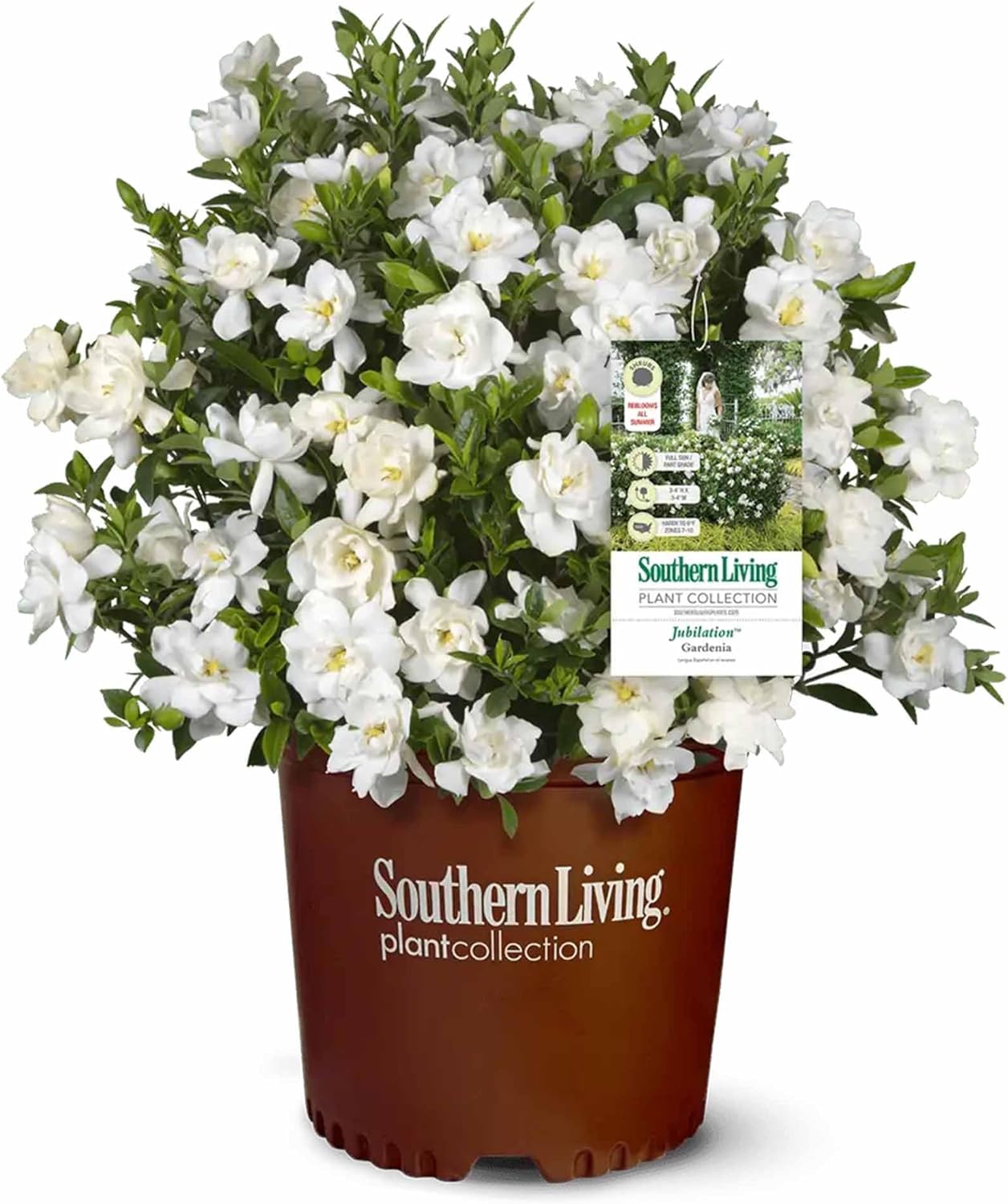
PERFECT PLANTS Jubilation Gardenia Live Plant (1 Gallon)
| Indoor Outdoor Usage | Outdoor |
|---|---|
| Other Special Features of the Product | Attracts Pollinators, Compact, Deer Resistant, Disease Resistant, Fragrant |
| Expected Blooming Period | Spring to Fall |
| Sunlight Exposure | Full Sun |
| USDA Hardiness Zone | 10, 7, 8, 9 |
The Jubilation Gardenia is a compact evergreen shrub selected for reliable, repeat blooming and strong fragrance from late spring through fall. In practice it works well as a potted patio specimen or small foundation plant placed in full to partial sun where its creamy white flowers and glossy foliage can be appreciated up close. Notable features include improved reblooming, heat and humidity tolerance for USDA zones 7–10, and a naturally rounded habit that keeps the plant tidy with minimal pruning. For container use it prefers well drained, slightly acidic loam and regular watering plus occasional fertilizing to sustain heavy bloom cycles. Limitations to consider are its climatic range and the need for consistent moisture and feeding to get the long flowering season; it is not suited to cool northern climates and cannot be shipped to certain states. For gardeners who want a high-performing, fragrant potted shrub for sunny outdoor spots, Jubilation delivers strong visual and olfactory impact with manageable care needs.
Best for: Gardeners who want a high-performing, fragrant shrub in a container or small sunny bed and prioritize frequent blooms and reliable summer heat tolerance.
Less Ideal for: Those gardening in cool northern zones, or buyers seeking a low-water, no-maintenance patio plant should consider alternatives.
- Compact, naturally rounded habit that fits well in containers and small sunny spaces
- Long flowering season with repeat blooms from spring through fall
- Strong, classic gardenia fragrance useful for placement near entries or seating areas
- Improved tolerance for heat and humidity, suitable for zones 7–10
- Glossy evergreen foliage provides year-round structure when not in bloom
- Requires consistent watering and periodic fertilizing to maintain heavy bloom performance
- Not cold-hardy outside USDA zones 7–10 and unsuitable for cooler climates
Verdict: Choose this gardenia when you want a compact, highly fragrant potted shrub that reliably reblooms and handles summer heat in sunny outdoor spots.
Plants for Pets Gardenia 'August Beauty' (1‑Gallon)

| Indoor Outdoor Usage | Indoor |
|---|---|
| Expected Blooming Period | Spring |
| Sunlight Exposure | Full Sun |
| USDA Hardiness Zone | 8 |
| Material Features | Organic |
This Gardenia 'August Beauty' is a compact, fragrant evergreen shrub shipped in a 1‑gallon grower pot that performs well as a container specimen or a small hedge. It produces double white flowers that age to creamy yellow and a strong gardenia perfume from spring into summer. Typical use is as a patio pot plant, entryway accent, or in grouped containers where its scent and glossy dark foliage are visible. Notable features from the listing include hardiness to Zone 8, preference for full to part sun, and a need for rich, moist, acidic soil with occasional deep soakings. In a pot it rewards regular feeding and consistent moisture and will provide seasonal cut flowers for arrangements. Limitations to plan for are its zone restriction and higher water and soil-quality needs compared with drought‑tolerant patio plants, so it is less forgiving if you want a very low-maintenance container. Also expect variability in bloom count on arrival because flowering depends on season and shipment timing.
Best for: Buyers who want a fragrant, showy flowering shrub for a patio pot or entryway container and are willing to provide regular watering and soil care to keep it healthy.
Less Ideal for: If you need an ultra low‑maintenance or cold‑hardy outdoor pot plant, choose a drought‑tolerant or more frost‑tolerant species instead.
- Strong, classic gardenia fragrance that enhances patios and entryways
- Glossy evergreen foliage that provides year‑round container interest
- Sized for containers — arrives in a 1‑gallon nursery pot ready to plant
- Reliable spring to summer bloom period for seasonal cut flowers
- Requires consistently moist, acidic soil and more attentive watering than many patio plants
- Hardiness limited to warmer climates (Zone 8 and up) so not suited for cold regions
Verdict: Choose this Gardenia for a scented, showy container plant when you want a fragrant focal point and can commit to moist acidic soil and seasonal care.
ELLA'S HOMES Lantana Live Plants (2-Pack)

| Unit Count | 2 Count |
|---|---|
| Plant Type | Perennial Flower Plant |
| Sun Exposure | Full sun |
| Size at Shipment | 5-12 Inches Tall |
This 2-pack of Lantana live plants arrives ready to transplant into pots or garden beds and is aimed at straightforward, low-maintenance summer color. Each plant is described as well-rooted and 5 to 12 inches tall, with random blooming colors that provide mixed orange, yellow, red, and purple clusters. In practice these lantanas perform best in full sun and are valued for long bloom periods and drought tolerance once established, making them a reliable option for sunny patios and containers. The plants are perennial where climate allows but go dormant in winter, so they are best used as outdoor seasonal or multi-year accents depending on your zone. Limitations are the random color selection and modest initial size, so buyers who need specific color schemes or instant large specimens may want larger or labeled starts. For gardeners seeking fuss-free, sun-loving container plants, these lantanas are an easy way to add sustained bloom without heavy care requirements.
Best for: Buyers who want dependable, low-effort full-sun container plants that provide long-lasting color on patios and in sunny beds.
Less Ideal for: Gardeners who need specific flower colors on demand or immediate large displays should consider larger nursery specimens or labeled varieties.
- Ready-to-transplant, well-rooted plants for quick establishment
- Long-blooming, colorful flower clusters that thrive in full sun
- Low maintenance and drought-tolerant once established
- Sold as a two-pack for easy pairing in pots or beds
- Color is random so exact flower shades are not guaranteed
- Plants are small on arrival and may take a season to reach full size
Verdict: A simple, dependable two-pack of sun-loving lantanas that delivers long-lasting color with minimal care.
Encore Azalea Autumn Kiss 1 Gal. Shrub

| Sunlight Exposure | Full Sun |
|---|---|
| USDA Hardiness Zone | 6, 7, 8, 9, 10 |
| Expected Blooming Period | Summer to Fall |
| Moisture Needs | Regular Watering |
The Encore Azalea Autumn Kiss is a reblooming azalea offered in a 1-gallon container that adds season-long color and evergreen foliage to patios and small gardens. It produces ruffled light-pink flowers with brighter edges in a heavy spring display followed by additional blooms through summer and fall, and its evergreen leaves keep containers looking full year round. Typical use is as a specimen in a mixed container, a standalone patio plant, or a small foundation accent where partial to full sun is available. Practical benefits include repeat flowering, low maintenance care, and attraction of pollinators. Planting is straightforward: water before planting, set slightly high, mulch, and fertilize in early spring. Limitations are that it prefers USDA zones 6 to 10 and regular watering, and the eventual mature spread (about 36–48 inches) means you may need occasional pruning or a larger container as it grows. It is best for gardeners who want a reliable, attractive container shrub without high upkeep, but plan container size and watering into your routine.
Best for: Gardeners who want an easy-care, attractive shrub for patio or balcony containers that provides repeated blooms and year-round foliage without constant maintenance.
Less Ideal for: Those seeking a small, permanently compact container plant for very small pots or gardeners in colder-than-zone-6 climates should consider alternative cold-hardy or dwarf varieties.
- Reblooms multiple times from spring through fall for extended color
- Evergreen foliage provides year-round container interest
- Low maintenance care with straightforward planting and seasonal fertilizing
- Attracts pollinators, adding ecological value to containers
- Requires regular watering and attention to moisture in containers
- Best suited to USDA zones 6–10 so not ideal in colder climates
Verdict: A reliable, low-maintenance reblooming azalea that keeps containers colorful and leafy throughout the growing season.
Perfect Plants Confederate Jasmine Live Plant, 1 Gallon

| Indoor Outdoor Usage | Outdoor |
|---|---|
| Other Special Features of the Product | Fragrant |
| Expected Blooming Period | Summer, Spring |
| Sunlight Exposure | Full Sun, Partial Shade |
| USDA Hardiness Zone | 4 |
This 1-gallon Confederate jasmine arrives as a young vine that quickly establishes in sunny spots and rewards with heavily scented, pale pinwheel flowers in spring and summer. Growers typically train it on a trellis, fence, hanging basket with support, or along railings; the vine is noted for cascading lime-green foliage and responds well to light shaping with clips or garden wire. Notable features from the listing include suitability for full sun to partial shade, moderate watering needs, and USDA hardiness to zone 4, which means it can persist in a wide range of climates when planted in appropriate sites. As a live plant it is straightforward to plant in loam-based soils and is described as easy to grow and maintain. Limitations to consider are that this is a young, single-plant offering so it will take time to reach its mature height and spread, and it requires support and periodic pruning to control vigor if used in baskets or confined containers. Also it does not ship to certain states according to the product notes.
Best for: Buyers who want an easy-care, fragrant climbing vine to add scent and cascading foliage to sunny baskets or supported containers and who value proven plant performance backed by customer feedback.
Less Ideal for: Gardeners seeking an instant full basket display or a no-maintenance groundcover should look elsewhere, as this vine needs time, training, and occasional pruning to fill space.
- Fragrant spring and summer blooms that add strong scent to outdoor spaces
- Tolerates full sun to partial shade making placement flexible
- Described as easy to grow which suits novice gardeners
- Hardy to USDA zone 4 so adaptable across many climates
- Sold as a single 1-gallon plant so it needs time and space to reach full coverage
- Requires a trellis or support and pruning to train and control growth
Verdict: A fragrant, easy-to-grow jasmine vine ideal for gardeners who want a proven, sun-tolerant climber to add scent and cascading foliage to hanging baskets and supported containers.
Plants for Pets Euphorbia 'Crown of Thorns' Live Succulent (4" Pot)

| Indoor Outdoor Usage | Indoor, Outdoor |
|---|---|
| Other Special Features | Drought Tolerant |
| Sunlight Exposure | Full Sun |
| Moisture Needs | Moderate Watering |
This Crown of Thorns (Euphorbia milii) is a small, showy succulent shrub sold in a 4-inch nursery pot that works well as a sunny patio or sunny-window houseplant. It produces clusters of pink bracts for much of the year in mild climates and stays compact enough for pots, mixed containers, or small garden beds. The plant stores water in its thick stems so it can handle dry spells and requires well-draining soil and allowing the potting mix to dry between waterings. Notable features are its tolerance for full sun and partial shade, low pest pressure, and year-round decorative color in suitable climates. Buyers should handle it carefully because injured stems exude a caustic, irritating sap that can harm skin and eyes and is toxic if ingested. As a practical, low-maintenance flowering succulent for sunny spots, it delivers reliable color without much fuss, but keep it out of reach of children and pets and use protective gloves when pruning.
Best for: Buyers who want a low-maintenance, sun-loving flowering succulent to add reliable color to pots, sunny patios, or bright indoor windows without frequent watering or pest work.
Less Ideal for: Homes with small children or curious pets where a poisonous, sap-producing plant would be a safety concern or for gardeners who prefer completely sap-free, non-spiny plants.
- Drought tolerant and stores water in stems, reducing watering frequency
- Compact 4-inch nursery pot size fits small pots, mixed containers, and tight garden spaces
- Produces colorful pink bracts most of the year in mild climates for long-lasting visual interest
- Tolerates full sun and partial shade, making placement flexible for sunny patios or bright windows
- Releases a caustic, toxic sap when injured that can irritate skin and eyes and is hazardous if ingested
Verdict: A compact, sun-tolerant flowering succulent that delivers long-lasting pink bracts with minimal watering, ideal for pots and sunny spots.
Choosing the Right Potted Outdoor Plants for Full Sun: Key Factors to Consider
Sun Exposure and Heat Tolerance
Full sun containers can reach higher temperatures than in-ground plantings because pot walls heat quickly and roots sit in warmer soil. Choose plants rated for sustained direct light and, if you have very hot afternoons, those that handle heat stress without leaf scorching. Consider how plants react during heat waves and whether they will wilt briefly and recover or sustain long-term damage.
Placement matters too. Containers against light-colored walls will reflect more heat, while those on dark decks absorb extra warmth. Matching plant tolerance to the microclimate reduces the need for extra shade or frequent watering.
Container Habit and Mature Size
Plants that stay compact or have an upright, clumping habit are easier to manage in pots than aggressive spreaders or deep-rooted shrubs. Estimate mature width and height for the container you plan to use so roots are not constrained too quickly and the pot remains balanced visually.
A plant that doubles in size the first season will require repotting or frequent pruning, while a steady, contained grower will perform predictably. Consider trailing versus upright habits to plan companion planting and allow adequate airflow around foliage.
Watering Needs and Soil Drying Rate
Potted soil dries faster than garden beds, especially in full sun. Watering frequency is a decisive factor for containers placed in hot, exposed sites. Choose plants whose natural moisture needs match how often you can water. Drought-tolerant species can handle occasional misses, while thirstier bloomers need daily attention in hot weather.
Also consider pot size and potting mix. Larger volumes retain moisture longer; mixes with more organic matter hold water better than straight sandy mixes. Matching plant moisture profile to container setup reduces stress and maintenance.
Seasonal Interest and Flowering Cycle
Some sun-loving container plants offer long bloom periods that provide continuous color, while others have brief, intense flowering followed by more subdued foliage seasons. Decide whether you want nonstop color, architectural foliage, or a combination.
Long-blooming plants reduce the need for frequent rotation or replacement and often reward routine deadheading. Foliage-focused choices can carry interest into seasons when flowers fade, extending the visual life of a container.
Fertilizer and Nutrient Requirements
Potted plants deplete nutrients faster than in-ground specimens because roots are confined and drainage is regular. Assess whether a plant needs regular feeding to sustain blooms or whether it performs well with occasional slow-release fertilizer.
High-feeding bloomers will need a consistent schedule to avoid reduced flowering. Low-maintenance foliage plants can often thrive with minimal feeding, which matters if you prefer lower-input container gardening.
Pest and Disease Resistance in Sunny Sites
Full sun containers may suppress some fungal problems but can still attract insect pests and sun-related leaf issues. Choose plants with known resistance to common pests in your area or with physical traits that make them less attractive to pests, such as tough or aromatic foliage.
Open, airy habits reduce humidity and disease pressure. Plants that tolerate occasional leaf damage without severe decline are better choices for busy gardeners who cannot respond to infestations immediately.
Matching Plants to Container Size and Material
The pot itself influences performance in full sun. Shallow pots heat and dry faster than deep ones, so reserve shallow bowls for species with small root systems or for temporary displays. Larger, heavier pots buffer temperature swings and reduce how often you need to water.
Material matters too. Terracotta breathes and promotes faster drying, which benefits drought-tolerant species but can stress thirsty bloomers. Glazed ceramic and plastic retain moisture longer, which suits higher-water plants but may require extra drainage attention in rainy spells.
- Use larger volumes for plants you want to forget about for longer stretches.
- Match terracotta to drought-tolerant choices; use glazed pots for thirstier varieties.
- Consider pot color to moderate heat absorption on very sunny patios.
Irrigation Strategies for Sunny Containers
Full sun containers often need more than hand watering. Grouping pots with similar water needs simplifies care and reduces over- or under-watering. For longer absences, use reservoir pots, capillary mats, or self-watering inserts to maintain consistent moisture for thirstier plants.
Adjust irrigation with weather. Increase frequency during heat waves and reduce after heavy rains. Monitor soil rather than following a strict schedule; a finger test or moisture meter helps avoid common mistakes such as watering on a fixed day regardless of need.
- Group plants by watering needs to streamline care.
- Use self-watering methods if you cannot water daily in hot weather.
- Check soil moisture at root level rather than judging by surface dryness alone.
Designing Color and Texture for Sunny Displays
Sunny containers offer the chance to combine bold blooms and contrasting foliage. Use a clear design framework: an upright focal plant, a mid-layer filler for continuous color, and a trailing element to soften edges. Choose a limited palette of complementary colors for a cohesive look.
Texture and leaf color are as important as flowers. Silver or gray foliage can reflect light and reduce heat stress, while glossy green leaves add lush contrast. Mixing bloom shapes keeps interest through the season even if one plant finishes blooming sooner than others.
- Include at least one trailing variety to spill over the pot edge.
- Balance bold flowers with textured foliage for long-lasting interest.
- Use repeat colors or foliage tones across multiple pots for a unified patio scheme.
Seasonal Care and Overwintering
Full sun pots face seasonal extremes. In summer, monitor for rapid drying and provide afternoon shade for marginal species. In autumn, reduce feeding and watering to let plants harden off. For regions with frost, plan whether containers will be moved to shelter or whether plants will be treated as annuals.
Some sun-loving plants are hardy and can overwinter in place with root insulation and reduced watering, while others are best brought indoors or replaced each year. Understand your plant's hardiness and the local microclimate before committing to winter care.
- Cut back on fertilizer late in the season to encourage dormancy.
- Insulate pots or move them to protected sites if frost is likely.
- Consider using lightweight frost cloths for brief cold snaps.
Companion Planting in Containers
Combining plants that share light and water requirements creates more resilient containers. Pair drought-tolerant bloomers with other dry-adapted fillers and trailing succulents rather than mixing thirsty annuals with cacti. Think about root competition and choose companions with similar growth rates.
Also consider seasonal succession planting. Use fast-growing annuals for immediate color around slower-establishing perennials so the pot looks full from the start, then replace the annuals later if needed.
- Avoid mixing deep-rooted and very shallow-rooted species in the same pot.
- Use quick-start annuals to fill gaps around slower growers.
- Choose companions with similar feeding needs to simplify fertilization.
How We Chose the Best Potted Outdoor Plants for Full Sun
We focused on traits that directly affect how plants perform in containers placed in full sun. Selection emphasized proven sun tolerance in exposed sites, compact or restrained growth habits suited to pots, and predictable water needs so gardeners can match plants to realistic irrigation routines. We also considered seasonal interest such as long bloom duration or attractive foliage, and resistance to common sun-related stresses like leaf scorch and rapid soil drying. Exclusions were plants that require constant shade, large root runs that quickly overwhelm small containers, or species that need specialized care impractical for typical patio gardeners. We prioritized entries that are widely adaptable across climates where full sun is common, and that offer clear cultural notes for container use. Final choices were filtered by sun tolerance, container habit, drought response, seasonal ornamental value, and ease of maintenance, which are the dimensions we used to evaluate suitability for sunny containers.
FAQ
How often should I water potted plants in full sun?
It depends on pot size, plant type, and weather. Small pots and thirsty bloomers often need daily watering in hot weather, while larger pots or drought-tolerant species may only need watering every few days. Check soil moisture at root level rather than relying on a fixed schedule.
Can I use terracotta pots for sun-exposed containers?
Yes, but terracotta dries out faster because it is porous. It pairs well with drought-tolerant plants. For thirstier varieties, choose glazed or larger pots to retain moisture, and ensure good drainage to avoid soil compaction.
What soil mix works best for full sun containers?
Use a high-quality potting mix designed for containers that balances drainage and water retention. Adding organic matter increases nutrient retention, while grit or perlite improves drainage. Match the mix to plant moisture needs to avoid chronic drought or waterlogging.
How can I protect potted plants from extreme heat?
Provide temporary afternoon shade for marginal species, increase watering frequency during heat waves, and use light-colored pot surfaces to reduce heat gain. Grouping pots and using mulch on the soil surface can also help retain moisture and lower root-zone temperatures.
Should I fertilize containers more often than in-ground plants?
Usually yes. Containers lose nutrients faster due to regular watering and limited soil volume. Feed long-blooming or heavy-flowering plants on a regular schedule, while low-feeding foliage plants may only need occasional slow-release fertilizer.
Final Verdict
Prioritize sun tolerance, container habit, and realistic watering needs when choosing potted outdoor plants for full sun. Decide whether you want long-lasting blooms, foliage interest, or low-maintenance drought tolerance, and select plants whose habits match the size and material of your pots. Balancing those tradeoffs will lead to reliable, attractive sunny containers. Focus on plants that fit your irrigation routine and the microclimate of your patio or balcony, and you will get consistent performance with minimal surprise maintenance.
