

Note: This article contains affiliate links. If you click on these links and make a purchase, I may earn a small commission at no extra cost to you. This helps support my research and content. Read my full affiliate disclosure here.
Choosing the right garden edging for a sloped yard changes how your beds hold soil, shed water, and look over time. On slopes a good edge does more than define a border; it helps prevent soil loss, controls runoff, and reduces trimming work on uneven ground. This guide covers six carefully shortlisted garden edging solutions suited for sloped yards and explains the practical tradeoffs each approach brings. We evaluated options across real garden concerns like erosion control, ease of installation on uneven ground, and long-term durability. Read on for hands-on guidance that helps you match edging type to slope steepness, soil conditions, and maintenance expectations.
Top Picks at a Glance
| Best Quality Built to a higher standard if you want something more solid | GJWCVL Corten Steel Landscape Edging, Pre-Rusted 4.5" H, 33 ft (10-Pack) |  |
| Best Value The sweet spot between price and what you get | shsyue Landscape Edging 33 ft — Extra Tall 4 in Flexible Garden Border Kit with Stakes |  |
| Best Budget The cheapest option that still gets the job done reliably | SnugNiture Corrugated Metal Garden Edging, 6" x 50' |  |
| Highest Rated A top-rated pick with lots of positive feedback | MIXC Vintage White Plastic Landscape Edging, 5.27 in tall, 100 ft |  |
| Most Popular A crowd favorite that many people choose with confidence | Amazon Basics Flexible Landscape Edging Coil, 5 in x 40 ft with Stakes |  |
| Best Seller A high-volume bestseller chosen again and again | STIRLINGEAR 33 ft Powder-Coated Galvanized Steel Landscape Edging (10-Pack) |  |
GJWCVL Corten Steel Landscape Edging, Pre-Rusted 4.5" H, 33 ft (10-Pack)

| Material Type | Corten Steel |
|---|---|
| Number of Items | 10 |
| Unit Count | 10 Count |
| Item Highlight | No Dig, Bendable for Curved Borders, 6 Clips |
| Total Length | 33FT |
This corten steel landscape edging is designed to create a clean, long-lasting border without heavy installation work. The kit ships as ten pre-rusted panels that interlock with supplied clips so you can insert the edging into soil with minimal digging and then link sections for continuous runs. The corten finish weathers to a stable patina, which reduces maintenance and blends with natural slopes and planting beds. Because each panel is bendable, it can be shaped to follow curves and moderate slopes, making it practical for defining terraces or holding back mulch on a sloped yard. Expect strong corrosion resistance and a rigid edge once clipped together, but realize the low 4.5 inch height is best for shallow borders rather than high-retaining edges. Installation is faster than poured or concrete solutions but may need extra anchoring on steep grades or where soil erosion is active. For performance-focused users who want a durable, low-maintenance metal edge that conforms to contours, this is a solid, utilitarian choice.
Best for: Gardeners who prioritize durable, low-maintenance edging and need a metal solution that can be quickly shaped to follow contours and moderate slopes.
Less Ideal for: Not the best choice for landscaping that requires tall retaining edges or heavy-duty soil retention on steep banks; those projects need higher or engineered retaining solutions.
- Corten steel construction offers long-term weather resistance and a natural rust patina.
- Pre-rusted finish reduces initial maintenance and provides an integrated aesthetic.
- Bendable panels allow shaping to curved beds and moderate slopes.
- No-dig installation with clips speeds setup compared with rigid hardscape options.
- Ten-panel kit gives 33 feet total length for defining larger borders without many gaps.
- Relatively short edge height (4.5 inches) limits its ability to retain large volumes of soil on steep slopes.
- May require additional anchoring or backup edging on highly erodible or very steep sites.
Verdict: A performance-minded, low-maintenance metal edging that bends to follow slopes and provides durable, long-lasting borders for shallow to moderate sloped yards.
shsyue Landscape Edging 33 ft — Extra Tall 4 in Flexible Garden Border Kit with Stakes
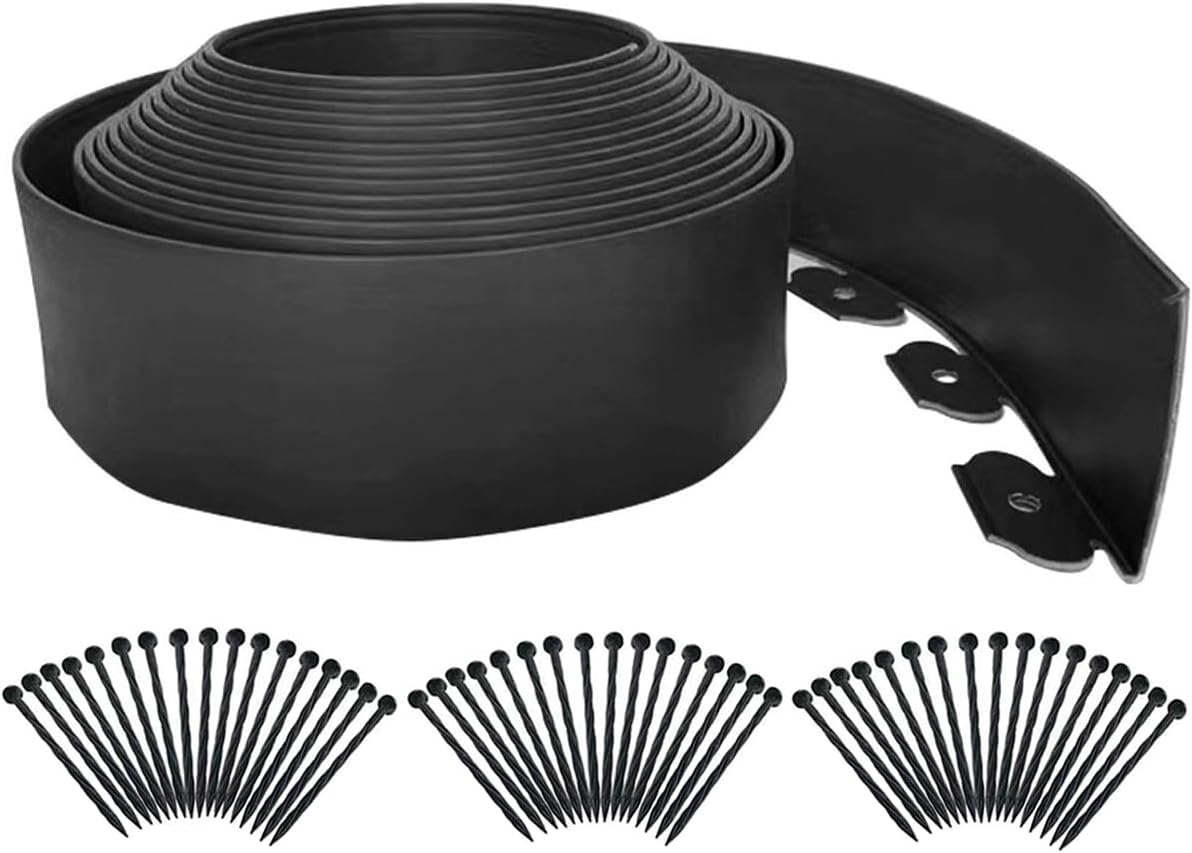
| Material Type | High Density Polyethylene (HDPE) |
|---|---|
| Length | 33 ft |
| Height | 4 in |
| Included Stakes | 50 spiral stakes |
This shsyue landscape edging kit provides a long, flexible strip of HDPE edging that you bend to follow beds, paths, and slopes and secure with included spiral stakes. It is typically used to define flowerbeds, keep mulch and soil contained, and create a neater transition between lawn and planting areas. The material is soft enough to cut to length and shape yet durable for outdoor use, and the nylon spiral spikes resist rust and can be reused. Installation is simple: position the edging, shape it to the contour you want, then hammer the stakes through the edging into the soil so it holds on uneven ground. For sloped yards the flexibility and spike design make it easier to follow grade without trenching. Limitations are that a 4-inch height is modest for heavy root intrusion or very deep mulch and the plastic will show wear sooner than metal edging in high-traffic locations, so it is best for visual separation and light containment rather than heavy-duty restraint.
Best for: Gardeners who want a low-effort, customizable edging solution to tidy beds and control mulch on sloped or irregular terrain without digging a trench.
Less Ideal for: People needing heavy-duty, permanent edging to stop persistent root intrusion or withstand vehicle and heavy foot traffic should consider metal or concrete alternatives.
- Flexible HDPE strip bends easily to follow curves and slopes for quick installation
- Includes multiple spiral nylon stakes that resist rust and hold edging on uneven ground
- Cut-to-fit lengths let you customize runs without special tools
- Long 33 ft length covers extensive borders in a single run
- Four inch height may be too low to fully contain deep mulch or aggressive grass runners
- Plastic material can degrade faster than metal when exposed to heavy wear or UV over many seasons
Verdict: A quick, flexible edging kit that makes defining and stabilizing beds on sloped yards fast and easy without digging.
SnugNiture Corrugated Metal Garden Edging, 6" x 50'

| Height | 6" |
|---|---|
| Length | 50' |
This corrugated metal garden edging is a straightforward, no-frills solution for defining beds and controlling grass encroachment on a sloped yard. The 6-inch high strip is made from coated metal intended to resist sun, rain, and snow, and the corrugated profile adds stiffness so it holds a curve on gentle slopes. A hemmed edge reduces the risk of cuts during installation and improves the finished look. Because the material is flexible, you can shape it to follow contour lines or create crisp transitions between lawn and planting areas; it also works well for short retaining runs on modest slopes. Installation requires staking or fastening along the run and occasional trimming to length, so expect some basic hand tools and elbow grease. This edging is focused on practicality rather than decorative detail, and heavier-duty tasks such as high erosion control or very steep banks may need sturdier, taller solutions.
Best for: Practical homeowners working on a budget who need a simple, weather-resistant edging to define beds and follow gentle slopes without professional installation.
Less Ideal for: Those tackling steep banks, significant erosion control, or who want ornate decorative edging should choose a taller or more specialized barrier instead.
- Durable coated metal resists sun, rain, and snow for longer outdoor life
- Corrugated profile adds stiffness so the edging holds curved runs on slopes
- Hemmed safety edge reduces risk of cuts and gives a cleaner finish
- Flexible length can be trimmed and shaped for custom layout and DIY projects
- 6-inch height is modest and may not control heavy soil erosion on steep slopes
Verdict: A cost-conscious, durable metal edging that flexes to follow gentle slopes and gives a clean, practical border for beds and lawns.
MIXC Vintage White Plastic Landscape Edging, 5.27 in tall, 100 ft

| Unit Count | 100 Feet |
|---|---|
| Height | 5.27 Inches |
| Material Type | Plastic |
| Number of Packs | 1 |
This MIXC vintage-style plastic landscape edging creates a neat, finished border around flower beds, walkways, and lawn edges without digging a trench. The kit supplies 100 feet of 5.27-inch-tall fence-profile edging and separate metal stakes that you insert through built-in anchoring holes to secure the sections. Because the edging is flexible it can be curved to follow slopes and uneven terrain and a single person can usually lay out and stake the runs. The plastic panels present a classic white fence look that helps visually contain planting areas, and the included metal stakes improve hold in firmer soils. Limitations to consider are that plastic edging relies on stakes rather than deep anchoring, so in very loose or erosion-prone slopes you may need additional anchoring or frequent checks. Stiffness is moderate, so very steep or heavily trafficked edges may require a more rigid material or added reinforcement. For most residential sloped yards this edging offers an easy, low-effort way to define borders and refresh a landscape edge.
Best for: Gardeners who want a reliable, low-effort way to define beds and pathways on modest slopes and who prioritize easy installation and consistent appearance.
Less Ideal for: Not the best choice for very steep, erosion-prone slopes or commercial properties requiring heavy-duty, permanently anchored edging solutions.
- Provides 100 feet of continuous edging to define large areas
- Flexible profile allows curving around uneven or sloped terrain
- Includes metal stakes for quicker installation and improved hold
- Fence-style design gives a clear, traditional visual border without digging
- Relies on surface stakes rather than deep anchoring which may need reinforcement on very loose slopes
- Plastic material is less rigid than metal and may need extra support in high-traffic areas
Verdict: A straightforward, easy-to-install plastic fence-style edging that reliably defines beds and follows gentle to moderate slopes.
Amazon Basics Flexible Landscape Edging Coil, 5 in x 40 ft with Stakes

| Item Type Name | Edging Coil |
|---|---|
| Unit Count | 1 Count |
| Material Type | All-new material |
| Item Weight | 8.9 pounds |
This flexible landscape edging coil is designed to create tidy borders around lawns, flower beds, pathways and raised beds. The 5-inch-high coil ships as a 40-foot length and is flexible enough to form gentle curves or straight runs; matching stakes are included to hold the edging in place once positioned. Constructed from recycled plastic with a faux woodgrain texture, it blends into natural landscapes while resisting rot and the maintenance needs of real wood. Installation is straightforward for a single person: roll out the coil, shape it to the desired line, and drive the stakes through the pre-drilled areas to secure it. Expect good long-term low-maintenance performance, though the plastic can be less rigid than metal options and may require more frequent staking on very uneven ground. The brown finish helps hide in most planting beds but does not camouflage perfectly against every mulch or planting scheme. For routine edging jobs it offers an economical, easy-to-install solution that keeps edges neat without special tools.
Best for: Buyers who want a practical, low-maintenance way to define garden edges quickly and economically, and who value ease of installation and flexibility over heavy-duty rigidity.
Less Ideal for: Not the best choice for landscapers needing very rigid, permanent edging or for sites with extreme soil erosion where metal or concrete edging is required.
- Long 40 ft coil covers large perimeters without seams
- Flexible material lets you create curves and straight edges easily
- Included matching stakes simplify and secure installation
- Recycled plastic with faux woodgrain gives a low-maintenance, natural look
- Plastic is less rigid than metal edging and may need extra stakes on uneven terrain
- Color and woodgrain effect may not perfectly match all landscapes
Verdict: A budget-friendly, easy-to-install flexible edging solution that quickly creates clean garden borders with minimal tools.
STIRLINGEAR 33 ft Powder-Coated Galvanized Steel Landscape Edging (10-Pack)

| Total length | 33 ft (10-pack) |
|---|---|
| Material Type | Powder-Coated Galvanized Steel |
| Stake count | 11 stakes included |
| Finish | Black powder coat |
This 10-pack landscape edging kit provides a durable, low-profile solution for defining flower beds, paths, and lawn borders. Each 40-inch panel is made from powder-coated galvanized steel and installs with hammer-in stakes, so you can create a neat edge quickly without excavating long trenches. The kit includes 11 stakes for anchoring and a black finish that blends into planting beds. In practice the metal is stiff enough to hold a clean line against turf and light soil movement yet flexible enough to be cut and eased around gentle curves. The powder coating and galvanization help resist rust in typical garden conditions, making this a good long-term option for a risk-averse gardener who wants minimal maintenance. Keep in mind the panels are low profile, so they do not provide a tall barrier against creeping roots or heavy mulch; very thick turf or aggressive runners may still cross the line. Installation requires a hammer and occasional trimming at corners, but no special tools are needed.
Best for: Home gardeners who want a low-maintenance, long-lasting edging solution that installs quickly and keeps flower beds tidy with minimal ongoing fuss.
Less Ideal for: Gardeners needing a high barrier against invasive roots or a tall edging for steep grade changes should consider taller or buried edging systems instead.
- Durable galvanized steel with powder coating for rust resistance
- Hammer-in stake design enables fast installation without deep digging
- Low-profile panels create a neat, professional-looking border
- Flexible enough to cut and shape around gentle curves
- Includes stakes so kit is ready to anchor after layout
- Low profile does not block aggressive runners or heavy mulch movement
- May require trimming and shaping for tight corners or complex curves
Verdict: A fuss-free, rust-resistant steel edging kit that gives risk-averse gardeners a quick, durable way to create clean flower-bed borders.
Choosing the Right Garden Edging for Sloped Yard: Key Factors to Consider
Slope Angle and Runoff
The steepness of the slope determines how much lateral pressure and water flow the edging must resist. Gentle inclines mainly need a defined edge to keep soil and mulch in place, while steep slopes demand edging that anchors deeply and transfers load to the ground rather than relying on shallow stakes.
Runoff patterns matter too. If water channels along the bed during storms, edging should be able to direct flow or integrate with drainage features to avoid undercutting. Consider the length of the run as well; a long stretch of edging on a steep slope accumulates greater hydrostatic force and will need stronger anchoring and continuity.
Soil Type and Stability
Soil texture influences how easily the bank erodes and how well anchors hold. Sandy or loose soils offer poor holding power, so edging in those conditions benefits from deeper stakes, wider base plates, or materials that can be trenched and backfilled to create mass.
Clay soils may hold anchors well when dry but expand and contract with moisture changes, which can shift lighter edging systems. Rocky or root-filled soils make trenching difficult and may favor aboveground modular edging that can be micro-adjusted without digging a continuous trench.
Material Suitability for Weather
Materials behave differently on slopes over seasons. Metal edging offers rigidity and can cut into banks, but thin metal may corrode in wet soils. Rigid plastics resist rust and flex but can warp under sun and heat, creating gaps. Solid stone or concrete provides mass and permanence but requires more labor and may crack with freeze-thaw cycles if not properly installed.
Think about local climate: frequent freeze-thaw, heavy rains, or extended sun exposure all influence which material will hold up longest and require the least maintenance.
Anchoring and Connection Methods
How edging fastens to the ground is critical on a slope. Systems that rely on driven stakes, deep pins, or bolted splice plates transfer shear and uplift forces better than those that use surface clips alone. Continuous buried edges hold back soil more effectively than short, unconnected segments.
Connections between sections should prevent separation under load. Overlapping seams or mechanical fasteners reduce the risk of gaps forming where water can concentrate and erode the bank.
Adaptability to Shape and Garden Style
Sloped yards often have irregular contours, terraces, or point loads from tree roots and rocks. Edging that can flex to follow curves or be cut and rejoined on site simplifies installation and yields a cleaner look. Some rigid systems allow preforming into curves, while modular pieces let you step an edge down the slope to create terraces.
Also weigh aesthetic goals against structural needs. A heavy stone edge may look appropriate but could be overkill on a shallow slope; conversely, a slim metal edge might be invisible from the house but insufficient for severe erosion.
Maintenance Requirements Over Time
Consider how often the edging will need resetting, tightening, or replacement. Systems that require periodic re-anchoring after storms or freeze-thaw cycles add ongoing labor. Low-maintenance options might have higher upfront installation effort but fewer future interventions.
Think about accessibility for repairs on a steep slope. If the edge is hard to reach, pick materials and attachment methods that tolerate some movement without letting the bank fail completely.
Terracing and Stepped Edges
Creating small terraces or stepping the bed down the slope reduces the effective grade each edging segment must resist. Terracing breaks up runoff, slows soil movement, and lets you use shorter runs of edging with stronger anchors.
This approach works especially well when the slope is moderate to steep and you want planting pockets that stay level. It often requires more initial digging or structural supports, but it lowers long-term erosion risk and simplifies maintenance.
- Use short, continuous edging segments at terrace risers for stability.
- Combine with soil-retaining plants to reinforce the bank.
- Allow for drainage behind edges to reduce hydrostatic pressure.
Integrating Drainage with Edging
Edging should not trap water behind a bed unless you have a plan for drainage. On slopes, water tends to concentrate at low points. Integrate gravel channels, perforated drainage pipes, or weep gaps in the edging to give water an escape route without eroding the soil.
Placing drainage outlets at defined intervals or low spots prevents undercutting. Also consider directing runoff into swales, rock gardens, or planted buffers that slow water and promote infiltration.
- Plan outlets before installing a continuous buried edge.
- Use permeable backfill where water is likely to collect.
- Inspect drainage paths after heavy rain to verify performance.
Using Plants as Living Edges
Strategic planting can work alongside hard edging to stabilize slopes. Deep-rooted groundcovers, ornamental grasses, and shrubs reduce surface erosion and bind soil between the edge and the slope. When used together, plants and edging share the load: the hard edge prevents sloughing while plants slow runoff and reinforce the bank.
Choose species adapted to your sun exposure and moisture regime so they establish quickly and require minimal long-term watering or maintenance. Living edges are particularly effective on gentle to moderate slopes.
- Combine living edge plantings with structural anchors on steeper grades.
- Stagger plantings to create a dense root mat near the edge.
- Mulch carefully to avoid burying crowns and to aid moisture retention.
Temporary Versus Permanent Solutions
Decide whether you need a temporary edge for seasonal beds or a permanent solution for long-term slope control. Temporary edging like modular pavers or lightweight plastic can be quick to install and remove for seasonal plantings, but they may not hold up to repeated runoff or freeze-thaw cycles.
Permanent solutions such as reinforced concrete, heavy stone, or deep-anchored metal are more labor-intensive to install but provide reliable long-term resistance to erosion. Factor in how long you expect the planting scheme to remain and how often you will alter the landscape.
- Use temporary edging for annual displays or trial layouts.
- Choose permanent materials where long-term erosion control is the priority.
- Consider hybrid approaches that combine a durable base with replaceable surfacing.
Working with Existing Site Features
Existing trees, rocks, paths, and utilities influence edging choices on a slope. Trees with surface roots may prevent deep trenching, so you might use aboveground anchoring or segmented edging that can be worked around roots without damage. Hardscape elements like steps or retaining walls can be integrated with edging to create cohesive transitions.
Also check for buried utilities before driving stakes or digging trenches. In many cases, minor design adjustments to the edging layout will avoid conflicts while still providing effective soil retention.
- Map obstacles before planning your edging run.
- Use flexible or cuttable materials to negotiate tight spots.
- Coordinate edging with any future hardscape or irrigation plans.
How We Chose the Best Garden Edging for Sloped Yard
We shortlisted products and edging approaches that perform well specifically on slopes rather than flat beds. Our selection criteria focused on factors that affect how an edge behaves under gravity and moving water: erosion resistance, installation adaptability for irregular grade, material durability in wet or shifting soil, and the ability to form a continuous, secure barrier along curved or angled beds. We also looked at labor and tool needs, since some edging systems require heavy digging, anchoring, or shaping for slopes. Another consideration was maintenance: how easily the edge can be adjusted, repaired, or reset after freeze-thaw cycles or erosion events. We excluded edging types that work only on level ground or that rely on shallow stakes with little lateral resistance, because those tend to fail or float on steep or wet inclines. Also omitted were purely decorative solutions that offer no measurable soil-retention benefit. The products that made the list balance structural performance on slopes with manageable installation effort and long-term weather resistance.
FAQ
How deep should edging be installed on a steep slope?
Depth depends on material and slope angle, but edging that anchors below the active root or topsoil zone is usually better. Deeper stakes or a buried lip help resist undercutting during heavy runoff. For steep slopes, expect to extend anchors several inches deeper than you would on flat ground.
Can I use the same edging on a flat bed and a sloped area?
Some systems work for both, but not all. Edging designed for flat beds may lack the anchoring or mass to resist lateral forces on a slope. If you plan to use the same product, choose a version with stronger anchors or plan to backfill and reinforce it for the slope portion.
Will edging stop erosion by itself?
Edging helps by holding back surface soil and redirecting minor water flows, but it rarely stops erosion alone on steep or actively eroding slopes. Combining edging with proper drainage, soil amendments, and vegetation gives the best chance of stabilizing the bank.
What maintenance should I expect after installation?
Maintenance usually involves checking anchors after heavy rains, clearing debris from drainage gaps, and repairing separated joints. Natural settling and minor movement are common, so periodic tightening or resetting of sections may be needed, especially during the first year.
Are there eco-friendly edging options for slopes?
Yes. Natural stone, salvaged timber, or biodegradable timber products paired with living plantings can be environmentally friendly choices. The key is ensuring the material still provides adequate anchoring and does not accelerate erosion as it degrades.
Final Verdict
For sloped yards the best edging balances structural resistance with adaptability. Prioritize systems that anchor well, allow integrated drainage, and accommodate the contour of the grade. Expect tradeoffs between installation labor and long-term resilience: heavier, better-anchored edges usually take more work up front but reduce maintenance and failure risk later. Choose an approach that matches your slope severity, soil type, and tolerance for future upkeep so you get stable, tidy beds that protect soil and plants.
