

Note: This article contains affiliate links. If you click on these links and make a purchase, I may earn a small commission at no extra cost to you. This helps support my research and content. Read my full affiliate disclosure here.
Ants are persistent outdoor pests that can invade flower beds, lawns, patios, and the gaps around a foundation. The right outdoor liquid ant killer reduces visible trails, controls nests before they spread, and leaves a usable residual that prevents quick reinfestation. This guide covers six shortlisted outdoor liquid ant killers chosen for their coverage, residual performance, and ease of application in typical backyard and landscaping situations. You will find practical notes on when to spray, how much area each product is designed to cover, and which product features matter most for long-lasting control. The picks below focus on real garden use-treating visible trails, spot-treating nests, and protecting high-traffic outdoor areas. Read on for the criteria we used and clear guidance to match a product to your yard and pest pressure.
Top Picks at a Glance
| Best Overall The best all-around choice for most situations | Terro Ant Killer II Ready‑to‑Use Liquid Ant Baits, Pack of 4 |  |
| Best Value The sweet spot between price and what you get | Terro T1806SR Outdoor Liquid Ant Baits, 2-Pack (12 Traps) |  |
| Best Budget The cheapest option that still gets the job done reliably | Raid MAX Liquid Ant Baits, 4 Count |  |
| Highest Rated A top-rated pick with lots of positive feedback | TERRO Liquid Ant Killer 2 oz (2-Pack) |  |
| Most Popular A crowd favorite that many people choose with confidence | Terro Outdoor Liquid Ant Bait Stakes, 12-Pack |  |
| Best Seller A high-volume bestseller chosen again and again | Ortho Home Defense Insect Killer for Indoor & Perimeter, 1.33 gal. with Comfort Wand |  |
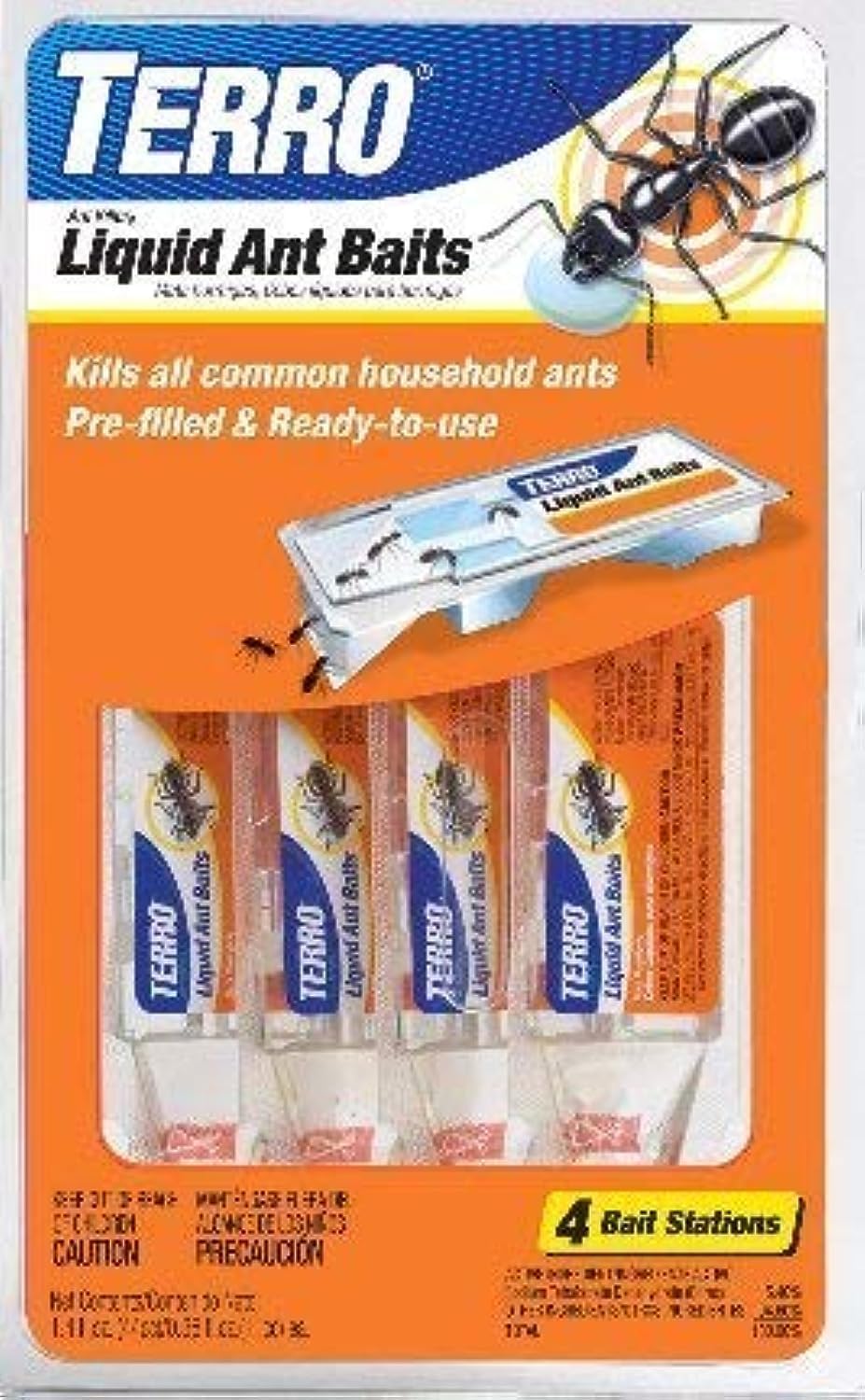
Terro Ant Killer II Ready‑to‑Use Liquid Ant Baits, Pack of 4
| Item Form | Liquid |
|---|---|
| Target Species | Insects |
| Active Ingredients | Sodium Tetraborate Decahydrate (Borax) |
| Liquid Volume | 0.36 fluid ounces |
Terro Ant Killer II delivers a simple, no-fuss way to reduce ant activity around the home and yard. The product ships as four sealed liquid bait stations that you place near ant trails or where ants congregate; ants feed on the sweet liquid and carry the borax back to the colony. The stations are drip‑free and designed to prevent spills and drying out, so they can sit outdoors near foundations or indoors along baseboards without making a mess. Practical benefits include fast attraction to common household ants and a contained design that reduces direct handling of the active ingredient. Limitations are that it is a bait solution rather than a spray, so results depend on ants finding and sharing the bait and it will not provide instant knockdown on a large visible infestation. Also, because it contains borax, it should be kept well out of reach of children and pets and used according to placement directions.
Best for: Buyers who want a low-effort, contained ant control method for general household or perimeter use and prefer placing bait stations rather than applying insecticide sprays.
Less Ideal for: Not the best choice for someone needing immediate knockdown of a heavy, visible ant infestation or for settings where pets or small children might access the bait stations.
- Ready-to-use sealed bait stations require no mixing or pouring
- Liquid bait attracts and is carried back to the colony for broader control
- Patented design resists drips and prevents the bait from drying out
- Suitable for both indoor and outdoor placement near ant trails
- Works only if ants locate and consume the bait so may be slower on large infestations
- Contains borax so requires careful placement away from children and pets
Verdict: An easy, contained borax-based liquid bait solution for homeowners who want low‑effort indoor and outdoor ant control.
Terro T1806SR Outdoor Liquid Ant Baits, 2-Pack (12 Traps)

| Unit Count | 12 Count |
|---|---|
| Target Species | Ant |
| Power Source | Manual |
| Number of Pieces | 2 |
Terro outdoor liquid ant baits are ready-to-use stations designed to control common sweet-seeking ants outside before they move indoors. You place the pre-filled traps along ant trails, near nests, or in problem spots on decks, patios, garages, and around foundation lines; the included stakes let you secure them in soil but they also sit flat on hard surfaces. The liquid formulation contains borax and the bait station design helps prevent the liquid from drying out so ants have continuous access day and night. For practical use this means less frequent replacement and steady recruitment of worker ants that carry bait back to the colony. Limitations are that the product targets sugar-preferring species so results may be slower on protein- or grease-preferring ants and stations need to be positioned thoughtfully along active trails for best effect. For routine outdoor ant reduction, these stations are low-effort and integrate easily with non-chemical prevention methods.
Best for: Gardeners and homeowners who want a low-effort, preventive solution to reduce outdoor ant activity and stop ants before they get indoors.
Less Ideal for: People needing immediate knockdown of indoor infestations or control of non-sugar-preferring ant species should consider faster-acting or targeted alternatives.
- Pre-filled, ready-to-use stations reduce setup time
- Patented design resists drying so bait remains available day and night
- Includes stakes for secure placement in soil and can also sit on hard surfaces
- Targets a wide range of common outdoor sweet-seeking ant species
- Formulation relies on sugar bait so may be less effective against ants that prefer protein or grease
- Requires correct placement on active ant trails for reliable control
Verdict: A low-effort, ready-to-use outdoor bait that keeps liquid attractive to ants for continuous colony control, ideal for preventing ants from entering structures.
Raid MAX Liquid Ant Baits, 4 Count

| Unit Count | 4 Count |
|---|---|
| Item Form | LIQUID |
| Target Species | Insects |
| Active Ingredients | Spinosad |
Raid MAX Liquid Ant Baits are small pre-filled liquid stations intended to be placed where ants are active indoors or at entry points outdoors. The bait attracts sweet-feeding and foraging ants which drink the liquid and carry it back to the nest, so the product targets the colony rather than only killing visible workers. Typical use is to set the stations along baseboards, in pantries, near trash or along ant trails; they are spill-proof and come ready to use so there is no measuring or mixing. The active ingredient listed is spinosad which is effective against many common household ants but is explicitly not for fire ants, carpenter ants, harvester ants or pharaoh ants. Practical benefits are ease of placement, low handling, and colony-level control when the target species are present. Limitations include a narrow list of excluded ant species, small individual bait volume that may need frequent replacement in heavy infestations, and the need to identify ant type for best results.
Best for: Homeowners or renters who want an inexpensive, low-effort way to reduce common household ant colonies around kitchens, pantries, and entryways.
Less Ideal for: People dealing with infestations of fire ants, carpenter ants, pharaoh ants, or large outdoor mound infestations should choose a product formulated for those species or consult a pest professional.
- Ready-to-use, pre-filled liquid stations require no mixing or measuring
- Designed for indoor and outdoor placement to treat ant activity at entry points
- Targets the colony by having worker ants carry bait back to the queen
- Spill-proof station design reduces mess and exposure during use
- Not effective against several ant species including fire ants and carpenter ants
- Small bait volume may require multiple units or frequent replacement in heavy infestations
Verdict: An easy, budget-friendly liquid bait for homeowners who need simple indoor and perimeter control of common household ants by knocking out colonies from the inside.
TERRO Liquid Ant Killer 2 oz (2-Pack)

| Item Form | Liquid |
|---|---|
| Target Species | Insects |
| Unit Count | 1 Count |
The TERRO 2 oz Liquid Ant Killer (2-pack) is a simple bait product designed to kill ant colonies by attracting worker ants to feed and carry the liquid back to the nest. You place the small bottles near ant trails, entry points, or foraging sites where ants can access the liquid; the active formulation is in a ready-to-use container so no mixing is required. Its compact bottles are convenient for spot treatments around foundations, patios, and indoor entryways and the baiting approach treats the nest rather than only killing workers on sight. Because the bottles contain a liquid bait, they work best against sugar- or protein-feeding ants and will be less effective if placed where ants cannot find them. The product is limited in volume so multiple bottles or repeat applications may be needed for large infestations or many entry points. For users who want a low-effort, bait-based solution for routine outdoor spot control, this delivers predictable, colony-level results when placed correctly.
Best for: Gardeners and homeowners who prioritize dependable, low-effort ant control and want a bait that targets colonies rather than temporary surface sprays.
Less Ideal for: People facing very large or fast-growing infestations who need bulky-volume treatments or immediate knockdown across wide areas should consider larger-capacity or professional options.
- Ready-to-use liquid bait requires no mixing or equipment
- Compact 2 oz bottles are easy to place at trails and entry points
- Baiting strategy targets the colony for longer-term control rather than only killing visible workers
- Small bottle size may require multiple units for larger or widespread infestations
- Effectiveness depends on ant species and their feeding preferences
Verdict: A compact, ready-to-use liquid bait that reliably targets ant colonies when used for spot treatments around outdoors entry points.
Terro Outdoor Liquid Ant Bait Stakes, 12-Pack

| Unit Count | 12 Count |
|---|---|
| Material Type | Plastic |
| Target Species | Ant |
| Power Source | manual |
These Terro Outdoor Liquid Ant Bait Stakes are simple, low-effort bait stations designed to intercept ant colonies outdoors before they reach the house. Each stake contains a sweet liquid bait with borax that worker ants feed on and carry back to the nest, which can eliminate the queen and much of the colony over a 2 to 4 week period. They are weather-resistant, see-through so you can monitor bait consumption, and install by cutting a tab and pushing the stake into soil or mulch near ant trails. For homeowners dealing with small common species such as little black, odorous house, pavement, and ghost ants, the stakes provide targeted perimeter protection without sprays or direct contact. Limitations are that baiting takes days to weeks to fully work and you may see increased ant activity at first as foragers discover the bait. Also they must be placed where children and pets cannot access them and replaced periodically to maintain protection.
Best for: Homeowners who want a low-effort, evidence-based way to stop small common outdoor ants at the source and prefer baiting over sprays, using visual confirmation of activity before replacing units.
Less Ideal for: People needing an immediate knockdown or single-visit solution for heavy indoor infestations or those who cannot place bait stations out of reach of children and pets.
- Colony-level control via borax bait that foraging ants share with the nest
- Ready-to-use stakes are easy to deploy by cutting the tab and inserting in soil
- See-through design lets you monitor bait consumption and know when to replace
- Weather-resistant stations suitable for yards, patios, and garden perimeters
- Works gradually and can take 2–4 weeks for complete colony control
- Not child- or pet-proof if placed in accessible areas and requires careful placement
Verdict: A practical, easy-to-use baiting solution that stops small outdoor ant colonies by getting worker ants to carry borax bait back to the nest.
Ortho Home Defense Insect Killer for Indoor & Perimeter, 1.33 gal. with Comfort Wand

| Item Form | Spray |
|---|---|
| Target Species | Insects |
| Liquid Volume | 1.33 gallons |
| Active Ingredients | Bifenthrin 0.05%, Zeta-Cypermethrin 0.0125% |
This 1.33 gallon Ortho Home Defense spray is designed to treat both indoor problem spots and the outdoor perimeter of a home to reduce ants, roaches, spiders and many other crawling and flying insects. It comes with a battery-powered Comfort Wand that delivers a continuous spray so you can apply a uniform band around foundations, patios and entry points without bending or pumping. The formula with bifenthrin and zeta-cypermethrin is intended to kill on contact and establish a barrier that the manufacturer says lasts up to 12 months for ants, roaches and spiders on non-porous indoor surfaces. In real-world use that means fewer repeat treatments in busy yard perimeters and around doors and windows. The spray dries clear with minimal fumes which helps for indoor use near kitchens and living areas. Limitations are that this is a chemical insecticide so users should follow safety directions around children, pets and plants and it is not a specific solution for pests not listed on the label. For homeowners focused on strong, perimeter-level protection this product simplifies application and covers a large area per container.
Best for: Homeowners who want a performance-focused perimeter treatment to reduce recurring yard and entry-point insect problems and prefer a ready-to-use product that is easy to apply.
Less Ideal for: People seeking organic or non-chemical control methods or those who need a targeted solution for pests not listed on the label should consider alternative products.
- Includes battery-powered Comfort Wand for continuous, fatigue-free application
- Ready-to-use 1.33 gallon container covers large perimeters without mixing
- Formula creates a barrier claimed to provide up to 12 months protection against ants, roaches and spiders on non-porous indoor surfaces
- Dries clear and gives off minimal fumes, making indoor use more practical
- Contains synthetic insecticides so precautions are required around children, pets and ornamentals
- Protection claims are specific to certain species and surfaces so results vary by pest and conditions
Verdict: A powerful, ready-to-use perimeter and indoor spray for homeowners who want long-lasting, performance-oriented protection against common yard and household insects.
Choosing the Right Outdoor Liquid Ant Killer: Key Factors to Consider
Coverage Area and Dilution Rate
Coverage area determines how much lawn, bed edge, or hardscape you can treat per container. Products with a higher labeled coverage area reduce the number of reapplications needed on larger yards. Pay attention to the dilution rate in the label directions because concentrated concentrates can treat substantially more square footage than ready-to-use bottles.
Also check whether the product lists separate dilution guidance for spot treatments versus broadcast applications. A product that gives clear square-foot estimates for both types of use makes it easier to plan how much to buy and how often to reapply.
Residual Activity Duration
Residual activity describes how long the active ingredient continues to affect ants after application. Longer residuals help prevent return infestations but can be affected by heavy rain, irrigation, and UV exposure. Look for products that state an expected residual window and read label instructions for reapplication after rainfall.
For borders and foundations where you want extended protection, residual longevity is often more important than very fast initial knockdown. Conversely, for spot-treating active mounds, a fast-acting formula combined with a short residual may be preferable to limit exposure to non-target beneficial insects.
Knockdown Speed and Nest Penetration
Knockdown speed refers to how quickly ants are immobilized after contact. Rapid knockdown reduces visible trails and immediate nuisance but does not always eliminate entire colonies if the active ingredient lacks transfer properties. Some formulations are designed to penetrate nests or be carried back to the colony by worker ants, increasing colony-level control.
Consider whether you need instant relief for patios and walkways or deeper colony suppression for ant mounds in turf. Labels that mention colony transfer or nest penetration can be useful for larger infestations.
Application Flexibility and Equipment Compatibility
Application flexibility covers whether a product is available ready-to-use, as a concentrate for handheld sprayers, or compatible with hose-end attachments. Concentrates that dilute for broadcast spray give better economics for large yards, while ready-to-use bottles are useful for small areas and spot treatments.
Check compatibility with common garden sprayers and any agitation recommendations for suspensions. Clear label instructions on sprayer settings or nozzle selection help achieve consistent droplet size and coverage, which affects effectiveness.
Safety Notes for Lawns, Beds, and Pets
Label guidance on turf tolerance, allowable use on ornamental beds, and re-entry intervals for people and pets matters in home landscapes. Some formulations require that irrigation be delayed or that treated areas be kept off-limits for a set period. Follow the signal words and personal protective equipment directions for mixing and spraying.
If you have edible plants nearby, read the label for setbacks or restrictions. Choosing a product with clear, conservative safety instructions reduces the chance of damaging sensitive plants or exposing children and pets unnecessarily.
When to Spot-Treat Versus Broadcast Applications
Spot-treating is the fastest way to deal with visible ant trails and individual mounds. Use a targeted spray along the trail and at the mound entrance. Spot treatments save product and limit exposure of beneficial areas when infestations are limited to a few localized colonies.
Broadcast applications make sense when ants are widespread or when you want a protective barrier around foundations, garden beds, and patios. Broadcast spraying treats the foraging area and reduces the chance of new colonies establishing close to the house.
- Use spot treatments for single active mounds and trails.
- Reserve broadcast treatments for perimeter protection or heavy infestations.
- Always follow label dilution and turf/bed limits to avoid plant injury.
Applying Liquid Treatments Safely in Landscapes
Apply on calm, dry days to reduce drift and runoff. Avoid treating right before forecasted heavy rain unless the product label specifies rainfastness, since irrigation and rain can wash away freshly applied residues and reduce effectiveness. Protect desirable flowering plants and water features by masking them or by using lower pressure and coarse spray nozzles to limit drift.
Wear recommended protective gear when mixing and spraying. Keep children and pets off treated areas for the interval stated on the label. Rinse sprayers thoroughly after use to avoid contaminating other garden applications.
- Check weather and irrigation schedule before spraying.
- Use coarse droplets to limit drift onto non-target plants.
- Rinse equipment outdoors away from sensitive plantings.
Treating Around Foundations and Hardscapes
For foundation perimeters and patios, focus treatments along baseboards, cracks, and joint lines where ants travel. Liquid products that leave a residual film on hard surfaces can create an effective barrier without wetting nearby plantings. Apply carefully to avoid saturating soil immediately against foundation walls unless label directions allow it.
If ants are entering through door thresholds or window wells, treat the adjacent soil and the obvious runways. Recheck treated hardscape after initial application and repeat as the label recommends if activity resumes.
- Apply a continuous band around foundations when perimeter protection is desired.
- Avoid over-saturating the soil next to foundation walls unless directed.
- Re-treat visible return paths according to the product's reapplication window.
Managing Ants in Lawns and Garden Beds
In turf and beds, focus on treating the foraging area and the mound itself. Some formulations are labeled for use on turf grass and will specify safe wait times before irrigation. Avoid direct contact with desirable seedlings and use lower pressure to reduce chances of leaf burn on sensitive ornamentals.
When ant mounds are numerous across a lawn, a broadcast application timed in the morning or evening when ants are active gives better contact. Follow label guidance on maximum applications per season to protect soil organisms and avoid phytotoxicity.
- Treat mounds directly when possible to reduce colony pressure.
- Follow turf-specific instructions for irrigation and mowing after treatment.
- Stagger broadcast applications to avoid exceeding seasonal limits.
Environmental Considerations and Beneficial Insects
Many outdoor insecticides can affect non-target insects, including pollinators and predatory arthropods. To reduce impacts, avoid spraying flowering plants and apply during times when pollinators are not active. Read label restrictions regarding protecting pollinators and nesting sites for beneficial insects.
Consider mechanical controls and sanitation measures alongside liquid treatments. Reducing food sources, sealing entry points, and removing decaying wood can make chemical treatments more effective and minimize the need for repeated applications.
- Do not spray open blooms or active pollinator areas.
- Combine chemical treatments with habitat reduction for longer-term control.
- Follow buffer and runoff guidance on the label to protect aquatic life.
How We Chose the Best Outdoor Liquid Ant Killer
We selected products that deliver reliable ant control in outdoor settings by applying editorial filters that matter to gardeners and landscapers. Selection prioritized measurable coverage per application and documented residual activity so a single treatment can protect lawns, beds, and foundation perimeters for an extended period. Ease of application was assessed based on whether the product can be mixed and applied through common garden sprayers, hose-end units, or ready-to-use bottles without complex setup. We also weighed safety information relevant to home landscapes, including label directions for turf, ornamental beds, and pet-safe re-entry intervals. Excluded items included granular baits, indoor-only formulations, and fly-or-mosquito-specific insecticides that do not list ant control on the label. The final shortlist favors formulations labeled for direct outdoor use on soil and hardscape and that report both knockdown speed and residual efficacy. These criteria align with assessments of coverage area, residual control, application flexibility, safety directions, and knockdown time used across the article.
FAQ
How long after applying an outdoor liquid ant killer is it safe for pets to re-enter the area?
Re-entry intervals vary by product and are specified on the label. Many products recommend waiting until the spray has dried, often a few hours, but some require longer restrictions. Always follow the label for the specific re-entry time and keep pets off treated areas until the indicated period has passed.
Will a single application get rid of an entire ant colony?
Often a single application reduces visible activity, but colony elimination depends on the product's mode of action and whether workers carry the active ingredient back to the nest. Severe or multiple colonies may need follow-up treatments or combined tactics to achieve full control.
Can I use outdoor liquid ant killers near edible garden beds?
Some formulations are labeled for use near ornamentals but restrict use around edible plants. Read the label carefully for setbacks, pre-harvest intervals, and application restrictions to protect food crops. When in doubt, avoid treating directly over edible plants.
How does rain affect the effectiveness of a liquid ant treatment?
Rain can wash away residues and shorten residual activity if it occurs soon after application. Labels often indicate a rainfast period or recommend reapplication after heavy rain. Applying on a dry forecast window improves persistence and effectiveness.
Is a concentrate better than a ready-to-use bottle for home lawns?
Concentrates can be more economical for larger yards because they treat more area per container, while ready-to-use bottles are convenient for small properties or spot treatments. Consider your yard size and whether you have compatible sprayer equipment when choosing the format.
Will liquid ant killers harm beneficial insects in my yard?
They can harm non-target insects if applied directly to flowering plants or used indiscriminately. To reduce impacts, avoid spraying blooms, apply during low pollinator activity times, and follow label instructions for pollinator protection and buffer zones.
Final Verdict
When choosing an outdoor liquid ant killer, prioritize coverage area and residual activity relative to the size of your yard and the intensity of the infestation. Application flexibility and clear landscape safety guidance help you use the product effectively while protecting pets, pollinators, and desirable plants. For quick nuisance relief focus on knockdown speed and spot treatments; for longer-term perimeter protection emphasize labeled residual duration. Balance the need for colony control with environmental precautions and application limits. Follow label directions carefully and match the product format to your equipment and garden layout to get reliable ant control with minimal non-target impact.
