

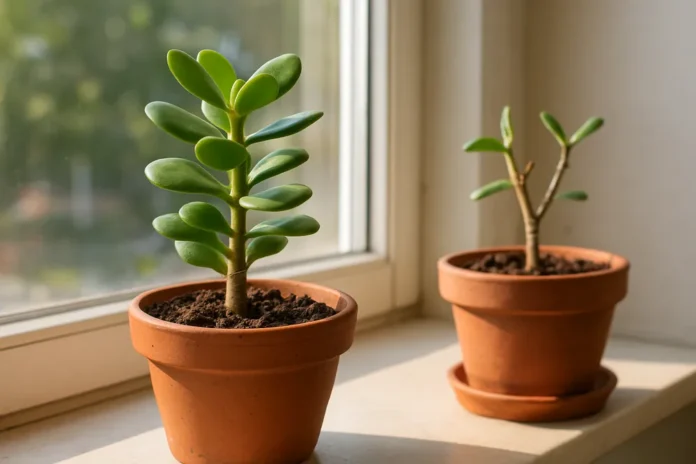
A jade plant usually stops growing because it is not getting enough bright light, its roots are stressed, or it is being watered in a way that slows growth. Cool temperatures, poor soil, and a pot that stays wet too long can also keep it from putting out new leaves and stems.
A jade plant is naturally a slow to moderate grower, so it will never shoot up like a pothos or coleus. Still, a healthy plant should show some signs of life during its active season, whether that means new leaves, thicker stems, tighter branching, or a little extra height. If your jade plant not growing feels completely stalled for months, there is usually a clear reason behind it.
In my experience, the biggest mistake is assuming a jade that looks green must be fine. Jade plants often stay alive for a long time while doing almost nothing. They can sit in dim light, dense soil, or an overlarge pot and hold their shape so well that the real problem is easy to miss. Once you correct the main stress point, growth often resumes gradually rather than all at once.
The good news is that stunted growth in jade plants is usually fixable. The key is matching the care to what this plant actually wants: lots of light, fast drainage, warm active growing conditions, and enough room for roots without keeping them waterlogged.
What Normal Growth Looks Like in a Jade Plant
Before assuming something is wrong, it helps to know what healthy jade growth really looks like. Jade plants, usually Crassula ovata, grow in bursts. During spring and summer, a healthy plant may push out pairs of fresh leaves, extend stems, and gradually form a thicker trunk. In fall and winter, growth often slows way down or pauses entirely, especially indoors.
A mature jade may also invest energy into thicker stems and stronger branching instead of obvious height. That means a plant can be growing even if it is not getting much taller. If you see firm leaves, compact spacing between leaf pairs, and occasional new tips in warm bright months, your jade is probably doing fine.
- New leaf pairs at stem tips in spring or summer
- Leaves that stay plump and firm rather than limp or wrinkled
- Short internodes, meaning leaves are not spaced far apart on the stem
- Stems that gradually thicken and harden with age
- Branching after pruning or after a healthy flush of growth
Not Enough Light Is the Most Common Cause
If I had to pick one reason a jade plant sits still indoors, it would be insufficient light. Jade plants want bright conditions and can handle several hours of direct sun once acclimated. In a dim room, they often survive but barely grow. The plant may keep older leaves for months while producing little to no new growth because it does not have enough energy to build more tissue.
A light-starved jade may also lean toward the window, stretch between leaves, or develop weak, floppy stems. Sometimes the signs are subtle. The plant stays compact only because it has essentially stopped trying. A north-facing room, a shaded patio door, or a spot several feet back from a sunny window is often not enough.
When I am diagnosing a stalled jade, I look at the newest growth first, not the oldest leaves. If the tips are small, pale, or absent during the warm season, I usually suspect light before anything else.
Signs Your Jade Needs More Light
- No new leaves during spring and summer
- Long gaps between leaf pairs
- Plant leaning hard toward the window
- Thin stems that cannot support upright growth well
- Dull green color instead of stronger, fuller foliage
For most homes in the U.S., the best indoor location is a bright south- or west-facing window. East-facing windows can work too, especially if they get strong morning sun. If natural light is limited, a grow light can make a huge difference. Just move the plant into stronger light gradually so the leaves do not scorch from a sudden jump.
Watering Problems Can Stall Growth in Either Direction
People often think only overwatering is a problem for jade, but both too much and too little water can stop growth. Overwatering is more dangerous because it reduces oxygen around the roots. When roots stay wet too long, they cannot function properly, and the plant slows or stops new growth. In severe cases, roots begin to rot.
Underwatering can also hold a jade back. A plant that stays too dry for too long may survive, but it conserves energy. Instead of putting out fresh leaves, it uses stored moisture from older foliage. Growth becomes slow, sparse, or nonexistent.
How Overwatering Usually Looks
- Soil stays damp for many days
- Leaves turn soft, mushy, or start dropping
- Stems feel weak or develop dark spots near the base
- Plant looks stagnant even though it is watered regularly
How Underwatering Usually Looks
- Leaves wrinkle or feel less plump
- Potting mix pulls away from the sides of the pot
- Growth tips stay small and dry out
- Plant looks dull and stalled but not mushy
The best approach is to water deeply, then let the soil dry substantially before watering again. Exactly how long that takes depends on light, temperature, pot size, and soil type. A jade in bright summer light may need water much more often than one sitting in a cool room in January.
Heavy Soil and Poor Drainage Choke the Roots
Even if your watering routine sounds right on paper, the potting mix may be the real issue. Jade plants hate dense, peat-heavy soil that stays wet for too long. Many nursery plants are sold in moisture-retentive mixes that work in greenhouse production but become a problem in average home conditions.
When the mix drains slowly, the root zone remains cool and wet. That means less oxygen, slower root activity, and weak or nonexistent top growth. A jade plant cannot grow well if the roots are constantly stressed.
A Good Jade Soil Mix Should Be
- Fast draining
- Gritty rather than spongy
- Able to dry out within a reasonable time
- Loose enough that roots get air between waterings
Many gardeners do well with a cactus or succulent mix improved with extra pumice, perlite, or coarse sand. The goal is not to make the plant bone dry forever. The goal is to make sure water moves through the root zone quickly and excess moisture does not linger.
If your jade has not grown in months and the soil still feels damp a week after watering, I would repot before changing anything else. Better light cannot fully compensate for roots sitting in a soggy mix.
The Pot Size May Be Working Against You
A slightly snug pot is usually fine for jade plants, but extremes on either side can slow growth. If the plant is severely rootbound, roots may circle densely and have trouble taking up water and nutrients efficiently. On the other hand, a pot that is too large holds extra soil that dries slowly, raising the risk of root stress.
I see the oversized-pot problem more often indoors. People up-pot a small jade into a large decorative container expecting faster growth, but the opposite happens. The roots stay wet too long, the plant sulks, and top growth stalls.
Clues the Pot Is Part of the Problem
- Roots tightly circling when you slide the plant out
- Water runs straight through because roots have taken over the pot
- Soil mass stays wet for too long in a large container
- Plant seems stable but inactive after a recent pot upgrade
When repotting, move up only one pot size at a time. Choose a container with drainage holes. Terra-cotta is especially helpful for jades because it lets moisture evaporate more readily than plastic or glazed ceramic.
Temperature and Season Strongly Affect Growth
Jade plants grow best in warm, bright conditions. If your home stays cool, especially near drafty windows in winter, the plant may enter a resting phase and stop growing. That is not always a health problem. It may simply be responding to shorter days and lower temperatures.
Most indoor jades are most active from spring through early fall. In winter, growth can slow dramatically even under decent care. If your plant is not growing in January but looks firm and healthy, that is very different from a plant failing to grow in June.
- Warm days and bright light encourage active growth
- Cold drafts can stall new leaves and stems
- Short winter days naturally reduce growth speed
- Outdoor jades may pause after sudden weather swings
This seasonal rhythm matters because it changes what you should expect. I do not judge a jade too harshly in winter. I pay much closer attention if it remains motionless through the brightest months of the year.
Nutrient Issues Can Matter, but They Are Rarely the Main Cause
A jade plant that has been in the same soil for years may run low on nutrients, and that can contribute to weak growth. Still, fertilizer is often blamed too quickly. If the plant lacks bright light or has root problems, feeding it more will not solve the issue.
When nutrients are the missing piece, growth may be slow, leaves may be smaller than usual, and the plant may not branch well during active season. A mild fertilizer during spring and summer can help, but it should support healthy growing conditions rather than try to compensate for poor ones.
When Fertilizer Makes Sense
- The plant is in bright light and otherwise looks healthy
- It has been in the same potting mix for a long time
- You see some growth, but it is weak or minimal
- You are feeding lightly during the active growing season only
Use a balanced, diluted houseplant fertilizer or one suited for succulents. Avoid frequent heavy feeding. Too much fertilizer can burn roots and create a different set of problems.
Root Damage, Pests, or Disease Can Quietly Suppress Growth
If the basics seem right and your jade still refuses to grow, look for less obvious stress. Root damage from chronic wet soil, broken roots during repotting, or pest pressure can all slow the plant down. Mealybugs are a common culprit on jade plants. They feed on sap and can weaken new growth, especially around leaf joints and stem tips.
Root rot is another major concern. A jade with rotting roots may appear stalled for a long time before dramatic symptoms show up. Leaves can yellow, soften, or fall, and the base of the stem may darken. By the time top growth stops completely, the roots may already be in trouble.
Signs to Inspect More Closely
- Cottony white clusters that suggest mealybugs
- Sticky residue on leaves or stems
- Blackened or mushy roots at repotting time
- A soft stem base or sudden leaf drop
- Plant that declines even after light and watering improve
A jade with root trouble often looks oddly static before it looks dramatic. When the plant has stopped growing, stopped drinking, and the soil stays wet longer than it used to, I start thinking below the soil line.
Pruning, Propagation, and Recovery Periods Can Pause Growth
Sometimes a jade is not growing because it is recovering from something you recently did. Pruning, repotting, moving it outdoors, bringing it back inside, or rooting a damaged stem all require adjustment time. During that period, the plant may focus on root repair and moisture balance rather than obvious top growth.
This is especially common after a fresh repot. Gardeners expect instant growth because the plant has new soil and more room, but jade plants often need a few weeks to settle in. As long as the leaves stay reasonably firm and the stems remain healthy, patience may be the right answer.
- Recent repotting can temporarily slow growth
- Heavy pruning may delay visible top growth while buds activate
- A new environment may require acclimation time
- Rooted cuttings often spend time establishing before they size up
How to Get Your Jade Growing Again
Once you know the likely reason, the fix becomes much simpler. Jade plants respond best when you correct the main limiting factor instead of changing everything at once. Sudden overcorrections, especially with water and fertilizer, can create more stress.
A Practical Recovery Plan
- Move the plant into brighter light, ideally near a sunny south-, west-, or bright east-facing window.
- Make sure the pot has a drainage hole and the mix drains quickly.
- Water thoroughly, then wait until the mix has dried substantially before watering again.
- Check whether the pot is far too large or badly rootbound.
- Inspect stems, leaf joints, and roots for pests or rot if growth does not resume.
- Feed lightly only during active growth and only after light and drainage are in good shape.
Then watch the newest growth, not the oldest leaves. Healthy recovery usually shows up first as fresh leaf pairs or firm new tips. Damaged old leaves may not improve much, so do not use them as your only progress marker.
When a Jade Plant Is Fine and Just Growing Slowly
Not every slow jade is a struggling jade. Older plants, bonsai-style specimens, and jades kept intentionally compact may grow at a measured pace even under good care. If the plant has firm leaves, sturdy stems, no signs of rot or pests, and occasional seasonal growth, it may simply be acting like a mature succulent rather than a fast houseplant.
I often tell gardeners to think in seasons, not days. A healthy jade may not look dramatically different after two weeks, but over one warm season you should notice some combination of fuller branching, thicker stems, or fresh leaves. If that is happening, even slowly, the plant is likely on the right track.
FAQ
How Long Does It Take for a Jade Plant to Start Growing Again?
If the problem was light, watering, or soil and you corrected it during spring or summer, you may see new growth within a few weeks to a couple of months. In winter, even a healthy jade may wait until days are longer and temperatures rise.
Does a Jade Plant Need Direct Sunlight to Grow?
Jade plants grow best with very bright light and often benefit from some direct sun, especially indoors. They can live in bright indirect light, but growth is usually slower and weaker if the light level is too low.
Should I Fertilize a Jade Plant That Is Not Growing?
Only if light, drainage, and watering are already in good shape. Fertilizer helps support growth, but it rarely fixes a jade that is stalled because of poor light or stressed roots.
Can a Rootbound Jade Plant Stop Growing?
Yes. A severely rootbound jade can struggle to take up water and nutrients well enough to support fresh growth. Repotting one size up into a fast-draining mix usually helps.
Why Is My Jade Plant Alive but Not Getting Bigger?
That usually means the plant is surviving rather than actively growing. Low light, dense soil, cool temperatures, or a watering pattern that stresses the roots are the most common reasons.
Is It Normal for Jade Plants to Stop Growing in Winter?
Yes. Indoors, jade plants commonly slow down or pause in winter because of shorter days and cooler conditions. If the plant still looks firm and healthy, that seasonal slowdown is usually normal.
Will a Grow Light Help a Jade Plant Grow Faster?
Yes, if low indoor light is the main issue. A good grow light can improve energy for new leaves and stronger stems, especially in homes without a bright south- or west-facing window.
Want to fix a stalled succulent faster? Check out our guide to the best soil mixes, grow lights, and pots for jade plants so you can choose the setup that actually drives new growth.
