

Note: This article contains affiliate links. If you click on these links and make a purchase, I may earn a small commission at no extra cost to you. This helps support my research and content. Read my full affiliate disclosure here.
If big black ants are marching through your kitchen, garage, or patio, the right ant trap can stop them at the source. You want a solution that actually draws worker ants, survives normal household conditions, and reliably transfers bait back to the colony. This guide covers five shortlisted ant traps designed for the specific behavior and foraging patterns of large black ant species. We evaluate each option for bait attractiveness and durability in typical home and outdoor entry zones, plus how easy they are to place and maintain. Read on to compare the top picks and find the trap best suited to where ants are appearing around your property.
Top Picks at a Glance
| Best Overall The best all-around choice for most situations | TERRO Liquid Ant Killer 3-Pack (T200-3SR) |  |
| Best Quality Built to a higher standard if you want something more solid | Advion Ant Gel Station Insecticide, Ready-to-Use Gel Bait (3 Stations) |  |
| Best Budget The cheapest option that still gets the job done reliably | Hot Shot MaxAttrax Ant Bait, 4 Child-Resistant Bait Stations |  |
| Highest Rated A top-rated pick with lots of positive feedback | ROUTADE 48-Pack Slow-Acting Ant Gel Bait Stations |  |
| Most Popular A crowd favorite that many people choose with confidence | TERRO Liquid Ant Killer Bait Stations, 12-Pack (T300B) |  |
TERRO Liquid Ant Killer 3-Pack (T200-3SR)

| Item Form | Liquid |
|---|---|
| Active Ingredients | Sodium Tetraborate Decahydrate (Borax) 5.40% |
| Target Species | Insects |
| Specification Met | EPA |
TERRO Liquid Ant Killer is a straightforward indoor bait system designed to eliminate common household ants by having workers feed on a borax-based liquid and transfer it to the colony. You apply drops of the bait onto the included cardboard tiles and place them along ant trails, baseboards, counters, and other activity hotspots. The 3-pack gives multiple bait stations for treating several rooms or repeated placements. The active ingredient, sodium tetraborate decahydrate, works slowly enough to be shared among nestmates so the queen and hidden workers are affected, which can produce visible reductions in a few days. Because the formulation is liquid and comes in drip bottles, placement and reapplication are simple and low-mess compared with granular or spray options. Limitations are that the product is intended for indoor use only and requires ants to find and feed on the bait, so heavily contaminated or outdoor nests may need additional measures. When used as directed it is a practical, low-effort solution for routine household infestations.
Best for: Homeowners wanting a low-effort, indoor-focused solution to eliminate sugar ants and other household species who prefer baiting over sprays.
Less Ideal for: People who need immediate knockdown of visible ants outdoors or who require a product for large external infestations should look at targeted outdoor nest treatments.
- Borax-based liquid attracts worker ants and allows transfer to the colony for more complete elimination
- Three 2 oz bottles provide multiple placements for whole-house coverage
- Simple drop application on included cardboard tiles makes setup and reapplication low-mess
- EPA specification met and formulated for common household ant species including sugar and ghost ants
- Only effective if ants discover and consume the bait, so results depend on placement and ant behavior
- Designed for indoor use and may not address outdoor nests feeding into the house
Verdict: A simple, effective indoor bait that uses borax to knock out sugar ant colonies by relying on worker-to-colony transfer.
Advion Ant Gel Station Insecticide, Ready-to-Use Gel Bait (3 Stations)

| Brand | Advion |
|---|---|
| Unit Count | 3 Count |
| Item Type Name | Ant Trap |
| Item Form | Gel |
The Advion Ant Gel Station is a small, ready-to-use gel bait delivered inside a simple station for targeted ant control indoors and outdoors. Use involves removing the top tab and squeezing the gel capsule into the station, then placing stations along ant trails or near entry points where foragers are active. The active ingredient indoxacarb is shared among nestmates, which helps reach the queen and brood rather than only killing individual workers. Practical features include a no-mess contained gel capsule and compact station design that is easy to place in tight spots. Because it is a bait, results depend on ants accepting the gel and will be slower if competing food sources are available or if the species prefers other foods. The product is formulated for a wide range of common ant species, but effectiveness can vary by species and heavy infestations may need repeated placement or complementary measures. Overall it is a convenient, low-effort option for homeowners and property managers who want a focused approach to reducing ant colonies.
Best for: Buyers who want a low-effort, targeted bait to reduce ant colonies with minimal setup and who prefer a contained, easy-to-place solution for homes or commercial spaces.
Less Ideal for: People facing massive or structural carpenter ant infestations that require professional inspection and more extensive remediation.
- Ready-to-use stations require no mixing or measuring
- Gel formulation encourages sharing in the colony for broader control
- Contained capsule and station minimize mess and make placement simple
- Labeled for indoor and outdoor use suitable for residential and commercial sites
- Effectiveness depends on ants taking the bait and can be reduced by competing food sources
- Small unit count may require purchasing multiple boxes for larger or persistent infestations
Verdict: A convenient, ready-to-use gel bait station that lets you place effective, no-mess ant baits quickly to target and reduce ant colonies.
Hot Shot MaxAttrax Ant Bait, 4 Child-Resistant Bait Stations

| Unit Count | 4 Count |
|---|---|
| Item Type Name | Ant Bait |
| Active Ingredient | Indoxacarb (0.05%) |
| Target Species | Insects |
Hot Shot MaxAttrax delivers a straightforward, budget-friendly way to tackle ant infestations using prefilled child-resistant bait stations. Each station contains a long-lasting bait that attracts both sugar- and grease-feeding ants so they carry the poison back to the nest; the manufacturer says it can begin killing within 24 hours and the stations last for months indoors. The stations are easy to deploy along ant trails, near baseboards, in cabinets and outside where you see activity, and require no mixing or cleanup. Because the active ingredient is low-percentage indoxacarb, the product targets ants while minimizing exposure to people and surfaces when used as directed. Important limitations are that bait stations only work if foraging ants take the bait and very large or widespread colonies may need multiple placements and reapplication. Also this product does not physically remove nests, so expect gradual reduction of activity over days to weeks rather than instant elimination.
Best for: Buyers looking for an inexpensive, no-fuss solution to reduce visible ant activity in and around the home who prefer ready-to-use stations over DIY mixes or sprays.
Less Ideal for: People needing immediate eradication of extremely large outdoor colonies or those who want a tool that removes nests on contact should consider professional control methods instead.
- Prefilled child-resistant stations are ready to place with no mixing or mess
- Attractant works on both sugar- and grease-feeding ants for broader effectiveness
- Lasts for months indoors so you do not need frequent reapplication
- Simple placement along trails makes it quick to use around the house and yard
- Requires ants to feed on the bait so it can be slower on colonies that ignore the stations
- Not a physical nest removal method, so results occur over days to weeks
Verdict: A low-cost, ready-to-use bait station pack that quietly reduces ant colonies by attracting foragers to take poison back to the nest.
ROUTADE 48-Pack Slow-Acting Ant Gel Bait Stations
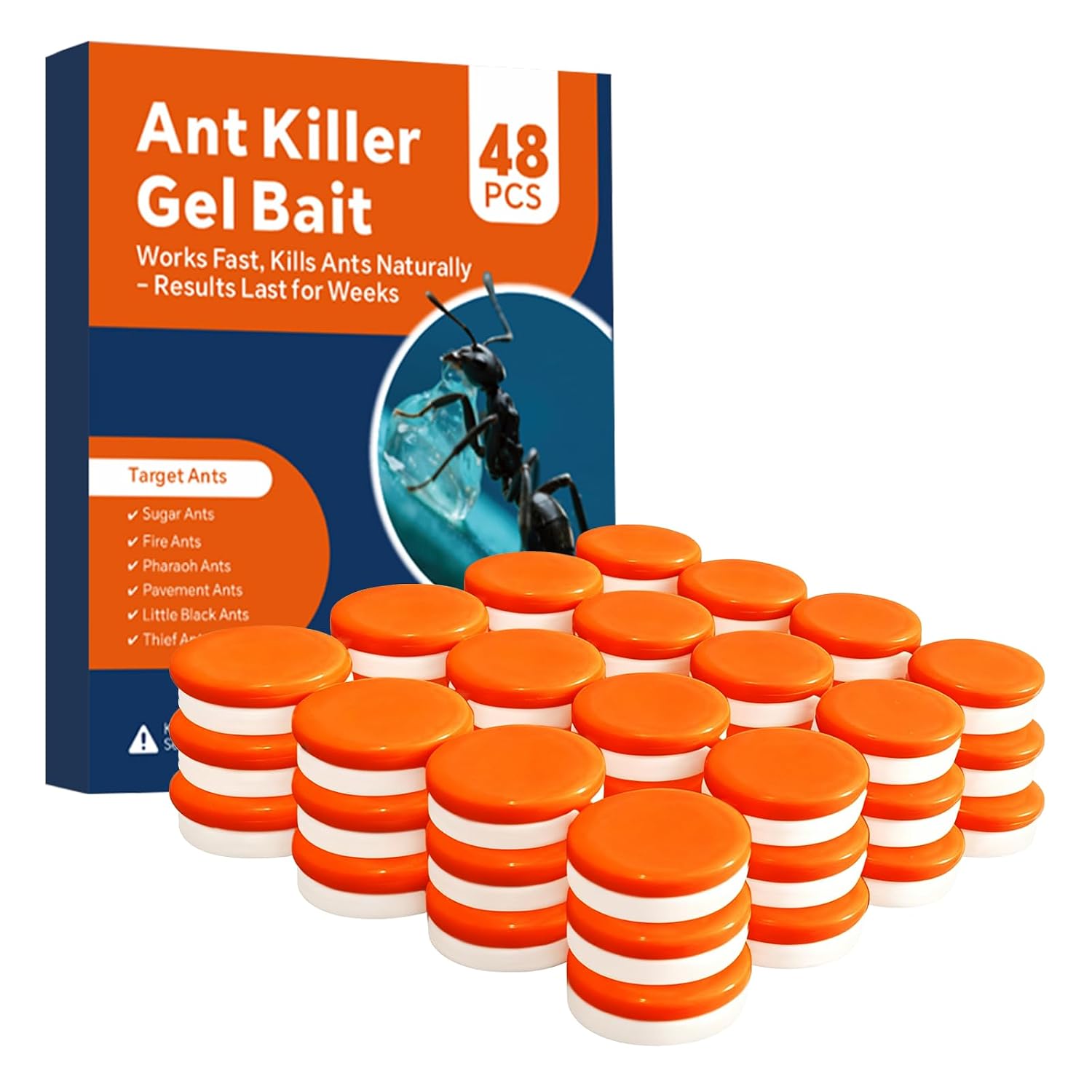
| Unit Count | 48 Count |
|---|---|
| Item Form | Gel |
| Target Species | Ants |
| Included Components | Ant gel bait |
This 48-pack of ROUTADE slow-acting ant gel bait stations is built for systematic, long-term ant control in and around the kitchen. Each station contains a gel formula that worker ants consume and carry back to the nest, which helps reduce the entire colony rather than only visible foragers. The product is supplied in ready-to-use stations with adhesive tape so you can place them along baseboards, in cabinets, near sinks, and on entry thresholds without messy sprays or frequent repositioning. The large pack lets you deploy multiple stations in high-traffic areas and replace them over time for continuous coverage. Because the formula is slow-acting, it is effective against a range of common household species including carpenter ants and sugar ants, but it requires several days to weeks to knock down a colony and will not give instant removal of visible ants. Also the stations are small and contain gel rather than a tamper-resistant hard block, so keep them away from children and pets. For someone wanting a low-maintenance, colony-focused approach to kitchen ant problems, this kit makes it easy to set and forget while the bait works.
Best for: Homeowners who prioritize reliable, long-term elimination of ant colonies in kitchens and want a low-maintenance bait they can deploy across multiple hotspots.
Less Ideal for: People who need an immediate knockdown of visible ants or who require childproof solid bait stations should consider alternatives.
- Slow-acting gel designed for worker ants to carry bait back to the nest for colony-level control
- Ready-to-use bait stations with adhesive for easy placement along baseboards and in cabinets
- 48-count pack provides broad coverage around a kitchen and enough replacements for extended use
- Versatile for indoor and outdoor placement to block entry points and high-traffic ant routes
- Slow-acting formula takes days to weeks to eliminate a colony so visible results are not immediate
- Gel in small stations may require careful placement to keep away from children and pets
Verdict: A practical, deploy-and-forget gel bait kit for reliable colony-level control of kitchen ant infestations.
TERRO Liquid Ant Killer Bait Stations, 12-Pack (T300B)

| Unit Count | 12 Count |
|---|---|
| Item Form | Liquid |
| Target Species | Insects |
| Active Ingredients | Sodium Tetraborate Decahydrate (Borax), 5.40% |
Terro Liquid Ant Killer bait stations are prefilled, single-use traps designed for indoor control of common sugar-loving ants. You place the small stations along baseboards, in corners, under appliances, or on countertops where you see ant activity. Worker ants are drawn to the sweet liquid, feed on it, and take it back to the nest so the borax-based active ingredient can eliminate the colony over days to weeks. The product is easy to use with no mixing or setup and the 12-pack gives coverage for several rooms. Because the bait is contained inside a low-profile plastic station, it reduces incidental contact risk compared with loose sprays or powders and lasts for weeks while ants continue to visit. Limitations are that the formula targets sugar-preferring species so very protein- or grease-attracted ants may ignore it, and control can take 2 to 4 weeks for larger infestations. Also stations should be placed away from pets and children despite the contained design since the bait contains borax.
Best for: Homeowners who prioritize an easy, low-hassle indoor solution and want a bait that works at the colony level with minimal hands-on pest handling.
Less Ideal for: People who need immediate knockdown of ants or who have pets or children that frequently access treated areas and cannot reliably keep them away from placed stations.
- Ready-to-use stations require no mixing or setup
- Designed to be carried back to the nest for colony-level control
- Low-profile enclosed bait reduces messy exposure compared with loose liquids or sprays
- 12 stations provide coverage for multiple rooms or hotspots
- Formulation is sugar-based so less effective on ants that prefer protein or grease
- Control can take 2–4 weeks for large or established colonies
Verdict: A simple, low-contact indoor bait system that reliably reduces sugar-loving ant infestations by getting worker ants to carry borax back to the colony.
Choosing the Right Ant Trap for Big Black Ants: Key Factors to Consider
Bait Type and Foraging Preference
Different large black ant species favor different food sources at various times of day. Some forage primarily for sugars and carbohydrates, while others prefer proteins or greasy foods. Choosing a trap with a bait formulation that matches the target ants increases the chance that foragers will enter the trap, feed, and carry bait back to the nest.
Bait type also affects how rapidly a colony-level reduction occurs. Fast-acting, non-repellent baits are useful when immediate forager suppression is needed, but slower-acting baits that allow extensive sharing within the colony can produce deeper population declines. Consider the observed behavior of the ants at your site-what they are carrying or what they visit most often-when selecting bait.
Bait Transfer and Colony Impact
A trap that only kills forager ants where it sits will reduce visible traffic but may not eliminate the colony. For big black ants, look for baits designed to be carried and shared with nestmates through trophallaxis or food caching. The physical form of the bait-gel, granular, or solid bait station insert-affects how well workers can transport and distribute it.
Think about placement that encourages ants to take bait back into the nest. Traps positioned along established foraging trails and near entry points increase the odds of bait transfer, which is the mechanism that reduces colony size rather than merely suppressing surface activity.
Trap Placement and Accessibility
Large black ants often use predictable paths such as mortar joints, cracks in foundations, door thresholds, and gaps around pipes. A trap that is easy to position in those spots without obstructing foot traffic is more likely to intercept foragers. Low-profile stations that sit flush against baseboards or narrow crevice traps that fit along trim can be especially effective indoors.
For sheltered outdoor locations, traps should anchor or weigh down to prevent being knocked over by wind or pets. Consider how often you can check and replenish traps; if access is limited, choose larger-capacity stations or ones with long-lasting bait inserts.
Durability in Home and Outdoor Conditions
Traps used near doorways, porches, or garages face temperature swings, moisture, and occasional light rain or splashes. Durable housings preserve bait effectiveness and prevent contamination by soil or debris. Look for materials that resist cracking in sun-exposed areas and that have secure lids or seals to keep bait intact.
Durability also means the trap remains operable over the period needed to control a colony. Stations that degrade or leak will require more frequent replacement and can create messes that deter ants from entering in the future.
Safety Around People, Pets, and Beneficials
Placement and bait formulation matter for protecting children, pets, and non-target wildlife. Tamper-resistant housings reduce accidental contact, and bait forms that are confined inside sealed compartments limit exposure. When placing traps, avoid spots reachable by pets or curious wildlife, and follow all label directions regarding placement near edible plants, compost, or water sources.
Also consider how the trap will be handled during replacement. Designs that allow bait to be swapped without touching the active material minimize user exposure and reduce the risk of accidental spills.
Ease of Monitoring and Maintenance
An effective trapping program requires checking stations regularly to see if ants are feeding and to refresh bait as needed. Clear indicators of activity, such as visible bait consumption windows or easy-open lids, make monitoring straightforward. Choose traps that allow quick bait replacement without disturbing surrounding areas.
If you plan to use multiple stations around a property, consider uniform designs so you only need one type of replacement insert. Simpler maintenance reduces the chance of stations being left empty and losing effectiveness.
Understanding Big Black Ant Behavior
Large black ants often forage along the same routes day after day and can be attracted to food sources inside and outside the home. They may nest in wall voids, under foundations, in mulch, or in soil near structure edges. Their foraging patterns influence which trap types will intercept workers most reliably.
Observing where ants enter and what they are carrying provides clues about the right bait type. If you notice ants transporting insect parts or greasy crumbs, protein or lipid-based baits are likely to be more effective than sugar baits. Foraging peaks can vary with temperature and humidity, so timing checks for active periods improves placement success.
- Watch trails for consistent entry points before placing traps
- Note the material ants carry to choose bait class
- Check activity at different times of day for best results
Where to Place Traps for Best Results
Indoor placement should focus on baseboards, along kitchen kickplates, behind appliances, and near plumbing penetrations where ants cross. Outdoors, concentrate on sheltered spots like under eaves, against foundation walls, near door thresholds, and along garage edges. Avoid placing bait directly on soil or in puddled locations where it can be diluted or contaminated.
Position traps so foragers will encounter them naturally. Placing a station a foot off a trail reduces the chance ants will find it. Low-profile stations tucked flush to the trail edge or small crack-and-crevice devices inserted into gaps often intercept more workers.
- Place multiple stations along long trails instead of a single distant trap
- Keep outdoor stations in sheltered, dry locations
- Avoid blocking doors or pathways with traps
Managing Expectations and Timeline
Ant traps that depend on bait transfer require patience. Visible decline in surface activity can take days to weeks as bait spreads through the colony. Rapid declines in foraging may indicate a fast-acting bait, but that could leave the colony intact if bait transfer was limited.
Track activity by photographing stations or marking baseline ant counts. Replenish baits when consumption slows, but allow enough time for workers to carry material back to the nest. Expect a multi-week program for established colonies and be ready to relocate or add stations if trails shift.
- Allow at least one to three weeks to see colony-level effects
- Replace bait when consumption declines or contamination occurs
- Be prepared to adjust placement if trails change
Safety and Non-target Considerations
Keep stations out of reach of pets and children and choose tamper-resistant housings when possible. Place outdoor traps away from bird feeders, compost piles, and flowering plants that attract pollinators, since non-target animals can sometimes access baits.
When using multiple stations, note which ones show activity and prioritize replacing bait in those spots. Dispose of spent bait according to label guidance and avoid dumping active bait into garden beds where beneficial insects may contact it.
- Use tamper-resistant stations near areas where pets roam
- Avoid placing baits near plants that attract pollinators
- Follow disposal guidance for expired or spent bait inserts
Integrating Traps with Non-Chemical Practices
Combine trapping with sanitation and exclusion for the best outcome. Clean up food residues, seal cracks and gaps, store pet food in sealed containers, and reduce outdoor sources like open compost or sticky fruit. Traps work best when they are the most attractive food source along a trail.
Physical exclusion such as door sweeps and sealing foundation cracks reduces new colonies from reaching indoor baits and limits the number of stations needed. Use traps as part of an overall ant management plan rather than the sole measure.
- Prioritize sanitation to increase bait attractiveness
- Seal entry points to prevent re-infestation
- Use traps as a complement to exclusion and habitat modification
How We Chose the Best Ant Trap for Big Black Ants
We focused on features that matter when dealing with large black ant species and the places they frequent. Primary evaluation criteria included bait attractiveness to large foragers, trap durability under indoor and sheltered outdoor conditions, bait transfer efficiency that encourages worker-to-colony feeding, and placement versatility for common ant entry points like door thresholds, baseboards, and window sills. We also considered container safety to reduce accidental access by pets and children and the ease of monitoring and replacing bait. We excluded traps designed only for small sugar ants or for broad-spectrum insect glue boards that do not provide transferable bait. We skipped products requiring specialized application tools or professional installation. The final shortlist reflects traps that balance effective bait formulation, robust housings that withstand humidity or light rain near entryways, and practical features that make them usable by gardeners and homeowners without pest-control training.
FAQ
How long before I see fewer ants after placing a trap?
It often takes several days to a few weeks. Visible reductions in foraging can appear quickly with fast-acting baits, but colony-level decline from bait transfer usually requires more time. Monitor stations and allow at least one to three weeks for significant changes.
Can I use ant traps outdoors near my foundation?
Yes, but choose stations designed for sheltered outdoor use and place them where they stay dry. Keep outdoor traps in protected spots to avoid rain dilution and check them more often than indoor stations.
Are ant traps safe around pets and children?
Many ant traps are designed to be tamper-resistant, but no bait is completely risk-free. Place stations out of reach, use childproof housings, and follow label guidance on placement and disposal to minimize exposure.
What if traps attract ants but they do not reduce the colony?
If foragers consume bait but the colony remains active, the bait may not be transferable or the placement may be intercepting only scout workers. Try a bait formulation known for slow-acting transfer, increase the number of stations along trails, and ensure sanitation so bait is the most attractive food source.
How often should I check and replace bait?
Check stations every few days until activity drops, then at least weekly until the infestation is controlled. Replace bait when consumption slows, when it becomes contaminated, or when it shows signs of drying out or spoilage.
Final Verdict
When targeting big black ants, prioritize traps that match the ants' feeding preference, encourage bait transfer, and fit the entry points and trails you observe. Durable housings and tamper-resistant designs make maintenance safer and more reliable, while good placement and sanitation increase bait uptake. Balance speed of knockdown against the need for colony-level control. For most situations, multiple well-placed stations containing transferable bait, combined with exclusion and cleaning, offer the clearest path to long-term reduction of large black ant populations.
