

Note: This article contains affiliate links. If you click on these links and make a purchase, I may earn a small commission at no extra cost to you. This helps support my research and content. Read my full affiliate disclosure here.
Choosing the right plants for large outdoor pots changes how your patio or entryway looks and performs. Bigger containers let you combine structural foliage, bold blooms, and trailing accents without overwhelming the space. They also create microclimates that affect watering, root health, and seasonal longevity. This guide covers our top five picks suited specifically for large outdoor pots. We evaluated options for container vigor, hardiness, sun tolerance, and seasonal interest so you can pick plants that thrive and look purposeful. Read on to understand the traits that make some varieties better than others in big pots, then use the shortlist to plan your container composition.
Top Picks at a Glance
| Best Quality Built to a higher standard if you want something more solid | Southern Living Obsession Nandina Shrub (2 Gal) |  |
| Best Value The sweet spot between price and what you get | Tropical Plants of Florida Majesty Palm (3‑Gallon Grower Pot) |  |
| Best Budget The cheapest option that still gets the job done reliably | Giant Elephant Ear (Colocasia esculenta) — 3 Bulbs |  |
| Highest Rated A top-rated pick with lots of positive feedback | Old Oaks 'Calidora' Alocasia (Elephant Ear) – 1 Gallon |  |
| Most Popular A crowd favorite that many people choose with confidence | PERFECT PLANTS Frostproof Gardenia Live Plant, 1 Gallon |  |
Southern Living Obsession Nandina Shrub (2 Gal)

| Sunlight Exposure | Full Sun to Part Shade |
|---|---|
| USDA Hardiness Zone | 6, 7, 8, 9, 10 |
| Moisture Needs | Moderate Watering |
| Expected Planting Period | Year Round |
The Southern Living Obsession Nandina is a 2-gallon evergreen shrub prized for intense red foliage that holds color through much of the year. It is marketed for outdoor beds and containers, and performs in full sun to part shade across USDA zones 6 to 10. Typical use is as an accent in mixed borders, a colorful container specimen on a patio, or a low hedge where a 3- to 4-foot mature height is acceptable. Practical benefits include low maintenance, deer resistance, and moderate water needs once established; the plant is described as organic and suited to loam soils with well-drained conditions. Limitations to consider are that it does not produce notable blossoms and requires routine watering while establishing; it will also reach about 48 inches, so plan placement or pruning accordingly. For container use, choose a generous pot and monitor soil moisture to keep foliage vibrant in hot, sunny sites.
Best for: Gardeners who want a low-maintenance, colorful evergreen for patio containers or small landscape accents and value year-round foliage interest.
Less Ideal for: People seeking a showy flowering shrub or those who need a very small dwarf variety for tight spaces should consider other options.
- Bright red evergreen foliage provides season-long color
- Suitable for containers or landscape beds thanks to compact mature size
- Tolerates full sun to part shade across USDA zones 6–10
- Low maintenance and described as deer resistant
- Does not produce significant blossoms for floral interest
- Requires consistent watering until established
Verdict: Choose this nandina when you want an easy-care, brightly colored evergreen that performs well in pots and small garden settings.
Tropical Plants of Florida Majesty Palm (3‑Gallon Grower Pot)

| Indoor Outdoor Usage | Indoor, Outdoor |
|---|---|
| Other Special Features of the Product | Air Purification, Pet Friendly |
| Sunlight Exposure | Partial Sun |
| Moisture Needs | Moderate Watering |
| Product Care Instructions | water |
This Majesty Palm arrives in a 3‑gallon grower pot and is intended as a medium-sized specimen for a floor planter or large outdoor pot in warm climates. It produces long, arching green fronds that create a lush, tropical look useful for filling corners, entryways, patios, or a sizable decorative container. Care guidance indicates it prefers bright, indirect light to partial sun, consistently moist but well drained soil, and higher humidity, so it is typically used where regular watering and occasional misting are practical. Notable features include pet-friendly foliage and claimed air-purifying benefits. Practical benefits are straightforward: it adds instant tropical presence without fast, uncontrollable growth and adapts to indoor or sheltered outdoor spots. Important limitations are its humidity and moisture preferences, which make it less forgiving in dry or very cold locations, and it is a slow grower so it will not rapidly fill very large planters on its own. Routine attention to watering and avoiding drafts will keep the palm looking healthy.
Best for: Buyers who want a low-maintenance, slow-growing tropical look for a large outdoor pot or sheltered patio and who are willing to provide regular watering and humidity care.
Less Ideal for: Those in cold climates, very dry environments, or gardeners seeking a fast-growing specimen to quickly fill a large pot should consider other plants.
- Provides lush, tropical foliage that fills corners and large pots without rapid vigorous growth.
- Suitable for indoor or warm sheltered outdoor placement with bright, indirect light.
- Comes in a 3‑gallon grower pot ready for planting into a decorative container.
- Pet friendly foliage makes it safer for households with animals.
- Prefers moderate watering so it is straightforward to maintain with a regular schedule.
- Requires higher humidity and consistent moisture, which can be challenging in dry climates.
- Not tolerant of cold or drafty areas so outdoor use is limited to warm seasons or climates.
- Slow growth means it will take time to reach larger, statement sizes in a big pot.
Verdict: A manageable, slow-growing tropical palm that gives large pots instant lush presence when kept moist and in bright, indirect light.
Giant Elephant Ear (Colocasia esculenta) — 3 Bulbs
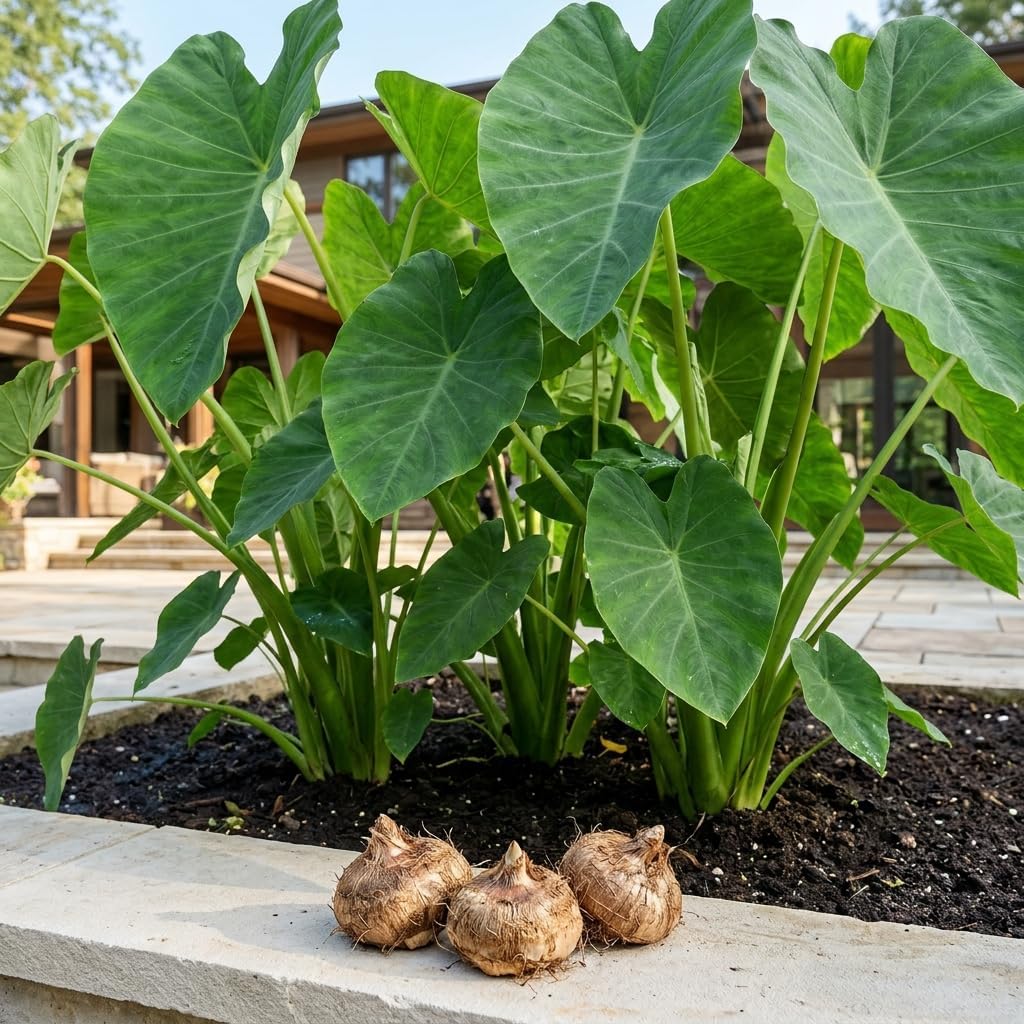
| Quantity | 3 Bulbs |
|---|---|
| Botanical name | Colocasia esculenta |
| Growth habit | Giant elephant ear foliage |
| Planting season | Spring after frost |
These three Giant Elephant Ear bulbs produce Colocasia esculenta plants with very large, heart- to shield-shaped leaves that create bold tropical impact in large outdoor pots or landscape beds. Planting in spring after frost, they are typically set in a substantial container filled with rich, moisture-retentive soil and placed in sun to partial shade. Notable features include rapid foliage growth in warm weather and the ability to reach several feet tall, which makes them effective focal points around patios and pools without relying on flowers. Practical benefits are dramatic visual impact from a small number of bulbs and suitability for container culture where you can control soil and moisture. Limitations are climate sensitivity and seasonal behavior: in cooler regions you must lift and store dormant corms for winter or treat them as annuals, and they need consistent watering during hot periods because their large leaves transpire heavily. For gardeners on a tight budget, these bulbs offer big foliage returns per purchase but require the right container and seasonal care to perform well.
Best for: Gardeners who want a low-cost way to add immediate tropical height and bold foliage to a single large outdoor pot or grouped containers and who are willing to provide regular watering and seasonal corm care.
Less Ideal for: People in cold climates who do not want to lift and store bulbs for winter or those who cannot provide regular watering during hot weather.
- Produces very large, dramatic foliage that works well as a focal point in a single large pot
- Three bulbs give multiple plants for broader coverage or a clustered display
- Suitable for container growing so you can move or lift corms for winter storage
- Not cold-hardy in many climates and requires lifting and winter storage or replanting each year
- Requires consistent moisture and rich soil to develop full-sized leaves
Verdict: If you need an affordable, high-impact plant for a large outdoor pot, these elephant ear bulbs deliver dramatic tropical foliage with minimal upfront cost.
Old Oaks 'Calidora' Alocasia (Elephant Ear) – 1 Gallon

| Indoor Outdoor Usage | Outdoor |
|---|---|
| Sunlight Exposure | Full Sun to Partial Shade |
| USDA Hardiness Zone | 7, 8, 9, 10, 11 |
| Moisture Needs | Moderate Watering |
| Expected Planting Period | Spring to Fall |
The Old Oaks 'Calidora' Alocasia is a bold, architectural elephant ear offered in a one-gallon container that establishes quickly as a focal plant for patios and large containers. It produces upright, highly ribbed leaves and is commonly used as a centerpiece in mixed containers or as a backdrop in beds. The plant is rated for USDA zones 7–11 and accepts full sun to partial shade and a wide range of soils, which simplifies placement and reduces concern about site selection. Moderate watering needs and the ability to keep it potted over winter in cooler climates make it straightforward to maintain. Limitations are typical for large Alocasias: it will eventually reach substantial size in the ground and needs space or a container large enough to control growth, and it offers no significant blooms so it is chosen for foliage impact rather than flowers.
Best for: Buyers who want a dependable, dramatic foliage plant for outdoor containers or beds and who prioritize low-fuss placement and consistent seasonal performance.
Less Ideal for: Those seeking a compact flowering annual or gardeners without space to accommodate a large foliage plant as it matures.
- Striking upright, highly ribbed foliage creates immediate visual impact
- Wide light tolerance from full sun to partial shade makes siting flexible
- Hardy across zones 7–11 so it can be grown outdoors in many temperate climates
- Sold in a one-gallon container so it establishes quickly and can be easily potted up or used in container displays
- Mature plants can reach large size in-ground and may need a large container or regular size management
- No notable flowering display since the plant is grown for foliage
Verdict: A reliable, showy foliage plant for outdoor containers that simplifies placement and care while delivering strong visual impact.
PERFECT PLANTS Frostproof Gardenia Live Plant, 1 Gallon

| Indoor Outdoor Usage | Outdoor |
|---|---|
| Other Special Features of the Product | Deer Resistant, Fragrant |
| Expected Blooming Period | Summer |
| Sunlight Exposure | Full Sun, Partial Shade |
| Expected Planting Period | Spring |
This 1-gallon Frostproof gardenia is a compact, fragrant shrub intended for outdoor landscape use. It arrives as a live plant with a recommended mature height around 5 feet and is typically planted in mulch beds, as a low hedge, or as an accent near entries where its scent can be enjoyed. Notable features include deer resistance, a history of reliable spring and summer blooms, and included easy-to-use plant food for a simpler start. The plant prefers full sun to partial shade, so it will tolerate some shaded locations but performs best where it receives several hours of direct light. Practical benefits for a cautious buyer are straightforward care, minimal pruning to maintain shape, and an aromatic presence that enhances small gardens or patios. Limitations are that it is sold as a 1-gallon specimen so it will need time to reach mature size, and the product text notes shipping exclusions to a few states which affects availability for some buyers.
Best for: Buyers who want an easy-care, scented shrub for a small garden or patio and prefer reliable, low-maintenance plants that establish steadily rather than instant large specimens.
Less Ideal for: Gardeners seeking an immediate tall screening hedge or a plant for deep, full shade should consider alternative species better suited to dense shade or instant privacy needs.
- Fragrant white blooms that enhance outdoor seating areas during spring and summer
- Deer resistant variety reduces need for protective measures in deer-prone yards
- Includes plant food to simplify initial establishment
- Tolerates partial shade, allowing placement in spots without full sun all day
- Sold as a small 1-gallon plant so it requires time to reach mature size
- Per product notes it does not ship to certain states which limits access for some buyers
Verdict: Choose this gardenia if you want a low-maintenance, fragrant shrub that tolerates some shade and adds seasonal white blooms to small outdoor spaces.
Choosing the Right Plants for Large Outdoor Pot: Key Factors to Consider
Container Vigor and Rooting Habit
How a plant's root system behaves in a large pot determines long-term success. Species with fibrous or moderately deep roots tend to fill container soil space without becoming rootbound too quickly. Plants that rapidly choke the pot or develop large woody taproots can need frequent repotting or pruning of roots.
Rooting habit also influences how often you need to refresh potting mix. Vigorous rooters may deplete nutrients faster and require more frequent feeding, while plants with slower root growth can thrive longer between repottings. Consider whether you want a specimen that aggressively fills the pot or one that stays more controlled so you can maintain a stable container arrangement.
Seasonal Interest and Bloom Longevity
Large pots are a focal point, so choose plants that offer multi-season visual payoff. Look for species that provide structure (interesting foliage or form) as well as flowers that last or rebloom. Combining long-blooming perennials or shrubs with shorter-lived annuals lets you tweak color without sacrificing base structure.
Bloom longevity affects maintenance cycles. Plants that drop flowers cleanly and rebloom reduce deadheading time. Also consider foliage that changes color or texture across seasons to keep containers attractive even when flowers fade.
Sun Exposure and Microclimate Fit
Large pots heat up and reflect light differently than garden beds, creating a microclimate at the container level. Full-sun species in a south-facing large pot will need more frequent water and heat-tolerant root zones. Conversely, pots placed against building walls can stay warmer overnight and extend the growing season for marginally hardy plants.
Match plants to expected light conditions and consider how pot material affects temperature. Porous clay can dry faster than plastic or glazed pots. Assessing the microclimate helps prevent stress from overheating, leaf scorch, or lack of blooms due to insufficient light.
Water Use, Soil, and Fertility Needs
Large containers hold more soil and can buffer moisture swings, but they also require consistent management. Some plants are drought tolerant and tolerate occasional drying, while others need steady moisture. Choose potting mixes formulated for containers that retain moisture while allowing drainage.
Fertilizer needs differ: heavy feeders benefit from slow-release fertilizers or regular liquid feedings, while low-maintenance plants require less frequent nourishment. Consider how easy it is to water the location where the pot will live and whether you want to rely on self-watering inserts or manual watering routines.
Cold Hardiness and Overwintering Strategy
In many climates, overwintering a large container is a different challenge than protecting an in-ground plant. Soil in pots freezes and thaws more readily, which can damage roots. Choose plants hardy to your zone for permanent container plantings or plan to move pots to a protected spot in winter.
If moving large containers is impractical, select plants with proven tolerance to freeze-thaw cycles or use insulating strategies such as wrapping pots, adding mulch to the soil surface, or planting in containers with better insulation. Think about long-term maintenance: whether you will keep a plant year-round or treat it as a seasonal display affects plant selection.
Designing a Balanced Large Container
Large pots work best when you combine three functional roles: an upright structural element, one or two mid-height performers, and trailing plants to soften the rim and spill visually. Structural plants can be small shrubs, tall perennials, or grasses that set the silhouette. Mid-layer plants provide texture and blooms, and trailers add movement and fill gaps.
- Choose one plant for each role to avoid overcrowding.
- Scale the structural element to the pot's height so it dominates but does not block the view.
- Select mixes of foliage textures and bloom times for extended interest.
Potting Mix and Root Zone Management
Use a high-quality container mix that drains well but holds moisture. Large pots benefit from mixes with composted bark or coco coir to balance aeration and water retention. For very large volumes, consider blending in perlite or pumice to reduce compaction and improve oxygen flow to roots.
- Top up soil annually rather than full repotting in many cases.
- Add slow-release fertilizer at planting and supplement with liquid feed during peak growth.
- Check root health every two to three years and refresh potting mix if soil structure compacts.
Watering Strategies for Big Pots
Even though large pots retain water better than small containers, they can still dry unevenly. Water deeply and slowly to ensure the root ball is saturated, not just the surface. Use a moisture meter or check depth moisture with a finger or trowel to gauge needs rather than relying on schedule alone.
- Group pots with similar water needs together to simplify irrigation.
- Consider a drip line or soaker setup for heavy-planter locations.
- Mulch the top of the soil to reduce evaporation and keep roots cooler in summer.
Seasonal Care and Replanting Cycles
Plan a seasonal routine for pruning, deadheading, and replacing ephemeral annuals. Large pots can carry a perennial backbone that stays through seasons while you swap color through annuals or bulbs. Prune structural plants in early spring to maintain shape and encourage new growth.
- Plant spring bulbs with summer perennials for layered seasonal interest.
- Rotate annuals mid-season if blooms wane.
- Monitor for pests and diseases more frequently in dense container plantings.
Placement and Mobility Considerations
Think about where the pot will sit year-round. A pot placed where it receives full sun all day will favor heat-tolerant species and may need more frequent watering. If you plan to move the pot for seasonal protection, choose containers with built-in casters or place them on rolling plant stands to make relocation easier.
- Avoid tight spaces that limit airflow around foliage.
- Place large pots near seating or entryways for maximum impact.
- Use saucers or feet to protect hardscape surfaces and improve drainage.
How We Chose the Best Plants for Large Outdoor Pot
We shortlisted candidates based on traits that matter when planting large outdoor containers rather than small bedding or in-ground gardens. We prioritized plants that establish quickly in confined soil, resist common container stressors, and provide high visual impact over a full season. Practical durability was key: we favored species with good root architecture for large pots, predictable water use, and pest and disease tolerance in container conditions. Evaluation criteria included container vigor and rooting habit, seasonal interest and bloom longevity, sun and shade tolerance, drought and watering needs, and cold hardiness or winter container strategies. We excluded plants that require in-ground support, invasive root systems that outgrow pots quickly, and annuals that offer only a short visual window unless paired intentionally with long-season companions. Editorial filtering also considered maintenance time and how well a plant pairs with common large-container companions such as structural foliage and trailing plants.
FAQ
How often should I water plants in a large outdoor pot?
It depends on species, pot material, and exposure. Many large-container plants need deep watering once or twice a week in summer, but check soil moisture before watering. Grouping similar water users simplifies scheduling.
Can I overwinter container plants outside?
Some hardy species tolerate outdoor overwintering if planted in large pots with good drainage and insulated soil. Other plants need moving to a sheltered spot or wrapping the pot to avoid root freeze-thaw damage. It usually depends on the plant's hardiness and your local winter severity.
Do large pots need different soil than in-ground gardens?
Yes. Container mixes are lighter and drain faster than garden soil to prevent compaction and root rot. Use a quality container potting mix with added organic matter and drainage amendments to keep roots healthy.
How do I prevent large container plants from becoming rootbound?
Choose plants with appropriate rooting habits, refresh the topsoil periodically, and repot every few years if roots circle heavily. Dividing perennials or pruning roots during repotting helps maintain long-term vigor.
What is the best way to fertilize plants in big containers?
Use a combination of slow-release fertilizer at planting and periodic liquid feeding during the growing season for heavy feeders. Lighter feeders may only need occasional feeding. Monitor plant growth and leaf color to adjust frequency.
Final Verdict
Large outdoor pots let you create bold, high-impact plantings that function like small garden rooms. Prioritize plants with the right rooting habit, consistent water and light requirements, and multi-season interest for the location where the pot will sit. Be realistic about maintenance: vigorous rooters and heavy feeders need more attention, while well-matched, hardy choices will deliver long-term performance. Choose a structural center, support it with mid-layer performers, and add trailers for softness. Match plant selection to your microclimate and a clear overwintering plan so your large container remains attractive and healthy year after year.
