

Note: This article contains affiliate links. If you click on these links and make a purchase, I may earn a small commission at no extra cost to you. This helps support my research and content. Read my full affiliate disclosure here.
If you want vertical green in a patio, balcony, or tight yard, climbing plants in planters are one of the most efficient ways to add height and interest without a full garden bed. Container climbers behave differently than in-ground vines: root volume is limited, watering and feeding cycles are more important, and support structures must be sized for the pot. This guide covers seven shortlisted climbing plants for planters suited to a range of exposures and goals. We evaluate ease of establishment, container vigor, support needs, and bloom or foliage performance so you can pick the best climber for your space. Read on for practical tips and plant-specific considerations that will help these climbers thrive in pots.
Top Picks at a Glance
| Best Overall The best all-around choice for most situations | MYSHELFIE Japanese Honeysuckle Vine Starter, White Fragrant Climbing Plant (2-Inch Pot) |  |
| Best Quality Built to a higher standard if you want something more solid | Plants by Mail Star Jasmine 'Large Leaf' (2.5 Quart) – Evergreen Climbing Vine |  |
| Best Value The sweet spot between price and what you get | Carpet Creeping Mixed Clematis Vine Seeds (Heirloom, Non-GMO) |  |
| Best Budget The cheapest option that still gets the job done reliably | SPROUTARAQ Morning Glory Seeds (Dark Red/Dark Purple) |  |
| Highest Rated A top-rated pick with lots of positive feedback | MYSHELFIE Purple Honeysuckle Vine (Lonicera japonica 'Purpurea'), Live 2-inch Pot, 2-Pack |  |
| Most Popular A crowd favorite that many people choose with confidence | Perfect Plants Confederate Jasmine (2-Pack), Star Vine, 1 Gal |  |
| Best Seller A high-volume bestseller chosen again and again | American Plant Exchange English Ivy — Live 4" Potted Trailing Vine |  |
MYSHELFIE Japanese Honeysuckle Vine Starter, White Fragrant Climbing Plant (2-Inch Pot)

| Indoor Outdoor Usage | Outdoor |
|---|---|
| Sunlight Exposure | Full Sun To Partial Shade |
| USDA Hardiness Zone | 4-11 |
| Expected Blooming Period | Spring to Fall |
| Moisture Needs | Moderate, Water Regularly But Allow Soil To Dry Between Waterings |
This Japanese honeysuckle arrives as a small 2-inch potted starter intended for outdoor planting on trellises, fences, or in larger planters. It produces white and yellow fragrant blossoms from spring through fall and is valued for its vigorous climbing habit and ability to quickly establish a green screen or vertical accent. The plant tolerates full sun to partial shade and adapts to a range of soils when they are well draining, making it relatively low maintenance: water moderately, allow the soil to dry slightly between waterings, and prune to control spread and shape. Notable benefits include its drought tolerance once established and its attractiveness to pollinators like butterflies and hummingbirds. Important limitations are its vigorous growth habit, which can require regular pruning and containment in planters to prevent it from overtaking nearby plants or structures, and the small initial pot size which means it will need repotting or planting into substantial soil volume to reach its reported mature height.
Best for: Gardeners who want a fast-growing, fragrant climber to create screening or vertical interest in planters and are willing to prune and manage its growth.
Less Ideal for: Those who prefer slow-growing, low-spread plants or who cannot commit to routine pruning and containment should consider more compact climbers.
- Strong, fast-climbing habit that quickly covers trellises and walls
- Fragrant white and yellow blooms that attract pollinators from spring to fall
- Tolerant of full sun to partial shade and adaptable to a range of soils
- Drought tolerant once established, reducing watering needs
- Very vigorous and can become invasive without regular pruning and containment
- Ships as a very small 2-inch starter which requires repotting or planting into larger soil volume
Verdict: Choose this honeysuckle starter if you want a fast, fragrant climber that will quickly fill a planter or trellis and attract pollinators.
Plants by Mail Star Jasmine 'Large Leaf' (2.5 Quart) – Evergreen Climbing Vine

| Expected Blooming Period | Spring to Summer |
|---|---|
| Sunlight Exposure | sun to partial shade |
| USDA Hardiness Zone | 9 |
| Moisture Needs | Moderate Watering |
| Soil Type | Loam Soil |
This large-leaf Star Jasmine is a versatile, fast-growing evergreen vine that is typically used on trellises, arbors, fences, or as a groundcover. It produces clusters of fragrant white, star-shaped flowers in late spring through summer and can be trained to reach tall supports where it will twine and fill in quickly. The plant prefers full sun but tolerates partial shade and benefits from regular watering during its first seasons to establish strong roots. Practical features include vigorous twining habit that makes it easy to train on a trellis and glossy leathery leaves that provide year-round greenery. Expect steady vertical coverage and strong fragrance that attracts pollinators. Limitations to consider are its USDA zone preference (best in warmer climates) and the need for routine watering and occasional pruning after flowering to keep it neat and encourage denser growth. For gardeners wanting a reliable, fragrant climber for sunny trellis sites, this jasmine is a straightforward choice.
Best for: Gardeners who want a reliable, fragrant climber to quickly cover a sunny trellis or fence and value year-round evergreen screening with seasonal blooms.
Less Ideal for: Those in consistently cold climates or gardeners seeking a low-water, drought-tolerant climber should consider alternative species better adapted to cooler or xeric conditions.
- Fast-growing twining habit that quickly covers trellises and fences
- Fragrant clusters of white star-shaped flowers in spring and summer
- Evergreen glossy foliage provides year-round screening
- Tolerates full sun to partial shade and attracts pollinators
- Best suited to warmer USDA zones so may not survive cold winters without protection
- Requires regular watering and occasional pruning to maintain shape and vigor
Verdict: Choose this Star Jasmine when you need a fast, fragrant evergreen climber to quickly fill a full-sun trellis and provide seasonal white blooms.
Carpet Creeping Mixed Clematis Vine Seeds (Heirloom, Non-GMO)

| Indoor Outdoor Usage | Outdoor |
|---|---|
| Expected Blooming Period | Spring to Fall |
| Sunlight Exposure | Full Sun |
| Material Features | GMO Free, Heirloom |
| Unit Count | 1000 Count |
This seed mix supplies a variety of clematis species and cultivars intended for training on trellises, arbors, fences and pergolas to add vertical color from spring through fall. The packet is heirloom and non-GMO and includes hundreds of seeds, but growing from seed requires patience: seeds need cold stratification for 8 to 12 weeks and germination can take weeks to months. Once established the vines climb naturally by twining leaf stalks and can provide 6–12 feet of coverage, attract pollinators, and tolerate moderate drought. Practical benefits for full-sun trellis projects are plentiful: long bloom windows, disease resistance, and deer resistance reduce maintenance and replacement. Limitations are the time and skill needed to start seeds and the unpredictability of mixed-seed results compared with named cultivars, so expect variable flower colors and a one- to three-year wait before reliable flowering from seed-grown plants.
Best for: Gardeners working to add affordable, long-blooming climbers to full-sun trellises who are willing to start plants from seed and wait for established growth.
Less Ideal for: Growers who want instant mature vines, guaranteed specific cultivars, or a fast-season display should choose container-grown or named-variety clematis instead.
- Large quantity of seeds for multiple trellises or repeat sowings
- Heirloom and non-GMO seeds suitable for traditional gardening
- Extended bloom period that can provide seasonal color from spring to fall
- Attracts pollinators and is reported to be deer resistant
- Requires cold stratification and patience; germination can take weeks to months
- Mixed-seed packet yields variable, unpredictable flower types and timings
Verdict: If you want an inexpensive way to fill full-sun trellises with long‑blooming vines and you can start plants from seed, this mixed clematis pack gives plenty of material to plant and experiment with.
SPROUTARAQ Morning Glory Seeds (Dark Red/Dark Purple)

| Indoor Outdoor Usage | Outdoor |
|---|---|
| Expected Blooming Period | Summer to Fall |
| Sunlight Exposure | Full Sun |
| Expected Planting Period | Spring |
| Moisture Needs | Regular Watering |
These morning glory seeds grow vigorous climbing annuals that suit a whiskey barrel planter where you want fast vertical coverage and bold summer to fall blooms. Sow in spring in a sunny spot and provide a trellis or stake; the plants reach up to about 6–10 feet and quickly fill vertical space while flowering through warm months. The listing highlights full sun preference, regular watering, and sandy, well draining soil which matches typical morning glory needs, and the pack contains multiple seeds for repeated sowing or filling several barrels. Because they are annuals, expect a season of heavy flowering rather than permanent structure, and you will need to manage self-seeding and thinning if you prefer tidier growth. These seeds are presented in a small-count packet, so you may need multiple packets to densely cover larger planters or multiple barrels. For gardeners seeking an inexpensive, fast, flowering climber for container displays, these deliver strong visual impact with straightforward care.
Best for: Buyers who want an inexpensive, fast-blooming climber to quickly add vertical color to a whiskey barrel planter and who prefer easy, low-effort annuals.
Less Ideal for: Gardeners seeking permanent perennial structure or exact control over self-seeding and spread should choose more long-lived or clump-forming plants instead.
- Fast-growing climber ideal for vertical coverage in containers
- Produces abundant summer to fall flowers for strong seasonal impact
- Suitable for full sun locations common for barrel planters
- Annual habit means plants need replanting each year
- Packet unit count is small so multiple packets may be required for larger displays
Verdict: An affordable, fast-growing annual vine that quickly provides bold seasonal color and vertical coverage for whiskey barrel planters.
MYSHELFIE Purple Honeysuckle Vine (Lonicera japonica 'Purpurea'), Live 2-inch Pot, 2-Pack

| Indoor Outdoor Usage | Outdoor |
|---|---|
| Expected Blooming Period | Spring to Fall |
| Sunlight Exposure | Full Sun To Partial Shade |
| USDA Hardiness Zone | 7-11 |
| Moisture Needs | Moderate, Water Regularly But Allow Soil To Dry Between Waterings |
This purple honeysuckle arrives as a healthy starter in a 2-inch pot and is meant for fast, reliable establishment on trellises, arbors, or in planters. It grows quickly and tolerates full sun to partial shade, producing fragrant blooms from spring through fall while its purple foliage provides year-round interest. Care is straightforward: plant in well-draining fertile soil, water moderately while allowing the soil to dry between waterings, and prune to shape if it becomes too vigorous. Practical benefits for planter use include rapid coverage of supports and attractiveness to pollinators, plus low maintenance once established. Important limitations are that these are small starter plants that need time and support to reach their 4-foot expected height, and the species can be vigorous so it may require periodic pruning to prevent overgrowth. For a planter situation expect to provide a sturdy support and regular monitoring during the first season for best results.
Best for: Gardeners who want a dependable, fast-establishing climber for planters or small supports and who prioritize a low-effort plant that reliably fills vertical space.
Less Ideal for: Those who want an instant, full-sized specimen or who prefer strictly noninvasive, slow-growing vines without periodic pruning.
- Fast-growing vine that establishes quickly to cover trellises or planter supports
- Attractive purple foliage and fragrant blooms that attract pollinators
- Tolerates full sun to partial shade, giving flexibility in planter placement
- Low-maintenance care: moderate watering and occasional pruning
- Sold as a small 2-inch starter pot so it requires time and good aftercare to reach mature size
- Can be vigorous and may need regular pruning to keep growth contained in planters
Verdict: Choose this purple honeysuckle for a reliable, fast-growing climbing plant that quickly fills planters and attracts pollinators with minimal fuss.
Perfect Plants Confederate Jasmine (2-Pack), Star Vine, 1 Gal
| Indoor Outdoor Usage | Outdoor |
|---|---|
| Expected Blooming Period | Spring |
| Sunlight Exposure | Full Sun, Partial Shade |
| Moisture Needs | Moderate Watering |
| Unit Count | 1 Count |
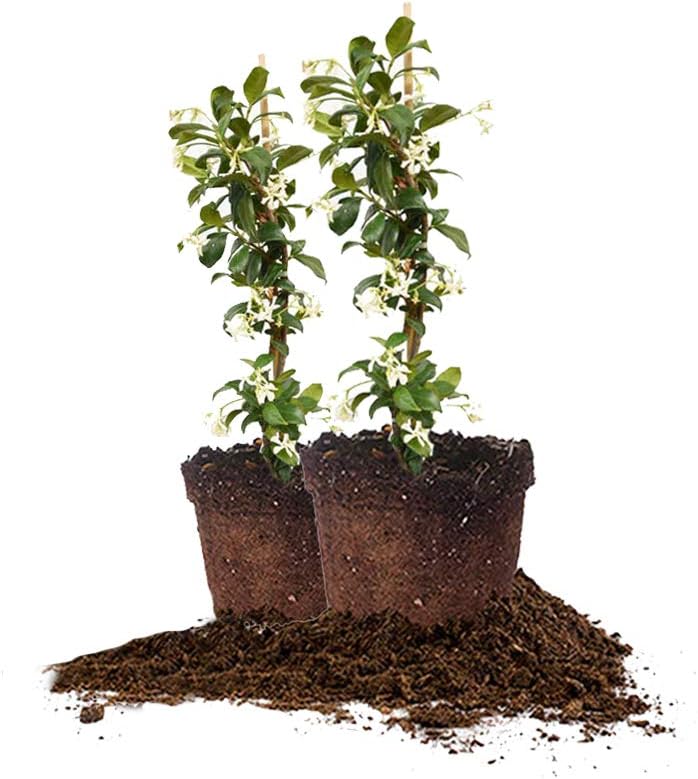
These two Confederate jasmine vines arrive in individual 1‑gallon nursery pots and are meant to be trained on fences, trellises, railings or other supports to form a fragrant, evergreen screen. They perform best in full sun to part shade and are rated for USDA zones 7–11, so on a shaded porch they will tolerate lower light but bloom most reliably where they get some sun. The plants are described as easy to establish; new arrivals need deep watering every day or two for the first two weeks and can drop some leaves while roots settle. Notable features are the glossy evergreen foliage, sweet white pinwheel flowers in spring and early summer, and organic plant material. Limitations include that each order contains small 1‑gallon pots so expect a period of growth before reaching the listed mature height, and some variability between the two plants. Buyers should plan to provide a structure and basic training to get a neat coverage and to monitor moisture while the plants establish.
Best for: Gardners who want a fragrant, evergreen climbing vine to train on a porch trellis or railing and who prefer a low‑maintenance plant that establishes quickly with basic watering.
Less Ideal for: Those seeking instant privacy or mature coverage right away or gardeners unwilling to train or support vines as they grow.
- Two evergreen vines per order for quicker coverage when planted together
- Fragrant white spring blooms that add scent to a porch area
- Tolerates full sun to partial shade, making it adaptable to sheltered porches
- Ships in 1‑gallon nursery pots so plants are ready to plant immediately
- Described as easy to establish with straightforward watering guidance
- Plants are small 1‑gallon specimens so visual impact takes time as they grow to mature height
- Some leaf drop and minor shipping damage to stems is possible during establishment
Verdict: A practical choice for porch gardeners who want a fragrant, adaptable evergreen vine they can train for seasonal blooms and long‑term screening.
American Plant Exchange English Ivy — Live 4" Potted Trailing Vine

| Indoor Outdoor Usage | Indoor, Outdoor |
|---|---|
| Other Special Features of the Product | Air Purification, Compact, Low Maintenance, Pet Friendly, Shade Resistant |
| Sunlight Exposure | Partial Shade |
| Moisture Needs | Moderate Watering |
| Material Features | Live Plant, Nursery Pot, Potting Soil |
This 4-inch English ivy is a versatile trailing vine that works well in planters, hanging baskets, or trained up a small trellis. It prefers bright, indirect to low light and evenly moist, well-draining soil, so it fits shaded balconies, patios, and indoor windowsills where direct sun is limited. Notable features include fast growth, dense evergreen foliage, and documented air-purifying qualities, which make it useful as a decorative cascade or quick green privacy layer in a planter. Practical benefits are its cold hardiness and low maintenance needs: occasional pruning keeps vines tidy and encourages fuller growth. Important limitations are that the plant is mildly toxic if ingested, so it requires caution around children and pets, and the 4-inch nursery pot means immediate transplanting or frequent watering and feeding if you want more vigorous long-term growth in large planters. For risk-averse gardeners this plant is straightforward to care for but does need routine attention to soil moisture and pruning to avoid legginess or overgrowth in containers.
Best for: Buyers who want an easy, reliable climber to add quick greenery to planters or hanging baskets and prefer low-effort care and predictable results.
Less Ideal for: Those seeking an instant large-screen privacy plant or pet owners who cannot keep plants out of reach should consider sturdier or non-toxic alternatives.
- Fast-growing trailing habit suitable for hanging baskets and planter-mounted trellises
- Tolerates low to bright indirect light so it works in shaded planters and indoors
- Described as low-maintenance and cold-hardy for year-round greenery
- Air-purifying foliage that adds visual and indoor-air benefits
- Mildly toxic if ingested, so not safe to leave where children or pets can nibble
- Ships in a small 4-inch nursery pot which may require repotting for larger planters
Verdict: A straightforward, fast-growing ivy that reliably adds cascading green to planters and hanging baskets with minimal fuss.
Choosing the Right Climbing Plants for Planters: Key Factors to Consider
Container Vigor and Rooting Habit
How a climber establishes in a limited volume of soil determines long-term success in planters. Some vines develop a dense, fibrous root ball that fills the pot evenly and absorbs nutrients effectively, while others send a few long roots that do not explore the container well. A plant with good container vigor will tolerate restricted root space and produce steady top growth without frequent repotting.
When evaluating vigor, consider typical mature size relative to the planter. Fast-growing climbers can look dramatic but may need larger pots and more frequent feeding. Slower-growing or naturally compact climbers are often a better match for small balconies or window boxes because they require less root volume and fewer seasonal interventions.
Watering Behavior and Moisture Tolerance
Planters dry out more quickly than ground soil, and climbing plants vary widely in their tolerance of wet-dry cycles. Some species handle brief drought and rewetting well, while others suffer root stress when the soil alternates between saturated and bone-dry conditions. Choose climbers with moisture tolerances that match your watering routine and local climate.
Also consider how the plant responds to uniform moisture versus fluctuating conditions. Plants that tolerate occasional drying are useful for casual gardeners and holiday absences. Those that prefer consistently moist substrate need self-watering setups, larger pots with more stored moisture, or a more attentive irrigation schedule.
Support Method and Attachment Style
Climbers attach to supports in different ways: twining stems wrap around stakes, tendrils grasp trellis wires, adhesive pads cling to vertical surfaces, and some will simply be trained with ties. The attachment style affects what kind of support you must provide and whether the plant will damage delicate surfaces.
Planter-friendly supports include lightweight trellises that fit in pots, obelisks that sit in the soil, and removable wire frames. Consider how the plant will be trained as it grows and whether you prefer a maintenance-free cling or an actively trained twiner that needs guidance each season.
Light Requirements and Seasonal Performance
Light exposure on a balcony or patio is often the single biggest factor shaping growth and bloom. Some climbing plants need full sun to flower reliably, while others tolerate or even prefer part shade. Seasonal performance also matters: evergreen or semi-evergreen climbers provide winter structure, whereas herbaceous or summer-flowering vines offer a strong but temporary display.
Match a climber's light needs to the planter location. In shaded spots, choose plants that produce attractive foliage or late-season flowers in low light. In bright, sunny locations, prioritize heat- and sun-tolerant climbers that will reward you with consistent blooms.
Feeding, Pruning, and Winter Care
Maintenance expectations should influence the choice of climbing plant for a container. Some vines need regular fertilizing to sustain flowering in limited soil, while others persist on light feeding. Pruning needs range from minimal formative pruning to seasonal hard cutbacks to control size and encourage blooms.
Winter protection is another consideration. In climates with freezing winters, potted climbers can be more exposed than in-ground plants. Some species handle cold overwintering in pots, but others will need insulation, mulching, or moving to a protected location. Consider your willingness to perform these tasks when choosing a climber.
Matching Climbers to Planter Types
Different planter shapes and sizes change how a climber grows. Deep pots support larger root systems, while shallow troughs suit plants with surface-feeding roots. Narrow columns favor twining climbers that use a stake, while wide low containers are better for sprawling or training to low trellises.
Also think about material: terracotta dries faster than glazed ceramic or resin, which affects watering frequency. If you plan to use vertical frames attached to balcony railings, measure the weight limits and pick lightweight support structures and plants that will not become top-heavy when saturated.
- Deep containers for vigorous climbers with larger root systems
- Shallow troughs for lightweight, surface-rooting varieties
- Secure bases or tie-in points for tall trellises on windy balconies
- Use lighter supports for hanging or rail-mounted planters
Support Options That Fit Planters
Choose support systems that anchor safely in the potting mix without displacing too much soil. A central stake with a spiral or small obelisk is ideal for single-stem twining vines. For multiple plants in a single container, a low-profile fan trellis keeps roots spread while giving each stem a path to climb.
Removable or collapsible supports are useful if you need to winter the plant indoors or rotate it seasonally. For delicate surfaces, use freestanding frames rather than adhesive-mounted options that can cause damage.
- Spiral stakes and obelisks for single-stem twiners
- Fan or radial trellises for mixed plantings
- Wire frames for tendril climbers that need multiple attachment points
- Removable supports for seasonal repositioning or indoor overwintering
Feeding and Watering Strategies for Container Climbers
Because potting mix has limited nutrients, regular feeding helps sustain flowering and growth. Use a balanced, water-soluble fertilizer on a schedule suited to the plant's needs, or incorporate slow-release granules into the potting medium at planting.
To manage moisture, choose a potting mix with good drainage and organic matter for water retention. Mulch the top of the container to reduce evaporation and consider using self-watering planters in hot, exposed sites to maintain steady moisture for thirsty climbers.
- Apply balanced liquid feed every few weeks during the growing season for heavy bloomers
- Incorporate slow-release fertilizer at planting for lower-maintenance setups
- Choose mixes that balance drainage with moisture retention
- Mulch container surface to slow drying
Training and Pruning Techniques
Early training shapes the plant and reduces future corrective work. Gently tie young stems to supports using soft ties and adjust them as the plant thickens. For twining species, start by placing the stem beside the support so it can wrap naturally.
Pruning controls size and boosts flowering for many climbers. Remove dead or weak growth in spring and perform light shaping through the season. For plants that bloom on new growth, a harder cutback can rejuvenate a tired specimen, but expect a short delay before blooms return.
- Use soft ties and reposition as stems thicken
- Remove dead wood in early season
- Perform light shaping during growth to maintain form
- Understand whether blooms form on old or new wood before pruning
Seasonal Considerations and Overwintering
Potted climbers face temperature and moisture swings more dramatically than in-ground plants. In cold climates, reduce watering in winter and protect roots with insulating wraps or move pots to a sheltered location. Semi-hardy species may require mulching or relocation to a frost-free spot.
For summer heat, provide afternoon shade or extra water for sun-loving climbers that show stress. Plan seasonal training and repotting in spring so the plant has the full growing season to re-establish in fresh mix.
- Insulate or relocate pots for winter protection in cold climates
- Reduce feeding and watering in dormancy
- Increase shade or water during heat waves for sun-stressed plants
- Repot in spring to refresh potting mix and root space
How We Chose the Best Climbing Plants for Planters
We selected plants that reliably grow in containers and produce visible vertical structure from a pot. Our editorial filters prioritized species that establish roots in limited soil, tolerate container moisture cycles, and respond well to common support options such as trellises, obelisks, and stakes. We favored climbers with predictable growth habits rather than plants that require frequent corrective pruning or invasive root spread. Evaluation focused on five concrete criteria: container vigor, root tolerance to drying and rewetting, support compatibility for typical planter sizes, seasonal ornamental value (flowers or foliage interest), and maintenance demands such as pruning and feeding. Plants were excluded if they are very likely to outgrow standard planters within a single season, have aggressive root systems unsuitable for pots, or require specialized greenhouse conditions. The resulting list reflects species and varieties that balance container performance with visual impact and manageable maintenance for gardeners using planters.
FAQ
How large should a planter be for a climbing plant?
Planter size depends on the climber's mature habit. Small, twining climbers do well in 10 to 12 inch pots, while vigorous or multi-stem climbers need deeper and wider containers to provide adequate root volume and stability. When in doubt, choose a slightly larger pot to reduce the need for early repotting.
Can any climbing plant be grown in a container?
Not every climber is suitable for containers. Plants with invasive root systems or those that reach enormous sizes tend to struggle in pots unless you commit to frequent root pruning and very large containers. Look for species known for good container performance or naturally compact habits.
How often should I water climbing plants in planters?
Watering frequency depends on pot size, pot material, and exposure. Small pots in sun may need daily watering in hot weather, while large, well-mulched containers might only need occasional watering. Check the top inch of soil and water when it feels dry for most container climbers.
Do container climbers need special soil?
Yes. Use a high-quality potting mix that balances drainage with moisture retention and contains organic matter. Avoid garden soil in containers because it compacts and drains poorly. A mix tailored for containers gives roots the oxygen and moisture balance they need.
How do I keep a climbing plant from toppling its pot?
Prevent toppling by choosing a heavy or wide-based container, planting the climber off-center to counterbalance wind load, and securing the support structure deep in the soil. For very tall supports, anchor the base with gravel or use weighted pots to increase stability.
When should I prune climbing plants in containers?
Prune in late winter or early spring for most species to remove dead wood and shape growth, and perform light summer pruning to control size. Timing depends on whether the plant flowers on old or new wood, so avoid cutting off next season's flower buds for species that bloom on previous-year growth.
Final Verdict
Choosing the right climbing plants for planters means balancing root volume, watering habits, and support needs with the visual effect you want to achieve. Prioritize species that match your container size and exposure, and plan for appropriate feeding and winter protection to reduce surprises. Accepting a few tradeoffs will help you pick a container-friendly climber: faster growers give quick coverage but need larger pots and more maintenance, while compact or slower types are lower effort but may take longer to fill a trellis. Choose based on how much time you will invest in training and care, and you will get reliable vertical interest from planters.
