

Note: This article contains affiliate links. If you click on these links and make a purchase, I may earn a small commission at no extra cost to you. This helps support my research and content. Read my full affiliate disclosure here.
Choosing the right container flowers for shade changes how a porch, patio, or shaded border looks and performs through the growing season. In lower-light spots you need plants that set blooms without full sun, tolerate richer watering cycles, and stay compact enough for pots. This guide surveys seven top container options suited for shady conditions, shortlisted for their bloom reliability, foliage interest, and ease of care. Below you will find practical notes on what each plant does in a real garden and the evaluation criteria we used to select them.
Top Picks at a Glance
| Best Overall The best all-around choice for most situations | SVI Rainbow Coleus Heirloom Flower Seeds (1200 Count) |  |
| Best Quality Built to a higher standard if you want something more solid | Touch Of ECO Hosta Bare Roots 6-Pack (Mixed Heart-Shaped) |  |
| Best Value The sweet spot between price and what you get | CZ Grain Florida Cardinal Caladium Bulbs (5 bulbs) |  |
| Best Budget The cheapest option that still gets the job done reliably | Seedville Kenilworth Ivy (Cymbalaria muralis) Flower Seeds, 100 Count |  |
| Highest Rated A top-rated pick with lots of positive feedback | Perennial Farm Frostkiss Elemental Helleborus (Lenten Rose) Live Perennial – #1 Container |  |
| Most Popular A crowd favorite that many people choose with confidence | HOME GROWN Rainbow Mix Coleus Seeds (400) |  |
| Best Seller A high-volume bestseller chosen again and again | Outsidepride Balsam (Impatiens) Flower Seeds — 500 Count Mixed Colors |  |
SVI Rainbow Coleus Heirloom Flower Seeds (1200 Count)

| Unit Count | 1200 Count |
|---|---|
| USDA Hardiness Zone | 4-10 |
| Sunlight Exposure | Partial Shade |
| Moisture Needs | Regular Watering |
| Material Features | GMO Free, Heirloom |
These SVI Rainbow Coleus seeds are a straightforward choice for gardeners who want fast, low-maintenance color in shady containers or borders. The packet contains 1200 heirloom, GMO-free seeds that germinate in about 7 to 14 days and form compact, bushy plants roughly 12 inches tall. Coleus thrives in partial shade, tolerates regular watering, and benefits from pinching the tops at 6 inches to encourage branching and a fuller mound. The plants are useful in containers, window boxes, or massed as edging where bright foliage is needed more than blooms. Practical benefits include clear planting guidance on each seed packet and broad USDA zone adaptability from 4 to 10, so these seeds suit many climates when started indoors or sown after frost. Limitations are typical of coleus: they prefer protection from hot afternoon sun and need consistent moisture for best foliage color, and being annuals they will not overwinter in cold climates without indoor care.
Best for: Buyers who want an easy, colorful foliage plant for shady containers or beds and prefer starting many plants from seed for repeated displays or container fills.
Less Ideal for: Gardeners seeking long-lived perennials or low-water drought-tolerant plants should consider alternatives better suited to full sun and dry conditions.
- Large seed count (1200) gives many plants or repeat sowings
- Heirloom and GMO free seeds with planting guidance on each packet
- Performs well in partial shade and is described as shade resistant
- Fast germination in 7 to 14 days and compact, bushy habit ideal for containers
- Suitable for a wide range of climates (USDA zones 4 to 10)
- Shade tolerance means foliage can suffer or fade in hot afternoon sun
- Requires consistent moisture to maintain vibrant leaf color
Verdict: A high-count packet of heirloom, shade-tolerant coleus seeds that lets you quickly fill containers and shady spots with vibrant foliage.
Touch Of ECO Hosta Bare Roots 6-Pack (Mixed Heart-Shaped)

| Unit Count | 6 Count |
|---|---|
| Expected Blooming Period | Spring to Fall |
| Sunlight Exposure | Full or Partial Shade |
| USDA Hardiness Zone | 3 to 9 |
| Moisture Needs | Regular Watering |
These Touch Of ECO hosta bare roots arrive dormant and are sold as a six-pack of mixed heart-shaped varieties aimed at producing rich green foliage and summer flowers. They are typically used in shaded containers, beneath trees, or in border plantings where regular watering and partial to full shade prevail. Notable features include hardiness across USDA zones 3 to 9, deer resistance, pollinator-attracting blooms, and simple planting instructions that make them beginner-friendly. Because they are bare roots, you plant the crown at soil level and water in; the plants establish over the season and return as low-maintenance perennials the following year. Practical benefits for container gardeners include reliable shade tolerance and compact growth habit that works well in pots or small beds. Limitations are that they arrive dormant so you must store and time planting properly, and individual varieties are mixed so exact foliage pattern or flower color is not guaranteed. For container use expect modest spread and the need to monitor moisture to avoid drying between waterings.
Best for: Gardeners who want reliable, low-maintenance shade plants for containers or small shady beds and who prioritize dependable performance across climates.
Less Ideal for: Growers seeking a specific named cultivar, exact foliage color pattern, or instant mature display should consider potted or named-variety hostas instead.
- Shade-tolerant varieties suited for containers and under trees
- Hardy across USDA zones 3 through 9 for broad climate reliability
- Deer resistant and attractive to pollinators
- Sold as bare roots that establish quickly when planted correctly
- Low-maintenance perennial habit that returns year after year
- Arrives dormant so planting must be timed and roots stored correctly
- Mixed pack means specific leaf variegation or flower color is not guaranteed
Verdict: A dependable, low-maintenance choice for adding shade-tolerant foliage to containers and small shady spaces with broad climate hardiness.
CZ Grain Florida Cardinal Caladium Bulbs (5 bulbs)

| Sunlight Exposure | Full Sun |
|---|---|
| Expected Plant Height | 5 feet |
| Soil Type | Sandy Soil |
| Moisture Needs | Moderate Watering |
These Florida Cardinal caladium bulbs produce large, fancy heart-shaped leaves with striking red and green variegation that perform well in shade or filtered light. They are sold as tubers intended for planting after the last frost and thrive in warm soil and moderate moisture, so they are a good fit for summer container displays on shaded patios. Notable features include vivid foliage color that provides instant tropical interest and low-maintenance growth habits that suit beginner gardeners. In pots you can position them as attention-grabbing centerpieces or mix them with ferns and hostas for layered texture. Limitations to keep in mind: caladiums prefer warm, nutrient-rich, well-draining soil and will not tolerate cold or overly wet roots, so containers need good drainage and occasional feeding. Expect seasonal growth rather than a year-round houseplant in cooler climates, and plant timing and warm soil temperatures strongly affect how quickly they emerge and leaf out.
Best for: Gardeners who want low-effort, high-impact shade container plants that provide bold foliage color without complex care routines.
Less Ideal for: Those seeking perennial flowering color through cold winters or gardeners in cool climates who cannot provide consistently warm soil conditions.
- Vivid red-and-green foliage that adds strong visual impact in shade containers
- Suitable for containers and garden beds so placement is flexible
- Easy-to-grow tubers that are beginner friendly when planted after frost
- Low ongoing maintenance once established with moderate watering needs
- Requires warm soil to germinate and will be slow or fail in cool conditions
Verdict: Buy these caladium tubers if you want an easy-to-grow, high-impact tropical foliage plant for shady containers that quickly upgrades a patio display.
Seedville Kenilworth Ivy (Cymbalaria muralis) Flower Seeds, 100 Count

| Unit Count | 100 Count |
|---|---|
| Expected Blooming Period | Spring – All Summer (Repeat Bloomer) |
| Sunlight Exposure | Part Sun – Full Shade |
| USDA Hardiness Zone | 4 – 8 |
| Moisture Needs | Moderate Watering |
These Kenilworth Ivy seeds produce a low, trailing vine covered in many small lavender-and-yellow, snapdragon-like flowers that perform well in part sun to full shade. They are typically sown in fall with cold stratification or started indoors before the last frost and then used to fill hanging baskets, shady containers, rock gardens, or to spill over walls and between pavers. Notable features from the seed packet include repeat blooming from spring through summer, suitability for USDA zones 4 to 8, and modest moisture and soil requirements, which make them easy to care for in shady container situations. Practical benefits are high visual payoff for a small footprint and a large unit count that lets you seed multiple pots or rescues if germination is uneven. Limitations are that the plants stay very short so they are best as edging or filler rather than a focal vertical plant, and germination and early care require attention to timing and cold stratification for best results.
Best for: Gardeners on a budget who want an inexpensive way to add continuous color to shaded containers, hanging baskets, or rockery edges without much specialized care.
Less Ideal for: Those seeking tall or structural container plants or instant showy blooms from larger nursery-grown specimens should look elsewhere.
- Large 100-count packet lets you seed multiple containers or replace failed starts
- Thrives in part sun to full shade, ideal for shady container spots
- Repeat blooming from spring through summer provides extended color
- Low water and average soil needs make it easy to maintain in pots
- Very low-growing habit (around 2–4 inches) so not suitable as a tall focal plant
- Requires correct sowing timing and cold stratification for reliable germination
Verdict: A very affordable seed packet that fills shady containers and baskets with abundant, low-growing blooms through the season.
Perennial Farm Frostkiss Elemental Helleborus (Lenten Rose) Live Perennial – #1 Container

| Sunlight Exposure | Partial Sun |
|---|---|
| Expected Blooming Period | Fall to Spring |
| USDA Hardiness Zone | 4 |
| Moisture Needs | Moderate Watering |
| Soil Type | Loam Soil |
The Frostkiss Elemental Helleborus is a compact, shade-tolerant perennial grown for its early white blooms and decorative marbled evergreen leaves. In containers it provides winter-to-spring interest by producing upward-facing flowers when few other plants are blooming, and the evergreen foliage keeps pots looking polished year-round. It prefers partial sun and loam soil with moderate watering, so placement in a sheltered, partly shaded spot and consistent but not excessive moisture will keep it healthy. Notable features include deer resistance, pollinator value in early season, and low maintenance once established. As a container choice it is best used in mixed shade pots or as a repeatable focal plant in a woodland-style arrangement. Limitations are that it blooms in a restricted early-season window and needs appropriate shade and soil drainage to avoid stress; it is not a showy, long-blooming annual but a reliable perennial that returns each year with modest care.
Best for: Gardeners who need a dependable, low-maintenance shade plant for containers or shady borders and value year-to-year reliability and winter-to-spring interest.
Less Ideal for: Buyers seeking long-season, high-impact annual color or full-sun container displays should consider other plants better suited to those conditions.
- Compact habit suitable for containers and small shady sites
- Evergreen marbled foliage provides year-round interest
- Blooms in late winter to early spring when few other plants are flowering
- Deer resistant and attractive to early-season pollinators
- Low maintenance once established
- Relatively short main bloom period limited to late winter and early spring
Verdict: Choose this compact Helleborus for a low-maintenance, container-friendly shade perennial that reliably produces early-season blooms and attractive evergreen foliage.
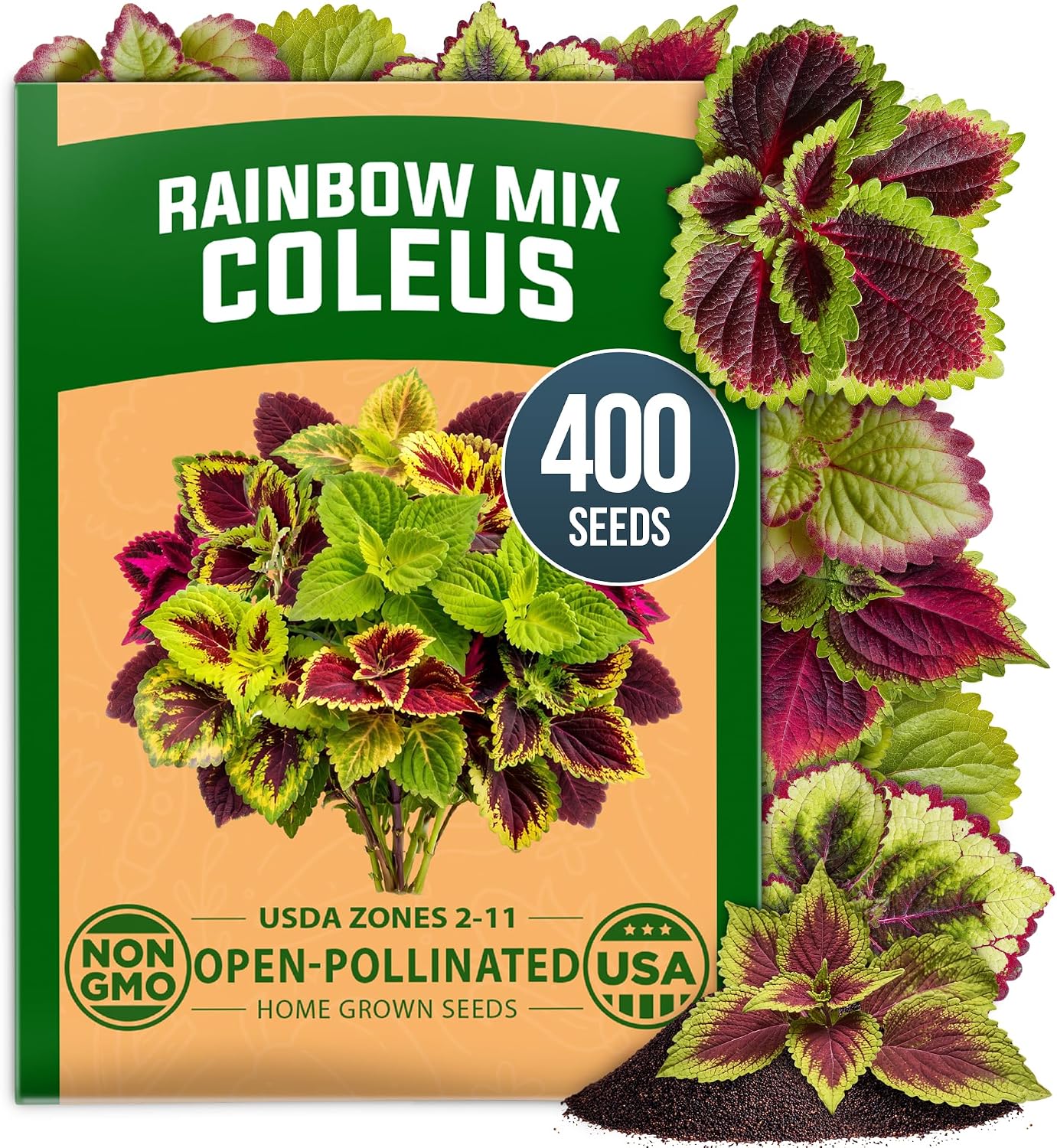
HOME GROWN Rainbow Mix Coleus Seeds (400)
| Indoor Outdoor Usage | Indoor, Outdoor |
|---|---|
| Sunlight Exposure | Part Shade to Shade |
| Expected Blooming Period | Spring through Frost |
| USDA Hardiness Zone | 2-11 |
| Material Features | GMO Free, Heirloom |
HOME GROWN Rainbow Mix is a large-count coleus seed packet intended for growers who want season-long foliage color in part-shade to full-shade containers and borders. The tiny seeds are surface sown and germinate best at 70–75°F, with seedlings appearing in about 10–14 days; plants perform well indoors near bright north or east windows and outdoors on shaded patios. Notable features include multi-colored foliage that provides visual interest without blooms, compact mounded habit that responds to regular tip-pinching, and broad suitability across USDA zones 2–11 as tender annuals or indoor plants. Practical benefits are plentiful seed quantity for group plantings or repeated sowings, strong container performance, and low-maintenance color for areas that get little direct sun. Limitations to plan for: coleus needs consistent moisture and protection from frost and prolonged drought, and flower spikes should be removed to keep foliage vibrant. Also, as an open-pollinated mix you may see variation in leaf pattern and height across seedlings rather than uniform cultivars.
Best for: Gardeners who want hassle-minimal, long-season color in shady containers or borders and who value large seed counts and heirloom, non-GMO stock for multiple plantings.
Less Ideal for: Growers seeking perfectly uniform, named cultivars or those who prefer very drought-tolerant, low-water plants should look elsewhere.
- High seed count (about 400) supports multiple containers or repeat plantings
- Non-GMO open-pollinated seeds suitable for gardeners who prefer heirloom material
- Shade-tolerant foliage provides long season color where sun-loving flowers struggle
- Compact, mounded growth habit works well in pots, window boxes, and mixed planters
- Requires consistently moist, rich soil and will decline if allowed to dry or sit in soggy conditions
- Seed-grown mix can produce variable plant colors and sizes rather than uniform named varieties
Verdict: A generous pack of heirloom coleus seeds made for filling shade containers and window boxes with low-maintenance, season-long foliage color.
Outsidepride Balsam (Impatiens) Flower Seeds — 500 Count Mixed Colors

| Unit Count | 500 Count |
|---|---|
| Expected Blooming Period | Spring to Fall |
| Sunlight Exposure | Partial Shade |
| USDA Hardiness Zone | 3 |
| Moisture Needs | Moderate Watering |
These Outsidepride Balsam seeds are an easy way to add continuous color to shady containers, window boxes, and garden borders. The mix of rose, salmon, white, scarlet, and violet blooms comes from plants that grow to roughly 12–18 inches and tolerate partial shade, so they work well where full sun plants struggle. You can sow directly after frost or start indoors 6–8 weeks early; seeds germinate quickly and the plants need consistently moist, well-drained loam and moderate watering to do their best. Practical benefits include low maintenance, compact habit that suits small pots, and pollinator appeal for hummingbirds and butterflies. The packet is GMO free and contains enough seed for many pots or a generous border. Expect some self-seeding and variable germination like most bulk seed packs, so thinning or spot-sowing may be necessary to get even spacing. Also these are annuals, so they provide season-long color but will not overwinter in cold climates.
Best for: Gardeners who want low-effort, reliable color in shaded containers or small borders and prefer starting plants from seed rather than buying transplants.
Less Ideal for: People seeking permanent, long-lived plantings or those who want guaranteed uniformity without thinning should consider nursery-grown plants or perennial shade options instead.
- Shade-tolerant blooms that perform well in partial shade and containers
- Compact growth habit (12–18 inches) suited to small pots and borders
- Long bloom period from spring through fall for season-long color
- Large 500-count packet provides seed for multiple containers or beds
- GMO free seeds that attract pollinators such as hummingbirds
- Annuals only, so plants need replanting each year
- Bulk seed packets can give uneven germination and may require thinning
Verdict: A cost-effective seed packet for dependable, season-long color in shady containers and small borders.
Choosing the Right Container Flowers for Shade: Key Factors to Consider
Shade Intensity and Duration
Shade intensity and how long sunlight reaches a container determine what will actually bloom. Dappled morning sun is dramatically different from deep, north-facing shade. Choose varieties that match the light profile: some will flower in filtered light, others will only maintain foliage without blooms in denser shade.
Assess daily light at container height rather than relying on broad descriptions. A plant placed on a covered porch may receive reflected light and perform better than the same variety under a full canopy. Planning around actual light conditions reduces frustration and improves flowering success.
Pot Size and Root Space
Container volume constrains root development, water availability, and nutrient reserves. Plants that need steady moisture or develop deep root systems perform poorly in small pots. For reliable blooms in shade, use containers that provide adequate soil depth and width for the species' typical root habit.
Larger pots buffer against temperature swings and dry-out between waterings, which is helpful in shaded spots that can stay cold and damp. Choosing the correct pot size also reduces the need for very frequent fertilizer and watering interventions.
Soil Mix and Drainage
Soil composition affects both moisture retention and aeration-two critical needs for shaded containers. Shade locations are often cooler and retain moisture longer; a heavy mix that holds water can lead to root rot. Use a well-draining, but moisture-retentive container mix amended with compost or coconut coir to balance water-holding and drainage.
Ensure containers have sufficient drainage holes and consider using a layer of coarse material under the soil only if it improves drainage for a specific pot type. Regularly check that water moves through the pot and does not pool at the surface after irrigation.
Watering Frequency and Technique
Shaded containers dry more slowly than those in sun, but they still need consistent moisture for flowering. Overwatering in low light is a common mistake because pots can stay damp while roots suffocate. Water deeply and infrequently when possible, allowing the top inch of soil to dry before the next thorough watering.
Adjust frequency with seasonal temperature and rainfall. Use a finger test or a moisture meter to avoid guesswork, and water early in the day so foliage has time to dry, reducing disease pressure in humid shade.
Fertilizer and Nutrient Needs
Containers have limited nutrient reserves, so regular feeding supports continuous bloom. Plants in shade often grow more slowly and can benefit from a balanced, water-soluble fertilizer applied at lighter rates than in full sun. Too much nitrogen encourages leaf growth at the expense of flowers.
Use a schedule that matches the plant's flowering rhythm: more frequent, lower-dose feedings can sustain steady blooms without pushing excessive vegetative growth. Flush pots occasionally to prevent salt buildup from fertilizers.
Maintenance and Seasonal Care
Maintenance demands vary widely between shade-adapted container flowers. Some need regular deadheading to encourage more blooms, while others bloom without much intervention. Pruning, replacing spent plants, or dividing bulbous types are seasonal tasks that affect long-term success.
Consider winter care: some containers can stay outdoors while others require protection or bringing plants inside. Choose species whose seasonal care fits your routine to avoid unscheduled labor or losses.
Best Container Placement in Shaded Spots
Placement matters more in shade than in open sun. Even small shifts that increase morning light or reduce afternoon canopy cover can change a plant from sparse to floriferous. Place containers where they receive the best available filtered light and avoid sites where leaves or gutters drip constantly onto foliage.
Think vertically as well. Hanging baskets, railing boxes, or elevated stands can catch brighter reflected light and improve airflow, which helps reduce disease pressure in humid shaded areas.
- Aim for the brightest available shaded spot, such as near an east-facing wall.
- Elevate containers to capture reflected light from hard surfaces.
- Avoid locations with persistent water drip or poor air circulation.
Combining Shade Flowers for Extended Color
Mixing plants with staggered bloom times and varied foliage keeps containers interesting. Pair steady bloomers with foliage plants that provide contrast. Textural contrast and leaf color can make fewer flowers read as more abundant.
Use a thriller, spiller, filler approach adapted for shade: a focal upright plant with contrasting leaves, a trailing element to soften edges, and one or two compact bloomers to fill in.
- Include at least one trailing element to soften pot edges.
- Choose foliage with different tones to highlight blooms.
- Select plants that bloom at different times to maintain color.
Water Management Strategies for Shady Containers
Because shaded pots dry slowly, reduce frequency but water thoroughly to encourage deep roots. Check soil moisture at the root zone rather than relying on surface dryness. Multiply containers make it helpful to group pots with similar moisture needs together so watering is more efficient.
Consider using saucers or self-watering inserts only when you can control standing water. Standing water can increase disease risk in shade. Mulching the container surface with coarse material reduces surface evaporation and helps maintain even moisture.
- Group containers by water needs to streamline care.
- Use moisture meters for larger collections to avoid overwatering.
- Mulch pot surface to moderate moisture without blocking drainage.
Seasonal Refresh: When to Replace or Divide
Many shade container flowers are annuals that will be replaced each season, while some perennials or bulbs can be divided and replanted. Late-summer and early-fall are good times to evaluate container health and decide whether to refresh the composition for continued color.
If planting bulbs for spring interest, lift or protect them according to local hardiness. For perennials, plan to divide or repot when rootbound or when flowering declines, usually in early spring or after a bloom flush.
- Inspect root health and repot when pot-bound.
- Refresh annual containers after peak bloom to reinvigorate color.
- Store or protect tender perennials and bulbs according to climate.
Foliage Interest as a Design Strategy
In deep shade foliage often provides more lasting impact than flowers alone. Select plants with colorful, variegated, or highly textured leaves to keep the container attractive between bloom cycles. Leaf sheen, variegation, and frilliness all translate into visual interest even when flowers are sparse.
Combine leaf shapes and colors to create contrast. Silver or pale leaves can brighten dark corners while deep green glossy leaves add a lush backdrop for softer blooms.
- Use variegated leaves to lighten dark areas.
- Mix broad and fine textures for depth.
- Balance dark foliage with brighter blooms for contrast.
How We Chose the Best Container Flowers for Shade
We prioritized plants that reliably produce flowers in part-shade to full-shade conditions and that adapt to container culture. Key evaluation criteria included shade tolerance, bloom consistency in low light, compactness for pot sizes, and maintenance needs such as watering and pruning. We also considered disease resistance in humid, shaded microclimates and the plants' ability to rebloom or hold color through the season. Entries were excluded if they require full sun to flower well, need extensive grafting or special winter protection, or are unsuitable for typical patio containers. Our shortlist focuses on plants that give gardeners familiar cultivation routines and predictable seasonal color without specialized infrastructure.
FAQ
What light level is considered too shady for flowering container plants?
Too shady typically means no direct or reflected light for most of the day, such as deep north-facing corners under dense canopy where only diffuse light reaches. In those conditions many bloomers will only produce foliage. Look for spots that get at least a few hours of bright, indirect light for reliable flowering.
How often should I fertilize container flowers in shade?
Usually a lighter routine than for sun-exposed containers works best. Apply a balanced, water-soluble fertilizer at half strength every two to four weeks during the active growing and flowering season. Adjust based on how vigorously plants are growing and whether blooms are forming.
Can I grow bulbs in shaded containers for spring color?
Yes, many spring bulbs will flower in part shade if they receive cool, moist conditions in winter and some indirect light in spring. Choose bulbs known to tolerate shade and plant them with appropriate depth and a well-draining mix to avoid winter rot.
How do I prevent fungal diseases in shaded containers?
Improve air circulation by spacing containers and elevating them off the ground. Water early in the day so foliage can dry, avoid overhead watering when possible, and use a free-draining soil mix. Remove diseased foliage promptly and avoid dense plantings that trap humidity.
Are trailing plants useful in shaded container combinations?
Yes. Trailing plants soften pot edges and can catch reflected light, making a container read as fuller and more dynamic. Choose trailing species that tolerate low light and avoid vigorous trailers that will outcompete slower shade bloomers.
Final Verdict
Focus on matching the plant to your actual shade conditions, container size, and the level of maintenance you want. Prioritize species with proven shade tolerance and compact container habits if you need reliable blooms without constant upkeep. Balance bloomers with foliage interest, manage moisture carefully, and plan seasonal refreshes. With those tradeoffs in mind you can confidently pick container flowers for shade that fit your space and gardening routine.
