

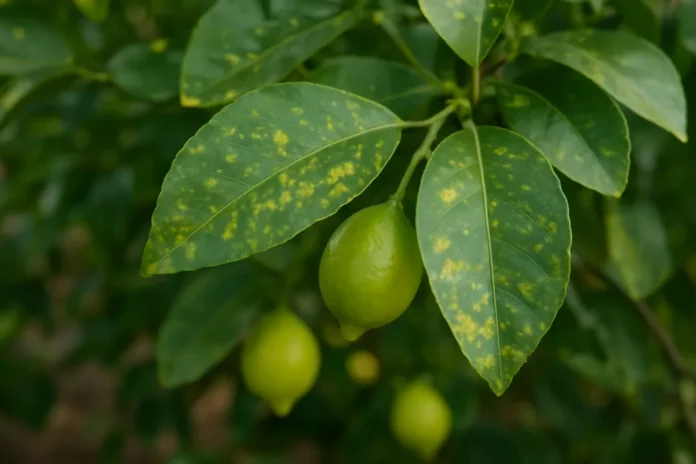
Yellow spots on lemon tree leaves are most often caused by pest feeding, nutrient imbalances, watering stress, or fungal and bacterial leaf problems. In some cases, cold snaps or poor root health can also trigger spotted yellowing.
Seeing yellow spots show up on a lemon tree can be unsettling, especially when the rest of the plant seemed fine just a week earlier. In my experience, lemon tree leaves with yellow spots rarely happen for just one random reason. The spotting pattern, where it starts, and whether the leaves also curl, drop, or develop brown centers usually tell the real story.
Sometimes the cause is simple, like inconsistent watering or a mild nutrient shortage. Other times it is a pest issue such as spider mites or scale, or a leaf disease that needs quicker attention. The good news is that a lemon tree usually gives several clues before the problem becomes serious, so a careful look can save a lot of guesswork.
If your lemon tree has yellow speckles, blotches, or halo-like spots, focus on the whole pattern instead of one leaf. New leaves, old leaves, the underside of the foliage, and nearby fruit all help narrow down what is happening.
What the Yellow Spotting Pattern Can Tell You
Before treating anything, look closely at the shape and location of the yellow spots. Fine stippling across the leaf surface often points to sap-sucking pests. Larger blotchy yellow patches between the veins may suggest nutrition or root stress. Yellow spots with brown or corky centers can lean toward disease or physical damage. If only older leaves are affected, I start thinking about mobile nutrient issues or watering inconsistency. If tender new growth is most affected, micronutrient problems or pest pressure move higher on the list.
- Tiny yellow specks scattered across many leaves often suggest spider mites or other piercing pests.
- Yellowing between green veins can indicate chlorosis, commonly tied to iron, manganese, or magnesium issues.
- Round yellow spots that later turn brown may point to fungal or bacterial leaf spotting.
- Spots mostly on the sunniest or most exposed side can come from cold, wind, or sun stress after weather swings.
- Yellow spotting combined with leaf drop and soggy soil often suggests root stress from overwatering.
When I diagnose citrus, I always compare several leaves from different parts of the tree. One damaged leaf can fool you, but a repeating pattern on old leaves, new leaves, and the undersides usually reveals whether the issue started with roots, nutrients, or pests.
Pests That Commonly Cause Yellow Spots on Lemon Leaves
Spider Mites
Spider mites are one of the most common causes of yellow stippling on lemon leaves, especially in hot, dry weather or on indoor and patio citrus. They feed by piercing leaf tissue and sucking out cell contents, which leaves behind countless tiny pale or yellow dots. Leaves may look dusty, dull, or bronzed over time. You may also notice very fine webbing on leaf undersides or between stems if the infestation is advanced.
Scale Insects
Scale can also cause yellow spotting, though the symptoms are often patchier than mite damage. These insects attach to stems and leaves and feed slowly, weakening the plant. Leaves may develop yellow blotches, and you might see sticky honeydew on foliage or nearby surfaces. Black sooty mold sometimes grows on that honeydew, which is another strong clue.
Aphids, Whiteflies, and Leafminers
Aphids and whiteflies can create generalized yellowing and small pale spotting, especially on tender new growth. Citrus leafminers are a little different. Their feeding creates winding, silvery trails inside the leaf, and the damaged areas can look yellowish or distorted. Leafminers usually do not kill a mature lemon tree, but they can make new flushes look rough and stressed.
- Check the undersides of leaves first, where mites, whiteflies, and young scale often hide.
- Look for webbing, sticky residue, or black sooty mold as supporting evidence.
- Inspect the softest new growth for curling, twisting, or trapped insects.
If pests are the cause, the yellow spots usually appear unevenly across the canopy and may worsen quickly during warm weather. A strong spray of water, horticultural oil, or insecticidal soap often helps with mild infestations, but timing matters. Treat in the early morning or evening so foliage is not stressed by heat.
Nutrient Deficiencies and pH Problems
Lemon trees are heavy feeders, and nutrient shortages often show up on leaves before the tree declines in any obvious way. Yellow spots can be a loose description homeowners use for several types of chlorosis, where green tissue fades to yellow in a patterned way. In citrus, nutrient problems are often tied not only to low fertilizer levels, but also to alkaline soil, poor drainage, or root damage that prevents uptake.
Iron and Manganese Deficiency
Iron deficiency usually affects younger leaves first. The tissue between the veins turns yellow while the veins stay greener. Manganese deficiency can look similar but may include more mottling or small dead specks as it progresses. These issues are especially common in soils with high pH, where nutrients are present but not available to the plant.
Magnesium Deficiency
Magnesium deficiency more often shows on older leaves. You may see yellowing around the edges or between veins while a green area remains near the base or center. Gardeners sometimes describe this as yellow patches or spots, even though it is really a broader leaf pattern.
Zinc and Other Micronutrients
Zinc deficiency can cause small leaves, rosetting, and irregular yellow mottling. When several micronutrients are tied up at once because soil pH is too high, the whole tree may look washed out, with some leaves showing blotchy yellow spotting rather than smooth, even discoloration.
If a lemon tree is in the ground and keeps showing chlorosis even after feeding, I stop adding more general fertilizer and start thinking about soil pH and root function. Extra nutrients do not fix a tree that cannot access them.
- Use a citrus-specific fertilizer that includes micronutrients.
- Avoid overliming nearby beds, which can raise soil pH around roots.
- For container lemons, refresh old potting mix if it has become compacted or depleted.
- If the pattern is strongest on new leaves, consider iron, manganese, or zinc before nitrogen.
Watering Mistakes and Root Stress
Inconsistent watering is one of the most underrated reasons lemon leaves develop yellow spotting or blotchy yellowing. Citrus roots need oxygen as much as moisture. When soil swings from bone dry to saturated, roots become stressed and nutrient uptake becomes erratic. That can create spotted chlorosis, general yellowing, leaf curl, and leaf drop all at once.
Overwatering
Overwatered lemon trees often have yellowing leaves with a limp feel. Spots may not look crisp or sharply defined. Instead, the leaf can develop uneven pale patches before dropping. In containers, overwatering is especially common when the pot is too large, drainage holes are limited, or saucers stay full for long periods.
Underwatering
Underwatering can also create yellow spotting, especially when dry roots temporarily shut down nutrient uptake. Leaves may look dull, curl slightly, or develop dry edges in addition to mottled yellow areas. Repeated drought stress can make the tree shed older leaves to protect new growth and fruit.
Root Crowding and Poor Drainage
A rootbound potted lemon tree can show symptoms that look like fertilizer deficiency even when you are feeding regularly. Water runs straight through, roots circle densely, and the mix stops holding moisture evenly. In heavy garden soil, standing water after rain can cause a similar root stress response.
- Water deeply, then let the top layer dry slightly before watering again.
- Make sure containers drain freely and never sit in standing water for long.
- Use a fast-draining citrus potting mix rather than dense garden soil in pots.
- Mulch in-ground trees lightly to moderate moisture, but keep mulch away from the trunk.
Fungal and Bacterial Leaf Diseases
Some yellow spots are true leaf lesions caused by disease. Citrus can develop fungal and bacterial issues when leaves stay wet for long periods, air flow is poor, or weather is warm and humid. Disease spots often start small, then expand into circular or irregular lesions with yellow halos, brown centers, or raised corky tissue depending on the pathogen.
Greasy Spot and Fungal Spotting
Greasy spot is a common fungal problem in citrus-growing regions with humidity. Early symptoms can include yellow mottling or spots on the upper leaf surface, while the underside develops darker, slightly blistered or greasy-looking areas. Over time, affected leaves may drop, thinning the canopy.
Bacterial and Corky Lesions
Some bacterial issues create yellow halos around spots that later become tan, brown, or corky. These are more concerning when they also show up on fruit and twigs. Disease spread is often helped by splashing water, wind-driven rain, and pruning when foliage is wet.
If disease is the likely cause, sanitation matters. Remove badly affected fallen leaves, avoid overhead watering, and prune lightly to improve air movement. In recurring cases, a copper-based spray may be used according to label directions, but it works best preventively or very early rather than after heavy infection has set in.
Disease spots usually have more structure than nutrient problems. When I see a defined center, a halo, and the same lesion repeating on several leaves, I think infection. When the yellowing follows veins or appears as a broad wash of color, I look harder at roots and fertility.
Cold, Sun, and Environmental Damage
Lemon trees are less cold-tolerant than many other citrus, and sudden weather changes can leave visible spotting. A chilly night followed by bright sun can damage leaf cells, especially on exposed outer growth. The result may be yellow patches, bleached spots, or blotchy leaves that later turn brown in places. Wind burn can add to the injury by drying leaves faster than roots can replace moisture.
Sunscald is less common on leaves than on fruit or bark, but recently moved container lemons can develop pale yellow spotting if they go from indoor or shaded conditions straight into intense afternoon sun. This is particularly common in spring when gardeners move overwintered citrus outdoors too quickly.
- Protect lemons from late frosts with covers or by moving containers indoors.
- Acclimate indoor citrus gradually to brighter outdoor light over a week or two.
- Shield exposed patio trees from strong drying wind when temperatures swing sharply.
How to Figure Out the Real Cause on Your Tree
When several issues overlap, it helps to rule causes in or out one at a time. Lemon trees under stress often attract pests, and weak roots can trigger nutrient symptoms, so the first visible problem is not always the original one. Start with the basics and work outward.
- Inspect both sides of several leaves for mites, scale, webbing, sticky residue, or insects.
- Note whether old leaves, new leaves, or the whole canopy is affected.
- Check soil moisture a few inches down instead of judging by the surface alone.
- Think about recent weather, fertilizer use, repotting, and any change in watering habits.
- Look for defined lesions, halos, or corky centers that suggest disease rather than simple chlorosis.
If the pattern still is not clear, a local extension office or a reputable garden center familiar with citrus can help. For persistent chlorosis in in-ground trees, a soil pH test is often more useful than adding more feed blindly. For severe pest or disease issues, a close photo of the leaf front and back can make diagnosis much easier.
What to Do Next to Help the Tree Recover
Recovery depends on correcting the stress behind the yellow spots, not on trying to green up damaged leaves instantly. Once a leaf is heavily marked, it may stay blemished even after the problem is solved. What you want to watch for is healthier new growth.
- Stabilize watering so roots are evenly moist but never waterlogged.
- Feed with a balanced citrus fertilizer during the active growing season.
- Treat confirmed pests with horticultural oil or insecticidal soap as labeled.
- Remove badly diseased fallen foliage and improve air circulation.
- Protect the tree from cold snaps and sudden light changes.
- Repot container trees if roots are crowded or the mix has broken down.
Be patient after making changes. Citrus does not always respond overnight. I usually judge success by the next flush of leaves, not by whether old spotted leaves turn perfect again. If new growth keeps emerging clean and green, you are moving in the right direction.
FAQ
Will Yellow-spotted Lemon Leaves Turn Green Again?
Lightly affected leaves sometimes improve a little, but many stay marked. The better sign is whether new leaves emerge healthy after you correct the underlying problem.
Can Overwatering Really Cause Yellow Spots Instead of Plain Yellow Leaves?
Yes. Root stress from soggy soil often causes uneven chlorosis, blotchy yellowing, and leaf drop before the whole leaf turns uniformly yellow.
Are Yellow Spots on Lemon Leaves Always a Nutrient Deficiency?
No. Pests, disease, cold injury, poor drainage, and root crowding can all cause yellow spotting that looks similar at first glance.
What Pest Most Often Causes Tiny Yellow Specks on Citrus Leaves?
Spider mites are one of the most common causes of fine yellow stippling, especially in hot, dry conditions or on indoor citrus.
Should I Remove Leaves with Yellow Spots?
Only remove leaves that are badly damaged, diseased, or mostly dead. If the tree still has enough healthy foliage, keeping mildly affected leaves helps it continue photosynthesizing while it recovers.
Can Hard Water Contribute to Yellow Spotting on Potted Lemon Trees?
Yes. Repeated use of very alkaline water can gradually raise potting mix pH, which may reduce iron and other micronutrient availability and lead to chlorosis-like spotting.
How Often Should I Fertilize a Lemon Tree with Yellow-spotted Leaves?
Follow the label on a citrus-specific fertilizer and feed during active growth rather than applying random extra doses. Too much fertilizer can worsen root stress and salt buildup, especially in containers.
When Should I Worry That Yellow Spots Are a Serious Disease?
Be more concerned if the spots have defined brown or corky centers, yellow halos, spread quickly during humid weather, or also appear on fruit and twigs.
Need help choosing the right citrus fertilizer, pest spray, or fungicide? Read our lemon tree care and treatment guides so you can fix yellow spotting faster and keep new growth healthy.
