

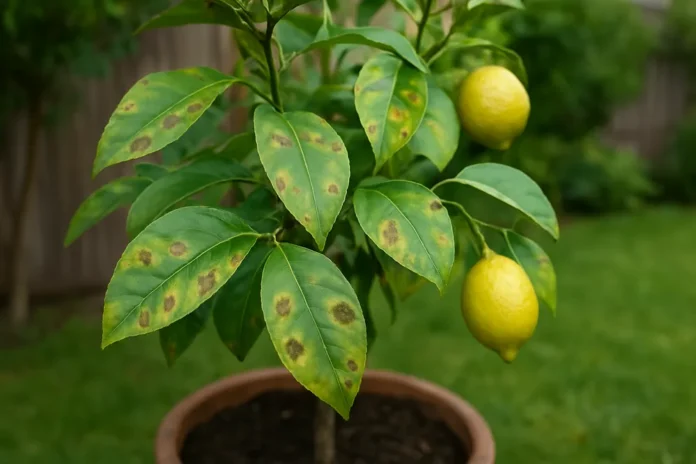
Brown spots on a lemon tree are usually caused by fungal or bacterial leaf diseases, watering stress, pest feeding, sunburn, or a nutrient imbalance. The exact cause often shows up in the size, color, and location of the spots.
Seeing brown spots on a lemon tree can be frustrating because the damage often seems to appear all at once. In my experience, though, brown spotting is rarely random. Lemon trees tend to show stress in very visible ways, and the pattern on the leaves, fruit, and even stems usually tells you whether you are dealing with disease, watering problems, insects, or weather injury.
Sometimes the issue is mostly cosmetic, especially when a few older leaves develop small dry specks. Other times, brown spots on lemon leaves are an early warning that the tree is under enough stress to drop foliage, lose blossoms, or produce poor fruit. The key is to look beyond the color alone and pay attention to where the spots start, how fast they spread, and what the rest of the tree looks like.
What Brown Spots Usually Mean on a Lemon Tree
Brown spots are a symptom, not a single diagnosis. On lemon trees, they commonly come from fungal leaf spot diseases, bacterial infections, inconsistent watering, salt buildup, sunscald, pest feeding, or nutrient imbalances. The tree reacts by killing small patches of tissue, which show up as tan, dark brown, or almost black lesions.
A few clues help narrow it down quickly. Spots with yellow halos often suggest disease. Crisp brown patches on the most exposed leaves point more toward sun or heat scorch. Fine stippling that turns bronze or brown can come from mites or other sap-feeding pests. If the spotting is paired with leaf drop and curling, root stress from watering problems is high on the list.
- Small round spots scattered across leaves often suggest fungal or bacterial leaf spot
- Large irregular dry patches on sun-facing leaves often mean sunburn or heat stress
- Brown edges or tips can point to salt injury, drought stress, or root stress
- Spots with sticky residue nearby often appear with sap-feeding insects like scale or aphids
- Brown blemishes on fruit can come from disease, sunscald, or physical injury
When I inspect a lemon tree, I look at new growth first. If the newest leaves are clean but older leaves are spotted, the problem is often past stress or a manageable leaf disease. If fresh growth is already emerging damaged, I start thinking about an active pest problem, ongoing root stress, or a continuing infection.
Leaf Spot Diseases That Cause Brown Spotting
Fungal Leaf Spot
Several fungal problems can mark lemon leaves with brown or dark lesions, especially in warm, humid conditions or when the foliage stays wet for long periods. The spots may begin as tiny dark dots, then enlarge into round or irregular patches. Some develop a yellow ring around them. If the infection worsens, leaves can yellow and drop early.
Fungal spotting is especially common on dense trees with poor airflow or on container lemons that are watered overhead late in the day. Fallen infected leaves can also keep the problem cycling. The tree may survive just fine, but repeated defoliation weakens it over time and reduces fruiting.
Citrus Canker and Other Bacterial Problems
In some regions, bacterial issues such as citrus canker can create raised corky lesions with brown centers and yellow halos on leaves, stems, and fruit. This kind of spotting tends to look more sharply defined than simple stress damage. Infected fruit may show rough blemishes that make it unattractive, even if the inside remains usable.
Because bacterial diseases can be regulated or serious depending on where you live, it is worth checking local extension guidance if the spotting looks raised, haloed, and widespread. A home gardener should be cautious about moving infected citrus plants around or pruning through wet foliage.
- Disease spots are often circular or clearly outlined
- Yellow halos around brown lesions are a common clue
- Spots may appear on leaves, twigs, and fruit at the same time
- Crowded canopies and wet leaves make spread more likely
Watering Problems and Root Stress
One of the most common reasons a home lemon tree develops brown spotting is inconsistent moisture. Citrus likes deep watering followed by some drying near the surface, not constant sogginess and not repeated bone-dry swings. When roots are stressed, leaves may develop brown tips, dry margins, scattered necrotic spots, curling, and drop.
Overwatering is especially tricky because it can mimic underwatering. A waterlogged root zone deprives roots of oxygen, and damaged roots cannot take up water properly. The result can be brown patches, yellowing, wilt, and leaf loss even though the soil feels wet. In containers, poor drainage, oversized pots, and saucers that hold runoff are common contributors.
Underwatering usually shows up as dry, crisp damage, especially along the edges and tips of leaves. During hot weather, a potted lemon can move from fine to stressed very quickly. Fruiting trees are even more sensitive because the combination of heat and fruit load increases water demand.
If I suspect watering stress, I avoid making several changes at once. Lemon trees respond slowly, so the clearest sign of success is healthy new growth, not whether old spotted leaves suddenly improve.
- Wet soil plus yellowing and brown blotches often points to overwatering or root rot stress
- Dry soil plus crisp edges and curling often points to underwatering
- Container trees dry faster than in-ground trees, especially in terracotta or fabric pots
- Roots packed tightly in a pot can make watering less effective and more uneven
Pests That Leave Spots, Scarring, and Bronzing
Brown spots are not always disease. Sap-feeding pests can damage leaf tissue and create stippling, bronzing, specks, or patches that later turn brown. Spider mites are a frequent culprit in hot, dry conditions, especially on container citrus kept on patios or near heat-reflective walls. Their damage often starts as fine pale speckling before leaves take on a dull, bronzed look.
Scale insects, aphids, and thrips can also stress foliage. Scale may be easier to notice by the bumps on stems or leaf undersides and the sticky honeydew they leave behind. Sooty mold can grow on that residue, darkening the surface and making the tree look diseased even when the original issue is insect feeding.
How Pest Spotting Tends to Look
- Very fine yellow or pale dots that turn brown or bronze often suggest mites
- Distorted young leaves can point to thrips, aphids, or leaf miners
- Sticky leaves with dark film often indicate sap-feeding insects and sooty mold
- Damage concentrated on leaf undersides often points to insects rather than sunburn
Pest damage often appears unevenly at first. One branch may look rough while the rest of the tree seems normal. That patchy pattern is a useful clue, especially if the tree is otherwise growing actively.
Sunburn, Heat Stress, and Weather Damage
Lemon trees love sun, but leaves can still burn under extreme conditions. A tree that was recently moved outdoors, newly pruned, or exposed after shade loss can develop tan to brown dry patches where the sun hits hardest. The lesions are often larger and more irregular than disease spots, and they usually appear on the outer canopy rather than deep inside the tree.
Heat stress can also magnify minor water problems. On very hot days, leaves may fold slightly, scorch at the edges, or show brittle brown areas after a sudden dry spell. Fruit can develop sunscald too, with discolored, leathery patches on the exposed side.
Cold damage is another possibility in borderline citrus climates. Chilled tissue may first look water-soaked or dull, then turn brown as it dies back. If a cold snap was followed by spotting and leaf drop, weather injury is worth considering before assuming disease.
I see a lot of gardeners blame fungus when the real problem is sudden exposure. If the spots are mostly on the outer, brightest side of the tree and the inner leaves look clean, I strongly suspect sun or heat injury before I suspect infection.
Nutrient Imbalance and Salt Buildup
Classic nutrient deficiencies in citrus often cause yellowing first, but severe or prolonged imbalances can lead to brown spotting or dead areas. Potassium deficiency may show as yellowing near the leaf edges followed by scorched-looking margins. Magnesium issues tend to create patterned yellowing, while multiple deficiencies together can leave foliage mottled and weak.
Salt buildup from fertilizer or hard water is another common container lemon problem. Excess salts draw moisture away from roots and can burn leaf edges and tips, creating brown necrotic tissue that looks a lot like drought damage. If you fertilize regularly and a white crust forms on the soil or pot rim, salt injury becomes much more likely.
- Brown tips and margins after frequent feeding can point to fertilizer burn
- White crust on soil or container edges suggests salt accumulation
- Weak pale growth plus spotting may indicate poor nutrient uptake from root stress
- High soil pH can lock up nutrients even when fertilizer is present
Nutrient-related spotting usually develops more gradually than disease. The tree may look generally off-color, less vigorous, or sparse before clearly defined brown damage shows up.
How to Tell Which Cause Is Most Likely
The fastest way to diagnose brown spots is to combine pattern, placement, and recent conditions. Start by asking whether the spots are crisp or soft-looking, whether they are on old leaves or new growth, and whether the tree recently went through rain, heat, repotting, pruning, or a watering change.
- Look at the newest leaves. Clean new growth suggests an older stress event, while damaged new growth suggests an active issue.
- Check both leaf surfaces. Pests often cluster on the undersides, while sunburn usually favors exposed upper surfaces.
- Notice the shape of the spots. Round lesions with halos often point to disease, while irregular scorched areas suggest weather or watering stress.
- Inspect the soil and roots if possible. Sour-smelling, constantly wet soil raises concern for overwatering and root trouble.
- Look at fruit and stems too. If similar lesions appear there, disease becomes more likely than simple drought stress.
If the tree is in a pot, do not underestimate root conditions. A lemon with compacted soil, circling roots, or poor drainage can show leaf symptoms that mimic almost everything else. Many above-ground problems start below the soil line.
What to Do About Brown Spots on a Lemon Tree
Remove the Stress That Is Still Happening
Old spots do not heal, so focus on stopping new damage. If watering has been erratic, correct that first. If the foliage stays wet late into the evening, change your watering method. If the tree was recently moved into stronger sun, give it time to adjust and protect it from the harshest afternoon exposure when possible.
Prune and Clean Up when Needed
Remove badly infected or heavily damaged leaves if the tree has enough healthy foliage left to keep growing well. Also clean up fallen leaves around the base, especially if fungal spotting is suspected. Use clean pruners and avoid heavy pruning during extreme heat.
Treat Pests or Disease Appropriately
If insects are clearly present, target them directly rather than guessing. Horticultural oil, insecticidal soap, or a strong rinse may help with common soft-bodied pests, while serious or recurring issues may need a more specific approach. For persistent fungal problems, improving airflow and reducing leaf wetness are often just as important as any spray.
Adjust Feeding Carefully
Use a citrus-appropriate fertilizer on a reasonable schedule, but avoid the temptation to overfeed a stressed tree. If salt buildup is likely in a container, flushing the pot thoroughly with water can help remove excess salts, provided the container drains freely.
- Water deeply, then let the upper soil dry slightly before watering again
- Keep mulch a few inches away from the trunk to avoid excess moisture at the base
- Improve airflow by lightly thinning crowded growth when needed
- Avoid wetting the foliage late in the day
- Monitor new leaves for improvement over the next few weeks
When Brown Spots Are Serious Enough to Worry About
A few brown spots on older leaves are not always an emergency. Lemon trees routinely shed some aging foliage, and minor cosmetic spotting can happen after weather swings. The bigger concern is when spotting spreads quickly, affects lots of new growth, appears on fruit and stems, or is accompanied by major leaf drop and overall decline.
You should pay closer attention if the tree shows dieback, trunk lesions, persistent wilting despite moist soil, or a rapid collapse in vigor. Those signs suggest a more systemic problem such as root disease, severe infection, or serious environmental stress.
- Rapidly increasing spots across much of the canopy
- Raised or corky lesions on leaves, stems, and fruit
- Heavy leaf drop combined with soggy soil or foul root odor
- Branch dieback or cracking tissue
- Repeated damage to each flush of new growth
If that describes your tree, local extension services or a reputable nursery can be very helpful, especially in regions where citrus diseases are monitored closely.
How to Prevent Brown Spots From Returning
Healthy lemon trees are much less likely to develop chronic spotting. Prevention usually comes down to keeping the tree growing steadily instead of bouncing between stress and recovery. Citrus responds best to consistency.
- Plant or place the tree where it gets strong light with some protection from extreme reflected heat
- Use a fast-draining citrus mix in containers
- Water thoroughly but do not leave roots sitting in water
- Feed regularly during the active growing season with a citrus fertilizer
- Inspect leaf undersides often for mites, scale, and other pests
- Remove fallen diseased leaves and keep the canopy from becoming too crowded
- Acclimate indoor or sheltered trees gradually when moving them into stronger sun
In my garden, the trees that stay cleanest are the ones with the most even care. They are not pampered, but they are not yo-yoing between drought, overwatering, and sudden environmental changes either.
FAQ
Will Brown Spots on Lemon Leaves Go Away?
No. Damaged leaf tissue does not turn green again. What you want to see is healthy new growth without fresh spotting.
Should I Cut Off Spotted Lemon Leaves?
You can remove badly damaged or clearly infected leaves, especially if they are dropping or crowding the canopy. Do not strip too many leaves at once, because the tree still needs foliage to recover.
Can Overwatering Cause Brown Spots on a Lemon Tree?
Yes. Overwatering stresses roots and can lead to brown blotches, yellowing, wilting, and leaf drop. Wet soil for long periods is a major warning sign.
Can Underwatering Cause Brown Spots Too?
Yes. Drought stress often causes crisp brown tips, edges, and dry patches, especially during hot weather or on potted lemon trees.
Are Brown Spots on Lemon Fruit Safe to Ignore?
Minor superficial blemishes may only affect appearance, but spreading, sunken, or rough lesions can signal disease or sunscald. If fruit spotting is widespread, inspect the leaves and stems too.
Do I Need a Fungicide for Brown Spots on My Lemon Tree?
Not always. Many mild leaf spot problems improve when airflow, watering, and sanitation improve. Fungicides are most useful when disease is confirmed or the spotting keeps returning under favorable conditions.
Why Does My Potted Lemon Tree Get Brown Spots More Often than One in the Ground?
Container trees are more vulnerable to root stress, salt buildup, temperature swings, and uneven watering. Those stresses often show up first as leaf spotting or browning.
Want the right fix faster? Read our citrus care guide and treatment picks for lemon tree pests, leaf spot, fertilizers, and watering tools that actually help stressed trees recover.
