

Note: This article contains affiliate links. If you click on these links and make a purchase, I may earn a small commission at no extra cost to you. This helps support my research and content. Read my full affiliate disclosure here.
If you have limited outdoor space but want to grow earlier and later in the season, a small wooden greenhouse is a practical solution. A compact timber greenhouse gives you the warmth, wind protection, and humidity control seedlings need without claiming the whole yard. This guide covers six shortlisted compact wooden greenhouse options that suit patios, small yards, and balcony gardens. We evaluated models for build durability, ventilation and airflow control, glazing performance, and how easy they are to assemble and maintain. Read on to find which features matter most for tight spaces and different growing goals.
Top Picks at a Glance
| Best Overall The best all-around choice for most situations | HAPPYGRILL Portable Wood Mini Greenhouse with Openable Roof and Double Shelves |  |
| Best Quality Built to a higher standard if you want something more solid | GRAFFY Wooden Cold Frame Greenhouse with 3 Adjustable Shelves |  |
| Best Value The sweet spot between price and what you get | Bamworld 3-Tier Mini Wooden Greenhouse with Grow Light |  |
| Best Budget The cheapest option that still gets the job done reliably | Bamworld 3-Tier Wooden Mini Greenhouse with Clear PE Cover |  |
| Highest Rated A top-rated pick with lots of positive feedback | Gardman Dove Gray Wooden Growhouse with UV-Treated Polycarbonate Glazing |  |
| Most Popular A crowd favorite that many people choose with confidence | GIANTEX Wooden Cold Frame Greenhouse with Flip-Top Roof and 2-Tier Shelves |  |
HAPPYGRILL Portable Wood Mini Greenhouse with Openable Roof and Double Shelves

| Cover Material | Polycarbonate (PC) |
|---|---|
| Frame Material | Wood |
| Number of Doors | 2 |
| Number Of Vents | 1 |
| Indoor Outdoor Usage | Indoor, Outdoor |
This HAPPYGRILL mini greenhouse is a small, wood-framed cold frame designed for patios, balconies, or a protected garden corner. It has a split, openable transparent roof secured by manual bolts so you can vent seedlings on sunny days and close it against rain or cold. Two sliding doors and a single vent make access easy while helping maintain humidity, and the two internal shelves hold multiple trays or pots for seed starting and hardening off. The polycarbonate cover gives clearer visibility and better light transmission than thin plastic, and the wooden frame looks more finished next to outdoor furniture. Assembly is tool-free with detachable components so you can place it where needed or move it with the seasons. Limitations to note are the compact footprint, which restricts larger pots and taller plants, and the single vent means airflow is limited unless you open the roof or doors during warm weather.
Best for: Buyers who want a tidy, attractive small greenhouse to start seeds or protect young plants on a patio or balcony and who value ease of use and a finished wood look.
Less Ideal for: Not a good choice for growers who need space for large pots, tall plants, or full-season production in exposed, windy sites.
- Wood frame with polycarbonate cover offers a sturdy, attractive look compared with thin PE covers
- Openable split roof lets you vent plants easily while still providing weather protection
- Double shelves increase usable staging space for seed trays and small pots
- Sliding double doors provide convenient access without needing extra clearance in front
- Compact interior limits use to seed trays and small pots rather than larger containers or tall seedlings
- Only one built-in vent so passive airflow can be limited in hot conditions
Verdict: A compact, attractive wooden mini greenhouse that makes seed starting and protecting small plants easy while adding a finished look to small outdoor spaces.
GRAFFY Wooden Cold Frame Greenhouse with 3 Adjustable Shelves

| Cover Material | Polycarbonate (PC) |
|---|---|
| Frame Material | Wood |
| Number of Doors | 4 |
| Weight Capacity | Minimum weight: 33 pounds |
This compact wooden cold frame is designed to give hobby gardeners a durable, light-transmitting shelter for seedlings, herbs, and small potted plants. The solid natural fir frame combined with translucent polycarbonate panels traps heat while letting in diffuse light, so it extends the growing season and protects plants from wind and light frost. The unit uses three removable, adjustable shelves to organize plants by size and stage, and a flip-top roof plus hinged doors provide easy access and ventilation. Practical details include an angled roof for drainage and side support rods to prop doors open for airflow. It assembles quickly and is light enough to be repositioned for sun or shade. Limitations to expect are modest capacity and weight limits per shelf, so it is best for small pots and seed trays rather than heavy planters, and the natural wood will need periodic finishing if left outdoors to resist weathering.
Best for: Gardeners who want a compact, performance-focused shelter to start seedlings, overwinter small plants, or stage potted herbs while prioritizing light transmission and heat retention.
Less Ideal for: People who need large-capacity or heavy-duty greenhouse space for big planters or commercial propagation should choose a larger or metal/polycarbonate greenhouse.
- Solid fir wood frame offers a sturdy, natural-looking structure
- Polycarbonate panels provide good light transmission and heat retention
- Adjustable three-tier shelves maximize usable growing space for seedlings and small pots
- Flip-top roof and hinged doors allow easy access and adjustable ventilation
- Angled roof and drainage design reduce water buildup
- Small footprint limits number and size of plants that can be grown inside
- Wood frame requires occasional sealing or maintenance if used outdoors
Verdict: Buy this if you want a compact, well-ventilated wooden cold frame that boosts light and heat for seedlings while keeping a small footprint.
Bamworld 3-Tier Mini Wooden Greenhouse with Grow Light

| Cover Material | Polyethylene (PE) |
|---|---|
| Frame Material | Wood |
| Shelves | 3 tiers |
| Model Number | 3floors-GL |
This Bamworld 3-tier mini greenhouse combines a eucalyptus wood frame with a polyethylene cover and an integrated grow light to create a compact, all-in-one seedling station. It is typically used on patios, balconies, or indoors to start seeds, keep herbs and succulents protected, or extend the growing season for small plants. The wooden frame and three-way connectors are designed to improve stability compared with basic metal frames, while the shelving supports heavier trays and pots. The built-in light offers a 3/6/12 hour timer and nine brightness levels, which makes it easy to tailor light schedules for different stages of growth without separate fixtures. Practical benefits include portability, organized vertical shelving, and a controlled light schedule for consistent starts. Limitations are the PE cover and wood exposed to weather, which will need protection from prolonged moisture and UV to avoid rot and degradation, and the unit is best for small plants rather than large pots or fully grown vegetables.
Best for: Buyers who want an organized, compact greenhouse to start seedlings and grow small pots on a patio or balcony and who prioritize controlled lighting and a sturdier wooden frame over cheapest materials.
Less Ideal for: Gardeners needing a large walk-in greenhouse or those who plan to grow large vegetables or mature plants outdoors should look for a larger, weatherproof solution.
- Three stacked shelves increase growing space in a small footprint
- Integrated LED grow light with timer and nine brightness settings for easy scheduling
- Eucalyptus wood frame and custom connectors for improved rigidity over basic shelving
- Shelves rated to hold heavier trays and pots for seedlings and small plants
- PE cover and exposed wood require regular protection from UV and moisture to avoid wear
- Not suitable for large plants or full-size outdoor crops
Verdict: A space-saving wooden 3-tier greenhouse with built-in adjustable grow light that makes starting seedlings and growing small pots simple and tidy.
Bamworld 3-Tier Wooden Mini Greenhouse with Clear PE Cover

| Number of Doors | 1 |
|---|---|
| Indoor Outdoor Usage | Outdoor |
| Cover Material | Polyethylene (PE) |
| Frame Material | Wood |
This Bamworld 3-tier mini greenhouse is designed to give homeowners an inexpensive, portable shelter for seedlings, herbs, and small potted plants. The eucalyptus wood push-fit frame snaps together without tools and supports three shelves with about 15.8 inches of clearance each, so standard nursery pots and seed trays fit comfortably. A 75% clear PE cover traps heat and blocks light frost while still transmitting most sunlight, and the roll-up zipper door makes watering and ventilation easy. It is light enough to move between a sunroom, balcony, or covered patio and can extend the growing season by several weeks for overwintering tender plants. Important limitations are its light PE cover and wood frame, which are intended for sheltered locations rather than full exposure to heavy rain or sustained strong winds, and the product does not include ground anchors. For a homeowner on a budget who wants a simple, quick-to-assemble growing shelter, this greenhouse delivers straightforward protection and convenience, but you should plan to anchor or shelter it in windy conditions and expect shorter-term outdoor durability compared with heavier-duty metal and PVC options.
Best for: Homeowners who want an affordable, easy-to-assemble mini greenhouse to start seeds, overwinter herbs, or protect small plants on a sheltered balcony, porch, or sunroom.
Less Ideal for: Gardeners who need a heavy-duty, long-term outdoor greenhouse for exposed sites or larger plants should choose a sturdier metal or polycarbonate model instead.
- Tool-free push-fit wooden frame for quick 10–20 minute assembly
- Three shelves with standard nursery pot clearance for seed starting and small plants
- Clear PE cover transmits 75% of sunlight while trapping heat for frost protection
- Lightweight and portable for use on balconies, porches, or moving indoors
- PE cover and wooden frame are not suited for sustained heavy rain or strong winds
- No included anchors or ground hardware for securing in exposed locations
Verdict: An inexpensive, easy-to-assemble mini greenhouse that gives budget-conscious homeowners a simple way to start seeds and protect small plants in sheltered outdoor or indoor spots.
Gardman Dove Gray Wooden Growhouse with UV-Treated Polycarbonate Glazing

| Cover Material | Polycarbonate (PC) |
|---|---|
| Frame Material | Wood |
| Number of Doors | 2 |
| Indoor Outdoor Usage | Indoor, Outdoor |
The Gardman wooden growhouse is a small, reliable enclosure for starting seeds, hardening off seedlings, and sheltering young plants on a patio, balcony, or small garden. Its solid wood frame and 5 mm UV-treated polycarbonate glazing provide weather-resistant protection while letting in diffused light. Two removable, height-adjustable wooden shelves let you organize plants by size and move trays in and out without crowding, and the roof panels open and lock at any angle to give quick ventilation control. Assembly is straightforward with simple tools, and the unit is light enough to be repositioned if needed. The growhouse is sized for limited spaces so it will not replace a full greenhouse for larger crops, and the wood finish will need occasional maintenance if left exposed to harsh weather. Also note the product carries a California Prop 65 warning about certain chemicals. For anyone seeking a compact, sturdy structure to extend the season or protect seedlings, this growhouse offers practical durability and easy airflow management.
Best for: Buyers who prioritize a dependable, well-built small greenhouse to start seeds, protect seedlings, or extend the season in a patio, balcony, or compact garden and who value easy ventilation control and simple assembly.
Less Ideal for: Gardeners who need a large-capacity greenhouse for mature vegetables or year-round production should consider larger metal or polycarbonate greenhouse models instead.
- UV-treated 5 mm polycarbonate glazing provides durable, weather-resistant light transmission
- Solid wooden frame offers sturdy support while remaining movable for small spaces
- Two removable and height-adjustable shelves accommodate different plant sizes
- Roof panels with adjustable ventilation let you control airflow and temperature
- Wood frame will require periodic maintenance if exposed to the elements
- Compact footprint limits how many or how large plants you can grow inside
Verdict: A compact, sturdy wooden growhouse that gives reliable protection and flexible ventilation for seed starting and small-space gardening.
GIANTEX Wooden Cold Frame Greenhouse with Flip-Top Roof and 2-Tier Shelves
| Number of Doors | 2 |
|---|---|
| Indoor Outdoor Usage | Outdoor |
| Closure Type | Roll Up |
| Cover Material | Polycarbonate (PC) |
| Frame Material | Wood |
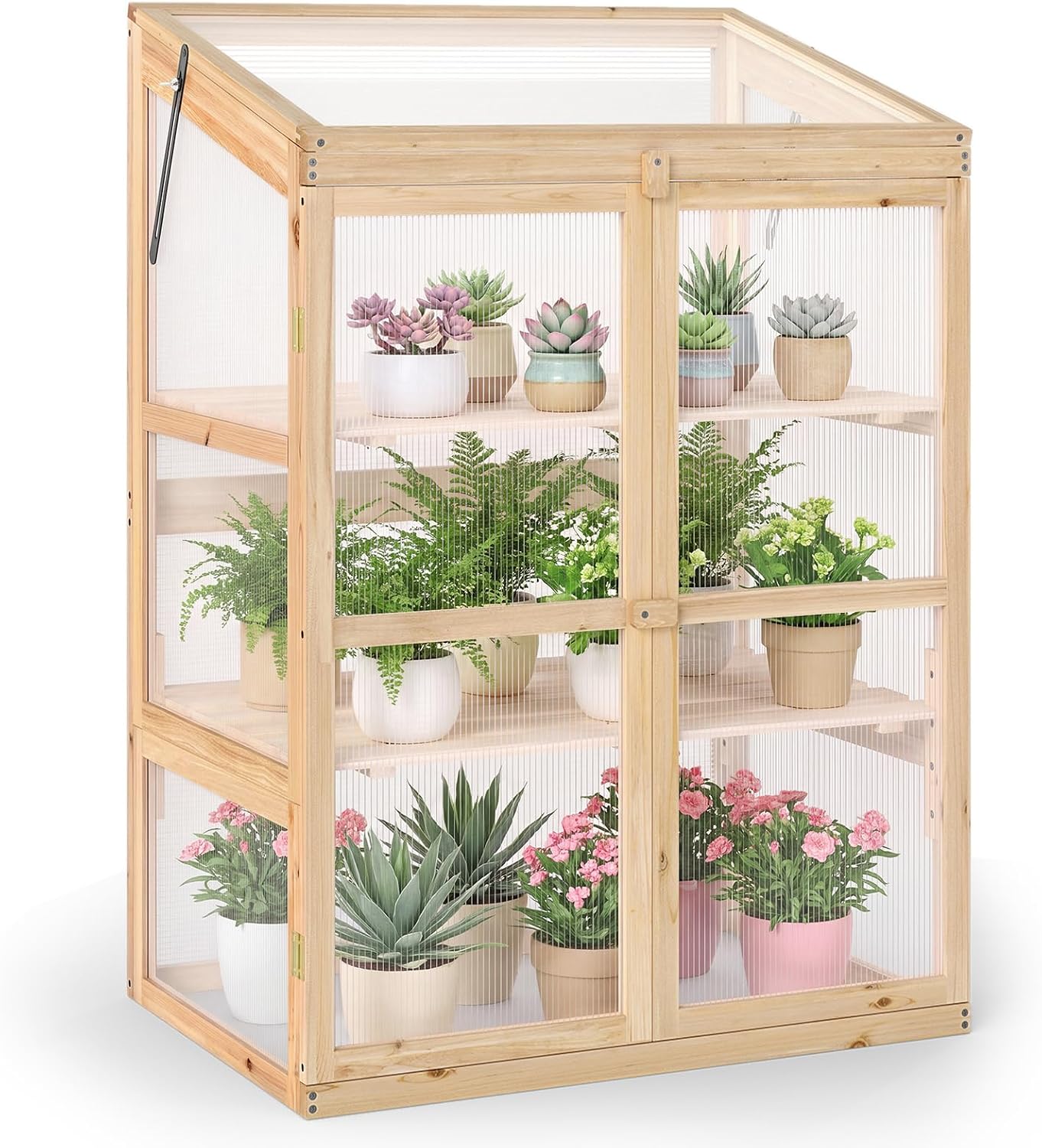
This GIANTEX wooden cold frame is a small outdoor greenhouse designed to extend the growing season for seedlings, herbs, and small potted plants. It combines a fir wood frame with transparent polycarbonate panels and hinged double doors so plants get good light while staying sheltered from wind, rain, and light frost. The flip-top roof with a support rod makes routine ventilation simple without fully exposing plants, and the two-tier slatted shelves let you organize trays or pots for better use of vertical space. Build quality looks thoughtful for the price point thanks to reinforced metal hinges and tightened screw connections, though assembly and anchoring are necessary to keep it steady in windy conditions. The unit is best for patios, balconies, and small garden corners where a compact footprint matters; it is not intended for large-scale propagation or heavy-duty overwintering of large shrubs. If you need a modest, attractive cold frame that balances sun exposure and protection on a budget, this model covers those basics well.
Best for: Gardeners looking to extend the season for seedlings or grow a modest collection of potted plants on a patio, balcony, or small backyard who want a natural-looking, budget-friendly wooden solution.
Less Ideal for: People who need a large greenhouse for bulk propagation, overwintering large plants, or heavy commercial use should consider larger or more heavy-duty structures.
- Fir wood frame blends durability with a natural look suitable for outdoor display
- Polycarbonate panels provide high light transmission while protecting plants from rain and light frost
- Flip-top roof with support rod enables easy ventilation control without disassembly
- Two-tier slatted shelves increase usable growing area in a compact footprint
- Compact size limits the number and size of plants that will fit comfortably
- Requires assembly and proper anchoring to remain stable in windy conditions
Verdict: A budget-friendly wooden cold frame that gives small-space gardeners reliable light, shelter, and easy ventilation to extend the growing season.
Choosing the Right Small Wooden Greenhouse: Key Factors to Consider
Frame Durability and Timber Treatment
A small wooden greenhouse sits exposed to rain, fluctuating temperatures, and sunlight all year. Untreated or low-grade timber will absorb moisture and can warp, crack, or develop rot within a few seasons. Look for kiln-dried wood, pressure treatment, or preservative finishes that are rated for outdoor use to extend service life.
The frame design also affects longevity. Thicker sections, reinforced joints, and metal joinery at high-stress points reduce the risk of loosening under wind or when snow loads occur. For small greenhouses that double as display features near patios, a stable frame prevents ongoing adjustment and keeps windows and doors aligned for consistent ventilation.
Glazing Type and Light Transmission
Glazing is the interface between plants and sunlight, so it directly affects growing conditions. Single-pane glass provides excellent light transmission but has minimal insulating value. Polycarbonate panels offer better insulation and impact resistance but can slightly diffuse light and may yellow over time if lower quality.
Consider how much direct sunlight your site receives and the crops you plan to grow. Seedlings and leafy greens tolerate some diffusion, while fruiting crops often appreciate stronger direct light. Also think about seasonal insulation needs: in early spring and late fall, glazing that holds warmth while allowing enough light is more useful in a compact greenhouse.
Ventilation and Airflow Management
Small greenhouses heat up quickly, which can stress young plants or create conditions for fungal disease. Adjustable vents, roof vents, and operable windows let you fine-tune temperature and humidity. Passive venting through ridge vents or louvres is low-maintenance, while manual or automatic vent openers give more precise control during hot spells.
Placement relative to prevailing wind matters too. A greenhouse with vents on multiple sides allows cross-ventilation even in tight yards where you cannot orient the building perfectly. Consider whether you need insect screening on vents and how quickly panels or vents can be opened during sudden temperature swings.
Size, Footprint, and Site Requirements
Although the category is small greenhouses, there is still variation in footprint and usable interior space. Measure the intended site, accounting for door swing and maintenance access around the structure. A narrow but tall greenhouse may save floor footprint while giving more growing racks, but it can be harder to reach plants at the back.
Foundations range from simple paving slabs to timber sleepers. For small installations, a level, compact base helps keep doors aligned and prevents moisture from pooling at the frame base. Also consider sun exposure through the day, nearby shade from trees or fences, and overhead clearance for rooflines.
Assembly Complexity and Tools Needed
Many small wooden greenhouses are offered as kits with pre-cut parts. Complexity varies from simple panel assembly to more involved builds requiring accurate squaring and sealant application. Think about whether you can source help for lifting panels and whether the kit includes clear instructions and hardware.
Required tools should be basic: drill, level, silicone sealant, and fasteners. Kits that use standardized hardware and pre-drilled holes reduce build time and the risk of misalignment. Consider the time you can commit to assembly because easier builds get you growing sooner.
Maintenance, Repair, and Upgradeability
Small greenhouses need periodic maintenance to remain effective. Timber frames may require re-coating with preservative or paint every few years, depending on local climate. Glazing panels can be scratched or damaged in storms, so check whether replacements are available and how easily panels are swapped.
Think about upgrade options such as adding shelving, automatic vent openers, or thermal curtains. Designs that allow access to internal fixings and use common fasteners make life easier when you need to replace a panel or adjust a hinge.
Best Placement in Small Yards and Patios
Place your small wooden greenhouse where it receives the most useful sunlight for your intended crops. For seed starting, morning sun and shelter from afternoon heat often work best. For overwintering container plants, more consistent southern exposure helps retain warmth through short winter days.
Also consider access for routine tasks. You will be watering, ventilating, and occasionally moving pots, so ensure there is comfortable access to both the inside and the immediate exterior. A flat, stable base avoids doors binding and keeps shelving level.
- Avoid low spots where water pools at the base
- Allow space for door swing and exterior maintenance
- Keep at least one side clear for cross-ventilation if possible
Seasonal Use and Crop Planning
A compact greenhouse is versatile: use it for early seed starting, advancing transplants, protecting tender potted plants, and extending harvests into autumn. Plan the interior layout by thinking vertically – stacked shelving increases capacity without expanding footprint.
Rotate crops and clear old soil to reduce pest and disease carryover between seasons. In winter, group containers together and use bubble wrap or thermal screens if extra insulation is needed for marginal hardiness.
- Start seeds on the warmest benches in spring
- Move frost-sensitive plants to the sheltered interior at the first cold snaps
- Empty and clean between major growing periods to limit pests
Ventilation Solutions for Small Structures
Combining roof vents, side windows, and a simple fan can prevent overheating on sunny days. Automatic vent openers that operate on temperature are useful when you cannot be present during peak heat. In very tight sites, adjustable side vents allow airflow even if roof vents are blocked by eaves or nearby trees.
Ensure screens or fine mesh are fitted to keep insects out when vents are open, especially if you are overwintering tender crops that attract pests.
- Use a small circulating fan for consistent airflow when temperatures are stable
- Install automatic vent openers for hands-off temperature control
- Add insect screening to vents if overwintering plants
Foundations and Anchoring Tips
A level foundation keeps doors and windows operating smoothly. For small greenhouses, a compact paved slab, treated timber base, or compacted gravel pad is usually sufficient. Avoid soft ground that will settle and misalign the frame over time.
Anchor the structure to the base to resist wind uplift. Anchoring systems vary from simple ground spikes to a bolted timber perimeter. Check local wind exposure and choose anchoring that suits that site.
- Level the site before assembly
- Provide drainage under the base to avoid standing water
- Use anchors suited to local wind conditions
Interior Layout and Shelving Ideas
Make the most of a small footprint by using narrow, sturdy shelving and mobile staging. Rolling benches or wheeled plant trolleys allow you to reconfigure space for different seasons. Keep heavier items low and use upper shelves for seedlings and lighter pots.
Consider removable shelving panels to allow larger containers in winter. Durable, rot-resistant shelving materials such as sealed wood or metal are better choices than untreated timber for long-term use.
- Stack vertically to maximize plants per square foot
- Use wheeled benches for flexible access
- Choose rot-resistant shelving materials
Climate Control Accessories
Beyond vents, small greenhouses benefit from a few simple accessories: a thermometer and hygrometer to monitor conditions, thermal curtains for night insulation, and shade cloth to prevent scorching in midsummer. A small thermostat-controlled heater can protect against sudden frosts for overwintering plants.
Solar-powered fans or low-voltage systems are convenient for sites without power nearby. When using electrical devices, ensure weatherproof routing of cables and stable mounting to prevent moisture ingress.
- Use a thermometer and hygrometer to track interior conditions
- Thermal curtains boost overnight insulation
- Solar fans help with ventilation where mains power is unavailable
How We Chose the Best Small Wooden Greenhouse
We shortlisted six small wooden greenhouses by focusing on features gardeners actually use in confined outdoor spaces. Key evaluation criteria included structural durability and timber treatment to ensure the frame resists rot and warping in humid garden conditions. We judged glazing and insulation performance to assess heat retention and light transmission for seed starting and overwintering. Ventilation and airflow control were evaluated because small structures can overheat or stagnate; we looked for adjustable vents, windows, or louvre options. Ease of assembly and available instructions matter for tight-space installations, so we prioritized greenhouses with clear hardware layouts and manageable panel sizes. Practical maintenance needs such as replaceable glazing, accessible cleaning, and finish longevity were also considered. We excluded large hobby or commercial structures and any designs that require extensive foundations or permanent site work, since the goal was compact, backyard-friendly greenhouses. Our picks focus on options that perform well in small yards, patios, or balcony-adjacent placements and that balance seasonal heat management with everyday usability.
FAQ
Will a small wooden greenhouse keep plants safe from frost?
Often it will provide several degrees of frost protection by trapping solar heat during the day and reducing wind chill at night. For hard freezes, add thermal mass, insulated covers, or a small heater because the compact volume still loses heat quickly.
How much sunlight does a small wooden greenhouse need?
It depends on crops, but most seedlings and leafy crops do well with full to partial sun. Ensure the chosen site provides several hours of direct morning or midday sun and avoid heavy shade from buildings or trees.
Do glazing panels need frequent replacement?
Not usually. Quality glass or polycarbonate panels last many seasons, but inspect for scratches, cracks, or seal failure annually. Polycarbonate can yellow over long periods in harsh sun if not UV-stabilized.
Can I install a small greenhouse on a balcony or deck?
Yes, if the deck can support the load and you have sufficient clearance for roofing and ventilation. Use a lightweight base and avoid blocking drainage. Check local regulations for structural or safety requirements before installing.
How much maintenance does a wooden greenhouse need?
Routine maintenance includes re-coating exposed timber every few years, clearing gutters and vents, and checking seals around glazing. Promptly replace or repair damaged panels to prevent moisture ingress and wood decay.
What foundation is best for a compact wooden greenhouse?
A level paved slab or compacted gravel base with a treated timber perimeter is common for small structures. The foundation should provide good drainage and a firm, level surface to keep doors aligned and prevent frame distortion.
Final Verdict
For a small wooden greenhouse, prioritize a durable, well-treated frame and glazing that balances light with insulation. Ventilation control and a level foundation greatly affect real-world performance in tight yards. Consider how much assembly and maintenance you can manage, and plan the interior layout to maximize vertical space. Choosing the right combination of timber treatment, glazing type, and venting will give you a compact greenhouse that extends the season and protects plants without overwhelming a small outdoor area. Focus on the tradeoffs between insulation and light, ease of assembly, and long-term upkeep to pick the best fit for your site.
