

Note: This article contains affiliate links. If you click on these links and make a purchase, I may earn a small commission at no extra cost to you. This helps support my research and content. Read my full affiliate disclosure here.
When you work on small wood projects – trim, picture frames, trim repairs, or simple hobby builds – the right hand saw makes those quick cuts less frustrating and more accurate. Small-work hand saws behave differently than full-size carpentry saws: they need finer teeth, easier control, and a grip that lets you guide short strokes without tiring your hand. This guide covers our shortlisted top hand saws for small wood projects and explains the practical tradeoffs of tooth pattern, blade length, and handle style. We evaluated candidates across control, cut quality, and ease of use so you can choose a saw that fits tight spaces, thin stock, and delicate joinery. Read on for the factors that matter when picking a saw and how each feature affects real work at the bench or on the job.
Top Picks at a Glance
| Best Overall The best all-around choice for most situations | Frocopo 6-inch Double-Edge Pull Hand Saw with Wooden Handle | 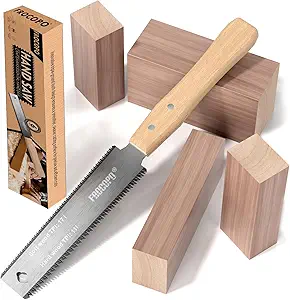 |
| Best Quality Built to a higher standard if you want something more solid | Gyokucho Razorsaw Double‑Edge Flush Cutting Saw, 125 mm (Model 1151) |  |
| Best Value The sweet spot between price and what you get | WORKPRO 6" Japanese Pull Saw with Dual-Edged SK5 Blade and Beech Handle |  |
| Best Budget The cheapest option that still gets the job done reliably | NVKLBEA 6" Japanese Ryoba Pull Saw with Dual-Edge SK5 Blade and Wood Handle |  |
| Highest Rated A top-rated pick with lots of positive feedback | LUCKDANO Hand Saw Kit with Rosewood Hex Handle and 5 Detachable Blades |  |
| Most Popular A crowd favorite that many people choose with confidence | RUITOOL 6" Ryoba Japanese Double-Edge Pull Saw |  |
| Best Seller A high-volume bestseller chosen again and again | TOOLAN 8-in-1 Multi-Blade Hand Saw with Quick-Change Handle |  |
Frocopo 6-inch Double-Edge Pull Hand Saw with Wooden Handle

| Blade Material | SK5 Steel |
|---|---|
| Blade Length | 6 inches |
| Number of Teeth | 17 |
| Power Source | Hand Powered |
| Handle Material | Wood |
This Frocopo 6-inch hand saw is a small pull-style saw built for accurate finishing and quick trim work. The thin, flexible SK5 steel blade is double-edged—11 TPI on one side for faster cuts and 17 TPI on the other for finer finishes—so you can switch between speed and precision without changing tools. Its triple-ground, hardened teeth help produce cleaner cuts, and the lightweight wooden handle makes the saw comfortable for extended use when working on small projects, flush cuts, or detail carpentry. The compact blade length and flexibility make it especially useful for flush-cutting trim, model making, and cutting engineered wood in tight spots. Limitations are its short 6-inch blade and small size, which are not suited to ripping large boards or heavy demolition; larger saws will cut faster on big stock. For shoppers focused on straightforward, affordable finishing work, this saw offers sharp teeth, an ergonomic grip, and versatility between coarse and fine cutting in a single, pocketable tool.
Best for: Practical buyers who need an affordable, precise hand saw for trim, small woodworking projects, and flush cuts and who prioritize value and versatility in a compact tool.
Less Ideal for: Tradespeople who regularly cut large lumber or need a saw for heavy demolition should choose a larger handsaw or power tool instead.
- Double-edged SK5 steel blade provides both coarse and fine cutting options
- Triple-ground hardened teeth for cleaner, more accurate cuts
- Lightweight wooden handle designed for comfortable, fatigue-free use
- Compact 6-inch blade fits tight spaces and enables flush cuts
- Short blade length limits efficiency on large or long boards
- Not intended for heavy-duty ripping or pruning tasks
Verdict: A budget-friendly, compact pull saw that gives you both coarse and fine cutting in one lightweight tool for precise trim and small woodworking tasks.
Gyokucho Razorsaw Double‑Edge Flush Cutting Saw, 125 mm (Model 1151)

| Blade Material | Stainless Steel |
|---|---|
| Handle Material | Beechwood |
| Number of Teeth (one edge) | 32 tpi |
| Number of Teeth (other edge) | 21 tpi |
| Other Special Features | Dual‑edge blade, Impulse hardened teeth |
The Gyokucho Razorsaw 1151 is a compact flush‑cut saw built for precision work on small wood projects. Its thin, flexible stainless steel blade has two tooth patterns: a fine 32 tpi edge for hardwoods and a coarser 21 tpi edge for softwoods, allowing you to switch between clean, hairline cuts and slightly faster cuts without changing tools. The impulse‑hardened teeth extend wear so the blade keeps a sharp edge through repeated use. The short blade and slim profile make it excellent for cutting flush to surfaces, trimming dowels, tenons, and small trim in tight spots; the beechwood handle is riveted for a solid feel and good control. Because the blade is very thin it excels at squeak‑free, accurate cuts but requires a steady hand and is not intended for heavy stock removal. It is compact enough for a toolbox or hobby bench and is best used by woodworkers who value finish quality and control over brute cutting speed.
Best for: Skilled hobbyists and performance‑focused woodworkers who prioritize extremely clean, precise flush cuts on small parts and joinery and who are comfortable working with a delicate blade.
Less Ideal for: People needing a general‑purpose saw for fast rough cutting or for work on large boards should choose a larger ripping or crosscut saw instead.
- Dual‑edge blade with 32 tpi and 21 tpi gives versatility for hardwoods and softwoods
- Thin, flexible 0.12" blade enables very clean flush and fine cuts in tight spaces
- Impulse hardened teeth increase edge life for longer use between resharpening or replacement
- Compact overall length and lightweight profile make it easy to maneuver and store
- Thin blade is not suited for heavy stock removal or rough ripping
- Small blade length limits reach on larger workpieces
Verdict: Buy this saw if you want a compact, high‑precision tool for exceptionally clean flush and fine cuts on small woodworking projects.
WORKPRO 6" Japanese Pull Saw with Dual-Edged SK5 Blade and Beech Handle

| Blade Material | High Carbon Steel (SK5) |
|---|---|
| Number of Teeth | 60 (14 TPI/17 TPI sides) |
| Handle Material | Beechwood |
| Surface Recommendation | Wood |
The WORKPRO 6" Japanese pull saw is a compact hand saw aimed at fine woodworking and small projects. It has a dual-edge SK5 blade with 14 TPI on one side for rip cuts and 17 TPI on the other for cross cuts, so you can switch edges depending on the cut direction. The thin, flexible 0.6 mm blade and narrow head let you work in tight spaces and make flush or delicate cuts. The blade’s gold coating increases corrosion resistance and the triple-tooth geometry helps remove chips efficiently for cleaner cuts without frequent sharpening. The non-slip beechwood handle gives a firm, comfortable grip for controlled pulls. Practical buyers will appreciate the saw’s low weight and ergonomics for tasks like trim work, dovetails, and small furniture repairs. Limitations are that the short, thin blade is intended for light to medium wood only and is not suitable for heavy framing or prolonged rough cutting where a larger, more aggressive saw would be faster.
Best for: A buyer who prioritizes efficient, precise results on small woodworking and trim tasks and values a compact, easy-to-handle saw for workshop or home projects.
Less Ideal for: Woodworkers who need a general-purpose or heavy-framing saw for large boards or demolition work should choose a larger tooth-pattern handsaw or a power tool instead.
- Dual-edged blade (14 TPI and 17 TPI) covers both rip and cross cuts for versatile small-work tasks
- Flexible SK5 high-carbon steel blade with rust-resistant gold coating for cleaner cuts and longer blade life
- Narrow head and thin blade thickness allow precise work in tight spaces and flush cutting
- Non-slip beechwood handle provides comfortable, controlled grip during pull strokes
- Blade is thin and short so it is not suited for heavy-duty or prolonged rough cutting
- No protective sheath or additional accessories included
Verdict: Choose this compact Japanese pull saw when you want a precise, easy-to-control tool for fine woodworking and tight-space cuts.
NVKLBEA 6" Japanese Ryoba Pull Saw with Dual-Edge SK5 Blade and Wood Handle

| Blade Length | 6 inches |
|---|---|
| Blade Material | Chrome Vanadium Steel |
| Handle Material | Wood |
| Other Special Features of the Product | Double Edge |
This compact Japanese ryoba pull saw is built for small woodworking and trim jobs where control and a clean finish matter. The 6-inch SK5/manganese steel blade is thin and hardened for edge retention, and the dual-edge tooth pattern gives both fine crosscutting and more aggressive rip cutting without changing tools. Because it cuts on the pull stroke and has a thin kerf, the saw produces smooth, low-resistance cuts and reduces user fatigue on longer detail work. The solid beechwood handle is ergonomically shaped for a comfortable grip and good control for one- or two-handed use, though it lacks modern rubberized padding. The saw is lightweight and easy to maneuver for joinery, dowel trimming, and flush trim tasks, but the short blade limits reach and is not meant for large timbers or full-size construction framing. For a budget-oriented shop this saw offers professional-style cutting performance at a low entry cost, with the main compromise being blade length and a basic wooden handle rather than premium finishings.
Best for: Budget-minded hobbyists and DIYers who tackle small furniture repairs, trim, and joinery and want a capable, precise pull saw without spending much.
Less Ideal for: Professional carpenters or users who need long blades for framing, large boards, or heavy daily production work should choose a larger handsaw or specialized tool.
- Dual-edge blade provides both fine crosscuts and faster rip cuts without swapping tools
- SK5/manganese steel blade with induction hardening holds edge for extended use
- Thin kerf and pull-stroke design reduce effort and produce cleaner cuts
- Ergonomic solid beechwood handle offers comfortable control during detailed work
- 6-inch blade length limits reach and is unsuitable for cutting large stock
- Wood handle lacks cushioning found on higher-end saws
Verdict: A low-cost, compact Japanese ryoba saw that delivers precise rip and crosscuts for small woodworking projects.
LUCKDANO Hand Saw Kit with Rosewood Hex Handle and 5 Detachable Blades

| Blade Material | High Carbon Steel |
|---|---|
| Handle Material | Rosewood |
| Included Components | Hand Saw Handle, Saw Blades, Storage Box |
| Number of Items | 6 |
This LUCKDANO hand saw kit is built for precise small-wood projects where a stable, controllable cut matters. The kit includes a hex-shaped rosewood handle and a brass collet that locks blades firmly in place, so the connection feels solid and wobble-free during use. Five interchangeable high-carbon steel blades cover a range of cuts from fine detail work to coarser ripping, and the included storage box keeps blades organized between jobs. In practice the ergonomic hex handle gives a secure grip for push and pull strokes and helps limit hand fatigue during longer sessions. The blades are best suited to woodworking surfaces and deliver clean, accurate cuts when kept sharp. Limitations to expect are the manual setup for blade changes and the need to maintain blade sharpness and rust prevention yourself; this is a straightforward hand tool rather than a heavy-duty contractor saw. For hobbyists and small-shop users who value a dependable, no-frills saw set, this kit offers practical versatility and a reliable blade-to-handle connection.
Best for: Ideal for hobbyist woodworkers and small-shop users who prioritize a reliable, stable hand saw for detailed cutting and occasional larger cuts and value a tool that stays steady during use.
Less Ideal for: Not a great choice for contractors or users who need a heavy-duty full-size handsaw for prolonged, high-volume ripping or demolition work.
- Brass collet provides a stable, secure blade-to-handle connection that reduces wobble
- High carbon steel blades deliver precise, clean cuts when properly maintained
- Hex-shaped rosewood handle offers a comfortable, non-slip grip for control
- Five interchangeable blades suit both fine detail and coarser woodworking tasks
- Requires regular blade maintenance to retain sharpness and resist corrosion
- Not designed for heavy-duty or very large ripping tasks compared with full-size saws
Verdict: Buy this kit if you want a dependable, well-connected hand saw set that handles precise small woodworking jobs with consistent control.
RUITOOL 6" Ryoba Japanese Double-Edge Pull Saw

| Blade Material | SK5 steel |
|---|---|
| Blade Length | 6 inches |
| Number of Teeth | 14 & 17 TPI |
| Handle Material | Beechwood |
| Blade Thickness | 0.67mm |
This RUITOOL 6" Ryoba pull saw is built for precise small woodworking tasks like trim, flush cuts, dovetail work, and small rip or crosscuts. It uses a thin, flexible SK5 high-carbon steel blade that cuts on the pull stroke and comes with two tooth patterns: 17 TPI for finer cuts and 14 TPI for slightly faster cutting. The hardened three-edge tooth geometry and thin 0.67 mm blade make for fast, clean cuts and good chip removal, while the beechwood handle gives a traditional grip that is comfortable for short sessions. Because the blade is very thin and flexible it excels at finish work and tight spaces but is not intended for heavy stock removal or cutting very thick timbers. The compact overall length and lightweight construction make it easy to control for detailed joinery, but users who need heavier-duty or longer cuts will want a larger saw. For hobbyists and craftsmen focused on neat, accurate small projects this saw is a useful, reliable hand tool.
Best for: Woodworking hobbyists and small-project makers who prioritize clean, accurate finish cuts and control for trim, joinery, and detail work.
Less Ideal for: Contractors or users who need to rough-cut large boards, fast stock removal, or long rip cuts should choose a larger, heavier-duty saw.
- Thin SK5 high-carbon steel blade provides precise, low-friction pull cuts
- Double-edge design (14 and 17 TPI) covers both faster cuts and finer finish work
- Hardened three-edge teeth improve sharpness and wear resistance
- Compact, lightweight profile and beechwood handle for good control in tight spaces
- Blade size and thinness limit speed and effectiveness on large or very thick stock
- Traditional wood handle may feel less grippy in wet conditions compared with modern rubberized handles
Verdict: Choose this compact Ryoba pull saw when you need a precise, low-friction 6" hand saw for tidy finish cuts and detailed small woodworking projects.
TOOLAN 8-in-1 Multi-Blade Hand Saw with Quick-Change Handle

| Power Source | Manual |
|---|---|
| Blade Material | Alloy Steel |
| Included Components | 1 pcs handle, 8 pcs blade |
| Blade Length | 6 inches |
This TOOLAN 8-in-1 hand saw is a lightweight manual cutting tool that uses a single ergonomic handle and a set of interchangeable reciprocating blades to tackle a range of small workshop and home projects. You install blades into either a side or middle slot depending on blade length, then lock them with the built-in quick-change clamp that auto-secures the blade. The kit ships with eight blades made from alloy/HSS or bimetal suitable for drywall, wood, PVC and light metal tasks, plus a textured TPR-style grip to reduce hand fatigue during repeated cuts. For small wood projects it provides a compact, portable alternative to powered tools and lets you do plunge cuts, trim small boards, and cut openings in panels without setup. The main limitations are manual speed and effort compared with a power reciprocating saw and thinner blades are intended for light precision cuts rather than heavy structural ripping. Replacement blades are standard reciprocating types so you can restock locally if you use it frequently.
Best for: A cautious buyer who wants a simple, low-risk hand tool for occasional small wood and DIY jobs and values a tool that is easy to maintain and replace parts for.
Less Ideal for: Do not choose this if you regularly cut large timbers or need fast production cuts for heavy construction work; a powered reciprocating saw is more appropriate.
- Interchangeable quick-change blade system works with common reciprocating blades for easy replacement
- Includes eight blades covering drywall, wood, plastic and light metal cutting needs
- Ergonomic anti-slip handle reduces hand fatigue during manual cutting
- Compact and lightweight for toolbox storage and portable DIY use
- Manual operation is slower and more physically demanding than power saws
- Included thinner blades are for light, precise cuts and not for heavy ripping
Verdict: A portable, low-risk multi-blade hand saw that lets cautious DIYers handle a wide range of small cutting tasks without power tools.
Choosing the Right Hand Saw for Small Wood Projects: Key Factors to Consider
Tooth Geometry and Pitch
Tooth geometry and pitch determine how a saw bites into wood and how smooth the cut will be. For small wood projects you usually want finer teeth with a higher teeth-per-inch count to reduce tearout on thin stock and veneered panels. The rake and gullet size affect chip removal and whether the saw tends to bind on crosscuts or rips. Consider whether your work is mainly crosscutting, ripping small strips, or a mix; that will influence whether a finer crosscut pattern or a hybrid tooth pattern is best.
A saw with well-shaped teeth and consistent set will leave a cleaner edge, which matters when you are joining pieces or plan to glue and finish without heavy sanding.
Blade Length and Rigidity
Blade length affects stroke length and how much control you have in tight spaces. Shorter blades let you make accurate, short strokes and are less likely to flex when cutting small pieces. Rigidity matters because a blade that bends or twists will wander and create uneven cuts. Look for a plate thickness and tensioning that match the scale of your projects so the saw cuts straight without excessive effort.
If you frequently cut longer small parts, choose a blade that balances length and stiffness. For confined work like picture frames or trim under an overhang, a compact, rigid blade is usually preferable.
Handle Shape and Ergonomics
Handle design determines how comfortably you can guide the saw during repeated short cuts. A handle with a comfortable palm fit and sufficient finger clearance helps you maintain a steady line and reduces hand fatigue. The angle of the handle relative to the blade influences wrist position and control; a more ergonomic angle can make precision cuts easier when working at a bench or in awkward positions.
Materials matter too. A slightly textured or contoured grip improves purchase when your hands are sweaty or gloved. For hobbyists who spend long sessions at the bench, prioritize a handle that supports neutral wrist alignment and secure control.
Cut Finish and Splinter Prevention
Small wood projects often involve visible edges, so the cut finish is important. Tooth set, blade tension, and the presence of a thin-kerf or fine-tooth design all influence how much tearout you get on the exit face. Techniques like scoring the cut line or cutting on the waste side help, but choosing a saw designed to minimize splintering reduces prep work and sanding.
If you work with plywood, veneered boards, or finished stock, prioritize saws that deliver minimal chipping on face cuts and produce consistent, square edges for joinery.
Maintenance and Blade Serviceability
Consider how easy it is to maintain the saw: can the blade be removed, replaced, or resharpened? For frequent users, a blade that accepts resharpening or replacement extends the tool's life and keeps cut quality high. Some saws use replaceable blades with accessible fastening methods; others have pinned plates that are trickier to service.
Also factor in rust resistance and the ability to keep the set even across teeth. A tool that is easy to clean, store, and maintain will perform predictably over many small projects.
Best Tooth Patterns for Detail Work
Understanding tooth patterns helps you match a saw to the task. Crosscut teeth slice fibers to reduce tearout on face cuts, while rip teeth shear along the grain for faster material removal. For small projects, a fine crosscut or hybrid pattern usually gives the cleanest visible edge.
Use a higher TPI when working with thin stock, laminates, or veneered panels. When you need to remove small amounts of material quickly, a slightly coarser pattern helps, but expect more finishing work after the cut.
- Fine crosscut: cleaner edges on short, visible cuts
- Rip pattern: faster material removal on grain-aligned cuts
- Hybrid patterns: compromise between speed and finish
Practical Techniques for Cleaner Cuts
Technique is as important as tool choice. For fine work, clamp pieces securely and use short, steady strokes. Start with a shallow scoring pass to establish the line, then work to full depth once the kerf is guided.
Support the workpiece near the cut to prevent tearout on the exit face, and use a sacrificial backer board for veneered or thin panels. Keeping the blade aligned with your sightline and maintaining consistent pressure will improve accuracy more than relying on aggressive strokes.
- Score the cut line before full depth passes
- Clamp and support near the cut to prevent blowout
- Use a backer for thin or veneered stock
Choosing Between Fixed-Plate and Replaceable-Blade Saws
Fixed-plate saws often offer a stout, traditional feel and stable blade alignment, which can be beneficial for repeatable benchwork. Replaceable-blade saws provide convenience for users who want to swap tooth patterns or replace a worn blade without specialized sharpening.
Consider whether you prefer the simplicity and longevity of a fixed plate or the flexibility of replaceable blades. For occasional hobbyists, replaceable blades can be cost-effective. For frequent users, the ability to resharpen a quality plate may be more economical over time.
- Fixed-plate: durable alignment, often easier to tension
- Replaceable-blade: quick swaps and pattern changes
Care and Storage to Preserve Performance
Protect blades from moisture and impacts to maintain tooth geometry and plate tension. Wipe blades after use, apply a thin protective oil if storing in damp environments, and keep saws in a rack or sleeve to avoid dings and bends. Regularly inspect teeth for damage and address any bent teeth before they ruin the cut line.
For long-term storage, loosen tension on some adjustable saws if the design recommends it. Proper care reduces the need for early replacement or extensive resharpening and keeps your small-project work consistently accurate.
- Wipe and lightly oil blades after use in humid conditions
- Store in protective sleeves or racks to avoid damage
- Inspect teeth and straighten minor bends promptly
When to Use Specialty Small Saws
Some small saw types, such as veneer saws, flush-cut saws, and compact backsaws, are designed for specific tasks you will encounter in small wood projects. Veneer saws excel at thin overlay work and scoring, while flush-cut saws remove protruding dowels and tenons without marring adjacent surfaces. Compact backsaws give better control for fine joinery and miters.
Match the saw to the recurring tasks in your workflow rather than buying a specialty tool for one-off uses. If you frequently trim dowels or work with delicate edges, a specialty small saw can save time and reduce finishing work.
- Veneer saws: thin scoring and fine face cuts
- Flush-cut saws: trim protrusions without scratching
- Compact backsaws: precise joinery and miters
How We Chose the Best Hand Saw for Small Wood Projects
We selected hand saws based on criteria that reflect how these tools are used on small wood projects. Priority factors included tooth geometry and count because smaller cuts and fine trim demand appropriate pitch and rake to avoid tearout. Blade length and rigidity were assessed to ensure the saw can make short, controlled strokes without flexing or binding. Handle ergonomics and hand clearance were evaluated to reduce fatigue during repeated short cuts and to provide precise guidance. Cutting finish and splinter control were judged by tooth set and plate tension characteristics. Ease of maintenance and blade replacement were considered for users who prefer to resharpen or swap blades. Excluded were large-format carpentry saws and specialty powered tools that do not match the short-stroke technique typical in small projects. We focused on saws intended for manual use on thin stock and trim, and we favored designs that demonstrated consistent control and clean edges in everyday shop and site conditions.
FAQ
What tooth count should I choose for thin plywood and veneers?
Higher tooth counts are usually better for plywood and veneers because they reduce splintering on the face. Aim for a fine crosscut pattern with a higher TPI and consider using a backer board or scoring first for the cleanest results.
Can I sharpen a small hand saw myself?
Often you can resharpen a small hand saw with the right files and a steady hand, especially if the teeth are not severely damaged. Some users prefer to send plates to a sharpening service or replace blades when they are designed to be removable.
Is a thinner blade always better for small projects?
A thinner kerf reduces waste and can make pull strokes easier, but too thin a blade may flex and wander, harming accuracy. Choose a blade thickness that balances stiffness with minimal material removal for the sizes you commonly cut.
How do I avoid tearout on the exit face?
Support the exit face with a sacrificial backer board, clamp the workpiece firmly, and score the cut line first. Using a fine-tooth crosscut saw and steady control also helps reduce tearout.
Which handle styles work best for short-stroke cutting?
Comfortable pistol grips with good finger clearance or contoured handles that let your wrist stay neutral are best for short strokes. Avoid handles that force an awkward wrist angle or provide poor purchase during controlled cuts.
Final Verdict
For small wood projects, prioritize tooth geometry, blade rigidity, and handle ergonomics over sheer raw cutting speed. Those features most directly affect control, edge quality, and the amount of finishing required after a cut. Expect tradeoffs: finer teeth give cleaner finishes but remove material more slowly, and shorter blades improve control but limit stroke length. Choose the saw that matches the scale and materials of your regular work. Focus on a comfortable handle and a blade that stays rigid during short strokes, and plan to maintain teeth and blade tension to keep cuts consistent over time. That approach will yield the most reliable, shop-ready results for small wood tasks.
