

Note: This article contains affiliate links. If you click on these links and make a purchase, I may earn a small commission at no extra cost to you. This helps support my research and content. Read my full affiliate disclosure here.
Picking the right potting mix for lettuce matters more than most home gardeners expect. Lettuce needs a light, moisture-stable medium that lets roots breathe while supplying steady nutrients for quick, tender growth. The wrong mix can lead to slow germination, bitter leaves, or fragile roots that bolt early. This guide highlights our shortlist of the best potting mixes for lettuce across common growing situations-containers, shallow trays, and small raised beds. We evaluated mixes using real-garden priorities like drainage, nutrient delivery, and seedling support so you can choose the best option for your lettuce crop.
Top Picks at a Glance
| Best Overall The best all-around choice for most situations | Espoma Organic Potting Mix, 16-Quart |  |
| Best Quality Built to a higher standard if you want something more solid | Burpee Premium Organic Potting Mix with Coco Coir (9 Quart) |  |
| Best Value The sweet spot between price and what you get | Miracle-Gro Potting Mix, 16 qt. (2-Pack) |  |
| Best Budget The cheapest option that still gets the job done reliably | Back to the Roots 3-in-1 Seed Starting Mix, 6 Quart, Organic Peat-Free |  |
| Highest Rated A top-rated pick with lots of positive feedback | FoxFarm Ocean Forest Potting Soil, 12 qt (with 2 Plant Tags) |  |
| Most Popular A crowd favorite that many people choose with confidence | Miracle-Gro Indoor Potting Mix for All Plants, 6 qt., 2-Pack |  |
| Best Seller A high-volume bestseller chosen again and again | Back to the Roots Organic Indoor Potting Mix, 6 Quart |  |
Espoma Organic Potting Mix, 16-Quart
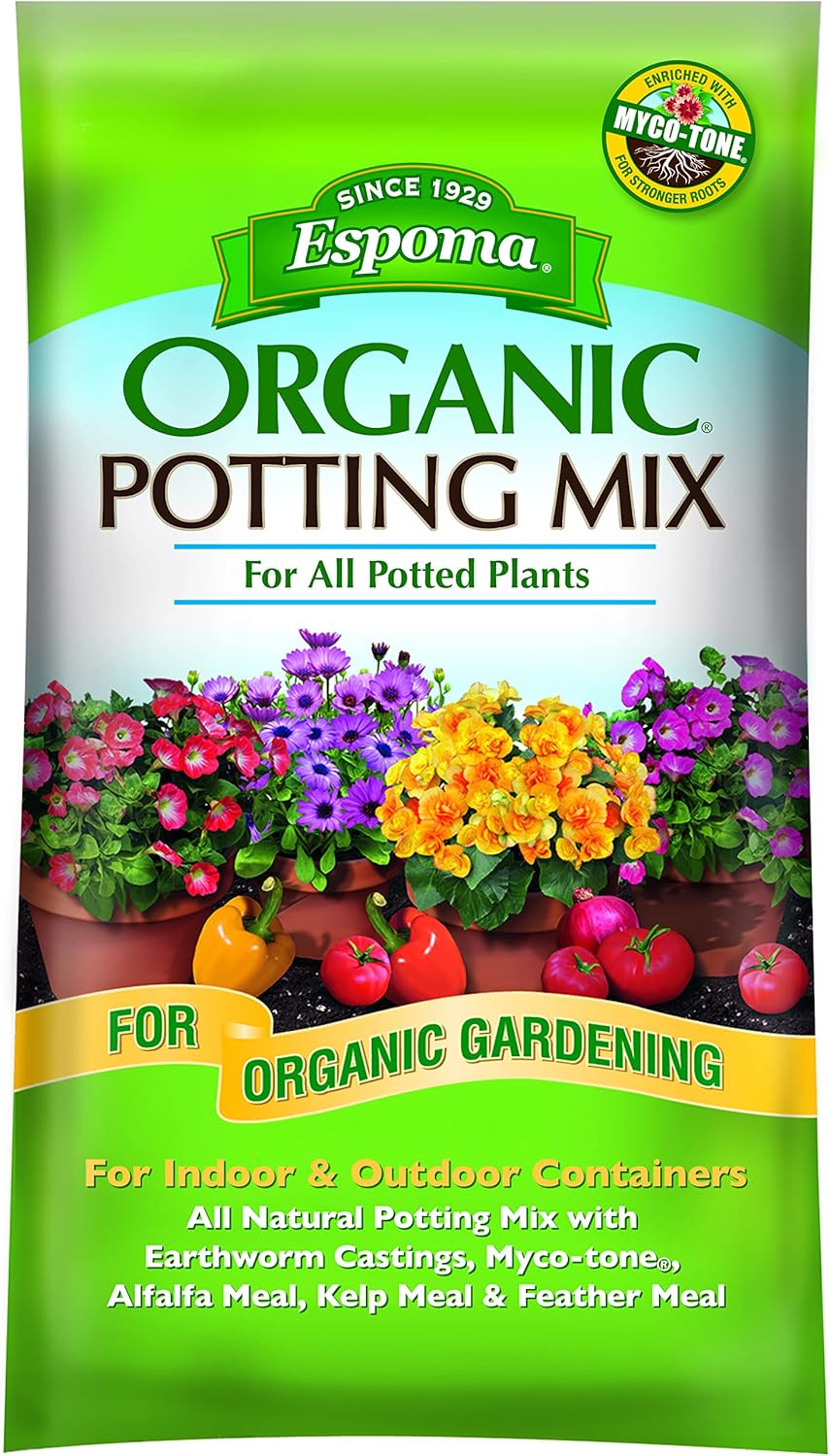
| Volume | 16 quarts |
|---|---|
| Item Weight | 16 ounces |
| Style Name | Mix |
Espoma Organic Potting Mix is a general-purpose, organic blend designed for container gardening and transplanting. It combines sphagnum peat moss, humus and perlite for drainage and aeration, and is enriched with earthworm castings, alfalfa, kelp and feather meals to supply slow-release nutrients. The added Myco-tone mycorrhizae can help roots establish faster after potting, which is helpful when repotting or starting new plants. In practice this mix works well for potted herbs, vegetables and ornamentals where a balance of moisture retention and drainage is needed. Because it is peat-based it holds water longer than coarse, mineral-heavy mixes so you will likely water less frequently but should monitor for overwatering with moisture-sensitive plants. It is fully organic and does not include synthetic fertilizers, so nutrient buildup and salt stress are less of a concern for sensitive plants when used as directed. The bagged 16-quart size is convenient for small patios and containers but may require multiple bags for several large pots.
Best for: Gardeners who prioritize organic inputs and want a reliable, nutrient-rich potting medium for container-grown herbs and ornamentals and who value easier establishment after repotting.
Less Ideal for: Growers seeking an extremely fast-draining, gritty mix tailored to Mediterranean plants that require very low moisture between waterings should look for a cactus or specialized lavender mix instead.
- Organic ingredient blend with no synthetic fertilizers
- Includes mycorrhizal inoculant to support root establishment
- Perlite and humus improve drainage and aeration compared with pure peat
- Contains slow-release organic amendments for steady nutrient supply
- Peat-based formula retains more moisture than very gritty mixes preferred by some Mediterranean herbs
Verdict: Choose this organic mix if you want a balanced, nutrient-rich potting soil with mycorrhizae that helps container plants establish and grow well.
Burpee Premium Organic Potting Mix with Coco Coir (9 Quart)

| Item Form | Powder |
|---|---|
| Specific Uses For Product | Plant Growth, Root Development, Seed Development, Soil Conditioning |
| Coverage | 9 Qt Container |
| Liquid Volume | 9 quarts |
Burpee Premium Organic Potting Mix is a ready-to-use container soil designed for indoor and outdoor pots, seed starting, and raised bed containers. The mix combines coco coir for improved aeration and moisture retention with a nutrient blend that feeds plants for up to three months, making it useful for establishing seedlings or repotting established vegetables, herbs, and ornamentals. It is OMRI listed, which suits organic growers, and the bag is sold in a convenient 9-quart size that fits most small to medium containers. Practical benefits include reduced watering frequency thanks to the coir component and a balanced medium that promotes root development and germination. Limitations are the small bag size for larger projects and that it supplies nutrients for only a limited period, so longer-term containers will need supplemental fertilizer. The mix is powdery and light, so it is easy to handle but may compress over time in deep pots and benefit from occasional loosening.
Best for: Gardeners who want a compact, ready-made organic potting mix that reduces maintenance and supports reliable seed starting and container growth.
Less Ideal for: Those establishing large beds or filling many large containers at once should choose bulk soil or larger bags instead.
- OMRI listed organic blend suitable for organic container gardening
- Coco coir improves moisture retention while maintaining good aeration
- Includes slow-release nutrients that feed plants for up to three months
- Light, easy-to-handle texture ideal for seed starting and repotting
- 9-quart bag is small for larger containers or multiple pots
- Nutrient supply is temporary so additional fertilizer is required for long-season crops
Verdict: A compact OMRI-listed potting mix with coco coir that simplifies seed starting and short-term container growing by improving moisture balance and early root development.
Miracle-Gro Potting Mix, 16 qt. (2-Pack)

| Feeds Plants | Up to 6 months |
|---|---|
| Volume | 16 quarts |
| Number of Packs | 2 |
| Intended Use | Outdoor containers |
| Ingredients | Sphagnum Peat Moss, Peat, Perlite, Compost, Fertilizer |
Miracle-Gro Potting Mix is a general-purpose container soil designed for outdoor pots, planters, and hanging baskets. It combines peat-based media, perlite, compost, and built-in fertilizer so you can pot vegetables, herbs, annuals, perennials, and shrubs without blending amendments. Typical use is straightforward: fill a pot about one third, set the plant at nursery depth, top off, and water until excess drains. Notable features are fast drainage to prevent root rot, an all-purpose nutrient charge that feeds plants for up to six months, and a texture that helps roots establish quickly. In practice this means less upfront prep and fewer immediate feedings compared with plain soil, and it is handy for seasonal repotting and new container plantings. Important limitations are that it is formulated for containers only (not in-ground beds) and the nutrient boost will diminish after the stated feeding period so you will need to supplement or repot for long-term specimens. Also peat-based mixes can compress over time and require refreshing each season.
Best for: Gardeners who want a low-effort, dependable potting soil for seasonal container planting and quick repots, especially those optimizing time and results across many pots.
Less Ideal for: Those wanting a soil to amend in raised beds or long-term in-ground planting should choose a garden soil formulated for in-ground use instead.
- Ready-to-use mix with built-in fertilizer that feeds up to six months
- Formulated for fast drainage to reduce risk of overwatering and root rot in containers
- Versatile for a wide range of outdoor container plants including vegetables, herbs, and flowers
- Not intended for in-ground garden beds
- Fertilizer effect is temporary and requires refeeding or repotting after about six months
Verdict: A convenient, fast-draining potting mix that simplifies container planting while providing up to six months of built-in nutrition.
Back to the Roots 3-in-1 Seed Starting Mix, 6 Quart, Organic Peat-Free

| Unit Count | 192 Fluid Ounces |
|---|---|
| Style Name | 3-in-1 Seed Starting Mix |
| Brand Name | Back to the Roots |
| UPC | 810667035822 |
This 6-quart Back to the Roots 3-in-1 Seed Starting Mix is a peat-free, organic blend aimed at making seed starting and early potting simple. You use it straight from the bag to fill trays, small pots, or starter cells; the mix includes coconut coir for water retention, dolomitic limestone to balance pH, mycorrhizae to support root uptake, and yucca extract for moisture control. Practically, that means fewer extra amendments for a new gardener and a more forgiving environment for delicate seedlings. The formula is designed to drain well while retaining enough moisture for even watering, and the included nutrients and worm castings can reduce early feeding. Limits to note are the small 6-quart volume, which is best for hobby-scale starting rather than large beds, and a lighter texture that may dry faster in very hot, exposed conditions. For budget growers who want an all-in-one starter mix without experimenting with multiple additives, this is a convenient choice.
Best for: Great for budget-minded home gardeners who want a single, ready-to-use seed starting mix that reduces extra amendments and simplifies starting herbs, vegetables, and flowers.
Less Ideal for: Not the best fit for landscapers or gardeners starting large numbers of plants or filling large containers where bulk bagged mixes would be more economical.
- Peat-free organic formula with coconut coir for moisture retention and aeration
- Includes mycorrhizae and worm castings to support early root development and nutrient uptake
- pH balancing with dolomitic limestone reduces the need for corrective amendments
- Ready-to-use blend suitable for seed trays, small pots, and indoor container starts
- Only 6 quarts per bag, so multiple bags are needed for larger projects
- Light, fast-draining texture can require more frequent watering in hot or windy conditions
Verdict: A convenient, peat-free all-in-one starter mix that saves time and extra purchases for home gardeners starting small batches of seeds.
FoxFarm Ocean Forest Potting Soil, 12 qt (with 2 Plant Tags)

| Brand Name | FoxFarm |
|---|---|
| Unit Count | 144 Ounce |
| Item Highlight | Light, Aerated Texture with Fish Meal, Crab Meal, Earthworm Castings |
| Volume | 12 quarts |
FoxFarm Ocean Forest is a pre-mixed potting soil built from aged forest products, sandy loam and sphagnum peat moss, amended with organic inputs like fish meal, crab meal and earthworm castings. It is designed to be used straight from the bag for container-grown plants and seedlings, providing a light, well-aerated texture that helps drainage and root development. Typical use is filling pots or raised beds for starts, houseplants and container vegetables or berries; the included plant tags make labeling varieties and planting dates easier. The nutrient-rich formula supplies an initial fertility boost so you can delay heavy nitrogen feeding while young plants establish. On the downside the 12 quart bag is relatively small for larger blackberry plantings in-ground or for filling many large containers and you may need to supplement specific soil pH or long-term fertility requirements for mature brambles. For container blackberries this mix gives an easy, reliable start but plan on larger volumes or soil amendments for permanent beds.
Best for: Gardeners who want a reliable, plug-and-play potting mix to start container blackberries or seedlings and value a nutrient-rich, well-aerated medium that reduces early feeding needs.
Less Ideal for: Growers preparing large in-ground blackberry beds or those needing specific soil pH control should choose bulk soil or amend based on a lab test rather than rely on this bag alone.
- Ready-to-use blend with organic amendments for immediate planting
- Light, aerated texture that promotes drainage and root growth
- Contains fish meal, crab meal and earthworm castings for early nutrient support
- Includes plant tags for easy labeling of varieties and planting dates
- 12 quart bag size is limited for larger plantings or multiple containers
Verdict: Use this nutrient-rich, aerated potting mix to give container or young blackberry plants a strong, low-effort start.
Miracle-Gro Indoor Potting Mix for All Plants, 6 qt., 2-Pack

| Number of Packs | 2 |
|---|---|
| Unit Count | 400.58 Ounce |
| Item Highlight | Feeds for up to 6 Months |
| Ingredients | Sphagnum Peat Moss, Coir, Perlite, Fertilizer, Wetting Agent |
This Miracle-Gro indoor potting mix is formulated as an all-purpose soil for indoor container plants and is sold in a two-pack of 6‑quart bags. It combines sphagnum peat moss, coconut coir, and perlite to create a lightweight, well-draining mix that holds moisture yet releases it to roots, which helps tropical houseplants like a Dragon Tree avoid waterlogged roots. The bagged mix includes a slow-release fertilizer meant to feed plants for up to six months so you do not need to amend immediately after potting. Notably the formula excludes bark and compost, which can reduce habitats for fungus gnats — useful when repotting indoor specimens. Use is straightforward: fill a pot with drainage, set the plant, backfill with mix, and water. Limitations are that the fertilizer schedule is fixed to the included feed and heavy feeders may need additional fertilizing after several months, and serious growers who want a custom cactus or orchid-style mix will find the texture too fine. For routine repotting of Dragon Trees and similar tropical houseplants this mix is convenient and consistent.
Best for: Buyers who want a reliable, low-effort potting mix for repotting tropical houseplants like Dragon Trees and prefer a product with built-in feeding and pest-reduction features.
Less Ideal for: Specialist growers who need custom texture blends for succulents, orchids, or aggressive feeders should choose purpose-formulated mixes or amend this product accordingly.
- Balanced blend of peat moss, coir, and perlite for good moisture retention and drainage
- Includes slow-release fertilizer that feeds up to six months for low-maintenance care
- Bark- and compost-free formula reduces places for fungus gnats to breed
- Ready-to-use bag makes repotting quick with no mixing required
- Fertilizer is fixed for about six months so additional feeding may be necessary for heavy feeders
- Texture may be too fine for plants that prefer very fast-draining or chunky mixes
Verdict: A convenient, low-maintenance indoor potting mix that keeps Dragon Trees healthy with good drainage and up to six months of built-in feeding.
Back to the Roots Organic Indoor Potting Mix, 6 Quart

| Unit Count | 192 Fluid Ounces |
|---|---|
| Item Type Name | Indoor Potting Mix 6qt |
| Item Highlight | Peat-free, 100% organic, made in the USA |
| Ingredients | Coconut Coir, Yucca, Mycorrhizae, Perlite, Horticultural Sand |
This Back to the Roots indoor potting mix is a ready-to-use, 6-quart blend designed for common houseplants such as pothos, monstera and ferns. It combines coconut coir, yucca extract, mycorrhizae, perlite and horticultural sand to improve moisture retention, drainage and root development without peat. In practice it feels light and friable, so it is easy to pot seedlings or repot mature plants and it reduces compaction that can suffocate roots. The added mycorrhizae helps young roots establish and take up nutrients more efficiently while yucca extract helps the mix hold water between waterings, which is convenient for forgetful or busy plant owners. Because it is peat-free and made in the USA, it is a more sustainable choice versus traditional peat-based mixes. Limitations are the small 6-quart size, which means frequent repurchasing for larger collections, and the bag does not include fertilizer so you will need to feed plants separately as they grow.
Best for: Buyers who prioritize low-risk, easy-care houseplant solutions and want an organic, ready-to-use potting mix that reduces watering hassles and supports healthy root growth.
Less Ideal for: Not ideal for gardeners who need large-volume soil for many pots or for those expecting a mix that includes built-in fertilizer for long-term feeding.
- Peat-free organic formula that reduces environmental impact
- Yucca extract improves moisture retention between waterings
- Contains mycorrhizae to support root development and nutrient uptake
- Light, well-draining texture suitable for repotting seedlings and houseplants
- Small 6-quart volume may require frequent repurchasing for larger plant collections
- Does not include fertilizer so additional feeding is necessary
Verdict: A compact, peat-free potting mix that simplifies indoor plant care by holding moisture and boosting root establishment.
Choosing the Right Potting Mix for Lettuce: Key Factors to Consider
Texture and Particle Size
Texture controls how quickly water moves through the mix and how easily tender lettuce roots can grow. Finer particles make it easier for small root hairs to explore the medium at the seedling stage, while a small proportion of larger particles improves aeration.
Look for a balance that avoids heavy fines that compact and impede oxygen flow. In containers and flats, a light, crumbly texture encourages even rooting and reduces the risk of damping-off and root suffocation.
Drainage Versus Water Holding
Lettuce prefers consistently moist conditions but is sensitive to standing water. A good potting mix drains excess freely while retaining enough moisture between waterings to keep young roots supplied.
Materials like perlite or coarse sand improve drainage, while peat or coconut coir increase water-holding capacity. The ideal mix for lettuce combines both so you can water on a regular schedule without triggering root rot or drought stress.
Nutrient Content and Release Pattern
Leafy crops like lettuce need steady nitrogen and balanced micronutrients for lush, tender growth. A potting mix should either contain a gentle, slow-release fertilizer or accept frequent light feedings without salt buildup.
Too much starter fertilizer can burn seedlings, while too little leads to pale, slow-growing leaves. Consider whether you plan to start seed or transplant seedlings; seed-starter blends often have lighter nutrition that can be topped up once plants are established.
pH Stability and Mineral Availability
Lettuce thrives in slightly acidic to neutral pH where nutrients are most available. A stable pH in the potting mix reduces the risk of nutrient lockup, particularly for iron and manganese which are important for leafy color.
Mix components such as lime or dolomite can adjust pH, while neutral bases like coir tend to be close to ideal. If you expect repeated crops in the same container, choose a mix with predictable pH behavior so micronutrients remain accessible throughout the harvest cycle.
Sterility and Disease Risk
Seedlings are vulnerable to pathogens that live in contaminated or unprocessed mixes. Sterilized or pasteurized components and clean manufacturing reduce risks of damping-off and soil-borne fungi.
For small trays and repeated sowings, using a mix labeled pathogen-reduced improves success rates. Even when planting outdoors, starting lettuce in a clean soilless mix helps establish vigorous roots that resist disease pressure.
Suitability for Containers and Trays
Growing space affects the ideal mix. Shallow seed trays and small pots need a lighter, more friable mix that supports surface sowing and quick root spread. Deeper containers tolerate mixes with slightly higher organic content that hold more water between waterings.
Choose a mix designed for the container depth you plan to use to avoid overwatering in shallow bedding or rapid drying in deep pots.
Starting Lettuce From Seed
Seed-starting success begins with a fine, consistent mix that holds moisture without forming a crust. For direct seeding in trays, a loose, sterilized seed-starting blend encourages uniform germination and limits disease.
After germination, gradually move seedlings into a slightly richer potting mix that supplies nutrients for leaf development. Transplant carefully to avoid root disturbance and maintain even moisture to prevent transplant shock.
- Use a shallow tray with a fine-textured mix for even contact between seed and medium
- Keep surface moist with gentle misting until radicles appear
- Dampen the mix thoroughly before sowing but avoid waterlogging
Potting Mix for Container Raised Beds
Containers and small raised beds need a mix that balances drainage and water storage over longer intervals between waterings. A blend with compost or well-aged organic matter supplies nutrients, while perlite or pumice maintains air spaces.
If you will harvest multiple cut-and-come-again crops, pick a mix that accepts periodic light feeding without compacting. Mulching the surface with straw or coarse compost can help retain moisture and cool roots during warm spells.
- Include coarse drainage material at the base only if container drainage is poor
- Top-dress with compost between crops to refresh nutrients
- Monitor moisture deeper in the mix, not just at the surface
Adjusting Mix for Hydroponic and Soilless Systems
For soilless setups that mimic hydroponic conditions, choose an inert base like coco coir or perlite with a tailored nutrient program. These bases retain moisture and provide consistent structure while you control all feeding externally.
Soilless systems demand precise pH and nutrient management because the mix contributes little buffering. Regular monitoring of solution strength and pH ensures lettuce gets the steady nitrogen and micronutrients it needs for rapid leaf growth.
- Use coir blends for moisture retention while keeping aeration good
- Flush and replace soilless media between crops to prevent salt buildup
- Adjust nutrient solution according to plant stage for best results
Feeding and Recharging Potting Mix
Because potting mixes vary in initial nutrient content, plan a feeding routine that matches the mix type. Light, frequent feedings with a balanced fertilizer are generally better for lettuce than heavy, infrequent doses.
Between successive crops in the same container, refresh the top few inches with compost or a small amount of slow-release nutrient to maintain performance without completely replacing the mix.
- Start dilute liquid feeds once true leaves form
- Avoid excessive nitrogen that can make leaves floppy and prone to disease
- Refresh medium annually if growing many successive crops in the same container
Troubleshooting Common Mix-Related Problems
Yellowing or poor early growth often signals low nutrients or overly dry mix. Test moisture at root depth and adjust feeding before assuming variety or weather is the cause.
If seedlings collapse or stems rot near the soil line, overwatering or a contaminated mix is usually to blame. Improve drainage, reduce surface moisture, and consider a fresh sterile seed-starting mix for replacements.
- Check root health by gently lifting a seedling to inspect color and firmness
- Adjust watering frequency rather than changing fertilizer first
- Replace suspect mix if multiple seedlings show damping-off symptoms
How We Chose the Best Potting Mix for Lettuce
We prioritized attributes that directly affect lettuce performance rather than broad claims. Key evaluation criteria included particle texture and drainage to prevent soggy roots, nutrient profile and slow-release timing to support successive leaf harvests, and seed-start friendliness for quick, even germination. We also assessed moisture retention balance so mixes hold enough water for frequent shallow roots without staying waterlogged, and the presence of safe, disease-free components such as pasteurized compost or inert soilless bases. Other practical filters removed products with heavy, clay-like components or coarse bark that hinder small-root development. We excluded mixes formulated only for woody ornamentals or cacti because those formulas do not match lettuce needs. Final selection favored mixes that perform well in containers and seed trays, are free from common contaminants, and provide consistent particle size and nutrient release appropriate for leafy vegetables.
FAQ
Can I use general potting mix to start lettuce seeds?
Often yes for larger seeds, but lettuce seeds prefer a finer, lighter seed-starting mix. A general potting mix can be too heavy or contain larger particles that limit seed-to-soil contact and slow germination.
How often should I water lettuce in pots with potting mix?
Usually every one to three days depending on container size, weather, and mix water-holding properties. Check moisture at root depth and keep the medium consistently moist but not waterlogged.
Do I need to add fertilizer to potting mix when growing lettuce?
It depends on the mix. If the mix contains slow-release nutrients you may only need light top-ups. For inert or seed-starting mixes, begin dilute liquid feeding once true leaves appear and continue regularly for steady growth.
Is coconut coir a good base for lettuce potting mixes?
Coconut coir can be an excellent base because it holds water well and has a neutral pH. It works best when combined with aeration materials like perlite or pumice and paired with a nutrient program.
How do I avoid root rot when using potting mix for lettuce?
Ensure the mix drains well and avoid leaving pots in saucers of standing water. Use a mix with good aeration, water only when the top inch starts to dry, and remove any compacted surface layer that restricts airflow.
Final Verdict
Choose a potting mix for lettuce that prioritizes light texture, balanced moisture retention, and a gentle nutrient profile. Tradeoffs are inevitable: mixes that hold more water need better aeration, while very open mixes require more frequent feeding and watering. Focus on the growing situation you use most often-seed trays, shallow containers, or deeper planters-and pick a mix formulated for that scenario. When in doubt, start with a clean, fine seed-starting blend for germination and move seedlings into a slightly richer potting mix to finish for best results.
