

Note: This article contains affiliate links. If you click on these links and make a purchase, I may earn a small commission at no extra cost to you. This helps support my research and content. Read my full affiliate disclosure here.
Picking the right garden compost bin changes how quickly kitchen scraps and yard waste turn into usable compost and how much effort you need to maintain the pile. The right bin helps retain heat, manage moisture, and keep pests out while fitting your yard, patio, or small urban garden. This guide covers seven shortlisted garden compost bins well suited to a range of backyard situations and explains why each type made the list. We evaluated practical factors like capacity, airflow and turning access so you can match a system to your space and composting goals.
Top Picks at a Glance
| Best Overall The best all-around choice for most situations | FCMP Outdoor 37-Gallon Dual-Chamber Tumbling Composter |  |
| Best Quality Built to a higher standard if you want something more solid | Algreen Soil Saver Classic 94‑Gallon Compost Bin |  |
| Best Value The sweet spot between price and what you get | VIVOSUN Outdoor Tumbling Composter, Dual-Chamber 43 Gallon |  |
| Highest Rated A top-rated pick with lots of positive feedback | Vego Garden 125‑Gallon Metal Compost Bin (30" x 30" x 32") |  |
| Most Popular A crowd favorite that many people choose with confidence | Miracle-Gro Dual Chamber Compost Tumbler (2 × 18.5 gal) |  |
| Best Seller A high-volume bestseller chosen again and again | GEOBIN Backyard Compost Bin, Expandable Plastic Composter |  |
FCMP Outdoor 37-Gallon Dual-Chamber Tumbling Composter
| Capacity | 37 gallons |
|---|---|
| Material Type | Polypropylene (PP) |
| Item Type Name | Tumbling Composter |
| Chambers | Dual |
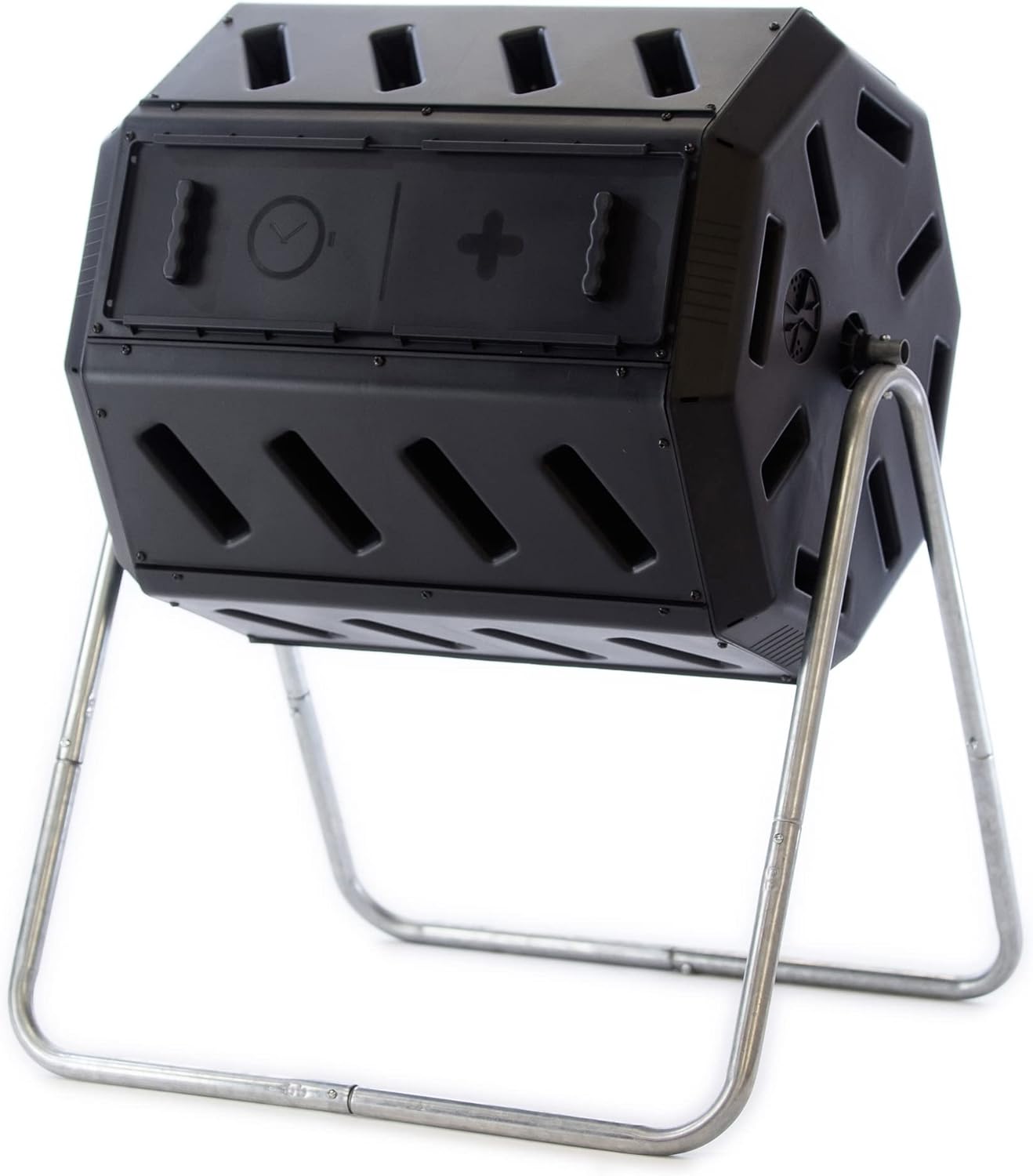
The FCMP Outdoor 37-Gallon Dual-Chamber Tumbling Composter is a user-friendly rotating bin that lets you process kitchen scraps and yard waste without turning a pile by hand. Its two chambers let you fill one side while the other finishes curing so you can maintain a steady supply of finished compost. The molded fins and ergonomic handholds make tumbling simple, and built-in aeration holes help oxygenate the load for faster decomposition. The drum is made from UV-inhibited, BPA-free polypropylene recycled plastic and sits in a powder-coated steel frame intended to resist corrosion outdoors. In practice this composter is simple to use for small to medium gardens: add balanced “greens” and “browns,” tumble a few times every few days, and remove finished material through the access door. Limitations to note are the 37-gallon capacity, which may be small for very large yards, and that composting speed still depends on feedstock balance and ambient temperature, so you will not get instant results in cool climates.
Best for: Gardeners who want a low-maintenance, continuous composting solution for small to medium yards and value easy tumbling and regular access to finished compost.
Less Ideal for: People with very large properties, commercial gardens, or those who need high-volume composting fast should consider larger or stationary systems instead.
- Dual-chamber design supports continuous composting so one side can cure while you add fresh material to the other
- Ergonomic deep fins and handholds make the barrel easy to rotate without heavy lifting
- Aeration holes and internal fins improve airflow and help break up clumps for faster decomposition
- Constructed from UV-inhibited, BPA-free polypropylene with a corrosion-resistant steel frame for outdoor durability
- 37-gallon capacity may be limiting for very large gardens or heavy yard waste producers
- Performance depends on proper feedstock balance and warm conditions, so it is slower in cool climates
Verdict: Choose this composter if you want an easy-to-use dual-chamber tumbler that delivers continuous, low-effort composting for a small to medium backyard.
Algreen Soil Saver Classic 94‑Gallon Compost Bin

| Capacity | 94 gallons |
|---|---|
| Material Type | Plastic |
The Algreen Soil Saver Classic is a large, stationary outdoor composter built to accelerate backyard decomposition and hold a full season’s worth of scraps and yard waste. You load material through a wide top lid and finished compost is retrieved through two sliding doors at the bottom, which lets you pull out ready humus without disturbing new inputs. The solid, octagonal walls are molded from 100% recycled plastic and retain heat to help microbes break down material faster, while slim ventilation slots and bottom aeration openings provide airflow. A locking lid reduces problems with wildlife and odors. Practical benefits include a roomy 94‑gallon capacity for heavy users, simple top loading, and low-maintenance construction that will not rust. Limitations are that it is a stationary bin so turning is limited to manual mixing through the top, and its plastic walls mean it can warm well in cold weather but will not insulate like insulated or tumbling designs that speed processing further for very fast results.
Best for: Gardeners who prioritize steady, high‑volume compost production and want a low‑maintenance, pest‑resistant backyard bin that holds a large amount of material.
Less Ideal for: People needing a compact or portable solution, or those who want a fast‑acting tumbling composter that minimizes manual turning and boosts heat quickly.
- Large 94‑gallon capacity handles substantial household and yard waste
- Dual sliding bottom doors let you extract finished compost without disturbing new material
- Made from 100% recycled plastic with heat‑retaining walls to support decomposition
- Locking lid and solid walls reduce pest access and limit odors
- Stationary design limits mechanical turning so you must mix manually for faster decomposition
- No built‑in insulation or tumbling action to accelerate composting in cold climates
Verdict: Choose the Soil Saver Classic if you need a roomy, durable stationary bin that reliably converts large volumes of kitchen and yard waste into usable compost.
VIVOSUN Outdoor Tumbling Composter, Dual-Chamber 43 Gallon
| Material Type | galvanized steel |
|---|---|
| Capacity | 43 gallons |
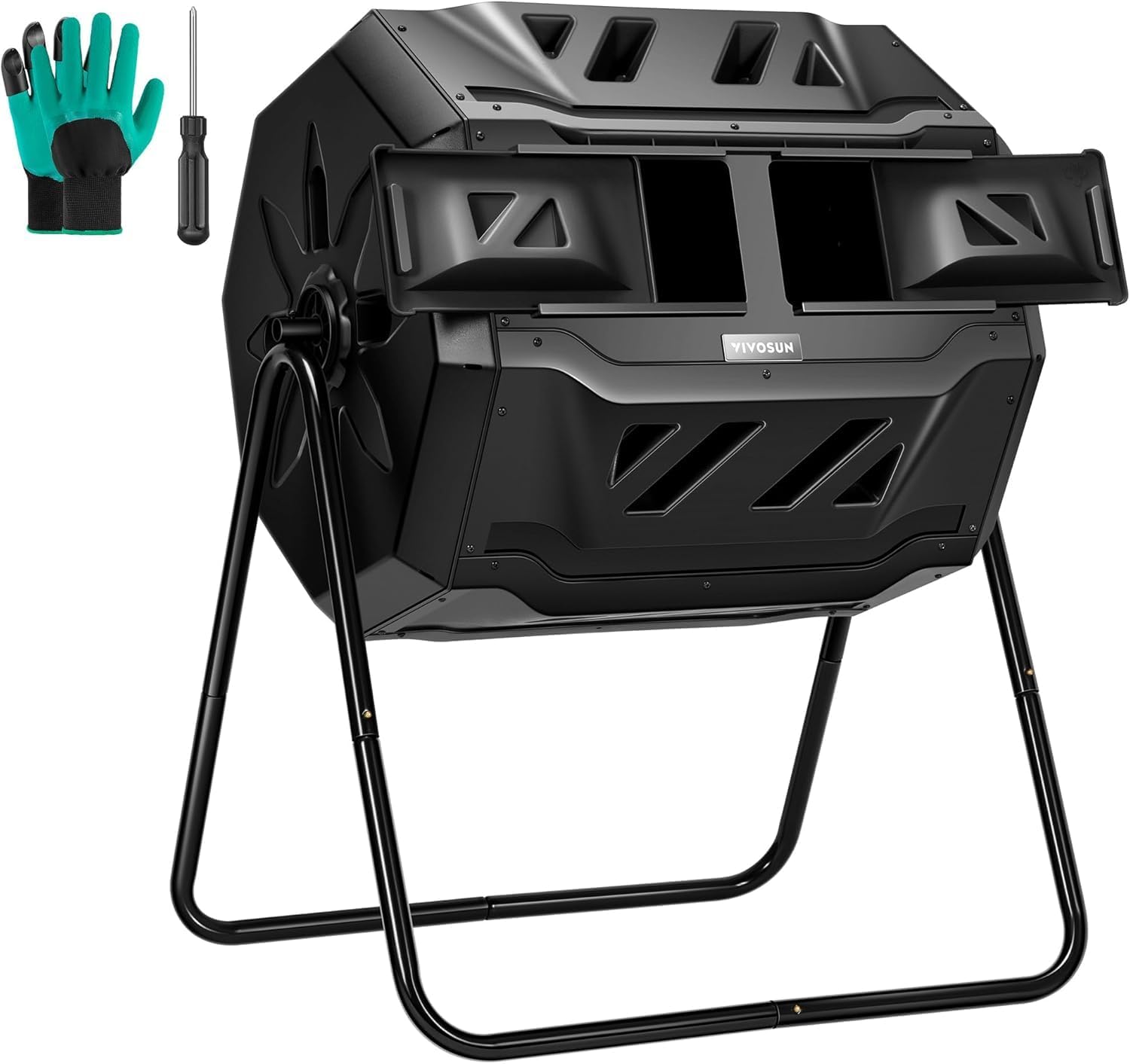
This VIVOSUN tumbling composter is a practical backyard unit built around two rotating chambers so you can add fresh waste to one side while the other finishes breaking down. The 360 degree tumbling design with deep internal fins makes turning the pile simple and helps break up clumps without digging. Ventilation slots around the drum promote airflow for aerobic decomposition, and the metal frame with a PP plastic barrel is designed to resist corrosion and outdoor weathering. It comes with waterproof garden gloves and small digging claws to make loading and aerating easier. At 43 gallons it is sized for a family garden or vegetable patch but is compact enough for a patio or small yard. Limitations to note are that it requires occasional manual turning to maintain activity and that the plastic drum means it will warm less in cold climates than insulated models, so composting speed will vary by season. Assembly and placement on a level spot are also important for smooth rotation.
Best for: Gardeners who want a hands-on, efficient system to produce regular batches of compost without digging a pile and who prioritize continuous output and easy turning.
Less Ideal for: People who need a completely hands-off hot composter or who compost only very large volumes; those in very cold climates seeking year-round rapid breakdown should consider insulated or electric options.
- Dual chambers let you load new material while another batch finishes, ensuring continuous compost production
- 360 degree tumbling with deep fins makes mixing and aeration easy without manual digging
- Galvanized steel frame and PP plastic barrel designed for outdoor durability and corrosion resistance
- Ventilation slots support aerobic breakdown for faster, less smelly composting
- Plastic drum offers less insulation than insulated or fully metal units, slowing composting in cold weather
- Requires manual turning and regular management to maintain heat and moisture for fast results
Verdict: If you want steady, manageable batches of compost with easy tumbling and continuous use, this dual-chamber VIVOSUN tumbler delivers practical, durable performance.
Vego Garden 125‑Gallon Metal Compost Bin (30" x 30" x 32")

| Capacity | 16.7 cubic feet |
|---|---|
| Material Type | Metal |
| Panel thickness | 0.8–0.9 mm galvanized steel |
| Bin options | 1‑bin, 2‑bin or 3‑bin modular setups |
The Vego Garden metal compost bin is a durable, modular outdoor composter built for season‑to‑season use. It is constructed from galvanized steel with a double‑sided powder coating so it resists corrosion better than typical wooden bins. The modular design lets you set up one, two, or three adjacent bins to match your household waste volume, and removable slats and bottom panels make removing finished compost straightforward and relatively tidy. Assembly is simple and does not require complex tools, so getting the bin operational is quick. In everyday use it handles kitchen scraps and yard waste while offering good ventilation when managed correctly. Expect a long service life and low maintenance compared with wood or plastic alternatives, but plan for manual turning and standard compost management since there are no mechanical aids included. The bin is roomy for most home gardens but its metal panels can be hot to the touch in direct sun and may require gloves during handling and harvest.
Best for: Buyers who prioritize a long‑lasting, low‑maintenance composting solution for an established garden and want a bin they can rely on year after year.
Less Ideal for: People who want a hands‑off, rapid composting system with mechanical turning or those who need a compact indoor/countertop composter.
- Galvanized steel with powder coating increases corrosion resistance and longevity
- Modular 1/2/3‑bin configuration adapts to different garden sizes and compost volumes
- Removable slats and bottom panels simplify harvesting finished compost
- Straightforward assembly with no complex DIY required
- No built‑in aeration or turning mechanism, so active management is needed
- Metal panels can become hot in direct sun and may be uncomfortable to handle
Verdict: Choose this galvanized, modular metal composter if you want a rugged, low‑maintenance outdoor bin built to last.
Miracle-Gro Dual Chamber Compost Tumbler (2 × 18.5 gal)

| Capacity | 37 gallons |
|---|---|
| Material Type | Alloy Steel (frame) and UV-protected plastic (barrel) |
This dual-chamber Miracle-Gro tumbler is a user-friendly solution for gardeners who want a steady supply of finished compost without manual turning. Each chamber holds 18.5 gallons, so you can load one side while the other finishes curing; the barrel rotates on a galvanized steel frame for easy turning and faster aeration. The molded, UV-protected plastic and side-locking seals are designed to resist weather and help keep pests out, and the maker claims finished compost in roughly 4 to 6 weeks under good conditions. Typical use is adding balanced green and brown materials, rotating the tumbler every few days, then unlocking the sliding door to remove cured compost. Practical benefits include reduced physical labor compared with pile turning and a continuous workflow from dual chambers. Limitations to note are modest total capacity for very large gardens and reliance on correct moisture and feedstock balance to hit the faster decomposition times; very cold winters will slow processing. Assembly and placement on a level spot are important for smooth rotation.
Best for: Gardeners who value steady, low-effort compost production backed by a well-known brand and want the assurance of a proven dual-chamber system for regular use.
Less Ideal for: People needing very large-volume commercial composting or those who prefer an open windrow or in-ground hot compost system for maximum throughput.
- Dual-chamber design lets you add fresh material while another batch cures for continuous compost supply
- Rotating barrel on a galvanized steel frame makes aeration easy with minimal physical effort
- UV-protected plastic and tight side locks help resist weather and reduce pest access
- Produces finished compost relatively quickly when fed and moistened correctly
- 37-gallon combined capacity may be small for very large or heavy-production gardens
- Performance depends on proper moisture, material mix, and ambient temperature to reach claimed speed
Verdict: Choose this dual-chamber tumbler if you want a simple, low-labor way to produce a steady stream of finished garden compost with reliable pest protection.
GEOBIN Backyard Compost Bin, Expandable Plastic Composter

| Capacity | 216 gallons |
|---|---|
| Material Type | Plastic |
| Shape | Cylindrical |
The GEOBIN Backyard Compost Bin is a lightweight, cylindrical plastic composter designed for straightforward backyard use. It assembles quickly with a few closure keys and expands to increase capacity, so you can start with a small footprint and add volume as your kitchen scraps and yard waste grow. The open-structure design gives excellent ventilation, which helps speed up decomposition when you layer greens and browns and turn the pile occasionally. Because it is low-tech and portable, it is easy to move, empty, or reassemble if you relocate it in the yard. The practical benefits are its affordability, ease of setup, and versatility for beginners and experienced gardeners who want a no-fuss system. Limitations are that it is a basic ring-style bin with no insulated walls or built-in access door, so it will not retain heat as well as tumblers or insulated bins and requires manual turning and occasional maintenance to keep the process active.
Best for: Budget-conscious gardeners who want a low-cost, low-effort way to compost yard trimmings and kitchen scraps without complicated setup.
Less Ideal for: People who need fast, high-temperature composting or a bin with a convenient bottom access door for frequent harvests should consider other designs.
- Expandable capacity up to 216 gallons (listed) to handle increasing compost volume
- Very easy assembly with simple closure keys
- Lightweight and portable for repositioning or storage
- Good ventilation that helps organic material break down faster
- No insulated walls or built-in access door for easy compost removal
- Basic plastic construction offers less heat retention than enclosed designs
Verdict: A very affordable, easy-to-assemble composter that gives budget gardeners a simple, expandable solution for backyard composting.
Choosing the Right Garden Compost Bin: Key Factors to Consider
Capacity and Volume
Capacity determines how much kitchen scraps and yard trimmings you can hold between harvests. A larger volume stores more material and retains heat better, which speeds up microbial activity, but it also requires more space and can be harder to turn manually.
If you generate a lot of lawn clippings, fall leaves, or frequent food scraps, choose a bin with higher volume to avoid constantly emptying it. For small patios or households producing little green waste, a smaller, compact bin wastes less space and is easier to manage.
Aeration and Ventilation
Good airflow keeps oxygen available for aerobic microbes, preventing anaerobic pockets that cause foul smells. Ventilation features can include slotted walls, internal baffles, or removable panels that let air move through the pile without letting pests in.
Consider how the bin balances airflow with heat retention. Too much open ventilation cools the pile and slows breakdown, while too little leads to damp, smelly compost. Look for designs that encourage passive airflow while still trapping enough warmth for active decomposition.
Access for Turning and Harvesting
Turning mixes fresh material into the hot center, redistributes moisture, and introduces oxygen to keep decomposition moving. Bins with easy-access lids, removable panels, or tumbling mechanisms reduce the physical effort required to turn the pile.
Harvesting finished compost is easier with bottom-release doors or removable sections. If you prefer low-labor systems, a tumbler that you can spin is convenient. If you favor large-volume, low-cost options, make sure the bin design allows you to reach the middle and bottom with a pitchfork or compost aerator.
Pest Resistance and Predator Control
Outdoor bins are attractive to rodents, raccoons, and insects if food scraps are exposed. Solid construction, tight-fitting lids, and secure fasteners limit access for pests. Some designs include elevated bases or buried skirts to prevent tunneling and ground-entry.
Consider where you place the bin in the yard. A well-sealed bin reduces visits from animals and avoids the nuisance of scattered contents, but it must still allow sufficient airflow to avoid anaerobic conditions.
Material Durability and Weather Resistance
Material and build quality affect how long a bin withstands UV exposure, rain, freeze-thaw cycles, and physical handling. UV-stabilized plastics resist cracking and fading, while metal options may corrode if not treated. Sturdier construction also reduces warping under heavy loads and frequent access.
Think about the local climate and expected outdoor exposure when choosing materials. A bin that lasts several seasons with minimal warping or rust will be easier to maintain and more cost-effective over time.
Assembly, Placement, and Footprint
Ease of assembly matters if you do not want a complex setup process. Some bins arrive as simple molded units, while others require panel assembly or a frame. Consider tools and time required for setup.
Footprint is also important. Measure the available spot in your yard, near a water source and accessible from the kitchen for convenient scrap transfer. A compact footprint fits tight patios, whereas larger flat areas accommodate bigger cylindrical or multi-bin systems.
Types of Garden Compost Bins and How They Behave
There are a few common bin formats gardeners use, and each behaves differently in a backyard. Stationary barrel or bin units offer simplicity and higher capacity but rely on manual turning. Tumblers make turning easy by spinning the whole chamber but often have lower capacity. Open-sided bins or wire cages are inexpensive and good for large-volume yard waste but offer less pest control and slower heat retention.
Match the bin format to your work style. If you want low-lift maintenance and faster mixes, a tumbler helps. If you need to compost a lot of seasonal yard waste, a larger stationary bin or multi-bin system gives the space to build and cure batches in sequence.
- Stationary solid bins: good heat retention and capacity, require manual turning
- Tumblers: easy turning, quicker aeration, smaller volume
- Wire or open bins: low cost and high airflow, less pest protection
Placement and Site Prep for Best Results
Choose a level, well-drained spot that is convenient to reach from the kitchen and garden. Avoid depressions that collect water; standing water cools the pile and causes anaerobic conditions. Partial shade is ideal to prevent excessive drying in hot climates while still allowing the pile to warm up.
Prepare a base by placing the bin on soil or coarse gravel to allow invertebrates and microbes access from the ground and to promote drainage. For elevated or balcony placements, ensure the structure can safely bear the bin's weight when full and that any runoff does not damage the surface below.
- Place on soil or coarse gravel for drainage and soil organism access
- Keep within a short walk of the kitchen for routine scrap transfers
- Avoid full sun exposure on very hot days to prevent drying
Feeding, Layering, and Moisture Management
A balanced mix of green (nitrogen) and brown (carbon) materials helps the pile heat up and avoid odors. Chop or shred large pieces so they break down faster. Regularly add a mix of materials rather than large single-type loads to keep decomposition steady.
Moisture should feel like a wrung-out sponge. Add water during dry spells and cover or add more browns if the pile becomes too wet. Good ventilation and turning schedule help redistribute moisture and speed breakdown.
- Aim for a roughly 2:1 or 3:1 ratio of browns to greens by volume for steady composting
- Shred bulky materials to reduce decomposition time
- Adjust moisture with dry browns or water as needed
Troubleshooting Common Compost Problems
If the bin smells foul, it is usually too wet or lacks oxygen. Turn the pile, add dry carbon-rich materials like shredded cardboard or leaves, and increase ventilation. Persistent odors can also come from meat or dairy scraps, which are better avoided in typical backyard bins.
If decomposition is very slow, the pile may be too small, too dry, or lacking in nitrogen. Increase pile size or add nitrogen-rich materials, check moisture, and improve insulation if temperatures are low. Pests indicate gaps or loose lids; secure fastenings and a tighter seal will reduce visits.
- Smell: add browns, turn, improve ventilation
- Slow breakdown: increase size, add nitrogen, check moisture
- Pest visits: secure lid, add mesh or bury base skirt
Seasonal Care and Year-Round Use
Composting slows in cold months but does not stop entirely. Insulating the bin with extra browns, a mesh cover, or a straw blanket can help maintain activity through cooler weather. In winter climates, consider larger mass or insulated designs to preserve heat.
During summer, watch for excessive drying. Shade or more frequent watering can keep microbes active. Adjust feeding and turning frequency seasonally to maintain stable decomposition rates.
- Insulate in winter with extra browns or an insulated bin
- Prevent drying in summer with shade or added moisture
- Adjust turning schedule with seasonal temperature changes
How We Chose the Best Garden Compost Bin
We focused on features that materially affect backyard composting performance and daily handling. Key evaluation criteria included bin capacity and shape to estimate how much material a gardener can process at once, ventilation and insulation features that influence decomposition speed, and access for turning and harvesting compost to assess maintenance effort. We also scored build durability and pest resistance to predict lifespan in outdoor conditions, plus assembly ease and footprint to judge suitability for different yard sizes. Exclusions included large-scale farm systems, purely decorative planters, and indoor-only tumblers. The resulting list favors bins that balance heat retention with airflow, provide straightforward access for routine turning, and fit common backyard situations from small patios to modest garden beds.
FAQ
How big should a garden compost bin be for a household of four?
For a household of four, a medium to large bin that holds several cubic feet of material is usually sufficient. Bigger volumes retain heat better and reduce the need for constant emptying, but ensure you can still turn and access the pile easily.
Can I compost on a small patio or balcony with a garden compost bin?
Yes. Choose a compact, sealed bin or a small tumbler designed for limited spaces. Place it on a stable surface, manage moisture carefully to avoid runoff, and avoid adding meat or dairy to prevent odors and pests.
How often should I turn a backyard compost bin?
Turning frequency depends on the system and goals. Tumblers can be turned every few days for faster results, while larger stationary bins can be turned every few weeks. Regular turning improves aeration and speeds decomposition but requires more labor.
Will a sealed compost bin attract rodents?
A well-sealed bin with tight-fitting lids and secure fasteners is less likely to attract rodents. Avoid adding meat, oily foods, or large quantities of food scraps that emit strong odors. If rodents are a concern, choose a design with reinforced base and locked access points.
How do I keep my compost from becoming too wet?
If the pile feels soggy or emits a sour smell, add dry brown materials such as shredded paper, dry leaves, or straw and turn the pile to introduce air. Ensure the bin has drainage or is placed on a well-drained surface to prevent standing water.
Is a tumbler better than a stationary bin?
It depends on priorities. Tumblers simplify turning and can speed composting in smaller volumes, while stationary bins often offer larger capacity, better heat retention, and lower cost. Choose based on how much material you process and how much manual labor you want.
Final Verdict
Choose the garden compost bin that matches how much material you produce, how much time you want to spend turning, and the space available in your yard. Prioritize capacity and access if you handle large volumes, or pick compact, easy-turn tumblers for minimal effort in small spaces. Balance ventilation and insulation to control odors and decomposition speed, and favor durable, pest-resistant construction for long-term use.
