

Note: This article contains affiliate links. If you click on these links and make a purchase, I may earn a small commission at no extra cost to you. This helps support my research and content. Read my full affiliate disclosure here.
Choosing the right potting mix for Majesty Palm matters because these palms need a balance of airflow, moisture, and organic nutrition to thrive in containers. The wrong mix holds too much water and invites root rot, while an overly fast mix leaves the palm thirsty between waterings. This guide covers five shortlisted potting mixes for Majesty Palm that suit indoor and patio containers and outlines the practical reasons each mix type works for palm health. We evaluated mixes for drainage, moisture-holding capacity, and nutrient profile so you can pick a blend that matches your watering style and pot size. Read on for clear buying factors and practical care notes that make repotting or mixing your own soil easier.
Top Picks at a Glance
| Best Quality Built to a higher standard if you want something more solid | Espoma Organic Cactus Potting Soil Mix, 4 qt |  |
| Best Value The sweet spot between price and what you get | Miracle-Gro Tropical Potting Mix (6 qt., 2-Pack) |  |
| Best Budget The cheapest option that still gets the job done reliably | Gardenera Palm Tree Potting Mix (1 Quart) |  |
| Highest Rated A top-rated pick with lots of positive feedback | E.B. Stone Organics Citrus & Palm Mix Potting Soil, 1.5 cu ft |  |
| Most Popular A crowd favorite that many people choose with confidence | Miracle-Gro Cactus, Palm & Citrus Potting Mix, 8 qt. |  |
Espoma Organic Cactus Potting Soil Mix, 4 qt

| Brand | Espoma |
|---|---|
| Volume | 4 quarts |
| Unit Count | 128 Ounce |
| Contains | Peat moss, humus, perlite, mycorrhizae |
Espoma Organic Cactus Potting Soil Mix is a lightweight, peat-based blend designed to improve drainage and root aeration for container plants. Typical uses include repotting succulents, cacti, and smaller container palms and citrus where fast drainage is important. The mix contains sphagnum peat moss, humus and perlite, plus a mycorrhizal inoculant to support root establishment. In practice this means soil that dries out more quickly than all-purpose mixes, reducing the risk of root rot in drought-tolerant species and helping young palms settle after repotting. Because it is organic and free of synthetic fertilizers, gardeners who prefer natural inputs can use it without adding immediate chemical feeds. Limitations are its small 4 quart volume and peat-heavy base, which may require mixing with coarser materials or regular feeding for larger palms or long-term container culture.
Best for: Buyers looking for an organic, fast-draining potting mix to repot succulents or small container palms and who prefer natural ingredients over synthetic additives.
Less Ideal for: Gardeners needing large volumes for big specimen palms or long-term container culture should choose a coarser, larger-volume mix or blend this with chunky amendments.
- Formulated for drainage and aeration with peat moss and perlite
- Includes mycorrhizae to encourage root growth and establishment
- Organic blend with no synthetic fertilizers or chemicals
- Suitable for repotting succulents, cacti and smaller container palms
- Small 4 quart bag may not be cost-effective for large pots or multiple palms
- Peat-heavy mix can compress over time and may need amendment for long-term container use
Verdict: A compact, organic, fast-draining mix that helps establish roots in succulents and small container palms when you need a natural potting medium.
Miracle-Gro Tropical Potting Mix (6 qt., 2-Pack)

| Item Form | Granules |
|---|---|
| Specific Uses For Product | Plant Growth |
| Coverage | tropical plants |
| Liquid Volume | 6 quarts |
Miracle-Gro Tropical Potting Mix is a ready-to-use container soil designed for tropical houseplants like monstera, pothos, and fiddle‑leaf fig. The mix includes lava rock to improve aeration and drainage, and built-in nutrients that the manufacturer says feed plants for up to six months, so it is convenient for repotting or topping up containers. In practical use it produces a light, well-draining medium that helps prevent waterlogging and reduces the likelihood of fungus gnat attraction compared with denser soils. It works both indoors and outdoors and is easy to handle straight from the bag without blending other amendments. Important limitations are that bag size is small (6 qt per unit listed) so larger specimens will need multiple bags, and the precharged nutrients mean you should delay additional fertilizing for about a month and monitor feeding afterward. Also, if you prefer a custom mix with specific proportions of peat, coco coir, or chunky orchid bark, this premix may not match those exact ratios.
Best for: Buyers who want a convenient, low-effort potting mix that supports tropical houseplants and speeds up repotting without custom blending.
Less Ideal for: Experienced growers who prefer to custom-blend their own soil recipes or who need large volumes for mature, heavy-rooted specimens.
- Formulated specifically for tropical/container plants so composition suits species like monstera
- Lava rock included for improved drainage and aeration
- Feeds plants for up to six months reducing immediate need for fertilizer
- Less likely to attract fungus gnats than heavier soils
- Ready-to-use straight from the bag for easy repotting
- Small unit volume means multiple bags required for large pots or repotting mature plants
- Pre-mixed nutrient level requires waiting before adding extra fertilizer
Verdict: A convenient, well-draining premix that makes repotting and maintaining tropical houseplants like monstera faster and easier.
Gardenera Palm Tree Potting Mix (1 Quart)
| Unit Count | 1 Count |
|---|---|
| Item Type Name | Palm Tree Potting Mix |
| Volume | 1 quarts |
| Brand Name | Gardenera |
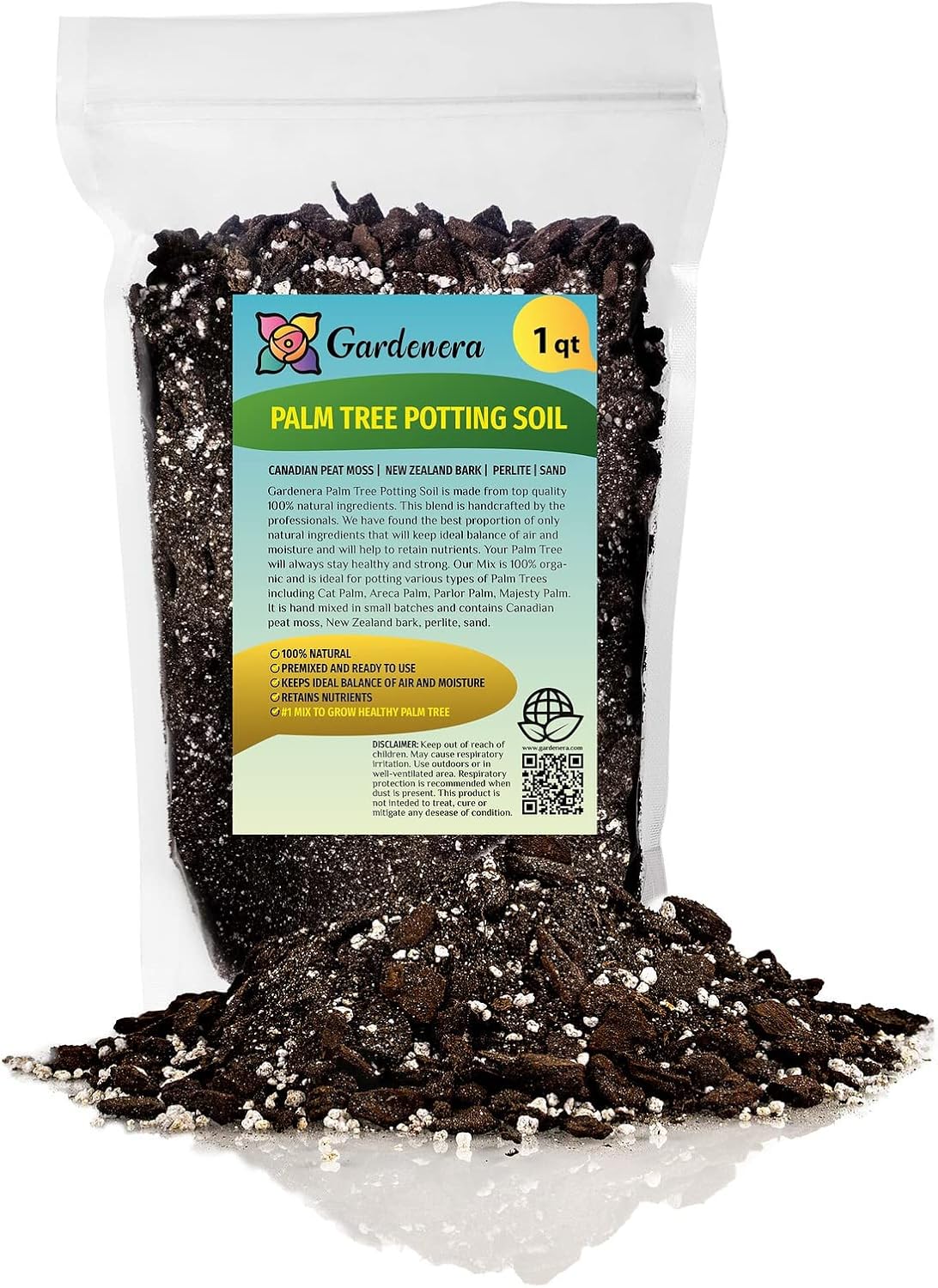
This Gardenera Palm Tree Potting Mix is a ready-to-use blend formulated for palm trees, combining Canadian peat moss, New Zealand bark, Ukrainian perlite, and sand to give a balance of moisture retention and drainage. It is typically used when repotting indoor or container palms or refreshing potting media for established potted specimens. The peat and bark add organic matter and structure while the perlite and sand increase aeration and reduce the risk of waterlogging. In practice this mix makes repotting straightforward: loosen roots, fill the new container, position the palm at the right height, and water to settle the soil. Because the bag is only 1 quart, it is best for single small pots, seedlings, or as a topdressing rather than filling large containers. The product notes safety precautions for handling dusty components, so wear a mask and gloves when working with it. If you want a palm-tailored, easy-to-use small bag for potting or small refreshes, this mix covers the bases; for larger jobs you will need multiple bags or a larger size option.
Best for: Buyers who need a small, palm-focused potting mix for repotting seedlings, small potted palms, or for topping up containers and who prioritize a product designed for palm root health.
Less Ideal for: Gardeners needing to fill large containers, multiple palm pots, or outdoor planting holes should avoid this size and choose bulk or larger-volume mixes instead.
- Formulated specifically for palms with peat, bark, perlite, and sand for balanced moisture and drainage
- Good aeration that helps prevent root rot in container palms
- Ready-to-use mix simplifies repotting and small pot top-ups
- Very small 1 quart volume limits use to seedlings or small pots
- Contains dusty components requiring gloves and a mask during handling
Verdict: A compact, palm-tailored potting mix that makes small repots and top-ups simple and effective.
E.B. Stone Organics Citrus & Palm Mix Potting Soil, 1.5 cu ft

| Brand Name | E.B. Stone Organics |
|---|---|
| Unit Count | 1536 Ounce |
| Volume | 1.5 cubic feet |
| Style Name | Potting Soil |
E.B. Stone Organics Citrus & Palm Mix is a ready-to-use organic soil blend designed for container and in-ground planting of citrus, palms, avocados and tropical foliage. The mix pairs aged fir bark and pumice to keep the root zone well aerated and fast-draining so plants that dislike soggy feet avoid root rot, while added mycorrhizae improve nutrient and water uptake. It is intended to be used straight from the bag for potting or worked into beds when planting, which simplifies planting and repotting tasks. For gardeners seeking reliability, this blend delivers consistent structure and moisture retention without heavy amendments, and the organic base supports longer-term soil biology. Limitations are the single bag volume of 1.5 cubic feet, which means larger projects will require multiple bags and mixing on site, and it does not list N-P-K numbers or slow-release fertilizer content so supplemental feeding may be needed for heavy-feeding specimens.
Best for: Gardeners who prioritize reliable, low-maintenance potting media for citrus and tropical plants and want a ready-made organic blend that supports healthy roots.
Less Ideal for: People who need large volumes for landscaping projects or who prefer a potting mix with specified fertilizer content and tailored nutrient ratios.
- Formulated specifically for citrus, palms and tropicals to match their root needs.
- Aged fir bark and pumice provide good drainage and aeration to reduce risk of root rot.
- Contains beneficial mycorrhizae to enhance root nutrient and water uptake.
- Ready-to-use bag simplifies repotting or planting without on-site blending.
- Single bag is only 1.5 cubic feet so multiple bags are required for larger trees or beds.
- No detailed fertilizer analysis provided so additional feeding may be necessary for heavy feeders.
Verdict: Choose this mix when you want a consistent, ready-to-use organic soil that promotes healthy, well-aerated roots for citrus and tropical plants.
Miracle-Gro Cactus, Palm & Citrus Potting Mix, 8 qt.
| Brand Name | Miracle-Gro |
|---|---|
| Volume | 8 quarts |
| Unit Count | 1 Count |
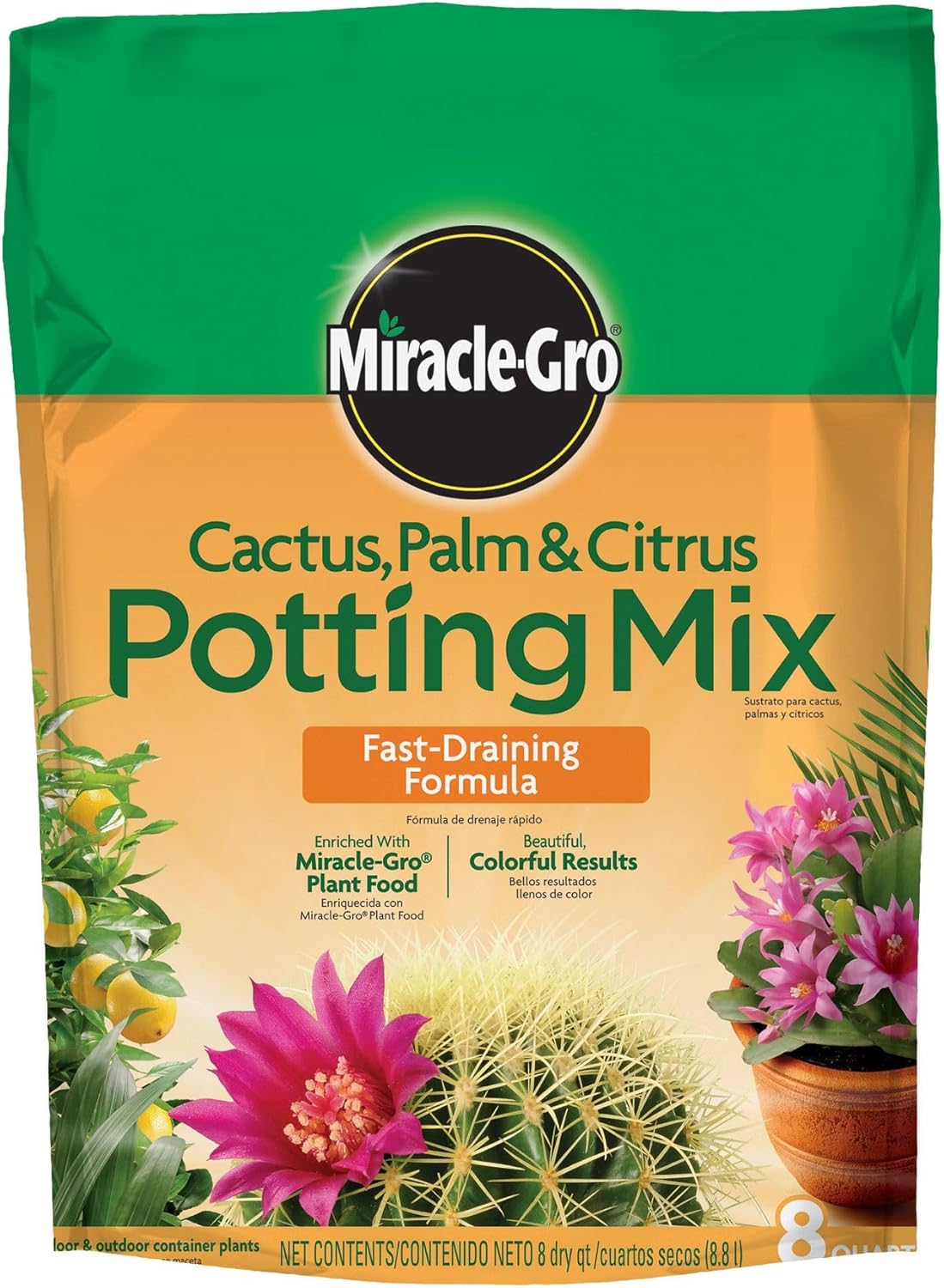
This 8-quart Miracle-Gro potting mix is designed for container-grown cacti, palms, and citrus and combines peat moss, sand, perlite, and forest products for faster drainage and reduced compaction. It arrives ready to use and is enriched with Miracle-Gro plant food so newly potted citrus get an initial nutrient boost without immediate fertilizing. Typical use is straightforward: choose a pot with drainage, fill about one third, set the root ball and top up, then water and allow to drain. The formula helps soil dry between waterings, which is important for citrus root health in containers, and one bag is enough for two 8-inch pots. Limitations are the small volume for larger trees and the presence of peat moss if you prefer peat-free mixes; heavier or older citrus will need larger volumes and eventual repotting. For growers wanting a quick, reliable container medium that balances moisture retention with drainage, this mix performs as expected.
Best for: Growers who repot or maintain container citrus and want a ready-to-use mix that balances drainage and initial feeding for healthier root development.
Less Ideal for: Gardeners potting mature or large citrus specimens that need large volumes of soil or those seeking a peat-free or custom mineral-heavy citrus bonsai substrate.
- Fast-draining blend reduces risk of waterlogged roots for container citrus
- Pre-enriched with plant food to give newly potted plants an initial nutrient boost
- Contains perlite and sand to resist compaction and maintain aeration
- Formulated for indoor or outdoor containers so it works across sites
- 8-quart bag is small for larger or multiple citrus containers
- Contains peat moss which some buyers avoid for sustainability reasons
Verdict: A convenient, fast-draining, plant-food–enriched container mix that makes repotting small to medium citrus trees quick and reliable.
Choosing the Right Potting Mix for Majesty Palm: Key Factors to Consider
Drainage and Aeration
Majesty Palm roots need air to avoid root rot and fungal problems. A potting mix with clear pore space, created by coarse components like coarse sand, pine bark, or perlite, permits excess water to escape and oxygen to reach roots.
Poorly aerated mixes compact over time and stay wet at the root crown, which stresses palms more than brief dry spells. When assessing mixes, look for visible chunky particles and read product descriptions for porosity. For DIY mixes, add chunky bark or perlite to clay-heavy soils to open the mix.
Moisture Retention That Matches Your Watering Rhythm
Majesty Palms prefer steady moisture rather than long saturated periods or extended drought. The right potting mix holds enough water to sustain the plant between routine waterings while still draining well after irrigation.
Materials such as coir or well-aged compost increase moisture-holding capacity without turning the mix into a sponge. If you water infrequently, choose a mix with slightly higher moisture retention. If you tend to water often or your home is humid, choose a faster-draining blend to prevent soggy roots.
Balanced Organic Nutrient Content
Young Majesty Palms benefit from a potting medium that supplies slow-release nutrients while you establish them in a pot. Organic components like composted bark or well-aged compost provide gradual feeding and encourage healthy microbial life.
Avoid mixes that promise immediate heavy feeding or those with high soluble salts. A balanced organic base reduces the need for frequent fertilization in the first months and supports even growth of new fronds without burning fine root tips.
Particle Size and Root Anchorage
Roots need a medium they can penetrate and cling to. A mix with a range of particle sizes gives structural support for the root ball, especially in taller containers where the palm needs stability against tipping.
Very fine mixes can collapse and give poor support, while overly coarse mixes may not retain enough fine particles for root hairs to establish. Aim for a texture that combines chunky mineral pieces with finer organic crumbs to provide both anchorage and easy root exploration.
Resistance to Compaction Over Time
Potting mixes settle and compress as they are watered and as organic matter decomposes. For container-grown Majesty Palm, a mix that maintains porosity for many months reduces the need for frequent repotting or aggressive soil refresh.
Materials such as inert aggregates and large bark pieces slow compaction. Consider mixes that advertise long-term structure or include stable components so you avoid root crowding and diminished aeration after a season or two.
Repotting Tips for Majesty Palm
Repot in spring or early summer when the palm is actively growing. Choose a container only one size larger than the current pot to avoid excess soil that stays wet. Gently tease the root ball and remove any mushy roots before placing the plant in fresh mix.
Position the crown slightly above the pot rim so the top few inches of mix dry between waterings. After repotting, water thoroughly to settle the mix and then allow the surface to dry to your typical moisture baseline before the next watering.
- Use a pot with drainage holes to prevent waterlogging.
- Avoid burying the trunk deeper than it was previously planted.
- Top-dress with a thin layer of mulch only if it does not trap moisture at the crown.
DIY Mix Adjustments
If you prefer to blend your own potting mix, start with a well-draining commercial base and add components to tune moisture retention and structure. A common home mix might combine two parts quality potting medium, one part coarse bark, and one part perlite or pumice.
Adjust the ratio based on your environment. In dry climates, increase organic components or coir slightly. In humid or low-light indoor spaces, add more perlite or pumice to speed drainage and reduce the risk of root disease.
- Coir or well-rotted compost adds water-holding capacity.
- Perlite or pumice increases aeration without adding weight.
- Coarse bark improves structure and slows compaction.
Watering Strategy With the Right Mix
Match your watering schedule to the mix. A faster-draining blend requires more frequent, thorough watering so the root zone receives moisture; a higher retention mix needs less frequent irrigation but careful monitoring to avoid saturation. Always water deeply until excess runs from the drainage holes.
Check moisture several inches down with a finger or a moisture meter rather than relying on surface dryness alone. Adjust irrigation frequency seasonally as growth and indoor humidity change.
- Water deeply and let excess drain completely.
- Avoid shallow daily wetting that keeps the surface moist but not the root depth.
- Reduce watering in winter when growth and evaporation slow.
Fertilizing Considerations for Container Palms
A balanced slow-release fertilizer or regular dilute liquid feed supports frond development. How often you fertilize depends on the nutrient content of the potting mix and whether organic matter is slowly releasing nutrients.
If using a nutrient-rich organic mix, you can reduce supplemental feeding early in the season and observe growth before adding more fertilizer. Always follow label directions for palms when applying concentrated feeds to avoid leaf tip burn.
- Use feeds formulated for palms when possible or a balanced 10-10-10 style formula.
- Supplement micronutrients, especially iron, if you notice yellowing between veins.
- Flush the pot with clean water occasionally to prevent salt buildup.
Managing Common Soil Problems
If the mix shows signs of compaction, such as poor drainage or slow drying after watering, repotting into a fresher, chunkier mix is usually the solution. For root rot symptoms, reduce watering and inspect roots; remove decayed tissue and repot into a fast-draining blend.
Yellowing fronds can indicate nutrient deficiency or poor root function. Test moisture and check for compacted soil before increasing fertilizer. Address one variable at a time so you can see what action helps.
- Fix compaction by repotting with added coarse components.
- Treat persistent wetness by improving drainage and checking pot holes.
- Address nutrient issues after ruling out water and soil structure problems.
How We Chose the Best Potting Mix for Majesty Palm
We prioritized criteria that matter to container-grown Majesty Palm health. Drainage and aeration were top filters because Majesty Palm roots need air as well as moisture; mixes that compact or retain surface water were excluded. Moisture retention was evaluated as a separate criterion to find blends that hold enough water between regular indoor watering without becoming waterlogged. Nutrient content and slow-release organic matter were considered to ensure steady feeding during the first weeks after repotting. Root space and structure were checked by looking at particle size and organic-to-mineral ratios that support stable root anchoring. Longevity and resistance to compaction guided selection toward mixes that retain structure over months of use. We excluded blends formulated only for cacti, succulents, or heavy tropical soils that either drained too quickly or held excessive moisture. We also excluded mixes with unbalanced salt-heavy fertilization. The final list focuses on mixes with a balanced mineral-organic blend, good porosity, and modest baseline nutrients suited to Majesty Palm container culture.
FAQ
How often should I repot a Majesty Palm into fresh mix?
Typically every 2 to 3 years for younger, actively growing plants, or when the mix shows compaction or the roots are crowded. Mature plants in large containers may need repotting less often.
Can I use regular indoor potting soil for Majesty Palm?
Regular potting soil can work if amended to improve aeration and drainage. Adding coarse bark and perlite or pumice helps create the open structure palms prefer.
Is cactus or succulent mix suitable for Majesty Palm?
Cactus mixes drain very quickly and usually do not retain enough moisture for Majesty Palms. You can blend a small portion of cactus mix with moisture-retentive components to balance it, but using a palm-suited mix is easier.
Should I add fertilizer to the potting mix when repotting?
A light dose of slow-release or a small amount of balanced starter fertilizer can help establishment, but avoid heavy feeding at repotting. Many mixes supply baseline nutrients that reduce immediate fertilizer needs.
How can I tell if my mix is compacting?
Signs include slow drainage, water pooling on the surface, or a hard crust on top. You may also notice reduced new root growth. If these occur, refresh the mix or repot with added chunky materials.
Final Verdict
Choose a potting mix that balances drainage with moisture retention, prioritizing porosity and steady nutrient release. Match the texture to your container size and watering habits to reduce common problems like root rot or chronic drought stress. When in doubt, favor a mix that maintains structure over time and supports steady root growth. Prioritize drainage and root anchorage first, then fine-tune moisture retention and nutrients based on your environment and watering schedule.
