

Note: This article contains affiliate links. If you click on these links and make a purchase, I may earn a small commission at no extra cost to you. This helps support my research and content. Read my full affiliate disclosure here.
If you want cuttings to form strong roots and become healthy rose plants, the rooting medium matters more than many gardeners expect. The right soil for rose cuttings provides a light, stable structure that drains excess water while holding enough moisture for root development. In this guide we narrowed the field to six shortlisted soils that suit the specific needs of cut roses and similar softwood or semi-hardwood cuttings. We evaluate each mix for how it handles drainage, moisture retention, and the pore structure that young roots need to find oxygen and water quickly. Read on to see which characteristics matter most and why these mixes made the list.
Top Picks at a Glance
| Best Overall The best all-around choice for most situations | Rio Hamza Trading Plant Propagation Soilless Mix (4 Quarts) |  |
| Best Quality Built to a higher standard if you want something more solid | Premier Horticulture Pro-Mix HP Mycorrhizae High Porosity Growing Medium |  |
| Best Value The sweet spot between price and what you get | Soil Sunrise Plant Propagation Mix (8 Quarts) |  |
| Best Budget The cheapest option that still gets the job done reliably | SunGro Horticulture Organic Seedling Mix (8 Quart) |  |
| Highest Rated A top-rated pick with lots of positive feedback | Coast of Maine Roses & Flowers Planting Soil, 20 qt (2-Pack) |  |
| Most Popular A crowd favorite that many people choose with confidence | Miracle-Gro Indoor Potting Mix for Seed Starting, 8 qt. (2-Pack) |  |
Rio Hamza Trading Plant Propagation Soilless Mix (4 Quarts)

| Volume | 4 quarts |
|---|---|
| Ingredients | Peat moss, perlite, worm casting, lime |
| Style Name | Plant Propagation Soil Mix |
This 4-quart soilless propagation mix is designed specifically to root cuttings and establish young plants. The blend combines peat moss for moisture retention, horticultural perlite to keep the medium airy and prevent compaction, lime to balance pH, and worm castings for gentle nutrient support. You typically use it dampened in trays, small pots, or propagation cells when starting houseplant cuttings or seedlings. The lightweight, open texture helps roots breathe and reduces rot risk compared with garden soil, and the added worm castings give new roots a mild nutrient boost without overwhelming tender cuttings. Because it is soilless, it will need supplemental feeding once roots form and plants are potted into regular potting mix. The 4-quart bag is convenient for small projects and beginners, but frequent propagators or those working at larger scale may find the volume limiting and need to buy multiple bags.
Best for: Gardeners who want a reliable, ready-to-use propagation medium for rooting houseplant cuttings and starting seedlings, especially those who value ease and consistent results.
Less Ideal for: Large-scale propagators or outdoor bed transplanting projects who need bulk volumes or a long-term planting medium should look for larger commercial mixes or garden soil alternatives.
- Soilless formula promotes aeration and reduces damping-off risk
- Contains perlite to prevent compaction and improve drainage
- Worm castings provide mild, natural nutrient support for new roots
- Hand-blended batches aim for consistent texture and moisture balance
- Small 4-quart volume may be insufficient for multiple or large propagation projects
- Contains peat moss which can compact over long periods and may require refreshing
Verdict: A lightweight, hand-blended soilless mix that makes rooting cuttings easier and more reliable for small-scale home propagation.
Premier Horticulture Pro-Mix HP Mycorrhizae High Porosity Growing Medium

| Item Form | Loose Fill |
|---|---|
| Specific Uses For Product | Plant Growth, Root Development |
| Coverage | Medium |
| Target Species | crops, plants |
| Mixing Ratio | 75:25 |
This Pro-Mix HP with mycorrhizae is a loose, high-porosity peat-based medium designed for seed starting, rooting cuttings, and water-sensitive or low-light crops. You use it like a standard potting mix: fill trays or containers, water thoroughly, and plant seeds or transplants. Notable features include added Glomus intraradices mycorrhizal inoculum to support early root establishment and a formulation that emphasizes air capacity and extra drainage, which helps prevent damping off in overwatered starts. The mix is practical for small-scale greenhouse or indoor seed starting where reliable drainage and oxygenation at the root zone matter. Limitations are that it is peat-based, so it will dry out faster than heavier mixes and requires regular monitoring of moisture and feeding since it is not a complete long-term potting soil. Also the package size is large, so it is best for gardeners who will use it across many flats rather than a single small project.
Best for: Growers who prioritize reliable, fast-rooting starts and need a consistent, well-draining medium for seed trays, cuttings, or low-light seedlings.
Less Ideal for: Casual gardeners who want a low-maintenance all-in-one potting soil for long-term container plants or those who prefer peat-free blends.
- Contains mycorrhizal inoculum to support early root growth
- High porosity provides excellent air capacity and extra drainage
- Formulated for water-sensitive crops and rooting cuttings
- Peat-based mix dries faster and needs more frequent watering
- Not a complete long-term potting soil so requires supplemental fertilization
Verdict: Choose this high-porosity, mycorrhizae-enhanced mix when you need a dependable, well-draining medium that promotes fast, healthy root development for seed starting and cuttings.
Soil Sunrise Plant Propagation Mix (8 Quarts)

| Ingredients | peat moss, perlite, worm castings, lime |
|---|---|
| Volume | 8 quarts |
| Style Name | Peat Moss, Perlite, Worm Castings, pH-Balanced Plant Propagation Mix |
Soil Sunrise Plant Propagation Mix is a ready-to-use, soil-less blend designed to help cuttings form strong roots and to refresh lightweight potting for tropical and houseplants. The formula combines peat for moisture retention, perlite for drainage and aeration, worm castings for gentle nutrition, and lime to stabilize pH. In practice the mix holds enough moisture to keep delicate cuttings from drying while still allowing oxygen to reach developing roots, so you see fewer soggy stems and more healthy root threads. The light texture also makes it easy to insert cuttings and remove them for inspection without compacting. Because it is a specialized propagation mix rather than a complete potting soil, you may need to switch to a richer potting medium after roots establish or top-dress for longer-term growth. The 8 quart bag is convenient for small batches of cuttings but not intended for large-scale propagation projects. If you want a straightforward, low-mess starting medium that reduces rot risk, this does the job very well.
Best for: Buyers looking for a no-fuss, reliable starting medium to root cuttings and repot small tropical or houseplant specimens; ideal for people who value predictable rooting conditions and low maintenance during the rooting phase.
Less Ideal for: Growers who need a heavy-duty long-term potting soil or who propagate at large scale should consider larger-volume potting blends or custom mixes tailored to their species and batch size.
- Light, fast-draining texture helps oxygen reach roots and reduces risk of root rot
- Includes worm castings for gentle, natural nutrients during early root development
- pH-balanced formula with lime to stabilize acidity for sensitive cuttings
- Ready-mixed blend saves time compared with sourcing individual components
- 8 quart volume is small for large or repeated propagation batches
Verdict: A compact, ready-made propagation mix that gives cuttings the moisture control and aeration they need to root reliably.
SunGro Horticulture Organic Seedling Mix (8 Quart)

| Brand Name | SUN GRO |
|---|---|
| Style Name | Peat Moss |
| Volume | 8 quarts |
SunGro Horticulture Seedling Mix is a fine-textured, peat-based starting mix formulated to germinate seeds in flats, pots, and plug trays. It contains sphagnum peat moss, perlite for lightness and drainage, and an organic wetting agent to promote even water absorption, which helps maintain consistent moisture for small seeds. The mix also includes a silicon-enriched additive called RESiLIENCE intended to support stronger seedlings and reduce wilting during establishment. Typical use is filling trays or small pots, keeping the medium evenly moist but not waterlogged, then transplanting seedlings once roots are established. Practical benefits include predictable moisture retention, a clean fine texture that allows delicate roots to develop, and OMRI listing for organic onion transplants and other edible starts. Limitations are its small 8 quart volume for larger onion seed programs and that peat-based mixes dry out faster than heavier soils, so frequent monitoring is required; it also provides limited long-term nutrients so potting up into a richer mix or fertilizing before transplant is necessary.
Best for: Gardeners who want an organic, predictable seed starting medium for small to medium onion seed batches and who prioritize reliable germination over bulk volume.
Less Ideal for: Commercial growers or anyone starting very large quantities of onion seedlings should choose larger-volume or more nutrient-dense starting media.
- Fine, light texture suitable for delicate seed germination
- Organic wetting agent promotes uniform water absorption
- OMRI listed so safe for organic edible starts
- Contains perlite for improved drainage and root aeration
- Small 8 quart bag may not be cost-effective for starting large onion batches
- Peat-based mix has low long-term nutrient content and needs fertilizing before transplant
Verdict: A reliable OMRI-listed seed starting mix that delivers even moisture and a fine texture ideal for producing healthy onion seedlings in small home gardens.
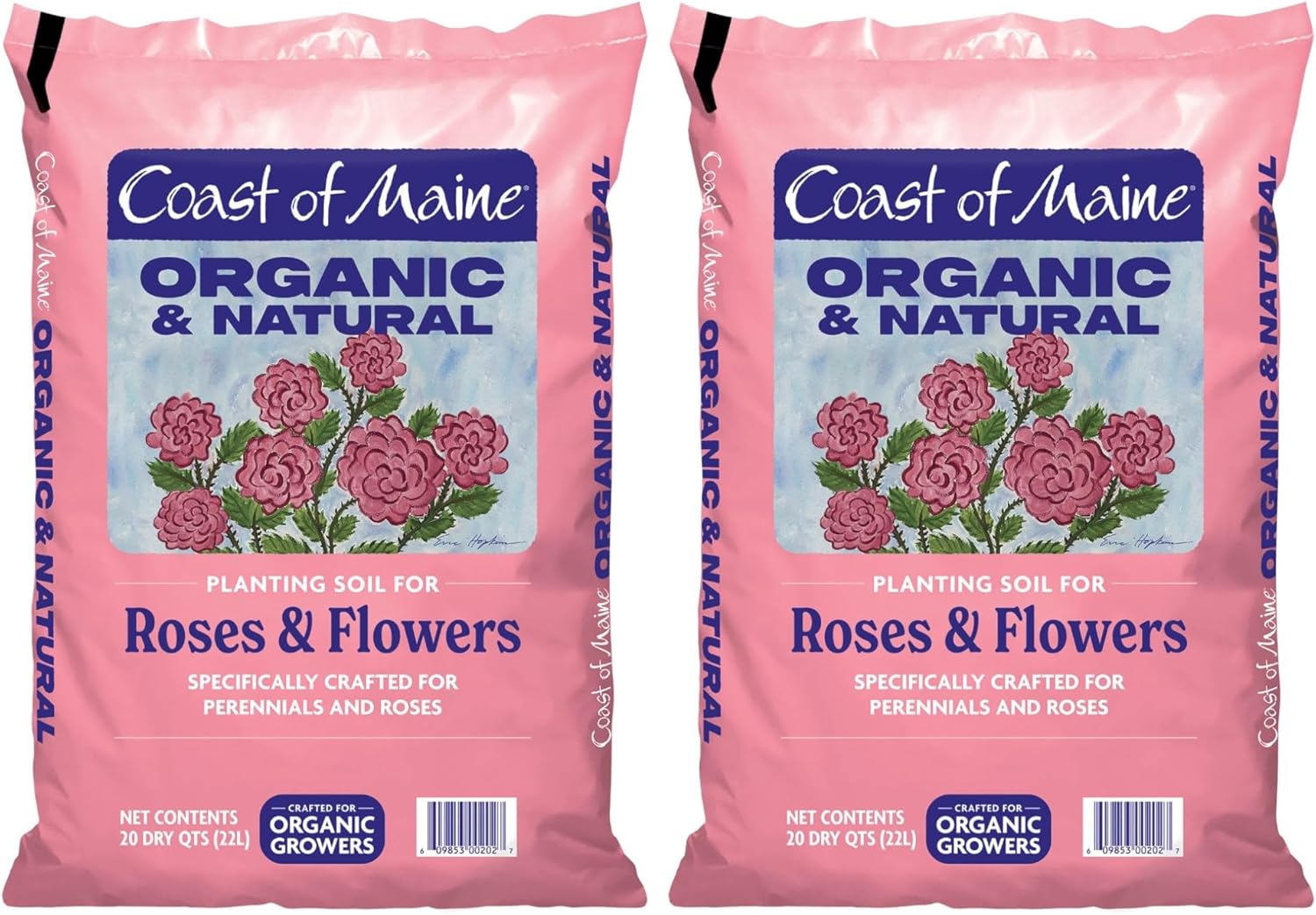
Coast of Maine Roses & Flowers Planting Soil, 20 qt (2-Pack)
| Unit Count | 2 Count |
|---|---|
| Volume | 20 quarts |
| Brand Name | Coast of Maine |
This Coast of Maine Roses & Flowers planting soil is an organic compost blend designed to revive planting mixes for roses, annuals, and perennials. Gardeners typically use it as a top dressing, a soil amendment mixed into existing bed soil, or straight into containers when repotting roses and flowering plants. Notable features include OMRI listing for organic use and a formula that uses seaweed, lobster meal, and composted materials to boost microbial life and supply slow-release nutrients. In practice the mix improves moisture retention while offering adequate drainage, which helps reduce watering frequency without waterlogging root crowns in containers. The product supports soil biodiversity and is safe around children and pets when used as directed. Important limitations are that this is a 20 quart bag sold in a two pack so it is best for small-scale container work or targeted amendments rather than large landscaping projects, and heavier organic mixes like this can compact over time compared with lightweight potting mixes formulated solely for container aeration.
Best for: Buyers who want an organic, nutrient-rich amendment for container roses and flowering pots and who value soil health and sustainable ingredients.
Less Ideal for: Anyone needing a lightweight commercial potting mix optimized only for maximum aeration or gardeners tackling large in-ground areas who need bulk volume.
- OMRI listed organic formula made from seaweed, lobster meal, and compost
- Balanced moisture retention and drainage suitable for container roses
- Supports soil microbiology and biodiversity for healthier root systems
- Safe for use around kids and pets when handled per instructions
- 20 quart bags are small for large projects so multiple bags are needed for beds
- Denser compost-rich mix can compact in containers over time compared with lighter potting-only mixes
Verdict: A small-batch organic soil blend that revitalizes container roses and flower pots by adding slow-release nutrients and supporting soil life.
Miracle-Gro Indoor Potting Mix for Seed Starting, 8 qt. (2-Pack)

| Brand Name | Miracle-Gro |
|---|---|
| Item Type Name | Potting Mix |
| Number of Packs | 2 |
| Volume | 8 quarts |
This two-pack of Miracle-Gro Indoor Potting Mix is designed specifically for starting seeds and rooting cuttings indoors. The blend is lightweight and pre-enriched with plant food so seedlings get a nutrient boost during early root development, and the manufacturer says it yields stronger roots compared with unfed mixes when used as directed. It is intended for vegetables, flowers, and herbs and works well in cell trays and small containers; one 8 qt. bag will fill roughly three 72-cell trays. Notably, the formula omits compost and bark, which helps lower the chance of fungus gnat infestations in damp seed-starting setups. Use it by filling trays or pots, keeping the mix evenly moist, and shielding newly sown seeds from direct sun until germination. Important limitations are standard for enriched mixes: it contains fertilizer (so handle carefully) and it is a seed-starting medium rather than an all-purpose potting soil for mature plants, so you will likely transplant seedlings into a different mix or amend soil later.
Best for: Buyers who want a low-effort, indoor seed-starting medium that supports faster root development and reduces common pest risks while following proven seed-starting practices.
Less Ideal for: Gardeners who need a permanent potting soil for mature container plants or who prefer fully organic, compost-rich mixes should consider alternatives.
- Lightweight, ready-to-use formula tailored for seed germination and cuttings
- Pre-enriched with plant food to support early root and seedling growth
- Excludes compost and bark to reduce habitat for fungus gnats
- Comes as a two-pack so you have enough mix for multiple trays
- Contains fertilizer which requires careful handling and storage
- Intended for seed starting so not formulated as long-term potting soil for mature plants
Verdict: A practical, low-risk seed-starting mix that boosts early root growth and reduces fungus gnat risk, making it a reliable choice for indoor vegetable seedlings.
Choosing the Right Soil for Rose Cuttings: Key Factors to Consider
Drainage and Aeration
Proper drainage and aeration give young rose roots access to oxygen while preventing the standing water that causes rot. A propagation mix should have a balance of coarse and fine particles so water moves through the profile without completely washing away moisture. Too fine a texture compacts around a stem and chokes oxygen flow; too coarse and the cutting will dry out quickly.
Look for mixes that include components such as perlite, coarse sand, or fine horticultural grit to open pore space. The goal is a medium that holds moisture in the smaller pores while leaving larger pores for air. This balance speeds root initiation and reduces the risk of damping-off.
Moisture Retention
Cuttings need consistent moisture at the base of the stem to form roots, but excess water invites rot. Moisture retention depends on the medium's particle surface area and organic content. Materials like peat or coco coir retain water well, while mineral amendments hold less but contribute to structure.
A good cutting mix will include a moderate proportion of water-retentive material so the cutting does not wilt between mistings or waterings. For home propagation, a mix that stays evenly moist for several days reduces the need for constant misting and lowers failure from drying.
Sterility and Disease Risk
Young cuttings lack established root systems and are vulnerable to soil-borne pathogens. Using a mix with low microbial load reduces early losses. Sterile or pasteurized components, clean bags, and inert ingredients like perlite and sterile peat or coir help limit pathogens.
Avoid raw garden soil or compost that can introduce fungi or nematodes. Even with careful sanitation of tools and containers, the propagation medium itself should minimize disease risk so the cutting's energy goes into rooting rather than fighting infection.
Particle Consistency and Grading
Uniform particle size makes moisture distribution predictable and reduces pockets of water or air that can stress a cutting. Graded mixes that combine a fine fraction for moisture contact with a coarse fraction for drainage are ideal. Extremely variable mixes can cause uneven rooting and make transplanting trickier.
Consistent particle grading also improves transplant success because roots grow through a similar texture when moved to a potting mix. For rose cuttings, look for a texture that supports stem stability without being so loose that the cutting leans or collapses.
Ease of Use and Handling
Propagation often happens in small trays, tubes, or pots, sometimes under humidity domes. A mix that is easy to fill, firm up around a stem, and rewet reliably will save time and reduce handling stress on cuttings. Dusty or exceedingly fine mixes can be messy and hard to get right in small containers.
Consider whether a mix is ready to use straight from the bag, requires pre-wetting, or benefits from light compression. For beginners, mixes that behave predictably when watered and hold stems upright without extra support are especially helpful.
Types of Media Used for Rose Cuttings
Several media types work for rose cuttings, each with tradeoffs. Pure mineral-based media such as perlite or coarse sand maximize drainage and aeration but need an added retentive component or more frequent misting. Peat-based mixes hold moisture well and are forgiving, but peat compacts over time and has environmental considerations. Coco coir is a renewable alternative to peat with good water-holding capacity and consistent structure.
Many successful mixes are blends that combine an inert mineral fraction with an organic binder to create a stable, well-draining rooting environment. Choose a media type based on how often you can monitor cuttings, your propagation setup, and local water quality.
- Mineral-only media: excellent aeration, needs frequent moisture management
- Peat-based mixes: good retention, may compact with age
- Coco coir blends: renewable, consistent water holding
- Sand or grit amendments: improve drainage and weight
Preparing Cuttings and Containers
Trim cuttings cleanly and make sure the stem base is free of leaves that will sit below the medium. Use sharp tools and make a fresh cut just below a node to expose cambium and promote rooting.
Sanitize containers and fill them with the propagation mix so the cutting sits at the correct depth and is stable. Pre-wet the medium lightly so it is evenly moist but not saturated. When inserting the cutting, press the medium gently around the stem to remove large air pockets while keeping the surrounding texture open enough for aeration.
- Sterilize tools between plants to reduce disease spread
- Use small tubes or pots that support the stem without burying too much
- Mark the date on containers to track rooting progress
Watering, Humidity, and Rooting Environment
Maintain consistent humidity around cuttings to reduce transpiration stress while roots form. A clear dome, misting system, or frequent hand misting can help, but avoid long periods of saturation. Monitor moisture by feel or with a small probe; the medium should be evenly moist but not soggy.
Airflow at the leaf level reduces fungal growth, so allow gentle ventilation while keeping humidity adequate. Temperature affects rooting speed; warm but not hot conditions usually speed root initiation for most rose varieties. Adjust watering frequency with temperature and light levels to keep conditions stable.
- Keep medium evenly moist, not waterlogged
- Provide gentle air movement to reduce fungal risk
- Warm temperatures generally speed rooting
When to Pot Up and Harden Off
Pot up cuttings when they show a healthy web of roots that will hold soil, typically several weeks depending on variety and conditions. Move them into a looser potting mix with similar drainage characteristics to avoid shocking the young roots. Handle roots gently and keep the newly potted plants in a protected, humid spot for a short transition.
Gradually reduce humidity and increase light over one to two weeks to harden off cuttings. This helps them acclimate and build stronger stems before planting out into the garden or a larger container.
- Transplant when roots are well formed and visible
- Use a similar-textured potting mix to reduce transplant stress
- Reduce humidity slowly over several days
Sourcing and Sustainability Considerations
When choosing a mix, consider ingredient sourcing and environmental impact. Peat is effective but has sustainability concerns; coco coir is a common peat alternative with lower carbon impact but variable quality depending on processing. Locally produced sand or grit reduces transport footprint and offers consistent particle sizes.
Look at bag labeling for ingredient transparency. Mixes with clear percentages of mineral and organic components make it easier to judge how they will behave in your propagation system. Reusing sterilized propagation trays and avoiding disposable materials further reduces environmental impact.
- Prefer mixes with transparent ingredient lists
- Consider coco coir as a peat alternative
- Choose local mineral amendments when possible
How We Chose the Best Soil for Rose Cuttings
We focused on characteristics that directly affect rooting success for rose cuttings. Key evaluation points included particle texture and porosity to ensure oxygen reaches developing roots, moisture retention that keeps cuttings hydrated without promoting rot, and drainage performance to prevent waterlogging. Sterility and disease risk were assessed through ingredient profiles and common horticultural practices to lower the chance of damping-off and fungal issues. Ease of use and handling were considered so mixes work well in pots, trays, or propagation tubes. Longevity and transplant readiness were checked by looking at whether the medium supports early root growth long enough to pot up. We excluded general garden soils and mixes designed for established shrubs because their heavier texture and higher nutrient load can hinder delicate rooting. Also excluded were formulations that rely solely on compost or raw garden loam. The final shortlist contains mixes with ingredients and structure appropriate for rose cutting propagation and aligns with the scoring criteria above.
FAQ
Can I use garden soil for rose cuttings?
Garden soil usually contains organisms and particles that can inhibit rooting and increase disease risk. It is generally better to use a sterile or inert propagation mix that provides predictable drainage and lower pathogen load.
How often should I water cuttings in a propagation mix?
Watering frequency depends on the mix and environment, but aim to keep the medium evenly moist without pooling water. Check by touch every few days and adjust based on temperature, humidity, and light.
Is peat or coco coir better for rooting roses?
Peat holds water well and is traditionally used, while coco coir offers similar retention with better renewability. Both work when mixed with mineral amendments to improve aeration; choice often comes down to availability and sustainability preferences.
Do I need rooting hormone with a good propagation soil?
Rooting hormone often increases the success rate, especially for difficult-to-root varieties, but a well-structured propagation mix improves outcomes even without hormone. Use hormone when you want higher reliability.
Should propagation mixes be pre-wetted before use?
Pre-wetting helps ensure even moisture distribution and avoids dry pockets that stress cuttings. Wet the mix until it is evenly moist but not dripping before inserting stems.
Final Verdict
Choose a propagation soil that balances open pore space for oxygen with enough fine material to hold moisture at the cutting base. Prioritize drainage and sterility first, then match moisture retention to your watering routine and propagation environment. Tradeoffs are normal: more aeration usually means more frequent watering, while higher retention reduces maintenance but raises rot risk. With the right mix and careful humidity and watering control, you can consistently root rose cuttings and transition them successfully to pots or the garden.
