

Note: This article contains affiliate links. If you click on these links and make a purchase, I may earn a small commission at no extra cost to you. This helps support my research and content. Read my full affiliate disclosure here.
If you manage large lawns, athletic fields, or commercial properties, a commercial lawn sweeper is one of the fastest ways to remove leaves, grass clippings, and light debris without repeated raking. The right sweeper saves labor, reduces mower bagging time, and keeps turf looking professional through high-traffic seasons. This guide covers seven shortlisted commercial-grade sweepers chosen for durability, hopper size, and real-world sweep performance. We explain the evaluation criteria and practical tradeoffs so you can pick the sweeper that fits your property size, towing vehicle, and maintenance routine.
Top Picks at a Glance
| Best Overall The best all-around choice for most situations | Agri-Fab 50 in Heavy Duty Tow-Behind Lawn Sweeper with 26 cu ft Hopper |  |
| Best Quality Built to a higher standard if you want something more solid | Brinly 54" Tow-Behind Combo Lawn Sweeper with Dethatcher and 30 cu ft Hamper |  |
| Best Value The sweet spot between price and what you get | ActiveTrail 42-inch Tow-Behind Lawn Sweeper with 18 cu ft Hopper |  |
| Best Budget The cheapest option that still gets the job done reliably | Lefitap 44" Tow-Behind Lawn Sweeper — 25 cu ft Hopper |  |
| Highest Rated A top-rated pick with lots of positive feedback | Jojoka Tow-Behind Lawn Sweeper, 52-Inch Wide with Large Capacity Hopper |  |
| Most Popular A crowd favorite that many people choose with confidence | Agri-Fab 52" Tow-Behind Lawn Sweeper, 26 cu ft Hopper |  |
| Best Seller A high-volume bestseller chosen again and again | Brinly 42" Tow-Behind Lawn Sweeper with 20 cu. ft. Hamper |  |
Agri-Fab 50 in Heavy Duty Tow-Behind Lawn Sweeper with 26 cu ft Hopper

| Working width | 50 in |
|---|---|
| Overall width | 58 in |
| Hopper capacity | 26 cu ft |
| Brushes | Four 10 in diameter brushes |
The Agri-Fab 50 in Heavy Duty Tow-Behind Lawn Sweeper is built for large yards and frequent cleanups where speed and capacity matter. It tows behind a tractor or riding mower and covers a wide 50 inch swath so you complete passes faster than smaller sweepers. The 26 cu ft flow-thru hopper reduces stops to dump and lets the bag fill more completely, while the solid brush shaft and four 10 inch brushes with extra bristles maintain consistent ground contact for reliable pickup even when turning. A single-lever toolless infinite brush height adjustment makes it quick to dial in brush position for different turf conditions without tools. Practical benefits include fewer passes, less stopping to empty, and steady performance across varied lawns. The unit is purpose-built for heavy use, but its size and tow requirement mean it is best for owners with tractors or larger riding mowers and substantial lawn area to maintain.
Best for: Owners of lawn tractors or riding mowers who need a high-capacity, dependable sweeper to quickly clear leaves and clippings over large yards and maintain strong pickup performance during frequent use.
Less Ideal for: People with small yards, only walk-behind mowers, or those who need a compact, storage-friendly solution should consider smaller or non-tow alternatives.
- Wide 50 in working width covers large areas quickly
- 26 cu ft flow-thru hopper reduces dumping frequency
- Solid brush shaft and four 10 in brushes deliver consistent debris pickup, even while turning
- Single-lever toolless infinite brush height adjustment for fast on-the-go tuning
- Universal tow-behind design fits common lawn tractors and riding mowers
- Large overall footprint and tow requirement make it unsuitable for small yards
- Brushed collection depends on ground contact so very uneven terrain may reduce efficiency
Verdict: If you run a lawn tractor and need fast, high-capacity debris pickup for large lawns, this heavy-duty sweeper delivers consistent, efficient results.
Brinly 54" Tow-Behind Combo Lawn Sweeper with Dethatcher and 30 cu ft Hamper

| Power Source | Towed |
|---|---|
| Operation Mode | Manual |
| Number of Positions | 10 |
| Material Type | Powder-Coated Steel |
| Cutting width | 54 inches |
The Brinly 54" combo lawn sweeper pairs a two-row tine dethatcher with six high-velocity brushes and a 30 cubic foot fabric hamper to handle large properties quickly. It tows behind a lawn tractor or zero-turn, using a universal rear hitch and magnetic hitch pin for fast hookup. Operators can adjust tine depth without tools via a 10-position side-mounted control and shift the tines into a transport or sweeper-only position when needed. The powder-coated steel frame and heat-treated steel tines are built for repeated seasonal use and uneven turf. In practice this unit reduces passes by dethatching and picking up leaves, thatch, needles, and small sticks in one pass, and the oversized hamper cuts emptying stops. Trade-offs are its commercial-scale weight and footprint, which require a tractor to tow and more storage space, and the mechanical rather than powered tine system that needs correct depth setting for best results. For someone maintaining multiple acres, it speeds workflows and lowers labor versus doing dethatching and sweeping separately.
Best for: Best for owners or grounds crews who prioritize fast, high-throughput maintenance of multiple acres and want a single attachment to dethatch and collect debris in one pass.
Less Ideal for: Not a good fit for homeowners with small yards or anyone who cannot tow a heavy attachment behind a lawn tractor or who needs a compact, lightweight solution.
- Combined dethatcher and sweeper cuts task time by allowing simultaneous dethatching and debris pickup.
- Wide 54" sweep and six high-velocity brushes increase coverage and reduce number of passes.
- Large 30 cu ft hamper minimizes stops to empty material during big jobs.
- Tool-free tine depth adjustment and transport position make on-the-go setup and switching simple.
- Heavy and large footprint requires a tractor or ZTR and substantial storage space.
- Mechanical tine system depends on correct depth setting and may need occasional adjustment for optimal performance.
Verdict: If you need commercial-scale throughput for dethatching and sweeping large lawns, this 54" tow‑behind combo dramatically speeds the job by doing both at once.
ActiveTrail 42-inch Tow-Behind Lawn Sweeper with 18 cu ft Hopper

| Hopper capacity | 18 cu ft |
|---|---|
| Sweeper width | 42 Inch |
| Frame | Reinforced steel |
| Hitch type | Universal tow-behind |
This tow-behind sweeper converts a riding mower or lawn tractor into a fast leaf and debris collector so you can replace repeated raking with a few towing passes. The rotating brush lifts leaves, pine straw and light clippings into a large 18 cu ft hopper so you spend more time collecting and less time emptying. Height adjustment lets you set brush contact for short turf or uneven ground, and the reinforced steel frame is built for regular towing and dumping. The universal hitch fits most tractors and many ATVs or UTVs, and the dumping rope lets you empty the hopper from the seat for efficient workflows. The folding design helps with storage when not in use. Expect good performance on medium to large lawns and open areas but limited pickup of heavy wet debris or deep thatch without multiple passes, and you will need a compatible tow vehicle and occasional maintenance of brushes and bearings like any mechanical attachment.
Best for: Best for homeowners or small commercial operators who prioritize efficient, time-saving cleanup on medium to large turf areas and want to streamline weekly or seasonal debris removal without manual raking.
Less Ideal for: Not a good fit for people who only have a walk-behind mower or who need a unit specialized for heavy commercial use on extremely large properties.
- Large 18 cu ft hopper reduces emptying frequency during big jobs
- Adjustable brush height adapts to different grass lengths and uneven terrain
- Reinforced steel frame designed for repeated towing and dumping
- Seat-mounted dumping rope speeds disposal without dismounting
- Folding design eases off-season storage
- Not optimized for heavy wet debris or densely matted material
- Requires a compatible riding mower, tractor, or ATV to operate
Verdict: If you want to replace repetitive raking with fast, seat-controlled debris collection on medium to large lawns, this 42-inch tow-behind sweeper is a practical, storage-friendly choice.
Lefitap 44" Tow-Behind Lawn Sweeper — 25 cu ft Hopper

| Sweeping width | 44 inches |
|---|---|
| Hopper capacity | 25 cu ft |
| Brush height adjustment | Tool-free lever |
| Storage | Fold-flat design |
The Lefitap 44" tow-behind sweeper is built for covering large lawns quickly: its 44-inch rotating brush clears a wide path and feeds debris into a 25 cu ft non-woven hopper so you empty far less often. It attaches to an ATV, UTV, or lawn tractor and uses a tool-free lever to adjust brush height for different turf conditions. The metal-brush interface is reinforced to resist warping and improve consistent pickup of leaves, grass clippings, and small twigs. Practical touches include a dump rope that makes emptying the hopper simple and a fold-flat design that saves storage space in a garage or shed. Expect efficient performance on dry debris and reasonably even terrain; very wet, matted leaves or heavy branches will reduce pickup efficiency and require more passes or pre-clearing. Assembly and hitching are straightforward but you will need a towing vehicle and room to maneuver, so this is not a hand-pushed solution for tight yards.
Best for: Buyers who prioritize efficient, time-saving yard maintenance for medium to large properties and already own a tow vehicle like a lawn tractor, ATV, or UTV.
Less Ideal for: People with small, tightly landscaped yards or those who need a walk-behind or handheld solution should consider other options.
- Wide 44-inch sweeping path covers large areas quickly
- Generous 25 cu ft hopper reduces trips to empty
- Tool-free brush height adjustment adapts to different turf and debris
- Reinforced metal-brush interface improves durability and consistent pickup
- Fold-flat design simplifies storage when not in use
- Best suited for dry, loose debris and less effective on very wet or heavily matted material
Verdict: If you want to clear leaves and clippings across large lawns with minimal passes, this wide 44-inch tow-behind sweeper delivers high-capacity pickup and easy storage.
Jojoka Tow-Behind Lawn Sweeper, 52-Inch Wide with Large Capacity Hopper
| Cutting width | 48 inches |
|---|---|
| Wheel Size | 10 inches |
| Item Weight | 71.5 pounds |
| Power Source | charcoal |
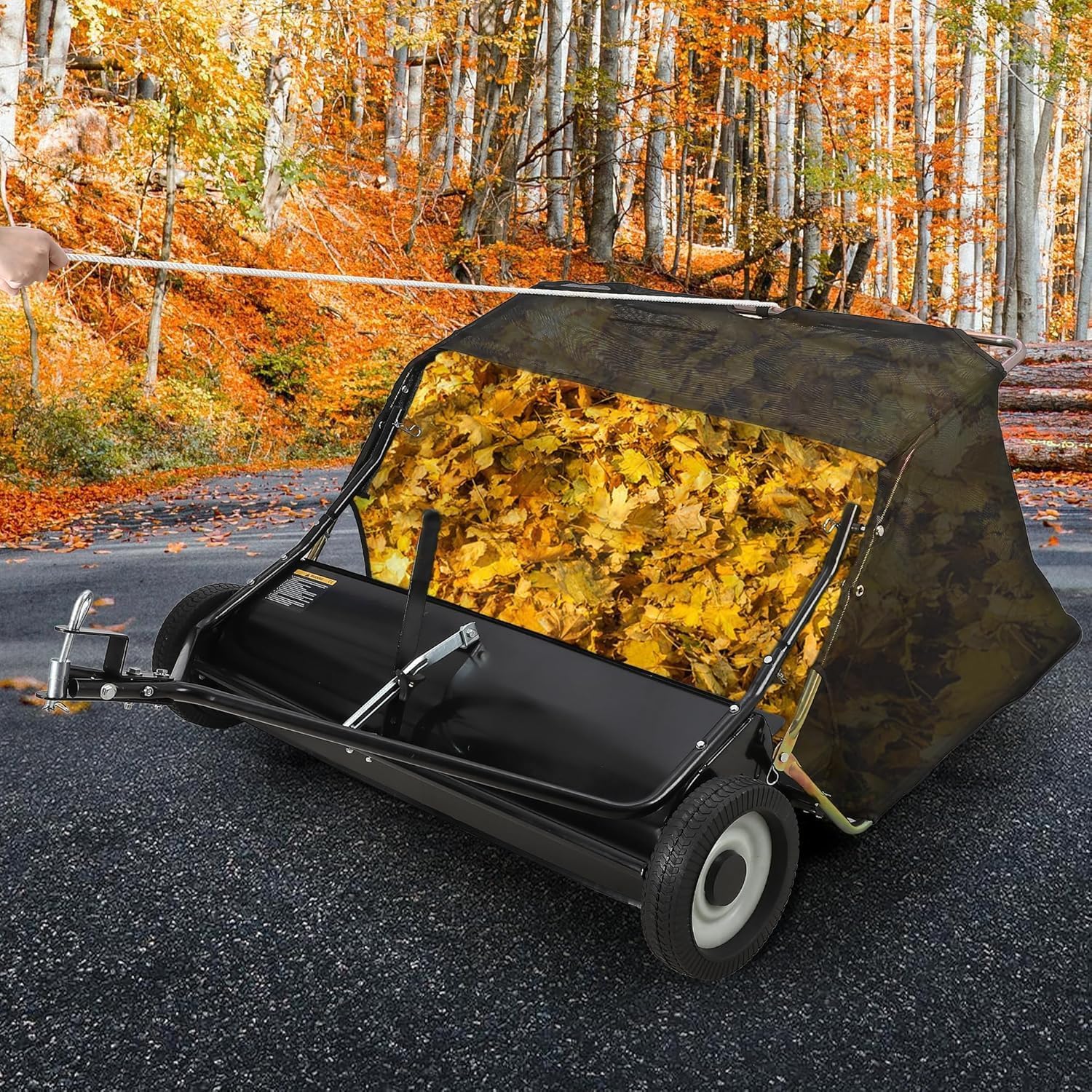
The Jojoka tow-behind lawn sweeper is a pull-behind attachment that uses rotating brushes to pick up leaves, grass clippings, and light debris across lawns, driveways, and sidewalks. You hook it to a lawn tractor or similar tow vehicle, set the brush height by hand to match your terrain, and sweep in passes; the widened interface between brush and metal frame is intended to improve pickup so a single pass captures most debris. The unit’s large non-woven hopper holds a substantial volume so you spend less time emptying, and the folding frame simplifies storage in a shed or garage. Notable features include the adjustable brush height, reinforced spinning brushes, and a rope-operated dumping design for quick emptying. Important limitations are its heavy weight and bulk, which make it less convenient to maneuver by hand and increase storage space needs, and the product is focused on dry debris rather than wet or matted material where performance will drop. For operators who need a durable, straightforward sweeper for routine commercial-style cleanup, this is a practical option; those expecting tractor-mounted hydraulics or electric power should look elsewhere.
Best for: Buyers who prioritize dependable, heavy-use cleanup for medium to large lawns and want a straightforward tow-behind that minimizes trips to empty the hopper.
Less Ideal for: Homeowners with only very small yards or those who need an electrically powered or hydraulic-mounted sweeper should consider lighter or powered alternatives.
- Large-capacity non-woven hopper reduces frequency of dumping
- Adjustable brush height adapts to different terrains and surfaces
- Folding frame design eases storage when not in use
- Widened brush-to-frame interface increases pickup efficiency in one pass
- Heavy overall weight makes manual positioning and handling difficult
- Optimized for dry, loose debris so performance falls with wet or matted material
Verdict: Choose this robust tow-behind sweeper when you need reliable, high-capacity debris pickup for regular commercial-style lawn maintenance.
Agri-Fab 52" Tow-Behind Lawn Sweeper, 26 cu ft Hopper

| Power Source | HAND_POWERED |
|---|---|
| Hopper Capacity | 26 cu. ft. |
| Sweeper Width | 52 inches |
| Material Type | Alloy Steel |
| Wheel Size | 11 inches |
The Agri-Fab 52" tow-behind sweeper is a tractor-mounted, hand-powered pickup that quickly collects grass clippings, leaves, and small twigs into a large 26 cubic foot hopper while you mow. It mounts to most lawn tractors and uses a brush-to-wheel gearing system and infinite brush height adjustment to set brush depth up to 1/2 inch so bristles reach into turf without scalping. Semi-pneumatic wheels and metal pinion gears make it more durable than lighter plastic alternatives and the dump-from-seat handle lets you empty the hopper without detaching the unit. Practical benefits include covering a wide 52-inch path to reduce passes on medium to large lawns and a robust alloy steel frame built for repeated seasonal use. Important limitations are its bulk and 86 pound weight, which mean you need a compatible tractor and storage space, and the manual operation requires driving at an appropriate speed for effective pickup rather than relying on powered suction. Assembly and occasional brush adjustments are part of normal maintenance.
Best for: Buyers who own a riding lawn tractor and want a proven, sturdy tow-behind sweeper to cut pickup time on medium to large lawns while prioritizing reliable construction over light weight.
Less Ideal for: People with only walk-behind mowers, very small yards, or those who need a compact, easy-to-store electric or push sweeper should look elsewhere.
- Large 26 cu ft hopper reduces trips to empty and handles significant leaf or clipping loads
- Wide 52-inch sweeping width covers ground quickly for fewer passes
- Infinite brush height adjustment and 1/2 in. penetration help pick up debris without damaging turf
- Semi-pneumatic wheels and metal pinion gears improve durability over cheaper components
- Heavy 86 pound unit requires a tractor with sufficient hitch capacity and makes manual handling difficult
- Bulky footprint needs substantial storage space when not in use
Verdict: If you have a lawn tractor and need a durable, high-capacity tow-behind sweeper to speed up debris pickup on medium to large lawns, this Agri-Fab 52" model is a practical, proven choice.
Brinly 42" Tow-Behind Lawn Sweeper with 20 cu. ft. Hamper

| Operation Mode | Manual |
|---|---|
| Cutting width | 42 inches |
| Material Type | Metal |
| Maximum Adjustable Cutting Height | 10 centimeters |
| Minimum Adjustable Cutting Height | 5 centimeters |
The Brinly 42" tow-behind lawn sweeper is a tractor-mounted tool for collecting leaves, grass clippings, pine needles, and light yard debris without raking. It connects behind a lawn tractor and uses six high-velocity brushes driven by a 5:1 gear ratio to lift material into a removable 20 cu. ft. fabric hamper that empties via a pull-rope and T-handle from the seat. Height is adjustable with a twist-lock mechanism so you can set brush contact for turf, pavement, or heavier leaf loads, and the high brush-to-wheel ratio reduces skipping through turns. The metal construction and collapsible hamper braces make the unit durable and easier to store upright when not in use. Expect efficient coverage from the 42" sweep width, but this is a manual-operation, tow-behind accessory so you need a compatible tractor or towing vehicle and some storage space for the assembled sweeper. It performs best on open lawns and for seasonal leaf cleanup rather than wet, matted debris or very rocky terrain.
Best for: Buyers who want to replace repeated raking with a tractor-operated solution for seasonal leaf and grass cleanup and who value fewer passes and easy emptying from the seat.
Less Ideal for: People who only use a walk-behind mower or who need a tool for heavy brush, large sticks, or consistently wet debris should consider other options.
- Large 20 cu. ft. fabric hamper reduces trips to empty and can be emptied from the tractor seat with the included pull-rope
- Six high-velocity brushes and a 5:1 gear ratio provide continuous pickup, including during turns
- Twist-lock height adjustment secures brush-to-ground contact for different surfaces and leaf depths
- Collapsible hamper braces allow the sweeper to fold upright for easier storage
- Requires a tow vehicle or tractor so not suitable for purely walk-behind use
- Not ideal for very wet, matted debris or heavy sticks and rocks which can reduce brush effectiveness
Verdict: If you own a tractor and want to ditch raking, this 42" Brinly sweeper delivers large-capacity, tractor-seat leaf pickup with easy emptying and secure height adjustment.
Choosing the Right Commercial Lawn Sweeper: Key Factors to Consider
Hopper Capacity and Dumping
Hopper capacity affects how often you must stop and empty the sweeper on large properties. A larger hopper reduces downtime during long runs, but increases the machine's empty weight and the load on the towing vehicle. Consider how the hopper discharges debris. Top-dump or side-dump designs speed emptying for leaf-heavy seasons, while manual-lift hoppers may be lighter but require more physical effort.
Think about the logistics of where you will dump collected material. If space is tight, look for hoppers with controlled discharge height or compatibility with a dump cart to transfer clippings and leaves into a larger bin or compost pile.
Sweep Width and Brush Configuration
Sweep width determines how many passes you need to cover a field. Wider brushes cover ground faster but can be harder to maneuver in tight areas. Brush configuration-single, dual, or variable brush angles-affects pickup on different debris types. Stiffer brushes are better for damp leaves and heavy thatch, while softer brushes work well for fine clippings and sandier surfaces.
Adjustability matters. The ability to change brush height and angle lets you dial in contact to avoid turf damage while maintaining effective pickup. Also consider brush wear life and how easy replacement is when brushes eventually need servicing.
Frame Construction and Axle Strength
A commercial sweeper spends long hours on the job, so sturdy frame materials and a robust axle are essential. Steel frames with corrosion-resistant coatings last longer in wetter climates and under winter storage conditions. Heavy-duty axles and robust wheel bearings prevent bending and reduce play that can lead to uneven sweeping.
Inspect how the frame attaches to the axle and whether critical joints are welded or bolted. Reinforced hitch points and a stable center of gravity improve towing stability, especially when the hopper is full.
Towing Compatibility and Maneuverability
Commercial sweepers are commonly towed behind tractors, UTVs, and large lawn tractors. Confirm hitch types, tongue length, and turning radius compatibility with the machines you already own. Some sweepers are designed for 3-point hitches while others use drawbar mounts, which affects ease of hookup and how they track behind the towing vehicle.
Maneuverability also includes wheel size and tire type. Larger pneumatic tires smooth the ride over rough turf and reduce rutting, while smaller solid wheels may be maintenance-free but transfer more impact to the turf.
Maintenance and Serviceability
Downtime reduces productivity on commercial jobs, so ease of maintenance matters. Look for sweepers with accessible brush and belt components, clear grease points, and readily available replacement parts. Simple mechanical designs with fewer proprietary fasteners are easier for a grounds crew to service in the field.
Also consider how tools and parts are accessed. Quick-release brush mounts, easy-to-open belt covers, and clear adjustment points help reduce service time between jobs and extend the sweeper's effective life.
Turf Impact and Noise
A commercial sweeper should remove debris without damaging the turf surface. Brush contact and wheel pressure influence whether the machine scuffs grass or leaves ruts. Adjustable brush height and larger tires help reduce negative impact, particularly on softer soils or newly established turf.
Noise level matters for daytime work in noise-sensitive areas such as residential neighborhoods or school grounds. Heavier construction can sometimes reduce vibration and noise, while maintenance of brushes and bearings will keep operations quieter over time.
Matching Sweeper Size to Property and Workload
Choose sweeper size by mapping typical job length and debris volume. For multi-acre parks or athletic complexes, prioritize larger hoppers and wider sweep widths to minimize stops. For densely planted landscapes or sites with many obstacles, prioritize maneuverability and a narrower footprint.
Also consider seasonal peaks. You may need higher capacity during fall leaf drop and lighter equipment for spring and summer maintenance. Planning for both peak and routine tasks ensures the sweeper remains useful year-round.
- Estimate average debris volume per acre during peak season
- Match hopper capacity to how often you want to empty
- Balance sweep width with the need to navigate tight spaces
Attachment Options and Vehicle Match
Confirm that the sweeper's hitch and tongue configuration work with your existing tractors or utility vehicles. Some sweepers are adaptable across multiple hitch types, while others require an adapter. Consider tongue length and hitch height to avoid bottoming or awkward angles during turns.
Also think about PTO or powered brush options. While many commercial sweepers are ground-driven, powered units can improve pickup on heavy or wet debris but add complexity and maintenance needs.
- Check hitch type and tongue length for smooth towing
- Decide if you need a ground-driven or powered brush system
- Verify turning clearance for tight landscapes
Storage, Winter Care, and Longevity
Plan storage that protects metal components from prolonged moisture exposure. A covered dry area prevents rust and prolongs the life of bearings and springs. Before long-term storage, clean out debris, grease moving parts, and, if possible, raise the sweeper slightly off the ground to reduce tire flat spots.
Seasonal maintenance before and after storage reduces surprises during peak use. Replace worn brushes and inspect belts so the sweeper is ready when the busy season starts.
- Clean and dry hopper before storage
- Grease pivot points and check belts annually
- Store off the ground or on jack stands if possible
Operating Tips to Improve Pickup Efficiency
Adjust brush height and towing speed to match debris type. Slower speeds increase brush contact time and improve pickup for heavy or damp leaves. Avoid excessive speed that causes debris to be thrown rather than collected.
Overlap passes slightly to prevent missed strips, and plan routes that minimize tight turns and repeated crossings over the same area. Empty the hopper when it reaches recommended fill lines to maintain consistent sweep performance.
- Slow down in heavy debris to increase pickup
- Overlap passes by a few inches for full coverage
- Empty hopper before it becomes overfilled
Common Maintenance Tasks and Schedules
Daily checks during busy seasons should include brush wear inspection, wheel bearing play, and belt tension. Weekly greasing of pivot points and monthly inspection of the frame for cracks or corrosion will catch issues early. Replace brushes in matched sets to maintain even contact across the sweep width.
Keep spare belts, brushes, and common fasteners on hand so minor repairs do not interrupt a job. Log maintenance tasks and hours to predict service intervals and budget for replacement components.
- Inspect brushes daily during heavy use
- Grease pivot points weekly
- Keep spare consumables on hand
How We Chose the Best Commercial Lawn Sweeper
We evaluated commercial lawn sweepers using criteria that reflect real-world heavy-use demands. Durability was a primary filter, focusing on frame materials, axle robustness, and wheel construction that tolerate frequent towing and long storage seasons. Hopper capacity and discharge design were assessed to reduce trips emptying collected debris on large properties. Sweep performance considerations included brush type, brush contact adjustment, and sweep width to measure how quickly and completely debris is picked up in a single pass. Maneuverability and towing compatibility were checked to ensure smooth hookup to different tractors, UTVs, and large lawn tractors, plus turning behavior around landscape features. Ease of maintenance covered brush replacement, belt access, and grease points to keep downtime low. Noise and turf impact were also considered so units collect effectively without tearing grass. We excluded consumer-grade push sweepers and lightly built models meant only for small yards. The final short list favors units that balance heavy-duty construction, large hopper capacity, efficient sweep mechanics, manageable maintenance, and broad towing compatibility.
FAQ
What towing vehicle do I need for a commercial lawn sweeper?
It depends on the sweeper's weight and hitch type. Many commercial sweepers are compatible with large lawn tractors, compact tractors, or UTVs. Check tongue weight and towing capacity of your vehicle and confirm hitch compatibility before purchase.
How often do brushes need replacing on a heavy-use sweeper?
Brush life varies with debris type and hours of use. Under heavy commercial use, brushes may need replacement every season or two. Inspect brushes regularly and replace them when bristle length or effectiveness drops noticeably.
Can a commercial sweeper handle wet leaves and clumped debris?
Wet leaves and clumped material are more challenging. Stiffer brush configurations and slower towing speeds improve pickup, but extremely wet, compacted debris may require pre-loosening or a follow-up pass.
How much maintenance should I expect with a commercial model?
Commercial units require routine maintenance to stay reliable, including brush checks, belt inspections, and greasing bearings. The exact schedule depends on usage, but expect weekly to monthly tasks during peak seasons.
Will a larger hopper damage turf when full?
A full hopper increases axle load, which can increase turf compaction risk on soft soils. Using larger pneumatic tires, reducing fill levels, or operating when the turf is firmer reduces the chance of rutting.
Are powered brush options worth the extra complexity?
Powered brushes can improve performance on heavy or wet debris and in situations where consistent brush speed is important. They add mechanical complexity and maintenance, so weigh the pickup benefits against service needs for your operation.
Final Verdict
Choose a Commercial Lawn Sweeper that balances hopper capacity, brush design, and towing compatibility with the realities of your property and crew. Larger hoppers and wider sweep widths cut run time on expansive sites, while adjustable brushes and robust frames protect turf and reduce downtime. Prioritize serviceability and proper match to your towing vehicle so the sweeper stays productive across seasons. Weigh the tradeoffs between capacity, maneuverability, and maintenance to select the sweeper that best fits your workload. When you match these factors to site conditions and vehicle capabilities, you will get consistent, efficient cleanup and longer equipment life.
