

Note: This article contains affiliate links. If you click on these links and make a purchase, I may earn a small commission at no extra cost to you. This helps support my research and content. Read my full affiliate disclosure here.
Choosing the right fertilizer for capsicum matters because peppers respond strongly to nutrient balance and feeding timing. Too much nitrogen can produce lush foliage with few fruits, while too little potassium reduces fruit size and flavor. This guide narrows the field to seven shortlisted fertilizers suited for capsicum growing, covering different formats and feeding schedules to fit gardens, containers, and small plots. We evaluated options across nutrient ratios, ease of application, and suitability for common growing conditions. Below you will find practical notes on what to expect from each fertilizer type and clear criteria to help you pick the best fit for your pepper patch.
Top Picks at a Glance
| Best Overall The best all-around choice for most situations | Greenway Biotech Pepper & Herb Fertilizer 11-11-40 Powder, 1 lb | 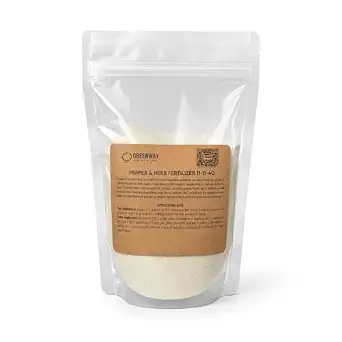 |
| Best Quality Built to a higher standard if you want something more solid | Big A Pepper Fertilizer — 13.5 oz Organic Powder for Peppers |  |
| Best Value The sweet spot between price and what you get | Jobe's Organics Granular Tomato & Vegetable Fertilizer, 4 lb |  |
| Best Budget The cheapest option that still gets the job done reliably | Miracle-Gro Water Soluble Tomato Plant Food, 1.5 lb |  |
| Highest Rated A top-rated pick with lots of positive feedback | FoxFarm Happy Frog Tomato & Vegetable Fertilizer, 5-7-3 Blend, 4 lb |  |
| Most Popular A crowd favorite that many people choose with confidence | Dr. Earth Organic Tomato, Vegetable & Herb Fertilizer (64 oz) |  |
| Best Seller A high-volume bestseller chosen again and again | TPS Nutrients Liquid Plant Food for AeroGarden and Hydroponics, 8 oz |  |
Greenway Biotech Pepper & Herb Fertilizer 11-11-40 Powder, 1 lb

| Item Form | Powder |
|---|---|
| Specific Uses For Product | Hydroponic |
| Coverage | peppers and herbs |
| Liquid Volume | 200 gallons |
| Mixing Ratio | 0.5 Pounds per 100 Gallons of Water |
This 11-11-40 powder from Greenway Biotech is built to push flowering and fruit set on hot and sweet peppers while also enhancing essential oil production in herbs. It dissolves fully in room-temperature water so you can use it as a soil drench, foliar spray, or in hydroponic systems without clogging emitters. The formula includes EDTA-chelated iron, manganese, zinc and copper plus boron and molybdenum, which helps keep micronutrients available across a broad pH range and reduces the chance of lockout. Directions cover side-dressing, foliar feed, and reservoir dosing so it adapts to backyard beds, containers, and NFT or DWC setups. Practical benefits include a high potassium level to support capsaicin and fruit development and a concentrated powder format that treats many gallons per pound. Important limitations are that accurate dosing requires a scale for small-plant applications and that a single 1 lb package is intended for focused use rather than season-long feeding of large plantings.
Best for: Serious pepper growers focused on maximizing fruit size, heat, and yield who use targeted feeds or run hydroponic systems and want a performance-minded, pH-tolerant nutrient.
Less Ideal for: Casual gardeners who prefer low-effort granular feeds or pre-mixed liquid fertilizers intended for whole-season broadcasting across very large beds.
- High potassium ratio (40%) that supports flowering, fruit development, and capsaicin production in hot peppers
- EDTA-chelated micronutrients (Fe, Mn, Zn, Cu) plus boron and molybdenum to reduce nutrient lockout across pH 4–9
- 100% water soluble powder that dissolves cleanly for soil drench, foliar spray, and hydroponic systems without clogging
- Concentrated formula stretches a small package to treat large volumes of water for targeted feeding
- Requires precise measuring (scale or careful teaspoons) for correct dilution on small plants
- 1 lb package may be small for growers with many plants or multiple growing seasons
Verdict: Choose this concentrated, chelated 11-11-40 powder when you want a performance fertilizer that boosts pepper flowering, fruit set, and capsaicin production in soil or hydroponic systems.
Big A Pepper Fertilizer — 13.5 oz Organic Powder for Peppers

| Item Form | Powder |
|---|---|
| Specific Uses For Product | Gardening,Plant Food |
| Coverage | Resealable |
| Target Species | pepper |
| Unit Count | 13.5 Ounce |
This powder fertilizer is designed for pepper growers who want a performance-focused organic feed. It is a highly soluble, resealable 13.5 ounce pouch containing a proprietary blend of nutrients including nitrogen, calcium, manganese, kelp, and humic acid aimed at improving pepper size, crispness, and flavor. Typical use is dissolving the powder into water according to package directions and applying during the growing season to outdoor or container pepper plants. Notable features are its pepper-targeted formulation, high solubility for quick uptake, and resealable packaging that helps preserve the mix between uses. Practical benefits include faster nutrient availability compared with granular organics and a blend tuned to support fruit development and root health. Limitations are that nutrient analysis numbers are not listed on the product page so precise dosing and comparison to other performance fertilizers requires following labeled instructions or contacting the maker. Also the 13.5 ounce pouch is best suited to small to medium pepper gardens rather than very large plantings.
Best for: Gardeners who prioritize measurable improvements in pepper performance and want an organic, quick-acting feed for small to medium home pepper plots.
Less Ideal for: Large-scale growers or those who require exact nutrient breakdowns for precision fertilizer programs should consider bulk or lab-analysed alternatives.
- Formula targeted specifically for peppers to support fruit size, flavor, and crispness
- Highly soluble powder for quick nutrient uptake when mixed into water
- Includes organic inputs such as kelp and humic acid to support root health
- Resealable pouch preserves remaining product and reduces moisture exposure
- No detailed N-P-K or full nutrient analysis listed on the product page
- 13.5 ounce pouch may be small for large or commercial pepper plantings
Verdict: If you want an organic, pepper-focused feed that absorbs quickly to boost fruit size and flavor in home gardens, this powder is a strong performance-oriented choice.
Jobe's Organics Granular Tomato & Vegetable Fertilizer, 4 lb

| NPK | 2-5-3 |
|---|---|
| Item Form | Granules |
| Target Species | Vegetable and tomato |
| Unit Count | 64 Ounce |
Jobe's Organics granular fertilizer is a simple, slow-release feed designed specifically for tomato and vegetable beds. You apply the granules around plants every 4 to 6 weeks during the growing season to supply roots with nitrogen, phosphorus, and potassium in a 2-5-3 ratio aimed at fruiting and root development. The formula derives nutrients from bone meal and processed poultry manure and includes calcium and other micronutrients, which helps reduce blossom end rot and supports solid fruit set. Because it is OMRI listed it fits into organic vegetable production and is safe to use around children and pets when applied as directed. Practical gardeners will appreciate the measured, low-mess granular format and the moderate coverage for small to medium plots. Limitations are that it is not a fast-acting soluble feed for immediate correction and the 4 lb bag covers only a modest area, so larger vegetable gardens will need larger or repeated purchases.
Best for: Gardeners who prioritize organic, low-maintenance feeding for home vegetable and tomato beds and who want a measured, slow-release product for steady crop development.
Less Ideal for: Growers who need rapid correction of nutrient deficiencies or who manage large-scale vegetable plots and prefer concentrated or high-coverage fertilizers.
- OMRI listed for use in certified organic vegetable production
- Balanced 2-5-3 NPK with added calcium and micronutrients to support fruiting and root health
- Slow-release granular form feeds roots over time and reduces risk of over-fertilizing
- Easy to measure and apply for small to medium garden beds
- Not a quick soluble feed for immediate nutrient correction
- 4 lb bag provides only moderate coverage for larger vegetable gardens
Verdict: A reliable OMRI-listed granular feed that delivers balanced, slow-release nutrition ideal for home tomato and vegetable gardens.
Miracle-Gro Water Soluble Tomato Plant Food, 1.5 lb

| Item Form | Liquid |
|---|---|
| Application Method | Water Soluble |
| Target Species | Great for tomatoes and vegetables |
| Mixing Ratio | 18-18-21 |
Miracle-Gro Water Soluble Tomato Plant Food is a water-soluble fertilizer intended to boost vegetable growth by delivering nutrients quickly through a watering can or Miracle-Gro Garden Feeder. Its 18-18-21 mixing ratio supplies balanced nitrogen, phosphorus, and potassium so plants get a steady supply of the elements they need for leafy growth, flowering, and fruit set. Use it by mixing the recommended dose into a watering can for outdoor containers or in-ground beds and apply every 7 to 14 days during the growing season. The product works fast because it dissolves completely and can be applied directly to the root zone, which is useful for impatient gardeners trying to push tuber and foliage development in potatoes. On the downside it is a concentrated chemical fertilizer rather than an organic option and requires careful measuring to avoid overfeeding. Coverage notes from the brand indicate a small 1.5 lb package is meant to feed a modest area when used with the Garden Feeder, so larger plots will need multiple containers.
Best for: Ideal for gardeners on a budget who want a straightforward, fast-acting fertilizer to boost potato foliage and tuber development without complicated application methods.
Less Ideal for: Not the best choice for growers seeking organic or slow-release nutrition or for those managing large acreages who need bulk, long-lasting supplies.
- Water-soluble formula mixes easily for quick nutrient uptake
- Balanced NPK (18-18-21) supports foliage, flowers, and fruit development
- Designed for use with watering cans or the Miracle-Gro Garden Feeder for convenient application
- Feeds quickly when applied every 7 to 14 days during the growing season
- Concentrated synthetic formula, not an organic fertilizer
- 1.5 lb package is small for larger vegetable plots and will require frequent repurchasing
Verdict: A simple, fast-acting water-soluble fertilizer that gives budget-minded vegetable growers an easy way to boost potato growth and yields.
FoxFarm Happy Frog Tomato & Vegetable Fertilizer, 5-7-3 Blend, 4 lb

| Item Form | Granules |
|---|---|
| Specific Uses For Product | Vegetables, Tomatoes, Soft Fruits, and Berries |
| Unit Count | 64 Ounce |
| Mixing Ratio | 5:7:3 |
| Target Species | Vegetables |
This granular FoxFarm Happy Frog fertilizer supplies a balanced 5-7-3 N-P-K blend designed to support leafy growth and plentiful fruit set, plus added calcium and mycorrhizal fungi to improve root uptake and reduce blossom end rot. It is applied to in-ground beds and containers following the package directions and is suitable across vegetable plantings. The OMRI listing means it fits organic-minded plots, and the inclusion of mycorrhizae can help young roots access nutrients and moisture more efficiently. For root crops such as turnips the moderate nitrogen level encourages healthy foliage without overly stimulating excessive top growth that can reduce root development when used at recommended rates. Practical limits are that it is a general vegetable formula rather than a turnip-specific mix, so tight control of nitrogen and timing is still needed for optimal root size, and application rates must be followed to avoid uneven root formation. The dry granules are easy to store and apply but require incorporation or watering in to activate nutrients.
Best for: Gardeners focused on reliable, performance-oriented nutrition for a variety of vegetable crops who want an organic-certified, all-purpose fertilizer that supports both roots and fruiting.
Less Ideal for: Growers seeking a specialized low-nitrogen or root-maximizing formula specifically for large-scale root vegetable production should consider a product formulated expressly for root crops.
- Balanced 5-7-3 N-P-K suited to vegetables that need both foliage and root development
- Contains calcium to help prevent blossom end rot and related fruiting issues
- Includes mycorrhizal fungi to improve root nutrient and water uptake
- OMRI listed, making it acceptable for organic gardens
- Granular form is simple to store, measure, and apply to containers or beds
- Not tailored specifically to root crops so growers may need to adjust application timing or rates for turnips
- Sold in a single size that may require multiple purchases for larger plots
Verdict: Choose this OMRI-listed 5-7-3 granular if you want a performance-oriented, organic-friendly fertilizer that supports healthy roots and reliable vegetable yields.
Dr. Earth Organic Tomato, Vegetable & Herb Fertilizer (64 oz)

| Unit Count | 64 Ounce |
|---|---|
| Item Form | Granules |
| Specific Uses For Product | Organic |
| Target Species | Herb |
| Coverage | Medium |
This granular organic fertilizer is designed to boost vegetable and herb production by supplying balanced nutrients and soil biology support. It is typically broadcast into beds, mixed into potting mixes, or applied at planting and midseason for a nutritional lift; the manufacturer recommends reapplying every six weeks for containers. Notable features include a fully organic ingredient list, fast but sustained nutrient release, and a blend of probiotic microbes plus ecto and endo mycorrhizae intended to improve nutrient uptake and drought tolerance. In practice that means healthier root systems and potentially better yields and flavor in crops like cucumbers when used as part of an organic program. Limitations are that it is a medium coverage product in a 64 ounce bag so larger plots will need more frequent purchases, and it contains phosphorus so local runoff rules should be checked before use. Follow the directions for pH and application timing to avoid overapplication in small containers.
Best for: Gardeners who prioritize organic soil health and want a single, biology‑focused fertilizer to support vegetables like cucumbers in beds or containers.
Less Ideal for: Large‑scale growers seeking a bulk, high‑coverage fertilizer or those who must avoid phosphorus due to local regulations should consider other options.
- 100 percent organic formula suitable for certified organic gardens
- Contains beneficial microbes and eight strains of mycorrhizae to support root health and nutrient uptake
- Granular form releases nutrients quickly and continues feeding for several months
- Works for beds, raised planters and containers and can be used at planting, transplanting or midseason
- Bag is medium coverage so not economical for very large vegetable plots
- Includes phosphorus which may be restricted in some local jurisdictions
Verdict: Choose this product if you want an organic, microbe‑rich granular fertilizer that supports root health and steady feeding for cucumber and other vegetable plantings.
TPS Nutrients Liquid Plant Food for AeroGarden and Hydroponics, 8 oz

| Item Form | Liquid |
|---|---|
| Specific Uses For Product | Plant Growth, Root Development |
| Target Species | Herb, Vegetable |
| Mixing Ratio | 5 mL (1 tsp) per quart of feedwater |
| Unit Count | 8 Fluid Ounces |
This 8 oz liquid plant food provides concentrated, reservoir-safe nutrition intended for AeroGarden and comparable hydroponic units. It is used by mixing the recommended 5 mL per quart of feedwater into the system reservoir on a regular feeding schedule to supply macro and micronutrients for herbs, greens, and other compact edible plants. Notable features include a liquid formulation that dissolves easily, a focus on root development, and explicit compatibility with indoor hydroponic gardens. In practice it simplifies feeding for small indoor crops because a measured teaspoon per quart is straightforward to dose and store. Important limitations are the small bottle size, which will require frequent repurchasing for larger or multiple units, and the need to follow dilution directions carefully to avoid overfeeding. Safety handling is necessary because the concentrate should be kept away from children and pets. For risk-averse growers, the product’s clear mixing ratio and hydroponic focus make predictable feeding simple, but you should track reservoir concentrations rather than guessing frequency or volume adjustments.
Best for: Buyers who want a simple, low-risk feeding routine for indoor green onions and other small edible hydroponic crops and prefer clear dosing instructions they can follow reliably.
Less Ideal for: Growers managing large hydroponic setups, outdoor beds, or those who need a detailed NPK profile for tailored nutrient programs should look for larger or fully specified concentrates.
- Designed specifically for AeroGarden and similar hydroponic systems for straightforward compatibility
- Liquid formula mixes easily for even nutrient distribution in the reservoir
- Clear mixing ratio (5 mL per quart) simplifies dosing and repeatable feeding
- Targets root development and steady growth for herbs and vegetables
- Small 8 oz bottle may not last long for multiple or larger units
- No full nutrient analysis or NPK breakdown provided on the product listing
Verdict: A compact, easy-to-dose liquid fertilizer that makes predictable feeding of indoor green onions simple and low risk.
Choosing the Right Fertilizer for Capsicum: Key Factors to Consider
Nutrient Ratio and Timing
Capsicum plants need different nutrient balances at vegetative and fruiting stages. A higher nitrogen ratio helps early leaf and stem growth, while increased phosphorus and potassium support flowering, fruit set, and fruit quality. Understanding the N-P-K balance on a fertilizer label lets you adjust feedings as plants transition from establishing foliage to producing peppers.
Timing of application matters as much as ratio. Feed lightly during establishment to avoid excessive foliage, then shift to bloom- and fruit-focused formulations once buds form. Regular, smaller feedings often work better than occasional heavy doses because peppers prefer steady nutrient availability.
Application Format and Ease
Fertilizers come as granular, water-soluble, liquid concentrates, and controlled-release pellets. Water-soluble and liquid feeds let you deliver nutrients quickly and correct deficiencies during the season. Granular and controlled-release products reduce the need for frequent feeding, which is helpful for busy gardeners or for use in beds where disturbance is undesirable.
Consider how much effort you will realistically invest. If you prefer weekly watering and foliar sprays, a soluble or liquid concentrate with clear dosing is a good fit. If you want low maintenance, choose a slow-release granule with a release profile that matches your growing season length.
Container Versus In-Ground Suitability
Capsicum grown in containers have different fertilizer demands than plants in open soil. Containers hold less medium and nutrients wash out with frequent watering, so feeds must be more regular or formulated for container use. Products labeled for containers often account for salt buildup and provide gentler, more frequent dosing instructions.
In-ground plants benefit from larger soil reserves and microbial activity that can help release nutrients from organic fertilizers. When choosing a fertilizer, check whether the product recommends reduced rates or different timings for container culture to avoid root burn and salt accumulation.
Micronutrients and Secondary Elements
Beyond N-P-K, elements such as calcium, magnesium, and trace micronutrients are important for capsicum fruit quality and preventing common physiological disorders. Calcium helps prevent blossom end rot-like symptoms and supports cell wall strength. Magnesium is central to chlorophyll and photosynthesis, while iron and zinc affect growth and yield when deficient.
A fertilizer that includes or is compatible with supplemental micronutrient applications gives you flexibility to correct specific deficiencies. Organic sources and some chelated products can improve micronutrient availability in certain soil pH conditions.
Salt Index and Root Health
Salt buildup from frequent feeding or high-salt formulations damages roots and reduces water uptake, which directly limits fruiting. This is especially important for container-grown peppers where salts concentrate faster. Check for products with lower salt indices or those formulated for regular use without causing buildup.
Leaching with plain water periodically and using well-draining potting mixes helps manage salts. If you rely on soluble feeds, follow recommended rates and flush containers occasionally to protect root health.
Organic Versus Synthetic Choices
Organic fertilizers release nutrients more slowly and often improve soil structure and microbial life, which benefits long-term soil health. They can be less concentrated and require larger volumes or more frequent applications to meet the high demands of fruiting capsicum plants.
Synthetic fertilizers deliver predictable, targeted nutrients and faster correction of deficiencies, which is useful during flowering and fruit set. Your choice depends on whether you prioritize immediate nutrient response or long-term soil improvements and organic growing practices.
Matching Fertilizer to Capsicum Growth Stage
Young pepper plants and seedlings need a gentle feed to encourage root and leaf development without overstimulating top growth. Once flowering begins, switch to a formula higher in phosphorus and potassium to support blossom retention and fruit development. Many gardeners use a two-stage approach: a balanced feed for establishment, then a bloom/fruit formulation through harvest.
Adjust feeding frequency according to plant size and growing medium. Containers and small raised beds typically need more frequent, lighter feedings, while deeper in-ground soils with good organic matter can hold nutrients longer.
- Start with low-strength feeds for seedlings and transplants.
- Increase P and K once buds form to reduce flower drop.
- Reduce high-nitrogen inputs after flowering begins to avoid excess foliage.
Using Foliar Feeding Wisely
Foliar feeding can quickly correct micronutrient deficiencies and give a short-term boost during flowering. Apply foliar sprays in the early morning or late afternoon to minimize leaf burn and ensure uptake. Use only products labeled safe for foliar use and avoid heavy concentrations that could scorch foliage.
Foliar feeding should complement, not replace, a soil-based nutrient program. It is most effective for fast symptom correction rather than routine macronutrient supply.
- Best for micronutrient corrections and quick touch-ups.
- Avoid foliar sprays in hottest part of day or under direct sun.
- Rinse fruit before harvest if using foliar sprays close to picking.
Managing Soil pH and Nutrient Availability
Capsicum prefers a slightly acidic to neutral soil pH for optimal nutrient uptake. pH affects how well plants can access phosphorus, iron, and other nutrients. Test soil or potting mix early in the season and amend it if pH is outside the preferred range.
When pH is corrected, fertilizers work more predictably. Some micronutrients perform better when chelated in higher pH soils, so product labels and compatibility matter for persistent deficiencies.
- Aim for slightly acidic to neutral pH for best uptake.
- Adjust pH before heavy feeding for reliable results.
- Choose chelated micronutrient products when pH reduces availability.
Watering Practices That Complement Feeding
Consistent watering is essential for nutrient uptake and fruit development in capsicum. Overwatering leaches nutrients and stresses roots, while underwatering limits nutrient movement and can cause blossom drop. Match your feeding schedule to the watering routine so nutrients are available when plants need them most.
For containers, water until some runoff occurs to flush salts periodically. In beds, incorporate organic matter to improve water-holding capacity and nutrient retention.
- Water consistently to support steady nutrient uptake.
- Flush containers occasionally to prevent salt buildup.
- Combine feeding with watering cycles to reduce stress at critical stages.
Common Feeding Mistakes and How to Avoid Them
A common mistake is overfeeding with high-nitrogen products after fruit set, which delays or reduces pepper production. Another frequent error is applying the same dose regardless of plant size or growing medium, leading to root burn in containers and wasted nutrients in large beds.
Read and follow label rates closely, reduce concentration for foliar sprays, and gradually increase feeding only if plants show need. Keep records of feeding dates and plant responses so you can adjust in future seasons.
- Avoid high-nitrogen feeds during fruiting.
- Adjust doses for container versus in-ground plants.
- Keep a simple feeding log to track what works.
How We Chose the Best Fertilizer for Capsicum
We focused on fertilizers that deliver nutrient mixes and application methods known to influence capsicum growth and fruiting. Key evaluation dimensions included nutrient ratio relevance to capsicum stages, delivery format and ease of use, solubility and availability of nutrients, and how the product performs in container versus in-ground settings. We also checked for presence of secondary nutrients and micronutrients that support flowering and fruit quality, plus guidance clarity on application rates and timing. Exclusions included products aimed primarily at lawns, bulbs, or non-fruiting ornamental plants, and any formulations that lacked clear nutrient labeling or application instructions. We prioritized formulations and formats that suit small-scale vegetable gardeners: water-soluble feeds, controlled-release granules, and organic options. Practical factors such as reapplication frequency, compatibility with foliar feeding, and potential for salt buildup in containers were also part of the selection filters.
FAQ
How often should I fertilize capsicum plants during the season?
Frequency depends on the fertilizer format. Water-soluble feeds are often applied weekly at reduced strength, while controlled-release granules may only need one application every 8 to 12 weeks. Containers typically need more frequent feeding than in-ground plants.
Can I use organic fertilizer for fruiting peppers?
Yes. Organic fertilizers provide slow-release nutrients and improve soil biology, but they may need larger volumes or more frequent application to meet heavy fruiting demands. Combining organic feeds with targeted micronutrient supplements can improve results.
What signs indicate my capsicum needs more potassium?
Signs of potassium deficiency include smaller fruits, poor flavor, and marginal leaf browning or scorching. If fruit set is low despite adequate flowering, boosting potassium within recommended rates during fruit development can help.
Is foliar feeding safe close to harvest?
Foliar feeding for micronutrients is usually safe, but avoid heavy foliar sprays on fruit. If you apply foliar products close to harvest, rinse harvested peppers before eating. Follow label guidance on pre-harvest intervals when provided.
How do I prevent salt buildup in container-grown peppers?
Use lower-strength soluble feeds, flush containers with plain water periodically to leach accumulated salts, and use a well-draining potting mix. Choosing fertilizers formulated for containers reduces the risk of root damage from salts.
Final Verdict
Pick a fertilizer strategy that matches how you grow capsicum and the stage the plants are in. Prioritize nutrient ratios that shift from modest nitrogen during establishment to higher phosphorus and potassium at bloom and fruiting. Also weigh application format, container needs, and micronutrient support when deciding. Balancing these tradeoffs helps you avoid common pitfalls like salt buildup or excess foliage at the expense of fruit. Use the evaluation criteria above to choose the feeding approach that fits your routine and growing conditions so you get steady yields and better-quality peppers.
