

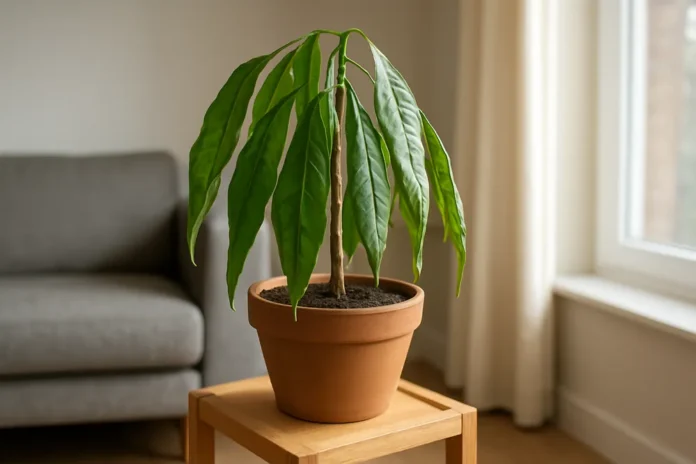
Money tree leaves usually droop because the plant is stressed by watering problems, low light, temperature changes, dry indoor air, or root trouble. In many cases, the leaves droop when roots cannot take up moisture normally, even if the soil seems wet.
A money tree with drooping leaves can look dramatic fast. One day it seems upright and healthy, and the next the leaflets hang down, feel limp, or lose that tidy umbrella shape. The good news is that drooping is usually a stress signal, not an automatic death sentence.
In my experience, the most common reason is watering trouble, but not always simple underwatering. A money tree can droop from too much water, too little light, a chilly draft, compacted roots, or even the shock of being moved into a new room. The pattern on the leaves, the feel of the soil, and the timing of the problem usually tell you a lot.
If you can separate temporary stress from an ongoing root issue, you can usually get the plant back on track. Here is how I sort through the likely causes and what each one tends to look like in a real home setting.
What Drooping Usually Means on a Money Tree
Drooping means the plant is having trouble maintaining normal leaf pressure and structure. Healthy leaves stay lifted because the plant is moving water efficiently from the roots up through the stems and leaflets. When that flow is interrupted, the foliage softens and hangs.
That is why drooping can point to opposite problems. A plant with bone-dry soil may droop because it lacks water. A plant sitting in soggy soil may droop because damaged roots cannot absorb water properly. Both can produce limp leaves, which is why it helps to look beyond the leaf posture alone.
- Leaves that droop but still look green often suggest recent stress rather than severe decline.
- Drooping with yellowing often points to overwatering, low light, or root stress.
- Drooping with crispy brown edges leans more toward underwatering, hot dry air, or salt buildup.
- Drooping right after a move or repot can be short-term adjustment stress.
When I diagnose a drooping money tree, I pay more attention to the soil and stems than to a single sad leaf. If the trunk base feels firm and the newest leaves still look decent, recovery is usually very possible.
Overwatering Is the Most Common Cause
Money trees are often sold as easy indoor plants, so people tend to water them on a schedule whether the potting mix has dried or not. That is where problems begin. Roots need oxygen as much as moisture, and constantly wet soil crowds out air spaces around the roots.
Once the roots stay too wet for too long, they stop functioning well. The leaves then droop because the plant cannot move water efficiently, even though the pot is wet. This is one of the most confusing situations for new plant owners.
Signs Your Money Tree Is Overwatered
- Soil stays damp for many days after watering
- Leaves droop and may also turn pale yellow
- Some leaves fall off while still soft, not crisp
- The pot feels heavy most of the time
- There is a sour or swampy smell from the soil
- The lower trunk or braided stems feel softer than normal
If this sounds familiar, let the potting mix dry down more before watering again. Make sure the pot has drainage holes and never leaves the root ball sitting in a saucer full of water. If the soil is dense and slow to dry, repotting into a chunkier indoor mix can help a lot.
Underwatering Can Make Leaves Limp Fast
Although overwatering is more common, money trees absolutely droop when they get too dry. This usually happens when the potting mix pulls away from the sides of the pot, the plant is near a heating vent, or the root ball has become so crowded that water runs straight through without soaking in.
Underwatered drooping tends to show up quickly. Leaves may look limp, slightly curled, or thinner than usual. If the dryness continues, the edges and tips can turn brown and crisp.
Clues That Point to Dryness
- Soil feels dry well below the surface
- The pot feels much lighter than usual
- Leaflets may fold or curl inward a bit
- Brown tips or crispy patches appear after the drooping starts
- The plant perks up noticeably within a day after a thorough watering
If a rootbound money tree dries out too fast, I like to water in stages. A small first soak helps the root ball start absorbing again, and a second pass a few minutes later does a much better job than one rushed pour.
When you water, do it thoroughly until excess drains out, then wait until the top portion of the mix dries before watering again. Light frequent sips usually make things worse because they do not reach the full root zone.
Low Light and Weak Indoor Placement
Money trees tolerate moderate indoor light, but they do not truly thrive in dark corners. In low light, the plant uses water more slowly and grows more weakly. That combination often leads to drooping, especially if watering habits did not adjust to the dimmer conditions.
A money tree in poor light may not only droop but also lean, stretch, or produce smaller new leaves. The plant can look tired rather than sharply wilted. Owners sometimes respond by watering more, which then compounds the problem.
What Better Light Looks Like
Bright, indirect light is usually the sweet spot. A spot near an east window works well, and a few feet back from a bright south or west window can also be good if harsh afternoon sun is filtered. The goal is a bright room without long stretches of direct scorching sun on the leaves.
If the plant has been in a very dim area, move it gradually into brighter conditions over several days. Sudden change is less risky than with some plants, but a gentle transition still helps reduce stress.
Temperature Stress, Drafts, and Dry Air
Money trees prefer steady indoor warmth. Cold windows, exterior doors, air conditioning blasts, and heating vents can all trigger drooping. Even a healthy plant may sag if it is exposed to sharp temperature shifts for a day or two.
Dry indoor air can also add stress, especially in winter. Low humidity alone may not cause severe drooping, but it can make the plant lose moisture faster and contribute to limp leaves, brown edges, and general decline.
- Keep the plant away from cold drafts and hot air vents
- Avoid placing it directly against icy window glass in winter
- Aim for typical indoor temperatures around 65 to 80 degrees Fahrenheit
- Use a pebble tray or humidifier if your home air is extremely dry
If drooping started right after weather changed or the plant was moved near a vent, environmental stress is a strong suspect. In many cases, the plant improves once conditions stabilize.
Rootbound Plants and Poor Soil Structure
A money tree that has outgrown its pot can start drooping even when your watering routine is reasonable. When roots circle tightly around the root ball, there is less loose mix left to hold moisture and air evenly. The plant can swing between drying out too fast and staying patchily wet in compacted areas.
Old potting mix causes similar trouble. Over time, indoor mixes break down and become denser. That reduces drainage and oxygen around the roots, which encourages the same stress pattern as overwatering.
When Repotting Makes Sense
- Roots are circling heavily inside the pot
- Water rushes through but the root ball still seems dry
- The plant needs water far more often than it used to
- The soil has become hard, compacted, or shrinks from the pot edges
- You see roots emerging from drainage holes
Repot only one size up, not several. A pot that is too large holds extra moisture around a limited root system, which can create new watering problems. Choose a container with drainage and use a well-aerated indoor plant mix.
Transplant Shock and Recent Changes in the Home
Money trees often droop after a sudden change in environment. This can happen after purchase, after repotting, after moving across the house, or after spending time outdoors and then coming back inside. The plant has to readjust to new light levels, humidity, airflow, and watering patterns.
This kind of drooping is usually temporary if the roots were not badly disturbed. You may see some leaf drop or a few limp stems for a week or two, but new growth should settle in once the plant adapts.
Fresh drooping after a move does not always mean you need to intervene aggressively. I usually avoid repotting, fertilizing, and heavy pruning all at once because stacking stress on a stressed plant tends to slow recovery.
Give the plant stable conditions, moderate light, and careful watering. Judge recovery by the condition of new growth, not by whether every older leaf returns to perfect posture right away.
Pests and Disease Are Less Common but Possible
Pests are not the first cause I suspect with a drooping money tree, but they can contribute. Spider mites, mealybugs, and scale may weaken the plant by feeding on sap, especially in dry indoor conditions. When infestations build, leaves can droop, yellow, or become sticky and dull.
Root rot is the more serious disease concern. It usually develops after chronic overwatering or poorly draining soil. Once roots start rotting, the plant can show droop, yellowing, leaf drop, and a persistently wet pot.
What to Inspect
- Check leaf undersides for fine webbing, tiny specks, or cottony clusters
- Look for sticky residue or small bumps on stems and leaf joints
- Smell the soil for sour odor that suggests root problems
- Gently inspect roots during repotting for black, mushy, or foul-smelling sections
Treat pests early with repeated wiping or insecticidal soap, depending on the pest. If rot is present, trim dead roots, refresh the potting mix, and correct the watering and drainage issue that caused it.
How to Tell Which Cause Is Most Likely
If you are staring at a drooping money tree and the cause is not obvious, use the pattern of symptoms to narrow it down. The combination of soil moisture, leaf color, and recent changes usually points you in the right direction.
- Wet soil plus yellowing and limp leaves usually suggests overwatering or root stress.
- Dry soil plus curling, light weight, and crispy edges usually suggests underwatering.
- Drooping in a dark corner with slow growth often suggests low light, often combined with excess moisture.
- Sudden drooping after moving, repotting, or weather shifts often suggests environmental stress.
- Drooping with sticky leaves, webbing, or visible insects points toward pests.
- Drooping with a soft trunk base or rotten smell points toward more serious root damage.
Try to avoid making three or four corrections at once. If you change watering, light, pot, and fertilizer all together, you may not know what actually helped and you may further stress the plant.
What to Do to Help Your Money Tree Recover
Recovery depends on fixing the main stress without overreacting. Most money trees rebound best with steady conditions and a bit of patience rather than a burst of plant rescue products.
Simple Recovery Steps
- Check the soil several inches down instead of judging by the surface alone.
- Water thoroughly only if the root zone is genuinely dry.
- If the mix is soggy, delay watering and improve drainage and airflow.
- Move the plant into bright, indirect light if it has been sitting in a dim spot.
- Keep it away from vents, drafts, and cold window contact.
- Repot if roots are crowded, the mix is compacted, or there are signs of root rot.
- Hold fertilizer until the plant starts active, healthy new growth again.
Do not expect damaged older leaves to look perfect again. The better sign is firm stems, stable leaf drop, and healthier new growth over the next few weeks.
How to Prevent Drooping in the Future
Prevention is mostly about consistency. Money trees are forgiving when their basic conditions stay within a comfortable range. They get fussy when light is too low, watering is too frequent, or the environment swings from one extreme to another.
- Water based on soil dryness, not on the calendar alone
- Use a pot with drainage holes every time
- Place the plant in bright, indirect light
- Rotate it occasionally for even growth
- Repot before the root ball becomes severely crowded
- Keep temperature and airflow reasonably stable
- Watch new growth for early signs of stress instead of waiting for major leaf collapse
Once you get familiar with how heavy the pot feels when the mix is dry versus moist, caring for a money tree becomes much easier. That simple habit prevents a lot of the drooping problems I see indoors.
FAQ
Will Drooping Money Tree Leaves Go Back Up?
Often, yes. If the cause is mild watering stress, temporary shock, or a recent environmental change, the leaves may perk back up within days. Severely damaged or yellowing leaves may not fully recover, but healthy new growth usually tells you the plant is improving.
Should I Water My Money Tree when the Leaves Droop?
Only if the root zone is actually dry. Drooping can come from too much water just as easily as too little, so watering automatically can make the problem worse.
Can Low Light Make a Money Tree Droop?
Yes. In low light, money trees grow more weakly and use water more slowly, which can lead to drooping and increase the risk of overwatering.
How Long Does a Money Tree Take to Recover From Drooping?
Minor stress can improve within a few days, while root or soil issues may take several weeks to stabilize. Recovery is faster when the plant still has firm stems and no major trunk damage.
Do Braided Trunks Cause Drooping Leaves?
Not usually by themselves. Braided money trees can live well indoors, but if the stems are bound too tightly or one trunk begins to decline, the overall plant may show stress through drooping foliage.
Can I Mist My Money Tree to Stop Drooping?
Misting is not a reliable fix for drooping. It may briefly raise humidity at the leaf surface, but it does not solve watering, light, or root problems.
Why Is My Money Tree Drooping After Repotting?
Repotting can trigger short-term transplant shock, especially if roots were disturbed or the plant was moved into different light. As long as the soil drains well and watering is careful, the plant often settles in after a week or two.
Want to stop indoor plant problems before they spread? Read our guide to the best potting mixes, watering tools, and moisture meters for healthier houseplants with less guesswork.
