

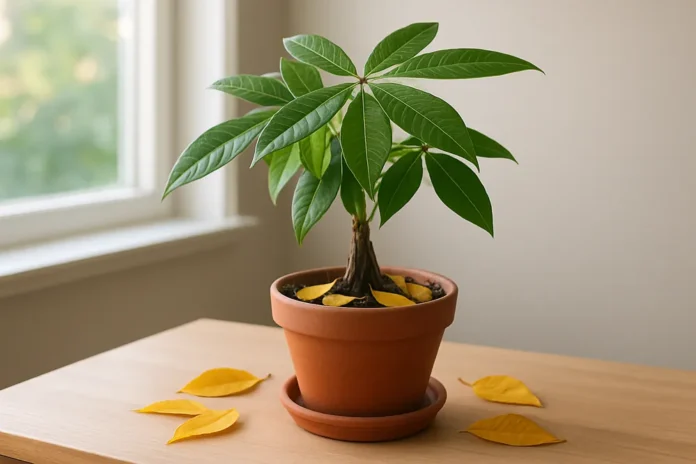
A money tree usually drops leaves because of watering stress, low light, temperature swings, dry indoor air, or transplant shock. It can also shed leaves from pests, poor drainage, or simply adjusting to a new spot.
A money tree dropping leaves can look dramatic fast. One week it seems fine, and the next you notice yellowing leaflets, bare stems, or a ring of fallen leaves on the soil. In my experience, this plant is forgiving in some ways, but it reacts pretty quickly when its roots or environment are off balance.
Most of the time, leaf drop is not caused by a rare disease. It is usually a response to everyday care issues like too much water, too little water, weak light, cold drafts, or stress after being moved. The key is to look at the pattern of leaf loss instead of treating every fallen leaf like an emergency.
If your money tree is losing leaves, start by thinking about what changed recently. A new room, a different watering routine, a repotting job, or winter heating can all trigger shedding. Once you narrow down the likely cause, recovery is usually very possible.
What Normal Leaf Drop Looks Like
Not every fallen leaf means your plant is in trouble. Money trees naturally shed some older leaves as they grow, especially lower leaves that get less light. If you only see an occasional yellow leaf or two and the plant is still pushing fresh green growth, that is usually normal aging rather than a serious care issue.
Normal leaf drop is usually gradual. The plant still looks full overall, stems remain firm, and new leaves keep opening. Problem leaf drop is different. It tends to happen in clusters, speeds up after a change in care or location, or comes with other symptoms like yellowing, browning, drooping, mushy stems, or sticky residue.
- A few older lower leaves dropping over time is often normal.
- Sudden leaf loss from many stems at once usually signals stress.
- Leaf drop paired with soft trunks, soggy soil, or a bad smell often points to root trouble.
- Leaf drop with crispy edges or curling often suggests dry conditions or missed watering.
When I diagnose a money tree, I pay more attention to the newest growth than the oldest leaves. If the new leaves look small, pale, limp, or keep dropping before they mature, the problem is active and usually tied to roots, light, or environmental stress.
Overwatering Is the Most Common Cause
If I had to bet on the most common reason a money tree drops leaves indoors, I would choose overwatering. These plants like evenly moist soil, but they do not want to sit in wet potting mix for long periods. When the roots stay too wet, they cannot breathe properly, and the plant responds by yellowing and shedding leaves.
Overwatered money trees often drop yellow leaves first. The soil may stay damp for many days, the pot may feel heavy, and the trunk base can start feeling softer than normal. In more advanced cases, roots turn brown or black and may smell sour or rotten. Once root rot starts, leaf drop can accelerate quickly.
Signs Your Money Tree Is Too Wet
- Leaves turn yellow before falling
- Soil stays wet several inches down for too long
- The pot has poor drainage or no drainage hole
- Stems feel soft or the trunk base looks darkened
- A sour smell rises from the potting mix
Fixing overwatering starts with letting the soil dry to the right depth before watering again. For most indoor money trees, I like to water when the top 2 to 3 inches of soil feel dry. If the mix is dense and soggy, repotting into a looser indoor plant mix with drainage material can make a huge difference.
Do not try to compensate for root stress by watering on a schedule. I get better results by lifting the pot, feeling the soil with a finger, and waiting until the root zone has started to dry instead of following the calendar.
Underwatering Can Cause Fast Leaf Drop Too
Although overwatering gets most of the attention, underwatering can also make a money tree drop leaves. When the root ball gets too dry, the plant sheds foliage to reduce moisture loss. This is especially common when the potting mix has become very dry and pulls away from the sides of the pot.
Leaves on an underwatered plant may turn dry, crisp, or slightly curled before falling. The whole plant can look tired or limp, but the soil feels light and dusty instead of wet. If water runs straight through the pot without soaking in, the root ball may have become hydrophobic, which means it is resisting moisture rather than absorbing it evenly.
How Underwatering Usually Looks
- Crispy brown edges or tips
- Dry, lightweight potting mix
- Leaves folding, curling, or drooping before dropping
- Soil shrinking away from the pot edge
- Water rushing through without really rewetting the root ball
The fix is a deep, even watering. Water thoroughly until excess drains out, then let the mix approach moderate dryness before watering again. If the soil has gone bone dry repeatedly, setting the pot in a shallow tray of water for a short time can help the root ball absorb moisture more evenly.
Low Light Weakens the Plant Over Time
Money trees tolerate indoor conditions fairly well, but they do best in bright, indirect light. In a dim corner, they may hold on for a while and then start dropping leaves as energy runs low. This kind of leaf loss is often slower than watering-related drop, but it can still become noticeable.
A plant that is not getting enough light may become sparse, stretch toward the nearest window, produce smaller new leaves, and lose older leaves from the interior. The soil may also stay wet longer because the plant is using less moisture, which can blur the line between low light stress and overwatering.
When Light Is the Likely Issue
- The plant is far from a bright window
- Growth is thin, stretched, or leaning
- New leaves are smaller than older ones
- Leaf drop is gradual but persistent
- Soil seems to take a very long time to dry
Move the plant closer to bright filtered light, ideally near an east-facing window or a few feet back from a brighter south or west exposure. Rotate it every week or two so growth stays balanced. If natural light is poor, a grow light can help stop the slow decline.
Sudden Environmental Changes Trigger Stress Shedding
Money trees can be surprisingly sensitive to change. A move from one room to another, a recent purchase from a greenhouse, a blast of air conditioning, or a dry winter heating vent can all trigger leaf drop. In these cases, the plant is reacting to a shift in temperature, humidity, airflow, or light rather than to a long-term care problem.
This kind of shedding often happens soon after the change. The plant may drop healthy-looking green leaves or leaves that yellow quickly without obvious root rot symptoms. If everything else seems roughly right, timing is your biggest clue.
Common Stressors That Cause Leaf Drop
- Moving the plant to a new home or room
- Cold drafts from doors or windows
- Hot dry air from heating vents
- Sudden exposure to intense direct sun
- Sharp day-to-night temperature swings
Try to keep the plant in a stable location with temperatures generally between 65 and 80 degrees Fahrenheit. Avoid drafty windows, exterior doors, fireplaces, and HVAC vents. Once conditions stabilize, a money tree often slows or stops its leaf drop within a few weeks.
I often see money trees shed after being brought home from a store, even when the owner has not done anything wrong. Greenhouse humidity, brighter production lighting, and shipping stress create a hard transition, so a short adjustment period is common.
Humidity Problems Can Show Up Indoors
Money trees appreciate moderate humidity, and very dry indoor air can contribute to leaf drop, especially in winter. Dry conditions usually show up first as brown tips, crispy margins, or curling leaflets, but prolonged dryness can push the plant to shed leaves altogether.
Humidity stress is rarely the only issue, but it often makes other problems worse. A plant in low light, near a heating vent, and watered inconsistently will struggle much more than one growing in a stable room with average household humidity.
- Keep the plant away from forced-air heat
- Group houseplants together to raise local humidity slightly
- Use a small humidifier if your home is very dry
- Avoid placing the plant right next to radiators or fireplaces
Misting is not my favorite long-term solution because it fades quickly and does not reliably change room humidity. A more stable environment works better than frequent light sprays.
Pot, Soil, and Root Problems Are Easy to Overlook
Sometimes the issue is not how often you water but what the roots are sitting in. A money tree planted in heavy, compacted soil can stay wet too long even if you water carefully. A decorative cachepot that traps runoff can do the same thing. On the other hand, a plant that is severely rootbound may dry out so fast that leaf drop follows repeated moisture swings.
Healthy roots should be firm and light-colored. Dark, mushy roots point to rot, while extremely dense circling roots may mean the plant needs a slightly larger pot. The best setup is a container with a drainage hole and a potting mix that holds some moisture but still drains freely.
A Better Potting Setup for Money Trees
- Use a pot with at least one drainage hole
- Choose an airy indoor plant mix rather than dense garden soil
- Add bark, perlite, or similar coarse material if the mix stays soggy
- Empty decorative outer pots after watering so roots are not left in standing water
- Repot only one size up if roots are crowded
If you suspect root rot, act sooner rather than later. Trim damaged roots with clean scissors, refresh the mix, and replant in a pot that drains well. If the root system is still mostly healthy, the plant often recovers with better moisture control.
Pests Can Cause Leaf Loss, Especially on Stressed Plants
A stressed money tree is more likely to attract pests such as spider mites, mealybugs, scale, or aphids. These insects feed on plant sap, weakening the foliage and sometimes causing leaves to yellow, speckle, curl, or drop. Spider mites are especially common in dry indoor conditions.
Check the undersides of leaves, stem joints, and the braided trunk area. Fine webbing, sticky residue, white cottony patches, or tiny brown bumps are all warning signs. Pest damage usually does not make the whole plant collapse overnight, but it can cause steady decline if ignored.
Common Pests on Money Trees
- Spider mites, which cause stippling and fine webbing
- Mealybugs, which look like bits of white cotton
- Scale insects, which appear as small waxy bumps on stems and leaves
- Aphids, which cluster on tender new growth
Isolate the plant if you find pests. Wipe leaves, rinse the foliage gently, and follow up with insecticidal soap or neem-based treatment if appropriate for the pest involved. Repeating treatment matters because eggs and hidden insects can survive the first pass.
Fertilizer Issues and Mineral Buildup Can Add Stress
Money trees are not especially heavy feeders, so too much fertilizer can do more harm than too little. Salt buildup in the potting mix can burn roots, leading to brown tips, yellowing, and leaf drop. This problem is more likely if you fertilize often, use a strong liquid feed, or water lightly without flushing the soil.
Nutrient deficiency is possible, but indoors I usually see overfertilizing or old exhausted potting mix more often than a true dramatic deficiency. If the plant has not been repotted or lightly fed in a long time, pale growth can contribute to leaf loss, but it is rarely the only symptom.
- Feed lightly during active spring and summer growth
- Avoid fertilizing a stressed, freshly repotted, or root-damaged plant
- Flush the soil occasionally with a thorough watering to reduce salt buildup
- Skip fertilizer in low-light winter conditions when growth slows
How to Figure Out the Real Cause
Because several problems can look similar, the best diagnosis comes from combining symptoms with recent plant history. Look at leaf color before drop, soil moisture, pot drainage, light levels, nearby vents or drafts, and whether the plant was recently moved or repotted.
Simple Clues That Narrow It Down
- Yellow leaves plus wet soil usually point to overwatering or poor drainage.
- Crispy leaves plus very dry soil usually suggest underwatering or dry air.
- Gradual thinning in a dim room usually suggests inadequate light.
- Sudden leaf drop after a move often means environmental shock.
- Sticky leaves, webbing, or cottony patches suggest pests.
If more than one factor applies, fix the biggest stressor first. For many indoor money trees, that means improving drainage and watering habits before making smaller adjustments. Changing everything at once makes it harder to tell what actually helped.
Judge recovery by new growth, not by damaged leaves. A leaf that has already yellowed or crisped up usually will not turn perfect again, so I watch for firm stems and healthy fresh leaflets before deciding a treatment worked.
What to Do Right Now if Your Money Tree Is Dropping Leaves
If your plant is actively shedding, keep the response simple and focused. Start by checking the soil depth with your finger, confirming that the pot drains freely, and moving the plant into bright indirect light if it is sitting in a dark corner. Then stabilize conditions instead of fussing with it every day.
- Remove fallen leaves from the pot surface so moisture and pests do not build up.
- Check whether the top 2 to 3 inches of soil are wet, evenly moist, or bone dry.
- Make sure excess water can drain completely from the pot.
- Place the plant in bright indirect light away from vents and drafts.
- Inspect leaves and stems closely for spider mites, mealybugs, or scale.
- Hold off on fertilizer until the plant shows signs of steady recovery.
Avoid heavy pruning unless stems are clearly dead or rotten. A stressed money tree needs as many healthy leaves as possible to rebuild energy. Once care is corrected, it may look sparse for a while, but new foliage can fill in over time.
When Leaf Drop Means Serious Trouble
Most money trees recover from ordinary care mistakes, but there are times to act quickly. If the trunk feels mushy, the soil smells rotten, leaves are dropping rapidly from every stem, or roots are black and slimy, root rot may be advanced. In that case, repotting and root cleanup are more urgent than waiting it out.
Likewise, if a severe pest outbreak covers the plant or leaf drop continues for weeks despite corrected care, take a closer look at the roots and overall growing conditions. Persistent decline usually means the original issue was only part of the problem.
FAQ
Will My Money Tree Grow Leaves Back After Dropping Them?
Yes, if the stems and roots are still healthy. Lost leaves do not reattach, but the plant can produce new growth once watering, light, and environmental conditions improve.
How Often Should I Water a Money Tree?
Water based on soil dryness rather than a fixed schedule. For many homes, watering when the top 2 to 3 inches of soil are dry works better than watering every few days or every week automatically.
Can a Money Tree Drop Leaves After Being Moved?
Yes. A new light level, temperature change, lower humidity, or simple relocation stress can cause temporary leaf drop, especially right after bringing the plant home.
Do Yellow Leaves Always Mean Overwatering?
No, but overwatering is a common cause. Yellow leaves can also appear with low light, nutrient stress, pests, or normal aging, so check soil moisture and overall plant conditions before deciding.
Should I Mist My Money Tree to Stop Leaf Drop?
Misting may offer only brief moisture around the leaves and usually does not solve the root cause. Better watering habits, brighter indirect light, and more stable humidity help more.
Can Low Light Make a Money Tree Lose Leaves?
Yes. In dim conditions, money trees often weaken slowly, produce smaller leaves, and shed older foliage because they are not making enough energy to support dense growth.
Should I Repot My Money Tree if It Is Dropping Leaves?
Only if the soil stays soggy, the roots are rotting, drainage is poor, or the plant is badly rootbound. Repotting a mildly stressed plant unnecessarily can add more shock.
Is Leaf Drop Worse in Winter?
Often, yes. Shorter days, lower light, dry heated air, cooler drafts, and slower water use can all make winter a common season for money tree leaf drop.
Want to save your plant faster? Read our money tree care guide and best indoor plant soil roundup to choose the right watering routine, pot, and mix for strong regrowth.
