

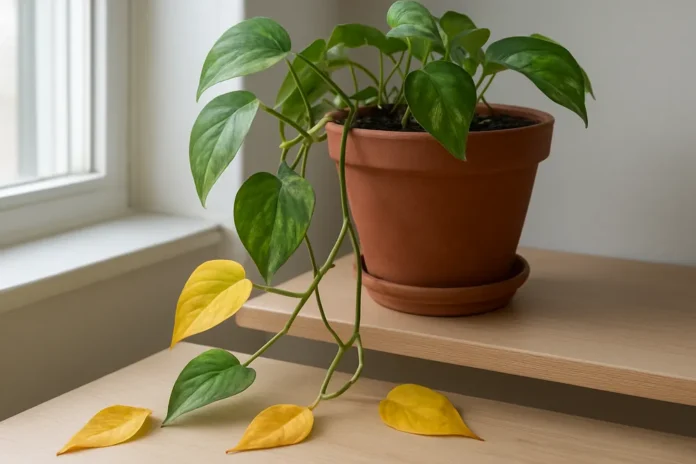
Pothos usually loses leaves because of watering stress, low light, sudden temperature changes, root problems, or shock after being moved. Older leaves can also drop naturally as the plant adjusts or ages.
A pothos can look full and healthy one week, then start dropping leaves fast enough to make you wonder what went wrong. In my experience, pothos leaf drop is rarely random. This plant is forgiving, but it still reacts when its roots stay too wet, the potting mix goes bone dry too often, or the light and temperature shift more than it likes.
The good news is that pothos usually gives you clues before the problem gets severe. Where the leaves are falling from, what the remaining foliage looks like, and how the soil feels can tell you a lot. Once you match the symptom pattern to the real cause, recovery is often straightforward.
What Normal Leaf Loss Looks Like
Not every fallen leaf means your plant is in trouble. A pothos will occasionally shed an older leaf, especially one near the base of a vine. If the rest of the plant looks firm, green, and actively growing, and you only lose a leaf here and there, that is usually normal aging.
Natural leaf drop tends to be slow and limited. The oldest leaves yellow first, then release cleanly. You should still see fresh growth at the tips and healthy roots below the soil. Trouble signs start when several leaves drop in a short period, stems begin looking bare, or the plant also shows wilting, yellowing, browning, or mushy stems.
Overwatering Is the Most Common Cause
If I had to guess blindly why a pothos is losing leaves, I would start with overwatering. Pothos likes evenly moist soil at times, but it does not want to sit in soggy mix for days. When the root zone stays too wet, roots lose access to oxygen and begin to rot. Once that happens, leaves yellow, soften, and drop because the plant can no longer move water properly.
Signs Your Pothos Is Staying Too Wet
- Yellow leaves dropping from multiple parts of the plant
- Soil that still feels wet several days after watering
- A pot that feels unusually heavy for its size
- Black, soft, or mushy stems near the soil line
- A sour or swampy smell coming from the pot
When I suspect overwatering, I do not look at the fallen leaf first. I look at the stem base and the center of the root ball. A pothos with wet soil and yellow leaves but firm white roots usually rebounds well. A pothos with soft brown roots needs faster intervention.
Overwatering is not just about how often you water. It can also come from a pot without drainage, a dense potting mix, a container that is too large, or low indoor light that slows drying. In winter, many pothos need less water than they do during bright spring and summer growth.
To fix it, let the top part of the soil dry before watering again. If the mix is compacted or sour-smelling, repot into a loose indoor plant mix with added perlite and a pot that has drainage holes. Trim away any obviously rotten roots. After that, water thoroughly, then wait until the top 1 to 2 inches of soil feel dry before the next watering.
Underwatering Can Also Make Leaves Fall
Pothos is tolerant of occasional neglect, but repeated drought stress can lead to leaf drop too. When the mix gets excessively dry, the plant sacrifices older leaves first. You may see limp vines, curled leaves, crispy brown edges, and soil that has pulled away from the sides of the pot.
How Underwatering Looks Different From Overwatering
- Leaves feel dry or papery rather than soft
- Yellowing may be followed by brown, crisp patches
- The pot feels very light
- Water runs straight through because the mix has become hydrophobic
- Vines may droop but perk up after a deep watering
A badly dried-out pothos may drop leaves even after you water it because the roots were stressed for too long. If the soil has become hard and shrunken, rehydrate it slowly. Water thoroughly, let excess drain, then repeat once more after a short pause so the root ball absorbs moisture evenly.
If water keeps racing down the sides of the pot, I like to bottom-water the plant for 20 to 30 minutes, then let it drain well. That often restores a dry root ball much better than pouring water from the top once.
Low Light Causes Slow Decline and Leaf Drop
Pothos is famous for surviving in low light, but surviving is not the same as thriving. In very dim rooms, the plant cannot support as much foliage. Growth gets thinner, internodes stretch, variegation fades, and older leaves may yellow and drop because the plant does not have enough energy to maintain them.
Leaf loss from poor light is usually gradual rather than sudden. You may notice long bare sections on the vines, smaller new leaves, or the plant leaning toward a window. This is especially common in winter, when a spot that worked in summer becomes too dark.
What Pothos Light Problems Usually Look Like
- Long stems with wider spacing between leaves
- Faded variegation on golden or marble varieties
- Slow drying soil because the plant is using less water
- Leaf drop mostly on older interior leaves
- Weak, sparse growth despite regular watering
Move your pothos to bright, indirect light for the best recovery. A spot near an east window or a few feet back from a bright south or west window usually works well. Avoid harsh direct afternoon sun if the plant has been in low light, because sudden exposure can scorch leaves.
Temperature Shock and Dry Indoor Air Can Trigger Leaf Drop
Pothos prefers stable indoor conditions. Sudden chills, drafts, blasts from heating vents, or hot dry air from appliances can stress the plant enough to shed leaves. This tends to happen after seasonal weather changes, moving day, or a plant being placed near an exterior door or drafty window.
Cold damage is especially rough on pothos. Leaves may yellow quickly, develop dark water-soaked patches, then fall. Heat stress and very dry air can cause curling, crisp edges, and a general tired look before leaves drop.
- Keep pothos away from temperatures below about 55 degrees Fahrenheit
- Do not place it directly in the path of AC or heater vents
- Avoid setting vines against cold window glass in winter
- Maintain steady household temperatures whenever possible
Humidity alone is not usually the main reason a pothos drops many leaves, but dry air can worsen other issues. If your home is very dry, grouping plants together or using a humidifier may help reduce stress.
Rootbound Plants and Poor Potting Mix Create Hidden Stress
A pothos that has been in the same container for years can start dropping leaves because its roots have taken over the pot. When roots circle tightly and crowd out most of the soil, water can either rush through too quickly or remain unevenly distributed. The plant then swings between stress from dryness and stress from poor root function.
Old potting mix can also break down and compact. Even if you water correctly, dense mix reduces airflow around roots and may stay wet too long. On the other hand, an exhausted mix may not hold moisture well enough during active growth.
Clues It Is Time to Repot
- Roots growing out of drainage holes
- Soil dries out extremely fast after watering
- Water runs through without soaking the root ball well
- The plant wilts often despite a regular care routine
- Growth has slowed and vines are losing lower leaves
Repot into a container just 1 to 2 inches wider than the current pot. Going much larger can keep excess soil wet for too long. Use a loose, airy mix intended for houseplants, ideally amended with perlite or fine bark for better drainage.
Pests and Disease Are Less Common but Still Possible
Pothos is fairly tough, but sap-sucking pests can weaken it enough to cause leaf loss. Spider mites, mealybugs, scale, and thrips are the usual suspects indoors. These pests drain plant tissue, reduce vigor, and often cause yellowing or stippling before leaves fall.
Disease is more likely when the plant has already been stressed by wet soil or poor airflow. Root rot is the biggest issue, but bacterial or fungal spotting can also lead to leaf drop if the problem spreads.
Symptoms That Point Toward Pests
- Fine webbing under leaves or between stems
- Sticky residue on leaves or nearby surfaces
- Small bumps on stems or leaf undersides
- Silvery streaks, stippling, or distorted new growth
- Leaves dropping even though watering seems on track
I check the undersides of the newest leaves first when a pothos is dropping foliage for no obvious watering reason. Pest problems often show up there before the older leaves tell the full story.
If you find pests, isolate the plant and clean the leaves thoroughly. Insecticidal soap or neem can help, but repeated treatments are often needed. For rot-related disease, the best solution is usually correcting the root environment rather than spraying the foliage.
Transplant Shock and Environmental Changes After Purchase or Moving
Sometimes a pothos starts losing leaves right after you bring it home, move it to a new room, or repot it. That does not always mean you did something wrong. Plants react to changes in light intensity, humidity, watering rhythm, and root disturbance. A few dropped leaves can be part of the adjustment period.
Leaf drop from shock is usually temporary if the plant still has healthy stems and roots. The best response is consistency. Keep it in stable bright, indirect light, avoid constant repositioning, and do not try to fix the problem by changing three things at once.
Repotting can also cause short-term stress if too many roots were broken or if the new container is oversized. After repotting, expect the plant to pause before new growth resumes. Judge recovery by what new leaves do over the next several weeks, not by whether every old leaf is saved.
How to Figure Out the Real Cause Quickly
When a pothos is dropping leaves, I like to narrow it down by pattern instead of guessing from one symptom alone. Most cases become clear once you check the soil, light, and stems together.
- Feel the soil 1 to 2 inches down. Wet points to overwatering or poor drainage. Bone dry points to underwatering.
- Look at the fallen leaves. Soft yellow leaves suggest excess moisture. Dry crispy leaves suggest drought or heat stress.
- Check the location. Very dim corners, cold windows, and air vents commonly trigger decline.
- Slide the plant from its pot if needed. Brown mushy roots indicate rot. Tight circling roots suggest it is rootbound.
- Inspect leaf undersides and stem joints for pests, webbing, or sticky residue.
It helps to remember that pothos problems often overlap. Low light slows soil drying, which increases overwatering risk. A rootbound plant dries erratically, which can make you alternate between too much and too little water. Focus on the condition that started the chain reaction.
How to Help Your Pothos Recover
Once you identify the likely cause, recovery is mostly about giving the plant a steadier routine. Pothos does not need pampering, but it does respond well to consistency.
- Place the plant in bright, indirect light
- Water only when the top 1 to 2 inches of soil are dry
- Use a pot with drainage and a loose houseplant mix
- Trim mushy roots or dead stems if rot is present
- Remove severely damaged leaves so you can monitor new growth
- Keep it away from drafts, heater vents, and cold glass
- Hold fertilizer until the plant shows signs of active recovery
Do not expect dropped leaves to come back. Recovery shows up as healthy new leaves, firmer stems, and a more predictable watering rhythm. If a vine has gone mostly bare, you can prune it back once the plant stabilizes to encourage fuller regrowth.
If the plant is badly stressed, propagation can be a smart backup plan. Healthy stem cuttings root easily in water or moist mix, so you can preserve the plant even if the original root system is struggling.
FAQ
Should I Remove Yellow Leaves From My Pothos?
Yes. If a leaf is fully yellow or comes off with a gentle tug, remove it. That keeps the plant tidier and makes it easier to track whether the problem is still progressing.
Can a Pothos Recover After Dropping a Lot of Leaves?
Usually, yes. As long as the stems and roots still have healthy tissue, pothos can rebound once the underlying problem is corrected. Look for healthy new growth rather than waiting for old leaves to return.
How Often Should I Water a Pothos to Prevent Leaf Drop?
There is no fixed schedule that works in every home. Water when the top 1 to 2 inches of soil feel dry, then let excess drain away. Light, pot size, and season all change how often that happens.
Why Is My Pothos Losing Leaves After Repotting?
Mild leaf drop after repotting is often transplant shock. Root disturbance, a big change in pot size, or a new soil mix can temporarily stress the plant. Keep conditions stable and avoid overwatering while it adjusts.
Do Pothos Lose Leaves in Winter?
They can. Lower light, cooler temperatures, and slower growth in winter often make pothos more sensitive to watering mistakes and drafts, which can lead to some leaf loss.
Can Low Humidity Make Pothos Drop Leaves?
Low humidity alone is not the most common cause, but it can add stress, especially near heaters or in very dry homes. It often shows up alongside crispy edges or curling rather than being the only issue.
Will Fertilizer Stop Pothos Leaf Drop?
Not if the real issue is watering, roots, light, or pests. Fertilizer only helps a healthy plant grow. Feeding a stressed pothos can sometimes make the problem worse.
Still troubleshooting your houseplant setup? Read our guide to the best pothos soils, pots, and watering tools so you can fix leaf drop and keep new growth coming in full.
