

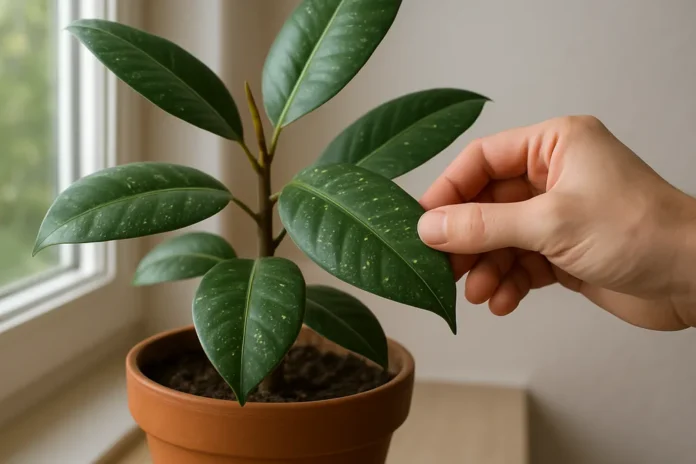
Money tree leaves get white spots most often from sap-sucking pests, hard water or fertilizer residue, fungal problems, or leaf stress after watering and humidity changes. The exact cause usually shows up in the way the spots look and where they appear on the plant.
Seeing money tree leaves with white spots can be confusing because several different problems can create a similar look. Sometimes the spots wipe off and turn out to be simple mineral residue. Other times they are a sign of spider mites, mealybugs, powdery mildew, or stress that damaged the leaf surface.
When I troubleshoot a money tree with pale or chalky marks, I start by looking at the texture of the spots, not just the color. White fuzz, white crust, fine stippling, and bleached patches all point in different directions. That small detail usually tells you whether you are dealing with something harmless, something infectious, or a pest issue that needs quick action.
The good news is that most causes are fixable, especially if the plant still has healthy new growth. Once you match the symptom pattern to the right cause, treatment is usually straightforward.
What White Spots on a Money Tree Usually Mean
White spots are not one single disease. On money trees, they usually fall into one of four categories: pest activity, surface residue, fungal growth, or physical leaf damage. The marks may sit on top of the leaf, sink into the tissue, spread in patches, or show up with other symptoms like yellowing, curling, sticky residue, or fine webbing.
- If the white material looks cottony or fuzzy, pests or fungus are more likely.
- If it looks chalky or crusty and wipes off, hard water or fertilizer residue is a common cause.
- If the leaf has tiny pale dots or a faded, speckled look, spider mites are high on the list.
- If the white areas look bleached or papery, sun scorch or environmental stress may be involved.
I do not judge the problem from one leaf alone. I compare older leaves, new leaves, the undersides, and nearby stems. A pattern that repeats across the plant usually tells the truth much faster than one damaged leaf.
Common Causes of White Spots on Money Tree Leaves
Spider Mites
Spider mites are a very common indoor cause of pale or white spotting. They feed by piercing leaf tissue, which leaves behind tiny light dots called stippling. At first the leaf may just look dusty or faded. As the problem worsens, leaves can turn dull, dry at the edges, and eventually drop. You may also notice fine webbing between leaves and stems, especially in dry indoor air.
Money trees under low humidity or near heating vents are especially vulnerable. Mites often start on the undersides of leaves, so a quick top-down glance can miss them early.
Mealybugs and Other Sap-sucking Pests
Mealybugs look like little bits of white cotton clustered along leaf veins, where leaves meet stems, or around new growth. Scale insects can also leave pale marks and sticky honeydew. These pests weaken the plant by feeding on sap, which can create distorted growth, yellowing, and patchy discoloration in addition to the visible white bodies.
If your white spots look raised instead of flat, inspect closely before assuming disease. A pest that stays attached to the plant is very different from residue or spotting inside the leaf tissue.
Hard Water or Fertilizer Residue
Not every white spot means the plant is sick. If you mist leaves with tap water, use hard water, or occasionally splash fertilizer solution onto the foliage, minerals can dry into pale white specks or rings. This is especially common on broad glossy leaves like money tree foliage. The spots usually sit on the surface and wipe away with a damp cloth.
This kind of residue is mostly cosmetic, but it can block light a bit and make it harder to notice real pest or fungal issues later.
Powdery Mildew or Other Fungal Issues
Powdery mildew shows up as a white, dusty coating on leaf surfaces. It can start in small patches and expand if air circulation is poor and leaves stay damp. On indoor money trees it is not the most common problem, but it does happen, especially where plants are crowded together, humidity is high without good airflow, or leaves are repeatedly wetted.
Fungal spotting may also appear as pale lesions with tan or brown centers later on. If the spots are spreading rather than staying static, disease becomes more likely.
Sunscald and Physical Leaf Stress
A money tree moved suddenly from lower light to direct afternoon sun can develop bleached white or silvery patches. These spots are usually flat, dry, and irregular. They do not rub off because the leaf tissue itself has been damaged. Cold drafts, sudden temperature swings, and severe underwatering can also leave pale stress marks on leaves.
If the spots wipe off cleanly, I think residue first. If they stay put but the leaf tissue still feels smooth, I suspect pests. If the area feels dry, thin, or papery, I start thinking about sun or environmental damage.
How to Tell Which Problem You Have
The fastest way to diagnose white spots is to examine three things: where the spots are located, whether they wipe off, and what other symptoms appear alongside them. You do not need lab testing for most money tree problems. A close inspection under bright light is usually enough.
- Look at the undersides of leaves for mites, webbing, or tiny moving dots.
- Check leaf joints and stems for cottony clusters that suggest mealybugs.
- Gently wipe one leaf with a damp cloth. If the white mark disappears, residue is likely.
- Notice whether the spots are powdery, raised, speckled, or bleached into the tissue.
- Watch for companion symptoms like sticky leaves, yellowing, curling, browning edges, or leaf drop.
Location matters too. White spotting mainly on leaves facing a bright window can point to light damage. White buildup mostly on upper leaf surfaces may be residue. Damage beginning on lower leaves and spreading upward can happen with mites or general plant stress. Cottony masses tucked into crevices almost always mean pests.
What to Do for Each Cause
If the Spots Are From Spider Mites
Isolate the plant from other houseplants first. Rinse the foliage thoroughly, especially the undersides, to knock populations down. Then treat with insecticidal soap or horticultural oil labeled for indoor plants. Repeat treatments as directed because one spray rarely gets every life stage. Raise humidity moderately and keep the plant away from hot, dry vents.
If the Spots Are From Mealybugs
Remove visible mealybugs with a cotton swab dipped in rubbing alcohol, then follow up with insecticidal soap or neem-based treatment if appropriate for the product label. Inspect hidden areas every few days because they often come back from leaf axils or protected stem crevices. Badly infested leaves can be pruned off if the plant still has enough healthy foliage.
If the Spots Are Mineral or Fertilizer Residue
Wipe leaves with a soft damp cloth. If buildup is stubborn, use distilled water rather than tap water for cleaning. Going forward, avoid misting with hard water and try not to splash fertilizer onto the leaves. If salts may also be building up in the soil from overfertilizing, flush the potting mix thoroughly and pause feeding until the plant resumes steady growth.
If the Spots Are Powdery Mildew or Another Fungal Issue
Remove the most affected leaves if the plant can spare them, improve airflow around the plant, and stop wetting the foliage. Keep the money tree in bright indirect light so leaves dry and the plant recovers faster. For active fungal spread, use a houseplant-safe fungicidal product according to label directions. Also reduce crowding if nearby plants are touching.
If the Spots Are From Sun or Environmental Stress
Move the plant to bright, indirect light and protect it from harsh afternoon sun. Keep watering consistent, letting the top layer of soil dry slightly between waterings instead of swinging from bone dry to soggy. Avoid cold drafts from doors, air conditioners, or winter windows. Existing damaged spots will not turn green again, but new leaves should emerge healthy once conditions stabilize.
Treat one diagnosis at a time. I see a lot of struggling houseplants get watered differently, fertilized, repotted, and sprayed all in the same week. When several changes happen at once, it becomes hard to tell what actually helped or made the stress worse.
Care Issues That Make White Spotting More Likely
Money trees are fairly forgiving, but certain care habits make white spotting show up more often. The biggest triggers are low humidity, poor airflow, irregular watering, and residue from tap water or fertilizer. Indoor plants also suffer when leaves are left dusty for long periods, since pests can go unnoticed and the foliage cannot function as well.
- Very dry indoor air encourages spider mites.
- Wet leaves with poor airflow create better conditions for fungal growth.
- Heavy fertilizer use can leave salt deposits on leaves and in soil.
- Sudden direct sun can bleach leaves that were adapted to lower light.
- Crowded plants allow pests and disease to spread faster.
A healthy money tree is less likely to stay in trouble for long. Good light, steady watering, and occasional leaf cleaning do more prevention work than most people realize.
When White Spots Are Harmless and when They Are a Warning Sign
Surface residue that wipes off is usually harmless. Old sunscald on one or two leaves is also mostly cosmetic once the plant has been moved into better conditions. In those cases, the white spots may be ugly, but they are not actively spreading through the plant.
Take the problem more seriously if you see active spread, sticky residue, leaf curling, webbing, fuzzy growth, or new leaves emerging damaged. Those signs suggest pests or disease are still present. A money tree that is losing leaves quickly or showing white spots along with black mushy stems may have larger root or watering problems that need attention too.
How to Prevent White Spots From Coming Back
Prevention is mostly about keeping the leaf surface clean and the plant environment steady. Money trees do best in bright, indirect light with moderate humidity and consistent watering. They do not like extremes.
- Inspect leaves, stems, and undersides every week or two.
- Wipe dust from foliage regularly with a soft damp cloth.
- Use filtered or distilled water for misting if your tap water leaves residue.
- Avoid overfertilizing, especially in low light or winter.
- Provide space between houseplants for airflow.
- Quarantine new plants before placing them near your money tree.
- Acclimate the plant gradually if you move it into brighter light.
If you are prone to forgetting inspections, tie them to watering day. That small habit catches pest outbreaks early, when treatment is faster and much less frustrating.
FAQ
Can White Spots on a Money Tree Go Away on Their Own?
Residue can be wiped away, but true leaf damage usually stays on the affected leaf. If the cause is pests, fungus, or sunscald, the goal is to stop new damage rather than expect old spots to turn green again.
Are White Spots on Money Tree Leaves Always a Pest Problem?
No. Pests are common, but hard water residue, fertilizer splash, powdery mildew, and sun damage can all create white marks. The texture and location of the spots usually separate these causes.
Should I Cut Off Leaves with White Spots?
Remove leaves if they are heavily infested, badly diseased, or mostly damaged. If only a few spots are present and the leaf is still doing useful work, you can leave it on while correcting the underlying issue.
Is It Safe to Use Neem Oil on a Money Tree?
Neem products can be useful for some pests and mild fungal issues if the label says they are suitable for houseplants. Apply in the right dilution, keep the plant out of harsh direct sun after treatment, and test a small area first if you are concerned about sensitivity.
Why Do the White Spots Keep Coming Back After I Wipe the Leaves?
If the marks return quickly, the cause is probably not simple dust alone. Reappearing residue often comes from hard water or fertilizer splash, while recurring white speckling or fuzz suggests pests or fungal growth are still active.
Can Low Humidity Cause White Spots by Itself?
Low humidity does not usually create crisp white residue on its own, but it strongly encourages spider mites, which cause pale stippling and a washed-out look. Dry air can also increase general stress and make leaves more vulnerable.
Do I Need to Repot My Money Tree if It Has White Spots?
Not usually. Most white spotting problems are above-ground issues. Repot only if the plant also has root-related symptoms such as sour soil, poor drainage, constant sogginess, or severe salt buildup from overfertilizing.
Still trying to decide whether your money tree has mites, fungus, or a watering problem? Read our indoor plant pest treatment guide and compare the best sprays, soaps, and cleanup tools before the damage spreads.
