

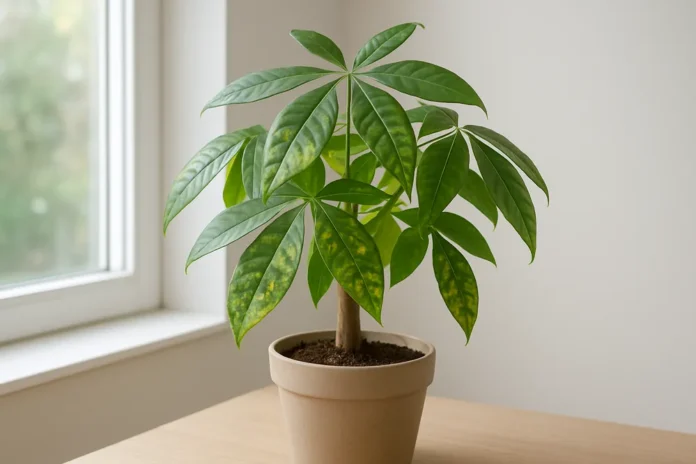
Yellow spots on money tree leaves are usually caused by watering stress, pest damage, too much direct sun, or occasional fungal leaf problems. The exact cause depends on whether the spots look pale, crispy, speckled, or water-soaked.
Seeing money tree leaves with yellow spots can be frustrating because the plant may still look mostly healthy at first. A few scattered marks often show up before the bigger clues do, so this symptom is easy to dismiss until more leaves start fading, browning, or dropping.
In my experience, yellow spotting on a money tree usually traces back to one of a handful of issues: inconsistent watering, poor drainage, pest feeding, too much harsh sun, or a leaf disease that likes damp conditions. The good news is that the pattern on the leaves usually gives you a solid clue. Once you match that pattern to the cause, the fix becomes much more straightforward.
This guide will help you sort out what those yellow spots mean, how to tell similar problems apart, and what to do so new growth comes in clean and healthy.
What Yellow Spots Are Telling You
Yellow spots are not a diagnosis by themselves. They are a symptom. On money tree, the most useful details are where the spots appear, how sharp the edges look, whether the centers turn brown, and whether the leaf also droops or curls. A plant with random pale freckles has a different problem than a plant with large blotches between the veins.
Start by looking at several leaves, not just the worst one. Check older leaves near the bottom, newer leaves near the top, the undersides for pests, and the soil moisture in the root zone. Also note whether the plant recently moved near a sunnier window, had a change in watering routine, or sat in a decorative cachepot where water might have pooled unseen.
When I diagnose spotted houseplant leaves, I care more about the pattern across the plant than the ugliest leaf. One badly marked leaf can be old damage. Five leaves showing the same spotting pattern usually point to an active problem.
Overwatering and Poor Drainage Are Common Causes
If I had to pick the most common cause of yellow spotting on money tree, it would be excess moisture around the roots. Money trees like evenly moist soil, but they do not like sitting in a soggy pot. When roots stay too wet, they struggle to take up oxygen, and the leaves begin showing stress as yellow mottling, soft yellow patches, and eventual browning.
What Overwatering Damage Looks Like
- Yellow spots or blotches that gradually expand rather than staying tiny and crisp
- Leaves that feel soft, limp, or slightly swollen instead of dry and papery
- Lower or older leaves yellowing first
- Soil that stays wet for many days after watering
- A pot that feels heavy all the time
- Musty smell from the soil or signs of fungus gnats
Poor drainage can create the same symptoms even if you are not watering very often. A nursery pot placed inside a decorative outer pot is a classic trap. Water drains out of the inner pot, collects at the bottom, and the roots keep soaking it back up.
How to Fix It
- Let the top 1 to 2 inches of soil dry before watering again.
- Empty any saucer or outer pot after watering so roots never sit in runoff.
- Make sure the container has at least one real drainage hole.
- If the mix stays wet longer than a week, repot into a chunkier indoor plant mix with added perlite or bark.
- Trim off badly damaged yellow leaves, but keep any leaf that is still mostly green.
After fixing a watering issue, judge success by new growth, not by old damaged leaves clearing up. Spotted sections usually stay spotted, so the real sign of recovery is that fresh leaves open without marks.
Underwatering Can Also Cause Speckled Yellowing
Although money tree is often overwatered, underwatering can create yellow spots too. When the soil gets bone dry, the plant cannot move moisture evenly through the leaves. That can show up as scattered yellow patches, especially near the tips and edges, followed by crisp brown tissue.
Signs the Plant Is Getting Too Dry
- Yellow spots paired with dry brown edges or tips
- Leaves that curl inward or feel thin and papery
- Potting mix pulling away from the sides of the pot
- A very light pot that dries out fast
- Drooping that improves quickly after a thorough watering
This often happens when a money tree is in a small pot, placed near a heating vent, or watered lightly instead of thoroughly. Small sips only moisten the surface. The lower root ball may stay dry, and the leaves respond with blotchy stress symptoms.
How to Fix It
Water deeply until excess runs from the drainage hole, then let the top layer dry before watering again. If the soil has become hydrophobic and water runs straight down the sides, soak the pot for 15 to 20 minutes so the root ball can rehydrate evenly. Then return to a steadier schedule instead of waiting for severe wilt.
Spider Mites and Other Pests Can Leave Yellow Stippling
Tiny pests are another major reason money tree leaves develop yellow spots. Spider mites are especially common indoors, particularly in dry air. They feed by piercing leaf tissue and sucking out contents, which leaves behind fine yellow stippling that can merge into larger pale areas.
Pest Patterns to Look For
- Very small yellow dots spread across the leaf surface
- More spotting on the upper leaf surface, with pests hiding underneath
- Fine webbing between leaves or stems in spider mite cases
- Silvery or scarred patches from thrips feeding
- Sticky residue if scale or soft-bodied insects are present
- Spotting concentrated on newer growth when pests prefer tender leaves
Spider mite damage often looks dry and dusty rather than soft. The leaf may lose its deep green color and take on a faded, stippled look. Thrips can create irregular yellow or silvery scars, while scale tends to cause more general decline plus isolated yellowing around feeding sites.
How to Confirm Pests
Inspect the undersides of leaves with a bright light. Tap a leaf over white paper to see if tiny moving specks fall off. For spider mites, look closely along the midrib and where leaflets meet the stem. For thrips, check new leaves that look distorted, streaked, or dull.
How to Fix It
- Isolate the plant from your other houseplants.
- Rinse the foliage thoroughly, especially leaf undersides.
- Treat with insecticidal soap or horticultural oil according to label directions.
- Repeat treatments every 5 to 7 days for several rounds, because one spray rarely gets every life stage.
- Remove heavily damaged leaves if they are mostly spent.
If the leaf looks sprinkled with tiny pale dots almost evenly across the surface, I think pests before disease. Fungal spots usually form more distinct lesions, while mite damage tends to read like a fine faded speckling from a distance.
Too Much Direct Sun Can Bleach or Scorch the Leaves
Money tree prefers bright, indirect light. If it sits in strong direct afternoon sun, especially after living in lower light, leaves can develop pale yellow spots that later turn tan or crispy brown. This is common near west-facing windows and in south-facing windows without a sheer curtain.
How Sun Scorch Usually Appears
- Yellow or bleached patches on the side facing the window
- Spots that become dry, brittle, or papery
- Damage concentrated on exposed upper leaves
- A sudden flare-up after moving the plant to brighter light
Sun damage usually has a location pattern. The window-facing side gets hit first, while shaded inner leaves stay normal. Unlike overwatering, the affected tissue often feels dry rather than soft.
How to Fix It
Move the plant a little farther from intense sun or filter the light with a sheer curtain. Keep it in bright indirect light so it still has enough energy to grow. Do not swing the plant from deep shade to harsh sun in a single jump. Gradual adjustment prevents another round of spotting.
Fungal or Bacterial Leaf Spots Are Possible in Damp Conditions
True leaf spot diseases are less common than watering or pest problems, but they do happen. They are more likely when leaves stay wet for long periods, airflow is poor, and the plant is crowded among other houseplants. In these cases, yellow spots may start as small lesions with darker centers, halos, or water-soaked edges.
Clues That Point to Disease
- Distinct round or irregular spots rather than diffuse mottling
- Brown, black, or tan centers surrounded by yellow halos
- Spots that appear after misting, splashing, or prolonged humidity on the leaf surface
- Several leaves marked in a similar way, especially where foliage touches
Bacterial-type spots may look greasy or water-soaked at first. Fungal spots often dry into tan or brown lesions with defined edges. Either way, damaged leaf tissue does not heal, and crowded wet foliage encourages spread.
How to Fix It
- Remove the worst infected leaves with clean scissors.
- Avoid wetting the foliage during watering.
- Improve air circulation around the plant.
- Water the soil only when needed, and avoid keeping it constantly damp.
- Disinfect tools after pruning affected tissue.
If spotting keeps spreading quickly despite those changes, the plant may need a houseplant-safe fungicidal treatment labeled for leaf spot diseases. For most indoor growers, though, sanitation and drying out the environment solve the issue before chemicals are necessary.
Nutrient Issues and Water Quality Can Contribute
Nutrient deficiencies usually cause broader yellowing rather than neat spots, but they can still show up as mottled or patchy discoloration on money tree leaves. A plant that has been in the same exhausted potting mix for years may develop pale leaves with uneven yellow areas. Hard water or fertilizer salt buildup can also stress roots and lead to blotchy yellowing.
When to Suspect Nutrition or Salt Buildup
- The plant has not been repotted or fed in a long time
- A white crust appears on the soil surface or pot rim
- Yellowing is widespread but not obviously linked to pests or sun
- Growth has slowed and new leaves are smaller than usual
This is usually a secondary issue rather than the only one. Roots stressed by salts or depleted mix become less efficient, which makes the plant more sensitive to watering mistakes too.
How to Fix It
Flush the pot thoroughly with plain water to wash out accumulated salts, or repot into fresh mix if the soil is old and compacted. During active growth, feed lightly with a balanced houseplant fertilizer according to label directions. More fertilizer is not better here. Overfeeding can worsen spotting by burning the roots.
How to Tell the Causes Apart Quickly
Because several problems can produce yellow spots, it helps to compare the texture and pattern of the damage.
- Soft yellow blotches plus wet soil usually point to overwatering or poor drainage.
- Dry yellow patches that crisp brown in window-facing areas usually suggest sun scorch.
- Tiny scattered yellow dots or faded stippling often mean spider mites or similar pests.
- Sharp lesions with dark centers or yellow halos can indicate fungal or bacterial leaf spot.
- Patchy yellowing with crisp edges and bone-dry soil usually fits underwatering.
- General pale, tired growth with uneven yellowing can involve old soil, salt buildup, or feeding issues.
If you are torn between two causes, lean on context. Did the problem start after moving the plant? Think light stress. Has the soil stayed wet too long? Think root stress. Are there specks or webbing underneath? Think pests.
What to Do Right Now for a Spotted Money Tree
If you want a practical response without overreacting, take a calm triage approach. Money tree usually rebounds well once the root environment and light are corrected.
- Check the soil moisture 1 to 2 inches down before adding water.
- Inspect leaf undersides for mites, thrips, or scale.
- Move the plant out of harsh direct sun if needed.
- Trim off a few of the ugliest leaves so you can track whether new spotting continues.
- Make only one or two major changes at a time so you know what helped.
Avoid the temptation to repot, fertilize, prune heavily, and spray products all in one afternoon unless the plant clearly has multiple problems. Stressed roots and stressed leaves recover best when you remove the main cause, then give the plant stable conditions for a few weeks.
How to Prevent Yellow Spots From Coming Back
Prevention mostly comes down to consistency. Money tree likes bright indirect light, soil that drains well, and watering that is thorough but not constant. Once you find the right rhythm, spotting problems become much less frequent.
- Use a pot with drainage and a loose indoor plant mix.
- Water deeply, then wait until the top layer dries before watering again.
- Keep the plant near bright filtered light rather than intense afternoon sun.
- Wipe leaves occasionally and inspect the undersides during routine care.
- Avoid crowding the plant where airflow is poor and leaves stay damp.
- Repot every couple of years if the mix becomes dense or depleted.
I also like rotating my money tree every week or two so growth stays balanced and one side does not get overexposed. It is a small habit, but it helps me catch changes early because I see every part of the plant regularly.
FAQ
Will Yellow Spots on Money Tree Leaves Go Away?
No. The damaged parts of a leaf usually stay marked. What you want to watch for is healthy new growth and a stop to new spots forming.
Should I Cut Off Leaves with Yellow Spots?
Remove leaves that are heavily damaged, mostly yellow, or clearly diseased. Keep lightly spotted leaves if they are still doing useful work for the plant.
Can Misting Cause Yellow Spots on Money Tree Leaves?
It can contribute if the leaves stay wet and airflow is poor. Misting does not reliably raise humidity much, and repeated wet foliage can encourage leaf spot problems.
Do Yellow Spots Mean Root Rot?
Not always, but they can be an early sign when the soil stays soggy and leaves also turn soft or limp. Root rot becomes more likely if the pot lacks drainage or smells sour.
Can Tap Water Cause Yellow Spotting on a Money Tree?
Sometimes. Hard water and mineral buildup can stress roots over time, which may lead to patchy yellowing. Flushing the soil or using filtered water can help if buildup is visible.
How Often Should I Water a Money Tree with Yellow-spotted Leaves?
Water based on soil dryness, not a fixed calendar. Most money trees do best when the top 1 to 2 inches of soil dry before the next deep watering.
Are Yellow Spots From Pests Contagious to Other Houseplants?
Yes, if pests are the cause they can spread quickly to nearby plants. Isolate the money tree until you know what is going on and have started treatment.
Can Too Little Light Cause Yellow Spots?
Low light usually causes slower growth and general decline rather than distinct yellow spots. It often makes overwatering more likely, which then leads to blotchy yellowing.
Need the right fix fast? Read our money tree care guide and product picks for potting mixes, pest sprays, and drainage-friendly pots that actually help spotted plants recover.
