

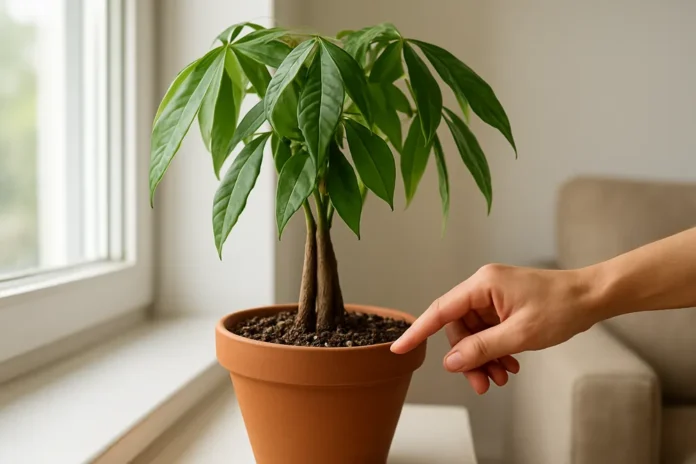
A money tree usually wilts because its roots are stressed by too much water, too little water, sudden temperature swings, or poor indoor conditions. Wilting can also happen when root rot, compacted soil, or recent repotting interferes with normal water uptake.
A money tree wilting is one of those houseplant problems that can look dramatic fast. Leaves droop, stems lose some firmness, and the whole plant can seem tired overnight. The good news is that wilting is usually a symptom of stress, not an automatic death sentence.
In my experience, the biggest mistake people make is assuming every wilted money tree needs more water. Sometimes that is true, but just as often the roots are already sitting in soggy soil and cannot take up oxygen or moisture properly. The trick is reading the full pattern: soil moisture, leaf color, recent care changes, room conditions, and how quickly the plant declined.
Once you match the wilt to the likely cause, recovery is often straightforward. New growth tells you much more than damaged older leaves, so focus on correcting the problem and giving the plant a stable environment.
What Wilting Usually Means on a Money Tree
Wilting happens when the plant's leaves and stems lose internal pressure. A healthy money tree keeps its tissues firm by moving water from the roots up through the stems and into the leaves. When that flow is interrupted, the plant droops.
That interruption can happen for opposite reasons. Soil that gets bone dry leaves the plant without enough water to maintain leaf pressure. Soil that stays wet too long can damage roots, and damaged roots also fail to deliver water. That is why underwatering and overwatering can look surprisingly similar at first glance.
- Mild drooping with dry soil often points to thirst.
- Drooping with yellowing leaves and wet soil often points to overwatering or root trouble.
- A sudden limp look after moving the plant may be temperature shock or transplant stress.
- Wilting plus leaf drop can mean prolonged stress rather than a one-time missed watering.
When I diagnose a wilted money tree, I do not judge by one leaf. I look at the whole plant, then feel the soil several inches down. A thirsty plant and a root-damaged plant can both droop, but the soil almost always tells the more honest story.
The Most Common Causes of a Wilted Money Tree
Overwatering and Root Rot
This is the most common reason I see money trees collapse indoors. If the potting mix stays wet for too long, roots cannot breathe. Over time they begin to rot, and once roots are damaged, the plant wilts even though there is plenty of water in the pot.
Signs that support overwatering include yellowing leaves, a heavy pot that stays wet for days, a musty smell, black or mushy roots, and a trunk base that feels soft. If your money tree is in a decorative cachepot without drainage, the risk goes up quickly.
Underwatering
A money tree that has been allowed to dry too deeply may droop all over, especially in warm bright rooms. Leaves can feel thin or papery, and the pot may feel unusually light. Some lower leaves may turn brown at the edges or drop after repeated drought cycles.
This tends to happen when watering is too shallow, when a very rootbound plant dries out fast, or when dry peat-based mix starts repelling water instead of soaking it in evenly.
Poor Drainage or Compacted Soil
Even if you are not watering too often, a dense potting mix can keep roots too wet. Old soil breaks down over time and holds more moisture with less air space. That creates the same kind of root stress as overwatering.
Low Light
Money trees tolerate medium light, but they do not love dark corners. In low light, the plant uses water more slowly, so the soil stays wet longer. That makes watering mistakes more likely and can gradually weaken the plant enough that it starts drooping.
Temperature Swings and Drafts
Cold drafts from doors, air conditioning vents, and chilly windows can make a money tree wilt fast. Sudden heat from a nearby vent or radiator can do the same. These plants prefer steady indoor temperatures and usually react badly to abrupt change.
Repotting Stress
A recently repotted money tree may droop for a week or two while roots adjust. This is especially common if roots were disturbed heavily, damaged during the move, or shifted into a soil mix that holds much more water than the old one.
Pests and Less Common Issues
Spider mites, mealybugs, and scale can weaken a money tree enough to cause limp growth, though they are less commonly the main reason for a full-plant wilt. A severely rootbound plant can also wilt because water runs straight through the pot and roots cannot stay hydrated for long.
How to Tell Which Problem You Are Dealing With
Before you fix anything, pause and look for a pattern. Wilting is only the headline symptom. The supporting clues matter more than people realize.
- Check soil moisture 2 to 3 inches down, not just the surface.
- Lift the pot. A very light pot often signals dry soil, while a heavy pot suggests excess moisture.
- Look at leaf color. Yellowing often accompanies overwatering, while crisp browning more often comes with dryness or low humidity stress.
- Smell the soil. Sour or swampy odors suggest rot.
- Inspect the drainage holes. Healthy roots are light tan to white and firm. Rotten roots are dark, mushy, or stringy.
- Think about timing. If wilting followed a cold draft, move, repot, or schedule change, that event may be the trigger.
If the soil is wet and the plant is drooping, adding more water will usually make things worse. If the soil is dry all the way through and the leaves feel limp rather than yellow and mushy, thirst is the more likely cause.
If you are unsure whether the plant is too wet or too dry, wait a day before reacting unless the soil is clearly bone dry. Panic watering is one of the fastest ways to turn a mild problem into root damage.
How to Fix a Wilted Money Tree Based on the Cause
If the Plant Is Underwatered
Water thoroughly until excess drains from the bottom. If the soil has become very dry and shrunk from the sides of the pot, water slowly in stages or soak the pot briefly so the root ball can rehydrate evenly. Do not just wet the top inch.
After rehydrating, let the plant recover in bright indirect light and avoid fertilizing right away. Some leaves may not perk back up fully, but healthy stems and newer leaves usually respond within a day or two.
If the Plant Is Overwatered
Stop watering and let the soil dry to an appropriate level before watering again. Move the plant to bright indirect light, improve airflow around it, and always empty any saucer or outer pot that traps standing water.
If the soil stays soggy for many days, or if you suspect root rot, unpot the plant and inspect the roots. Trim away black, mushy sections with clean scissors and repot into fresh, well-draining mix in a pot with drainage holes.
If Drainage or Soil Is the Issue
Use a loose indoor potting mix that drains well but still holds some moisture. A blend for houseplants with added perlite or coarse bark usually works better than dense, compacted soil. Choose a pot only slightly larger than the root ball, because oversized pots stay wet too long.
If Light Is Too Low
Move your money tree closer to a bright window where it gets strong indirect light. East-facing windows are often ideal, and a few feet back from a south or west window can also work. Better light helps the plant use water properly and rebuild stronger growth.
If Temperature Shock Is Involved
Move the plant away from vents, exterior doors, and cold glass. Keep it in a stable room, ideally between about 65 and 80 degrees Fahrenheit. Once conditions settle, the plant often stops worsening even if some leaves still drop.
If Repotting Caused the Wilt
Give the plant time. Keep the soil lightly and evenly moist, not soggy, and avoid direct harsh sun while the roots recover. Do not fertilize until you see new growth, because stressed roots are easy to burn.
After any rescue step, I try to change only one or two variables at a time. If you repot, move, water heavily, and fertilize all at once, it becomes much harder to tell what actually helped and what added stress.
Signs Your Money Tree Is Recovering
Recovery does not always mean every wilted leaf looks perfect again. The better signs are in the plant's overall behavior over the next few weeks.
- Leaves stop getting progressively droopier.
- The trunk and stems feel firmer.
- No new yellow leaves appear after the watering issue is corrected.
- The soil begins drying at a more normal pace between waterings.
- Fresh leaf growth emerges at the tips.
If older damaged leaves continue dropping but the stems stay firm and new growth looks healthy, the plant is usually on the mend. Houseplants often shed stressed foliage while redirecting energy to root repair.
When Wilting Means the Roots Need Immediate Attention
Some cases call for quick action instead of watchful waiting. If the trunk base feels soft, the soil smells rotten, or the plant remains limp even though the mix is wet, do not keep waiting for it to bounce back on its own.
Remove the plant from its pot and inspect the root system. Healthy roots are firm and pale. If most roots are brown, mushy, or sloughing off, you are dealing with rot. Trim the damaged material, discard the old soil, clean the pot, and replant in fresh mix. If only a small portion of the roots remain healthy, prune back some top growth so the reduced root system has less foliage to support.
In severe cases, portions of the braided trunk may not recover if rot has moved upward into the stems. At that point, salvage depends on whether any trunks and roots still feel firm and alive.
How to Prevent Money Tree Wilting in the Future
Prevention is mostly about consistency. Money trees do best when watering, light, and temperature stay fairly predictable.
- Water when the top 1 to 2 inches of soil are dry, not on a rigid calendar.
- Always use a pot with drainage holes.
- Empty saucers and decorative outer pots after watering.
- Keep the plant in bright indirect light.
- Use a loose, well-draining houseplant mix.
- Avoid cold drafts, heater blasts, and sudden relocations.
- Repot only when needed, usually when roots are crowded or soil has broken down.
I also like to rotate money trees every so often so they grow evenly, but I do not move them all over the house. Stable conditions solve a surprising number of indoor plant problems before they start.
FAQ
Can a Money Tree Recover After Severe Wilting?
Yes, if the roots and trunk are still largely healthy. Plants wilted from simple underwatering often recover quickly, while plants wilted from root rot recover more slowly and may lose some leaves even after the problem is fixed.
Should I Water My Money Tree Right Away if It Is Drooping?
Not automatically. Drooping can come from both dryness and overwatering, so watering immediately is only smart if the soil is actually dry below the surface.
How Often Should I Water a Money Tree Indoors?
There is no perfect schedule because light, temperature, pot size, and season all change how fast the soil dries. Most indoor money trees do best when watered only after the top layer of soil has dried out.
Why Is My Money Tree Wilting After Repotting?
Repotting can disturb roots and temporarily interrupt water uptake. A bigger pot, denser soil, or rough root handling can all increase post-repot drooping for a short period.
Do Yellow Leaves Always Mean Overwatering?
Not always, but yellow leaves combined with wet soil and wilting strongly suggest excess moisture or root trouble. Yellowing can also come from aging leaves, low light, or other stress factors.
Can Low Humidity Make a Money Tree Wilt?
Low humidity alone is more likely to cause browning edges than a whole-plant wilt, but very dry indoor air can add stress and speed up water loss. It often makes an underwatering problem show up faster.
Is a Braided Money Tree Harder to Save when It Wilts?
Sometimes, because one or more trunks in the braid may decline faster than the others. It is common for part of a braided plant to stay viable while another section softens or rots.
Need help choosing the right fix fast? Read our money tree care and troubleshooting guide to compare symptoms, watering methods, and the best soil and pot options for a healthier plant.
