

Note: This article contains affiliate links. If you click on these links and make a purchase, I may earn a small commission at no extra cost to you. This helps support my research and content. Read my full affiliate disclosure here.
Carnivorous plants thrive in nutrient-poor, acidic soils and are harmed by the same feeding approaches you'd use for common garden species. Choosing the right fertilizer for carnivorous plants matters because excess salts, high nitrogen, or incorrect application can stress or kill these specialized species. This guide covers six carefully shortlisted options suited to carnivorous plants and explains why each type made the list. We focus on nutrient formulation, application method, and safety for delicate roots and trap tissues. Read on to understand how to feed without risking salt burn or unwanted growth changes.
Top Picks at a Glance
| Best Overall The best all-around choice for most situations | Josh's Frogs Bugless Boost Carnivorous Plant Food, 2 fl. oz. |  |
| Best Quality Built to a higher standard if you want something more solid | GARDENWISE Organic Marina Mist Carnivorous Plant Foliar Kelp Spray, 8 oz |  |
| Best Value The sweet spot between price and what you get | Gardenera 3-1-2 Liquid Fertilizer Concentrate for Carnivorous Plants, 8 fl oz |  |
| Best Budget The cheapest option that still gets the job done reliably | TPS Nutrients Carnivorous Plant Fertilizer, Gentle Liquid Plant Food, 8 oz |  |
| Highest Rated A top-rated pick with lots of positive feedback | Gardenera Carnivorous Plant Superfood Spray Mist, 8 oz |  |
| Most Popular A crowd favorite that many people choose with confidence | Orchid Gene Solid Gel Food for Venus Flytraps and Carnivorous Plants, 2.5 oz |  |
Josh's Frogs Bugless Boost Carnivorous Plant Food, 2 fl. oz.

| Brand | Josh's Frogs |
|---|---|
| Unit Count | 2 Fluid Ounces |
| Item Form | Liquid |
| Included Components | Liquid Fertilizer Bottle |
Josh's Frogs Bugless Boost is a small, precision-dropper liquid feed designed for carnivorous plants that need the nutrients normally obtained from insects. The formula includes seaweed, blood meal, ammonium phosphate, potassium nitrate, and chelated micronutrients to promote trap health, vigorous growth, and richer coloration. You can apply it directly to individual traps or pitchers with one drop every two to four weeks for targeted feeding, or dilute for light foliar misting to treat multiple plants. The 2 fl. oz. bottle and narrow dropper tip make accurate dosing and spot applications easy for small collections. Because it concentrates insect-derived nutrients, it removes the need to culture or catch live prey and keeps enclosures cleaner. The small bottle size means frequent repurchasing for larger collections, and users should follow dilution and timing carefully to avoid overfeeding sensitive species. For growers who prefer predictable, mess-free nutrition, this product simplifies regular feeding while addressing the specific needs of carnivorous plants.
Best for: Growers with a small to moderate collection who want a straightforward, low-mess way to provide carnivorous-plant-specific nutrition without feeding live insects.
Less Ideal for: People managing very large collections or commercial growers who need bulk supplies or a longer-lasting feed option.
- Formulated specifically for carnivorous plants with insect-derived nutrients and chelated micronutrients
- Precision dropper bottle enables accurate, mess-free one-drop feeding to individual traps
- Dual application: direct trap dosing or diluted foliar misting for treating multiple plants
- Eliminates need to catch or culture live insects, keeping terrariums cleaner
- Small 2 fl. oz. bottle may require frequent repurchasing for larger collections
- Concentrated nutrients require careful dosing and adherence to interval recommendations
Verdict: An easy, mess-free liquid feed that supplies carnivorous plants with the insect-style nutrients they need without live prey.
GARDENWISE Organic Marina Mist Carnivorous Plant Foliar Kelp Spray, 8 oz

| Item Form | Liquid |
|---|---|
| Specific Uses For Product | Carnivorous plant food spray |
| Application Method | Spray |
| Coverage | Medium |
| Liquid Volume | 8 fluid ounces |
This 8 oz Marina Mist foliar kelp spray is designed to supplement carnivorous plants with trace minerals, phytohormones, and a tiny amount of nitrogen and potassium without the heavy NPK load that can harm these species. It is used as a fine mist applied to leaves and traps 1–2 times per week after shaking to re-suspend ingredients. Notable features include an organic Ascophyllum nodosum base, a guaranteed analysis showing very low N and K levels, and an application method intended for direct foliar uptake rather than soil feeding. In practice the spray can improve coloration, trap vigor, and overall plant vitality for Venus flytraps, sundews, butterworts, and pitcher plants while avoiding root burn from standard fertilizers. The product is convenient for hobbyists who want targeted feeding without changing their potting media. Limitations are the small 8 oz volume for frequent use on larger collections and the low macronutrient content means it is a supplement not a complete feeding solution for severely nutrient-deficient specimens.
Best for: Growers focused on maximizing carnivorous plant performance who want a foliar supplement to enhance trap development, color, and vitality without altering potting media.
Less Ideal for: Large-scale growers who need high-volume feeding or those seeking a complete soil-based fertilizer solution for plants with severe nutrient deficiencies.
- Formulated specifically for carnivorous plants to avoid excessive root NPK exposure
- Organic Ascophyllum nodosum kelp provides trace minerals, amino acids, and phytohormones
- Foliar spray application targets leaves and traps for direct uptake
- Low-concentration guaranteed analysis reduces risk of overstimulation or damage
- Small 8 oz bottle may require frequent replacement for larger collections
- Provides very low macronutrients so it functions as a supplement rather than a standalone fertilizer
Verdict: Use this organic kelp foliar spray when you want a safe, performance-focused supplement that improves trap vigor and coloration without exposing carnivorous plants to heavy root fertilizers.
Gardenera 3-1-2 Liquid Fertilizer Concentrate for Carnivorous Plants, 8 fl oz

| Item Form | Liquid |
|---|---|
| Specific Uses For Product | Indoor carnivorous plants |
| Unit Count | 8 Fluid Ounces |
| Mixing Ratio | 1:378 |
Gardenera's 3-1-2 liquid concentrate is made specifically for indoor carnivorous plants and is used by diluting 1 teaspoon per gallon of water and applying it with your regular watering routine. Its nitrogen-led 3-1-2 NPK supports steady foliage and root growth while the plant-specific labeling helps you pick the right formulation for orchids, succulents, snake plants and several carnivorous varieties. The concentrate format means one 8 fl oz bottle stretches to many feedings, so it is economical for growers with several pots. It is designed for root-zone feeding rather than foliar sprays, which fits carnivorous plants that rely on soil-delivered nutrients. Important limitations are that it is not a foliar mist and is not labeled as fully organic except in other product lines, so growers seeking strictly organic certified inputs should check the label. Also follow safety directions carefully and avoid overfeeding by sticking to the recommended mixing and watering schedule.
Best for: Buyers who want a compact, economical fertilizer to maintain healthy indoor carnivorous plants and prefer root-zone feeding that fits into an established watering routine.
Less Ideal for: Growers who need a certified organic fertilizer, who rely primarily on foliar sprays, or who prefer fully water-free feeding methods should consider alternatives.
- Formulated NPK balance (3-1-2) suited to steady foliage and root development for indoor carnivorous plants
- Concentrate format (1 tsp per gallon) yields many feedings from an 8 fl oz bottle, lowering per-use cost
- Root-zone application integrates with normal watering so feeding is quick and easy
- Plant-specific labels help match the formula to orchids, succulents and other indoor plant groups
- Not presented as a ready-to-spray foliar product so it cannot be used for leaf feeding
- The listing does not indicate organic certification for this specific concentrate
- Requires careful dilution and scheduling to avoid overfeeding
Verdict: A concentrated, easy-to-dose 3-1-2 root-feeding formula that stretches across many waterings and keeps indoor carnivorous plants healthy.
TPS Nutrients Carnivorous Plant Fertilizer, Gentle Liquid Plant Food, 8 oz

| Item Form | Liquid |
|---|---|
| Coverage | Carnivorous Plants (Indoor & Outdoor) |
| Target Species | Carnivorous Plants |
| Liquid Volume | 8 fluid ounces |
| Mixing Ratio | 1:8 |
This 8 oz liquid fertilizer from TPS Nutrients is made specifically for carnivorous plants like Venus flytraps, sundews, and pitcher plants. It is mixed at a 1:8 ratio and can be applied as a foliar spray or soil drench to support trap and pitcher development without causing mineral buildup that can harm sensitive roots. Typical use is to dilute the concentrate and feed plants on a regular schedule appropriate for potted or indoor specimens; its small bottle fits easily into a hobbyist routine. Notable features include a formulation pitched as root-safe and labeled for both indoor and outdoor carnivorous species, which reduces the risk of fertilizer burn common with standard plant feeds. The compact size keeps upfront cost low and is convenient for growers with a few plants. Limitations are the small 8 oz volume, which means frequent repurchase for larger collections, and the product does not list specific nutrient concentrations for precise tailoring to growers who want exact NPK values.
Best for: Ideal for hobbyist growers who keep a small number of carnivorous plants and want a gentle, easy-to-use fertilizer that minimizes risk to delicate roots.
Less Ideal for: Not the best choice for large collections or growers who require exact nutrient formulations and want to customize feeding regimens.
- Formulated specifically for carnivorous plants to support trap and pitcher growth
- Root-safe and designed to avoid mineral buildup that can damage sensitive species
- Can be used as foliar feed or soil drench for indoor and outdoor potted plants
- Small bottle is convenient and low-cost for hobbyists with a few plants
- Only 8 fl oz bottle which is small for growers with larger collections
- No explicit NPK breakdown provided for precise nutrient management
Verdict: A small, affordable liquid feed made for sensitive carnivorous plants that lets hobbyists nourish traps and pitchers without risking root damage.
Gardenera Carnivorous Plant Superfood Spray Mist, 8 oz

| Item Form | Liquid |
|---|---|
| Application Method | Spray |
| Coverage | Full |
| Target Species | Carnivorous Plants |
| Mixing Ratio | 1-0.03-13 |
This ready‑mixed spray is designed to give carnivorous plants a gentle, nutrient-rich feeding without the hassle of measuring or diluting concentrates. Packaged in an 8 oz spray bottle, the formula uses a low NPK profile (1-0.03-13) and a blend of organic inputs plus microbial additives to encourage robust traps, improved foliage color, and overall plant vigor. Typical use is a light weekly mist directly onto leaves and traps rather than soil drenching, which fits the delicate watering needs of Venus flytraps, sundews, and pitcher plants. Practical benefits include the convenience of a fine mister, a tailored nutrient ratio for carnivores, and a broad mix of vitamins and minerals that can support visible health improvements. Important limitations are that it is a supplemental foliar/feed product rather than a soil amendment, and buyers who prefer exact DIY nutrient control or water-only regimens for very sensitive specimens may find a pre-mixed spray less precise. For routine, low-effort feeding this product simplifies care and helps maintain trap performance.
Best for: Growers who want a reliable, low-effort feeding routine for Venus flytraps, sundews, and pitcher plants and prefer a pre-mixed product that supports trap vigor without complex dosing.
Less Ideal for: Collectors who rely exclusively on water‑only care or who require precisely adjustable nutrient concentrations should consider alternatives that offer finer control.
- Ready‑to‑use spray eliminates mixing and dosing guesswork
- Low NPK ratio (1-0.03-13) formulated for carnivorous plant needs
- Contains a broad organic nutrient blend and beneficial microbial inputs
- Fine mist application is gentle on delicate traps and foliage
- Pre-mixed formula offers less control than adjustable concentrates
- Not intended as a soil replacement so it will not address substrate deficiencies
Verdict: If you want a simple, dependable weekly foliar feed to boost trap health and foliage in carnivorous plants, this ready‑to‑use spray makes feeding effortless.
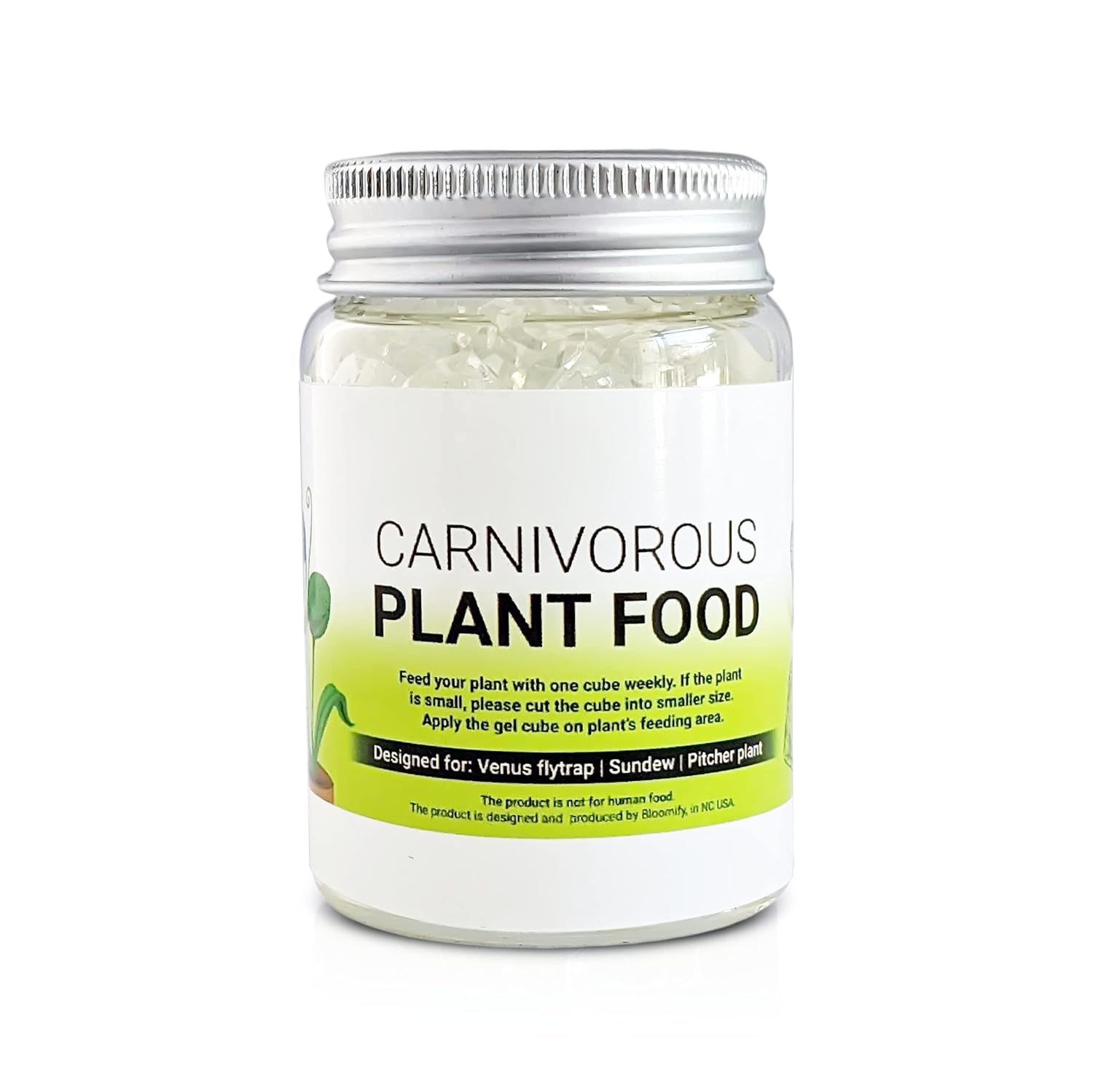
Orchid Gene Solid Gel Food for Venus Flytraps and Carnivorous Plants, 2.5 oz
| Item Form | Gel |
|---|---|
| Specific Uses For Product | Plant Food |
| Target Species | Insects |
| Liquid Volume | 2.5 fluid ounces |
This 2.5 ounce jar contains solid gel cubes designed to mimic insect prey and supply protein and nutrients to carnivorous plants that are not catching enough food on their own. Use is straightforward: place one cube (or a cut piece for small plants) onto the plant's feeding area about once a week. The gel form is mess-free compared with liquids and claims to include a balanced nutrient mix formulated for insect-eating species. Practical benefits include easy, portioned feeding and the ability to maintain plant nutrition during seasons or indoor setups where insects are scarce. Limitations to consider are the small jar size which will only cover a limited number of weekly feedings, and that this is a supplement rather than a complete replacement for occasional live prey or proper growing conditions. Also the product directions are terse so careful portioning and observation are needed to avoid overfeeding sensitive plants.
Best for: Buyers who want a reliable, low-effort way to supplement nutrition for Venus flytraps and other carnivores when insects are scarce and who value a product with established consumer acceptance.
Less Ideal for: Growers who prefer to feed exclusively with live prey or who need a large-volume feeding supply for many plants should look for alternate options.
- Gel cubes mimic prey and are easy to place on traps without liquid mess
- Formulated specifically for carnivorous plants so it addresses protein/nutrient needs
- Simple weekly dosing makes feeding quick and repeatable
- Small 2.5 oz jar provides only a limited number of weekly feedings
- Instructions are brief so users may need to experiment with portion size
Verdict: Use this ready-to-apply gel when your carnivores are not catching enough prey to keep them healthy and you want an easy weekly supplement.
Choosing the Right Fertilizer for Carnivorous Plants: Key Factors to Consider
Nutrient Concentration and Ratio
Carnivorous plants evolved to extract most nutrients from captured prey, so any added fertilizer should use very low concentrations and conservative N-P-K ratios. High nitrogen levels stimulate leafy growth at the expense of traps and can cause weak, soft tissue that is prone to rot.
A balanced but diluted formulation reduces the risk of nutrient shock. Look for products that list low total nitrogen and provide clear dilution instructions. Even trace mineral supplements need careful handling because repeated small doses can accumulate in the potting mix.
Salt Accumulation in Potting Media
Most conventional fertilizers increase soluble salts in the root zone as they break down. Carnivorous plants are particularly sensitive to salt accumulation since their native bog soils are low in dissolved minerals.
Consider how the fertilizer behaves in water and whether regular leaching is required. Water-soluble products with high ionic content raise the risk of buildup, so choose options designed for minimal residue or adopt an application schedule that includes periodic thoroughly flushing the media with pure water.
Application Method: Root Versus Foliar Versus Prey Mimicry
How you deliver nutrients matters. Direct root feeding with diluted solutions can work for some species, but standing water in trays increases contact time and potential salt stress. Foliar or trap feeding using very dilute solutions or insect-based supplements mimics natural prey-derived nutrients and avoids overloading the root zone.
Some gardeners apply nutrient drops directly to traps or use crushed insect supplements. Evaluate whether the fertilizer's label supports foliar or localized application and whether tools like pipettes or spray bottles are needed for precise dosing.
Compatibility With Acidic, Low-Organic Media
Carnivorous plants are usually grown in peat, sphagnum, or long-fibered materials with low nutrient-holding capacity. Fertilizers that alter media pH or rely on microbial conversion in organic-rich soils may behave unpredictably in these substrates.
Choose products that are stable in acidic conditions and that do not depend on a rich microbial community to become plant-available. Consider whether the fertilizer will change the substrate over time and how often you will need to repot to avoid residual buildup.
Ease of Dilution and Dosing Accuracy
Because the safe concentration range for these plants is narrow, dosing precision is critical. Liquid concentrates that require exact measurements or powders that dissolve cleanly are preferable to ambiguous granular mixes.
Look for products with simple dilution charts, measured droppers, or easily porportioned sachets. Clear labeling reduces the chance of overdose and makes routine maintenance less stressful for gardeners who are new to feeding carnivorous plants.
Frequency and Long-Term Effects
Feeding frequency matters more than occasional applications. Small, infrequent doses or seasonal feeding during active growth phases reduce risk compared with regular, monthly high-concentration treatments.
Consider long-term effects such as gradual media enrichment, pH drift, or changes in trap vigor. Choose fertilizers and schedules that match the plant's natural lifecycle and plan for occasional flushing or repotting to reset the root environment.
Feeding Approaches That Mimic Natural Diets
Many growers prefer mimicking natural nutrient sources rather than relying on standard garden fertilizers. That can mean offering live or dead insects, applying a diluted insect-based supplement to traps, or using foliar sprays designed for carnivores. These methods deliver nitrogen and micronutrients in forms similar to prey, reducing stress on roots and avoiding salt spikes in the potting mix.
- Direct trap feeding with tiny amounts of insect material
- Very dilute foliar sprays targeted at traps and leaves
- Occasional prey supplementation during active growth
Safe Dilution Practices
Always start at a fraction of the recommended concentration for general houseplants and work up cautiously only if plants tolerate it well. Use clean containers and measured droppers to prepare fresh solutions each time. Never add fertilizer to standing tray water unless the formulation specifically permits it, and consider flushing media after a feeding cycle to prevent salt buildup.
- Prepare fresh, accurately measured dilutions
- Avoid adding to long-term tray water
- Flush media periodically with pure water
Timing Fertilizer Use With Growth Cycles
Carnivorous plants often have distinct active growth periods and dormancy. Apply supplemental feeding during active growth when traps and leaves are producing new tissue. Reduce or stop feeding during dormancy to avoid forcing weak growth or depleting stored resources. Observing natural cues like trap production and seasonal leaf changes helps time applications for the best results.
- Feed during active growth phases only
- Pause or cut back during dormancy
- Adjust frequency for young versus established plants
Preparing Media and Repotting to Manage Residues
Regular repotting into fresh low-nutrient media helps control long-term buildup of salts and minerals. When repotting, use the typical sphagnum- or peat-based mixes recommended for carnivores and avoid compost-rich blends that retain fertilizer salts. If you plan to fertilize occasionally, factor in more frequent repotting intervals and inspect roots for any signs of salt stress or discoloration.
- Use low-nutrient, well-draining mixes when repotting
- Repot more often if you fertilize regularly
- Inspect roots and traps for residue damage
Tools and Techniques for Precise Application
Small syringes, pipettes, and fine-mist bottles give you the control needed to place tiny amounts of nutrient solution where they are needed. A calibrated dropper is especially useful for trap feeding. Label prep bottles with concentration and date to avoid confusion and reduce the risk of accidental high-dose applications.
- Use pipettes or droppers for trap feeding
- Label bottles with dilution info
- Keep measuring tools dedicated to fertilizer use only
How We Chose the Best Fertilizer for Carnivorous Plants
We prioritized products and approaches that respect the low-nutrient ecology carnivorous plants require while still offering safe supplemental feeding. Selection started with fertilizers and feeding methods formulated or historically recommended for acid-loving, low-nutrient bog species. We excluded any concentrated high-nitrogen or high-salt garden fertilizers and anything designed solely for heavy-feeding vegetables or lawns. Our editorial filters emphasized gentle nutrient balance with low total dissolved solids, clear application guidelines for foliar or root-safe use, and compatibility with the typical media used by carnivorous plants. We also assessed ease of dilution and dosing to reduce risk of accidental overfeed, plus availability of supporting guidance for frequency and concentration. Durability in wet, acidic potting mixes and the tendency to leave residue or salts were given weight. Finally, we favored options with straightforward instructions that minimize common user errors such as undiluted application or frequent dosing in stagnant media.
FAQ
Can I use standard houseplant fertilizer on carnivorous plants?
Standard houseplant fertilizers are usually too concentrated and can contain salts and nutrients in amounts harmful to carnivorous plants. If you must use a general fertilizer, dilute it to a very small fraction of the recommended strength and apply sparingly, but specialized low-strength approaches are safer.
How often should I feed carnivorous plants?
Feeding frequency depends on species, size, and growth stage. Many growers feed lightly only during active growth, using small, infrequent doses or offering prey every few weeks. Overfeeding is a common cause of stress, so err on the side of less frequent applications.
Is foliar feeding safe for trap-bearing species?
Foliar or direct trap feeding can be safe when solutions are extremely dilute and applied in tiny volumes. This method limits salt contact with the root zone but requires precise dosing and careful observation for signs of tissue sensitivity.
Will fertilizer change the pH of my carnivorous plant soil?
Some fertilizers can alter substrate pH over time, especially those with alkaline components. Choose products stable in acidic conditions and monitor media pH if you fertilize regularly. Periodic repotting helps reset pH and remove accumulated residues.
What signs indicate fertilizer damage to carnivorous plants?
Look for browning or collapse of traps, stunted new growth, leaf yellowing, or salt crusts on the potting surface. Roots may appear darkened or mushy in severe cases. If you spot these signs, stop feeding and flush the media with pure water.
Final Verdict
When choosing a fertilizer for carnivorous plants, prioritize safety over potency. Low-concentration formulations, methods that avoid the root zone, and tools that enable precise dosing reduce the risk of salt damage and unwanted growth changes. Balance frequency with natural growth rhythms and plan for periodic repotting or media flushing to manage long-term residues. Focus on the factors that matter most here: nutrient concentration, salt accumulation, application method, and media compatibility. If you follow conservative dosing and match feeding to active growth, you can provide supplemental nutrients without compromising the specialized needs of carnivorous plants.
