

Note: This article contains affiliate links. If you click on these links and make a purchase, I may earn a small commission at no extra cost to you. This helps support my research and content. Read my full affiliate disclosure here.
Indoor water plants have different needs than soil-grown houseplants. They rely on dissolved nutrients in the water column, so the right natural fertilizer keeps foliage green, supports steady growth, and minimizes algae spikes. Choose a product that supplies the right balance of macronutrients and micronutrients without overloading the tank or altering pH. This guide covers our five shortlisted natural fertilizers for indoor water plants and explains how we evaluated each one for nutrient profile, dosing simplicity, and effect on water chemistry. Read on to find an option that fits your tank size, plant load, and care routine.
Top Picks at a Glance
| Best Quality Built to a higher standard if you want something more solid | TPS Nutrients Liquid Plant Food for AeroGarden and Hydroponics, 8 oz |  |
| Best Budget The cheapest option that still gets the job done reliably | crystalpro Flora Multi Minerals Liquid Aquarium Plant Fertilizer (125 ml) |  |
| Highest Rated A top-rated pick with lots of positive feedback | OCEANSOLUTION 2-0-3 All Natural Liquid Fertilizer, 32 fl oz Concentrate |  |
| Most Popular A crowd favorite that many people choose with confidence | API Leaf Zone Freshwater Aquarium Plant Fertilizer, 16 fl oz |  |
| Best Seller A high-volume bestseller chosen again and again | TPS NUTRIENTS Water Plant Fertilizer, Liquid Plant Food, 8 oz |  |
TPS Nutrients Liquid Plant Food for AeroGarden and Hydroponics, 8 oz

| Item Form | Liquid |
|---|---|
| Specific Uses For Product | Plant Growth, Root Development |
| Target Species | Herb, Vegetable |
| Mixing Ratio | 5 mL (1 tsp) per quart of feedwater |
| Unit Count | 8 Fluid Ounces |
This 8 oz liquid plant food provides concentrated, reservoir-safe nutrition intended for AeroGarden and comparable hydroponic units. It is used by mixing the recommended 5 mL per quart of feedwater into the system reservoir on a regular feeding schedule to supply macro and micronutrients for herbs, greens, and other compact edible plants. Notable features include a liquid formulation that dissolves easily, a focus on root development, and explicit compatibility with indoor hydroponic gardens. In practice it simplifies feeding for small indoor crops because a measured teaspoon per quart is straightforward to dose and store. Important limitations are the small bottle size, which will require frequent repurchasing for larger or multiple units, and the need to follow dilution directions carefully to avoid overfeeding. Safety handling is necessary because the concentrate should be kept away from children and pets. For risk-averse growers, the product’s clear mixing ratio and hydroponic focus make predictable feeding simple, but you should track reservoir concentrations rather than guessing frequency or volume adjustments.
Best for: Buyers who want a simple, low-risk feeding routine for indoor green onions and other small edible hydroponic crops and prefer clear dosing instructions they can follow reliably.
Less Ideal for: Growers managing large hydroponic setups, outdoor beds, or those who need a detailed NPK profile for tailored nutrient programs should look for larger or fully specified concentrates.
- Designed specifically for AeroGarden and similar hydroponic systems for straightforward compatibility
- Liquid formula mixes easily for even nutrient distribution in the reservoir
- Clear mixing ratio (5 mL per quart) simplifies dosing and repeatable feeding
- Targets root development and steady growth for herbs and vegetables
- Small 8 oz bottle may not last long for multiple or larger units
- No full nutrient analysis or NPK breakdown provided on the product listing
Verdict: A compact, easy-to-dose liquid fertilizer that makes predictable feeding of indoor green onions simple and low risk.
crystalpro Flora Multi Minerals Liquid Aquarium Plant Fertilizer (125 ml)

| Form | Liquid |
|---|---|
| Liquid Volume | 125 ml |
| Mixing Ratio | 5:100 (High Support), 1:100 (Low Light) |
| Target Species | plants |
| Ingredients | potassium, nitrate, magnesium, calcium, iron, boron, manganese, zinc, copper, molybdenium, cobalt |
Crystalpro Flora Multi Minerals is a concentrated all-in-one liquid fertilizer for freshwater planted aquariums designed to promote faster root and leaf growth. It is mixed into tank water at specified ratios (5:100 for high support, 1:100 for low light) and dosed weekly to biweekly depending on planting density. The formula lists both macronutrients and trace elements — potassium, nitrate, magnesium, calcium and iron plus boron, manganese, zinc, copper, molybdenum and cobalt — so it covers a wide spectrum of plant needs without separate bottles for micro and macro feeds. Notably it contains no phosphate or silicate, which helps reduce the chance of fueling algae compared with fertilizers that include those components. Packaging is small and highly concentrated so a single 125 ml bottle will treat many gallons when dosed sparingly. Limitations: it is strictly a liquid mineral solution so users wanting added carbon, chelated iron forms for extreme deficiencies, or fertilizer tabs for substrate release may need complementary products.
Best for: Buyers who want a simple, cost-effective way to feed a freshwater planted tank without buying separate micro and macro bottles and who prefer low-maintenance weekly dosing.
Less Ideal for: Aquarists seeking substrate slow-release nutrients, full carbon dosing solutions, or highly customized chelated iron treatments should consider specialized supplements or combined regimens instead.
- Complete macro and trace element blend in one bottle so you do not need multiple supplements
- Zero phosphate and silicate formulation reduces risk of encouraging algae
- High concentration means small doses treat large volumes, stretching a budget
- Safe for fish, shrimp and snails so it can be used in community planted tanks
- Small bottle size requires careful measuring for larger tanks
- Does not supply carbon or substrate-bound nutrients, so some setups will need additional products
Verdict: A concentrated, algae-friendly all-in-one mineral fertilizer that stretches a small budget by covering macro and trace needs in a single bottle.
OCEANSOLUTION 2-0-3 All Natural Liquid Fertilizer, 32 fl oz Concentrate

| Item Form | Liquid |
|---|---|
| Specific Uses For Product | Plant Growth |
| Liquid Volume | 32 fluid ounces |
| Mixing Ratio | 1:128 |
OCEANSOLUTION 2-0-3 is a highly concentrated liquid mineral fertilizer intended for regular feeding of indoor plants, microgreens and hydroponic setups. Mixed at the manufacturer-recommended ratio of 1 ounce per gallon, the ionic liquid formula supplies a broad spectrum of macro and micronutrients drawn from ocean minerals that plants can absorb immediately. In practice it is easy to use and mess-free because it is odorless and comes as a clear concentrate that will not clog delivery lines when diluted correctly. The product is OMRI-listed which supports use in natural or organic growing systems and the low dose rate makes a 32 ounce bottle last through many feedings. Expect improved vigor and nutrient-driven flavor in vegetables and denser growth in microgreens when used as part of a regular feeding schedule. Limitations are that it is a mineral concentrate rather than a complete standalone program for every deficiency and hydroponic operators should follow the mixing ratio carefully to avoid overfeeding sensitive seedlings.
Best for: Growers who prioritize a consistent, easy-to-use mineral supplement for indoor plants and hydroponic microgreens and who value an all-natural, low-odor concentrate that lasts through many feedings.
Less Ideal for: Gardeners who need a single-product solution for correcting specific nutrient deficiencies or those who prefer dry granular fertilizers or blended multi-part hydroponic formulas.
- Very concentrated 1:128 mixing ratio stretches a 32 fl oz bottle across many feedings
- Odorless ionic liquid that absorbs quickly and is unlikely to clog irrigation lines when diluted
- Formulation includes a wide range of ocean-derived macro and micronutrients for balanced feeding
- OMRI-listed and positioned for natural or organic growing systems
- Not a targeted corrective product for specific nutrient deficiencies without supplemental inputs
- Requires careful dilution to avoid overfeeding delicate seedlings or microgreens
Verdict: A long-lasting, odorless ocean-mineral concentrate that reliably supplies broad-spectrum nutrients for indoor plants and hydroponic microgreens when mixed to the recommended ratio.
API Leaf Zone Freshwater Aquarium Plant Fertilizer, 16 fl oz

| Item Form | Liquid |
|---|---|
| Specific Uses For Product | Plant Growth |
| Coverage | Medium |
| Liquid Volume | 473 ml |
| Mixing Ratio | 5 ml per 10 US gallons |
API Leaf Zone is a straightforward liquid fertilizer designed to improve leaf color and growth in freshwater planted aquariums. It is dosed weekly at 5 ml per 10 US gallons and supplies chelated iron and potassium that are rapidly absorbed through leaves to help prevent yellowing and leaf drop. In practice it is easy to use: shake, measure, and add to the tank, which makes it well suited to routine maintenance schedules. The formula targets foliar uptake so it complements root-based products if you use substrate dosing. Practical benefits include faster improvement in coloration and a reduced likelihood of nutrient-deficiency symptoms when used as directed. Limitations are that it is formulated for freshwater setups only and focuses on leaf uptake rather than substrate nutrition, so heavily root-feeding species or nutrient-poor substrates may need additional root tab supplements. Also weekly dosing means you must keep to a schedule for consistent results.
Best for: Buyers who prioritize a proven, easy-to-dose foliar fertilizer to keep planted freshwater tanks healthy and visibly green, and who prefer products with established community use and clear instructions.
Less Ideal for: Aquarists relying solely on substrate nutrition, planted tank specialists seeking a complete macro/micro dosing system, or those maintaining saltwater or reef aquaria.
- Provides chelated iron and potassium for visible leaf color improvement
- Rapid foliar absorption to correct deficiencies without substrate dosing
- Simple, repeatable weekly dosing makes maintenance easy
- Compatible with freshwater aquariums containing fish and plants
- Not formulated to address root nutrition or substrate deficiencies directly
- Intended for freshwater only and not recommended for saltwater or reef tanks
Verdict: A simple, reliable weekly foliar fertilizer that quickly improves leaf color and overall health in freshwater planted tanks.
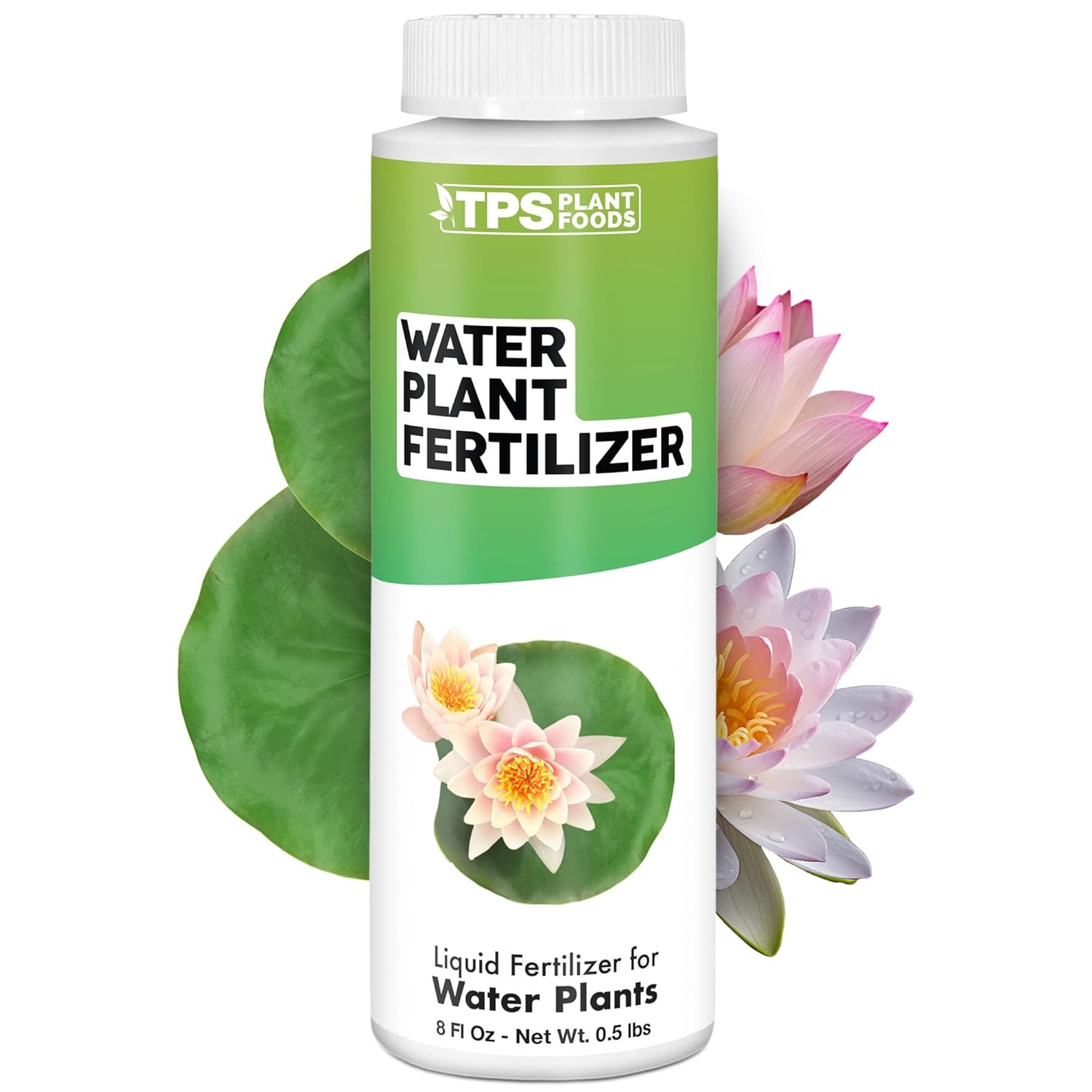
TPS NUTRIENTS Water Plant Fertilizer, Liquid Plant Food, 8 oz
| Item Form | Liquid |
|---|---|
| Specific Uses For Product | Aquatic Plant Growth |
| Target Species | Water Plants |
| Liquid Volume | 8 fluid ounces |
| Mixing Ratio | 1:0:0 |
This 8 oz liquid formula is designed specifically for plants grown in water, such as water lilies, lotus, and indoor propagation jars. It is mixed at a simple ratio of 1 teaspoon per gallon and applied weekly, making it easy to use for routine maintenance. The label highlights a gentle low-nitrogen feed with added iron and a full complement of micros, which helps keep leaves green and supports root development without overloading aquatic systems. Practical benefits include straightforward dosing, suitability for small indoor water gardens, and a formulation aimed at aquatic plants rather than soil-grown species. Important limitations are the small bottle size, which means frequent repurchase for larger setups, and the safety guidance to avoid contact with eyes and skin and to prevent entry into unintended water sources. This product pairs best with inert water planting systems and tanks where controlled, regular dosing is preferred by cautious growers.
Best for: A cautious indoor grower who wants a simple, aquatic-specific feed for water-grown plants and prefers predictable weekly routines over experimental mixes.
Less Ideal for: Gardeners with large outdoor ponds or many specimens who need bulk fertilizer or users who want an all-purpose soil-and-water solution.
- Formulated specifically for aquatic plants with low nitrogen and added iron
- Easy, repeatable dosing: mix 1 teaspoon per gallon and apply weekly
- Liquid form disperses quickly in water for even nutrient availability
- Suitable for small indoor water gardens, propagation jars, and water planters
- Small 8 oz volume may require frequent replacement for larger collections
- Contains concentrated ingredients that require careful handling to avoid contact or contamination of non-target water sources
Verdict: A safe, easy-to-use liquid fertilizer tailored for indoor water plants that makes weekly feeding straightforward for cautious growers.
Choosing the Right Natural Fertilizer for Indoor Water Plants: Key Factors to Consider
Nutrient Balance and Ratio
Plants growing in water take up dissolved nitrogen, phosphorus, potassium, and a suite of micronutrients directly from the solution. A balanced ratio matters because too much of one element can mask deficiencies of another. For example, excess phosphorus can encourage algae while leaving plants starved for nitrogen or iron. Look for a natural fertilizer that lists both macronutrient numbers and at least some micronutrients so you can avoid common indoor deficiencies like iron chlorosis.
Pay attention to the form of nutrients. Chelated or organically bound micronutrients tend to stay available across a wider pH range common in indoor water systems. A clearly stated analysis helps you match the product to your plant load and container volume.
Solubility and Bioavailability
Indoor water environments require fertilizers that dissolve readily and remain available to plant roots and submerged leaves. Granular or pellet products that do not dissolve will either sink and rot or leach unpredictably, making dosing inconsistent. Liquid concentrates and water-soluble powders designed for aquatic use provide immediate availability and reduce the risk of particulate build-up.
Bioavailability also depends on how nutrients are bound. Natural sources that break down slowly can provide a gentle, steady feed, but if they release too slowly they will not correct visible deficiencies. Choose a formulation that balances immediate availability with sustained release appropriate for the maintenance schedule you plan to follow.
Dosing Precision and Safety
Small vases and aquariums magnify dosing errors. A teaspoon too much can spike nutrient levels and cause algae outbreaks or stress plants. Dosing precision is therefore critical. Products that include dropper caps, graduated measuring scoops, or clear concentration guidelines per liter make controlled feeding easy.
Safety also means lower salt indexes and guidance on frequency. Natural fertilizers formulated for aquatic use usually recommend conservative starting doses and step-up schedules so you can gauge plant response before increasing concentration.
Effect on Water Chemistry
Even natural fertilizers can change pH, conductivity, and total dissolved solids, all of which affect plant uptake and the health of aquatic microfauna. Some natural nutrient sources release organic acids or salts that temporarily lower pH. Others may increase hardness or raise conductivity if they include ionic mineral salts.
Consider how tolerant your plant species are to those shifts. If you keep sensitive species or small invertebrates, prioritize fertilizers labeled as low-impact on pH and conductivity. Regular water testing after feeding helps you detect unwanted changes early.
Algae Risk and Nutrient Release Rate
Algae are a common problem in indoor water containers when dissolved nutrients are abundant and light is present. Fertilizers that flood the water column with immediately available phosphorus or nitrogen can trigger blooms, particularly in bright windows or under grow lights.
Choose products intended for aquatic plantings that recommend conservative dosing and slower release profiles. Also account for your light conditions and maintenance routine; more frequent water changes or lower light can offset higher nutrient availability.
Packaging, Dosage Guidance, and Shelf Life
Packaging influences how easy it is to keep a consistent feeding schedule. Bottles with precise droppers or clearly graded measuring scoops reduce guesswork. Airtight, opaque containers protect nutrient integrity from light and moisture, which is especially important for natural formulations that can degrade.
Shelf life matters for gardeners who fertilize sporadically. Look for products with stable storage guidance and clear expiration or manufacture dates. Re-sealable single-dose sachets can be convenient for occasional treatments and reduce waste.
Adjusting Dosage for Tank Size and Plant Load
Small glass vases, tabletop aquariums, and larger planted tanks all require different dosing approaches. Start with a conservative fraction of the manufacturer recommendation for small-volume systems and observe plants for a week before increasing. Measure or estimate the water volume and calculate doses per liter to maintain repeatable results.
- Estimate water displacement of decor and plants to calculate true water volume.
- Record the dose you use and the plant response to create a simple feeding log.
- For heavy plantings, increase frequency rather than single-dose quantities to avoid spikes.
Testing and Monitoring Water Parameters
Regular checks of pH, conductivity (TDS), and visible nutrient deficiency signs are the best guardrails when using any fertilizer. A simple pH meter and a handheld conductivity or TDS meter provide quick feedback on whether a dosing change is affecting water chemistry. If pH drifts more than a few tenths or conductivity rises steadily between water changes, reduce dose or frequency.
- Check pH before and 24 to 48 hours after the first few doses.
- Track conductivity weekly for the first month after changing fertilizer.
- Look for leaf signs: yellowing between veins suggests iron or micronutrient issues; uniformly pale leaves often point to nitrogen shortfalls.
Complementary Care: Light, Cleaning, and Water Changes
Fertilizer is just one part of a healthy indoor water plant routine. Light levels determine how much nutrient the plants can use. High light increases nutrient uptake but also raises algae risk. Regular partial water changes remove excess dissolved solids while leaving slow-release nutrients in place if you dose conservatively. Cleaning algae from surfaces, trimming decayed leaves, and managing stocking levels of fish or invertebrates will keep nutrient cycling stable. Align feeding frequency with your maintenance schedule so nutrients do not accumulate between cleanings.
- Match feeding frequency to your water change schedule.
- Remove decaying plant material promptly to prevent nutrient spikes.
- Reduce light exposure if algae becomes persistent after feeding.
Using Natural Additives and Supplements Safely
Natural additives such as liquid seaweed, compost teas designed for aquatic use, or diluted fish emulsion can supply micronutrients and growth stimulants. However, not all natural inputs are suitable for closed indoor water systems. Compost tea and unprocessed manures carry organic particulates and microbes that can foul water quickly. If you use natural supplements, choose products formulated for aquatic or hydroponic use and follow conservative dilutions. Observe water clarity after application and be prepared to do an extra partial change if turbidity or odor increases.
- Avoid raw compost or manure in indoor containers.
- Dilute concentrated natural supplements and add them after water changes.
- Monitor clarity and oxygen levels after adding organic-based products.
How We Chose the Best Natural Fertilizer for Indoor Water Plants
Our shortlist came from products and formulations suited to submerged and marginal houseplants kept in vases, aquariums, or hydroponic set-ups. We focused on factors that matter to indoor water gardeners rather than broad garden fertilizers. Evaluation criteria included nutrient balance for aquatic use to avoid deficiencies; solubility and bioavailability so nutrients are usable without residues; dosing accuracy and safety to prevent overfertilizing that causes algae; impact on water chemistry, especially pH and hardness; and packaging that preserves potency and allows precise measurement. We excluded high-strength field or crop fertilizers intended for soil or outdoor ponds because those formulations often concentrate salts that stress indoor plants. Also excluded were products requiring complex activation or long breakdown times that are impractical for small containers. The resulting candidates all deliver naturally derived nutrients in forms suitable for continuous dissolved feeding, with clear dosing guidance for small indoor systems.
FAQ
How often should I dose natural fertilizer in a small indoor vase?
Frequency depends on concentration and plant load, but often a very light dose every one to two weeks is sufficient for small vases. Start with a reduced fraction of the recommended dose and watch plants for a week. If growth is slow with no deficiency signs, you can increase frequency slowly.
Will natural fertilizers cause algae in my indoor water setup?
Natural fertilizers can encourage algae if dosing is too heavy relative to light levels and maintenance. The risk is higher when phosphorus or nitrogen spikes. Use conservative dosing, control light exposure, and keep up with partial water changes to reduce algae pressure.
Can I use compost tea or fish emulsion in an aquarium with plants?
Raw compost tea or unprocessed fish emulsion can introduce particulates and microbes that reduce water clarity and oxygen. If you choose natural supplements, use aquarium- or hydroponic-safe formulations and dilute them according to guidance to avoid fouling the water.
How do I correct iron deficiency in submerged indoor plants?
Iron deficiencies often show as yellowing between leaf veins. Use a water-soluble iron supplement formulated for aquatic use or a chelated iron product safe for submerged plants. Apply conservatively and monitor pH, since iron availability falls at high pH.
Can I mix different natural fertilizers or supplements?
Mixing products increases complexity and the risk of interactions that change pH or conductivity. If you combine supplements, start at reduced rates and add one product at a time while monitoring water parameters closely.
Final Verdict
Prioritize slow, soluble nutrient sources and precise dosing when feeding indoor water plants. The right natural fertilizer supplies both macronutrients and key micros without destabilizing water chemistry. Match product concentration to container volume and plant density, test water regularly, and adjust frequency rather than single-dose size to avoid nutrient spikes. Ultimately, choose a formulation that fits your maintenance routine and light conditions. Conservative feeding and consistent monitoring let you keep plants vigorous while minimizing algae and water-quality problems.
