

Note: This article contains affiliate links. If you click on these links and make a purchase, I may earn a small commission at no extra cost to you. This helps support my research and content. Read my full affiliate disclosure here.
If you want bigger yields and fewer pest problems from your okra patch, the right natural fertilizer makes a measurable difference. Okra responds well to steady nutrient release and a living soil that retains moisture through hot months. This guide looks at seven top natural fertilizer approaches suited for okra, shortlisted for their ability to feed plants while improving soil structure and microbial life. You will find concise reasons each approach works in real garden conditions, plus the evaluation criteria we used such as nutrient balance and ease of application. Read on to see which natural feeding strategies best match your growing style and site conditions.
Top Picks at a Glance
| Best Overall The best all-around choice for most situations | Down To Earth Organic All Purpose Tomato & Vegetable Mix 4-6-2, 1 lb |  |
| Best Quality Built to a higher standard if you want something more solid | Espoma Plant-Tone Organic All-Purpose Plant Food, 36 lb bag |  |
| Best Value The sweet spot between price and what you get | Jobe's Organics Granular Tomato & Vegetable Fertilizer, 4 lb |  |
| Best Budget The cheapest option that still gets the job done reliably | Down To Earth Organic Vegetable Garden Fertilizer, 4-4-4, 1 lb |  |
| Highest Rated A top-rated pick with lots of positive feedback | Brut Organic Worm Castings, 5 lb |  |
| Most Popular A crowd favorite that many people choose with confidence | Dr. Earth Organic Tomato, Vegetable & Herb Fertilizer (64 oz) |  |
| Best Seller A high-volume bestseller chosen again and again | Farmer's Secret Fruit & Bloom Booster Liquid Fertilizer (8 oz) |  |
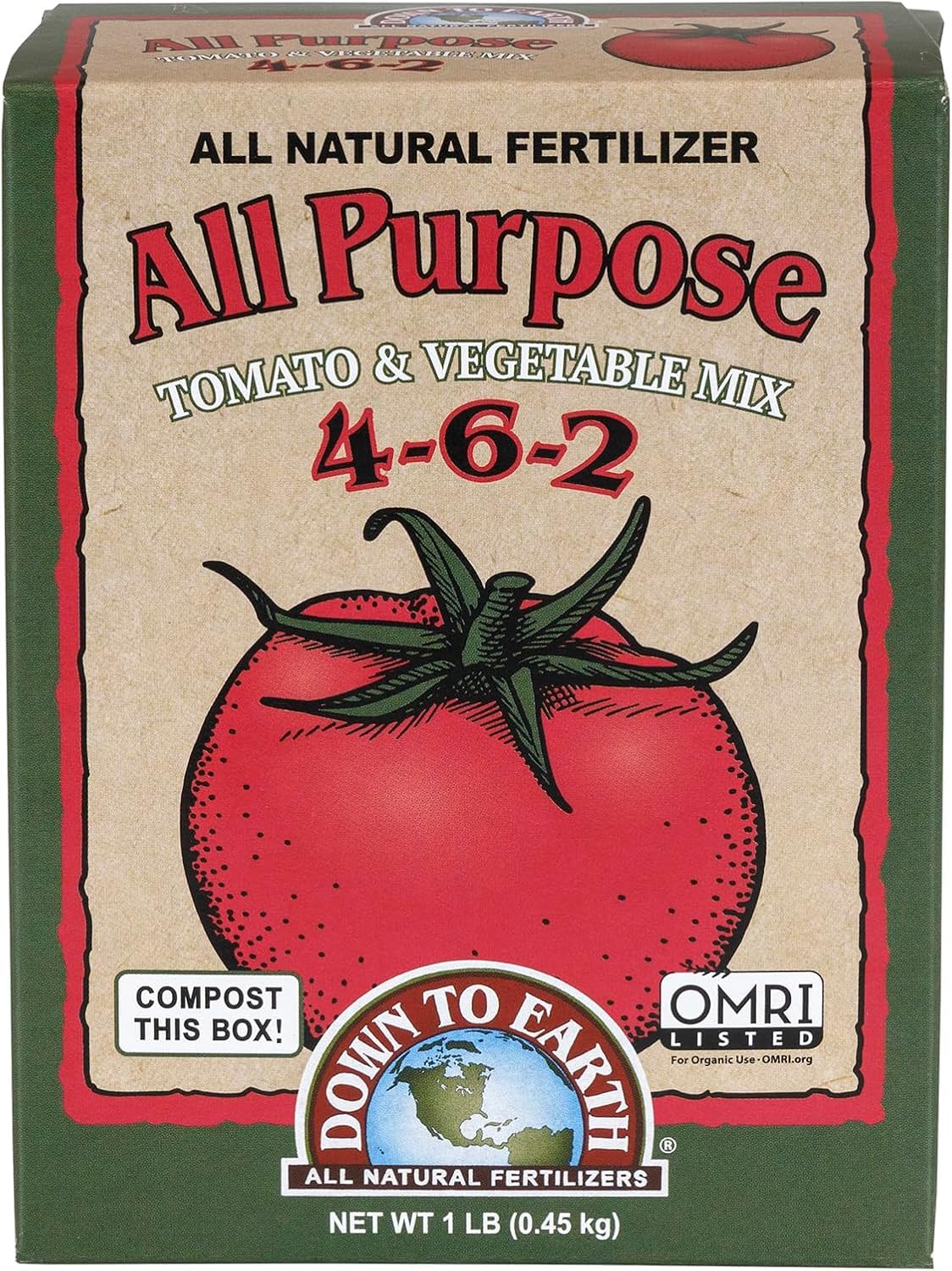
Down To Earth Organic All Purpose Tomato & Vegetable Mix 4-6-2, 1 lb
| Item Form | Granules |
|---|---|
| Specific Uses For Product | Plant Growth |
| Coverage | Medium |
| Target Species | Vegetables |
| Mixing Ratio | 4-6-2 |
This organic granular mix supplies a balanced 4-6-2 nutrient profile aimed at supporting root development and fruit set in vegetable crops. It is designed for broadcast or hand application to garden beds, raised beds and containers; you sprinkle it on the soil surface and scratch it in or cover with compost or mulch, then water it in. The formula is OMRI-friendly and made from natural inputs such as fish and bone meal that release nutrients as soil microbes break them down, so it feeds the soil as well as the plants. Practical benefits include stable shelf life, straightforward application for small-scale plots, and suitability for transplants and established plants. Expect nutrient release to be slower than soluble synthetic fertilizers, so results accumulate over weeks rather than days. Also the product is not water soluble and depends on active soil biology, so it performs best in healthy, living soils and may be less convenient for growers needing immediate, foliar-responsive feeding.
Best for: Gardeners looking for a reliable, organic all-purpose fertilizer to support healthy okra plants and other vegetables in beds or containers who prioritize soil health and steady nutrient release.
Less Ideal for: Growers who need fast, soluble feeding or foliar applications for immediate corrective nutrient response should consider a soluble nutrient source instead.
- Balanced 4-6-2 N-P-K tailored for fruiting vegetables
- OMRI-listed and made from natural organic inputs
- Easy broadcast or hand-application for beds and containers
- Shelf-stable granular form that stores without expiring
- Not water soluble so nutrient availability depends on soil microbial activity
- Slower acting than synthetic or soluble fertilizers for immediate greening
Verdict: A dependable OMRI-listed organic granular fertilizer that delivers balanced nutrients to support healthy okra growth while feeding the soil.
Espoma Plant-Tone Organic All-Purpose Plant Food, 36 lb bag

| NPK | 5-3-3 |
|---|---|
| Form | Bagged granular |
| Application | Apply to soil |
| Target species | flowers, vegetables, trees, shrubs |
Espoma Plant-Tone is a ready-to-use, granular organic fertilizer designed to feed a wide range of garden plants through slow-release natural ingredients and the brand's Bio-tone microbial formula. Typical use is to apply around the soil at the plant drip line and water in; it requires no mixing and is recommended monthly for vegetables and seasonally for trees and shrubs. Notable features are its 5-3-3 NPK with added calcium, organic input material approval for organic gardening, and a large 36 lb bag that supplies multiple applications across the growing season. In practice Plant-Tone builds soil nutrition gradually, supports steady vegetative growth, and reduces the need for frequent high-nitrogen supplements while being friendly to organic systems. Limitations are that its nutrient release is slower than synthetic feeds so response in nutrient-hungry crops can be less immediate, and the bagged bulk size may be more than a small-plot gardener needs to store and handle.
Best for: Gardeners who prioritize steady, long-term plant performance and want an organic, easy-to-apply fertilizer for vegetable beds and okra plants during the growing season.
Less Ideal for: Growers who need rapid, concentrated nutrient corrections or who manage very small containers and want minimal storage bulk should consider a different option.
- Organic 5-3-3 formula with added calcium supports balanced growth for vegetables and flowers
- Ready-to-use granular form requires no mixing and is simple to apply at the drip line
- Approved for organic gardening, compatible with organic production systems
- Slow-release natural ingredients and Bio-tone microbes help build long-term soil fertility
- Slower nutrient release than synthetic fertilizers so plants may not get an immediate boost
- Large 36 lb bag can be bulky to store for small gardens
Verdict: A reliable organic slow-release fertilizer that steadily builds soil fertility and is well suited to feeding okra and other vegetables throughout the season.
Jobe's Organics Granular Tomato & Vegetable Fertilizer, 4 lb

| NPK | 2-5-3 |
|---|---|
| Item Form | Granules |
| Target Species | Vegetable and tomato |
| Unit Count | 64 Ounce |
Jobe's Organics granular fertilizer is a simple, slow-release feed designed specifically for tomato and vegetable beds. You apply the granules around plants every 4 to 6 weeks during the growing season to supply roots with nitrogen, phosphorus, and potassium in a 2-5-3 ratio aimed at fruiting and root development. The formula derives nutrients from bone meal and processed poultry manure and includes calcium and other micronutrients, which helps reduce blossom end rot and supports solid fruit set. Because it is OMRI listed it fits into organic vegetable production and is safe to use around children and pets when applied as directed. Practical gardeners will appreciate the measured, low-mess granular format and the moderate coverage for small to medium plots. Limitations are that it is not a fast-acting soluble feed for immediate correction and the 4 lb bag covers only a modest area, so larger vegetable gardens will need larger or repeated purchases.
Best for: Gardeners who prioritize organic, low-maintenance feeding for home vegetable and tomato beds and who want a measured, slow-release product for steady crop development.
Less Ideal for: Growers who need rapid correction of nutrient deficiencies or who manage large-scale vegetable plots and prefer concentrated or high-coverage fertilizers.
- OMRI listed for use in certified organic vegetable production
- Balanced 2-5-3 NPK with added calcium and micronutrients to support fruiting and root health
- Slow-release granular form feeds roots over time and reduces risk of over-fertilizing
- Easy to measure and apply for small to medium garden beds
- Not a quick soluble feed for immediate nutrient correction
- 4 lb bag provides only moderate coverage for larger vegetable gardens
Verdict: A reliable OMRI-listed granular feed that delivers balanced, slow-release nutrition ideal for home tomato and vegetable gardens.
Down To Earth Organic Vegetable Garden Fertilizer, 4-4-4, 1 lb

| Item Form | Granules |
|---|---|
| Specific Uses For Product | Organic Gardening, Transplating, Vegetable Gardens |
| Coverage | Full |
| Target Species | vegetable gardens |
| Mixing Ratio | 4-4-4 |
This is a compact, all-natural granular fertilizer designed for vegetable beds, herbs and container-grown edibles. It supplies a balanced 4-4-4 NPK from ingredients like fish bone meal, alfalfa meal, feather meal and seaweed, so it feeds plants gradually and helps build soil biology rather than forcing fast leaf growth. Typical use is top-dressing or incorporating into planting holes and mixing at the suggested ratio for transplants and ongoing feedings. The slow-release nature reduces the chance of nutrient burn and limits leaching, which is practical for small to medium gardens and raised beds. Because it is OMRI-listed and made from recognizable organic inputs it is suitable for gardeners who prioritize natural approaches and pollinator safety. The 1 lb size is convenient to store and reduces waste for hobby plots, but gardeners with larger plots will need larger bags or frequent replenishment. There is no synthetic quick-release boost for urgent corrections, so expect steady improvements over weeks rather than immediate greening.
Best for: Practical home vegetable gardeners on a budget who grow in raised beds, containers, or small plots and prefer an organic, slow-release feed that supports steady, healthy growth.
Less Ideal for: Large-scale growers or anyone needing fast corrective feeding for nutrient-deficient soil should consider bulk or quick-release alternatives.
- Balanced 4-4-4 NPK tailored for vegetables and herbs
- Made from natural ingredients and listed for organic use
- Slow-release granules reduce risk of burn and nutrient leaching
- Small 1 lb package is easy to store and minimizes waste for small gardens
- 1 lb size is too small for larger gardens and requires frequent repurchasing
- Not formulated for rapid nutrient corrections or instant greening
Verdict: A small, organic slow-release fertilizer that fits budget-minded home vegetable gardeners who want steady, natural feeding rather than instant fixes.
Brut Organic Worm Castings, 5 lb

| Item Form | Granules |
|---|---|
| Specific Uses For Product | Gardening,Organic |
| Target Species | All plants |
| Mixing Ratio | 1:5 |
Brut Organic Worm Castings function as a concentrated, natural soil amendment you mix into potting mixes or top-dress garden beds and raised beds. Typical use is mixing at the recommended 1:5 ratio for new indoor plants, sprinkling a cup around established houseplants, or working into outdoor planting holes and beds according to the brand directions. The product is OMRI/CDFA listed and produced in controlled conditions, which supports consistent nutrient content and beneficial microbial life that help roots establish, improve soil structure, and increase moisture retention without burning plants. Practical benefits for raised garden beds include improved aeration, slow-release nutrients, and a boost in microbial activity that supports long-term fertility. Limitations are that it is not a complete NPK fertilizer for immediate heavy feeding needs and larger beds require significant quantities to hit the suggested per-square-foot rates, so frequent applications or bulk purchases may be needed for big projects.
Best for: Gardeners who prioritize dependable, organic soil improvement for raised beds and container gardens and prefer predictable, low-risk amendments that support long-term soil health.
Less Ideal for: Those needing immediate, high-NPK feeding for heavy-feeding crops or gardeners who want to amend very large beds without buying supplemental bulk material.
- Certified organic and produced indoors for consistent purity
- Rich in beneficial microbes that improve soil structure and plant vigor
- Easy-to-use granular form suitable for mixing or top-dressing
- Not a standalone high-NPK fertilizer for rapid nutrient correction
- Five-pound bag may be small for large raised beds and repeated seasonal use
Verdict: Use this OMRI/CDFA-listed worm castings product to reliably build long-term fertility and microbial health in raised beds and containers.
Dr. Earth Organic Tomato, Vegetable & Herb Fertilizer (64 oz)

| Unit Count | 64 Ounce |
|---|---|
| Item Form | Granules |
| Specific Uses For Product | Organic |
| Target Species | Herb |
| Coverage | Medium |
This granular organic fertilizer is designed to boost vegetable and herb production by supplying balanced nutrients and soil biology support. It is typically broadcast into beds, mixed into potting mixes, or applied at planting and midseason for a nutritional lift; the manufacturer recommends reapplying every six weeks for containers. Notable features include a fully organic ingredient list, fast but sustained nutrient release, and a blend of probiotic microbes plus ecto and endo mycorrhizae intended to improve nutrient uptake and drought tolerance. In practice that means healthier root systems and potentially better yields and flavor in crops like cucumbers when used as part of an organic program. Limitations are that it is a medium coverage product in a 64 ounce bag so larger plots will need more frequent purchases, and it contains phosphorus so local runoff rules should be checked before use. Follow the directions for pH and application timing to avoid overapplication in small containers.
Best for: Gardeners who prioritize organic soil health and want a single, biology‑focused fertilizer to support vegetables like cucumbers in beds or containers.
Less Ideal for: Large‑scale growers seeking a bulk, high‑coverage fertilizer or those who must avoid phosphorus due to local regulations should consider other options.
- 100 percent organic formula suitable for certified organic gardens
- Contains beneficial microbes and eight strains of mycorrhizae to support root health and nutrient uptake
- Granular form releases nutrients quickly and continues feeding for several months
- Works for beds, raised planters and containers and can be used at planting, transplanting or midseason
- Bag is medium coverage so not economical for very large vegetable plots
- Includes phosphorus which may be restricted in some local jurisdictions
Verdict: Choose this product if you want an organic, microbe‑rich granular fertilizer that supports root health and steady feeding for cucumber and other vegetable plantings.
Farmer's Secret Fruit & Bloom Booster Liquid Fertilizer (8 oz)

| Item Form | Liquid |
|---|---|
| Liquid Volume | 8 fluid ounces |
| Mixing Ratio | 1 teaspoon : 2 gallons |
| Application Method | dilute with water and pour or spray |
Farmer's Secret Fruit & Bloom Booster is a concentrated liquid plant food designed for mid-to-late season use when plants begin to bud and set fruit. You dilute a small amount (1 teaspoon per 2 gallons) and apply it either to the soil with your watering can or as a foliar spray, repeating every 1 to 2 weeks. The formula emphasizes phosphorus and potassium alongside trace minerals to promote root development, flowering and fruit set, which is the kind of nutrient profile banana growers look for during fruiting. Because it is liquid and already mixed, nutrients are immediately available and it is easy to integrate with irrigation or regular watering. The bottle is small but very concentrated, so a little goes a long way. A practical limitation is that the 8 ounce size supplies only a limited number of applications for larger banana plants or multiple trees, so you will need to plan purchases for season-long feeding. Follow dilution directions carefully to avoid overapplication.
Best for: Gardeners who prefer a proven, easy-to-use liquid feed to encourage blooms and fruit and who want straightforward instructions and predictable results.
Less Ideal for: Growers with large banana groves or multiple mature plants who need bulk or long-term feeding should consider larger-volume fertilizers or granular options.
- High phosphorus and potassium formulation supports flowering and fruit set
- Liquid concentrate delivers nutrients immediately and is usable as soil or foliar feed
- Simple, low-strength mixing ratio makes it easy for beginners to apply safely
- Contains additional trace minerals (iron, zinc, calcium) that support overall plant health
- Small 8 oz bottle provides relatively few applications for mature banana plants or multiple trees
Verdict: A highly concentrated, easy-to-use liquid booster that quickly delivers flowering and fruiting nutrients for backyard banana plants and other fruiting ornamentals.
Choosing the Right Natural Fertilizer for Okra: Key Factors to Consider
Nutrient Profile and Release Timing
Okra needs steady access to nitrogen for leaf and stem growth, plus phosphorus and potassium to develop healthy flowering and pods. Different natural fertilizers release those nutrients at different rates. Fast-release materials will green up plants quickly but can run off or leach during heavy rain, while slow-release organic sources feed over weeks to months and reduce burn risk.
Match the release timing to your planting schedule. Apply faster-release inputs at transplant or early growth and rely on slower-release, soil-building sources to sustain flowering and pod fill. Understanding release timing prevents nutrient gaps during critical phases of okra development.
Soil Structure and Microbial Support
Fertilizers that add organic matter or stimulate beneficial microbes improve water retention and nutrient cycling, which is especially important for okra grown in sandy or compacted soils. Materials that feed soil life help build stable crumb structure and maintain moisture through hot spells.
If your soil is low in organic matter, prioritize fertilizers that supply carbon-rich material or beneficial microbes. Over time, improved structure reduces the need for frequent feeding and supports consistent pod production.
Salt and Burn Risk
Some concentrated inputs, even natural ones like certain manures or high-nitrogen meals, can cause root burn or leaf scorch if applied too close to seeds or transplants. Okra seedlings are sensitive to high salt levels in the root zone, which can stunt early growth or damage roots.
Apply concentrated materials cautiously: incorporate them into the soil well before planting or dilute them in compost or mature bedding. Choosing lower-salt, slow-release options cuts the risk of damaging young okra plants while still providing needed nutrients later in the season.
Application Practicality
How easy a fertilizer is to store, spread, and incorporate matters for backyard gardeners. Bulk compost or loose manures require space and time to work into beds, while granular organic blends or pelleted amendments are quicker to broadcast. Liquid teas and foliar feeds need more frequent applications but let you correct deficiencies fast.
Consider your available time, tools, and bed size. If you have limited time, choose low-maintenance, slow-release materials. If you like hands-on feeding, liquid or soluble forms allow precise corrections during flowering and pod set.
Food-Safe Handling and Environmental Impact
Because okra is an edible crop, safety is important. Uncomposted manures or waste-based amendments can carry pathogens if not processed correctly. Natural fertilizers that are fully composted or pasteurized are safer for use in beds where you harvest pods.
Also consider runoff risk and local regulations. Choose materials that minimize nutrient leaching and follow recommended application rates to protect nearby waterways and pollinator habitat.
When to Feed Okra During the Season
Start feeding at transplant or when seedlings have their first true leaves. Early nitrogen helps develop a strong canopy that supports later flowering, but avoid over-applying at planting so roots are not burned.
Side-dress or top-dress with a balanced natural feed when plants begin to flower, then again during peak pod set. Okra fruits form quickly, so supplying steady nutrients through the bloom window sustains pod size and frequency.
After heavy harvests or long heat waves, a light boost of an approachable nitrogen source can help plants recover. Always factor in recent rainfall and soil moisture before applying to avoid quick leaching.
- Apply slow-release organics at planting for season-long supply
- Use light, soluble feeds at first bloom and mid-season
- Avoid late-season heavy nitrogen that delays pod maturity
How Soil Tests Inform Natural Fertilizer Choices
A soil test shows baseline pH and available nutrients, which helps you pick the right natural amendments. For example, a low-phosphorus test signals a need for bone-meal or rock-phosphate alternatives, while low potassium suggests wood ash or greensand may be useful.
Soil texture influences how quickly materials break down and nutrients move. Sandy soils benefit from organic matter that holds water and nutrients, while clay soils need amendments that improve drainage and structure.
- Aim to correct macro nutrient gaps shown on tests before relying on maintenance feeds
- Re-test every 2 to 3 years to track long-term soil-building progress
Compost, Manure, and Other Organic Matter Strategies
Compost is the backbone of many natural fertilizer programs for okra because it supplies a broad spectrum of nutrients and builds soil structure without high burn risk. Well-matured compost can be applied at planting and as a top-dress to feed soil life and plants.
Aged, fully composted manures add nitrogen and organic matter but must be well-rotted to avoid pathogens or excess salts. Mix with compost or work into the topsoil a few weeks before planting.
Layering organic matter as mulch around okra plants conserves moisture and releases nutrients slowly as it decomposes.
- Incorporate compost into beds in spring or use as a top-dress midseason
- Avoid fresh manure directly on transplants; compost first
- Use mulches to reduce water stress and feed soil microfauna
Liquid Feeds and Foliar Applications for Quick Corrections
Liquid compost teas and diluted organic fertilizers provide a rapid nutrient uptick and can be used to correct deficiencies during flowering. They are not a substitute for a base of compost or slow-release organics but are useful for short-term interventions.
Foliar feeding can quickly supply micronutrients like iron or zinc that are limiting pod set. Apply in the cooler parts of the day and follow concentration guidance to avoid leaf burn.
- Use liquid feeds sparingly and complement them with soil-applied organics
- Apply foliar sprays early morning or late evening to maximize uptake
Adapting Fertilizer Approach to Space and Scale
Small raised beds and containers need concentrated attention to organic matter and drainage. Containers dry out faster and lose nutrients more quickly, so frequent, lighter feedings with soluble organics and steady additions of compost work well.
In larger garden plots, bulk compost and broadcast applications are efficient. Plan rotations and cover crops to sustain fertility between okra plantings and reduce reliance on frequent amendments.
- Containers: lighter, more frequent feeds and ample compost
- Large beds: apply bulk organics and use cover crops for off-season rebuilding
How We Chose the Best Natural Fertilizer for Okra
We selected the seven natural fertilizer approaches for okra by focusing on features gardeners can verify and use easily in home plots and small farms. Our evaluation prioritized nutrient profile suitability for fruiting warm-season vegetables, the material's ability to support soil biology, and how reliably it supplies nitrogen, phosphorus, and potassium over a growing season. We also considered ease of use and safety for edible crops, including application timing and burn risk. Practical factors such as availability to home gardeners, compatibility with common soil types, and environmental impact were included as filters. Excluded items were products that rely primarily on synthetic salts or unproven proprietary claims. We excluded fertilizing options that require specialized equipment or industrial-scale handling. The criteria that mattered most were nutrient release pattern, soil-building contribution, application safety for food crops, and adaptability to typical backyard okra beds. These dimensions align with the scoring metrics used throughout the guide.
FAQ
How often should I apply a natural fertilizer to okra?
It depends on the material. Slow-release organics like compost or aged manure are usually applied once at planting and top-dressed midseason. Soluble feeds or teas can be used every 2 to 4 weeks during heavy fruiting to correct short-term needs.
Can I use fresh manure on okra beds?
Fresh manure is often too strong and can burn roots or introduce pathogens. Use only well-aged, fully composted manure for edible beds, and apply it several weeks before planting whenever possible.
Will adding compost change my soil pH for okra?
Mature compost typically has a neutral to slightly alkaline effect and changes pH slowly over time. If your soil test shows an extreme pH, choose specific amendments to correct acidity or alkalinity rather than relying on compost alone.
Are foliar sprays safe for food crops like okra?
Yes, foliar sprays of approved organic nutrients and teas are generally safe when used at recommended strengths and applied away from harvest windows. They are best for correcting micronutrient deficiencies quickly rather than supplying the whole-season fertility.
How do I avoid nutrient runoff when fertilizing okra?
Prevent runoff by incorporating organic matter into the soil rather than leaving concentrated patches on the surface, applying before calm weather, and avoiding over-application. Mulches and cover cropping also help hold nutrients in place.
Final Verdict
Choose a natural fertilizer strategy for okra that balances immediate nutrient needs with long-term soil building. Start with a base of mature compost or another slow-release organic, then add targeted, lower-risk feeds during flowering and pod set to sustain yields. Match your chosen approach to soil test results, bed scale, and how much time you can spend feeding and maintaining beds. Prioritize soil biology and steady nutrient release over quick fixes. That tradeoff will deliver more consistent pod production and reduce problems that come from volatile or high-salt inputs.
