

Note: This article contains affiliate links. If you click on these links and make a purchase, I may earn a small commission at no extra cost to you. This helps support my research and content. Read my full affiliate disclosure here.
If you want a straightforward way to automate landscape or lawn watering without Wi-Fi or smartphone apps, a non smart irrigation controller keeps things simple and dependable. These controllers focus on basic scheduling, manual overrides, and robust hardware that stands up to outdoor conditions. Choosing the right one matters because a controller shapes how often and how long your valves run, which affects plant health, water waste, and winterization routines. This guide covers six top shortlisted options and explains the practical features gardeners care about. We evaluate each pick for programming simplicity, scheduling flexibility, durability, and how well it fits typical yard setups so you can pick a dependable controller that matches your maintenance style.
Top Picks at a Glance
| Best Overall The best all-around choice for most situations | Hunter X-Core XC400 4-Station Sprinkler Timer (Outdoor) | 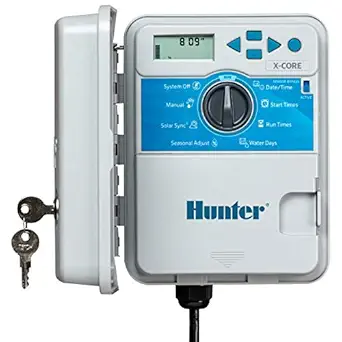 |
| Best Quality Built to a higher standard if you want something more solid | Hunter X-Core XC800i 8-Station Indoor Sprinkler Controller |  |
| Best Value The sweet spot between price and what you get | Orbit 4-Station Indoor/Outdoor Swing Panel Sprinkler Timer |  |
| Best Budget The cheapest option that still gets the job done reliably | Orbit Mechanical Water Timer (Model 62034) |  |
| Highest Rated A top-rated pick with lots of positive feedback | Hunter X-Core XC800 8-Station Outdoor Sprinkler Timer |  |
| Most Popular A crowd favorite that many people choose with confidence | Orbit Programmable Digital Hose Watering Timer (1-Outlet) |  |
Hunter X-Core XC400 4-Station Sprinkler Timer (Outdoor)

| Zones | 4 |
|---|---|
| Programs | 3 programs with 4 start times each |
| Run time | Up to 4 hours per station |
| Memory | Non-volatile (retains settings during power loss) |
The Hunter X-Core XC400 is a straightforward outdoor sprinkler controller that manages up to four independent watering zones with three programs and four start times per program. Installation is typical for a residential timer: mount outdoors, wire the valves, and set schedules using the intuitive dial and digital display. Notable features include a weather-resistant enclosure built for outdoor conditions, non-volatile memory so programs survive power interruptions, Quick Check diagnostics to spot wiring faults, and automatic short-circuit protection for safer operation. The Seasonal Adjust lets you change run times quickly as weather shifts, which helps conserve water without reprogramming each station. It does not include built-in Wi-Fi or smart weather integration, so remote control and cloud-based scheduling require separate Hunter add-ons. For homeowners who want a dependable, no-frills controller that emphasizes durability and straightforward programming, the X-Core delivers professional-grade reliability; buyers seeking app control or advanced smart features should look elsewhere.
Best for: Homeowners who want a dependable, easy-to-program outdoor controller that focuses on durability and straightforward manual scheduling for small to medium residential yards.
Less Ideal for: Users who prioritize smartphone control, cloud features, or large multi-zone systems should consider a smart Wi-Fi controller or higher-zone model instead.
- Weather-resistant outdoor enclosure for reliable long-term use
- Intuitive dial and digital display for fast setup and simple programming
- Non-volatile memory preserves schedules during power outages
- Quick Check diagnostics and short-circuit protection simplify troubleshooting and protect the system
- Seasonal Adjust and multiple start times let you fine-tune watering to save water
- No built-in Wi-Fi or cloud app control so remote scheduling requires add-ons
- Limited to four zones which may be too few for larger landscapes
Verdict: Buy this if you want a rugged, no-nonsense 4-zone outdoor controller that makes reliable, manual scheduling and seasonal adjustments quick and simple.
Hunter X-Core XC800i 8-Station Indoor Sprinkler Controller

| Zones | 8 stations |
|---|---|
| Programs | 3 programs, 4 start times each |
| Voltage | 120 volts AC |
| Display Type | LCD or LED |
The Hunter X-Core XC800i is a straightforward, performance-focused indoor irrigation controller for homeowners who need reliable control over up to eight zones. It uses a simple dial-based interface and three independent programs with four start times each, letting you set up to 12 daily start times and fine tune run lengths and intervals without using an app. Notable features include Cycle & Soak to reduce runoff, a global Seasonal Adjust to scale all run times quickly, non‑volatile memory that retains schedules during power loss, and built‑in surge protection. It is Smart Port compatible for optional remote add-ons and supports long run times for larger or drip systems. The lack of Wi‑Fi keeps the unit simple and dependable but means you will not get remote scheduling or weather-based adjustments without adding external sensors or remotes. For users who value consistent, professional irrigation control and water‑saving basics without the complexity of smart systems, the XC800i delivers robust performance in a compact indoor package.
Best for: Homeowners who prioritize dependable, professional irrigation control and water efficiency without relying on apps or cloud services, especially for larger yards or mixed lawn and drip zones.
Less Ideal for: People who want full smartphone control, cloud features, or automated weather-based scheduling straight out of the box should look at smart controllers instead.
- Supports up to 8 independently scheduled zones for larger residential systems
- Dial interface with 3 programs and 4 start times each for flexible scheduling without Wi‑Fi
- Seasonal Adjust and Cycle & Soak features help conserve water and reduce runoff
- Nonvolatile memory and built‑in surge protection preserve settings and improve reliability
- No built‑in Wi‑Fi or weather forecasting means no remote control or automatic weather adjustments
Verdict: Choose the X-Core XC800i if you want a rugged, no‑frills 8‑zone controller that delivers professional scheduling and water‑saving controls without Wi‑Fi complexity.
Orbit 4-Station Indoor/Outdoor Swing Panel Sprinkler Timer

| Stations | 4 |
|---|---|
| Mounting | Indoor or outdoor with locking cabinet |
| Features | Cycle and soak, stacking runtimes, rain skip delay |
The Orbit 4-Station Swing Panel Sprinkler Timer controls up to four irrigation zones with straightforward programming and an option to mount the lockable cabinet indoors or outdoors. It is typically used to automate residential lawn and garden watering by assigning independent schedules to each station, using features like cycle and soak, stacking runtimes, and a rain skip delay to avoid overwatering. The locking cabinet with two keys adds security when mounted outside, and setup is intentionally simple so a homeowner can get custom intervals running quickly. Practical benefits include conserving water through cycle and soak and avoiding manual watering chores across multiple zones. The unit does not include remote app control or advanced smart-home integration, so scheduling changes must be made at the controller rather than from a phone. For someone who wants a reliable, no-frills timer with flexible local programming, this is a solid choice; users wanting Wi-Fi connectivity or large-zone systems should consider other models.
Best for: Homeowners who want a dependable, easy-to-program timer to automate four garden or lawn zones and reduce routine watering tasks without needing smart-home features.
Less Ideal for: Gardeners who need remote app control, integration with other smart devices, or support for more than four irrigation zones should look elsewhere.
- Controls four independent watering zones for small to medium lawns
- Lockable cabinet with two keys allows secure indoor or outdoor installation
- Cycle and soak plus stacking runtimes help reduce runoff and overwatering
- Simple installation and intuitive local programming for quick setup
- No Wi-Fi or smartphone app for remote scheduling and monitoring
- Limited to four stations so not ideal for larger, multi-zone systems
Verdict: A solid, easy-to-use four-station timer that automates watering with practical cycle and soak features for homeowners who prioritize reliability over smart connectivity.
Orbit Mechanical Water Timer (Model 62034)

| Material Type | Plastic |
|---|---|
| Watering Duration | 15-120 minutes |
| Power Source | No batteries required |
| Included Components | Timer |
The Orbit Mechanical Water Timer is a simple, reliable hose faucet timer that works like an egg timer: twist the oversized dial to set watering from 15 to 120 minutes and the clockwork mechanism shuts the water off when the time is up. It installs directly on an outdoor faucet with a swivel coupling for quick hose connection and includes a manual bypass so you can water without removing the unit. Because it is fully mechanical there are no batteries or electronics to fail, which makes it low maintenance and dependable for routine lawn or garden watering. The clear, easy-grip dial is usable with wet or gloved hands, and the plastic housing is rust-proof for outdoor use. Limitations are its single fixed-duration runs and lack of programmable schedules or remote control, so it is best for straightforward tasks like run-once lawn watering, filling a watering can, or timed sprinkler sessions rather than automated multi-day schedules.
Best for: Buyers who want a low-cost, low-maintenance way to time single watering sessions for lawns or garden beds and prefer a straightforward mechanical solution over smart features.
Less Ideal for: Users who need multi-day automated schedules, app control, or multiple zone programming should consider programmable or smart timers instead.
- Battery-free mechanical operation eliminates the need for replacements or electronics maintenance
- Oversized, easy-grip dial that is usable with wet or gloved hands
- Manual bypass allows instant faucet use without removing the timer
- Swivel coupling for quick and secure hose and faucet connection
- Not programmable for recurring schedules or multiple daily runs
- No remote, app, or smart connectivity for off-site control
Verdict: Choose this if you want an inexpensive, maintenance-free mechanical timer that reliably times single watering runs without batteries or electronics.
Hunter X-Core XC800 8-Station Outdoor Sprinkler Timer

| Model | XC800 |
|---|---|
| Item Type Name | Sprinkler Timer |
| Display Type | LCD |
| Operating Temperature | 40 °F |
The Hunter X-Core XC800 is a straightforward, dependable 8-station sprinkler timer for residential irrigation. It controls up to eight zones with three separate programs and up to four start times per program, making it suitable for typical suburban lawns and gardens. The LCD display and built-in diagnostic feature simplify programming and troubleshooting of field wiring, and the unit accepts Hunter's Solar Sync ET sensor via a Smart Port to add weather-based watering without replacing the controller. Installation and basic maintenance are simple for someone comfortable with irrigation wiring, and the outdoor-only design keeps the controller accessible near valves. The XC800 focuses on robustness and ease of use rather than advanced connectivity, so you get a stable, proven controller that minimizes fuss. Limitations are its lack of built-in Wi-Fi and more advanced scheduling options found on higher-end models, and the unit is intended for outdoor mounting only.
Best for: Homeowners who prioritize a reliable, low-maintenance irrigation controller for standard lawns or gardens and who want straightforward programming with optional weather-based sensor support.
Less Ideal for: Users who need full remote control, cloud connectivity, or highly granular smart scheduling should look at Wi-Fi enabled controllers with app integration.
- Supports 8 stations with three programs and four start times per program for flexible basic scheduling
- LCD display and Quick Check diagnostics simplify programming and troubleshooting wiring issues
- Compatible with Solar Sync ET sensor via Smart Port to add weather-based runtime adjustments
- Designed for outdoor mounting with simple installation and low maintenance
- No built-in Wi-Fi or remote app control for offsite scheduling
- Limited advanced scheduling features compared with higher-end smart controllers
Verdict: A solid, no-nonsense 8-station controller that delivers dependable, easy-to-use irrigation control with optional weather sensor support.
Orbit Programmable Digital Hose Watering Timer (1-Outlet)

| Power Source | 2 AA batteries (not included) |
|---|---|
| Watering Duration | 1-240 minutes |
| Watering Frequency | Every 6 hours to once every 7 days |
| Rain Delay | 24, 48, or 72 hours |
The Orbit programmable digital hose timer converts a standard outdoor faucet into a simple, dependable automated watering station. You program start times, watering duration (1 to 240 minutes) and frequency (every 6 hours up to once every 7 days) on the oversized LCD and single dial, then let it run the schedule. Useful features include a manual water button for instant watering without reprogramming and a 24/48/72-hour rain delay to pause cycles after rainfall. The unit is water-resistant for outdoor use and runs on two AA batteries, making placement flexible where no power is available. Practical benefits are consistent, repeatable watering for lawns, beds, and containers and measurable water savings by avoiding overwatering. The main limitations are that it is a basic non-networked timer with only one outlet and no remote or app control, so managing multiple zones requires additional units and on-site programming for changes.
Best for: Buyers who prioritize a proven, straightforward timer with clear on-device controls and want reliable automated watering without needing smart-home features.
Less Ideal for: Gardeners who want central control of multiple zones or remote app scheduling should consider multi-outlet or smart Wi‑Fi-enabled controllers instead.
- Wide watering duration range (1–240 minutes) for flexible run times
- Clear, oversized LCD and single-dial controls for easy programming
- Built-in rain delay and manual watering button to conserve water and handle exceptions
- Water-resistant construction suitable for outdoor faucet mounting
- Battery power allows installation without external power source
- Single outlet only so multiple watering zones need extra timers or splitters
- No Wi-Fi or app control for remote scheduling or notifications
- Plastic construction may feel less durable than metal alternatives
Verdict: A dependable, easy-to-program single-outlet timer that saves water and removes guesswork when you want reliable on-site automation without smart features.
Choosing the Right Non Smart Irrigation Controller: Key Factors to Consider
Programming Simplicity
How easy a controller is to program directly affects daily use. Simple step-through programming with clearly labeled buttons and a readable display reduces mistakes and speeds setup. For gardeners who prefer occasional schedule tweaks rather than frequent changes, a minimal interface with separate zone start times and easy duration entry is often best.
Complex nested menus or vague icons can lead to misconfigured start times or overlapping zones that cause overwatering. Check whether the controller supports straightforward seasonal adjustments or percentage-based run time changes to simplify summer-to-fall transitions.
Scheduling Flexibility
Scheduling flexibility determines whether the controller fits your watering strategy. Look for controllers that support multiple start times per station, various day scheduling options (day-of-week, interval, or odd/even day programs), and independent run durations per zone. This allows one controller to handle mixed plantings, such as lawn, shrub beds, and vegetable patches with different needs.
If you rely on manual watering for certain areas, ensure the controller lets you exclude zones from an automatic program or set short durations for occasional runs. The ability to set seasonal adjustments across all zones from a single control simplifies routine maintenance.
Build Durability and Weather Resistance
A controller's enclosure and components must survive the conditions where it is mounted. Outdoor or garage-mounted controllers should have sealed housings, rust-resistant terminals, and durable knobs or buttons that resist UV. Poor weatherproofing can lead to corrosion of screw terminals, which causes intermittent valve failures and unreliable schedules.
Also consider the quality of the internal transformer and wiring terminals. Heavier-gauge transformers handle multiple valves more reliably, and labeled, accessible terminals make future troubleshooting or zone additions easier.
Manual Controls and Local Overrides
Gardeners often need to run one zone for a quick check or skip watering for a rainy spell. Reliable manual controls and clear local overrides let you do that without reprogramming. Physical start/stop buttons, a dedicated rain/off position, or simple dial-controlled modes are valuable for on-site adjustments.
Controllers that allow per-zone manual activation while leaving other zones on schedule are especially useful during plantings, repairs, or spot watering. Look for models with obvious, tactile controls that are usable with wet or dirty hands.
Number of Zones and Expandability
Choose a controller that matches your current valve count and offers room for expansion. Undersized controllers force workarounds like splitting zones manually, which reduces schedule flexibility and complicates backflow control. Oversized controllers add bulk and cost, but they provide future-proofing for garden changes.
Consider whether the controller supports modular expansion modules or common remote valve splitters. Clear terminal labeling and spare transformer capacity make adding zones less likely to require a full replacement later.
Installation and Wiring Practicality
Ease of installation affects whether you can DIY the setup or need professional help. Look for controllers with clear wiring diagrams, labeled screw terminals, and accessible mounting options. A layout that keeps common and zone wiring separate reduces cross-wiring risk during setup.
Also evaluate power requirements and whether the unit needs a dedicated outlet or hardwired connection. If your irrigation timer is in a damp location, check for included mounting plates and gasketed covers to simplify a secure install.
When a Non Smart Controller Is the Right Choice
Non smart controllers focus on reliable, local control without network dependency. They are ideal for gardeners who want simple weekly schedules, quick manual overrides, and fewer failure points related to app updates or Wi-Fi connectivity.
If you have a stable watering routine and prefer a physical dial or button interface, a non smart unit keeps programming visible and accessible at all times. It also reduces privacy concerns and the need to maintain network credentials for the garden.
- Best for fixed schedules and low-tech maintenance routines
- Favored in locations with unreliable internet or remote installations
- Simpler troubleshooting because settings are on the unit
Mounting and Placement Tips
Mount the controller where it is protected from direct sun and heavy rain if it is not fully weatherproof. Garages, sheds, or dedicated irrigation boxes offer shelter while keeping the unit accessible for seasonal adjustments.
When mounting outdoors, orient the enclosure so the display and controls are easy to read and use from eye level. Leave space around the unit for wiring access and future maintenance.
- Keep the transformer away from sprinkler valves to reduce electrical interference
- Avoid locations prone to freezing without winterizing access
Wiring Best Practices
Label all valve wires at both ends before disconnecting an old controller. Clear labeling prevents zone mix-ups during installation and makes future troubleshooting much faster. Use the terminal layout printed inside the controller as a wiring map and confirm common wire connections before powering up.
Use appropriate gauge wire for long runs to prevent voltage drop. Protect outdoor runs with conduit where possible and use waterproof connectors for any joints exposed to moisture.
- Test each valve manually after wiring to confirm correct zone mapping
- Keep spare terminals and wire nuts on hand during installation
Seasonal Setup and Winterization
Set an easy-to-adjust seasonal percentage or keep a simple program with shorter run times in cooler months. Non smart controllers often include a single seasonal dial or percent adjustment that scales all station times, which simplifies fall and spring transitions.
Before freezing weather, drain above-ground lines, or use the controller's rain/off setting and follow local winterization practices to protect valves and pipes.
- Use short manual runs to test each zone before winter shutoff
- Document your baseline summer durations so you can revert after adjusting for season
Troubleshooting Common Issues
If a zone fails to run, check the fuse or transformer first, then test the valve solenoid directly with a multimeter. Loose terminal screws and corroded connections are common causes of intermittent operation in older controllers.
Program errors often stem from unintended overlapping start times or incorrect day scheduling. Walk through the schedule display step-by-step to verify each station's start times and run durations.
- Inspect terminals for corrosion and clean with a contact cleaner if needed
- Keep a handwritten wiring map near the unit for quick reference
How We Chose the Best Non Smart Irrigation Controller
We prioritized features that matter to gardeners who want a no-frills, dependable irrigation controller. Key evaluation criteria included programming simplicity to ensure straightforward weekly schedules and seasonal adjustments; physical durability and weatherproofing for controllers mounted in garages, sheds, or outdoors; the number and type of zones supported to match common yard layouts; manual controls and local override options for quick on-site changes; and power options and backup to avoid schedule loss during outages. We also reviewed installation friendliness, including terminal layout and clear labeling, because easier installs reduce the chance of wiring errors. Items were excluded if they required cloud connectivity, mandatory app setup, or proprietary online activation steps that prevent local-only operation. We filtered out controllers with limited documentation or nonstandard wiring that complicates retrofit projects. Final selections emphasize units that deliver reliable timing and straightforward control without network dependence.
FAQ
Can a non smart controller save water compared with manual watering?
Often. A properly programmed controller can reduce overwatering by running precise durations at optimal times. It lacks automatic weather-based adjustments, so you still need to change schedules seasonally or after heavy rain.
How many zones do I need for an average suburban lawn?
It depends on irrigation layout and plant types. Many suburban yards use three to six zones to separate lawn, shrub beds, and planting beds. Match the controller to your current valve count with a little extra capacity for future changes.
Will a non smart controller work with drip irrigation and sprinkler heads?
Yes. Most controllers simply switch valves and are compatible with both drip systems and conventional sprinklers. Set run times appropriately, as drip lines often need longer, lower-flow runs than spray heads.
What power options do these controllers use?
Most non smart controllers use a small 24 VAC transformer powered from a household outlet or a hardwired connection. Some include battery backup for the clock or retain settings during outages, but full operation generally requires mains power.
Can I replace a smart controller with a non smart unit easily?
Usually. Most controllers use standard terminal blocks for common and zone wires. Confirm the wiring layout and swap wires to matching terminals. Keep the old controller handy until you verify each zone runs correctly.
How do I keep a non smart controller from running during heavy rain?
Use a local rain sensor or the controller's rain/off setting. Many non smart units have an input for a wired rain sensor that interrupts automatic programs until the sensor dries out.
Final Verdict
A non smart irrigation controller is a practical choice when you want straightforward, local control and fewer points of failure. Prioritize programming simplicity if you plan occasional tweaks, and choose a unit sized to your current zone count with modest room to expand. Weigh tradeoffs between extra scheduling flexibility and the simplicity of a dial-based controller. Focus on durable enclosures, clear wiring, and easy manual overrides so you can maintain reliable watering routines without relying on networked features.
