

Note: This article contains affiliate links. If you click on these links and make a purchase, I may earn a small commission at no extra cost to you. This helps support my research and content. Read my full affiliate disclosure here.
If you are planning a gravel path, driveway, or decorative rock bed, the right landscape fabric makes installation easier and reduces maintenance later. Fabric designed for gravel must suppress weeds, tolerate foot and vehicle traffic, and still allow water to drain through the gravel layer. This guide covers seven shortlisted landscape fabrics for gravel that are appropriate for patios, walkways, and driveways. We evaluated tensile strength, water permeability, UV resistance, and installation practicality to help you decide which option best fits your site conditions. Read on for practical pros and cons and guidance on selecting fabric that will last in a gravel application.
Top Picks at a Glance
| Best Overall The best all-around choice for most situations | DWALE 13 x 115 ft Heavy Duty Driveway / Landscape Fabric, 5 oz Geotextile |  |
| Best Quality Built to a higher standard if you want something more solid | Sandbaggy Woven Geotextile Landscape Fabric (12.5 ft x 100 ft) |  |
| Best Value The sweet spot between price and what you get | Pterying 6.5 x 300 ft Heavy-Duty Weed Barrier Landscape Fabric, 3 oz |  |
| Best Budget The cheapest option that still gets the job done reliably | Amazon Basics Weed Barrier Landscape Fabric, 3 x 50 Feet |  |
| Highest Rated A top-rated pick with lots of positive feedback | Breling 4 ft x 100 ft Dual-Sided Geotextile Fabric (5 oz) with 30 Stakes |  |
| Most Popular A crowd favorite that many people choose with confidence | DeWitt Sunbelt 4 ft x 300 ft Woven Weed Barrier Landscape Fabric (2-Pack) |  |
| Best Seller A high-volume bestseller chosen again and again | DeWitt Pro-5 Heavy-Duty Woven Weed Barrier Fabric, 4 x 250 ft |  |
DWALE 13 x 115 ft Heavy Duty Driveway / Landscape Fabric, 5 oz Geotextile

| Material Type | Polyethylene (PE) |
|---|---|
| Thickness | 5 oz |
| Tensile Strength | 800 LBS (grab) |
| Unit Count | 1 Count |
This DWALE 13 x 115 ft fabric is a commercial-style geotextile intended as an underlayment for driveways and gravel surfaces. Made from woven polyethylene and rated at roughly 5 oz weight with an advertised grab tensile strength up to 800 lb, it resists tearing and supports heavy loads when layered under gravel, pavers, or road base. The weave is permeable, so water drains through rather than pooling, which makes it suitable for French drains and erosion control as well as typical driveway reinforcement. Its large roll covers long runs without many seams, so installation goes faster and fewer overlap joints are needed. Expect a durable, rot-resistant material that will hold up under stone and traffic, but be prepared to secure edges and seams with staples or pins and to cut and handle a large, stiff roll during installation. This is a utilitarian product best used under aggregate or in construction applications rather than as a decorative surface fabric.
Best for: Homeowners or contractors who need a robust, permeable underlayment for gravel driveways, French drains, or erosion control and value long roll coverage to minimize seams.
Less Ideal for: People looking for a lightweight garden weed fabric for beds, or those wanting a decorative visible landscape fabric rather than a buried structural geotextile.
- High claimed tensile strength (up to 800 lb) for load-bearing under gravel and driveways
- Permeable woven construction prevents water pooling and supports drainage
- Large 13 x 115 ft roll reduces seams and speeds installation on long runs
- Made from polyethylene so it resists rot and stands up to burial under stone
- Material can be stiff and awkward to handle for one person during cutting and placement
- Specification language mixes polyethylene and polypropylene terms which could confuse precise material expectations
Verdict: Choose this heavy-duty, permeable geotextile when you need a durable underlayer that supports gravel and improves drainage over long driveway runs.
Sandbaggy Woven Geotextile Landscape Fabric (12.5 ft x 100 ft)

| Material Type | Polypropylene (PP) |
|---|---|
| Tensile Strength | ASTM D4632 – 200 lbs |
| UV Protection | ASTM D4355 – ≥85% strength after 500 hours |
| Item Form | Bolt Of Fabric |
Sandbaggy's woven geotextile is built for hard-use ground stabilization where gravel or pavers need separation from underlying soil. In practice you roll it out over prepared subgrade, overlap seams, and cover with the recommended 3+ inches of gravel or mulch to lock it in place and protect it from UV. Notable features include a 4 oz industrial‑grade polypropylene weave, ASTM D4632 tensile strength listing (about 200 lbs), and UV resistance claims that preserve strength after weather exposure. For gravel driveways and parking areas the fabric helps prevent stone migration into the soil, reduces rutting, and can cut the need for frequent replenishing of aggregate. The fabric is marketed as long‑lasting when buried, but it will degrade quickly if left exposed to sunlight, so proper coverage is essential. Installation is straightforward but requires enough overlap and anchoring to resist shifting under traffic. Overall this is a robust option for performance‑focused projects where a durable, vehicle‑capable underlayment is needed.
Best for: Buyers who need a performance‑grade underlayment for gravel driveways, parking areas, or heavy‑duty landscaping and who plan to bury the fabric under aggregate to maximize longevity.
Less Ideal for: Small ornamental garden beds or applications where the fabric will remain exposed to sun and weather without a protective cover.
- Heavy woven polypropylene construction for high tensile strength suitable under gravel and pavers
- Engineered UV protection to retain strength when covered and extend service life
- Designed to support vehicle traffic when installed with adequate aggregate cover
- Versatile for landscaping, road stabilization, and farming applications
- Lifespan drops sharply if fabric is exposed to sunlight so it must be covered promptly
- Large rolls may arrive folded or in multiple pieces which can require extra seam work during installation
Verdict: Choose this fabric when you want a heavy‑duty, vehicle‑capable underlayment that stabilizes gravel and reduces stone migration for long‑lasting driveways and parking areas.
Pterying 6.5 x 300 ft Heavy-Duty Weed Barrier Landscape Fabric, 3 oz

| Material | Woven polypropylene |
|---|---|
| Weight | 3 oz per square yard |
| Length | 300 ft |
| Width | 6.5 ft |
This Pterying landscape fabric is a 6.5 by 300 foot roll of woven polypropylene built to block sunlight and prevent weed seed germination across large beds. It is typically unrolled over prepared soil, cut for plant openings, and anchored with landscape staples or pins; green alignment stripes help keep rows straight. At 3 oz per square yard and with high tensile strength ratings cited by the brand, the material resists tearing under mulch or gravel and lets rain and irrigation through so roots remain aerated. The fabric is easy to cut with scissors and the seller’s tip to apply tape before cutting reduces fraying for neater edges. Important limitations are that seams must be overlapped and staples used to stop weeds at joins and edges, and heavy perennial weeds or roots may eventually find gaps, so expect occasional maintenance. For large-area projects this roll reduces weeding and irrigation needs but should be combined with proper installation and edge detailing for best long-term performance.
Best for: Gardeners and landscapers tackling large beds, driveways, or erosion-prone slopes who want a durable, breathable ground cover that cuts down routine weeding and irrigation work.
Less Ideal for: People needing a short-term or decorative fabric where appearance matters above function, or those who prefer a permanent hardscape solution rather than a fabric-plus-mulch approach.
- Long 300 ft roll covers large areas without many seams
- Woven polypropylene construction is water-permeable so irrigation and rain reach roots
- Rated tensile strength and 3 oz/sq yd weight improve tear resistance under mulch and gravel
- Built-in alignment stripes simplify laying out straight planting rows
- Cuts cleanly and the tape-before-cutting trick reduces edge fray for neater installation
- Requires staples and overlapping at seams to prevent weeds pushing through
- Not a permanent barrier against aggressive perennial roots which may need supplemental control
Verdict: A long, heavy-duty woven polypropylene roll that makes weed suppression and large-area groundcover installation faster and more durable.
Amazon Basics Weed Barrier Landscape Fabric, 3 x 50 Feet

| Material | Polypropylene |
|---|---|
| Weight | 90 GSM (3.2 oz) |
| Purpose | Weed control, erosion prevention |
This Amazon Basics landscape fabric is a straightforward heavy-duty weed barrier intended for garden beds, paths, and under gravel or pavers. Made from 90 GSM (3.2 oz) polypropylene, the material is tear-resistant and laid flat to suppress weed growth while remaining permeable so water and fertilizer reach plant roots. The 3 x 50 foot roll covers a typical raised bed or several smaller beds and is easy to cut to shape; factory guide lines simplify alignment and trimming tips help reduce edge fraying. It is commonly used under mulch, river rock, or around perennials where long-term weed suppression is desired without impeding drainage. Limitations are that heavier soils or high-traffic areas will eventually wear the fabric and that it does not stop weeds that grow from seed on top of mulch or from root intrusion without proper installation and overlap. For gardeners focused on straightforward, durable weed control this fabric delivers a low-effort solution, especially when paired with correct installation and surface mulch.
Best for: Gardeners who prioritize practical, low-maintenance weed suppression for beds and borders and want an affordable, easy-to-install fabric to pair with mulch or decorative rock.
Less Ideal for: Growers who prefer no-barrier methods like sheet mulching or those needing an impermeable membrane for heavy paving or structural erosion control.
- 90 GSM polypropylene offers tear resistance suitable for garden-bed and under-gravel use
- Breathable fabric allows water and nutrients to penetrate to the soil
- Guide lines on the fabric make alignment and cutting easier
- Large 3 x 50 ft roll covers multiple beds or a long border without frequent joins
- Will eventually degrade or wear in high-traffic or heavily amended soil areas
- Does not prevent weeds that sprout above the fabric without proper mulch and maintenance
Verdict: A durable, breathable landscape fabric that gives practical, low-effort weed suppression for garden beds and borders.
Breling 4 ft x 100 ft Dual-Sided Geotextile Fabric (5 oz) with 30 Stakes
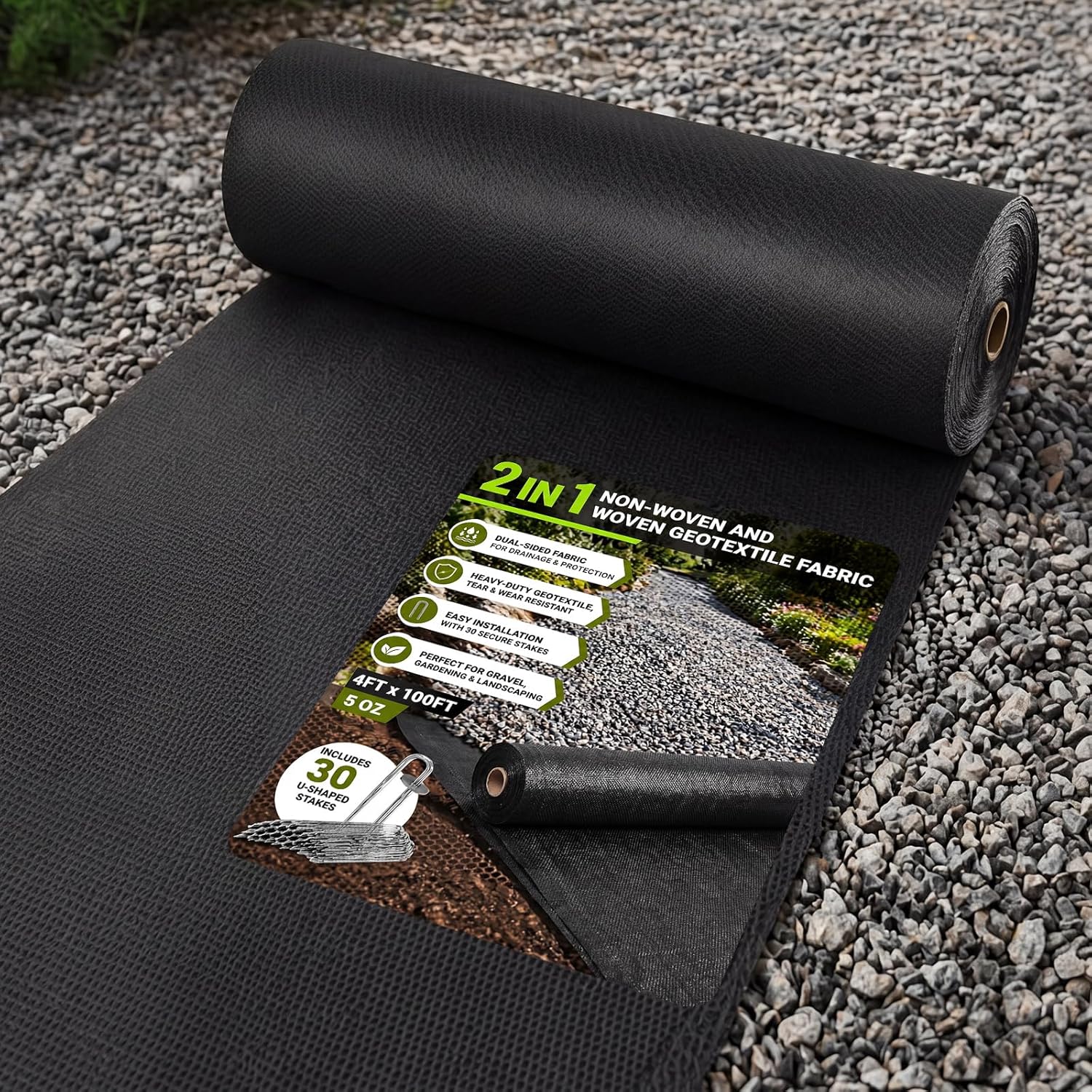
| Material | Non-woven and woven |
|---|---|
| Size | 4ft x 100ft |
| Weight | 5 oz |
| Package includes | 1 fabric, 30 stakes |
This Breling geotextile is built for reliable performance under gravel and in landscaping beds. The fabric is dual-sided: a non-woven plush surface for drainage and filtration and a woven smooth side for puncture resistance and separation, so it both helps water flow and keeps gravel from migrating into the soil. At a stated 5 oz weight it feels substantial and tear-resistant, which is important where driveways or heavy foot traffic are expected. Installation is straightforward — roll it out and secure with the included 30 U-shaped stakes — and the kit covers narrow paths or long runs when overlapped. Practical benefits include reduced weed growth, better gravel stability, and improved drainage compared with no barrier. Limitations are that the 4 ft width requires more seams on wider areas and the product description does not list long-term UV rating or expected lifespan, so exposed edges may need occasional inspection. Overall this is a dependable choice when you want a robust under-gravel layer that balances filtration and puncture resistance.
Best for: Buyers who prioritize a dependable, durable underlayer for gravel paths or driveways and want a product that balances drainage with puncture resistance for long-term stability.
Less Ideal for: People looking to cover very wide areas quickly without seams or those needing a fully UV-rated, long-term warranty-backed membrane should consider alternatives.
- Dual-sided construction provides drainage/filtration on one face and puncture resistance on the other
- Heavy 5 oz geotextile material offers tear resistance suitable for gravel driveways and high-traffic paths
- Includes 30 U-shaped stakes for securing the fabric during installation
- Helps reduce weed growth and prevents gravel from mixing with underlying soil
- Only 4 ft width means more overlapping seams for wider areas
- No explicit UV exposure lifespan or long-term durability rating provided in the listing
Verdict: Choose this dual-sided, heavy-duty geotextile when you need a reliable under-gravel barrier that combines drainage with puncture-resistant separation.
DeWitt Sunbelt 4 ft x 300 ft Woven Weed Barrier Landscape Fabric (2-Pack)

| Material | Woven polypropylene |
|---|---|
| Pack quantity | 2 rolls |
| Weight | 3.2 oz |
| UV resistance | Rated up to 5 years |
This DeWitt Sunbelt woven weed barrier is a heavy-duty ground cover intended to sit beneath gravel, mulch, or bark to reduce weed growth without using herbicides. It comes as two 4 ft by 300 ft rolls of 3.2 oz woven polypropylene that lay flat for easier placement and can be trimmed with scissors. The fabric is permeable, so water, air, and nutrients still reach the soil, and the woven construction resists tearing better than many lightweight nonwoven options. Printed 12-inch guide stripes make spacing rows or aligning plantings simpler when installing under gravel paths or driveways. It is UV-stabilized and rated for up to five years outdoors, making it suitable for medium-term landscape projects. Expect practical benefits like lower maintenance and cleaner gravel surfaces, but be aware that woven fabric will not stop very aggressive perennial weeds permanently and that seams and edges need secure anchoring to prevent gravel migration. For gravel beds, placing the fabric carefully and overlapping joints will maximize performance.
Best for: Buyers who want a durable, permeable underlayment for gravel paths or beds and prefer a proven brand with many user reviews to reduce installation risk.
Less Ideal for: Those looking for a permanent, herbicide-free solution for very aggressive perennial weeds or gardeners who need a fully impermeable weed block.
- Woven polypropylene allows water and air to pass through while suppressing surface weeds
- UV-stabilized construction rated for up to 5 years of outdoor use
- Large coverage per pack with two 4 ft x 300 ft rolls suitable for long gravel runs
- 12-inch guide stripes help align rows and simplify installation under paths
- Woven fabric can be less effective against deep-rooted perennial weeds compared with impermeable barriers
- Requires careful overlapping and anchoring to prevent gravel migration at seams
Verdict: A durable, permeable woven fabric that is a dependable choice for laying under gravel to reduce maintenance and keep surfaces cleaner.
DeWitt Pro-5 Heavy-Duty Woven Weed Barrier Fabric, 4 x 250 ft

| Material weight | 5 oz |
|---|---|
| Roll length | 250 ft |
| Manufacturer | Dewitt |
The DeWitt Pro-5 is a commercial-grade woven weed barrier made for long runs and high-traffic landscape installations. It is typically rolled out under mulch, gravel, or around long planting beds where durable, long-term weed suppression is needed. The fabric is strong and puncture-resistant, so it stands up to installation with staples, foot traffic, and edging work better than lightweight nonwoven covers. Gold alignment stripes every 12 inches make it easy to lay straight rows and space plants consistently in beds or garden rows. Because it is woven, the material permits water, air, and nutrients to pass through to the soil while still blocking sunlight that fuels weed growth. The main compromises are that heavy woven fabric is less flexible to conform to very irregular terrain and it requires cutting and careful anchoring at edges to prevent lifting. For large landscapes, commercial beds, and raised-row gardens where longevity and mechanical strength matter, this fabric performs reliably.
Best for: Gardeners and contractors who prioritize durable, long-lasting weed control for large beds, long rows, or commercial landscaping projects and need a fabric that stands up to heavy use.
Less Ideal for: Home gardeners with small, highly contoured planting areas or those who want a very flexible, lightweight fabric for tight curves should consider more pliable options.
- Commercial-grade woven construction resists tears and punctures during installation and use
- Allows air, water, and nutrients to reach soil while blocking weed growth
- Gold alignment stripes every 12 inches simplify straight-row layout and plant spacing
- Sized for long runs and large projects, suitable for pathways, borders, and raised beds
- Stiffer woven material is less conformable on very uneven or contoured ground
- Requires careful cutting and anchoring at edges to prevent lifting in windy areas
Verdict: Choose this heavy-duty woven fabric when you need long-lasting, tear-resistant weed control for large or commercial landscape projects.
Choosing the Right Landscape Fabric for Gravel: Key Factors to Consider
Tear and Puncture Resistance
Fabric under gravel is exposed to sharp stones, shovels during installation, and foot or vehicle traffic. Higher tensile strength and puncture resistance reduce the chance of rips that let weeds through or cause soil mixing with the gravel. Look for fabrics specified in grams per square meter or with stated puncture or grab tensile values.
Lower-strength fabrics can save money up front but often fail sooner, especially where the gravel layer is thin or traffic is heavy. If you plan on driving over the surface or have heavy foot traffic, prioritize stronger weaves and reinforced edges to extend service life.
Water Permeability
Landscape fabric must let water pass downward so the gravel bed drains and the subgrade does not trap moisture. Permeability ratings or flow-rate specs indicate how readily water will move through the material. A fabric that is too impermeable can cause pooling above the soil and reduce long-term stability.
Permeability also affects how fines from the underlying soil move upward into the gravel. A fabric with appropriate flow characteristics helps limit soil migration while still allowing percolation, which preserves the appearance and drainage performance of the gravel layer over time.
UV and Rot Durability
Solar exposure and ground moisture are the two main aging forces for landscape fabric. UV-stabilized materials and those treated to resist biological breakdown keep their structure and permeability longer. Even if the fabric is covered by gravel, edges and seams are often exposed during installation and early years, so UV resistance matters.
Rot resistance is important where organic soils or moisture encourage microbial activity. Choosing fabric with proven resistance to degradation reduces the frequency of replacement and the labor involved in reworking the gravel bed.
Installation Ease and Layout
How a fabric handles during installation can save hours of work. Features like pre-marked overlap lines, flexible but stable sheets that do not curl, and compatible anchoring methods simplify laying fabric under gravel. Consider how easy it is to cut cleanly around plantings, fixtures, or drainage inlets.
Installation ease also affects the likelihood of mistakes such as inadequate overlap or insufficient anchoring, which are common failure points. If you are installing on a slope or working solo, choose fabric that stays put and is forgiving during alignment and stapling.
Edge Retention and Anchoring
Edges and seams are where many installations fail. The fabric should accept staples, pins, or other anchors without tearing and should hold those anchors under freeze-thaw cycles and occasional traffic. Reinforced edging or a heavier weave at sheet borders helps maintain overlap integrity.
Also consider how the fabric interacts with edging materials like metal, plastic, or timber. A fabric that slips or bunches at the edge will allow gravel migration and undermine the clean look of the installation.
Thickness, Feel, and Compatibility With Gravel
Fabric thickness affects how it performs under different gravel sizes. Heavier, denser fabrics resist slugging and movement when used with larger, angular stones, while lighter materials may suffice for decorative pea gravel with only foot traffic.
Also consider how the fabric interfaces with geotextile or drainage layers if you are building up a deeper subbase. Compatibility with commonly used gravel sizes and the ability to lay smoothly over small undulations matter for a stable finished surface.
When to Use Landscape Fabric Under Gravel
Landscape fabric is useful when you want a separation layer that reduces weed growth, slows soil migration into the gravel, and helps keep the gravel layer distinct from the underlying soil. It is particularly valuable for paths, decorative beds, and light-duty driveways where preventing fines from working upward will preserve drainage and appearance.
Avoid using fabric when the subgrade is unstable or requires deep regrading. In those cases a proper compacted subbase or full geotechnical installation may be a better solution than relying on a separation fabric alone.
- Best for shallow gravel layers and decorative applications
- Useful for patios and walkways where weeds are a nuisance
- Not a substitute for proper base preparation on heavily loaded driveways
Preparing the Site and Subgrade
Good results start with clearing vegetation, removing large roots and rocks, and leveling the surface. A compacted, well-draining subgrade reduces future settling and helps the fabric sit flat so gravel does not concentrate wear in one spot.
If drainage is poor, install a gravel subbase or drainage channel before laying fabric. Addressing water flow at the start prevents pooling that could undermine both the fabric and the gravel layer.
- Clear and grade before laying fabric
- Compact soils for driveways or areas with vehicle traffic
- Install underdrains where water collects
Installation Best Practices
Lay fabric with sufficient overlap at seams, typically 6 to 12 inches depending on manufacturer guidance, and secure edges with staples or pins spaced appropriately for your soil and traffic conditions. Keep the fabric taut to prevent wrinkles that trap debris and create low spots.
When cutting for fixtures, dig a shallow opening rather than tearing across the fabric. Cover the fabric with a consistent depth of gravel so stones do not concentrate force on a single area. Check edges periodically and add anchors if you notice movement.
- Overlap seams and secure with anchors
- Maintain consistent gravel depth to avoid premature wear
- Trim carefully around in-ground fixtures
Maintenance Tips for Fabric-Covered Gravel
Routine maintenance includes weeding edges and pulling any shoots that penetrate seams early. Top up gravel periodically to replace fines that wash away and to maintain a protective layer over the fabric.
If weeds become persistent through tears or seams, patch the fabric by lifting the gravel, laying a new patch with ample overlap, and re-covering. Regular inspection after storms helps catch movement before it becomes a larger repair.
- Inspect seams after heavy rain
- Top up gravel to maintain coverage
- Patch tears promptly to prevent weed establishment
Alternatives and When to Skip Fabric
In some installations a compacted crushed-stone base or a full geotextile subbase is a better long-term solution than a thin separation fabric. For heavy vehicle loads, a structural base that includes geogrid or several inches of compacted aggregate provides better load distribution.
Also consider using a permeable paving system or resin-bound surface in areas where you want very low maintenance or where gravel migration is hard to control. Sometimes redesigning drainage or adding edging is a more effective long-term fix than relying on fabric alone.
- Use a structural base for vehicle loads
- Consider permeable paving for very low maintenance
- Edge containment can reduce need for fabric in some designs
How We Chose the Best Landscape Fabric for Gravel
We focused on attributes that directly affect performance under gravel and in outdoor conditions. Key evaluation criteria included tear and puncture resistance to survive installation and traffic, permeability to ensure stormwater moves freely through the gravel, UV and rot resistance for long-term lifespan, and ease of installation to reduce labor and potential mistakes. We also considered common thickness formats and edge-retention characteristics that influence how the fabric behaves when anchored with staples, edging, or aggregate. For exclusions, we omitted lightweight polypropylene weed-control sheets intended only for under mulch or potted plants, because those materials typically fail when used under coarse gravel or where vehicles pass. We also excluded fabrics that lack tested permeability ratings or that are marketed only for temporary erosion control. The final short list emphasizes materials and construction suitable for gravel beds: woven and nonwoven geotextiles with documented permeability and abrasion resistance, plus practical installation features like pre-printed overlap guides or reinforced edges. These filters ensure the picks work in real-world garden and hardscape settings rather than only in laboratory claims.
FAQ
Will landscape fabric stop all weeds under gravel?
Fabric greatly reduces weeds by blocking light at the soil surface, but it will not stop every seed that arrives by wind or birds. Weeds are most likely at seams, tears, or where fabric is exposed at edges. Proper overlap, anchoring, and prompt patching control most problems.
How deep should I put gravel over the fabric?
Typical decorative gravel layers range from 1 to 3 inches, while pathways often use 2 to 4 inches. For driveways or areas with vehicle traffic a thicker compacted base and more gravel is needed. Depth affects how well stones protect the fabric from puncture and wear.
Can I install fabric directly over grass?
You should remove heavy vegetation and large roots before laying fabric. Light turf can be smothered, but remaining roots and rhizomes may continue to grow and create bumps or gaps. Clearing and smoothing the surface first improves long-term performance.
How long does landscape fabric last under gravel?
Lifespan varies widely based on material quality, sunlight exposure, and traffic. UV-stabilized, heavier woven fabrics generally last longer, often many years when properly covered. Fabrics exposed at seams or edges degrade faster, so installation quality influences longevity as much as the material.
Should I use woven or nonwoven fabric for gravel?
Woven fabrics usually offer higher tensile strength and tear resistance, making them suitable under heavier gravel or traffic. Nonwoven fabrics can provide good separation and filtration in some drainage setups. The best choice depends on traffic, stone size, and whether separation or filtration is the priority.
Is fabric necessary if I use edging?
Edging helps contain gravel and reduces lateral migration, but fabric still provides a barrier to soil mixing and weed growth. In low-traffic decorative beds, edging alone may be sufficient, but fabric adds a layer of separation that prolongs the clean look of the gravel.
Final Verdict
When choosing landscape fabric for gravel, prioritize materials that combine tear resistance with adequate permeability so the gravel drains and the fabric endures. Balance installation ease and edge retention against the expected traffic and stone size to match a fabric to the job. For decorative paths and beds, a lighter but UV-stable fabric may be adequate, while driveways and high-traffic areas benefit from heavier woven geotextiles. Focus on proper site preparation and careful installation; those steps often matter more to long-term performance than small differences in material spec.
