

Note: This article contains affiliate links. If you click on these links and make a purchase, I may earn a small commission at no extra cost to you. This helps support my research and content. Read my full affiliate disclosure here.
Picking the right weed control landscape fabric makes a big difference in how often you pull, hoe, or replace mulch in garden beds and around shrubs. The right fabric reduces weed pressure, helps retain soil moisture, and stands up to foot traffic and seasonal exposure. This guide looks at seven top-rated weed control landscape fabric options shortlisted for real garden use. We evaluated each choice for durability, water permeability, and ease of installation so you can choose a fabric that fits your planting style and maintenance plan. Read on to see which features matter most and which fabrics match common garden situations.
Top Picks at a Glance
| Best Overall The best all-around choice for most situations | EXTRAEASY Heavy-Duty Woven Landscape Fabric, 4 ft x 300 ft (3.2 oz) |  |
| Best Quality Built to a higher standard if you want something more solid | DeWitt Pro-5 Heavy-Duty Woven Weed Barrier Fabric, 4 x 250 ft |  |
| Best Value The sweet spot between price and what you get | Winisok 3.2 oz Heavy-Duty Weed Barrier Landscape Fabric (4 ft x 100 ft, Black) |  |
| Best Budget The cheapest option that still gets the job done reliably | HANWRAPS 3.3 ft x 13 ft Heavy-Duty Weed Barrier Fabric (3.2 oz) |  |
| Highest Rated A top-rated pick with lots of positive feedback | Broadfashion 4 ft x 250 ft Heavy-Duty 5 oz Weed Barrier Landscape Fabric |  |
| Most Popular A crowd favorite that many people choose with confidence | ECOgardener Premium 5 oz Landscape Fabric, 4 ft x 50 ft |  |
| Best Seller A high-volume bestseller chosen again and again | LAVEVE Heavy Duty Weed Barrier Landscape Fabric, 4 ft x 100 ft (two 4×50 ft rolls) |  |
EXTRAEASY Heavy-Duty Woven Landscape Fabric, 4 ft x 300 ft (3.2 oz)

| Material | Woven PP |
|---|---|
| Weight | 3.2 oz |
| Covered area | 4 ft x 300 ft (1200 sq. ft.) |
This EXTRAEASY landscape fabric is a heavy-duty woven polypropylene weed barrier sold as a 4 ft by 300 ft roll that covers about 1,200 sq ft. It is meant to be laid over soil and held with staples, then covered with mulch, gravel, or wood chips. The 3.2 oz woven construction blocks most sunlight to suppress weeds while remaining permeable to water, air, and nutrients so plant roots can still breathe and receive moisture. In practice the fabric is easy to cut to shape and overlaps cleanly for full coverage; when protected by mulch it can extend service life to several years. Its tear resistance and tolerance of foot traffic make it suitable for high-use paths, driveways, and large beds. Limitations are that it still requires proper edge finishing and secure fastening to prevent lifting, and like all woven fabrics it can eventually allow fine weed roots through if soil and debris accumulate on top over time.
Best for: Buyers who want a durable, no-nonsense weed barrier for large beds, paths, or driveways and value longevity and ease of installation over decorative solutions.
Less Ideal for: Those looking for a decorative surface layer on its own or gardeners who plan frequent deep soil cultivation and turnover should consider alternatives that are easier to move or remove.
- Heavy-duty 3.2 oz woven polypropylene construction for good tear resistance
- Allows water, air, and nutrients to pass while blocking most sunlight to suppress weeds
- Large 4 ft x 300 ft roll covers about 1,200 sq ft for fewer seams and faster coverage
- Holds up under mulch, gravel, and light foot traffic for multi-year use when installed correctly
- Requires staples and proper overlapping/edge finishing to avoid lifting in wind or traffic
- Does not permanently eliminate deep or persistent weeds that can grow through accumulated soil and debris
Verdict: Choose this fabric when you need a robust, large-roll weed barrier that blocks light while letting water and air through for long-lasting landscape weed control.
DeWitt Pro-5 Heavy-Duty Woven Weed Barrier Fabric, 4 x 250 ft

| Material weight | 5 oz |
|---|---|
| Roll length | 250 ft |
| Manufacturer | Dewitt |
The DeWitt Pro-5 is a commercial-grade woven weed barrier made for long runs and high-traffic landscape installations. It is typically rolled out under mulch, gravel, or around long planting beds where durable, long-term weed suppression is needed. The fabric is strong and puncture-resistant, so it stands up to installation with staples, foot traffic, and edging work better than lightweight nonwoven covers. Gold alignment stripes every 12 inches make it easy to lay straight rows and space plants consistently in beds or garden rows. Because it is woven, the material permits water, air, and nutrients to pass through to the soil while still blocking sunlight that fuels weed growth. The main compromises are that heavy woven fabric is less flexible to conform to very irregular terrain and it requires cutting and careful anchoring at edges to prevent lifting. For large landscapes, commercial beds, and raised-row gardens where longevity and mechanical strength matter, this fabric performs reliably.
Best for: Gardeners and contractors who prioritize durable, long-lasting weed control for large beds, long rows, or commercial landscaping projects and need a fabric that stands up to heavy use.
Less Ideal for: Home gardeners with small, highly contoured planting areas or those who want a very flexible, lightweight fabric for tight curves should consider more pliable options.
- Commercial-grade woven construction resists tears and punctures during installation and use
- Allows air, water, and nutrients to reach soil while blocking weed growth
- Gold alignment stripes every 12 inches simplify straight-row layout and plant spacing
- Sized for long runs and large projects, suitable for pathways, borders, and raised beds
- Stiffer woven material is less conformable on very uneven or contoured ground
- Requires careful cutting and anchoring at edges to prevent lifting in windy areas
Verdict: Choose this heavy-duty woven fabric when you need long-lasting, tear-resistant weed control for large or commercial landscape projects.
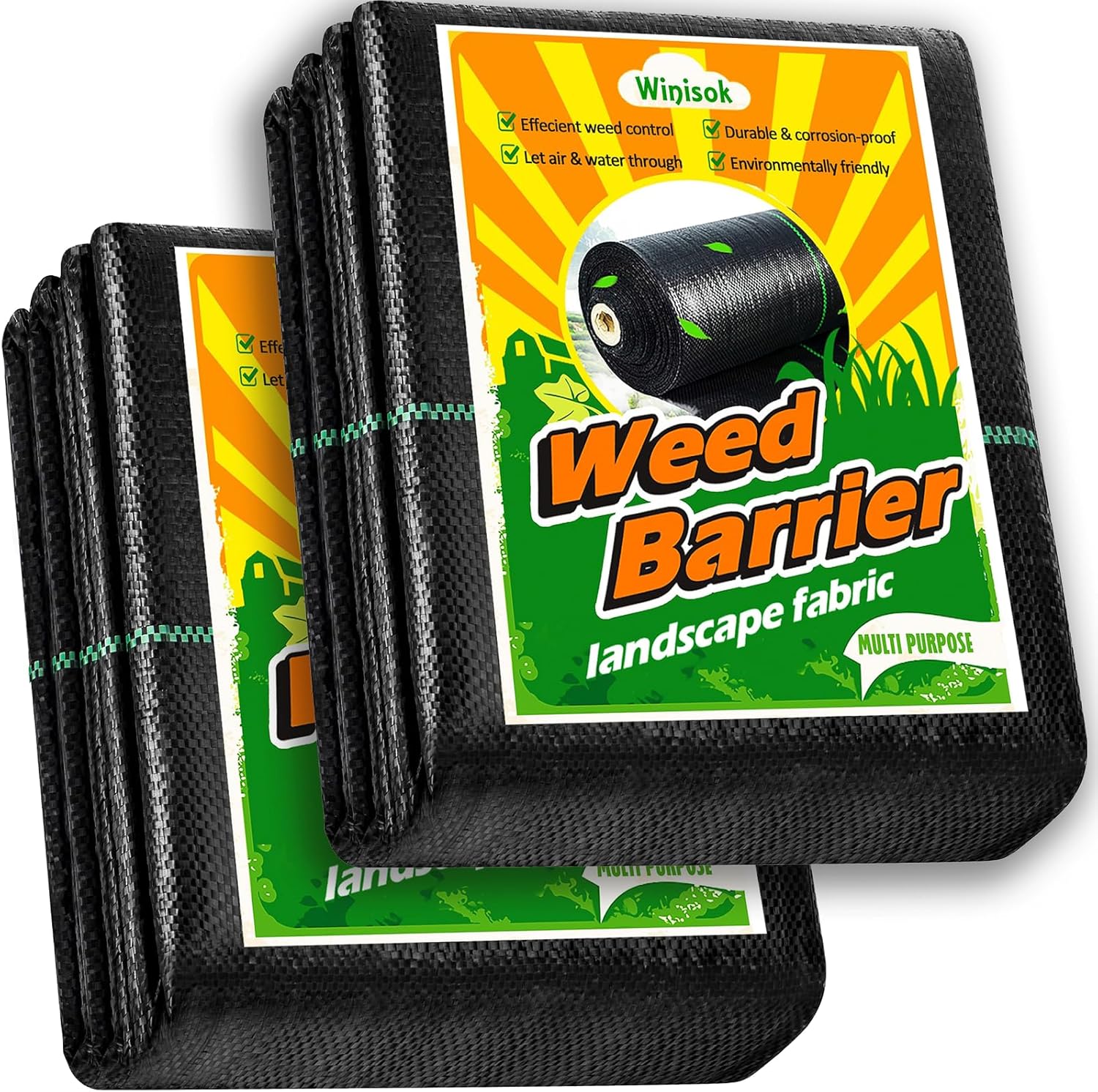
Winisok 3.2 oz Heavy-Duty Weed Barrier Landscape Fabric (4 ft x 100 ft, Black)
| Material | Polypropylene |
|---|---|
| Weight | 3.2 oz (fabric weight) |
| UV Protection | Yes |
| Permeability | Breathable, allows water and air |
This Winisok landscape fabric is a heavy-duty, tightly woven polypropylene mat intended to suppress weeds for multiple seasons while letting water and air reach the soil. Typical use is rolling it out over beds or under mulch, cutting planting holes or using the printed green planting lines for alignment, then securing the edges with staples or pins. The fabric emphasizes permeability and UV protection, so irrigation and plant roots are not impeded while sunlight to weed seeds is reduced. Practical benefits include simple installation without special tools, suitability for a range of uses from flower beds to erosion control and pond underlayment, and a construction that claims multi-year durability against tearing. Limitations are that it still requires correct cutting around established plants and periodic maintenance where mulch or soil shifts, and like any woven fabric it will not prevent deep-rooted persistent weeds from eventually working through or around seams. For gardeners optimizing effort and longevity this fabric offers a robust, low-maintenance layer for weed control when installed carefully.
Best for: Gardeners who want a durable, low-maintenance barrier to reduce weeding and protect soil while keeping irrigation effective; ideal for people who plan beds and borders and prefer an efficient, long-lasting solution.
Less Ideal for: Those who need a temporary or decorative-only groundcover or who prefer chemical weed control as their primary method may want different solutions.
- Tightly woven polypropylene construction designed for tear resistance and multi-year use
- High permeability that allows water and air to reach soil and roots
- Printed planting lines to simplify layout and cutting during installation
- Versatile for beds, underlayment, erosion control, and pond lining
- Easy to install without special tools
- Will not permanently stop deep or spreading perennial roots that reach through or around seams
- Requires correct cutting and securing; improper installation reduces effectiveness
Verdict: A sturdy, breathable weed barrier that gives practical, long-lasting weed suppression for gardeners focused on efficiency and low upkeep.
HANWRAPS 3.3 ft x 13 ft Heavy-Duty Weed Barrier Fabric (3.2 oz)

| Material | Polypropylene |
|---|---|
| Fabric weight | 3.2 oz |
| Size | 3.3 ft x 13 ft |
| Manufacturer | HANWRAPS |
HANWRAPS weed barrier fabric is a budget-friendly woven polypropylene cloth sold in a 3.3 ft by 13 ft roll intended for garden beds, pathways, and light landscaping. It is a 3.2 oz heavy-duty fabric with a high-density weave that resists tearing and holds up to sun and cold exposure, yet remains permeable so water and air reach the soil. Typical use is to lay the fabric over prepared soil, cut to shape, secure with pins, and cover with mulch or gravel to suppress weeds while retaining soil moisture. The material is easy to cut for custom beds and can be butted or overlapped to cover larger areas. Practical benefits include simple installation, decent durability for seasonal projects, and versatility for small home gardens or underlayment tasks. Limitations are the single-roll size that may require several pieces for larger beds and that woven polypropylene will eventually degrade under prolonged UV exposure, so it is better for medium-term rather than permanent installations.
Best for: A gardener on a budget who needs an affordable, easy-to-install weed barrier for small to medium beds, pathways, or under mulch and gravel.
Less Ideal for: People planning permanent, heavy-traffic installations or covering large areas who prefer industrial-grade geotextiles designed for long-term civil projects.
- High-density woven polypropylene offers good tear resistance for routine garden use
- Permeable weave lets water and air reach roots while reducing weed growth
- Easy to cut and splice for custom bed shapes and modular coverage
- Single 3.3 ft x 13 ft roll is small for larger landscapes so multiple rolls may be needed
- Woven polypropylene will slowly break down with long-term UV exposure and heavy wear
Verdict: A cost-conscious, easy-to-cut woven fabric that reliably suppresses weeds and retains soil moisture for small to medium garden projects.
Broadfashion 4 ft x 250 ft Heavy-Duty 5 oz Weed Barrier Landscape Fabric

| Material | Polypropylene |
|---|---|
| Weight | 5 oz |
| Coverage | 4 x 250 ft |
This Broadfashion 4 x 250 ft landscape fabric is a heavy-duty, polypropylene ground cover made to control weeds in flower beds and larger landscaping areas. It is typically rolled out over prepared soil, cut or slit for plants, and anchored with staples before being covered with mulch or decorative stone. The 5 oz material is described as tear resistant and weatherproof, so it stands up to foot and light vehicle traffic and resists breakdown from sun and moisture. Permeability is a key feature here: water and air pass through the textile so you do not get surface puddling while soil moisture is conserved. The large roll gives long continuous coverage for multi-bed projects, reducing seams and installation time. Important limitations are that it still requires proper installation around plants and edging to stop weed edges, and like any nonwoven fabric it will slowly degrade over many seasons and can be less effective against persistent deep-rooted weeds that grow through mulch into soil underneath.
Best for: Gardeners who prioritize a reliable, long-lasting barrier for flower beds and larger landscape areas and want a product that stands up to weather and light traffic without frequent replacement.
Less Ideal for: People looking for a zero-maintenance, permanent solution for aggressive perennial weeds or those who prefer biodegradable mulches that fully break down within a season.
- Heavy-duty 5 oz polypropylene construction for improved tear resistance and durability
- High permeability lets water and air reach the soil while reducing surface puddling
- Large 4 x 250 ft roll reduces seams and speeds installation for multi-bed projects
- Designed for long-term outdoor exposure and suitable for landscaping and erosion control
- Will not permanently stop deep-rooted perennial weeds that can grow through mulch or around edges
- Requires careful cutting and anchoring at plant openings and borders to remain effective
Verdict: Choose this heavy-duty, high-permeability fabric when you need a dependable, long-roll weed barrier that reduces seams and stands up to outdoor exposure in flower beds.
ECOgardener Premium 5 oz Landscape Fabric, 4 ft x 50 ft

| Material weight | 5 oz |
|---|---|
| Roll dimensions | 4 ft x 50 ft |
| Intended use | Weed barrier for garden beds and landscaping |
| Permeability | Allows water and air passage |
This ECOgardener landscape fabric is a professional-grade weed barrier made from a two-layer, 5 oz material intended for long-lasting garden use. It is installed over soil or existing weeds with the felted side down and secured with staples or pins, then covered with mulch or gravel; the porous weave lets water and air through while limiting weed growth and helping retain soil moisture. Notable features include its heavy-duty construction, advertised permeability, and suitability for raised beds, flower and vegetable gardens, tree bases, and yard projects. In practice it reduces recurring weeding and can cut mulch usage by keeping soil drier and cleaner. Limitations to consider are that landscape fabric does not eliminate deep-rooted perennial weeds, weeds can still sprout in mulch on top of the fabric over time, and any future planting through the fabric requires cutting or removing sections, which can be fiddly. For long-term beds that will not be frequently replanted, this fabric offers robust weed suppression and easier maintenance compared with bare soil.
Best for: Practical gardeners looking for a proven, long-lasting weed control layer who prefer lower-maintenance beds and want a product with solid user feedback.
Less Ideal for: Gardeners who replant beds frequently or those seeking a chemical-only solution for persistent perennial weeds should consider alternatives.
- Heavy 5 oz construction for durability in high-traffic garden and landscape uses
- Porous design allows water and air to reach soil while reducing weed growth
- Suitable for a variety of applications including raised beds, in-ground gardens, and under mulch or gravel
- Helps conserve soil moisture and reduce the frequency of manual weeding
- Does not prevent all weeds, particularly deep-rooted perennials or seeds that land on top of mulch
- Requires cutting or removal to add new plants, which can complicate future bed changes
Verdict: Choose this heavy-duty 5 oz landscape fabric when you want a durable, moisture-conserving weed barrier that reduces routine weeding in established beds.
LAVEVE Heavy Duty Weed Barrier Landscape Fabric, 4 ft x 100 ft (two 4×50 ft rolls)

| Material | Polypropylene |
|---|---|
| Permeability | Breathable, allows water and air flow |
| UV resistance | Resistant to sun exposure |
| Package | Two rolls totaling 4 ft x 100 ft |
This LAVEVE landscape fabric is a heavy-duty woven polypropylene ground cover intended to suppress weeds while letting moisture and air reach the soil. It ships as two 4 ft x 50 ft rolls (total 4 ft x 100 ft) with printed guide lines that make cutting and alignment straightforward. In practice it is laid over prepared beds, cut for plantings, and secured with U-shaped pegs; the fabric’s permeability helps reduce erosion and allows irrigation to penetrate. The material is UV-resistant and built for typical garden uses such as flower beds, vegetable plots, gravel paths, and sidewalks. Because it is a woven polypropylene, it is sturdier than thin nonwoven mats and stands up to foot traffic when covered with mulch or gravel. Limitations to expect are that surface-seeded weeds or seeds blown onto mulch can still germinate on top, and long-term burial or heavy soil compaction can reduce effectiveness; occasional maintenance and proper installation around plants are required to keep beds weed-free.
Best for: Gardeners who want a durable, breathable ground cover to reduce routine weeding and tidy beds across medium-length runs of pathway or planting area, and who value a product with solid usage feedback.
Less Ideal for: People seeking a permanent, maintenance-free solution or those who prefer chemical weed control methods; also not the best choice for beds where frequent deep digging or planting changes are required.
- Woven polypropylene construction provides durable, tear-resistant coverage
- Permeable design allows water and air to reach soil, reducing erosion
- Printed guide lines make measuring and cutting easier during installation
- Suitable for multiple applications including beds, paths, and under gravel
- Comes as two rolls totaling 4 ft x 100 ft for extended coverage
- Does not prevent weeds that germinate in mulch or on top of the fabric
- Requires proper securing and occasional maintenance to stay effective
Verdict: A sturdy, breathable woven fabric that gives reliable, easy-to-install weed suppression for medium garden beds and paths backed by strong user approval.
Choosing the Right Weed Control Landscape Fabric: Key Factors to Consider
Durability and UV Resistance
Landscape fabric spends long periods exposed to sun, temperature swings, and physical wear. UV-resistant fabrics resist breakdown and last multiple seasons, reducing the need for replacement. Durability also covers seam strength and resistance to tearing from tools, roots, and foot traffic. Choosing a fabric rated for extended UV exposure is important if you expect it to remain uncovered by mulch for parts of the year. Thicker woven or laminated constructions usually hold up better, but also consider how the fabric will be anchored and edged to prevent wind lifting and edge fraying.
Water Flow and Soil Breathability
A good weed control fabric must let water and air reach the soil while still blocking light that encourages weeds. Permeable fabrics allow rain and irrigation to infiltrate rather than creating surface runoff or puddling, which can wash away mulch or expose roots. Breathable fabrics also support healthy soil biology. If a fabric is too impermeable, it can trap moisture, create anaerobic pockets, and slow decomposition in the soil. Look for manufacturer permeability ratings or product descriptions that emphasize water flow and gas exchange.
Weed Blocking Performance
How well a fabric stops weeds depends on weave density and whether it is stabilized against stretching. Tight weaves and layered systems block light more effectively and keep shallow-rooted weeds from breaching the surface. However, no fabric permanently eliminates weeds; seeds can land on top of mulch or plants can grow through cut holes if not installed carefully. Consider how the fabric will be used. For annual beds with frequent planting, a lighter fabric that is easy to cut and remove may be preferable. For permanent beds around trees or pathways, choose a heavier fabric with proven long-term suppression.
Ease of Installation and Repair
Installation time and complexity matter for most gardeners. Fabrics that are stiff, bulky, or slippery can be hard to lay flat and secure, especially on slopes or uneven terrain. Look for materials that unroll easily, have clear anchoring recommendations, and are compatible with common staples, pins, or edging. Repairability is also important. Fabrics that can be overlapped and patched without losing effectiveness make seasonal adjustments easier. Consider whether you will need to cut access holes for planting and whether the fabric maintains integrity after being cut.
Compatibility With Mulch and Planting
Landscape fabric usually performs as part of a system that includes mulch, edging, and planting methods. Some fabrics work better under organic mulch because they allow roots to access soil and mulch to decompose, while others pair well with inorganic surfaces like gravel because they prevent soil migration. Think about how the fabric will affect mulch replenishment and whether it will interfere with root expansion for shrubs and perennials. Fabrics that cause mulch to sit too dry or that bunch under gravel can create maintenance headaches.
Environmental and Long-Term Soil Considerations
Consider the fabric's long-term effects on soil health and the surrounding ecosystem. Non-breathable plastics can inhibit earthworms and microbial activity, while durable woven fabrics that allow some exchange are less disruptive. Also evaluate whether the material is recyclable or likely to fragment over time. If you expect to transition beds back to full cultivation later, choose fabrics that are easy to remove without leaving bits behind. For permanent installations, favor materials with low fragmentation risk and documented environmental performance.
Best Uses by Garden Situation
Different landscape fabrics shine in different contexts. For pathways and gravel areas you want a heavy, puncture-resistant fabric that keeps soil from migrating upward. In perennial beds where you will occasionally transplant, a medium-weight, highly permeable fabric that is easy to cut and patch is usually a better fit.
For raised beds and vegetable plots many gardeners prefer leaving fabric out of the soil contact area and using temporary weed control layers during off-season work. Around established shrubs and under heavy mulch, choose long-lasting fabrics that tolerate edge stress and seasonal root growth.
- High-traffic paths: prioritize tear resistance and anchoring.
- Vegetable beds: prioritize permeability and easy removal.
- Gravel beds: prioritize soil separation and low stretch.
- Shrub borders: prioritize long-term UV resistance and root friendliness.
How Installation Technique Affects Performance
Installation is as important as material choice. Overlapping seams correctly, securing edges, and setting appropriate planting holes prevent sunlight from reaching weed seeds and stops wind from lifting fabric. Use the correct type and number of ground staples or pins for the fabric weight and soil conditions.
Slope, irrigation layout, and mulch depth also change fabric performance. On slopes, butt seams and extra anchors reduce slippage. Drip irrigation lines can sit under or over the fabric depending on the system, but ensure emitters remain accessible for maintenance.
- Overlap seams by several inches to prevent gaps.
- Anchor edges every few feet, more often on slopes.
- Cut planting holes cleanly and avoid large, ragged openings.
Maintenance and Seasonal Care
Routine maintenance keeps fabric performing. Check edges and seams each season, re-secure staples as soil settles, and replenish mulch to shield the fabric from UV. When weeds appear on top of mulch, remove them promptly rather than letting them seed down into the fabric.
Expect eventual repairs. Small rips can be patched by overlapping and pinning a new piece. When removing fabric, pull gently and work from one side to avoid tearing and leaving fragments in the soil.
- Inspect seams and staples annually.
- Replace thin or brittle fabric rather than layering excessively.
- Patch holes with overlapping pieces and secure firmly.
Balancing Longevity With Soil Health
Long-lived fabrics reduce replacement frequency but can alter soil conditions over time. If soil biology and infiltration are priorities, choose breathable woven fabrics and pair them with organic mulch that feeds the soil as it decomposes. For permanent decorative areas where minimal maintenance is the goal, more robust barriers under inorganic surface materials can be appropriate.
Plan ahead: if you anticipate changing a bed's use, select a fabric designed for removal to avoid excessive labor later.
- Use breathable fabrics where soil life is a priority.
- Reserve heavy barrier fabrics for strictly ornamental or high-traffic zones.
- Consider future garden plans when selecting material longevity.
Common Installation Mistakes to Avoid
Several recurring mistakes reduce performance. Leaving fabric exposed to direct sun without adequate mulch accelerates degradation. Using too few anchors allows wind or animal activity to pull edges up. Cutting oversized planting holes lets weeds grow through gaps and bypass the fabric's suppression.
Avoid stacking thin fabrics or using plastic sheeting meant for construction under mulch. Those can trap water and create unfavorable conditions for plants and soil organisms.
- Always cover fabric with the recommended mulch depth.
- Do not cut excessively large planting holes.
- Do not use impermeable plastic under mulch in planted beds.
How We Chose the Best Weed Control Landscape Fabric
We started by focusing on attributes that directly affect garden performance and longevity. Primary evaluation criteria included fabric durability under UV exposure and foot traffic, measured by reported material strength and expected lifespan. We also prioritized water permeability and drainage so fabrics do not create runoff or harm plant roots. Ease of installation and compatibility with common groundcovers, mulches, and edging systems was another filter, since awkward installation causes long-term problems for gardeners. We considered weed suppression effectiveness next, looking for tight weaves or layered constructions that block light while still allowing gas exchange. Environmental factors such as breathability and resistance to root girdling were reviewed to avoid fabrics that trap moisture or impede soil life. Finally, we checked reported maintenance needs and repairability for seasonal care. We excluded any options that are strictly decorative fabrics without weed-blocking properties, products intended only for indoor or hydroponic use, and materials that require specialized tools or professional installation. The final list balances durability, permeability, and gardener-friendly installation so each pick suits common landscape scenarios.
FAQ
Will landscape fabric prevent all weeds?
No. Landscape fabric greatly reduces light reaching weed seeds and prevents many shallow weeds, but it does not stop all growth. Windblown seed on top of mulch, perennial weeds with deep roots, and plants growing up through planting holes can still occur. Good installation and mulch management reduce most problems.
How deep should mulch be over fabric?
Mulch depth depends on material, but a common recommendation is 2 to 4 inches of organic mulch. That depth protects the fabric from sunlight, improves appearance, and helps block seeds on the mulch surface. Heavier inorganic mulches like gravel may need a thinner layer but require secure edging to prevent migration.
Can I use landscape fabric under vegetable beds?
Often gardeners avoid permanent fabric under vegetable beds because it can complicate soil amendments and future bed changes. For seasonal weed control, temporary fabric or biodegradable options are useful during fallow periods. If used, choose a permeable material that is easy to remove and will not impede root growth.
How long does landscape fabric typically last?
Lifespan varies widely by material and exposure. Heavy woven, UV-stabilized fabrics can last several years to a decade in protected conditions, while lighter options may degrade in two to three seasons if left uncovered. Proper mulch coverage and avoiding excessive foot traffic extend life.
Can landscape fabric harm soil life?
Some non-breathable or impermeable materials can reduce air and water exchange and discourage earthworms and microbes. Breathable woven fabrics that allow water and gas passage are less disruptive. Choosing permeable materials and using organic mulch helps maintain healthy soil biology.
Final Verdict
Choose landscape fabric based on the role it will play in your garden rather than one-size-fits-all features. Prioritize UV resistance and tear strength for paths and permanent beds, and favor permeability and easy removal for vegetable plots and transplanted perennials. Installation quality and mulch coverage are as important as the fabric itself. Decide whether longevity or soil friendliness is your top priority, then pick a fabric that aligns with that tradeoff. With proper selection and installation, weed control fabric can significantly reduce maintenance while supporting healthy planting areas.
