

Note: This article contains affiliate links. If you click on these links and make a purchase, I may earn a small commission at no extra cost to you. This helps support my research and content. Read my full affiliate disclosure here.
If you plan to install pea gravel on a path, patio, or garden bed, the right landscape fabric makes installation last longer and reduces long-term maintenance. The wrong fabric can trap water, break down under foot traffic, or allow weeds to push through, so pick a material that suits gravel use. This guide covers seven shortlisted landscape fabrics that work well specifically for pea gravel installations and explains the practical reasons each type earns a spot. We evaluated options for durability, water flow, and ease of installation so you can match fabric performance to your site conditions. Read on to understand which attributes matter most for gravel surfaces and how to prepare the base before laying fabric and stone.
Top Picks at a Glance
| Best Overall The best all-around choice for most situations | AZHCHKE 13 x 120 ft Heavy-Duty Driveway Landscape Fabric, 5 oz Polypropylene |  |
| Best Quality Built to a higher standard if you want something more solid | DWALE 13 x 115 ft Heavy Duty Driveway / Landscape Fabric, 5 oz Geotextile |  |
| Best Value The sweet spot between price and what you get | VEVOR Heavy-Duty Weed Barrier Landscape Fabric, 3 x 300 ft, Woven PP |  |
| Best Budget The cheapest option that still gets the job done reliably | LGJIAOJIAO 3.2 oz Heavy-Duty Weed Barrier Landscape Fabric (3 ft x 50 ft) |  |
| Highest Rated A top-rated pick with lots of positive feedback | Breling 4 ft x 100 ft Dual-Sided 5 oz Geotextile Fabric with 30 Stakes |  |
| Most Popular A crowd favorite that many people choose with confidence | LAVEVE Heavy Duty Weed Barrier Landscape Fabric, 4 ft x 100 ft (two 4×50 ft rolls) |  |
| Best Seller A high-volume bestseller chosen again and again | Happybuy 13 ft x 60 ft Woven Geotextile Driveway Fabric (5 oz) |  |
AZHCHKE 13 x 120 ft Heavy-Duty Driveway Landscape Fabric, 5 oz Polypropylene

| Material Type | Polypropylene (PP) |
|---|---|
| Fabric Type | 100% Polypropylene |
| Weight/Thickness | 5OZ |
| Tensile Strength | 800 LBS |
This 13 x 120 ft, 5 oz woven polypropylene fabric is built for heavy-duty under-gravel applications where strength and longevity matter. It is typically laid over prepared subgrade and pinned or overlapped at seams before spreading gravel; the woven construction lets water and air pass while blocking sunlight to suppress weeds and reduce erosion. Notable features include an 800 lb tensile strength rating, high-density 5 oz material that resists deformation under heavy loads, and factory guide lines to make cutting and placement easier. In practice it performs well for driveway stabilization, French drains, and other load-bearing landscaping tasks because it stays flat under stone and helps keep aggregate separate from soil. The fabric is flexible enough to conform to uneven ground but thick enough to resist tearing during installation. Limitations are that it is a polypropylene textile so UV exposure will eventually degrade it without adequate cover, and managing seams on very large projects requires careful overlap and securing to prevent shifting.
Best for: Buyers who prioritize long-term performance for under-gravel applications such as driveway stabilization, contractors or experienced DIYers needing a high-strength geotextile for load-bearing landscaping work.
Less Ideal for: Casual gardeners installing around small flower beds or temporary ground covers who need a lighter, easier-to-handle landscape fabric.
- High tensile strength (800 lbs) suitable for supporting gravel and vehicle traffic
- Woven 100% polypropylene construction resists rot and chemical soil conditions
- Large coverage (13 x 120 ft) reduces seams on medium to large driveway projects
- Permeable fabric allows water and air through while suppressing weed growth
- Polypropylene will degrade over long-term UV exposure if not fully covered by aggregate
- Requires careful overlapping and fastening on very large installations to prevent shifting
Verdict: Choose this heavy-duty woven polypropylene fabric when you need a strong, permeable geotextile that holds up under gravel and vehicle loads.
DWALE 13 x 115 ft Heavy Duty Driveway / Landscape Fabric, 5 oz Geotextile

| Material Type | Polyethylene (PE) |
|---|---|
| Thickness | 5 oz |
| Tensile Strength | 800 LBS (grab) |
| Unit Count | 1 Count |
This DWALE 13 x 115 ft fabric is a commercial-style geotextile intended as an underlayment for driveways and gravel surfaces. Made from woven polyethylene and rated at roughly 5 oz weight with an advertised grab tensile strength up to 800 lb, it resists tearing and supports heavy loads when layered under gravel, pavers, or road base. The weave is permeable, so water drains through rather than pooling, which makes it suitable for French drains and erosion control as well as typical driveway reinforcement. Its large roll covers long runs without many seams, so installation goes faster and fewer overlap joints are needed. Expect a durable, rot-resistant material that will hold up under stone and traffic, but be prepared to secure edges and seams with staples or pins and to cut and handle a large, stiff roll during installation. This is a utilitarian product best used under aggregate or in construction applications rather than as a decorative surface fabric.
Best for: Homeowners or contractors who need a robust, permeable underlayment for gravel driveways, French drains, or erosion control and value long roll coverage to minimize seams.
Less Ideal for: People looking for a lightweight garden weed fabric for beds, or those wanting a decorative visible landscape fabric rather than a buried structural geotextile.
- High claimed tensile strength (up to 800 lb) for load-bearing under gravel and driveways
- Permeable woven construction prevents water pooling and supports drainage
- Large 13 x 115 ft roll reduces seams and speeds installation on long runs
- Made from polyethylene so it resists rot and stands up to burial under stone
- Material can be stiff and awkward to handle for one person during cutting and placement
- Specification language mixes polyethylene and polypropylene terms which could confuse precise material expectations
Verdict: Choose this heavy-duty, permeable geotextile when you need a durable underlayer that supports gravel and improves drainage over long driveway runs.
VEVOR Heavy-Duty Weed Barrier Landscape Fabric, 3 x 300 ft, Woven PP

| Material | PP (Polypropylene) |
|---|---|
| Size option | 3 x 300 ft |
| Fabric weight | 3.2 Oz (stated) |
This VEVOR woven polypropylene landscape fabric is built for large projects where lasting weed suppression and soil breathability matter. It unrolls easily and includes green guide lines to cut accurate shapes for beds or pea gravel areas. The dense, tear-resistant weave blocks sunlight to inhibit weed germination while permitting water and air to pass so gravel or planting beds do not pond. Installation is straightforward: remove surface weeds, loosen soil, cut the fabric to fit, and secure with stakes—one person can handle the 3 x 300 ft roll for long runs. For pea gravel, the fabric’s durability and permeability help keep stone from sinking into the soil and limit weed growth between stones. Expect less frequent maintenance than bare gravel, but heavy foot traffic or driving on top may eventually stress the fabric and require reinforcement. Also the roll is large and somewhat heavy to move alone, so plan for handling when positioning it on site.
Best for: Gardeners and landscapers who prioritize efficient, long-lasting weed control over large pea gravel or driveway areas and want a breathable fabric that reduces maintenance time.
Less Ideal for: People needing a lightweight or small-format solution for tight urban planters or those expecting repeated vehicle traffic without added reinforcement.
- Large 3 x 300 ft coverage suits driveway-length runs and extensive pea gravel areas
- Woven PP construction resists tearing and provides all-season durability
- Good water and air permeability preserves soil drainage under gravel
- Guide lines on the fabric make cutting and fitting quicker and more precise
- Roll is heavy and bulky which can make unrolling and positioning difficult for a single person
Verdict: Choose this heavy-duty woven PP fabric when you need durable, breathable weed control to stabilize and reduce maintenance for large pea gravel areas.
LGJIAOJIAO 3.2 oz Heavy-Duty Weed Barrier Landscape Fabric (3 ft x 50 ft)

| Material | Polypropylene |
|---|---|
| Fabric weight | 3.2 oz |
| Available roll sizes | 3 x 50 ft (also other widths/lengths) |
This LGJIAOJIAO landscape fabric is a straightforward weed-control ground cover intended for flower beds, vegetable plots, pathways, and driveway underlayment. Made from 3.2 oz polypropylene, the woven material resists tearing and holds up to foot and occasional vehicle traffic when used as a stabilizing underlayer. It is typically rolled out over prepared soil, cut for plant holes, secured with pins or staples, and covered with mulch or gravel to hide the fabric and improve aesthetics. The fabric lets water and nutrients pass through while suppressing weeds by limiting light, and its heavier weight compared with lightweight options means it lasts longer before needing replacement. Expect easier seasonal maintenance and fewer weeds around plantings, but installation requires some cutting and anchoring work and it is not a permanent barrier for deep-rooted perennials that can work through or around the fabric over time. Also the darker woven surface can be visible through thin mulches unless covered adequately.
Best for: Buyers who want a reliable, heavier-weight fabric to reduce routine weeding and prefer products with established customer feedback and practical, multi-use performance.
Less Ideal for: If you want a zero-installation organic approach or need a temporary surface cover for seasonal planting beds, lighter-weight or biodegradable options may be a better fit.
- Heavy 3.2 oz polypropylene weave offers good tear resistance and longer lifespan than thin fabrics
- Allows water and nutrients to pass through so planted beds remain irrigated
- Versatile for beds, paths, vegetable gardens and as a driveway underlayment
- Comes in roll form that can be cut to fit irregular beds and layouts
- Requires cutting and securing during installation which adds labor
- May become visible under thin mulch and is less effective against deep-rooted weeds over many seasons
Verdict: Choose this heavier 3.2 oz woven polypropylene fabric if you want a durable, proven ground cover that substantially cuts down on hand-weeding across beds and paths.
Breling 4 ft x 100 ft Dual-Sided 5 oz Geotextile Fabric with 30 Stakes
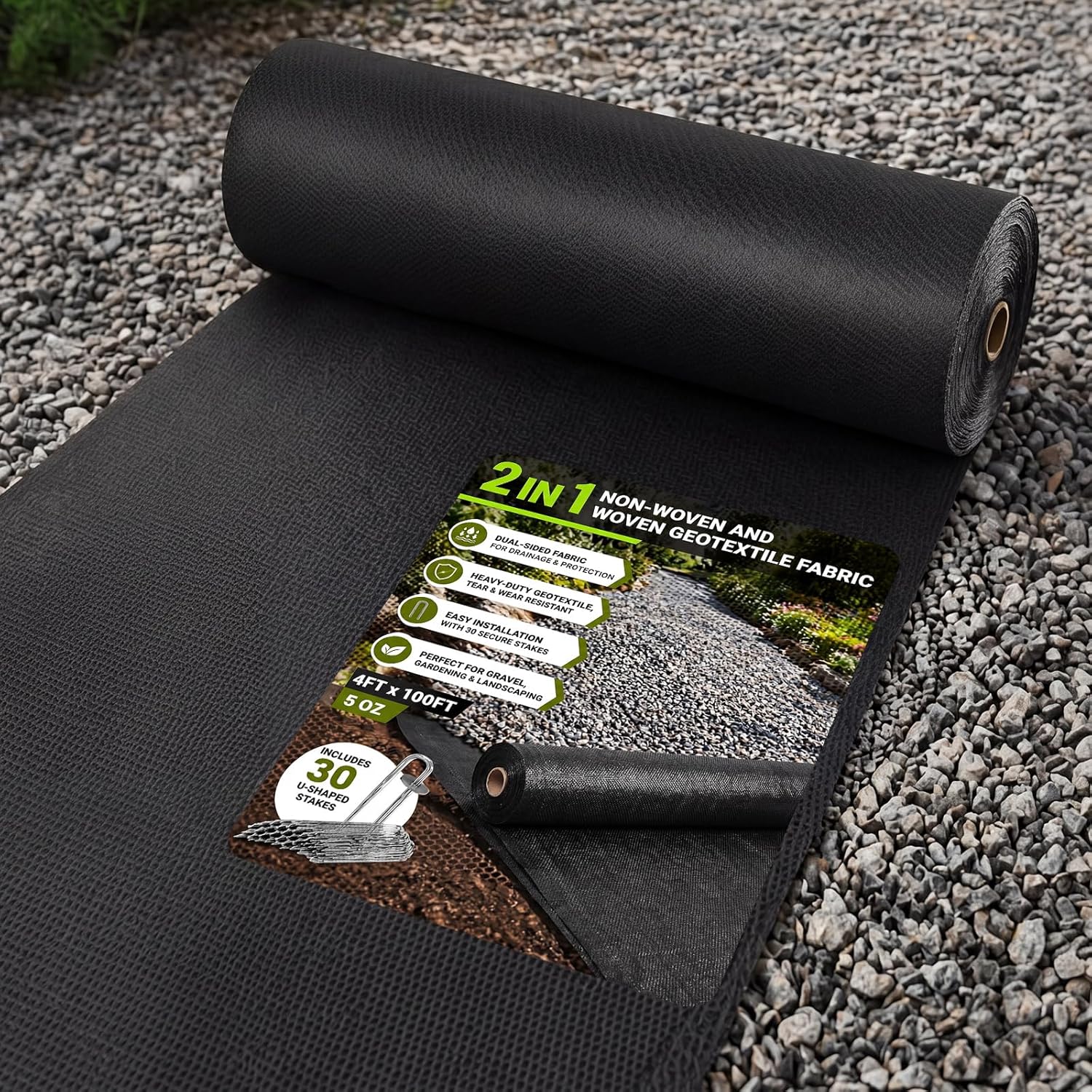
| Material | Non-woven and woven |
|---|---|
| Size | 4ft x 100ft |
| Weight | 5 oz |
| Package includes | 1 fabric roll, 30 stakes |
This Breling geotextile is a practical choice for laying under pea gravel and other landscape aggregates. The roll pairs a non-woven plush surface for drainage and filtration with a woven smooth side for puncture resistance and separation, so it both keeps fines out of the gravel and lets water pass through. Made from 5 oz heavy-duty material, the fabric is tear-resistant and meant to withstand the pressure of gravel driveways and high-traffic paths. Installation is straightforward: unroll, position, and secure with the included 30 U-shaped stakes to hold the fabric flat while you add gravel. In use the fabric reduces weed growth, limits soil migration into the stone, and helps the gravel stay stable longer. Expect good durability for typical residential projects, though the stakes are basic and you may want heavier anchors for very loose or sloped sites. The product is focused on function rather than finish, so it is best where long-term ground separation and drainage matter most rather than for decorative edging work.
Best for: Buyers who prioritize a durable, workmanlike solution to keep pea gravel separated from underlying soil and maintain reliable drainage for driveways and pathways.
Less Ideal for: Those wanting a decorative or edging-focused product or buyers who need engineered anchoring for steep commercial sites should consider alternative solutions.
- Dual-sided design with non-woven side for drainage and woven side for puncture resistance
- 5 oz heavy-duty geotextile construction for tear resistance under gravel
- Includes 30 U-shaped stakes for quick anchoring during installation
- Long roll size (4 ft x 100 ft) covers large runs without many seams
- Included stakes are lightweight and may not suffice on steep slopes or very loose soil
Verdict: Choose this dual-sided 5 oz geotextile when you want a durable, drainage-capable barrier that reliably stabilizes and protects pea gravel over long runs.
LAVEVE Heavy Duty Weed Barrier Landscape Fabric, 4 ft x 100 ft (two 4×50 ft rolls)

| Material | Polypropylene |
|---|---|
| Permeability | Breathable, allows water and air flow |
| UV resistance | Resistant to sun exposure |
| Package | Two rolls totaling 4 ft x 100 ft |
This LAVEVE landscape fabric is a heavy-duty woven polypropylene ground cover intended to suppress weeds while letting moisture and air reach the soil. It ships as two 4 ft x 50 ft rolls (total 4 ft x 100 ft) with printed guide lines that make cutting and alignment straightforward. In practice it is laid over prepared beds, cut for plantings, and secured with U-shaped pegs; the fabric’s permeability helps reduce erosion and allows irrigation to penetrate. The material is UV-resistant and built for typical garden uses such as flower beds, vegetable plots, gravel paths, and sidewalks. Because it is a woven polypropylene, it is sturdier than thin nonwoven mats and stands up to foot traffic when covered with mulch or gravel. Limitations to expect are that surface-seeded weeds or seeds blown onto mulch can still germinate on top, and long-term burial or heavy soil compaction can reduce effectiveness; occasional maintenance and proper installation around plants are required to keep beds weed-free.
Best for: Gardeners who want a durable, breathable ground cover to reduce routine weeding and tidy beds across medium-length runs of pathway or planting area, and who value a product with solid usage feedback.
Less Ideal for: People seeking a permanent, maintenance-free solution or those who prefer chemical weed control methods; also not the best choice for beds where frequent deep digging or planting changes are required.
- Woven polypropylene construction provides durable, tear-resistant coverage
- Permeable design allows water and air to reach soil, reducing erosion
- Printed guide lines make measuring and cutting easier during installation
- Suitable for multiple applications including beds, paths, and under gravel
- Comes as two rolls totaling 4 ft x 100 ft for extended coverage
- Does not prevent weeds that germinate in mulch or on top of the fabric
- Requires proper securing and occasional maintenance to stay effective
Verdict: A sturdy, breathable woven fabric that gives reliable, easy-to-install weed suppression for medium garden beds and paths backed by strong user approval.
Happybuy 13 ft x 60 ft Woven Geotextile Driveway Fabric (5 oz)

| Material | Polypropylene |
|---|---|
| Coverage | 780 sq ft (13 x 60 ft) |
| Tensile strength | 600 Pounds grab |
| Weight class | 5 oz woven |
This Happybuy woven geotextile is a heavy-duty landscape underlayment intended for stabilizing driveways and paving projects while limiting weed growth and allowing water to pass through. Installed under gravel, pavers, or base aggregate, the fabric separates subgrade from fill to reduce rutting and soil migration and is commonly used for driveways, paths, and French drains. Notable features include a 5 oz woven PP construction with a grab tensile strength of 600 pounds and a large 780 sq ft coverage that can be cut to fit irregular areas. The fabric’s high permeability helps drainage systems perform better and prevents washout without trapping moisture in the soil. Practical benefits are easier installation over uneven ground, reduced maintenance from fewer weeds, and improved longevity of paved surfaces. Limitations are that woven geotextile does not stop persistent weeds where light reaches between joints, it will require proper overlap and secure fastening to prevent shifting, and heavy compaction or sharp edges can eventually abrade the weave.
Best for: Owners planning paved or gravel driveways and paver installations who want a durable underlayment to stabilize base materials and improve drainage while cutting down on weed maintenance.
Less Ideal for: People who need a complete weed-proof barrier for tight jointed pavers or who prefer an adhesive or impermeable membrane for impermeable surfaces should consider other solutions.
- Heavy woven polypropylene construction (5 oz) offers durability for driveway and paving underlayment
- 600 lb grab tensile strength supports aggregate and vehicle loads without tearing easily
- High water permeability lets water drain through for use with French drains and permeable pavers
- Large single roll covers about 780 sq ft so fewer seams on medium projects
- Woven fabric does not completely block all light so persistent weeds can emerge at joints or seams
- Requires proper overlap and secure fastening to prevent movement during installation
Verdict: A robust, high-permeability woven geotextile that stabilizes base materials and improves drainage for pavers and gravel driveways.
Choosing the Right Landscape Fabric for Pea Gravel: Key Factors to Consider
Tensile and Puncture Strength
Fabric strength determines how well the material holds up under the abrasive action of pea gravel and repeated foot or occasional vehicle traffic. Higher tensile strength resists tearing when edges are secured or when stakes and staples are driven through the cloth.
Puncture resistance matters when sharp stones, tools, or buried objects press into the material. A fabric that shears or develops holes quickly will allow stones to migrate into the soil and create pockets where weeds can take hold, so prefer heavier constructions in high-traffic or edged installations.
Permeability and Drainage
Pea gravel installations rely on good vertical water movement; fabric must let water pass while preventing soil from washing up through the stone. A fabric rated for high permeability enables quick drainage after rain and reduces the chance of standing water on the surface.
If the fabric is too tight or has a nonwoven coating that impedes flow, water can collect above the fabric and push stones aside during heavy runoff. Match the fabric's flow rate to site conditions such as slope, rainfall intensity, and whether you have a subbase or compacted soil beneath the gravel.
Weed Suppression
One primary reason to use landscape fabric under pea gravel is to reduce weed emergence. Denser weaves are better at blocking light and preventing seeds in the soil from sprouting into the stone layer.
However, absolute blackout fabrics sometimes inhibit moisture transfer or break down inconsistently, so balance suppression with permeability. Think about existing weed pressure; renewed weed growth from decaying organic matter on the surface requires occasional maintenance regardless of fabric choice.
UV Resistance and Long-Term Durability
Landscape fabrics exposed to sunlight will degrade over time unless formulated with UV stabilizers or buried sufficiently. For areas where gravel is shallow or the fabric might be exposed at seams and edges, UV resistance extends service life and reduces the need for replacement.
Consider whether the project will leave fabric exposed during installation, whether edges will be fully covered by stone, and how long you expect the installation to last. Fabrics with documented UV resistance are a better match for long-term outdoor use.
Ease of Handling and Installation
Roll widths, weight per square foot, and how easily the fabric cuts and lays affect installation time and accuracy. Wider rolls reduce seams but are heavier to maneuver; lighter fabrics are easier to handle but may require more careful anchoring.
Installation features like pre-marked grid lines, compatibility with common stakes and staples, and clear overlap guidance can save time. Also consider how well the fabric conforms to contours when grading the subbase, and whether it can be temporarily folded or stretched to accommodate planting borders or edging materials.
Compatibility with Base and Edge Details
The success of pea gravel depends on a stable base and secure edging. Fabric should work with your chosen subbase-whether you plan to compact native soil, add a gravel base, or install a sand layer-without trapping fines or causing settlement.
Edge restraint interacts with fabric performance. If the fabric is pinched under edging or cut repeatedly to tuck under borders, that can create failure points. Pick a fabric thickness and fastening strategy that matches your edging approach and expected movement from freeze-thaw or foot traffic.
Preparing the Subbase for Pea Gravel
Successful pea gravel surfaces start with grading and preparing the subbase. Remove organic topsoil and contour the area so water flows away from structures. A compacted layer of crushed rock or a thin sand bed stabilizes the gravel and reduces migration into the soil.
Lay the fabric over the prepared base while the surface is firm. Overlap seams according to manufacturer guidance and anchor the fabric with staples or pins at regular intervals. A stable subbase reduces pressure on the fabric and minimizes future maintenance.
- Compact the subgrade to reduce settling and rutting
- Use a crushed-rock base where drainage or traffic is heavier
- Overlap seams by the recommended amount and stagger joints
Edge Restraints and Stone Containment
Edging keeps pea gravel contained and helps the fabric stay in place. Choose an edge that resists lateral movement-metal, plastic, timber, or concrete curbing are common options depending on aesthetics and load.
When installing edging, tuck the fabric under the restraint or anchor it so gravel cannot wash beneath the edge. Failure to secure edges often leads to stone loss and uneven borders.
- Bury fabric under edging to prevent undercutting
- Check that edging fasteners do not tear the fabric
Common Installation Mistakes to Avoid
Avoid using overly lightweight fabric in high-traffic zones; it will abrade and tear from stone movement. Likewise, do not rely on fabric alone to prevent weeds if you have heavy weed seed in the soil-combine it with a clean base and periodic surface maintenance.
Do not leave long exposed seams or unsecured edges where wind, water, or foot traffic can lift the fabric. Proper anchoring and covering with an adequate depth of pea gravel are essential to longevity.
- Do not skip compaction of the base
- Do not undercut edges or leave fabric exposed
- Do not expect fabric to be a one-time, permanent weed solution
Maintaining Pea Gravel Surfaces
Occasional raking and topping up will keep a pea gravel surface looking even and replenished. Remove debris and organic material that can accumulate on top of the stone, since this layer can seed weeds regardless of the fabric below.
If weeds do appear, pull them before they establish deep roots. For high-use paths, inspect edges and anchor points annually and repair any tears in the fabric promptly to keep the installation stable.
- Rake and level the surface yearly
- Remove leaves and organic debris regularly
- Inspect and re-anchor edges after harsh weather
When to Replace or Add Fabric
Replacing fabric is sometimes necessary after many years or if the layout changes. If you notice persistent washouts, wide patches of weeds, or fabric shredded in several places, plan to lift the gravel, assess the base, and install fresh fabric.
In renovations where you add new edging or increase compacted base depth, adding a new layer of appropriate fabric will restore performance. Addressing the underlying cause such as poor drainage or inadequate edging is as important as replacing the textile.
- Replace fabric when multiple tears or severe UV degradation are visible
- Lift gravel to evaluate base conditions before replacing fabric
How We Chose the Best Landscape Fabric for Pea Gravel
We selected fabrics that suit pea gravel by applying practical, garden-focused filters relevant to stone surfacing. Primary evaluation criteria included fabric tensile and puncture resistance to stand up to foot traffic and edging pressure; long-term UV and biodegradation resistance since exposure shortens service life; water permeability and drainage to prevent pooling and washout; and weave density or construction type because that affects weed suppression without blocking moisture movement. We also considered installation practicality such as roll widths, overlap requirements, and how easily the fabric can be cut and anchored during typical gravel projects. Excluded from consideration were fabrics intended only for planting beds where root growth needs to pass freely, temporary landscape covers under mulch, and any textiles that depend on heavy chemical coatings that break down quickly outdoors. The final list focuses on products whose construction and specs align with the needs of pea gravel walkways, patios, and decorative areas.
FAQ
How deep should pea gravel be over landscape fabric?
A typical depth for pea gravel over fabric is 1 to 2 inches for decorative beds and 2 to 3 inches for paths. Deeper layers improve stability and reduce fabric exposure, while shallower layers may not fully protect the fabric from sunlight and wear.
Can I install landscape fabric directly on soil without a base?
You can lay fabric on compacted soil for low-traffic decorative areas, but a compacted crushed-rock or sand base is recommended for paths and areas with drainage concerns. A proper base reduces settling and stone migration.
Will landscape fabric stop all weeds under pea gravel?
Fabric significantly reduces weeds by blocking light and limiting root penetration, but it does not stop all weeds. Organic debris on the surface can still allow seeds to sprout, so expect occasional maintenance and spot weeding.
Is a woven or nonwoven fabric better for pea gravel?
Woven fabrics typically offer higher tensile strength and better long-term puncture resistance, while some nonwoven fabrics provide excellent water flow. The best choice depends on traffic levels and drainage needs; choose a fabric that balances strength with permeability for your site.
How should seams be handled when covering large areas?
Overlap seams according to the fabric's instructions and angle joints away from prevailing runoff. Stagger seams to avoid a continuous weak line and secure overlaps with staples or pins to prevent lifting.
Final Verdict
Choose landscape fabric for pea gravel by prioritizing the attributes that address your site conditions. If foot traffic and edging pressure are high, favor heavier weaves with better tensile and puncture strength. For wet sites or poor drainage, select fabrics with high permeability to allow water movement while still keeping soil fines from migrating into the stone. Balance weed suppression, UV durability, and ease of installation to match maintenance expectations. With a properly prepared base and secured edges, the right fabric will make pea gravel surfaces last longer and perform more predictably.
