

Note: This article contains affiliate links. If you click on these links and make a purchase, I may earn a small commission at no extra cost to you. This helps support my research and content. Read my full affiliate disclosure here.
Choosing the right landscape fabric makes a big difference in how well beds, paths, and planting areas resist weeds and hold up under foot traffic. The wrong material can tear, let weeds through, or impede water and air movement to roots. This guide covers seven top shortlisted landscape fabric options suitable for common yard and garden uses. We evaluated each fabric for durability, weed-blocking performance, and water drainage so you can pick the right balance for planting beds, walkways, or under mulch. Read on for clear buying considerations and practical guidance before the product listings.
Top Picks at a Glance
| Best Overall The best all-around choice for most situations | DeWitt Pro-5 Heavy-Duty Woven Weed Barrier Fabric (5 oz) |  |
| Best Quality Built to a higher standard if you want something more solid | AMAGABELI 4 ft x 100 ft Heavy-Duty Polypropylene Weed Barrier Landscape Fabric |  |
| Best Value The sweet spot between price and what you get | FEED GARDEN Heavy Duty Landscape Fabric 4ft x 100ft (2 × 4×50 ft) with 30 U-Shaped Stakes |  |
| Best Budget The cheapest option that still gets the job done reliably | HANWRAPS 3.3 ft x 13 ft Heavy-Duty Weed Barrier Fabric (3.2 oz) |  |
| Highest Rated A top-rated pick with lots of positive feedback | Breling 6 ft x 100 ft Dual‑Sided Geotextile Fabric (5 oz) with 30 Stakes |  |
| Most Popular A crowd favorite that many people choose with confidence | ECOgardener Premium 5 oz Landscape Fabric, 3 ft x 100 ft |  |
| Best Seller A high-volume bestseller chosen again and again | LAVEVE Heavy Duty Weed Barrier Landscape Fabric, 4 ft x 100 ft (two 4×50 ft rolls) |  |
DeWitt Pro-5 Heavy-Duty Woven Weed Barrier Fabric (5 oz)

| Manufacturer | Dewitt |
|---|---|
| Item model number | P5 |
| Fabric weight | 5 oz |
| Intended use | Landscaping and commercial installations |
The DeWitt Pro-5 is a heavy-duty woven weed barrier intended for large landscaping and commercial garden use. In practice you roll it out under mulch, gravel, or along planting rows to suppress weeds while still letting water, air, and nutrients pass through to the soil. Its 5 oz woven construction resists tears and punctures during installation and in higher-traffic areas, and gold alignment stripes every 12 inches make it easy to lay straight rows and space plants accurately. The material is durable enough for pathways, raised beds, and long planting runs where a longer service life is important. Expect easier maintenance and fewer chemical controls when used correctly, but be prepared to cut planting holes for perennials or vegetables and secure the fabric with staples or pins to prevent shifting. The fabric does not remove the need for good edging or periodic weed removal where soil and debris collect on top of the mat, and it is heavier than lightweight options which can make handling on very large rolls more demanding.
Best for: Buyers who prioritize long‑term, professional performance for large beds, pathways, or commercial landscaping and want a durable fabric that reduces recurring weed work.
Less Ideal for: Casual gardeners with only small container or potted projects who prefer lightweight, easy‑to‑handle covers or temporary solutions.
- Commercial‑grade 5 oz woven construction resists tears and punctures during installation and use
- Permits air, water, and nutrients to reach soil to support plant health
- Gold alignment stripes every 12 inches simplify straight rows and plant spacing
- Durable enough for paths, raised beds, and high‑traffic landscape areas
- Heavier, bulkier rolls that can be harder to handle for solo installers
- Requires cutting and securing for planting which adds installation time
Verdict: Choose DeWitt Pro‑5 when you need a tough, long‑life woven barrier that keeps weeds down while allowing water and air to reach the soil.
AMAGABELI 4 ft x 100 ft Heavy-Duty Polypropylene Weed Barrier Landscape Fabric

| Material | Polypropylene |
|---|---|
| Size | 4ft x 100ft |
| Item model number | WG382 |
This AMAGABELI landscape fabric is a performance-oriented weed barrier intended for large beds, pathways, and under gravel or pavers. The 4 ft by 100 ft roll is made from high-density woven polypropylene that resists tearing and stands up to foot and occasional vehicle traffic. The fabric is permeable so water, air, and nutrients can pass through to the soil, reducing puddling and allowing planted areas to stay healthy while suppressing weed growth. Green guide lines printed on the cloth make plant alignment and cutting easier, and the material trims cleanly without fraying for custom installs. Because it is UV resistant and weatherproof it is suitable for long-term outdoor use, but like most woven fabrics it will eventually degrade under constant UV and heavy abrasion and may need replacement in high-traffic driveways. Installation requires staples or pins to secure edges and overlap, and it does not eliminate the need for proper soil prep and edging if you want a fully maintenance-free bed.
Best for: Gardeners and landscapers who prioritize long-lasting weed suppression across larger areas and want a durable, breathable fabric that stands up to regular use.
Less Ideal for: People seeking a permanent, no-maintenance solution for very high-traffic driveways or those who prefer chemical or non-fabric weed control methods.
- High-density woven polypropylene offers strong tear resistance for foot and light vehicle traffic
- Permeable design allows water, air, and nutrients to reach the soil to avoid puddling
- UV resistant and weatherproof for extended outdoor use
- Printed guide lines simplify cutting and plant placement
- Will eventually degrade with prolonged UV exposure and heavy abrasion
- Requires landscape staples or pins and correct overlap to prevent weed intrusion
Verdict: Choose this heavy-duty woven polypropylene fabric when you need a breathable, tear-resistant ground cover that reliably suppresses weeds over large planted or landscaped areas.
FEED GARDEN Heavy Duty Landscape Fabric 4ft x 100ft (2 × 4×50 ft) with 30 U-Shaped Stakes

| Material | Woven polypropylene |
|---|---|
| Quantity | 2 pieces (4ft x 50ft each) |
| Included stakes | 30 U-shaped stakes |
| Permeability | Breathable, allows water and air |
This FEED GARDEN landscape fabric is a straightforward, no-frills weed barrier for garden beds, paths, and around shrubs. It comes as two folded 4ft x 50ft pieces (sold as 4ft x 100ft total) with printed guide lines that make layout and cutting easy, plus 30 U-shaped stakes to anchor the material. The woven polypropylene construction gives respectable tensile strength and durability for long-term ground cover, and the fabric is breathable enough to let water and air through so plants and soil do not stay waterlogged. In practice it works well under mulch, gravel, or decorative rock to reduce weed growth and simplify maintenance. The main limitations are that heavy-duty perennial weeds with deep roots may still find gaps and that the supplied stakes are basic U-pins, so very windy or uneven sites may need additional or heavier anchors. It is easy to trim to fit irregular beds and the guide lines speed installation for a neat layout, making it a practical choice for routine landscape and vegetable-plot weed control.
Best for: Buyers who want a practical, easy-to-install weed barrier to reduce routine weeding and tidy beds quickly, especially those who value straightforward setup and measurable coverage.
Less Ideal for: Gardeners needing a permanent solution for aggressive, deep-rooted weeds or those who require heavy-duty anchoring in exposed, high-wind sites.
- Woven polypropylene construction offers good tensile strength and durability for long-term ground coverage
- Permeable design allows water and air to pass through, protecting soil health
- Printed guide lines make measuring and cutting quick and accurate
- Includes 30 U-shaped stakes for immediate securement during installation
- Supplied U-shaped stakes are lightweight and may be insufficient on very windy or uneven ground
- Woven barrier will not permanently stop deep-rooted perennial weeds without additional maintenance
Verdict: A practical, easy-to-lay woven landscape fabric with guide lines and stakes that makes routine weed control and neat bed layout fast and reliable.
HANWRAPS 3.3 ft x 13 ft Heavy-Duty Weed Barrier Fabric (3.2 oz)

| Material | Polypropylene |
|---|---|
| Fabric weight | 3.2 oz |
| Size | 3.3 ft x 13 ft |
| Manufacturer | HANWRAPS |
HANWRAPS weed barrier fabric is a budget-friendly woven polypropylene cloth sold in a 3.3 ft by 13 ft roll intended for garden beds, pathways, and light landscaping. It is a 3.2 oz heavy-duty fabric with a high-density weave that resists tearing and holds up to sun and cold exposure, yet remains permeable so water and air reach the soil. Typical use is to lay the fabric over prepared soil, cut to shape, secure with pins, and cover with mulch or gravel to suppress weeds while retaining soil moisture. The material is easy to cut for custom beds and can be butted or overlapped to cover larger areas. Practical benefits include simple installation, decent durability for seasonal projects, and versatility for small home gardens or underlayment tasks. Limitations are the single-roll size that may require several pieces for larger beds and that woven polypropylene will eventually degrade under prolonged UV exposure, so it is better for medium-term rather than permanent installations.
Best for: A gardener on a budget who needs an affordable, easy-to-install weed barrier for small to medium beds, pathways, or under mulch and gravel.
Less Ideal for: People planning permanent, heavy-traffic installations or covering large areas who prefer industrial-grade geotextiles designed for long-term civil projects.
- High-density woven polypropylene offers good tear resistance for routine garden use
- Permeable weave lets water and air reach roots while reducing weed growth
- Easy to cut and splice for custom bed shapes and modular coverage
- Single 3.3 ft x 13 ft roll is small for larger landscapes so multiple rolls may be needed
- Woven polypropylene will slowly break down with long-term UV exposure and heavy wear
Verdict: A cost-conscious, easy-to-cut woven fabric that reliably suppresses weeds and retains soil moisture for small to medium garden projects.
Breling 6 ft x 100 ft Dual‑Sided Geotextile Fabric (5 oz) with 30 Stakes
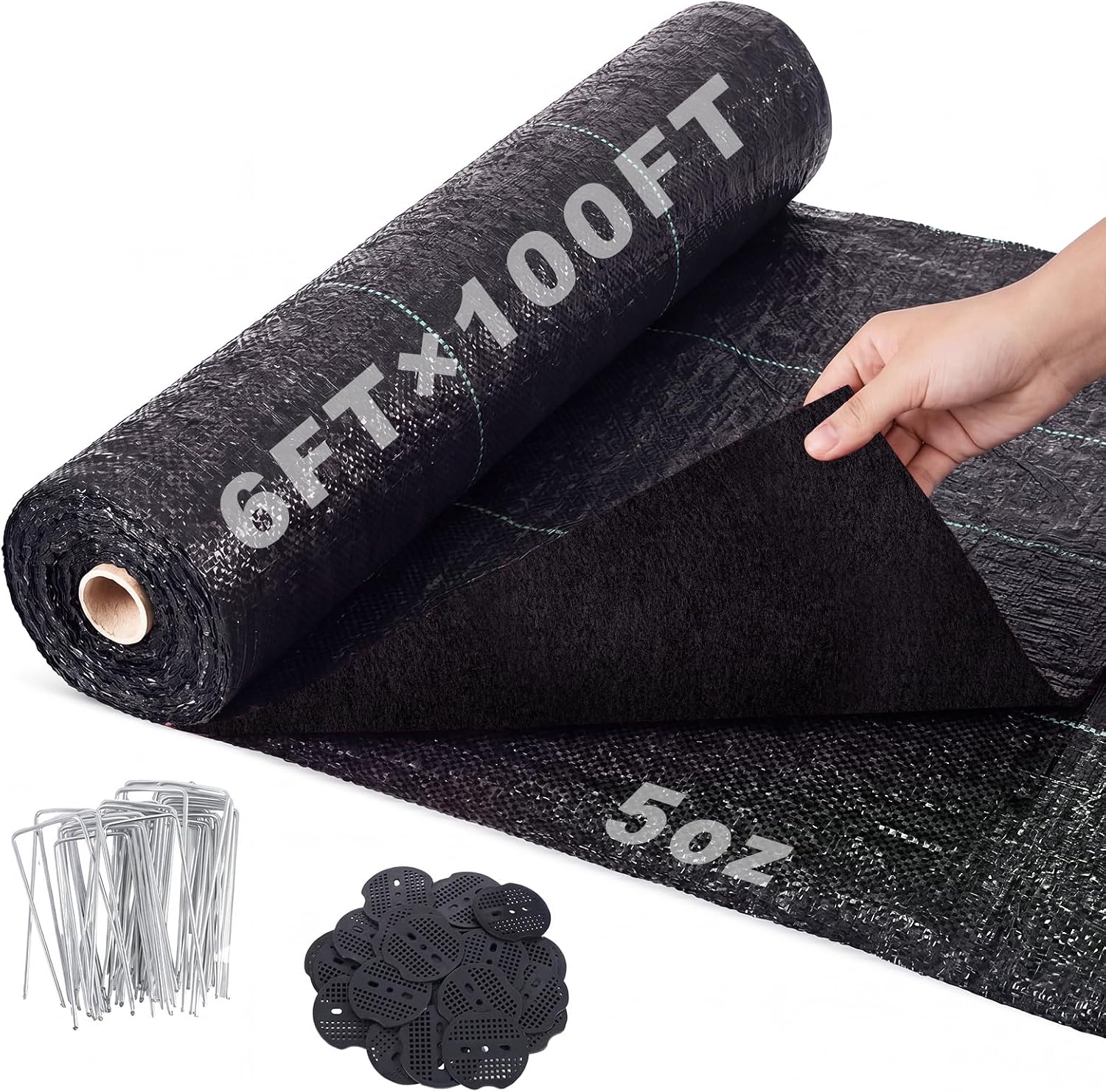
| Material | non‑woven and woven |
|---|---|
| Size | 6 ft x 100 ft |
| Weight | 5 oz |
| Package includes | 1 fabric roll, 30 stakes |
| Manufacturer | Breling |
This Breling geotextile fabric is built for durable landscape use where long-term reliability matters. The roll is dual-sided: a plush non-woven face for drainage, filtration and soil retention, and a smooth woven face for puncture resistance and separation under gravel or paving. At 5 oz construction it resists tearing and supports gravel driveways, pathways, and garden beds while helping reduce weeds and conserve soil moisture. Installation is straightforward — unroll, position and secure with the included 30 U-shaped stakes — and the material tolerates typical outdoor loads and water flow without rapid degradation. Practical benefits include improved gravel stability, reduced mixing of soil and aggregate, and better water management around plantings. Limitations are that the product is supplied as a single large roll so cutting and positioning across complex beds takes time, and stakes may be sparse for windy or highly uneven sites where extra fasteners are needed.
Best for: Gardeners and landscapers who prioritize a long‑lasting, reliable ground barrier for gravel driveways, paths, and beds and want a fabric that balances drainage with durability.
Less Ideal for: People who need many small pre‑cut pieces for ornamental beds or those who require a colored or decorative fabric finish for visible landscaping areas.
- Dual‑sided design provides drainage/filtration on one face and puncture resistance on the other
- 5 oz heavy‑duty geotextile material offers tear resistance for use under gravel and foot traffic
- Includes 30 U‑shaped stakes for immediate installation
- Helps prevent soil and gravel mixing and reduces weed growth while conserving moisture
- Stakes included may be insufficient for very uneven, rocky, or windy sites requiring additional anchoring
- Single large roll requires cutting and fitting for irregularly shaped beds
Verdict: Choose this heavy‑duty dual‑sided geotextile when you need a dependable, long‑lasting fabric that keeps gravel stable while managing drainage and weeds.
ECOgardener Premium 5 oz Landscape Fabric, 3 ft x 100 ft

| Fabric weight | 5 oz |
|---|---|
| Construction | Two-layer needle punch |
| Intended use | Weed barrier for gardens and landscaping |
| Manufacturer | ECOgardener |
This ECOgardener 5 oz landscape fabric is a professional-grade weed barrier built from a two-layer needle-punch construction that balances durability with permeability. It is typically laid under mulch, gravel, or between pavers and secured with landscape staples to reduce weed emergence and conserve soil moisture. The fabric is breathable, so water and air still reach roots while the felted side helps it grip soil and resist sliding. For practical use it speeds bed prep and reduces time spent hand-weeding, and it works across raised beds, flower borders, tree rings, and general yard base setups. Important limitations are that it will not eliminate all weeds forever—perennial roots and seeds at edges can still find their way through or around seams—and it makes planting perennials or modifying beds more work because you must cut and secure the fabric. The material is heavy-duty and suited to long-term installations, but expect to plan for future plant changes and to overlap and pin seams carefully for best results.
Best for: Gardeners who want a proven, heavy-duty weed barrier that reduces routine weeding and conserves moisture and who prefer products with solid user feedback and durable construction.
Less Ideal for: People who expect a maintenance-free solution or who frequently redesign beds and want easy, frequent access to soil without cutting fabric.
- Two-layer needle-punch construction for greater durability in long-term installations
- Permeable design allows water and air to reach plant roots while reducing weed growth
- Described felted side helps the fabric grip soil and minimizes shifting
- Suitable for a wide range of uses including raised beds, flower borders, tree bases, and under mulch
- Does not permanently prevent all weeds; aggressive perennials and edge growth can still emerge
- Requires cutting and securing for planting or future bed changes, adding labor to modifications
Verdict: Choose this heavy-duty, 5 oz two-layer fabric when you want a durable, breathable weed barrier that reduces weeding and holds up in long-term garden installations.
LAVEVE Heavy Duty Weed Barrier Landscape Fabric, 4 ft x 100 ft (two 4×50 ft rolls)

| Material | Polypropylene |
|---|---|
| Permeability | Breathable, allows water and air flow |
| UV resistance | Resistant to sun exposure |
| Package | Two rolls totaling 4 ft x 100 ft |
This LAVEVE landscape fabric is a heavy-duty woven polypropylene ground cover intended to suppress weeds while letting moisture and air reach the soil. It ships as two 4 ft x 50 ft rolls (total 4 ft x 100 ft) with printed guide lines that make cutting and alignment straightforward. In practice it is laid over prepared beds, cut for plantings, and secured with U-shaped pegs; the fabric’s permeability helps reduce erosion and allows irrigation to penetrate. The material is UV-resistant and built for typical garden uses such as flower beds, vegetable plots, gravel paths, and sidewalks. Because it is a woven polypropylene, it is sturdier than thin nonwoven mats and stands up to foot traffic when covered with mulch or gravel. Limitations to expect are that surface-seeded weeds or seeds blown onto mulch can still germinate on top, and long-term burial or heavy soil compaction can reduce effectiveness; occasional maintenance and proper installation around plants are required to keep beds weed-free.
Best for: Gardeners who want a durable, breathable ground cover to reduce routine weeding and tidy beds across medium-length runs of pathway or planting area, and who value a product with solid usage feedback.
Less Ideal for: People seeking a permanent, maintenance-free solution or those who prefer chemical weed control methods; also not the best choice for beds where frequent deep digging or planting changes are required.
- Woven polypropylene construction provides durable, tear-resistant coverage
- Permeable design allows water and air to reach soil, reducing erosion
- Printed guide lines make measuring and cutting easier during installation
- Suitable for multiple applications including beds, paths, and under gravel
- Comes as two rolls totaling 4 ft x 100 ft for extended coverage
- Does not prevent weeds that germinate in mulch or on top of the fabric
- Requires proper securing and occasional maintenance to stay effective
Verdict: A sturdy, breathable woven fabric that gives reliable, easy-to-install weed suppression for medium garden beds and paths backed by strong user approval.
Choosing the Right Landscape Landscape Fabric: Key Factors to Consider
Material and Weave
The fabric's base material and how tightly it is woven determine both durability and how well weeds are blocked. Heavier polypropylene or polyester weaves resist tearing when stepped on or when edging is installed, while very loose weaves can allow weed seedlings to push through.
Weave type also affects water and air flow. Nonwoven spunbond fabrics shed water differently than woven polypropylene, changing how quickly surface water drains and how mulch sits on top. Consider whether the fabric lists a weight or weave specification so you can compare strength and drainage performance.
Water Permeability and Drainage
Good landscape fabric must let water and air pass through to sustain soil biology and plant roots. Fabrics with poor permeability can trap water on the surface, create runoff, or cause root-zone drying by preventing capillary movement.
Look for stated flow rates, porosity, or references to 'breathable' or 'permeable' construction. For beds with heavy clay or poor drainage, choose a fabric with higher permeability to avoid pooling. For gravel paths, moderate permeability is acceptable, but very low permeability will shift water to edges and cause erosion.
UV Resistance and Expected Lifespan
Sunlight breaks down synthetic fabrics over time unless they include UV stabilizers. Fabrics intended for long-term planting beds should specify UV resistance or an expected lifespan in years. Without UV protection, fabrics may become brittle and tear after just a season or two in full sun.
If the fabric will be exposed at the surface under gravel or where mulch is thin, choose higher-rated UV protection. In shaded beds or beneath thick mulch, lower UV resistance can be acceptable because the covering reduces direct sunlight exposure.
Compatibility with Mulch and Soil Life
Landscape fabric affects how mulch interacts with the soil. Coarser mulches and gravel sit differently on fabric than fine shredded bark. Some fabrics trap organic particles on the surface, slowing decomposition and reducing nutrient exchange into the soil.
If you want active soil life and easier incorporation of compost over time, choose a more permeable fabric or plan to remove and replace fabric when refreshing beds. For purely decorative gravel beds where soil biology is less important, a denser fabric may be preferable for long-term weed control.
Installation and Fastening
How easily the fabric cuts, overlaps, and accepts staples or pins matters for achieving a weed-tight installation. Stiff, heavy fabrics can be harder to shape around plants and edges, while flimsy materials may bunch or tear during installation.
Consider whether the fabric tolerates common fasteners and how you will handle edges, seams, and planting holes. Some fabrics include installation guides or recommend spacing for staples; those details help predict how long the installed fabric will stay secure under lawnmower traffic or foot traffic.
Maintenance and Long-Term Upkeep
Think about how you will maintain beds over the years. Some fabrics are intended to be left in place for a decade, while others are better for short-term suppression during new plant establishment. Long-term fabrics can complicate planting larger perennials or adding new plants because roots must penetrate or fabric must be cut away.
Also consider how easy it is to remove debris and how the fabric interacts with weed seeds that land on top. Fabrics that hold organic matter on the surface will need periodic raking or replacement to prevent weed buildup.
Best Uses by Garden Location
Different areas of the yard demand different fabric behavior. Under decorative gravel or decomposed granite, a denser, higher-strength fabric reduces stone migration and weed breakthrough. In perennial planting beds you want higher permeability to support soil organisms and avoid water pooling. For walkways choose a durable fabric that tolerates light foot traffic and holds infill in place.
- Gravel and hardscape: prioritize tear resistance and stone stability.
- Perennial beds: prioritize permeability and easier plant integration.
- Under patios and pavers: choose high tensile strength and consistent drainage.
Preparing the Area Before Laying Fabric
Clear the site of existing weeds, roots, and large debris. Lightly grade the soil so water moves as intended and remove any sharp rocks that could perforate the fabric. If perennial roots are dense, consider solarizing or removing aggressive weeds before installation so the fabric is not overwhelmed by established roots.
- Rake the surface smooth and level.
- Remove perennial root crowns that can push through fabric.
- Moisten very dry soil so landscape fabric conforms better to contours.
Cutting, Overlapping, and Securing Fabric
Plan seams so they overlap by the manufacturer-recommended distance to prevent weed intrusion. Use proper landscape staples or pins placed at recommended intervals, and secure edges with edging material or mulch heavy enough to keep fabric flat. When cutting holes for plants, make clean plus-shaped or cross cuts and fold the fabric back neatly to prevent gaps where weeds can grow.
- Overlap seams according to package instructions.
- Place staples at regular intervals along edges and seams.
- Use edging or mulch to conceal and stabilize exposed fabric.
When Not to Use Landscape Fabric
Avoid fabric in beds where you plan frequent major replanting or where deep-rooted plants will expand rapidly. In vegetable garden rows, fabric can interfere with soil warming and ease of cultivation. Also skip fabric in heavily shaded, moist areas where it may hold surface moisture and accelerate fabric decay.
- Annual vegetable plots and beds with frequent crop rotation.
- Shade-dominated locations with persistent moisture.
- Areas where you plan to add large shrubs or redesign plantings often.
Replacing or Removing Old Fabric
Inspect fabric periodically for tears, root intrusion, and areas where it has migrated. When replacing, remove any attached mulch and cut back roots that have grown through. If multiple layers of fabric have been applied over time, remove old layers to restore soil contact and permeability before installing new material.
- Schedule inspections every 2 to 3 years in high-traffic areas.
- Remove debris before lifting sections to avoid tearing.
- Replace fabric that is brittle or allows persistent weed growth.
How We Chose the Best Landscape Landscape Fabric
We focused on attributes that matter in real garden situations: long-term tensile strength to resist tearing from foot traffic and garden tools; weave density and root-blocking ability to reduce weed emergence; water permeability to allow irrigation and rainfall to reach soil; and UV resistance to prevent rapid breakdown in sun-exposed beds. We also checked installation friendliness, such as how easily the fabric can be cut, overlapped, and secured with staples or pins, and compatibility with common mulches and decorative gravels. Products were excluded if they lacked clear material specifications, did not state permeability or UV resistance, or were intended solely for temporary construction uses rather than ongoing garden duty. We prioritized materials and weaves designed for long-term landscape use and that provide a balance between weed suppression and soil health.
FAQ
Will landscape fabric stop all weeds permanently?
No. Fabric reduces weeds by blocking light to the soil surface, but persistent perennial roots can find seams or grow through weaker weaves. Surface weeds that germinate in mulch on top of the fabric will still need removal.
How long does landscape fabric typically last?
Lifespan depends on material, UV protection, and exposure. Fabrics with UV stabilizers used under mulch or stone can last many years, while non-UV-treated materials exposed to sun may degrade in a few seasons.
Can I use landscape fabric under mulch and plants at the same time?
Yes. Many gardeners place fabric under mulch to reduce weeds while keeping soil accessible to water. Choose a permeable fabric so water and air reach roots, and be prepared to replace or lift fabric if you need to add large plants later.
Does landscape fabric affect soil health or drainage?
Some fabrics reduce the exchange of organic matter when they trap mulch on the surface, but breathable fabrics allow water and air movement. For healthy soil life, prioritize permeability and occasional incorporation of compost.
How should I secure fabric on slopes or high-traffic paths?
Use longer, corrosion-resistant staples or pins placed at recommended intervals and combine with mechanical edging or heavier surface materials like gravel. On slopes, increase overlap and fastening frequency to prevent slippage.
Final Verdict
Choose landscape fabric based on how you use the space. Prioritize tensile strength and UV resistance for high-traffic or exposed gravel areas, and favor higher permeability for planted beds where soil life and drainage matter. Consider ease of installation and long-term maintenance when deciding whether fabric is right for a particular bed. Balance weed suppression against future planting plans. If you expect frequent redesigns or regular cultivation, use removable or more permeable options. For permanent decorative surfaces, favor denser, longer-lasting fabrics and secure installation to minimize long-term upkeep.
