

Note: This article contains affiliate links. If you click on these links and make a purchase, I may earn a small commission at no extra cost to you. This helps support my research and content. Read my full affiliate disclosure here.
If you want to relieve compacted soil and encourage deeper root growth, a gas-powered aerator is the most practical choice for many home lawns. These machines give you consistent torque and the ability to finish larger jobs without the battery range or cord limits of electric models. The right gas lawn aerator cuts through dense turf and clay, pulls clean cores, and stands up to repeated seasons of use. This guide covers our shortlisted top picks and explains the features that matter most, including engine power, tine configuration, durability, and ease of handling. Read on to see which aerator traits match your yard and maintenance rhythm.
Top Picks at a Glance
| Best Overall The best all-around choice for most situations | NOXJUQU 22-inch 2-in-1 Gas Dethatcher Scarifier with 212cc Engine and 45L Bag |  |
| Best Quality Built to a higher standard if you want something more solid | PROGREEN 2-in-1 Gas Scarifier and Aerator, 16 in, 212cc | |
| Best Value The sweet spot between price and what you get | NOXJUQU 2-in-1 Dethatcher Scarifier Aerator, 212cc Gas | |
| Best Budget The cheapest option that still gets the job done reliably | AKHLSASK 2-in-1 16‑Inch Gas Lawn Dethatcher & Scarifier |  |
| Highest Rated A top-rated pick with lots of positive feedback | FAFAIR 7HP 212cc Self-Propelled Gas Lawn Aerator with 24 Replaceable Steel Coring Tines |  |
| Most Popular A crowd favorite that many people choose with confidence | ALYIAMXL 2-in-1 Gas Lawn Dethatcher and Scarifier, 16-inch |  |
| Best Seller A high-volume bestseller chosen again and again | Homonova 2-in-1 Gas Lawn Dethatcher and Scarifier, 16-inch |  |
NOXJUQU 22-inch 2-in-1 Gas Dethatcher Scarifier with 212cc Engine and 45L Bag

| Power Source | Gas Powered |
|---|---|
| Number of Positions | 5 |
| Cutting width | 22 inches |
| Material Type | Alloy Steel |
| Item Highlight | 2-in-1|212cc|45L Bag |
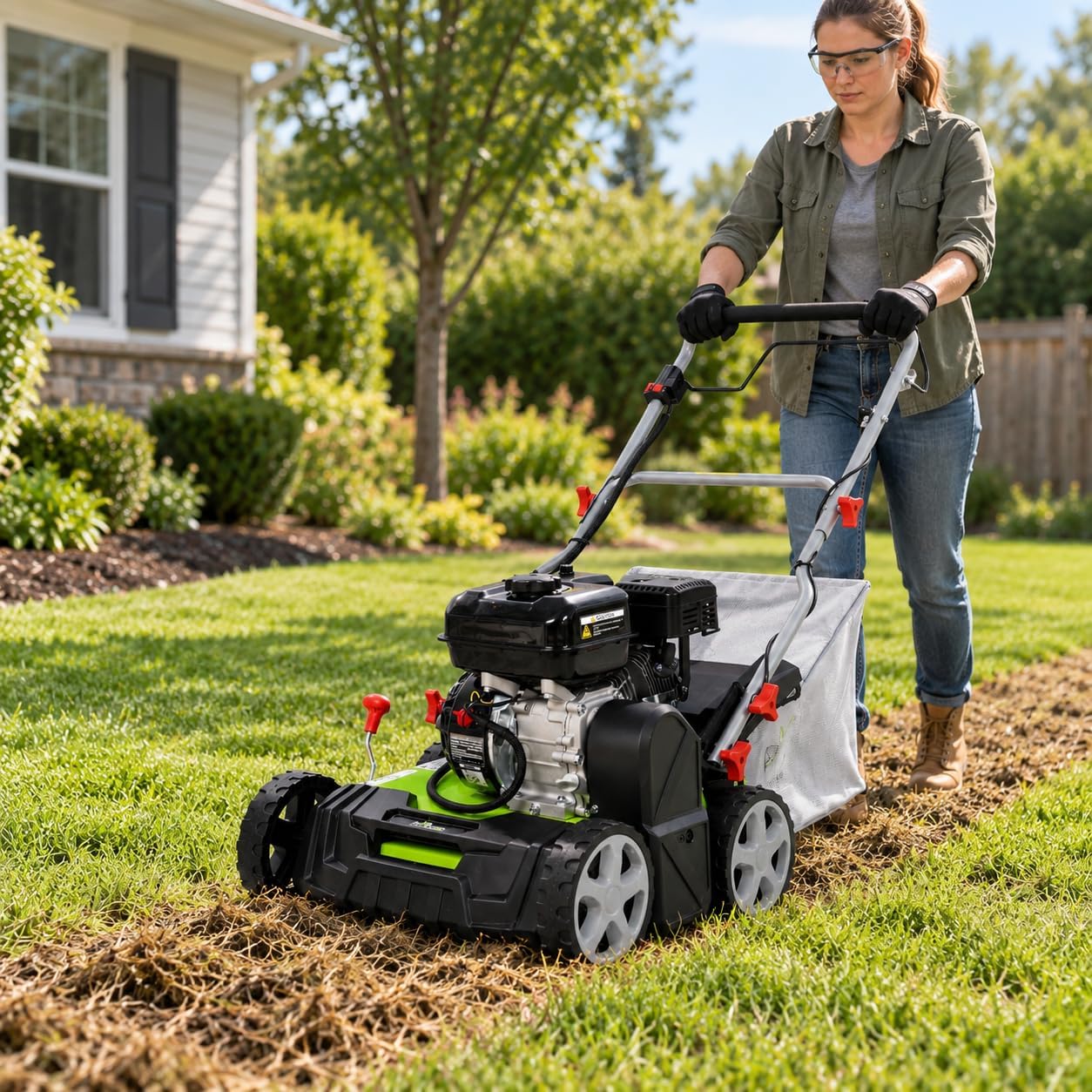
This NOXJUQU 2-in-1 dethatcher and scarifier combines a 212cc four-stroke gas engine with interchangeable cassettes so you can switch between dethatching and scarifying without tools. It is typically used by homeowners to remove moss and thatch, and to break up compacted soil before overseeding or fertilizing. The 22-inch cutting width and 45L collection bag reduce passes and trips to empty debris, while the five-step central height adjustment (from -0.6 to +0.6 inch) lets you dial the blade depth for seasonal needs. The alloy steel construction and manual push operation give a sturdy, straightforward machine for medium-sized lawns. Expect reliable power for tougher turf that electric machines struggle with, but also the normal upkeep of a small gas engine and the need to handle and store an 85-pound unit. Assembly and maneuvering on tight beds will take a little effort, yet for users who want a gas-driven tool that both scars and dethatches in one machine this model is a practical, capable choice.
Best for: Homeowners with medium-size lawns who want a gas-powered machine to tackle persistent thatch, moss, and compacted soil and prefer a single tool that both dethatches and scarifies.
Less Ideal for: Small-plot gardeners who need a lightweight or electric option or users who prefer a zero-maintenance, battery-powered tool.
- Powerful 212cc four-stroke gas engine suitable for tough thatch and compacted turf
- Interchangeable 2-in-1 cassettes let you switch between scarifying and aerating without tools
- Five-step central depth adjustment for seasonal control of blade penetration
- Large 45L collection bag reduces frequency of stops to empty debris
- 22-inch cutting width covers ground efficiently for medium-sized lawns
- Manual push operation and 85-pound weight can make maneuvering and storage more demanding
- Requires routine gas engine maintenance and safe fuel handling
Verdict: Choose this unit if you want a gas-powered two-in-one dethatcher and scarifier that delivers the power and collection capacity to clean and prep medium lawns efficiently.
PROGREEN 2-in-1 Gas Scarifier and Aerator, 16 in, 212cc
| Engine | 212cc 4-stroke |
|---|---|
| Function | Scarifier and aerator (interchangeable cassettes) |
| Height adjustment | 5-step central adjustment |
| Collection capacity | 13.2 gallon (45L) bag |
| Power output | 4.5KW |
This machine combines scarifying and aerating in one unit using interchangeable cassettes so you can remove moss and thatch or punch aeration holes without tools. The 212cc 4-stroke gas engine supplies enough torque for sustained work across medium to large lawns, while the central 5-step height adjustment lets you fine-tune depth for seasonal maintenance. A large 13.2 gallon collection bag reduces trips to empty debris when scarifying, and the steel construction suggests a solid, serviceable build for regular use. Expect straightforward switching between functions and effective thatch removal on compacted turf, but be prepared for typical gas-equipment upkeep such as fuel, oil changes, and periodic tune-ups. The unit is relatively heavy and wider than walk-behind mowers, so maneuvering in very tight or highly contoured yards will feel more cumbersome than on lighter tools. For focused performance on dethatching and aeration, this model delivers practical power and collection capacity in one package.
Best for: Buyers who prioritize performance and want a single gas-powered machine to handle both dethatching and aeration on medium to large lawns with durable construction and minimal tool changes.
Less Ideal for: Owners of small, intricately landscaped yards or those who prefer lightweight electric or manual tools should consider smaller or cordless alternatives.
- Two-in-one design lets you scarify or aerate with a simple cassette swap
- Powerful 212cc 4-stroke engine suited to continuous work on medium to large lawns
- Five-step central height adjustment for controlled depth across seasons
- Large 13.2 gallon (45L) collection bag reduces interruptions for emptying
- Steel construction for durability under regular outdoor use
- Relatively heavy and wide, which limits maneuverability in tight or highly contoured yards
- Requires regular gas-engine maintenance and storage considerations
Verdict: If you need a single, performance-oriented gas machine to reliably dethatch and aerate medium to large lawns, this 2-in-1 unit delivers the power and capacity to get the job done.
NOXJUQU 2-in-1 Dethatcher Scarifier Aerator, 212cc Gas
| Power Source | Gas Powered |
|---|---|
| Cutting width | 22 inches |
| Number of Positions | 5 |
| Material Type | Alloy Steel |
This NOXJUQU 2-in-1 dethatcher scarifier combines dethatching and aerating in a single walk-behind machine aimed at homeowner lawns. It uses a 212cc 4-stroke gas engine to drive interchangeable cassettes so you can tool-free switch between scarifying to remove moss and thatch and aerating to relieve compacted soil. A central lever offers five height settings around the turf surface and a 45L collection bag catches debris as you work, reducing stops to empty. The alloy-steel build and 22-inch working width let you cover medium to larger yards efficiently while the manual-push operation keeps controls simple. Important limitations are the machine weight and gas engine upkeep which require storage space, fuel handling, and routine maintenance; it is not a zero-emissions option and may be louder than electric alternatives. For seasonal dethatching and occasional aeration this unit consolidates two tasks into one solidly powered tool that speeds yard maintenance compared with renting separate equipment.
Best for: Homeowners who want a single, gas-powered machine to handle both dethatching and aerating across medium to larger lawns and value time saved by combining tasks.
Less Ideal for: Urban gardeners with small lawns, those who prefer electric or battery-powered equipment for quieter, lower-maintenance operation, or users who cannot store a heavier gas machine.
- Interchangeable cassettes allow tool-free switching between dethatching and aerating
- 212cc 4-stroke gas engine provides steady power for consistent performance
- 45L collection bag reduces interruptions by holding grass and moss debris
- Five-step central height adjustment tailors working depth for different seasons
- Heavy unit that requires storage space and effort to maneuver
- Gas engine requires regular maintenance and fuel handling
- Manual push operation may be tiring on large or uneven lawns
Verdict: If you want one robust gas tool that both dethatches and aerates to speed seasonal lawn care, this 2-in-1 machine delivers practical, steady power and fewer trips to empty debris.
AKHLSASK 2-in-1 16‑Inch Gas Lawn Dethatcher & Scarifier

| Power Source | Gas Powered |
|---|---|
| Engine | 212cc 4-Stroke |
| Working Width | 16 inches |
| Collection Capacity | 13.2 Gal |
This 2-in-1 gas dethatcher and scarifier is built to remove thatch and aerate compacted lawns without manual raking. It runs on a 212cc 4-stroke EPA-certified engine and covers a 16-inch swath per pass; the interchangeable steel cassette system switches between scarifier tines and aerator cores in seconds with a tool-free lever. Height is adjusted centrally across five positions so you can set shallow passes in summer or deeper scarifying in spring and fall. A large 13.2-gallon collection bag reduces empty trips when pulling up moss and debris, and the alloy steel frame looks sturdy for regular yard use. Expect typical gas-equipment chores such as fueling, periodic oil changes, and more noise than electric alternatives. The unit is manual to operate and relatively heavy, so initial setup and storage require space and some strength. For a buyer focused on getting mechanical dethatching and true aeration in one machine, this provides practical power and convenience at the cost of the usual maintenance and handling of gas tools.
Best for: Buyers who want a single, gas-powered machine that both dethatches and aerates medium to large lawns and who prioritize getting mechanical results over a lightweight or electric option.
Less Ideal for: People with very small yards, those who prefer low-maintenance electric tools, or buyers who cannot accommodate the storage and upkeep of gas equipment.
- Interchangeable scarifier and aerator cassettes for quick mode changes without tools
- Powerful 212cc 4-stroke EPA-certified engine suitable for larger or thick lawns
- Five-position central height adjustment for seasonal tine depth control
- Large 13.2-gallon collection bag reduces interruptions to empty debris
- Gas engine requires regular fueling and maintenance and produces more noise than electric models
- Relatively heavy and manual operation can be awkward for some users to move and store
Verdict: This unit gives budget-minded owners a single gas machine that both dethatches and aerates lawns with robust engine power and tool-free cassette swaps.
FAFAIR 7HP 212cc Self-Propelled Gas Lawn Aerator with 24 Replaceable Steel Coring Tines

| Engine displacement | 212CC |
|---|---|
| Working width | 19 inches |
| Number of tines | 24 replaceable steel tines |
| Maximum coring depth | 2.75 inches |
| Power source | gas_powered |
This FAFAIR aerator is a gas-powered, self-propelled core aerator built for heavy-duty lawn work. Its 212cc engine drives a 19-inch coring drum fitted with 24 replaceable steel tines to punch 0.87-inch diameter cores up to about 2.75 inches deep, which helps water, air and fertilizer reach grassroots on compacted turf. The unit is steered rather than pushed, so one person can cover large lawns quickly—manufacturer claims up to 21,500 sq ft per hour and roughly 10,000 sq ft in about 30 minutes. Practical features include a single-lever tine lift for easy transport and cornering, adjustable weights to tune coring depth, foldable tool-free handle for storage, puncture‑proof solid rubber wheels, and a reinforced chain-drive frame with segmented tine holders for easier repairs. Expect dependable performance for regular seasonal aeration, but it requires routine engine maintenance and fuel storage associated with gas equipment and is heavier and bulkier than manual or electric options. Replacement tines and occasional service are normal for sustained, professional-style use.
Best for: A buyer who wants a reliable, professional-style gas aerator to handle regular seasonal aeration on medium to large lawns and values uptime and serviceability.
Less Ideal for: Homeowners with very small yards, those who prefer quiet electric tools, or users unwilling to perform routine engine maintenance should consider simpler alternatives.
- Self-propelled design reduces physical effort and speeds coverage
- 24 replaceable steel tines that create deep 0.87" cores for better soil penetration
- Single-lever tine disengage and adjustable weight make switching to transport and tuning depth quick
- Solid puncture‑proof wheels and reinforced frame for frequent, heavy-duty use
- Requires regular gas engine maintenance and proper fuel handling
- Bulk and weight make it less convenient for storage or for very small yards
Verdict: Choose this unit if you need a robust, self-propelled gas aerator that delivers fast, deep cores and is built for reliable, frequent use on large lawns.
ALYIAMXL 2-in-1 Gas Lawn Dethatcher and Scarifier, 16-inch
| Power Source | Hand_powered |
|---|---|
| Number of Positions | 5 |
| Cutting width | 16 inches |
| Material Type | Alloy Steel |
This walk-behind 2-in-1 dethatcher and scarifier uses a 212cc 4-stroke gasoline engine to power a 16-inch working path and interchangeable cassettes that switch between dethatching/scarifying and aerating. It is typically used for seasonal lawn maintenance—removing moss and accumulated thatch, loosening compacted surface soil, and preparing turf before overseeding. The central depth lever gives five positions from -0.6 to +0.6 inches so you can dial in light raking or deeper scarification, and the 13.2-gallon collection bag captures debris as you work to cut down on cleanup. Practical benefits include strong mobile power for medium to larger lawns, the convenience of two functions in one machine, and a reasonable working width that balances coverage and maneuverability. Important limitations are the need to handle gasoline and engine oil, routine engine maintenance, and the physical size and weight that make it less convenient for very small yards or users who prefer cordless or electric tools.
Best for: A homeowner who needs a robust, mobile machine to tackle established lawns with thatch or moss and values a single unit that can both dethatch and aerate for seasonal lawn care.
Less Ideal for: Gardeners with very small yards, limited storage space, or those who prefer quieter, lower-maintenance electric or battery-powered tools should consider smaller or cordless options instead.
- Two-in-one functionality with interchangeable cassettes for dethatching and aerating
- Gas engine provides mobile, cord-free power for medium to larger lawns
- Five-position central depth adjustment for tailoring passes to turf condition
- Integrated 13.2-gallon collection bag reduces follow-up raking
- Requires gasoline and engine oil and basic engine maintenance
- Heavier and bulkier than electric or cordless alternatives
Verdict: Choose this gas-powered 2-in-1 scarifier if you want a mobile, powerful machine that combines dethatching and aerating to speed seasonal lawn renovation.
Homonova 2-in-1 Gas Lawn Dethatcher and Scarifier, 16-inch

| Power | 7HP (212cc 4-stroke) |
|---|---|
| Fuel Tank | 1 Gallon |
| Working width | 16in |
| Collection bag | 13.2 Gallon |
| Depth positions | 5 (-0.6 to +0.6in) |
This Homonova 2-in-1 gas lawn machine combines a 212cc 4-stroke engine with interchangeable dethatching and aerating cassettes to tackle moss, thatch, and compacted surface soil on established lawns. It is typically used in spring and fall to remove built-up debris or to scarify turf, with a central lever offering five depth positions from -0.6 to +0.6 inches so you can choose light surface raking or deeper thatch removal. The 16-inch working width balances coverage and maneuverability for medium to larger yards, while the 13.2-gallon collection bag collects loosened material as you work to reduce follow-up cleanup. Practical features include a 1-gallon fuel tank for extended runs and simple cassette swaps without tools. Limitations to consider are the unit weight and gas engine maintenance needs typical of powered equipment, plus the 16-inch width may require more passes on very large properties compared with wider commercial units. Expect straightforward, effective seasonal dethatching and aerating when you follow the engine fuel and oil requirements.
Best for: A cautious homeowner who wants a robust, gas-powered solution for periodic dethatching and light aeration on medium to larger lawns and prefers proven mechanical controls over DIY manual options.
Less Ideal for: Those with very small urban yards who would prefer a lightweight electric or manual tool, or landscape pros who need wider commercial-capacity machines for high-volume jobs.
- Two-in-one functionality with interchangeable dethatcher and aerator cassettes for seasonal versatility
- Five-position central depth control for precise adjustment between light raking and deeper scarifying
- 13.2-gallon collection bag reduces post-pass cleanup by capturing loosened thatch and moss
- 212cc 4-stroke gas engine provides cordless power and a 1-gallon tank for longer operation between refills
- 16-inch working width offers a balance of coverage and maneuverability for residential lawns
- Gas engine requires regular fuel, oil, and maintenance unlike electric alternatives
- Relatively heavy and narrower than commercial units, so it can be tiring to use on very large properties
Verdict: Choose this machine if you want a dependable gas-powered dethatcher that easily switches between scarifying and aerating while collecting debris to simplify seasonal lawn maintenance.
Choosing the Right Gas Lawn Aerator: Key Factors to Consider
Engine Power and Torque
A gas lawn aerator needs sufficient engine displacement and torque to drive tines into compacted or clay-rich soils. Higher torque prevents the engine from bogging when the tines hit dense layers and helps maintain consistent hole depth across the lawn.
Power also affects how many tines you can run at once and how quickly you can pass over an area. For homeowners with large yards or very compacted turf, prioritize models with stronger, low-end torque rather than peak horsepower alone.
Tine Configuration and Core Extraction
Tine type, spacing, number, and mounting design dictate how effectively the machine removes plugs and how much surface disruption it leaves. Hollow coring tines remove soil plugs that relieve compaction, while solid spike setups can fracture but not remove cores.
Consider tine spacing and width for your turf density. Wider spacing covers ground faster but may miss tight compaction zones. Also check how easily tines are swapped or serviced, since damaged or worn tines reduce performance.
Frame and Build Durability
A robust frame and quality materials matter because aeration is a high-stress task that sends vibration through the machine. Steel framing, reinforced tine mounts, and corrosion-resistant finishes extend service life in outdoor storage conditions.
Look for accessible welds, replaceable wear parts, and protective shielding around the tine assembly. Durable construction reduces long-term maintenance and keeps performance consistent across seasons.
Maneuverability and Operator Control
How a machine steers and handles determines how quickly you can work around obstacles, trees, and slopes. A heavier, more powerful unit may be stable while running tines, but it should still offer good turning radius and handlebar adjustments for different operator heights.
Control features such as throttle placement, depth adjustment, and a reliable clutch or engage mechanism matter for safety and precise aeration depth. Ease of transport and foldable handles also affect storage and seasonal use.
Maintenance Accessibility and Serviceability
Gas engines require periodic maintenance, so easy access to the air filter, spark plug, fuel shutoff, and oil fill simplifies upkeep. Quick-change tines and clear parts availability keep downtime low.
Consider how simple routine tasks are, such as draining fuel, changing oil, and replacing worn tines or belts. Machines designed for straightforward service reduce long-term ownership costs and keep your lawn care schedule on track.
Coverage Capacity and Work Rate
Coverage capacity ties together engine power, tine width, and forward speed to determine how much lawn you can aerate per hour. A model suited to small yards will be different from one built for large acreages.
Estimate your yard size and look for machines whose recommended service area matches it. A higher work rate saves time but may come at the cost of heavier weight or increased fuel use, so balance speed with maneuverability and storage needs.
When a Gas Aerator Is the Right Choice
Gas lawn aerators are best when you need sustained power for larger yards or for soils that resist electric models. They handle repeated passes without battery swaps and generally deliver stronger penetration in clay and compacted soils. Choose gas if your lawn exceeds a quarter acre, you have heavy clay, or you prefer the faster work rate for seasonal maintenance.
Conversely, if you have a tiny lawn, frequent indoor storage concerns, or strict emissions restrictions where you live, consider alternative aeration strategies. For many homeowners with medium to large lawns, a gas option shortens the job time and produces more uniform core removal.
- Best for yards with widespread compaction or clay
- Faster for large areas compared with battery units
- Requires regular engine maintenance and fuel storage
Preparing Your Lawn Before Aeration
Mow to a slightly lower height than usual and remove debris so tines can reach soil evenly. Water the lawn one to two days before aeration if the soil is extremely dry; moisture a day or two prior helps tines extract clean cores without excessive surface smearing. Avoid aerating when soil is waterlogged, as overly wet conditions can compact soil further and damage turf.
Mark sprinkler heads, shallow irrigation lines, and underground utilities before starting. Walk the lawn to note slope changes and obstacles so you can plan passes that minimize unsafe turns and protect plantings.
- Mow and clear debris before starting
- Water lightly a day or two before if lawn is dry
- Avoid aeration on saturated soils
Depth and Frequency Recommendations
Aim for core depths of 2.5 to 3.5 inches for most cool- and warm-season turf grasses. Depth adjustment controls should remain consistent between passes to avoid shallow, ineffective holes. For heavy compaction, multiple passes at staggered angles can improve outcomes.
Most lawns benefit from annual aeration, but high-traffic or clay-heavy yards may need two passes per year. Timing depends on grass type: early fall for cool-season grasses and late spring for warm-season varieties, when the plant is actively growing and can recover quickly.
- Target 2.5 to 3.5 inch core depths
- Annual aeration is common; heavy-use lawns may need more
- Stagger passes at different angles for thorough coverage
Safe Operation and Handling Tips
Wear eye protection, sturdy shoes, and hearing protection when operating a gas lawn aerator. Keep bystanders and pets well away during operation. Familiarize yourself with the throttle, clutch, shutoff, and how to stop tines quickly in an emergency.
Refuel outdoors on a cool engine and avoid spills. When transporting the machine, secure it and drain fuel if required by local safety guidance. Regularly inspect for loose fasteners or damaged tines and address issues before the next use.
- Use personal protective equipment
- Refuel only with the engine cool and outdoors
- Inspect tines and fasteners before each use
Aftercare: Filling Cores and Overseeding
Leaving cores in place is usually fine; they break down and return nutrients to the soil. If you overseed after aeration, spread seed and topdress lightly so seed contacts the soil inside holes. Water gently but consistently to promote germination and reduce washout of seed from the holes.
Topdressing with a thin layer of compost can improve soil structure and speed recovery. Avoid heavy fertilizer immediately after aeration unless the lawn needs specific nutrients identified by a soil test.
- Leave cores or rake lightly if desired
- Overseed and water consistently for best germination
- Use light topdressing if improving soil structure
How We Chose the Best Gas Lawn Aerator
We evaluated candidates for overall effectiveness in residential lawn aeration using criteria that reflect real-world gardening needs. Priority was given to engine power and torque because consistent hole depth and penetration in heavy soils hinges on adequate power delivery. Tine system and core removal efficiency were assessed to ensure machines extract clean plugs and leave minimal surface debris. Build durability and maintenance access were judged so a machine can handle repeated seasonal use without costly repairs. Maneuverability and control were considered for safe operation across slopes, around obstacles, and in tight garden beds. Operator ergonomics and setup time were included to reflect how quickly a gardener can get the job done. Excluded items included non-gas models and walk-behind tools designed only for small pots or indoor use. We also filtered out machines whose specifications showed insufficient engine displacement or unsupported replacement parts, since long-term serviceability matters for a gas lawn aerator. The final shortlist balances power, tine design, structural durability, ease of use, and maintenance accessibility.
FAQ
How deep should a gas lawn aerator penetrate?
Most lawns benefit from cores about 2.5 to 3.5 inches deep. Depth should be adjusted based on soil compaction and grass type; heavier compaction may require deeper passes or multiple passes.
Can I aerate wet or damp soil with a gas aerator?
Avoid aerating saturated soil because it compacts more easily and can smear the turf. Lightly moist soil a day or two after watering is ideal for clean core removal.
How often should I aerate my lawn with a gas model?
Annual aeration is common for most lawns, while high-traffic or heavily compacted yards may need two passes per year. Timing should align with active growth for your grass species.
Is maintenance difficult on gas lawn aerators?
Routine maintenance includes changing oil, checking spark plugs, cleaning or replacing the air filter, and inspecting tines. Models with easy access to service points make these tasks straightforward for a homeowner comfortable with small engine upkeep.
Will aeration damage my sprinkler system?
Shallow or low-mounted sprinkler heads can be damaged if not marked. Locate and mark irrigation components before aeration to avoid contact and adjust tine depth or spacing near these zones.
Can I use a gas aerator on sloped areas?
You can use a gas aerator on gentle slopes, but take care with traction and stability. Avoid steep slopes that could risk operator control, and consider shorter passes and cautious turning to maintain safety.
Final Verdict
Choose a gas lawn aerator by matching engine torque and tine design to your soil type and yard size. Prioritize durable construction and easy maintenance if you plan to aerate repeatedly or across many seasons. Balance coverage rate against maneuverability so you can work efficiently without sacrificing control. With those priorities clear, you can select a machine that delivers consistent, deep cores and keeps your turf healthier over the long term.
