

Note: This article contains affiliate links. If you click on these links and make a purchase, I may earn a small commission at no extra cost to you. This helps support my research and content. Read my full affiliate disclosure here.
When you are trying to propagate trees from cuttings, the rooting hormone you choose can make the difference between a few weak roots and a vigorous new sapling. Rooting hormones supply the auxin signal missing in cuttings, speed root initiation, and help reduce rot and transplant shock in the early weeks. This guide covers our five shortlisted rooting hormones for tree cuttings and explains the practical differences between powders, gels, and liquid dips. We evaluated each option for active ingredient strength, application ease, compatibility with common tree species, and handling safety so you can pick a product that fits your propagation technique. Next up are the products we selected and the specifics that matter for successful tree cutting propagation.
Top Picks at a Glance
| Best Overall The best all-around choice for most situations | Hormex Rooting Hormone Powder #16 for Hardwood Cuttings, 21 g |  |
| Best Value The sweet spot between price and what you get | Hormex Rooting Hormone Powder Set (#1, #3, #8 & #16) — 4 x 21g |  |
| Best Budget The cheapest option that still gets the job done reliably | Bonide Bontone II Rooting Powder, 1.25 oz |  |
| Highest Rated A top-rated pick with lots of positive feedback | Hormodin 2 Rooting Hormone Powder (0.3% IBA), 16 oz |  |
| Most Popular A crowd favorite that many people choose with confidence | Garden Safe TakeRoot Rooting Hormone Powder, 2-Pack (2 oz) | 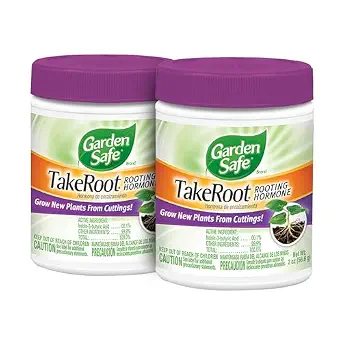 |
Hormex Rooting Hormone Powder #16 for Hardwood Cuttings, 21 g

| Item Form | Powder |
|---|---|
| Application Method | Dip |
| Specific Uses For Product | Rooting Hormone for Cloning Plants | Root Starter for Plant Cuttings | Propagation | Root Development |
| Coverage | Medium |
Hormex #16 is a powder rooting hormone designed specifically for hardwood and difficult-to-root woody cuttings such as trees, conifers and evergreen shrubs. Use it as a dip-and-plant treatment: moisten the cutting base, dip into the powder, tap off excess and place in a propagation medium like moist potting mix, coco coir or rockwool. The 1.6% IBA concentration targets tougher stems that do not root readily with lower-strength formulas, so it is useful when working with mature wood or species known to be recalcitrant. The 21 g bottle treats many cuttings, making it economical for seasonal propagation projects. Practical benefits include clearer guidance from the brand about matching strengths to plant type and a simple application method that fits common propagation workflows. Limitations are that success still depends on proper cutting technique and environmental conditions and that this product is narrowly aimed at hardwoods, so softer softwood cuttings will need a lower-strength formula.
Best for: Gardeners who regularly clone trees, conifers and woody shrubs and want a focused, higher-strength rooting powder for challenging hardwood cuttings.
Less Ideal for: Growers who mainly propagate tender softwood or herbaceous cuttings should choose a lower-strength product designed for those plant types.
- High 1.6% IBA concentration tailored for difficult hardwood and woody cuttings
- Simple dip application that integrates with standard propagation workflows
- Small 21 g bottle treats a large number of cuttings, offering good economy
- Brand provides a plant strength guide to match formula to species
- Intended specifically for hardwoods so not appropriate for tender softwood cuttings
- Effectiveness still depends on correct cutting technique and humidity/light management
Verdict: Choose Hormex #16 when you need a higher-strength, easy-to-use rooting powder specifically for difficult hardwood and woody cuttings.
Hormex Rooting Hormone Powder Set (#1, #3, #8 & #16) — 4 x 21g

| Item Form | Powder |
|---|---|
| Application Method | Dip |
| Specific Uses For Product | Rooting Hormone for Cloning Plants | Root Starter for Plant Cuttings | Propagation | Root Development |
| Coverage | For Softwood to Hardwood Plants |
| Target Species | Houseplants |
This Hormex kit supplies four 21 g bottles of rooting powder—#1 (0.1% IBA), #3 (0.3% IBA), #8 (0.8% IBA) and #16 (1.6% IBA)—so you can match hormone strength to the type of cutting you are propagating. Use it by moistening a prepared cutting, dipping the base into the chosen powder, tapping off excess and planting into your preferred medium such as potting mix, coco coir or propagation cubes. The clear plant-strength guide in the images helps select the right bottle for herbs, houseplants, roses, shrubs and hardwood tree cuttings. Practical benefits include having a full set on hand to cover different species and stages, small bottles that are easy to handle, and enough product to treat many cuttings per season. Limitations are that dosing is manual so technique affects success and the product is a powder dip only, so users seeking liquid or continuous-release formulations will need a different product. Instructions note not to return unused powder to the bottle and that rooting time varies with plant and conditions.
Best for: Gardeners who want a single, practical kit to handle propagation across a wide range of species and prefer selecting the optimal hormone strength for each cutting.
Less Ideal for: Those who prefer ready-to-use liquid hormones, automated dosing systems, or want a kit that includes propagation media and tools.
- Includes four distinct IBA strengths to cover tender to hardwood cuttings
- Small 21 g bottles are easy to handle and match by plant type
- Clear usage instructions and plant-strength guide reduce guesswork
- Sufficient quantity to treat many cuttings across a season
- Powder format requires careful technique and can be messier than liquids
- Does not include propagation medium or tools; sold separately
Verdict: Provides four IBA strengths in one compact kit so you can consistently match hormone strength to tree and woody cuttings for better propagation results.
Bonide Bontone II Rooting Powder, 1.25 oz

| Item Form | Powder |
|---|---|
| Specific Uses For Product | Root Development |
| Application Method | dip and shake |
| Target Species | azaleas, mums, geraniums, pachysandra, poinsettias and others |
| Unit Count | 1.25 Ounce |
Bonide Bontone II is a classic IBA-based rooting powder sold in a small 1.25 oz dust jar for home gardeners and hobbyists. You apply it by dipping a cutting’s wound into the powder, shaking off excess, and planting into moist media; it can also be used to coat seeds or bulbs in a bag before planting. The product’s straightforward formulation of indole-3-butyric acid targets root initiation and is effective on both softwood and hardwood cuttings as well as many ornamentals and vegetables. In practice the powder is convenient to use, has a medium coverage per package, and reduces the time and failure rate for many common cuttings. Limitations are the small unit size if you plan to take large numbers of cuttings, and because it is a dry powder it can be messier to apply than gel alternatives. Safety precautions are also reasonable to follow since it is a plant hormone rather than an inert filler.
Best for: Gardeners who want a reliable, easy-to-use rooting hormone backed by long-standing use and positive user feedback and who take a cautious approach to selecting proven products for their cuttings.
Less Ideal for: Propagation professionals or growers who take very large numbers of cuttings and need bulk quantities or who prefer the tidier application of gels or liquid dilutions.
- Contains indole-3-butyric acid (IBA), a proven rooting hormone for cuttings
- Ready-to-use powder that is simple to apply by dip and shake
- Versatile for cuttings, seeds, bulbs, and transplants across many ornamental and edible plants
- Compact jar size convenient for occasional home garden use
- Small 1.25 oz package may not be economical for frequent or large-scale propagation
- Powder form can be messier and harder to control than gel or liquid formulations
Verdict: A proven, ready-to-use IBA powder that reliably speeds rooting for home gardeners focused on successful cuttings.
Hormodin 2 Rooting Hormone Powder (0.3% IBA), 16 oz

| Item Form | Powder |
|---|---|
| Specific Uses For Product | Root Development |
| Target Species | woody and semi-woody plants, including some of the evergreens |
| Unit Count | 16 Ounce |
| Mixing Ratio | 1:0 or 100% |
Hormodin 2 is a powder-form rooting hormone designed to improve success when propagating woody and semi-woody plants. You use it by moistening the basal end of a fresh cutting, dipping the stem in the powder, tapping off the excess, and planting the treated cutting in rooting medium. The 0.3% IBA concentration targets plants that are moderately difficult to root, and the powder format makes application quick and low-tech for both hobbyists and small-scale growers. Practical benefits include faster root initiation, lower propagation bench time, and reduced losses from failed cuttings. The product description notes it prevents disease migration between cuttings because you dip individuals rather than sharing solutions. Important limitations are that it is formulated for woody and semi-woody species so it is not the best choice for very soft herbaceous plants, and being a powdered chemical it requires careful handling and storage to keep it dry and out of reach of children. The large 16 ounce jar suits repeat propagation but may be more than a casual user needs.
Best for: Gardeners and small-scale propagators who prioritize consistent, reliable rooting of woody and semi-woody cuttings and want a straightforward, repeatable application method.
Less Ideal for: Casual gardeners propagating mostly soft-stemmed annuals or those who prefer liquid dipping solutions and smaller single-use packages.
- Formulated specifically for woody and semi-woody plant cuttings with 0.3% IBA concentration.
- Powder format enables quick "dip it, tap it, stick it" application without mixing solutions.
- Large 16 oz jar provides many treatments for frequent propagators.
- Helps speed root initiation and reduce propagation bench time.
- Not formulated for soft herbaceous species where lower-strength products perform better.
- Powder requires dry storage and careful handling to avoid spills or contamination.
Verdict: Choose Hormodin 2 when you need a dependable powdered rooting hormone to reliably start roots on woody and semi-woody cuttings.
Garden Safe TakeRoot Rooting Hormone Powder, 2-Pack (2 oz)

| Item Form | Powder |
|---|---|
| Specific Uses For Product | Plant Growth, Root Development |
| Application Method | Stir cut ends in powder |
| Number of Packs | 2 |
| Active Ingredient | Indole-3-butyric acid |
Garden Safe TakeRoot is a simple powder rooting hormone intended to help grow new plants from stem cuttings. You moisten the cut end, dip or stir it in the powder, tap off excess and plant the treated cutting in a rooting medium, then mist regularly. The active ingredient is indole-3-butyric acid, a commonly used auxin that encourages root initiation on a wide range of houseplant and garden varieties such as African violets, geraniums, roses, poinsettias and many woody ornamentals. In practice the powder form is easy to apply, low-mess compared with liquids, and the included two-pack gives extra supply for repeated propagation attempts. Limitations are that it is a basic, single-concentration product so you cannot adjust strength for difficult species, and you must avoid cross-contaminating the jar when treating multiple plants. For cautious gardeners who prefer a proven, no-frills rooting aid, this product reliably increases the odds that common cuttings will form roots when used with proper cutting and aftercare techniques.
Best for: Buyers who want a straightforward, proven rooting aid to improve success with common cuttings and who favor reliable, low-risk products over experimental approaches.
Less Ideal for: Propagators seeking adjustable-concentration hormones, specialized formulations for very difficult-to-root plants, or liquid dosing systems should consider other options.
- Contains indole-3-butyric acid, a widely used rooting hormone that promotes root formation
- Powder form is easy to apply and reduces spills compared with liquid formulations
- Suitable for many common houseplants and garden cuttings including roses, geraniums and African violets
- Two-pack supply lets you treat multiple cuttings or keep a back-up jar
- Single-strength powder does not allow dosing adjustments for very sensitive or hard-to-root species
- Requires careful handling to avoid contaminating the container when treating multiple plants
Verdict: A dependable, easy-to-use powder rooting hormone that raises your chances of success with typical houseplant and garden cuttings.
Choosing the Right Rooting Hormone for Tree Cuttings: Key Factors to Consider
Active Ingredient and Concentration
The chemical that stimulates root growth is the most important factor for tree cuttings. Auxins such as IBA are commonly used because they promote root initiation in woody stems. Concentration matters because hardwood cuttings often need a stronger or differently delivered auxin dose than softwood cuttings. Too weak a concentration may delay rooting or produce only fine, nonfunctional roots, while too strong a concentration can damage tissues or inhibit rooting.
When evaluating products, look for clear labeling of the active ingredient and its percentage or ppm. This lets you compare strength across powders, gels, and liquids and adjust application method and contact time accordingly.
Application Format and Technique
Rooting hormones come as powders, gels, and concentrated liquids, and each format behaves differently with tree cuttings. Powders are easy to store and good for quick dipping of woody stems, but they can clump or transfer excess product if stems are wet. Gels offer controlled coating and stick better to thicker stems, reducing waste. Liquids are versatile for dip-and-hold methods and mister applications, but they require careful dilution and clean handling to avoid contamination.
Think about your propagation workflow: if you take large numbers of cuttings at once, a gel or liquid dip may be faster and more consistent. If you work with occasional cuttings, a powder can be simpler and lower maintenance.
Cutting Type and Species Compatibility
Different tree species and cutting stages respond differently to auxins. Hardwood cuttings from deciduous trees taken in dormancy often root more slowly and need different auxin dosing than semi-hardwood or softwood cuttings taken in the growing season. Some species are naturally easy to root, while others are notoriously reluctant and benefit from higher concentrations or combined cultural treatments.
Check product guidance for labeled species groups and recommended contact times. When guidance is absent, err on the side of conservative application and pair hormones with solid cultural steps like clean cuts, firm planting medium, humidity control, and bottom warmth.
Contamination Control and Sterility
Preventing fungal and bacterial infections is critical when you are trying to root tree cuttings. Contaminated products or handling can quickly spoil batches of cuttings. Products that come in resealable, contamination-minimizing packaging are easier to use in repeated sessions without compromising sterility. For liquids, using separate clean containers and changing solution between batches reduces cross-contamination risk.
Also consider whether the product requires dilution and how precise that dilution must be. Clear instructions and simple measuring reduce mistakes that lead to contaminated or ineffective solutions.
Dosage Flexibility and Measurement Accuracy
Being able to measure and adjust dosage is important because tree species and cutting ages need different auxin exposures. Concentrated liquids allow fine-tuning but demand accurate measuring tools and attention to dilution ratios. Powders are tolerant to small dosing errors but can waste product if too much clings to the stem. Gels offer a middle ground with pre-mixed concentrations that are easy to control for individual cuttings.
Choose a formulation you can dose reliably given the tools you have in the garden. If you propagate professionally or in larger batches, prioritize products that scale cleanly and offer clear measuring guidance.
Safety, Storage, and Environmental Concerns
Rooting hormones are effective biochemical tools and should be handled with appropriate care. Some formulations require gloves, eye protection, or avoidance of inhalation during application. Storage stability matters too; products that degrade quickly under heat or light can lose potency and harm outcomes.
Consider how often you will use the product, where you will store it, and whether you need a non-toxic or low-risk formulation because of children, pets, or edible tree propagation. Clear safety labeling and long shelf life are practical advantages in the garden.
When to Take Tree Cuttings and Which Stage Benefits Most From Hormone
Timing and the physiological stage of the parent wood influence rooting success. Softwood cuttings taken in late spring and early summer often root faster but can be more fragile and susceptible to desiccation. Semi-hardwood and hardwood cuttings, taken later or during dormancy, tend to be woodier and may respond differently to auxin strength and contact time.
- Softwood cuttings: often need lighter applications and careful humidity control
- Semi-hardwood: balance between ease of rooting and resilience; gels or controlled dips work well
- Hardwood: may require stronger auxin concentrations and different cultural supports
Preparing Cuttings for Best Contact with Hormone
Make clean, angled cuts just below a node and remove leaves that would be buried in the medium. For thicker, woody stems, scarifying the bark slightly or making a fresh slanted cut increases the surface area for hormone contact and water uptake. Always use clean, sharp tools and work in a clean area to reduce contamination risk.
- Use a sharp bypass pruner or knife for clean wounds
- Trim excess foliage to reduce transpiration stress
- Wound or notch thick stems to expose cambium for better hormone uptake
Mixing and Applying Liquid Concentrates Safely
If you choose a concentrated liquid, follow dilution ratios carefully and measure with graduated tools. Prepare only the amount you need for a single batch of cuttings to avoid storing diluted solutions, which can harbor microbes. Use a dedicated, clean container for dips and refresh the solution between batches if working with many cuttings.
- Use gloves and eye protection when handling concentrates
- Label any mixed solution with concentration and date
- Avoid contaminating the stock bottle by pouring into a separate cup rather than dipping cuttings into the stock container
Using Gels and Powders for Woody Stems
Gels provide a consistent coat that clings to the stem and is useful for thicker or irregular surfaces. Apply a pea-sized amount to the cut end and press gently into place. Powders work well for quick dipping of multiple cuttings; tap off excess and plant immediately to avoid powder loss. Both formats reduce the risk of overexposure compared with prolonged liquid dips.
- Gels: controlled, low-waste application for irregular cuts
- Powders: fast, convenient for many similar-diameter stems
- Both: avoid using on wet or heavily oozing stems to prevent dilution or clumping
Aftercare: Environment, Medium, and Moisture Management
Rooting hormone jump-starts root formation, but environmental control determines whether those initials develop into functional roots. Use a well-draining, sterile propagation medium and maintain high humidity with misting, domes, or humidity tents. Bottom heat in the range appropriate for the species can accelerate root growth. Avoid waterlogged conditions that invite rot. Monitor cuttings for early signs of rooting and reduce humidity gradually after roots form to harden them before transplanting.
- Sterile, aerated medium reduces rot
- Maintain steady, moderate humidity rather than soaking
- Introduce bottom heat for slow-rooting hardwoods
How We Chose the Best Rooting Hormone for Tree Cuttings
We focused on attributes that directly affect success with tree cuttings. First, we checked active ingredient and concentration because indole-3-butyric acid (IBA) and similar auxins determine rooting speed and reliability across hardwood and semi-hardwood cuttings. Second, we assessed application format since powders, gels, and concentrated liquids perform differently with thick, woody stems versus thin green shoots. Third, we evaluated compatibility and labeled species guidance to ensure the hormone is suitable for a wide range of common landscape trees and fruiting varieties. We also considered ease of measuring and applying the product in small batches, and the safety and handling instructions gardeners will need for repeated propagation sessions. Packaging that prevents contamination and clear dilution instructions were treated as positive attributes. We excluded products without clear active-ingredient listings, formulations intended solely for herbaceous annuals, and products lacking basic safety guidance. The result is a short list that balances biochemical efficacy with everyday practicality in the garden.
FAQ
Can I use rooting hormone on all tree species?
Often it depends on the species. Many common ornamentals and fruit trees respond well to auxins, but some species are naturally difficult to root and need specific cultural tweaks. Check product guidance and start with conservative application if species-specific instructions are absent.
Is powder better than liquid for woody tree cuttings?
Powder is convenient for woody stems and avoids dilution issues, while liquids can offer more consistent contact when diluted and used correctly. Choice depends on your technique, batch size, and tolerance for measuring and mixing.
How long should I keep cuttings dipped in liquid hormone?
It depends on concentration and species. Short dips of a few seconds are common with higher-concentration formulations, while very dilute solutions may call for longer contact or repeated applications. Follow manufacturer dilution guidance and err on the side of shorter contact for sensitive green wood.
Do I need to sterilize tools when using rooting hormone?
Yes. Clean, sharp tools reduce the chance of introducing pathogens that can spoil cuttings. Sterilize pruners between plants when taking many cuttings and avoid dipping cuttings back into stock solutions that could become contaminated.
Can I combine rooting hormone with fungicide?
Sometimes gardeners pair auxins with a mild fungicide as a cultural control to reduce rot, especially for slow-rooting hardwoods. Use only compatible products and follow label guidance for mixing to avoid chemical antagonism or damage to the cutting.
Final Verdict
Choosing a rooting hormone for tree cuttings is about matching formulation and concentration to the wood type, species, and your propagation workflow. Prioritize clear active-ingredient labeling, a format you can dose reliably, and packaging that minimizes contamination. Tradeoffs are real: powders are low-fuss, gels give control, and liquids offer flexibility for batch work. Focus on good cutting technique and environmental control as much as the hormone itself to get consistent, repeatable results.
