

Note: This article contains affiliate links. If you click on these links and make a purchase, I may earn a small commission at no extra cost to you. This helps support my research and content. Read my full affiliate disclosure here.
When rodents move into a house, garage, or garden shed they can damage insulation, contaminate food, and spread disease. Choosing a deadly rodent poison is a serious decision because these products prioritize rapid, reliable control but also carry risks for people, pets, and wildlife. This guide covers seven shortlisted options that are commonly used where fast population reduction is required. We evaluate each pick on factors that matter in real settings: how quickly it reduces numbers, how easy it is to deploy safely, and what precautions you need to take around children, pets, and non-target wildlife. Use the guidance here to match control needs to acceptable safety measures before using any product.
Top Picks at a Glance
| Best Overall The best all-around choice for most situations | Neogen Havoc Rodenticide Rat & Mouse Bait Pellets, 8 lb Pail |  |
| Best Quality Built to a higher standard if you want something more solid | Tomcat Bromethalin Bait Chunx Pail, 4.25 lb |  |
| Best Value The sweet spot between price and what you get | Neogen Ramik Green Fish-Flavored Rodenticide Nuggets, 4 lb |  |
| Best Budget The cheapest option that still gets the job done reliably | Tomcat Mouse Killer Refillable Bait Station with 16 Bait Blocks |  |
| Highest Rated A top-rated pick with lots of positive feedback | Farnam Just One Bite II Rat & Mouse Bait Bars, 8 pack |  |
| Most Popular A crowd favorite that many people choose with confidence | d-Con Corner Fit Mouse Poison Bait Station Refills, 10 Count |  |
| Best Seller A high-volume bestseller chosen again and again | Victor M925 Rodent Killer, 4 lb Fish‑Flavored Bait | 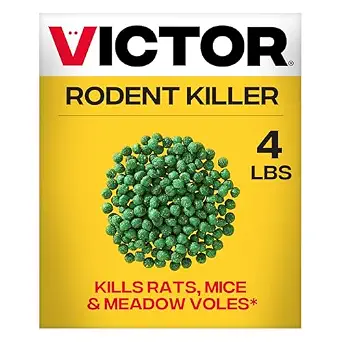 |
Neogen Havoc Rodenticide Rat & Mouse Bait Pellets, 8 lb Pail

| Item Form | Pellets |
|---|---|
| Target Species | Mouse |
| Active Ingredients | Brodifacoum |
Neogen Havoc is a high-concentration pellet rodenticide designed to deliver quick, single-feed control of house mice, Norway rats, and roof rats. It is typically used in place packs or tamper-resistant bait stations indoors and up to 100 feet around man-made agricultural structures where rodent pressure is high. The active ingredient brodifacoum is a second-generation anticoagulant that causes lethal hemorrhaging after ingestion, and the manufacturer combines it with palatable bait ingredients to improve uptake. Practical benefits include strong efficacy against established infestations and suitability for placement in commercial or farm settings as part of a biosecurity plan. Important limitations are that it contains a highly toxic compound that requires responsible placement, adherence to label restrictions, and precautions to prevent access by non-target animals and children. This product is intended for targeted pest control rather than casual home use and works best when integrated with sanitation and exclusion measures.
Best for: Buyers who need a strong, professional-grade solution for established rodent infestations around agricultural buildings or commercial structures and who will follow label directions and safety protocols.
Less Ideal for: Casual homeowners with small indoor mouse problems, households with pets or children where nonchemical or lower-toxicity options are preferred, and users who cannot implement secure bait placement.
- Second-generation anticoagulant (brodifacoum) effective in single-feed dosing
- Formulated pellets with attractive bait ingredients to improve consumption
- Suitable for use indoors and up to 100 ft around man-made agricultural structures
- Comes in a large 8 lb pail well suited for heavy infestations or commercial use
- Contains a highly toxic active ingredient that poses risks to non-target wildlife, pets, and people if misused
- Label restricts use to agricultural buildings and nearby structures which limits residential applications
Verdict: Choose Neogen Havoc when you need a potent, single-feed rodenticide for heavy or commercial infestations and will use it with proper safety and placement protocols.
Tomcat Bromethalin Bait Chunx Pail, 4.25 lb

| Item Form | Bar |
|---|---|
| Target Species | Rodents |
| Net Weight | 4.25 lb |
Tomcat Bromethalin Bait Chunx comes as a large refill pail of 1 oz bait blocks intended for serious rodent control. It is designed for use indoors and outdoors in tamper-resistant bait stations and targets Norway rats, roof rats, house mice, and meadow voles, including some anticoagulant-resistant populations. Each block is strong enough that a single feeding can be lethal and the manufacturer recommends maintaining fresh bait for at least 10 days to ensure control. Practical benefits include bulk supply for ongoing infestations, easy-to-place 1 oz blocks that fit standard bait stations, and an active ingredient effective where first-generation baits fail. Important limitations are regulatory and safety requirements: outdoor use must be within 100 feet of structures and bait stations are mandatory where non-target access is possible, so you will need proper stations and to follow label directions closely. This product is for users comfortable handling professional-strength rodenticide and observing safety and legal restrictions.
Best for: A buyer who needs professional-strength, high-performance rodenticide for active infestations and is prepared to use tamper-resistant stations and follow label safety rules.
Less Ideal for: Homeowners seeking pet-safe or DIY mild controls or those unwilling to comply with bait-station requirements should choose less potent, targeted options.
- Bulk 4.25 lb pail supplies many baiting stations for sustained treatments
- 1 oz preformed blocks are easy to place and measure dosing
- Contains bromethalin effective against some anticoagulant-resistant rodents
- Labeled for both indoor and outdoor use when used in tamper-resistant stations
- Requires tamper-resistant bait stations and careful placement to meet safety and legal rules
- Not permitted for use on certain rodent species in California
Verdict: Choose this product when you need a bulk, bromethalin-based bait that works against anticoagulant-resistant rats and mice for aggressive, sustained control.
Neogen Ramik Green Fish-Flavored Rodenticide Nuggets, 4 lb

| Item Form | Pellets |
|---|---|
| Target Species | Rats, Mice and Meadow Voles |
| Active Ingredients | Diphacinone (2-Diphenylacetyl-1,3-Indandione) |
Neogen Ramik Green are fish-flavored diphacinone pellets intended for targeting rats, mice and meadow voles where a weather-resistant bait is needed. You place the nuggets in bait stations, bait packs, or other secure feeding points; the grain-based formulation is palatable so rodents will consume lethal doses over several feedings and results typically appear in four to five days. Notable features include a wax-free, all-weather nugget that tolerates wet or damp conditions and a formulation meant for both indoor and outdoor use. Practical benefits are straightforward: a single 4 lb bag provides enough material for multiple bait points around a property, and the weather resistance reduces replacement frequency in damp areas. Important limitations are that it is a first-generation anticoagulant so control can require multiple feedings and time to mortality, and the product is a toxic rodenticide that must be used inside tamper-resistant stations and kept away from children, pets, and non-target wildlife.
Best for: Buyers who prioritize practical, long-lasting rodent control for wet or mixed indoor/outdoor sites and who will follow safe bait-station practices.
Less Ideal for: People who need immediate knockdown within hours, who cannot guarantee secure placement away from children or pets, or who prefer nonchemical control methods.
- Weather-resistant nugget suitable for damp or outdoor locations
- Fish-flavored grain mix that increases palatability to rodents
- Formulated for use on rats, mice, and meadow voles both indoors and outdoors
- First-generation anticoagulant may require multiple feedings and several days to be effective
- Contains a toxic active ingredient requiring strict use in tamper-resistant stations
Verdict: Choose Ramik Green nuggets when you need a palatable, weather-resistant rodenticide for practical, reliable control in damp indoor or outdoor locations.
Tomcat Mouse Killer Refillable Bait Station with 16 Bait Blocks

| Unit Count | 16 Count |
|---|---|
| Target Species | Rodents |
| Power Source | manual |
| Material Type | Plastic |
The Tomcat Mouse Killer refillable bait station is a simple rodent control system that pairs a tamper-resistant plastic station with 16 bait blocks so you can set and monitor bait in places mice frequent. Use it indoors behind appliances, in basements and garages, or outside near foundations; the clear lid makes it easy to check bait levels without opening the unit. Each bait block is formulated to attract and kill mice, and the station is designed to resist interference from children and pets while remaining weather resistant for outdoor placement. Because the station is reusable and the package includes multiple refills, it is convenient for ongoing monitoring and maintenance. Important limitations are that rodents typically consume the bait and die elsewhere so you will not find carcasses inside the station, and effective control requires keeping bait available until activity stops. The product is manual to use and best suited to targeted placements rather than broad landscape-wide rodent programs.
Best for: Buyers who need an affordable, no-fuss solution for localized mouse problems and prefer a reusable station with included refills for ongoing control.
Less Ideal for: People needing immediate removal of carcasses or those seeking a single broad-area treatment for large infestations should consider other professional or full-property approaches.
- Child- and dog-resistant station reduces accidental access
- Clear lid allows quick visual bait checks without opening
- Reusable station with multiple included bait blocks offers ongoing coverage
- Suitable for indoor and outdoor placement due to weather-resistant design
- Bait causes rodents to die elsewhere so you may not recover carcasses
- Requires regular monitoring and replacement of bait to maintain effectiveness
Verdict: A budget-friendly, reusable bait station with multiple ready-to-use blocks that provides practical, tamper-resistant mouse control for targeted indoor and outdoor spots.
Farnam Just One Bite II Rat & Mouse Bait Bars, 8 pack

| Item Form | Bar |
|---|---|
| Target Species | Rat,Mouse |
| Active Ingredients | Bromadiolone |
| Unit Count | 128 Ounce |
Farnam Just One Bite II is a ready-to-use rodent bait formed into individually wrapped 1 pound bars designed for controlling Norway rats, roof rats, and house mice. The formulation contains bromadiolone and includes nibble ridges to encourage chewing so rodents can ingest a lethal dose in one night; death is delayed 4 to 5 days which helps prevent bait shyness among surviving animals. The bars are packaged for placement inside bait stations or around agricultural buildings where long-lasting, targeted rodent control is required. Practical benefits include a heavy-duty active ingredient effective against warfarin-resistant populations and large, easy-to-place bars that reduce refill frequency. Limitations are that it is a toxic anticoagulant requiring careful handling, secure placement to avoid non-target exposure, and it is labeled for use in and around agricultural buildings rather than general household locations.
Best for: Buyers who need a reliable, professional-strength bait for persistent rat or mouse infestations around barns, outbuildings, or other agricultural settings and prioritize a single-feed lethal solution.
Less Ideal for: Homeowners looking for a domestic indoor bait for kitchens or living spaces or anyone who cannot securely place and monitor toxic bait away from children, pets, and non-target wildlife.
- Contains bromadiolone effective on warfarin-resistant rodents
- Nibble ridges encourage chewing for single-feed lethality
- Individually wrapped 1 lb bars reduce mess and make placement easier
- Large bars reduce how often you need to refill bait stations
- Toxic anticoagulant that requires strict precautions to protect children, pets, and wildlife
- Label restricts use to in and around agricultural buildings rather than general indoor use
Verdict: Choose this bait when you need a dependable, single-feed rodent killer formulated to work against resistant rat and mouse populations around agricultural buildings.
d-Con Corner Fit Mouse Poison Bait Station Refills, 10 Count

| Unit Count | 10 Count |
|---|---|
| Target Species | Mouse |
| Active Ingredients | Cholecalciferol |
This 10-count refill pack supplies the bait that fits d-Con corner-fit refillable stations and is formulated with cholecalciferol rather than traditional anticoagulants. You load the bait into the low-profile, tamper-resistant station and place it where you see mouse activity such as corners, behind appliances, attics or garages. The active ingredient is designed to be attractive to mice and can stop visible activity within a few days once mice consume the bait. The refillable format makes it easy to swap in fresh bait without replacing the entire station, and the manufacturer notes the station is weather-resistant for limited outdoor use. Important limitations are that this is a lethal control intended for rodents and contains a vitamin D derivative as the active ingredient, so users must follow label directions carefully to avoid accidental exposure to pets or children and to comply with local disposal rules. Also, bait effectiveness depends on proper placement and mice feeding on it, so monitoring and moving stations may be necessary.
Best for: Buyers who want a proven, replaceable bait option for established mouse activity and who prioritize products with social proof and a more familiar active ingredient profile.
Less Ideal for: People who need nonlethal or catch-and-release rodent solutions or who cannot guarantee secure placement away from children and pets.
- Contains cholecalciferol formulation instead of anticoagulant neurotoxins
- Refill pack fits d-Con corner-fit refillable stations for easy replacement
- Low-profile, tamper-resistant bait station design reduces access by children and pets
- Weather-resistant formulation and station suitable for indoor and limited outdoor placement
- Lethal to rodents so requires careful handling and strict adherence to label safety directions
- Effectiveness depends on mice actually feeding on the bait and correct placement of the station
Verdict: If you want a refillable, tamper-resistant bait option with cholecalciferol for quickly reducing house mouse activity, these 10-count refills are a practical choice.
Victor M925 Rodent Killer, 4 lb Fish‑Flavored Bait

| Item Form | Soft Bait |
|---|---|
| Target Species | Rodents |
| Specification Met | EPA |
| Active Ingredients | Diphacinone 0.005% |
Victor M925 is a ready-to-use rodenticide supplied as fish‑flavored soft bait balls in a 4 pound bag for treating mice, rats, and meadow voles. You place loose bait along rodent travel paths or inside tamper‑resistant bait stations; the palatable fish formula encourages repeated feeding until a lethal dose is consumed. The product is weather‑resistant so it can be used in exposed outdoor locations as well as inside basements, attics, or crawlspaces where rodents are active. The large bag provides enough bait for multiple placements across a large property or for extended treatment periods. Important practical points are the EPA specification and low active ingredient concentration, which reflect standard anticoagulant rodenticide chemistry and legal compliance, and the safety requirements: bait must be kept away from children, pets, and non‑target wildlife or secured in approved stations. This is a straightforward, no‑mix option for operators who want an effective, deployable poison, but it requires careful handling and proper bait station use to mitigate secondary exposure and accidental access.
Best for: Buyers who prioritize a conventional, proven chemical solution and want a simple, deployable rodenticide for treating established infestations indoors and around buildings; ideal for homeowners or property managers who will use tamper‑resistant stations and follow label safety instructions.
Less Ideal for: Households with small children, pets, or frequent access by non-target wildlife where secure baiting cannot be guaranteed should consider non-toxic or exclusion-based control methods instead.
- Ready-to-use soft bait that needs no preparation before placement
- Fish-flavored formula that is formulated to attract rodents and encourage feeding
- Weather-resistant formulation suitable for both indoor and outdoor placements
- Large 4 lb bag provides ample supply for multiple placements or large infestations
- Contains an anticoagulant active ingredient and must be strictly kept away from children, pets, and non-target wildlife
- Not suitable for use in situations where tamper-resistant bait stations cannot be reliably deployed or secured
Verdict: A large, ready-to-use fish‑flavored rodent bait that delivers reliable indoor and outdoor control when used in secure bait stations and handled with care.
Choosing the Right Deadly Rodent Poison: Key Factors to Consider
Lethality and Mode of Action
How a product kills rodents affects both effectiveness and safety. Rapid-acting compounds can reduce visible activity quickly but may increase the chance of pets or scavengers encountering poisoned carcasses. Slower-acting anticoagulants may take days to work but often reduce bait shyness and are less likely to produce obvious immediate effects that attract attention.
Understanding the active ingredient and its mode of action helps you plan placement and follow-up. Consider whether you need immediate knockdown for severe infestations or a longer-term strategy. Read the product label for timelines to expected mortality and how that interacts with cleanup and monitoring schedules.
Safety for Children, Pets, and Wildlife
Because these products are designed to be lethal to mammals, safety features are critical. Formulation matters: blocks, pellets, and enclosed bait cartridges all present different exposure risks. Tamper-resistant bait stations and products intended for placement inside locked containers reduce accidental access by children and pets.
Also think about secondary poisoning of scavengers that consume dead rodents. Placement away from open areas, retrieval of carcasses when safe, and using products with lower persistence can reduce that risk. Always follow label instructions on storage, handling, and first-aid measures.
Application Method and Placement Options
How and where you can deploy the product determines how practical it will be in your environment. Some formulations are suited to indoor use in wall voids and attics, while others are designed for perimeter use or in outbuildings. Pre-baited stations and granular formulations change how you monitor bait uptake.
Good placement practice involves assessing rodent travel routes, nesting sites, and likely bait competition from alternative food sources. Choose a product whose delivery format matches where you will place baits and how often you can check stations.
Label Instructions and Legal Use
Labels contain legal requirements and safety instructions that govern how a product must be used. Clear dosing, reapplication intervals, and disposal guidance make safe use more likely. Some products restrict outdoor use near water or require licensed applicators for certain concentrations.
Follow label directions exactly. Labels also state first-aid measures and required personal protective equipment. If the label is vague or missing key instructions, that product is a poor choice for nonprofessional users.
Environmental Persistence and Residue Concerns
Different active ingredients break down at different rates in soil and carcasses. Persistence affects secondary poisoning risk and the length of time you must restrict access to treated areas. Choose products with persistence profiles that match the sensitivity of your yard or nearby wildlife habitat.
Consider how irrigation, rain, and temperature can influence residue movement. If you garden in a space frequented by pets, children, or wildlife, prioritize formulations and application practices that minimize long-term residues and make remediation easier.
Monitoring and Cleanup Requirements
Effective rodent control includes a plan for monitoring bait uptake and removing carcasses safely. Some products require frequent checks and removal of consumed bait to prevent accidental exposures, while others may allow longer intervals between inspections.
Prepare for how you will dispose of contaminated materials, dead rodents, and used bait. Personal protective equipment and adherence to local regulations for hazardous waste will affect how easily you can comply with label disposal instructions.
When to Choose a Fast-Acting Option
Fast-acting rodent poisons are useful when an infestation is obvious, rodents are present in areas where they create immediate health risks, or when you need to reduce numbers quickly before a major event. They can restore sanitary conditions faster than delayed-action products.
- Use inside sealed structures where non-target access is limited.
- Pair with enclosed bait stations to reduce accidental exposure.
- Plan for carcass checks and removal within a few days of treatment.
Placement Strategies for Minimizing Risk
Effective placement both increases control success and reduces non-target exposure. Focus on rodent travel routes such as along baseboards, behind appliances, and near burrow entrances. In outdoor or semi-open areas use tamper-resistant stations anchored to the ground and placed where pets and children cannot reach.
- Avoid placing baits where domestic animals or wildlife forage.
- Keep baits away from food preparation and storage areas.
- Record station locations and check them consistently to track uptake.
Integrating Baits with Nonchemical Control
Poisons work best as part of an integrated plan. Seal entry points, reduce attractants by securing food and compost, and adjust landscaping to remove harborage. Combining sanitation and exclusion with poison reduces the chance of reinfestation after treatments.
- Inspect and seal gaps around doors, pipes, and vents.
- Store pet food and birdseed in rodent-proof containers.
- Remove excess brush and debris that provide shelter.
Handling, Storage, and Disposal Best Practices
Store products in their original containers in locked cabinets out of reach of children and animals. Keep material in a cool, dry place and follow label guidance on storage duration and conditions. For disposal, follow the product label and local regulations. Contaminated bait, used gloves, and removed carcasses should be handled with gloves and placed in sealed bags; many areas require hazardous waste collection for pesticide-contaminated materials. Document disposal actions if required by local ordinance.
- Keep a written log of application dates and station checks.
- Have first-aid instructions and emergency contact numbers available.
- Use gloves when handling baits and carcasses and wash hands thoroughly afterwards.
Seasonal Considerations for Use
Rodent activity and food availability change with seasons. In colder months rodents may move indoors and bait uptake patterns can change as natural food declines. Warmer seasons may increase non-target activity outdoors, so exercise extra caution when applying poisons outside.
- Increase station checks during peak activity periods.
- Avoid outdoor applications during times when young wildlife are most active and vulnerable.
- Adjust bait choices if alternative food sources are abundant.
How We Chose the Best Deadly Rodent Poison
We selected options that prioritize effective rodent population reduction while giving gardeners and homeowners clear safety controls. Our editorial filters emphasized proven mechanisms of action, accessibility of application formats for typical home and garden settings, and practical safety features that reduce risk to non-target animals and people. Evaluation criteria included lethality and speed of action to measure how reliably a product reduces infestations, safety controls and bait formulations that limit exposure to children and pets, dosing clarity and label guidance so users can follow legal and safe application, and environmental persistence to assess how long residues remain in treated areas. We also considered package formats and deployment options for different use cases such as inside structures, in outbuildings, or around perimeter bait stations. We excluded products that lack clear label instructions, formulations intended only for agricultural or commercial applicators without homeowner provisions, and any items with ambiguous active ingredient information. The resulting shortlist focuses on formulations a responsible gardener could use with appropriate precautions.
FAQ
Is a deadly rodent poison safe to use around pets?
It often depends on formulation and deployment. Products placed inside tamper-resistant bait stations and used according to label directions reduce risk, but any toxic bait carries potential hazards. Keep pets away from treated areas and consult a veterinarian immediately if exposure is suspected.
How long after placing bait will rodents die?
Timing depends on the active ingredient and the species targeted. Some products produce mortality within 24 to 72 hours, while others may take several days. Labels typically give a range that reflects expected timelines for control.
Can poisons harm wildlife that eat poisoned carcasses?
Yes, secondary poisoning is a real concern. Scavengers and predators can be exposed by consuming poisoned rodents. Minimizing carcass availability, using lower-persistence formulations when appropriate, and placing baits in secured stations all reduce that risk.
How often should I check bait stations?
Check frequency depends on product instructions and infestation severity. Many situations require inspections every few days initially, then weekly once uptake slows. Frequent checks help prevent bait degradation and reduce accidental exposures.
Are there legal restrictions on using certain rodent poisons?
Some active ingredients have specific regulatory restrictions or usage limitations, especially for outdoor applications or professional-only formulations. Always read the label and comply with local rules; if a product lacks clear homeowner instructions it may be unsuitable for residential use.
What should I do if a child or pet contacts bait?
Follow the first-aid directions on the product label immediately and contact emergency services or a poison control center. Remove contaminated clothing, wash exposed skin, and keep the person or pet calm and under observation while seeking professional help.
Final Verdict
Choosing among deadly rodent poisons requires balancing the need for quick, effective control with the safety of people, pets, and wildlife. Prioritize products with clear label instructions, deployment options that limit non-target access, and a persistence profile suited to your property and surrounding habitat. Make a plan before you apply any poison: identify bait locations, secure stations, schedule monitoring and carcass removal, and follow storage and disposal directions. With that approach you can reduce infestations responsibly while managing the real risks these products pose.
